Our readers keep the lights on and my smoothie glass nicely filled. As an Amazon Associate, I earn from qualifying purchases.
The difference between a podcast that keeps listeners hooked and one they click away from often comes down to a single thing: how the host’s voice sounds. A condenser microphone captures the subtle texture of speech — the breath, the warmth, the natural presence — that dynamic mics tend to smooth over, making it the go-to choice for studio-quality vocal reproduction in home podcast setups.
I’m Mohammad Maruf — the founder and writer behind WellFizz. I’ve spent hundreds of hours analyzing frequency response curves, polar pattern behavior, and ADC sampling rates to understand exactly which hardware delivers true broadcast clarity without demanding a professional recording booth.
This guide walks through seven carefully selected models that balance vocal fidelity with real-world ease of use, so you can confidently choose your next condenser mic for podcast recording without guessing.
How To Choose The Best Condenser Mic For Podcast
Picking the right condenser microphone for spoken-word recording isn’t about getting the most expensive capsule — it’s about matching the mic’s technical behavior to your room, your voice, and your workflow. Here are the three factors that matter most.
Polar Pattern and Room Sensitivity
Condenser capsules are inherently more sensitive than dynamic ones, which means they pick up every rustle, fan hum, and room reflection. A cardioid polar pattern is essential because it captures sound mostly from the front while rejecting noise from the sides and rear. If your recording space has hard floors or bare walls, a tighter pickup pattern saves you hours of post-production cleanup.
Bit Depth and Sampling Rate
The analog-to-digital converter inside a USB condenser mic determines how much vocal detail survives the conversion. A 24-bit depth preserves subtle dynamic shifts in speech, while a 96 kHz sampling rate captures the full frequency spectrum of the human voice — from the low chest resonance to the high sibilant consonants. Lower specs produce flat, lifeless audio that sounds compressed even before you export.
Onboard Controls vs. Software Dependency
Some condenser mics rely entirely on companion software to adjust gain, EQ, and monitoring levels. Others put physical knobs for mute, gain, and headphone volume directly on the body. For live podcast recording where you need to react instantly, physical controls are more reliable than tabbing through a software window. Look for zero-latency headphone monitoring as a minimum requirement, not a premium extra.
Quick Comparison
On smaller screens, swipe sideways to see the full table.
| Model | Category | Best For | Key Spec | Amazon |
|---|---|---|---|---|
| Elgato Wave:3 | Premium USB Condenser | Live streaming with software mixing | 24-bit/96kHz ADC, Clipguard anti-distortion | Amazon |
| Elgato Wave:3 MK.2 | Premium USB Condenser | Onboard DSP effects and VST support | Clipguard 2.0, Wave FX Processor | Amazon |
| Audio-Technica AT2020USB-X | High-Resolution USB | Home studio recording with neutral tone | 24-bit/96kHz, 600 Ohm impedance | Amazon |
| Sennheiser Profile | USB Cardioid Condenser | Plug-and-play simplicity, German engineering | Cardioid capsule, metal housing | Amazon |
| HyperX QuadCast 2 | USB Gaming/Streaming | Gamers wanting tap-to-mute and shock mount | 32 Ohm impedance, aluminum enclosure | Amazon |
| Logitech Blue Yeti | Multi-Pattern USB | Versatile recording with 4 pickup patterns | Three-capsule array, 16 Ohm impedance | Amazon |
| MAONO PD400X | Dynamic USB/XLR | Budget-conscious users needing XLR upgrade path | 40-16kHz frequency range, metal build | Amazon |
In‑Depth Reviews
1. Elgato Wave:3

The Elgato Wave:3 uses a cardioid condenser capsule paired with a 24-bit/96kHz analog-to-digital converter that captures vocal detail with studio-level crispness. Its proprietary Clipguard technology prevents digital distortion even when your voice peaks unexpectedly, making it forgiving for hosts who don’t sit perfectly still during a recording session.
The Wave Link app is the standout feature here — it lets you control the mic level alongside up to seven other audio sources and create two independent mixes, which is a lifesaver for live streamers who need to separate game audio from chat audio from the microphone feed. The physical dial on the front handles gain and headphone volume with tactile precision.
At roughly a foot tall, the Wave:3 can block the bottom of your monitor if centered on the desk, but its thin profile and adjustable stand make it easy to tuck to the side. The zero-latency headphone jack delivers real-time monitoring that feels immediate and natural, exactly what you need for live co-host conversations.
Why it’s great
- Clipguard eliminates digital clipping during loud vocal peaks
- Wave Link software allows independent mixing of multiple audio sources
- Compact footprint frees up desk space compared to bulkier mics
Good to know
- Tall body may partially block screen if placed directly in front
- Premium price places it well above entry-level USB condenser options
2. Elgato Wave:3 MK.2
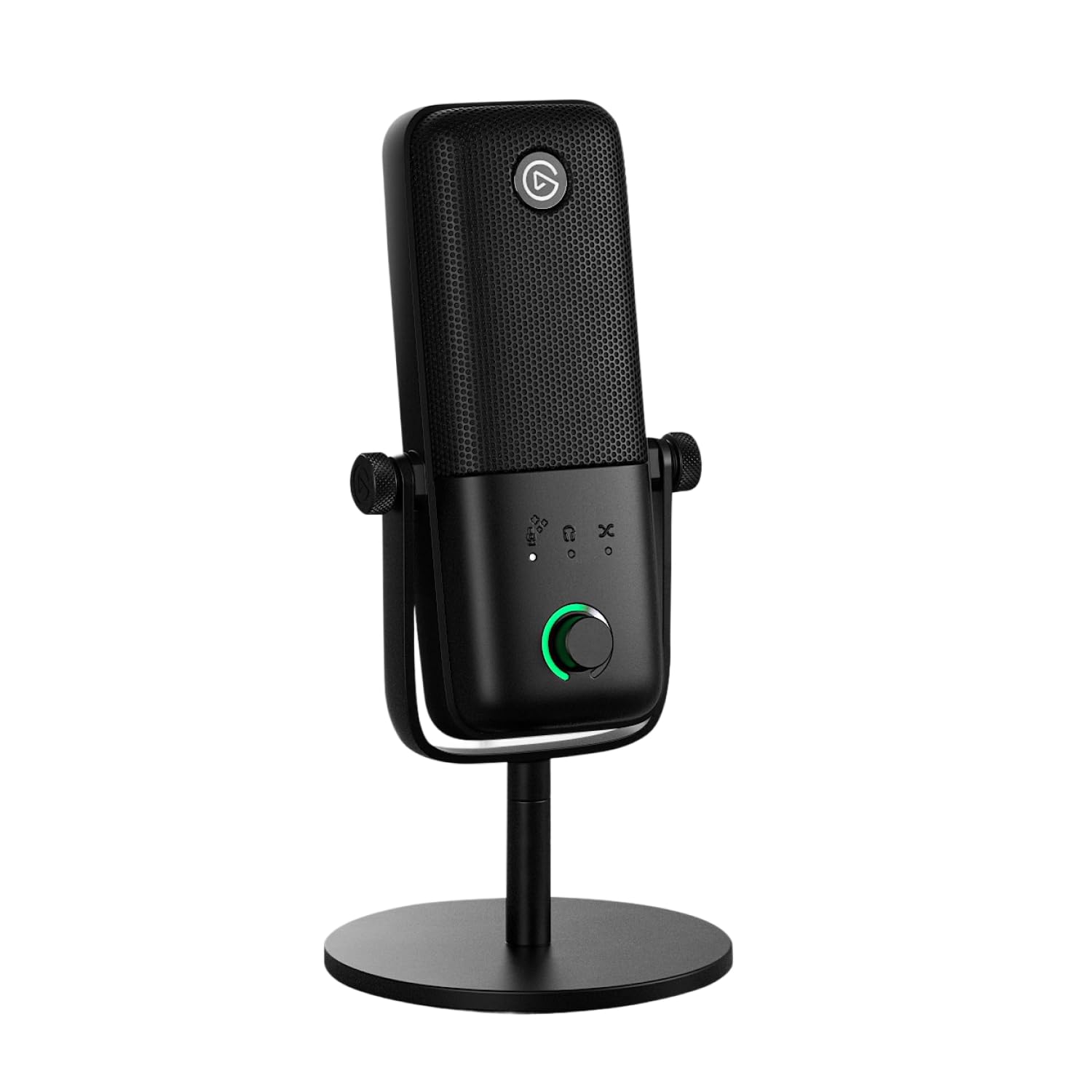
The MK.2 version of the Wave:3 builds on the original with a multi-stage Clipguard 2.0 system that adds an extra layer of headroom before distortion sets in. The real differentiator is the onboard Wave FX Processor, which unifies DSP-based voice enhancement (compressor, EQ, voice enhancer) and VST plugin inserts into a single signal chain — no separate plugin host needed.
Auto Gain takes the guesswork out of level calibration by setting your input gain in seconds based on your speaking volume. This is extremely useful for multi-host setups where each person has a different vocal presence. The multifunction dial and tap-to-mute remain physically responsive, and the real-time LED feedback shows your levels without needing to glance at a screen.
The included desk stand is stable, and the adapter set lets you mount it on any standard boom arm. The USB-C connection ensures future compatibility, and the metal-and-plastic build feels robust without being excessively heavy. For podcasters who want to apply processing at the hardware level rather than in post, this is the most complete all-in-one condenser mic available.
Why it’s great
- Onboard Wave FX Processor applies DSP and VST effects without software latency
- Auto Gain eliminates amateur level-matching errors
- Clipguard 2.0 provides near-unbreakable anti-distortion protection
Good to know
- Not all VST plugins may run smoothly on the onboard processor
- Taller than average desk mics may obscure monitor bottom edge
3. Audio-Technica AT2020USB-X

The AT2020USB-X inherits the legendary AT2020 capsule design that has been a studio staple for years, now converted to USB with a 24-bit/96kHz high-resolution AD converter. The cardioid polar pattern is tightly focused, which helps reject ambient room tone — though the high sensitivity of the condenser element means it will still capture acoustic reflections if your room is untreated.
Audio-Technica tuned the frequency response to be relatively neutral with a slight presence boost in the upper mids, giving speech a clear, articulate quality without sounding artificially hyped. The soft-touch capacitive mute button is silent in operation, so no mechanical click bleeds into the recording when you toggle it mid-session.
The built-in headphone jack provides direct monitoring with zero latency, and the two-state LED indicator ring shows blue when active and red when muted. The included custom desk stand is sturdy, and the USB-C to USB-A cable with adapter covers both modern and legacy ports. This is the choice for podcasters who want a known studio reference sound without an external audio interface.
Why it’s great
- Neutral frequency response ideal for natural vocal reproduction
- High-resolution 24-bit/96kHz ADC captures subtle vocal detail
- Silent capacitive mute prevents mechanical noise on recording
Good to know
- High sensitivity picks up room reflections in untreated spaces
- LED indicator remains lit when computer is shut down
4. Sennheiser Profile

The Sennheiser Profile is a cardioid condenser USB microphone built around a German-engineered capsule housed in a full metal chassis. What sets it apart is its complete independence from software — every control you need (mute, gain, headphone volume, monitor mix) is a physical knob on the body, making it the most intuitive plug-and-play option in this list.
The sound signature is warm and natural, with a subtle presence lift that adds body and intelligibility to spoken word without exaggerated sibilance. Sennheiser designed the Profile to work straight out of the box with no drivers or apps, yet it still supports direct headphone monitoring with zero latency. The included table stand is compact but sits low to the desk, so pairing it with a boom arm is recommended for optimal positioning.
Setup is genuinely instant: plug the USB-C cable into a computer, and the microphone is recognized as a standard audio device on Windows, macOS, and Linux. The metal housing and heavy base give it a solid, non-slip presence on the desk. For podcasters who want premium audio quality without fiddling with software, the Profile is the cleanest solution available.
Why it’s great
- No software needed for full control — all settings on physical dials
- Warm, natural vocal signature with German-engineered capsule
- Universal USB-C plug-and-play works on all major operating systems
Good to know
- Low-profile stand may require a boom arm for ideal mouth distance
- Limited to cardioid pattern — no multi-pattern flexibility
5. HyperX QuadCast 2

The HyperX QuadCast 2 is a USB condenser microphone aimed at gamers and live streamers who want premium vocal clarity with minimal setup fuss. The all-aluminum enclosure gives it a premium feel, and the built-in anti-vibration shock mount effectively decouples the capsule from desk thumps and keyboard clatter — a real advantage for mechanical keyboard users.
The tap-to-mute function with LED indicator is intuitive and responsive, and the onboard controls for gain, headphone volume, and monitor mix keep essential adjustments at your fingertips. The cardioid polar pattern focuses on your voice while rejecting side and rear noise, and the included USB-C cable reaches nearly 10 feet for flexible desk placement.
Sound quality is noticeably clearer than typical headset microphones, with a smooth frequency response that doesn’t exaggerate plosives or sibilance. The base is weighted and stable, though the overall height may feel tall on smaller desks. For gamers transitioning from a headset mic to a standalone condenser, the QuadCast 2 offers a significant quality jump with zero learning curve.
Why it’s great
- Built-in shock mount eliminates desk vibration and keyboard noise
- Aluminum build feels premium and durable over long-term use
- Plug-and-play USB-C with no driver installation required
Good to know
- Bright LED lights may clash with non-RGB desk setups
- Not suitable for professional studio recording applications
6. Logitech Blue Yeti

The Blue Yeti has been a staple in the USB condenser market for years, and for good reason — its three-capsule array supports four pickup patterns (cardioid, omni, bidirectional, and stereo) that let you adapt to different recording situations without buying additional microphones. For podcasters, cardioid mode is the default, but having omni available for roundtables or bidirectional for two-person interviews is genuinely useful.
The built-in Blue VO!CE software adds broadcast-style vocal effects and real-time modulation, though the physical controls for headphone volume, pattern selection, gain, and instant mute are responsive enough to use without opening the app. The adjustable desktop stand lets you pivot the mic to optimize proximity effect, and the metal construction gives it a reassuring heft on the desk.
Sound quality is clear and powerful, though the Yeti is noticeably more sensitive to background noise than some newer competitors. It also takes up significant desk real estate due to its wide base. Despite its age, the Yeti remains a solid entry point for podcasters who want pattern flexibility and reliable performance at a mid-range investment.
Why it’s great
- Four pickup patterns cover solo, interview, and group recording scenarios
- Blue VO!CE software adds effects and broadcast presets
- Sturdy metal build with adjustable pivot stand
Good to know
- Large footprint occupies significant desk space
- High sensitivity captures more room ambience than newer cardioid mics
7. MAONO PD400X

The MAONO PD400X is a dynamic microphone equipped with both USB-C and XLR outputs, giving budget-conscious podcasters an upgrade path from USB-only setups to professional audio interfaces without replacing the mic itself. Its cardioid polar pattern and dynamic capsule work together to reject off-axis room noise more aggressively than most condenser mics, making it ideal for untreated bedrooms or shared living spaces.
The 3-in-1 digital knob controls mic gain, headphone volume, and monitor mix with a single tactile control, while the tap-to-mute key glows red when silenced. The MAONO Link app provides standard and advanced EQ modes, letting you shape your vocal tone — warm, bright, or neutral — and apply compression and limiting. The metal body feels solid, and the included desktop stand is stable enough for daily use.
Frequency response spans 40 Hz to 16 kHz, which slightly truncates the high-end shimmer that pure condenser capsules capture, but the trade-off is significantly reduced background noise pickup. The supplied XLR cable and foam windscreen add immediate value. For podcasters who need to keep the budget low while preserving the option to go XLR later, the PD400X is a smart compromise.
Why it’s great
- USB and XLR outputs offer a future-proof upgrade path
- Dynamic capsule excels at rejecting ambient room noise
- MAONO Link app provides EQ presets and compression for vocal shaping
Good to know
- 16 kHz top-end roll-off reduces airy vocal detail
- Software EQ is necessary to get warm broadcast tone
FAQ
Can I use a condenser mic for podcasting in an untreated room?
What is the difference between a dynamic mic and a condenser mic for podcasting?
Do I need an audio interface for a USB condenser microphone?
Why does my condenser mic pick up background noise even in cardioid mode?
Final Thoughts: The Verdict
For most users, the condenser mic for podcast winner is the Elgato Wave:3 because its Clipguard anti-distortion system and Wave Link software deliver broadcast-quality vocal clarity while giving you total control over multiple audio sources from a single interface. If you want onboard DSP effects and VST support without external software, grab the Elgato Wave:3 MK.2. And for a clean, software-free experience that sounds warm right out of the box, nothing beats the Sennheiser Profile.

Mo Maruf
I created WellFizz to bridge the gap between vague wellness advice and actionable solutions. My mission is simple: to decode the research and give you practical tools you can actually use.
Beyond the data, I am a passionate traveler. I believe that stepping away from the screen to explore new environments is essential for mental clarity and physical vitality.