Our readers keep the lights on and my smoothie glass nicely filled. As an Amazon Associate, I earn from qualifying purchases.
The daily routine of scrubbing CPAP gear with dish soap can strip seals of their softness and leave behind a faint chemical scent that lingers inside the mask all night. A dedicated cleaning solution formulated specifically for CPAP equipment solves the problem: it removes body oils and biofilm without degrading silicone, all while rinsing completely away. Finding the right formula means the difference between a crisp, neutral-smelling setup and one that slowly develops a musty undertone no matter how often you wash.
I’m Mohammad Maruf — the founder and writer behind WellFizz. I’ve spent hundreds of hours breaking down the chemical makeup of CPAP cleansers, analyzing rinse properties, and cross-referencing user feedback on hundreds of CPAP care products to find the ones that actually protect sensitive medical-grade plastics.
Whether you need a daily pre-wash spray, a concentrated disinfectant soak, or ready-to-use wipes for travel, these options were selected for their ability to clean thoroughly without damaging your equipment. This guide breaks down the top-rated cleaning solution for cpap gear so you can breathe easy knowing your setup is genuinely clean.
How To Choose The Best Cleaning Solution For CPAP
Not all cleaning solutions are compatible with the silicone, polycarbonate, and thermoplastic elastomers found in modern CPAP masks and tubing. Harsh detergents, added fragrances, and alcohol-based formulas can accelerate material breakdown, causing leaks and skin irritation. The ideal solution balances effective biofilm removal with material-safe chemistry.
Pre-Wash vs. Disinfectant — Understanding the Difference
A pre-wash solution is designed for daily or every-other-day use. It lifts body oils, dust, and light residue before you run your equipment through a sanitizing cycle (either with a UV device or simply by air drying). A disinfectant, often sold as a concentrate, is meant for weekly or bi-weekly deep soaks to kill bacteria, mold, and viruses. Using a disinfectant too frequently can wear down seals; using only a pre-wash on heavily soiled gear allows biofilm to accumulate.
Fragrance, Dye, and Additive Profiles
Fragrance-free and dye-free formulas are preferred for CPAP cleaning because residual scent particles can irritate the nasal passages and trigger allergic reactions during therapy. Some solutions add conditioners or moisturizers to the formula — while these might sound appealing, they can leave a fine film inside the hose that traps bacteria. The safest approach is a solution that rinses completely with no residue.
EPA Registration and Material Compatibility
For users who need medical-grade disinfection (for example, during illness or if the equipment is shared), an EPA-registered disinfectant is the gold standard. These concentrates are tested to kill specific pathogens within a defined contact time. However, always check the manufacturer’s material safety data — some disinfectants advise against soaking silicone cushions or heated tubing for extended periods because the active ingredients can degrade the polymer structure over time.
Quick Comparison
On smaller screens, swipe sideways to see the full table.
| Model | Category | Best For | Key Spec | Amazon |
|---|---|---|---|---|
| Essential Values CPAP Cleaner | Pre-Wash | Scent-free daily cleaning | 16 fl oz, fragrance/dye-free | Amazon |
| Snugell CPAP Soap Cleaner | Pre-Wash | Odor neutralization | 8.4 oz, fresh citrus scent | Amazon |
| Control LLL Concentrate | Disinfectant | Hospital-grade disinfection | 16 oz concentrate, EPA-registered | Amazon |
| PAPMD Unscented CPAP Wipes | Wipes | Quick daily wipe-downs | 2x 150 packs, lint-free | Amazon |
| CPAP Protector Mat Stand | Organizer | Hose management & storage | Retractable hook, non-slip base | Amazon |
In‑Depth Reviews
1. Essential Values CPAP Cleaner Pre-Wash
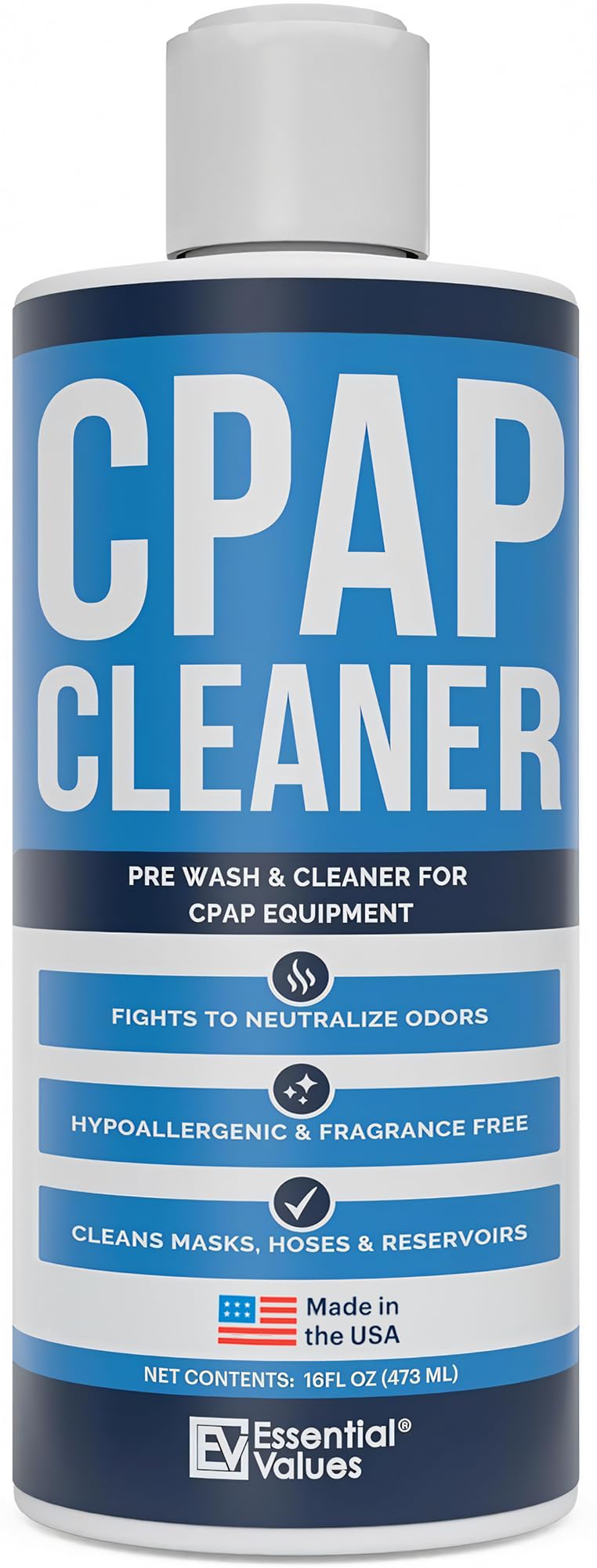
This 16-ounce pre-wash delivers the largest volume in the mid-range tier while remaining completely fragrance- and dye-free — exactly what you want for daily cleaning. The concentrated formula neutralizes odors and removes debris without leaving behind any chemical film on silicone cushions or polycarbonate water tanks. Users consistently report that it rinses clean with zero lingering scent, making it ideal for those who are sensitive to added fragrances during overnight therapy.
The manufacturer formulates this as a pre-wash: you rub the solution onto CPAP surfaces, rinse with warm water, and then allow the equipment to air dry or proceed with your normal sanitization cycle. Because it contains no conditioners or moisturizers, there is no residue buildup inside the hose over time — a common complaint with multipurpose dish soaps. The generous 16-ounce bottle also provides better per-use value than smaller competitors, extending the interval between repurchases.
One caveat: this is a pre-wash solution, not a disinfectant. It will remove body oils and light biofilm effectively, but it does not kill bacteria or viruses on contact. For users who need periodic deep disinfection, pairing this pre-wash with a separate EPA-registered soak (like Product 5) covers both daily maintenance and weekly sanitation needs.
Why it’s great
- Large 16-ounce bottle offers strong value per wash.
- Completely fragrance-free and dye-free, safe for sensitive sinuses.
- Rinses thoroughly with no film or residue on tubing or mask seals.
Good to know
- Not EPA-registered as a disinfectant — appropriate for daily cleaning only.
- Some users prefer a scented option; this has zero detectable odor.
2. Snugell CPAP Soap Cleaner 8.4oz
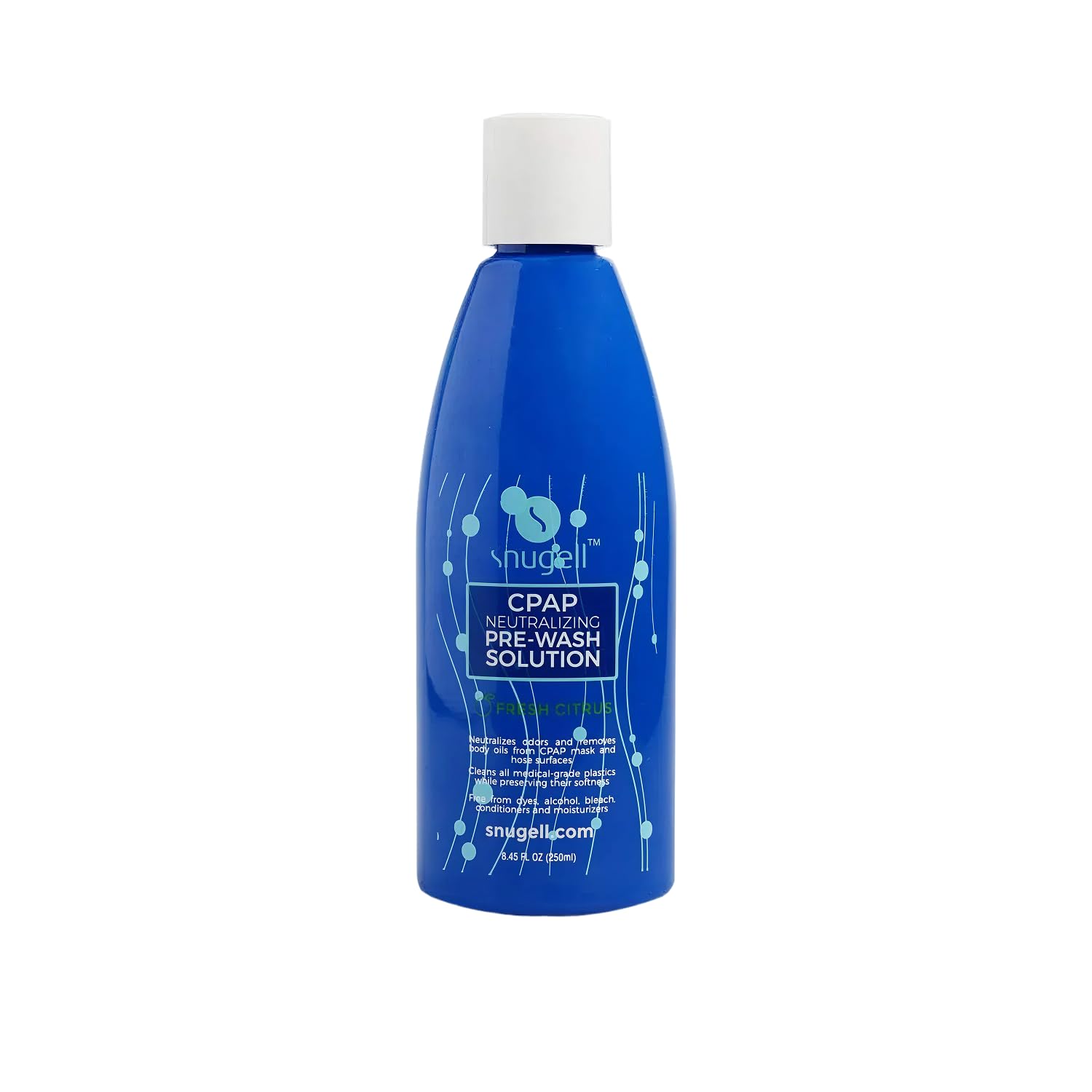
Snugell’s pre-wash solution stands out because it incorporates a fresh citrus scent that actually neutralizes odors rather than just masking them. The formula is free from dyes, alcohol, bleach, conditioners, and moisturizers, so the light citrus note dissipates fully during rinsing — leaving your CPAP gear clean but not perfumed. This makes it a strong middle-ground option for users who want a pleasant cleaning experience without risking nasal irritation during therapy.
At 8.4 ounces per bottle, the packaging is smaller than Essential Values but still provides enough solution for several weeks of daily use. The application process is straightforward: apply a small amount to a CPAP brush or soft cloth, scrub the inside and outside surfaces of the mask, tube, and water reservoir, then rinse with warm water. The solution is particularly effective at breaking down the body oils that accumulate on the nasal pillows and cushion contact points.
The main trade-off is the smaller volume relative to the price point. Some users note that they wish the bottle contained more product for the cost, especially if they clean their equipment daily. Additionally, while the citrus scent rinses away completely, users with extreme fragrance sensitivities should confirm with a patch test on a small area of tubing before committing.
Why it’s great
- Citrus scent neutralizes CPAP odors effectively without leaving a strong after-smell.
- Gentle formula — no dyes, alcohol, bleach, or moisturizers that could degrade silicone.
- Works well on body oils and biofilm with minimal scrubbing effort.
Good to know
- Smaller 8.4-ounce bottle provides less volume per dollar than larger competitors.
- Not suitable as a standalone disinfectant; best used as a pre-wash step.
3. Control LLL Concentrate Disinfectant Germicide

Control LLL is an EPA-registered concentrate that delivers true hospital-grade disinfection when diluted according to the instructions. Users who need to sanitize respiratory tubing, ventilator connectors, and nebulizer equipment after illness will find this product indispensable. The active ingredient is a non-toxic, hospital-proven compound that kills a broad spectrum of bacteria, viruses, and fungi with a contact time of 15 to 30 minutes.
Proper dilution is critical: the standard protocol is one teaspoon of concentrate per couple of quarts of water. The solution is then used to soak disassembled CPAP parts (hose, water tank, valve) for the specified contact time, followed by a thorough rinse with warm water. Many long-term CPAP users report that this product completely eliminates the musty smell that develops in tubing and water chambers between deep cleanings. The concentrate has a five-year shelf life, making it a practical bulk option.
There are two important safety considerations. First, the concentrate can irritate skin — always wear gloves when handling the undiluted solution. Second, prolonged soaking of silicone cushions or gaskets may degrade the seal material over time. Users are advised to wipe silicone surfaces with an alcohol wipe rather than soaking them in the diluted disinfectant. This product is best used as a periodic deep-cleaning soak rather than a daily cleaner.
Why it’s great
- EPA-registered, hospital-grade disinfection for serious sanitation needs.
- Non-toxic when diluted correctly — safe for medical equipment with proper rinsing.
- Concentrated formula produces many batches; five-year shelf life.
Good to know
- Irritates skin in concentrated form — gloves are mandatory during mixing.
- Can degrade silicone seals if parts are soaked too long; wipe cushions instead.
4. PAPMD Unscented CPAP Wipes, 2x 150-Pack
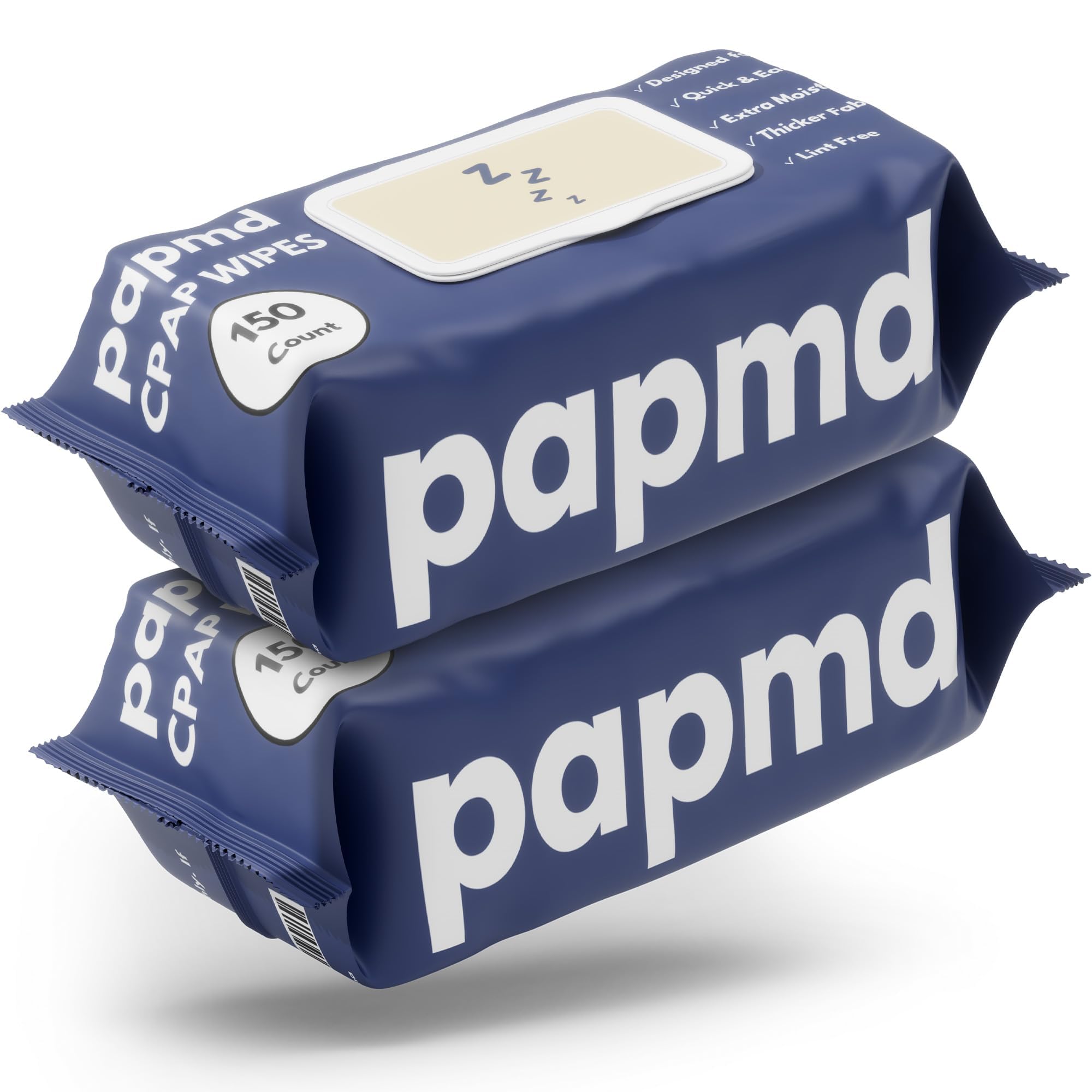
For CPAP users who travel frequently or simply prefer a no-rinse option between deep washes, PAPMD’s unscented wipes are a practical addition to your care kit. Each wipe is made from thick, non-woven fabric that is free from perfumes, latex, and lint — the absence of lint is especially important because loose fibers can migrate into the mask cushion and cause air leaks. A single wipe effectively removes dust, facial oils, and light residue from the mask seal, frame, and hose connector.
The 2x 150-pack format (300 total wipes) covers roughly three months of daily use, depending on how many surfaces you wipe each morning. The wipes are enriched with a moisture-rich formula that cleans without drying out the silicone, preserving the cushion’s flexibility and seal integrity over time. Users consistently report that the wipes feel damp but not wet, and the pull-out design with a resealable top keeps the remaining wipes from drying out between uses.
The limitation is that wipes are for surface cleaning only. They cannot reach inside the hose, into the water chamber corners, or behind the nasal pillow vents. For full hygiene, wipes should be used as a supplement to a weekly pre-wash or disinfectant soak, not as a replacement. But for quick daily touch-ups — especially on a bedside table — they’re much more convenient than pulling out liquid soap and a brush.
Why it’s great
- Lint-free fabric prevents fibers from causing mask leaks.
- No rinse needed — ideal for travel and quick morning wipes.
- Bulk 300-count provides months of daily surface cleaning.
Good to know
- Surface cleaning only — not a substitute for deep cleaning of hoses and tanks.
- Some users may find they need two wipes for a full mask and tube connector.
5. CPAP Protector Mat with Hose Holder
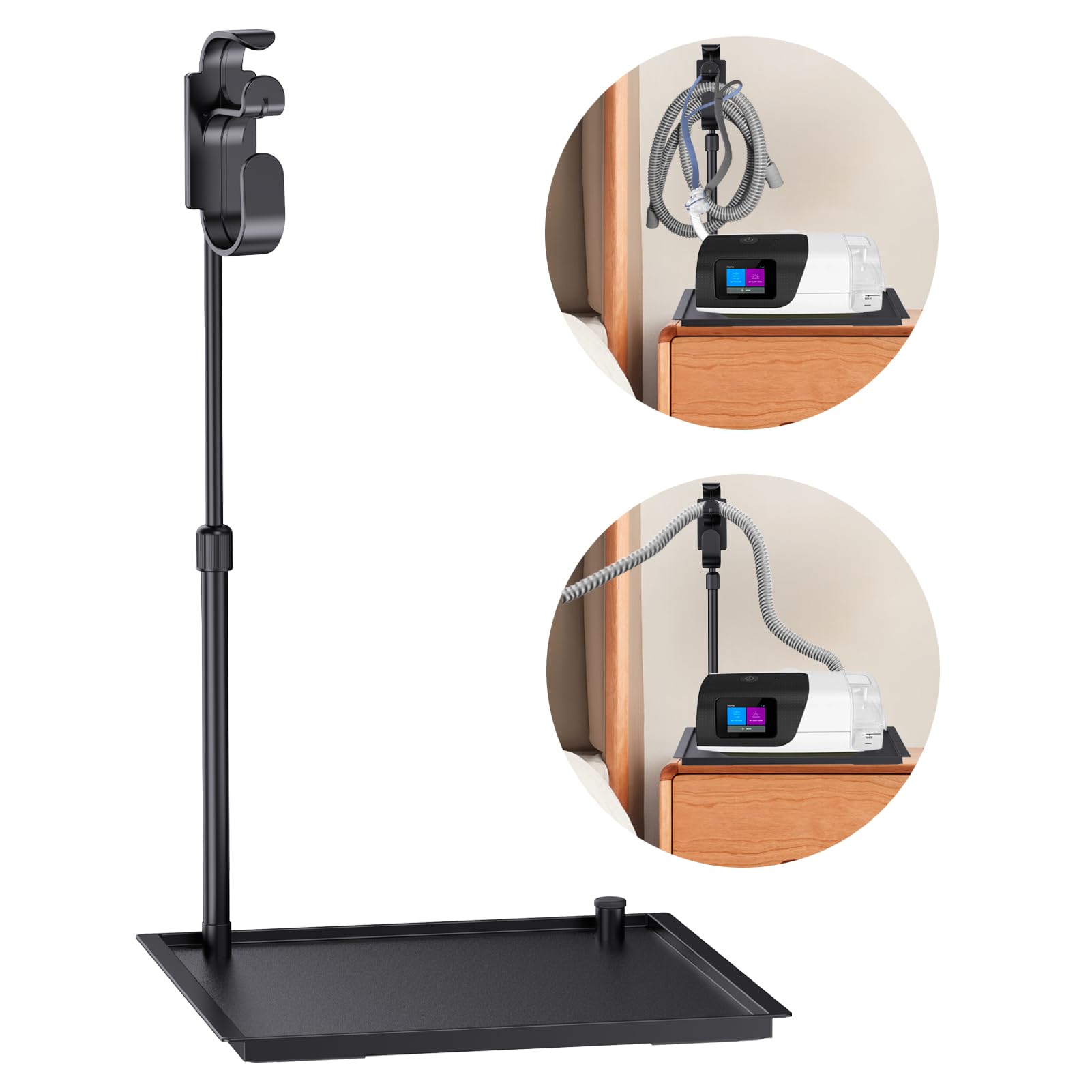
While not a cleaning solution itself, the CPAP Protector Mat addresses a hygiene-related pain point: keeping your CPAP supplies organized and off the floor or dusty nightstand. The pad features a non-slip bottom that prevents the machine from sliding during the night, along with a detachable retractable hose holder that elevates the tubing to prevent tangles and reduce tension on your head and neck. A clean, elevated hose stays dry and free from dust bunnies between washings.
The mat is sized to accommodate all standard CPAP machine models, including the ResMed AirSense 11 and similar units. The retractable hook extends to lift the hose above bed level, which not only prevents rainout (condensation pooling in the hose) but also keeps the tubing from dragging across the nightstand where it could collect debris. Users appreciate that the setup requires no assembly — it’s ready to use right out of the box.
The main consideration is the trade-off in sturdiness. Some users note that the retractable rod could be taller and more rigid, and heavier hose assemblies may cause slight sagging. Additionally, this is an accessory, not a cleaner, so it should be paired with one of the liquid solutions or wipes above for complete CPAP care. But for users who struggle with hose management, this mat extends the interval between deep cleans by keeping the equipment off dirty surfaces.
Why it’s great
- Non-slip mat prevents CPAP machine from moving on the nightstand.
- Elevated hose reduces tangles, rainout, and contact with dirty surfaces.
- No assembly needed; fits all standard CPAP machines.
Good to know
- Retractable hook could be taller for very tall beds or adjustable bases.
- Not a cleaning product — must be used alongside a proper cleaning solution.
FAQ
Can I use dish soap to clean my CPAP mask and hose?
How often should I use a disinfectant soak on my CPAP gear?
Do fragrance-free CPAP cleaners actually neutralize odors?
Final Thoughts: The Verdict
For most users, the cleaning solution for cpap winner is the Essential Values CPAP Cleaner because it offers the best combination of volume, fragrance-free formulation, and residue-free rinsing for daily use. If you want fresh citrus without compromising on rinsability, grab the Snugell CPAP Soap Cleaner. And for hospital-grade disinfection during cold and flu season, nothing beats the Control LLL Concentrate paired with proper glove use and careful soak times.

Mo Maruf
I created WellFizz to bridge the gap between vague wellness advice and actionable solutions. My mission is simple: to decode the research and give you practical tools you can actually use.
Beyond the data, I am a passionate traveler. I believe that stepping away from the screen to explore new environments is essential for mental clarity and physical vitality.