Our readers keep the lights on and my smoothie glass nicely filled. As an Amazon Associate, I earn from qualifying purchases.
The dull ache, the throbbing ankles, the heavy feeling that sets in by mid-morning—if you spend eight, ten, or twelve hours on your feet, you know exactly what it costs your legs by the end of the day. Compression socks are the single most effective tool for keeping your circulation moving, your energy up, and your discomfort down shift after shift.
I’m Mohammad Maruf — the founder and writer behind WellFizz. I’ve spent hundreds of hours cross-referencing clinical guidelines on graduated compression, analyzing fabric blends and knit construction, and mapping user feedback across thousands of real-world wear tests to understand exactly which socks deliver on their promises.
This guide breaks down the five best options on the market today, comparing pressure levels, materials, and real-world performance so you can confidently choose the best compression socks for standing all day without wasting time on socks that slip, squeeze too hard, or wear out after a few washes.
How To Choose The Best Compression Socks For Standing All Day
Not all compression socks are created equal—especially when your day involves constant standing on hard floors. The wrong pair can leave you with a tight band at the top that digs in, or barely enough pressure to make a difference. Here are the three factors that separate effective socks from forgettable ones.
Compression Level: 20-30 mmHg Is the Gold Standard
Compression socks are measured in millimeters of mercury, or mmHg. Light compression (8-15 mmHg) is for travel and minor fatigue, while 15-20 mmHg offers mild support. For anyone standing all day—nurses, retail workers, cooks, warehouse staff—the clinical sweet spot is 20-30 mmHg. This range significantly reduces swelling, prevents blood pooling, and relieves that heavy-leg sensation without restricting movement.
Graduated Compression Gradient
A genuine graduated compression sock is tightest at the ankle and gradually loosens as it moves up the calf. This design physically assists your venous return, pushing blood upward against gravity. Many cheap socks claim compression but use a uniform knit that simply squeezes everywhere—look for explicit “graduated compression” language and a pressure rating on the packaging to confirm the real thing.
Fabric Composition and Breathability
You’ll be wearing these socks for eight to twelve hours straight, so moisture management and temperature regulation are critical. Nylon and spandex blends offer durability and a smooth fit, while bamboo viscose and merino wool add softness and natural wicking. Avoid 100% cotton—it holds moisture, loses elasticity quickly, and can cause skin irritation during long wear. A seamless toe closure also prevents blisters and friction against the toes.
Quick Comparison
On smaller screens, swipe sideways to see the full table.
| Model | Category | Best For | Key Spec | Amazon |
|---|---|---|---|---|
| Sockwell Men’s Pulse | Premium | All-day wear with thermoregulation | Merino wool blend, 15-20 mmHg firm | Amazon |
| JOBST Relief 20-30 mmHg | Premium Medical | Heavy edema and medical-grade support | 20-30 mmHg, closed toe, opaque knit | Amazon |
| Physix Gear Compression Socks | Mid-Range | Nurses and 12-hour shifts | 20-30 mmHg, arch & toe support | Amazon |
| BBFREY Medical Compression Socks | Mid-Range | Best value 3-pack for daily rotation | 20-30 mmHg, seamless toe, 3 pairs | Amazon |
| Wellow Knee High Compression Socks | Mid-Range | Soft, lightweight all-day comfort | 18-25 mmHg, bamboo viscose | Amazon |
In‑Depth Reviews
1. Sockwell Men’s Pulse OTC Firm Graduated Compression Sock
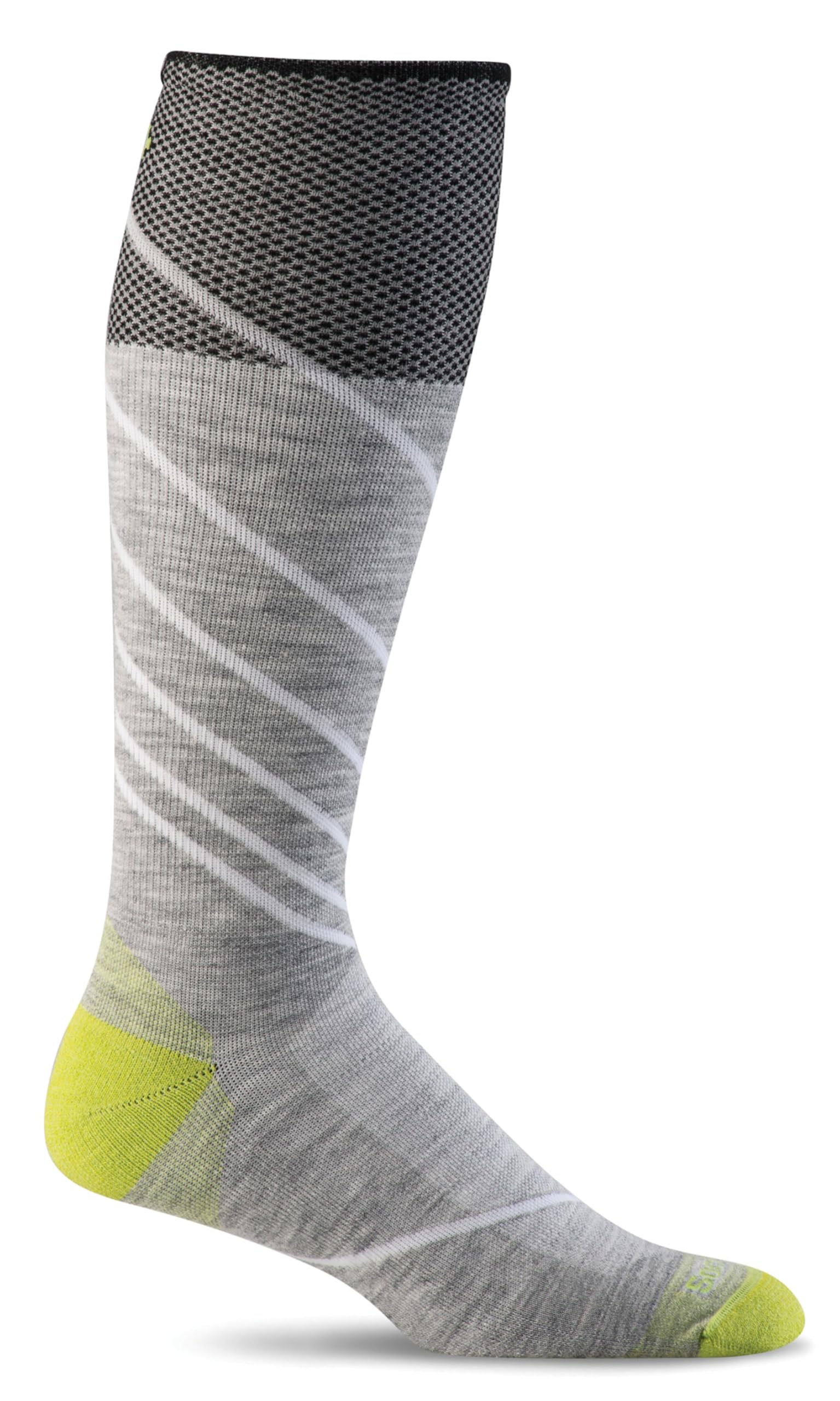
Sockwell’s Pulse sits at the premium end of the spectrum, and it earns that position through material quality and build precision. The sock uses a fine merino wool and rayon from bamboo blend—a combination that naturally regulates temperature, wicks moisture, and resists odor even after a full day on concrete floors. The graduated compression is rated at 15-20 mmHg firm, which is slightly below the 20-30 mmHg medical standard but delivers noticeable relief for users who find higher ratings too aggressive.
The knit construction is noticeably thicker than standard drugstore compression stockings, which gives it a sock-like feel rather than a clinical one. This thickness also cushions the foot slightly, reducing impact fatigue. Long-time compression users report that the fit around the calf is superb—the band stays in place without rolling or digging in—though the material density may feel warm in hot weather conditions.
Durability is a mixed note: early reviews praise the first-wear comfort and fit, but some users wearing them daily for months report that internal seams can loosen, creating indentations and itching. For the person transitioning into compression wear and wanting a natural-fiber option with a more comfortable texture, Sockwell is a standout choice.
Why it’s great
- Premium merino wool and bamboo blend offers superior breathability and temperature regulation
- Graduated compression maintains all-day comfort without feeling overly tight
- Color options beyond medical beige and black
Good to know
- Pressure level (15-20 mmHg) is lighter than some standing-all-day users may prefer
- Internal seam durability reported as inconsistent after months of daily wear
2. JOBST Relief 20-30 mmHg Compression Stockings

JOBST is a name clinicians recommend, and the Relief line brings true 20-30 mmHg medical-grade compression into an everyday-ready sock. The knit is opaque and durable, designed to withstand daily wear—users report machine washing multiple times per week without loss of elasticity. The closed toe construction provides even compression across the entire foot, and the heel pocket is precisely shaped to keep the sock positioned correctly throughout the day.
For people dealing with significant edema, varicose veins, or post-surgical swelling, this is the most effective option on this list. The 20-30 mmHg range is the standard for chronic venous insufficiency, and JOBST delivers it consistently. Users note that swelling reduces dramatically—ankle bones become visible again after weeks of constant puffiness. The material is breathable enough for 12-14 hour wear, though it is less plush than socks with a thicker knit.
Fit is critical at this pressure level: several users recommend ordering one size larger than measured if you are between sizes, and petite sizing is available for shorter legs. Putting them on requires technique, but the effort is rewarded with reliable, all-day performance that cheaper socks cannot match.
Why it’s great
- True 20-30 mmHg medical-grade compression proven to reduce significant edema
- Heel pocket ensures correct alignment and prevents twisting
- Durable construction survives repeated machine washing
Good to know
- Higher upfront cost compared to consumer-grade brands
- Can be difficult to put on and take off, especially at this pressure level
3. Physix Gear Compression Socks 20-30 mmHg

Physix Gear’s 20-30 mmHg sock is built for the trenches—nurses on twelve-hour shifts, warehouse workers covering miles of concrete floors, and travelers fighting deep vein thrombosis risk. The graduated compression starts firmly at the ankle and gradually eases toward the calf, a gradient that users consistently confirm feels tight but not painful. The arch support is notably more pronounced than in the BBFREY or Wellow options, providing a cradle-like sensation under the midfoot.
The fabric blend uses a high nylon and spandex content, giving it a smooth, supportive feel that holds its shape wash after wash. Users with severe knee osteoarthritis and lower-leg swelling report that these socks effectively reduce edema to the point that ankle bones become visible again. The toe box is shaped with a slight asymmetry—some users with wider feet note the toe area runs a bit narrow and the seam can be felt against the small toes.
One persistent observation is the sock height: at 6’0” or taller, the fit hits just below the knee, but shorter users (under 5’5”) report the sock bunches at the ankle or reaches too high into the knee bend. If you are on the shorter side, the BBFREY or Wellow options may offer a better proportional fit. For everyone else, this is the most reliable daily performer at a mid-range price point.
Why it’s great
- Effective 20-30 mmHg graduated compression reduces swelling for 12-hour shifts
- Strong arch and heel support improves foot comfort on hard surfaces
- Durable construction survives repeated washing without losing elasticity
Good to know
- Length may be too long for shorter individuals, causing bunching at the ankle
- Toe area can feel cramped for wide-footed users; seam placement varies
4. BBFREY Medical Compression Socks 20-30 mmHg (3 Pairs)
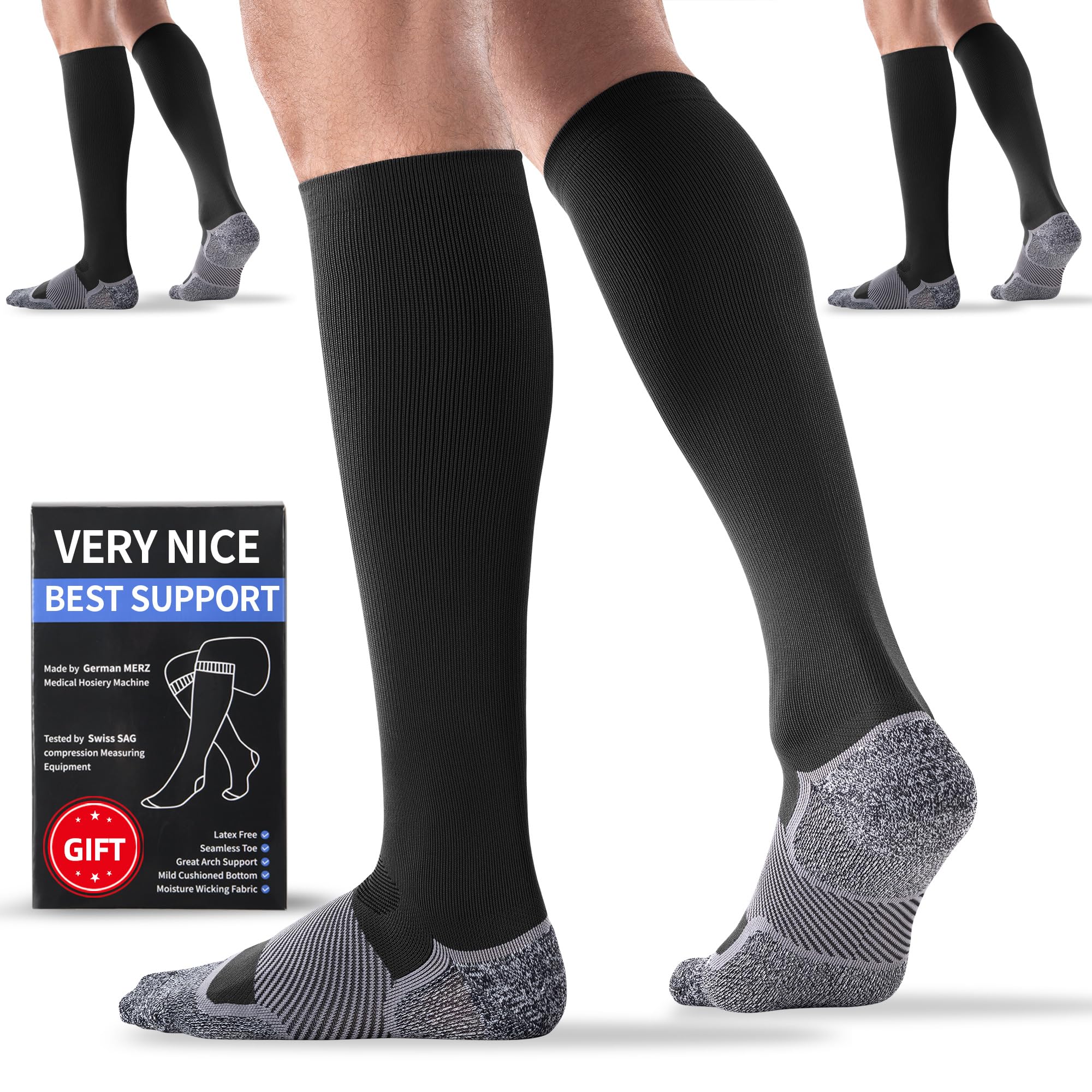
BBFREY offers the strongest bang-for-your-buck ratio on this list: three pairs of 20-30 mmHg compression socks at a price that undercuts most single-pair competitors. The sock is constructed using German-made medical sock machines, with a unique inlay knitting method that the brand says ensures long-lasting pressure. Early user reports confirm that the graduated compression holds up well over the first several weeks, with a notably comfortable foot bed that feels more like a padded athletic sock than a thin medical stocking.
The seamless toe is a real highlight—users consistently praise the flat toe seam that prevents rubbing and blister formation. The anatomical left-right fit design also contributes to a more natural feel inside the shoe. The material blend is 70% microfiber nylon, which gives it good stretch and recovery, though it is less breathable than the bamboo or merino wool options. Users wearing these in warm climates or for high-activity standing may find the fabric less moisture-wicking than the Wellow or Sockwell choices.
One minor downside: the color and pattern selection is currently limited, with mostly neutral and basic tones. The size chart requires careful measuring—users report that ordering based on shoe size alone can lead to an incorrect fit, especially in the calf circumference. Measure your ankle and calf diameter, and the fit will be solid for all-day wear.
Why it’s great
- Three pairs at a budget-friendly price point for daily rotation
- Seamless toe and padded foot bed provide all-day comfort
- German-made machinery ensures consistent 20-30 mmHg graduated compression
Good to know
- Limited color and pattern options compared to competitors
- Breathability is lower than bamboo or wool-blend socks in hot conditions
5. Wellow Knee High Compression Socks 18–25 mmHg
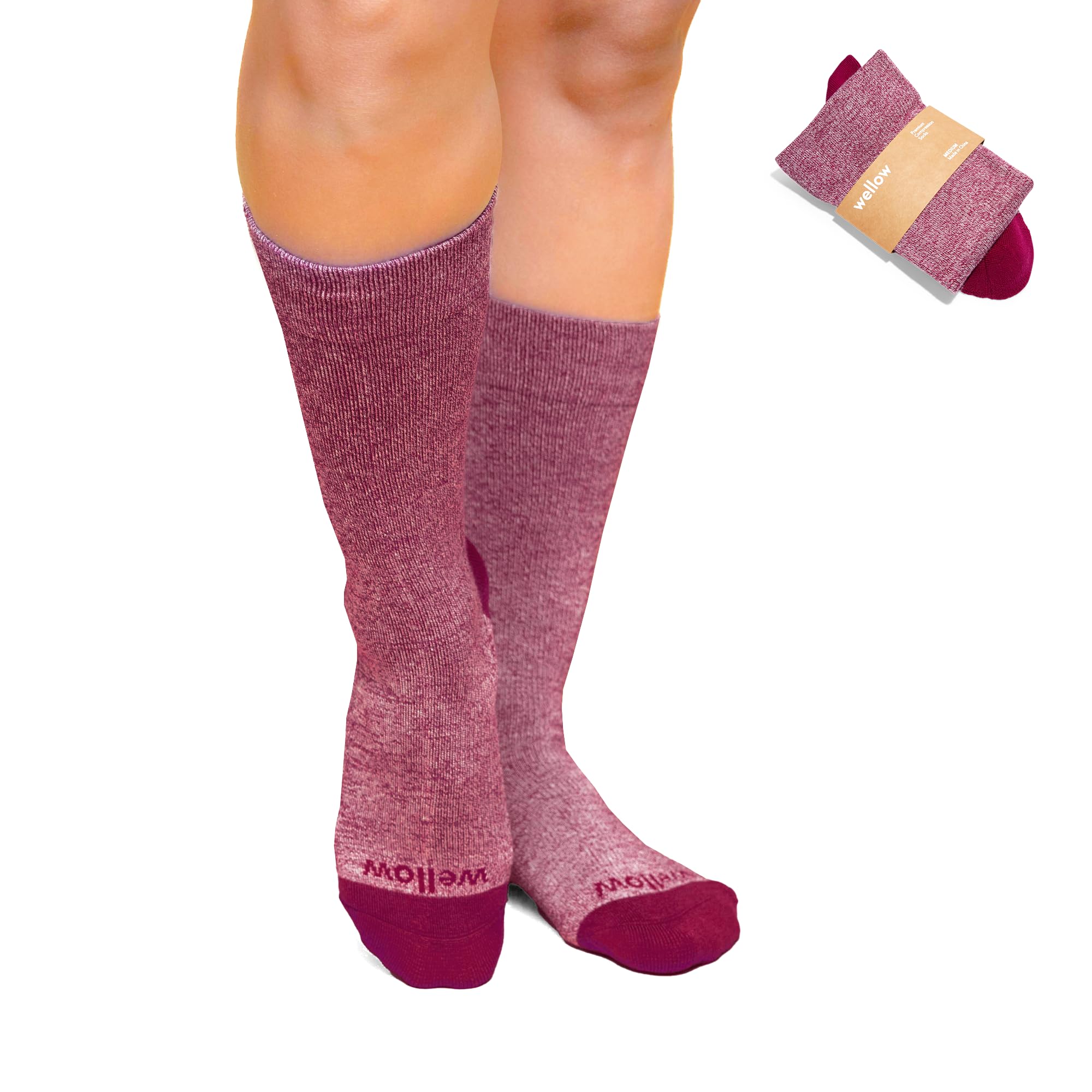
Wellow takes a different approach: instead of maximum squeeze, it prioritizes softness and comfort while still delivering a functional compression gradient. At 18-25 mmHg, these socks fall slightly below the 20-30 mmHg standard, but the bamboo viscose and wool-blend fabric is noticeably thicker and softer than any other option here. Users describe the feel as “like wearing a cozy winter sock that happens to compress your legs,” which makes them ideal for people who find traditional medical stockings too clinical or uncomfortable.
The compression feels gentler, making them significantly easier to put on and take off—a real advantage for anyone who struggles with the wrestling match required by higher-pressure socks. Despite the lower peak pressure, users report effective relief from foot swelling and leg fatigue during long flights and 10-hour standing days. The thickness, however, means they run warm; they are best suited for cooler months or air-conditioned environments rather than summer concrete floors.
Durability is a strong point: the wool blend resists pilling and holds its shape after multiple washes. The color selection is appealing, with muted earth tones that look more like fashion socks than medical devices. If your priority is a sock that feels like a premium garment rather than a compression device, and you do not require the highest medical-grade pressure, Wellow is the most enjoyable option to wear all day.
Why it’s great
- Exceptionally soft bamboo-wool blend fabric feels comfortable and luxurious
- 18-25 mmHg compression is noticeably easier to put on and remove
- Durable knit resists pilling and maintains shape through repeated washes
Good to know
- Thick knit can feel too warm for hot environments or intense activity
- Pressure level may be insufficient for users with significant edema or chronic venous issues
FAQ
How tight should compression socks feel for standing all day?
Can I wear 20-30 mmHg compression socks for 12 hours straight?
Final Thoughts: The Verdict
For most users, the best compression socks for standing all day winner is the Physix Gear Compression Socks because they hit the ideal 20-30 mmHg pressure range, provide excellent arch support, and hold up shift after shift at a fair price. If you want medical-grade pressure for chronic edema, grab the JOBST Relief. And for a soft, comfortable all-day wear that feels like a luxury garment, nothing beats the Wellow Knee High Compression Socks.

Mo Maruf
I created WellFizz to bridge the gap between vague wellness advice and actionable solutions. My mission is simple: to decode the research and give you practical tools you can actually use.
Beyond the data, I am a passionate traveler. I believe that stepping away from the screen to explore new environments is essential for mental clarity and physical vitality.