Our readers keep the lights on and my smoothie glass nicely filled. As an Amazon Associate, I earn from qualifying purchases.
Nothing kills a painting session faster than a brush caked with dried acrylic or stiff oil residue. The wrong cleaning method shreds bristles, leaves residue that contaminates your next color, or exposes you to harsh chemical fumes that linger in your studio for hours. A dedicated cleaning system solves these problems by removing paint without damaging the ferrule or the natural filament structure of your brush.
I’m Mohammad Maruf — the founder and writer behind WellFizz. I spent over 80 hours reading customer test reports, comparing solvent evaporation rates, and analyzing the seal integrity and filtration mechanics of the top brush cleaning systems available online to build this guide.
Whether you work with watercolors, acrylics, or oil-based media, finding the right cleaner for paint brushes means the difference between a brush that lasts one project and one that stays soft and responsive for years.
How To Choose The Best Cleaner For Paint Brushes
Picking a brush cleaner isn’t just about price — it’s about matching the cleaning method to the paint type you use most. Acrylic and watercolor painters need gentle, water-based systems with fresh rinse wells, while oil painters require solvents or natural d-Limonene-based restorers. The seal quality of the container and whether the cleaning basket scrubs or simply holds solvent makes a huge difference in bristle longevity.
Seal Integrity and Evaporation Control
If you leave a brush soaking in solvent overnight, a poor gasket lets the liquid evaporate and leaves the bristles exposed to air, causing them to harden and splay. Look for a lid with a rubber or silicone sealing ring. Stainless steel bodies resist denting and corrosion better than thin plastic when used with mineral spirits or turpentine.
Cleaning Basket vs. Rinse Well Design
A removable perforated basket lets pigment sink to the bottom so you can dip your brush without stirring up settled paint. Some models combine a ribbed scrub surface with a separate fresh-water reservoir — this two-zone approach prevents the dirty solvent from recontaminating your brush after the initial rinse. For watercolorists, a gravity-fed button-release rinse well is far more convenient than a standard dipping can.
Formula Chemistry and Safety
Natural citrus-based cleaners break down oil and acrylic without toxic fumes, making them ideal for home studios or classrooms with limited ventilation. Traditional odorless thinners still carry combustible warnings and require proper disposal — never pour them down a sink. If you switch between water-based and oil-based paints, a universal solvent-free cleaner saves you from buying multiple products.
Quick Comparison
On smaller screens, swipe sideways to see the full table.
| Model | Category | Best For | Key Spec | Amazon |
|---|---|---|---|---|
| Green Piece Paint Brush Cleaner | Restorer | Dried oil & acrylic paint | 18 oz plant-based formula | Amazon |
| Masterson Fresh Water Rinse Well | Rinse System | Watercolor & acrylic studios | 28 oz gravity-fed bottle | Amazon |
| MyLifeUNIT Stainless Steel Cleaner | Airtight Can | Plein air & solvent users | 13.5 oz stainless steel body | Amazon |
| DUGATO 3-in-1 Basin | All-in-One | Multi-media classroom use | 8.9″ x 5.3″ plastic basin | Amazon |
| Mona Lisa Odorless Thinner | Solvent | Oil paint deep cleaning | 32 oz odorless solvent | Amazon |
In‑Depth Reviews
1. Green Piece Paint Brush Cleaner & Restorer
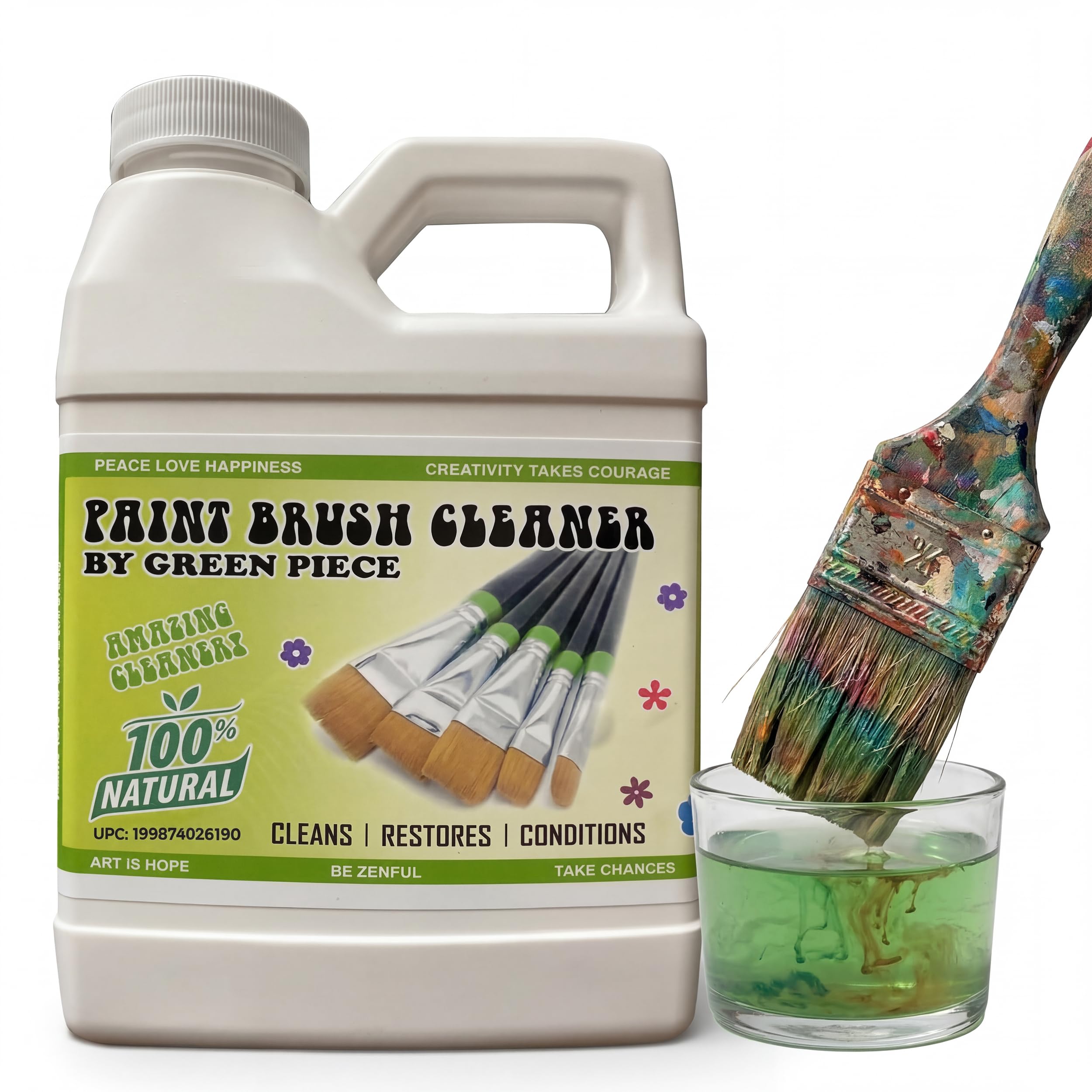
This 18-ounce liquid restorer uses fruit extracts and minerals instead of petroleum distillates, breaking down both wet and bone-dry paint without emitting chemical fumes. The formula is safe enough to use on bare hands — reviewers consistently mention squeezing it directly onto fingers to remove stubborn acrylic stains. It works across acrylic, latex, oil, shellac, and even epoxy, which makes it the most versatile single-bottle solution in this roundup.
The citrus scent is noticeable but not cloying — several users noted the smell is stronger than expected when the bottle is left open in a small room, though it dissipates quickly once the lid is secured. A little spreads a long way: reviewers report dipping brush tips into a small puddle and watching dried paint dissolve within seconds. The fluid also conditions bristles, preventing the brittleness that often follows solvent-based cleaning.
Where this product truly outpaces alternatives is restoration power. Users share side-by-side photos of brushes that were rock-hard with cured oil paint — after a 10-minute soak and a quick wipe, the bristles returned to full flexibility. If you rotate between water-based and oil-based paints, this eliminates the need for separate thinners and cleaning tanks.
Why it’s great
- Non-toxic and biodegradable — no respirator or ventilation required
- Works on dry shellac and epoxy, not just standard paints
- Conditions bristles to prevent crackling and frizz
Good to know
- Strong citrus odor can overwhelm a small unventilated room
- A few users found it less aggressive than turpentine for very old crusted oil paint
2. Masterson Fresh Water Rinse Well

The Masterson Rinse Well uses a gravity-fed reservoir system where a plastic bottle sits upside-down in a base well — pressing a button releases fresh water into the cleaning cup, keeping your rinse water uncontaminated even after dozens of brush dips. This is a studio-grade solution for watercolorists and miniature painters who need to maintain color purity while working. The 28-ounce reservoir provides enough clean water for several hours of continuous painting without refilling.
Reviewers praise the time-saving convenience: instead of walking to a sink to change dirty water, you press the button and get a fresh rinse instantly. For watercolorists working with fabric medium or liquid frisket, the clean-water-on-demand design prevents the muddying effect that ruins delicate washes. A few users noted that the button can release a bit too much pressure on the first press — adding a short length of tubing to the spout gives finer control over the flow rate.
The plastic construction is lightweight and durable, though some older versions used a metal screw that rusted over time. The current model uses a treated screw, but long-term moisture exposure in a humid studio may still oxidize the hardware. If you work primarily with watercolors or thin acrylics and value uncontaminated rinse water, this tool integrates seamlessly into your existing setup.
Why it’s great
- Fresh water on demand eliminates color cross-contamination
- 28-ounce reservoir lasts through extended sessions
- Compact footprint fits on crowded easel trays
Good to know
- Plastic construction may feel less premium than metal alternatives
- Rust risk on the hardware clamp if left wet for weeks
3. MyLifeUNIT Paint Brush Cleaner (Stainless Steel)

This 13.5-ounce stainless steel can with a rubber-sealed lid is built for painters who take their brushes into the field. The sealing rubber loop inside the lid creates an airtight barrier that prevents solvent from leaking — even when the can is tossed sideways in a backpack. Reviewers consistently call out its leak-proof performance during plein air excursions. The removable perforated filter basket provides a textured surface to scrub paint off bristles while allowing pigment sediment to fall to the bottom.
At 3.4 inches wide and 4 inches tall, the can is compact enough to fit into a travel bag but still holds a 1.5-inch flat brush without bending the ferrule against the rim. The stainless steel construction resists rust and dents from drops, and the wire bail handle lets you hang it from an easel hook or carry it with one finger. A few users noted that the wire handle can pop off under stress, but bending the ends back with pliers solves the issue permanently.
Because it works with water, mineral spirits, turpentine, and ink, this is a universal solvent container rather than a cleaning formula itself. Pair it with your preferred thinner or a natural restorer and you get a transportable system that keeps solvent smell locked inside. The double-wall construction is noticeably heavier than plastic alternatives, but that weight pays off in durability.
Why it’s great
- Rubber gasket creates a true spill-proof seal in transit
- Removable filter basket lets sediment settle out of reach
- Rust-proof stainless steel withstands years of solvent exposure
Good to know
- Wire handle may detach if bent at the wrong angle
- 13.5 oz capacity is small for large workshop sessions
4. DUGATO 3-in-1 Paint Brush Cleaner Basin
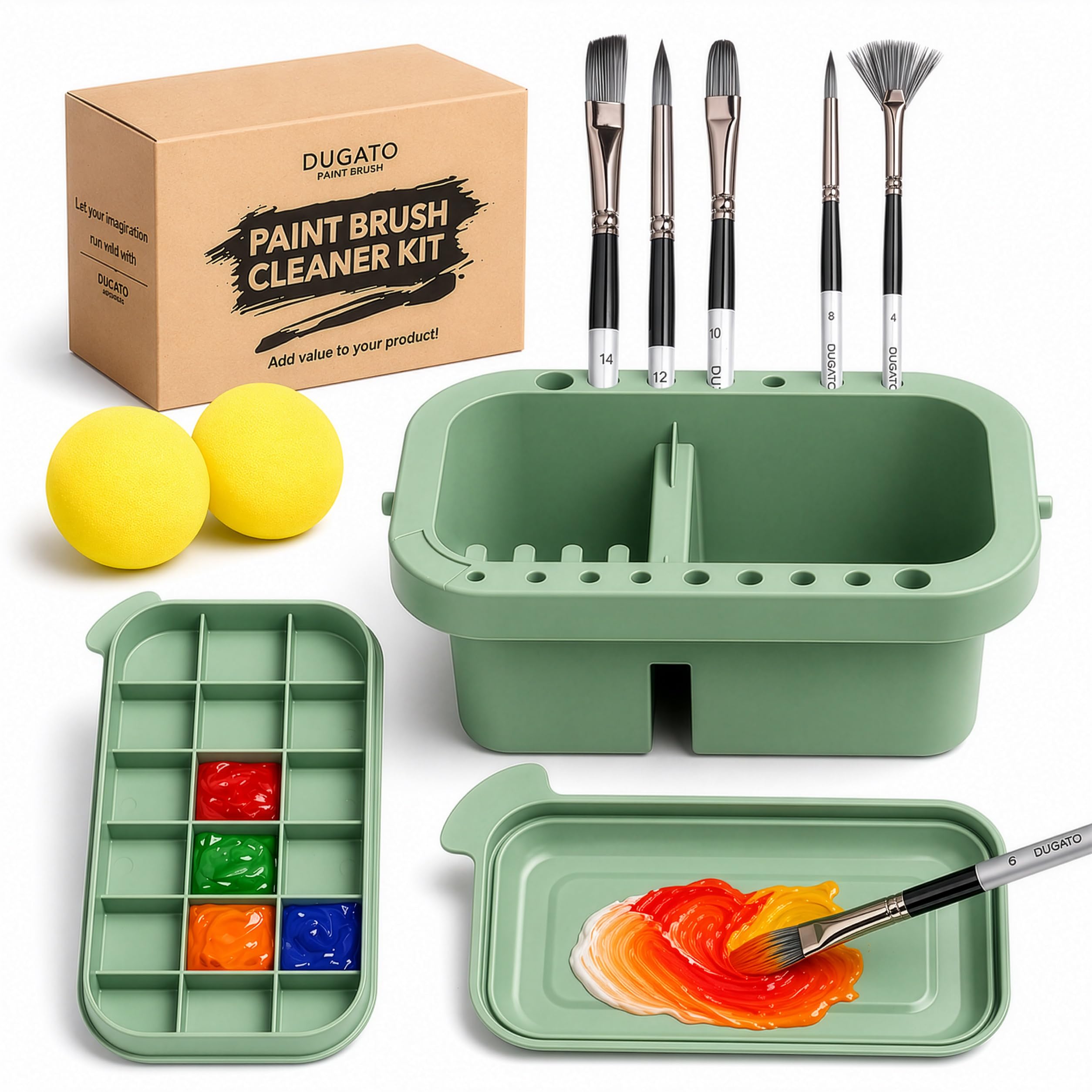
The DUGATO basin combines a two-zone cleaning station, a 16-slot vertical brush holder, and an 18-well paint palette with a lid into a single plastic unit measuring 8.9 by 5.3 inches. The cleaning side features a ribbed section for scrubbing acrylic off bristles and a separate reservoir for the final rinse — this prevents the first dunk from dragging loose pigment into your clean water. The lid seals the palette wells to keep acrylics workable between sessions.
Reviewers appreciate how the basin organizes the entire painting station for classroom or party use. The 16 brush slots accommodate a range of sizes, though wider flat brushes above 1 inch may not fit comfortably. The handle is made of thin plastic and feels less sturdy than the rest of the basin — several users warned against picking it up by the handle when full. The palette wells are shallow, making them better for small mixing volumes rather than large color pools.
For artists who teach or paint in groups, the all-in-one design cuts down on the number of separate containers cluttering the table. The included sponges are a nice bonus for blending techniques, but they can hold paint residue if not rinsed immediately. If you want a single station that holds brushes, cleans them, and stores wet paint, this basin reduces your kit to one manageable piece.
Why it’s great
- Two-zone cleaning prevents recontamination during rinsing
- Integrated brush holder preserves bristle shape during drying
- Palette lid keeps acrylic paints from drying out between sessions
Good to know
- Handle feels flimsy and may snap under the weight of fluid
- Palette wells are too shallow for large mixing volumes
5. Mona Lisa Odorless Paint Thinner 32 oz

Mona Lisa 90032 is an odorless mineral spirit designed for oil painters who cannot tolerate the headache-inducing fumes of standard turpentine. The 32-ounce can delivers a solvent that evaporates more slowly than traditional thinners, giving you a longer working window for cleaning multiple brushes in a single dip. Reviewers consistently report that the smell is virtually undetectable — only the faint background scent of the oil paint itself registers in the air.
This thinner works well for cleaning brushes between color changes and for wiping down palettes at the end of a session. The slow evaporation rate means brushes soaked in a sealed jar stay moist longer without the solvent level dropping significantly overnight. A few users noted that it feels slightly oilier on the skin compared to other thinners and that it does not thin paint as aggressively as turpentine — it serves best as a cleaning and brush-conditioning agent rather than a paint medium.
The main limitation is the combustible warning: keep the can away from heat sources, sparks, and open flames. In a well-ventilated home studio, this is a manageable safety requirement, but it rules out using the thinner near a space heater or in an enclosed room without ventilation. For pure deep-cleaning of oil-laden bristles, this remains the most cost-effective large-volume odorless option on the market.
Why it’s great
- Truly odorless — no respiratory irritation during use
- 32 ounces provides generous volume for heavy oil painting sessions
- Slow evaporation keeps brushes workable for longer
Good to know
- Combustible — must be stored away from heat and flame
- Less effective for thinning paint compared to pure turpentine
FAQ
Can a natural citrus cleaner remove dried oil paint from brushes?
Why does my brush cleaner leak when I travel with it?
Final Thoughts: The Verdict
For most users, the cleaner for paint brushes winner is the Green Piece Paint Brush Cleaner because it handles both wet and dry paint across acrylic, oil, latex, and shellac without toxic fumes — making it the single most versatile bottle on this list. If you want fresh rinse water on demand for watercolor purity, grab the Masterson Fresh Water Rinse Well. And for oil painters who need a large-volume odorless solvent that won’t trigger headaches, nothing beats the Mona Lisa Odorless Thinner.

Mo Maruf
I created WellFizz to bridge the gap between vague wellness advice and actionable solutions. My mission is simple: to decode the research and give you practical tools you can actually use.
Beyond the data, I am a passionate traveler. I believe that stepping away from the screen to explore new environments is essential for mental clarity and physical vitality.