Our readers keep the lights on and my smoothie glass nicely filled. As an Amazon Associate, I earn from qualifying purchases.
Knee pain turns every step into a negotiation—aching joints, stiff tendons, and the dull throb that follows a day on your feet. Standard compression socks, often too thin or too tight at the knee band, can aggravate the very area you’re trying to support, leaving you with grooves, irritation, or inadequate relief. The right pair applies graduated pressure from the ankle upward, reducing fluid buildup in the lower leg while keeping the knee joint free from restrictive bands.
I’m Mohammad Maruf — the founder and writer behind WellFizz. For this guide, I spent hours analyzing user feedback, material compositions, and compression ratings across dozens of models to identify the five pairs that actually deliver on their promise for knee pain.
After cross-referencing real-world experiences with technical specs, I’ve narrowed the field to the five most reliable compression socks for knee pain that balance comfort, durability, and measurable support.
How To Choose The Best Compression Socks For Knee Pain
Not all compression socks are designed with knee mechanics in mind. Many generic pairs target calf circulation or travel swelling but fail at the knee bend, where fabric bunching or an overly tight top band can cut off circulation or dig into the popliteal area. The key is finding a sock that provides consistent pressure without restricting the joint’s natural movement.
Compression Level and Graduation
For knee pain associated with edema, varicose veins, or post-surgical recovery, 15-20 mmHg offers effective daily support without prescription requirements. The graduation—tightest at the ankle, loosening toward the knee—encourages blood to flow upward, reducing fluid retention in the lower leg that can indirectly stress the knee joint. Higher ranges like 20-30 mmHg deliver more aggressive pressure but require careful sizing to avoid tourniquet-like bands behind the knee.
Fiber Blend and Skin Comfort
Nylon and spandere blends are standard but can cause itching, overheating, or irritation during all-day wear. Merino wool or bamboo viscose introductions create a buffer against synthetic fibers, wick moisture away, and regulate temperature—critical for users who wear compression socks through meals, shifts, or flights. The toe seam construction also matters: flat-knit seams reduce friction against the toes and nail beds.
Fit Length and Knee Bend Clearance
A sock that reaches too high—into the knee bend itself—will wrinkle at the ankle and dig into the popliteal fossa, causing pain rather than relief. Look for a cuff that stops approximately one to two inches below the knee crease. Measuring your calf circumference at the widest point and comparing it to the brand’s size chart is essential; a too-large sock slips and loses compression, while a too-small one restricts blood flow.
Quick Comparison
On smaller screens, swipe sideways to see the full table.
| Model | Category | Best For | Key Spec | Amazon |
|---|---|---|---|---|
| Wellow Knee High | Bamboo Viscose | All-day wear & travel | 18-25 mmHg, bamboo viscose | Amazon |
| CASMON Zipper | Zippered Medical | Post-surgery & limited mobility | 15-20 mmHg, YKK zipper | Amazon |
| Physix Gear | Medical Grade | Severe swelling & knee injury | 20-30 mmHg, arch support | Amazon |
| Merino Wool Compression Socks | Natural Fiber | Itch-free daily wear | 15-20 mmHg, merino/bamboo | Amazon |
| XZD 3-Pair | Multi-Pack Value | Budget pick for long shifts | 15-20 mmHg, 3 pairs | Amazon |
In‑Depth Reviews
1. Wellow Knee High Compression Socks
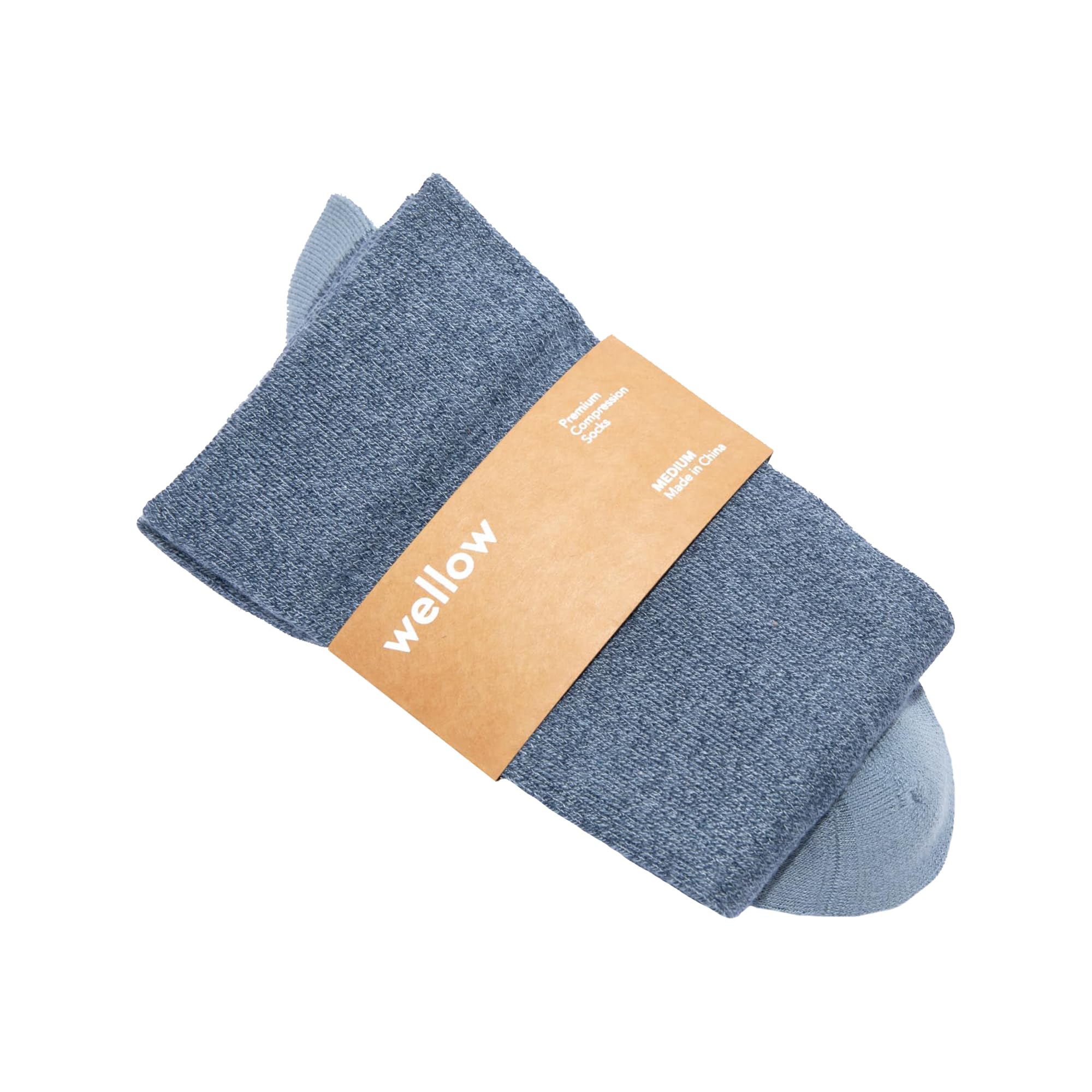
The Wellow hits a rare sweet spot: enough compression (18-25 mmHg) to prevent swelling after a long day or a transatlantic flight, yet soft enough that users report forgetting they’re wearing compression at all. The bamboo viscose blend gives it a plush, almost sock-like hand feel that sets it apart from scratchy nylon-dominant alternatives. Multiple reviews note that after 12 hours of wear, legs emerge visibly less swollen without the red indent lines common with tighter brands.
Testers appreciated that the compression feels less aggressive than the mmHg rating suggests—some users with mild knee pain found it supportive without restricting movement behind the knee. The medium size comfortably fits a women’s size 10, and the fabric thickness provides a slight cushion that works well for standing or walking. The wool-blend construction does run warmer than thinner synthetics, so summer use might feel heavier in hot climates.
The key trade-off is thickness: these socks add noticeable volume inside shoes, which may require sizing up in footwear if you wear them with fitted sneakers or boots. However, for the user seeking a comfortable, all-day knee support sock that feels premium from the first wear, the Wellow is the most balanced option on this list.
Why it’s great
- Soft bamboo viscose blend resists itching
- Effective 18-25 mmHg graduated compression
- Durable construction holds up to repeated washing
Good to know
- Thicker fabric may feel warm in summer
- Requires careful sizing for accurate compression feel
2. CASMON 15-20mmHg Zipper Compression Socks

The CASMON addresses the single biggest barrier to consistent compression wear: putting them on and taking them off. The integrated YKK zipper runs the full length of the calf, allowing users with arthritis, limited hand strength, or post-surgical restrictions to achieve a snug fit without wrestling the fabric. A protective flap inside prevents the zipper from pinching skin—a detail that real users highlight as a major comfort upgrade over other zippered models.
At 15-20 mmHg, the compression level is moderate enough for everyday use but pronounced enough to reduce edema and promote circulation. Several reviewers bought these specifically for elderly parents recovering from leg surgeries or managing chronic swelling, and the unanimous feedback is that the zipper eliminates the frustration that caused them to abandon previous compression socks. The closed-toe design reinforces the sock head flat, reducing blister risk during long wear.
On the downside, the zipper adds bulk along the calf, and the sock material is thinner than standard athletic socks—some users reported that shoes fit more snugly as a result. Initial sizing can be tricky if you rely on calf measurements alone, so reviewing the brand’s chart is crucial. But for anyone who struggles with the physical act of putting on compression, this model is a genuine accessibility breakthrough.
Why it’s great
- Full-length YKK zipper for easy on/off
- Protective flap prevents zipper pinching
- Good moderate compression for daily use
Good to know
- Thinner material may show through lighter pants
- Zipper adds slight calf bulk
3. Physix Gear Compression Socks 20-30 mmHg

For users dealing with significant knee pain rooted in swelling—LCL tears, meniscus issues, or osteoarthritis-related fluid buildup—the Physix Gear delivers the highest compression level on this list at 20-30 mmHg. One verified reviewer with a severe knee injury reported that after 12 hours of wear, the swelling in their ankle and calf had reduced enough to make ankle bones visible again, and the accompanying pain dropped markedly. That kind of outcome requires aggressive graduated pressure, and this sock delivers it consistently.
The fabric uses a floral weave that is both durable and breathable, holding up well to repeated machine washing without losing elasticity. The arch support strip runs along the bottom of the foot, providing targeted lift that some users found helpful for plantar fasciitis alongside knee pain. The size range extends to XL, accommodating calf circumferences up to 16 inches and shoe sizes up to 11.5 wide—a useful option for larger builds.
The trade-off for this compression strength is a stiffer feel: the socks are difficult to pull on without practice, and the length can sometimes reach into the knee bend for shorter legs, causing wrinkling behind the ankle. The toe box is also narrower than some alternatives, with a seam that a minority of reviewers found noticeable. This is a tool for therapeutic relief, not casual comfort, but for serious swelling, it’s the most effective pair.
Why it’s great
- High 20-30 mmHg compression for significant swelling
- Durable floral weave holds elasticity
- XL option fits larger calves and wide feet
Good to know
- Difficult to put on; requires morning application
- May be too long for shorter legs
4. Merino Wool Compression Socks 15-20 mmHg
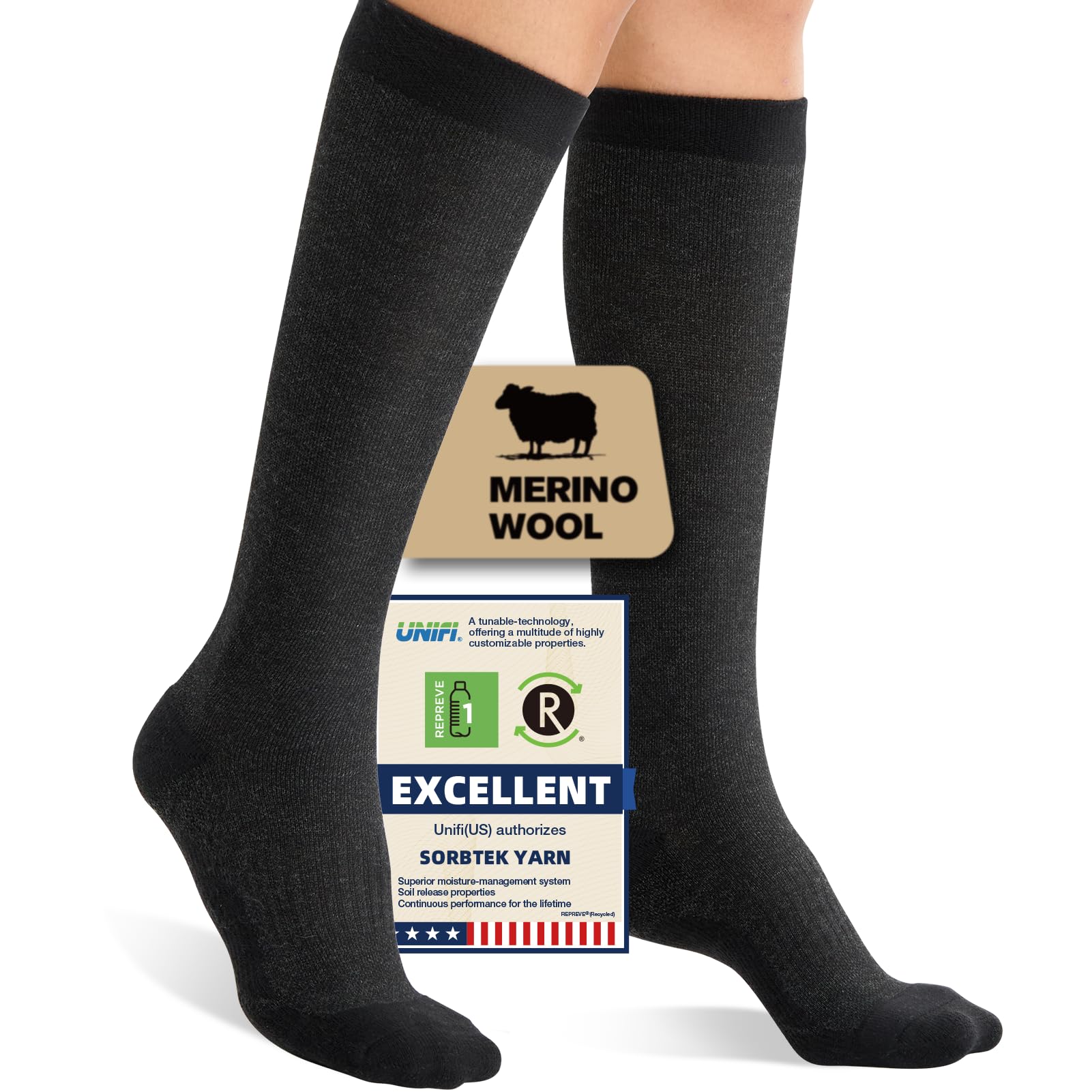
Users with sensitive skin or reactions to synthetic fabrics often abandon compression socks before they see benefits. This pair solves that problem by blending merino wool and bamboo fibers into the standard nylon-spandex construction, creating a soft cushion against the skin that eliminates the itching and sweating common with all-synthetic models. Reviewers consistently describe them as the most comfortable compression socks they’ve ever worn, with several noting that they stopped scratching within the first hour—a stark contrast to their experience with Bombas and other mainstream brands.
The 15-20 mmHg rating hits the therapeutic sweet spot for daily standing, hiking, or gym wear without feeling restrictive. The socks include a diagrammed instruction guide for putting them on, which matters because the wool blend adds some thickness that can make initial donning tricky. Users report that the socks keep feet dry and shoes fresh, and they hold their shape through multiple washes without shrinking.
The main drawback is the striped version of this sock, which has a more prominent rib weave that some users found less comfortable against the leg. The solid color versions seem to avoid this issue. Also, while the merino blend provides temperature regulation, the socks are still heavier than ultra-thin medical-grade stockings, so they work best in cooler conditions or air-conditioned environments.
Why it’s great
- Merino wool and bamboo prevent skin irritation
- Effective 15-20 mmHg graduated compression
- Does not shrink after washing
Good to know
- Striped version has a less comfortable rib texture
- Heavier than thin medical stockings
5. XZD 3-Pair Compression Socks 15-20 mmHg
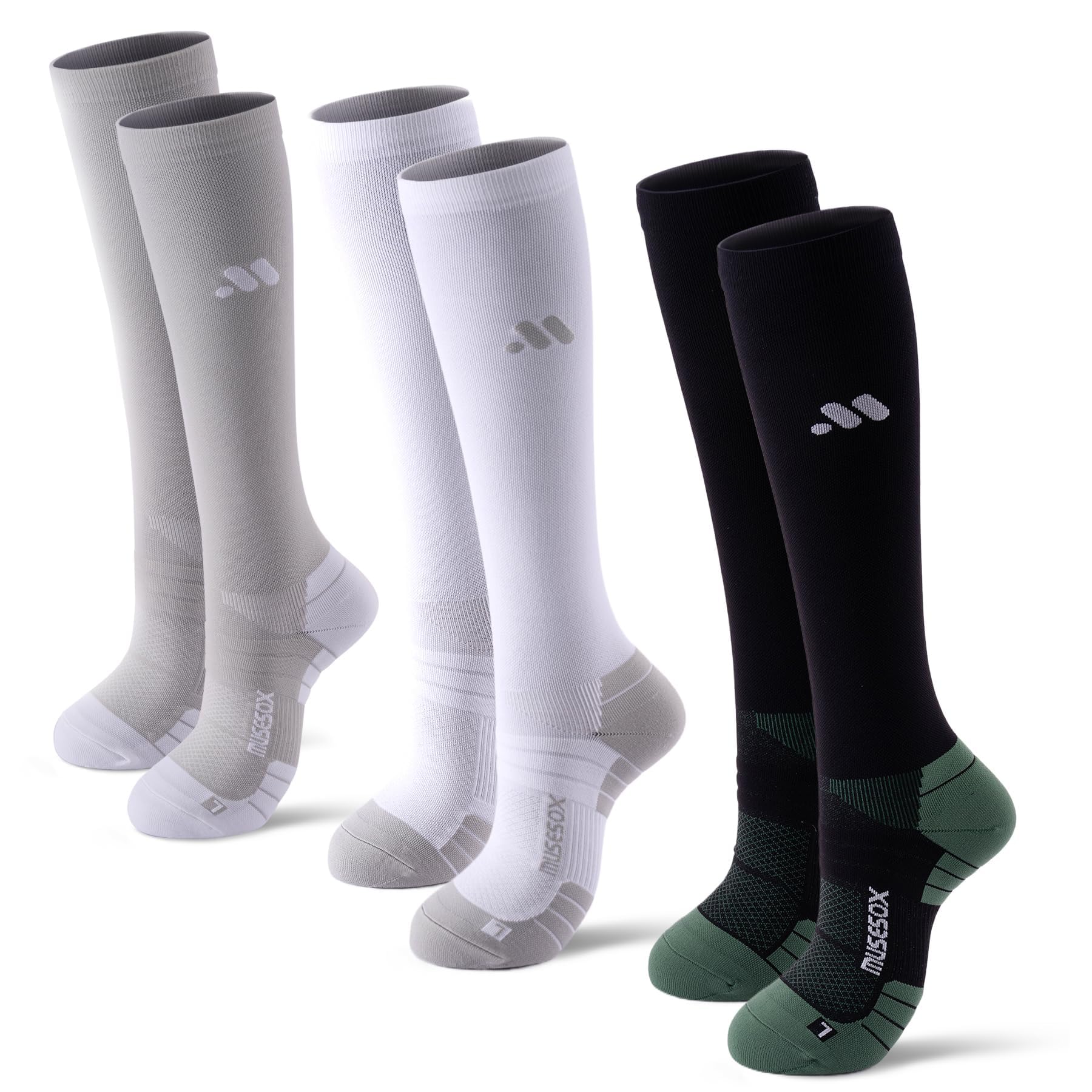
Value seekers don’t have to sacrifice performance: this three-pack delivers consistent 15-20 mmHg compression that rivals higher-priced singles. Verified users in food service and salon professions—jobs requiring eight to twelve hours of standing—report that the socks drastically reduced calf soreness and leg heaviness during shifts. The butter-soft fabric and left/right foot markings show an attention to fit that is rare at this price tier.
The inclusion of helpful diagrams for arthritic hands makes the socks accessible to older users or those with limited dexterity. The 12-inch calf fit on the medium size works for average builds, and the socks stay put without slipping during active movement. Multiple buyers said they preferred these over the hospital-grade pairs they were given post-surgery, citing the comfort and effective gradient pressure.
The main concession is visual: the color and pattern options are limited compared to premium brands. Some users also noted that if you buy the wrong size, the compression becomes noticeably less effective—so measuring your calf before ordering is essential. But as a daily workhorse for long shifts at a fraction of the per-pair cost of premium models, this three-pack is the smartest value buy in this category.
Why it’s great
- Three pairs for the cost of one premium sock
- Butter-soft fabric with left/right foot markings
- Effective for 8+ hour shift relief
Good to know
- Limited color and pattern options
- Exact sizing needed for best compression effect
FAQ
Can compression socks help with arthritis-related knee pain?
How tight should compression socks feel around the knee?
Is 15-20 mmHg enough for post-surgery knee recovery?
Final Thoughts: The Verdict
For most users, the best compression socks for knee pain is the Wellow Knee High because it balances soft bamboo-viscose comfort with effective 18-25 mmHg graduated pressure that reduces swelling without feeling restrictive. If you need easy on/off access due to arthritis or post-surgery limitations, grab the CASMON Zipper. And for serious swelling relief from injury or chronic conditions, nothing beats the compression strength of the Physix Gear 20-30 mmHg.

Mo Maruf
I created WellFizz to bridge the gap between vague wellness advice and actionable solutions. My mission is simple: to decode the research and give you practical tools you can actually use.
Beyond the data, I am a passionate traveler. I believe that stepping away from the screen to explore new environments is essential for mental clarity and physical vitality.