Our readers keep the lights on and my smoothie glass nicely filled. As an Amazon Associate, I earn from qualifying purchases.
Applying a clear coat to a hand-painted or custom-tied fishing lure is the final make-or-break step. A wrong choice—soft, tacky, or quick-to-yellow—ruins hours of work. The right finish seals paint, adds UV stability, holds up against teeth and structure, and keeps the lure fish-ready for seasons. This category demands a coating that bonds to wood, metal, plastic, and thread without reacting chemically or clouding fine detail.
I’m Mohammad Maruf — the founder and writer behind WellFizz. I’ve spent countless hours analyzing manufacturer data, customer feedback, and real-world application notes to understand which clear coats truly deliver hard, non-yellowing, and durable finishes for lure and fly builders.
Whether you brush on a water-based polyurethane, dip into a fast UV-cure resin, or spray a hobby-grade gloss, the right match protects your craft and extends every lure’s life. This guide navigates the best clear coat for fishing lures based on formula type, cure method, hardness, and non-yellowing performance.
How To Choose The Best Clear Coat For Fishing Lures
The right clear coat depends on the lure base material, desired finish thickness, curing time, and the environment it will face. Water, sun, and impact all stress the coating. Choose based on these four core factors.
Resin Type: UV Cure vs. Epoxy vs. Polyurethane
UV-cure resins set in seconds under a UV light, curing completely dry with zero tacky residue. They are thin enough to soak into thread wraps and fine details, making them popular for fly tying. Epoxy finishes like Flex Coat offer long working times, self-level perfectly, and build a thick, glass-like shell—ideal for spinning rods or heavy-use lures but require 24+ hours to fully cure. Water-based polyurethanes like Crystalac brush or spray on, clean up with water, and provide durable, non-yellowing protection without the strong fumes of solvent-based coatings.
Non-Yellowing & UV Stability
Yellowing turns white or translucent lures into discolored artifacts. Look for formulas explicitly labeled “non-yellowing” or “UV stabilized.” Crystalac and Solarez both advertise UV resistance, while some epoxy systems can amber over time if not light-stabilized. For lures kept in tackle boxes exposed to heat, a UV-stable finish prevents premature aging and keeps colors true. This property is non-negotiable for any lure that you intend to use beyond a single season.
Viscosity & Application Method
Thin viscosity resins wick into crevices and thread wraps, but they may require multiple coats to build a thick protective layer. Thicker formulas create a high-build coating in a single pass but can obscure fine detail or slump off vertical surfaces. Brush application suits room-temperature epoxy and polyurethane; spray works for large batches or complex shapes; dip gives even coverage but wastes material. Choose viscosity based on whether you prioritize speed, total coverage, or detail preservation.
Hardness & Scratch Resistance
A lure bangs against rocks, teeth, and metal hardware. A soft clear coat scratches within one fishing trip. Epoxy finishes tend to cure to the hardest surface, resisting abrasion best. UV resins fall in the middle, with some brands like Solarez Bone Dry producing a “bone-dry” hard finish. Polyurethane offers good impact resistance but can be softer than epoxy. Check customer reports of scratch resistance and think about the wear level your lures will actually endure—heavy cover bass fishing versus trout stream flies demand different hardness.
Quick Comparison
On smaller screens, swipe sideways to see the full table.
| Model | Category | Best For | Key Spec | Amazon |
|---|---|---|---|---|
| Crystalac Extreme Protection | Water-Based PU | Brush or spray on wood/plastic lures | Non-yellowing, self-leveling, UV stabilized | Amazon |
| Solarez Bone Dry Clear | UV Resin | Fly tying head cement and thin coating | 5 sec UV cure, no tacky residue | Amazon |
| Flex Coat Ultra V Finish | Epoxy | Rod wraps and high-build lure coating | Self-levels, bubble release, 4oz kit | Amazon |
| Loon Outdoors UV Clear | UV Resin | Thick fly finish with multiple tips | Infinite work time, cures in 15 sec | Amazon |
| Mr. Super Clear Gloss Spray | Aerosol Lacquer | Quick gloss topcoat for plastic lures | Dries in 1 hour, ultra-gloss finish | Amazon |
In‑Depth Reviews
1. Crystalac Extreme Protection Water Based Polyurethane
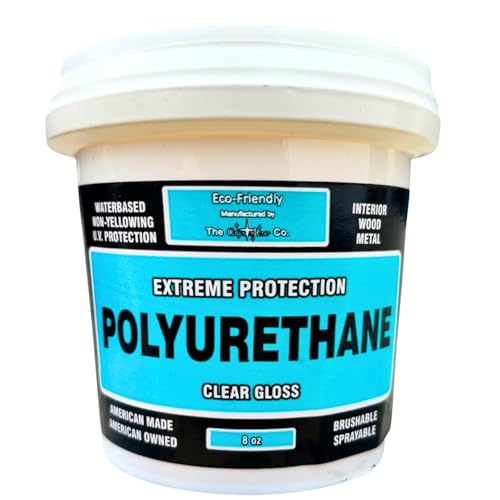
This water-based polyurethane is formulated to resist yellowing—a critical requirement for lures that spend time in sunny water or hot tackle boxes. The self-leveling properties mean brush strokes disappear as it dries, leaving a smooth, glossy shell that won’t obscure painted scale patterns or eyes. With an 8oz mini size covering 12–15 sq ft, a single bottle goes a long way for a handful of custom lures. The low odor and water clean-up make it easy to use in a home workshop without harsh solvents.
Customers consistently report a durable finish that holds up to moisture and handling. One user noted the finish looked unchanged after a full year on a kitchen countertop—a good proxy for the wet, abrasive conditions a lure faces. The non-toxic formula adds safety peace of mind when working indoors. Its versatility extends beyond lures to exterior wood, so you can use leftover product for rod handles or tackle storage projects. For a brush-on option that gives a hard, clear, and long-lasting coat without the heat or fume concerns of two-part epoxies, this is the most balanced choice on the list.
Application requires thin coats to prevent a cloudy effect on dark colors, as noted by a reviewer who saw haziness after multiple heavy layers. The product also shipped incorrectly in one reported case, receiving satin instead of gloss, though the brand is responsive when ordering direct. For most lure builders, the gloss version delivers exactly the high-shine look fish see underwater.
Why it’s great
- Non-yellowing and UV stabilized for long-term clarity
- Self-leveling brush or spray application with water clean-up
- Low odor and safe for indoor use
Good to know
- Multiple heavy coats can cloud dark colors
- Requires thin layers for best optical clarity
2. Solarez Bone Dry Clear

This UV-cure resin earns its “Bone Dry” name by curing completely tack-free, eliminating the sticky residue that plagues many UV finishes. With an ultra-low viscosity, it wicks quickly into fly-tying thread wraps, feather bases, and small crevices, creating an invisible, indestructible seal. A five-second cure under a UV lamp turns liquid into a hard gloss, making it possible to finish a fly in under a minute. Also available in a black version for eyes and realistic details.
Experienced tyers highlight its value as a head cement replacement. It soaks into thread, hardens to a durable shell, and dries absolutely smooth. One reviewer noted it replaced a whole bottle of head cement, tying hundreds of flies with a single container. The thin formula is not meant for build-up—it’s a penetrating sealer that bonds to multiple materials including thread, feather, and foam. For those tying perdigons or other smooth-bodied patterns, this produces a consistently flawless surface.
The product can crystallize in cool storage; users recommend microwaving the bottle in short bursts to restore liquid state. The included applicator brush is tiny—great for tight work but less effective for coating large foam poppers. Price per volume is higher than other options, but the functional efficiency makes each bottle last through many projects. If you need a non-sticky, ultra-fast UV coating for fine fly work, this is the specialist tool.
Why it’s great
- Zero tacky residue after UV cure
- Extremely thin viscosity for deep wicking
- Cures hard and crystal clear in seconds
Good to know
- May require gentle heating to re-liquify if crystallized
- Expensive per ounce; not for bulk coating
3. Flex Coat Ultra V Finish – V4Y

Flex Coat Ultra V is an epoxy-based two-part finish formulated with maximum UV protection. It offers a longer working time than standard epoxies—three to four hours before gel—giving you room to position a rod or lure on a rotator without rushing. The self-leveling action releases bubbles naturally, producing a glossy, glass-like surface that OEM rod builders trust for professional repairs. The 4oz kit includes both resin and hardener, enough for multiple rod wraps or a batch of high-end lures.
Customers who switched from other epoxy brands praise the reliability of Flex Coat. One user salvaged a 30+ year old rod that had been coated with a cheaper tacky finish—after stripping it and applying Flex Coat, the rod looked like new. The ability to apply a second coat after three to four hours (without sanding) means you can build thickness quickly. For lures that need a heavy, impact-resistant shell, this epoxy delivers the hardest finish on our list. It also covers metal and fabric substrates, making it a versatile shop staple for any angler who also builds rods.
The main trade-off is cure time. Full hardness takes at least 24 hours, and the finish can be finicky if mixed improperly—measure parts precisely by volume. Some users report that shipping in cold weather can cause the hardener to crystallize; warming the bottle before use solves this quickly. For anyone who demands a thick, scratch-resistant, UV-blocking coating and doesn’t mind waiting a day for cure, this is the workhorse.
Why it’s great
- Professional-grade epoxy with excellent UV resistance
- Self-levels and releases bubbles for a flawless finish
- Long working time allows precise application
Good to know
- Full cure requires 24+ hours drying time
- Mixing must be exact to avoid tackiness
4. Loon Outdoors UV Clear Fly Finish, Thick

Loon Outdoors offers a thick UV-cure resin that stays in place exactly where you apply it—unlike thin versions that can run off before curing. The infinite work time means you can shape and position the resin without the clock ticking, then hit it with any UV light for an instant cure. It comes with multiple interchangeable application tips, from precision needles for small eyes and wing cases to wider openings for coating larger foam poppers and bodies. The full cure happens in 15 seconds under a strong UV source, producing a hard, transparent finish suitable for both fly heads and full lure bodies.
Tyers appreciate the control this thickness provides. One reviewer mentioned it is “not as runny and easier to work with” than cheaper resin brands, specifically noting the included attachments allow precise adjustment depending on the fly pattern. The pliable nature before cure is ideal for building up three-dimensional heads and smoothing out transitions between thread and hook shank. It also functions as a head cement replacement, locking thread wraps permanently. For anyone who prefers a less fluid resin that stays put on vertical surfaces, this is a well-designed solution.
Some users found the stock formula too thick for very small flies, especially size 20 and below, where the resin would blob rather than wick. A quick warm-up or a mix with a thinner UV resin solves this. The .5oz bottle is compact but yields many applications due to the thick viscosity—you use less volume per coat compared to runny resins. It is not the most economical choice per ounce, but the control and finish quality justify the mid-range price for serious fly tyers.
Why it’s great
- Stays exactly where placed; ideal for vertical and detailed work
- Multiple applicator tips for versatility
- Infinite work time before UV exposure
Good to know
- May be too thick for tiny flies without warming
- Higher cost per ounce compared to thinner resins
5. Mr. Super Clear Gloss Spray

This aerosol clear coat from GSI Creos delivers a high-gloss finish in minutes without brush marks or resin mixing. Designed for hobby paints and bare plastic, it dries to the touch in as little as 20 minutes for small items and fully cures within an hour. The spray format is ideal for batch-coating multiple lures at once—lay them on a rack, spray from a distance, and rotate for even coverage. The gloss finish is impressively shiny, enhancing the visual depth of painted lure patterns.
Customers who use Mr. Super Clear for model painting and doll customization report excellent results on plastic and sealed wood. One reviewer described the finish as “immaculate” and appreciated the fast dry times. For lure builders who don’t own a compressor or spray booth, the aerosol can is the most accessible way to get a smooth, factory-like gloss. The low coverage per can means it is best for thin coats—reapply as needed rather than a heavy wet coat. Works well as a top-sealer over acrylic paints and decals.
The downsides are significant for serious lure use. It is not waterproof, so it will not protect submerged lures long-term without an additional sealer underneath. The fumes are strong—use only in extremely ventilated areas or outdoors. The aerosol pattern can produce an orange-peel texture if sprayed too close or in high humidity. For a quick topcoat on display lures, models, or short-session fishing, this is an affordable and fast option, but it will not match the durability of epoxy or UV resin for regular wet use.
Why it’s great
- Ultra-fast drying; small items ready in 20 minutes
- Convenient aerosol for easy batch coating
- Produce a high-gloss, factory-level finish
Good to know
- Not waterproof; need sealer for submerged lures
- Strong fumes require heavy ventilation
FAQ
Can I use a regular polyurethane from a hardware store for fishing lures?
How do I prevent UV resin from becoming tacky after curing?
Is an epoxy clear coat too thick for small lures and flies?
Can I apply a clear coat over an existing paint job without damaging it?
Final Thoughts: The Verdict
For most users, the best clear coat for fishing lures winner is the Crystalac Extreme Protection because it combines non-yellowing stability, easy water-based application, and reliable self-leveling hardness without fumes or complex mixing. If you need an ultra-fast, tack-free finish for fly tying detail, grab the Solarez Bone Dry Clear. And for building a glass-hard, thick shell around rod wraps or heavy-use lures, nothing beats the Flex Coat Ultra V Finish.

Mo Maruf
I created WellFizz to bridge the gap between vague wellness advice and actionable solutions. My mission is simple: to decode the research and give you practical tools you can actually use.
Beyond the data, I am a passionate traveler. I believe that stepping away from the screen to explore new environments is essential for mental clarity and physical vitality.