Our readers keep the lights on and my smoothie glass nicely filled. As an Amazon Associate, I earn from qualifying purchases.
That sharp, aching sensation in the arch of your foot when you stand up from a chair—or the throbbing that builds in your ankles halfway through a work shift—is the exact reason compression socks exist. Unlike generic legwear, a purpose-built compression sock applies graduated pressure that starts strongest at the ankle and gently eases off as it moves up the calf, physically pushing fluid out of your soft tissues and stabilizing overworked foot muscles.
I’m Mohammad Maruf — the founder and writer behind WellFizz. I’ve spent hundreds of hours combing through independent lab-grade pressure specifications, customer durability benchmarks, and fiber-construction details to separate socks that actually relieve foot pain from those that just look like medical gear.
Which specific models deliver measurable relief without cutting off circulation or falling apart after five washes? This guide answers that question with hard data and real user feedback to help you find the best compression socks for foot pain.
How To Choose The Best Compression Socks For Foot Pain
Not all tight socks are medical compression. The real differentiators lie in three measurable areas: the pressure gradient measured in millimeters of mercury (mmHg), the fiber’s ability to wick moisture and resist bacterial growth, and the construction details that prevent the sock from digging into your skin or bunching at the toes. Choose wrong, and you get a leg sleeve that doesn’t relieve the arch and heel pain it was meant to fix.
Pressure Level — The 20-30 mmHg Sweet Spot
For foot pain rooted in plantar fasciitis, overpronation, or extended standing, a compression rating of 20-30 mmHg is the clinical standard. Lower-pressure socks (8-15 mmHg) are more suited for flight leg fatigue or light swelling, but they lack the mechanical force to pull the plantar fascia into a shortened, relaxed position. Socks above 30 mmHg require a prescription and should only be worn under medical supervision. The 20-30 mmHg band delivers the therapeutic squeeze that reduces micro-tearing inflammation in the arch without restricting venous return in the thigh.
Fabric and Fiber Technology
Copper-infused nylon blends are gaining traction because copper ions have natural antimicrobial properties that reduce odor, and the nylon base holds the elastic memory longer than cotton or bamboo. Bamboo viscose, on the other hand, feels softer against the skin and runs cooler, but it tends to lose compression integrity after 20-30 machine washes. Premium options use a German inlay knitting method that embeds the elastic core inside a softer outer layer so the sock maintains 85% of its original pressure after 50 cycles.
Construction Details That Prevent Secondary Pain
A good compression sock for foot pain should have a seamless toe closure — flat stitching prevents friction blisters at the most sensitive part of the foot. Arch reinforcement, often a tighter-knit band or embedded elastic strip, supports the midfoot while the calf section remains at a lower pressure. The top band must have a 360-degree stretch silicone or wide-knit grip; a thin elastic rim that rolls down will create a tourniquet effect that causes pain behind the knee.
Quick Comparison
On smaller screens, swipe sideways to see the full table.
| Model | Category | Best For | Key Spec | Amazon |
|---|---|---|---|---|
| NEENCA Copper Compression Socks | Medical Grade | Patented ankle tuck & arch support | 20-30 mmHg, 6 compression rings at ankle | Amazon |
| PAPLUS Ankle Running Socks | Ankle Style | Low-cut design with built-in arch band | Ankle length, arch & ankle support | Amazon |
| BBFREY Medical Compression Socks 20-30 mmHg | Premium Knit | All-day firm medical-grade pressure | 20-30 mmHg, flat toe seam, cushioned heel/toe | Amazon |
| Bluemaple 6 Pack Copper Compression Socks | Value Multi-Pack | Budget-friendly rotation for daily wear | Graduated compression, wide top band | Amazon |
| Doctor’s Select Bamboo Viscose Light Compression | Mild Wear | Soft lightweight hold for sensitive skin | 8-15 mmHg, bamboo viscose, moisture-wicking | Amazon |
In‑Depth Reviews
1. NEENCA Copper Compression Socks
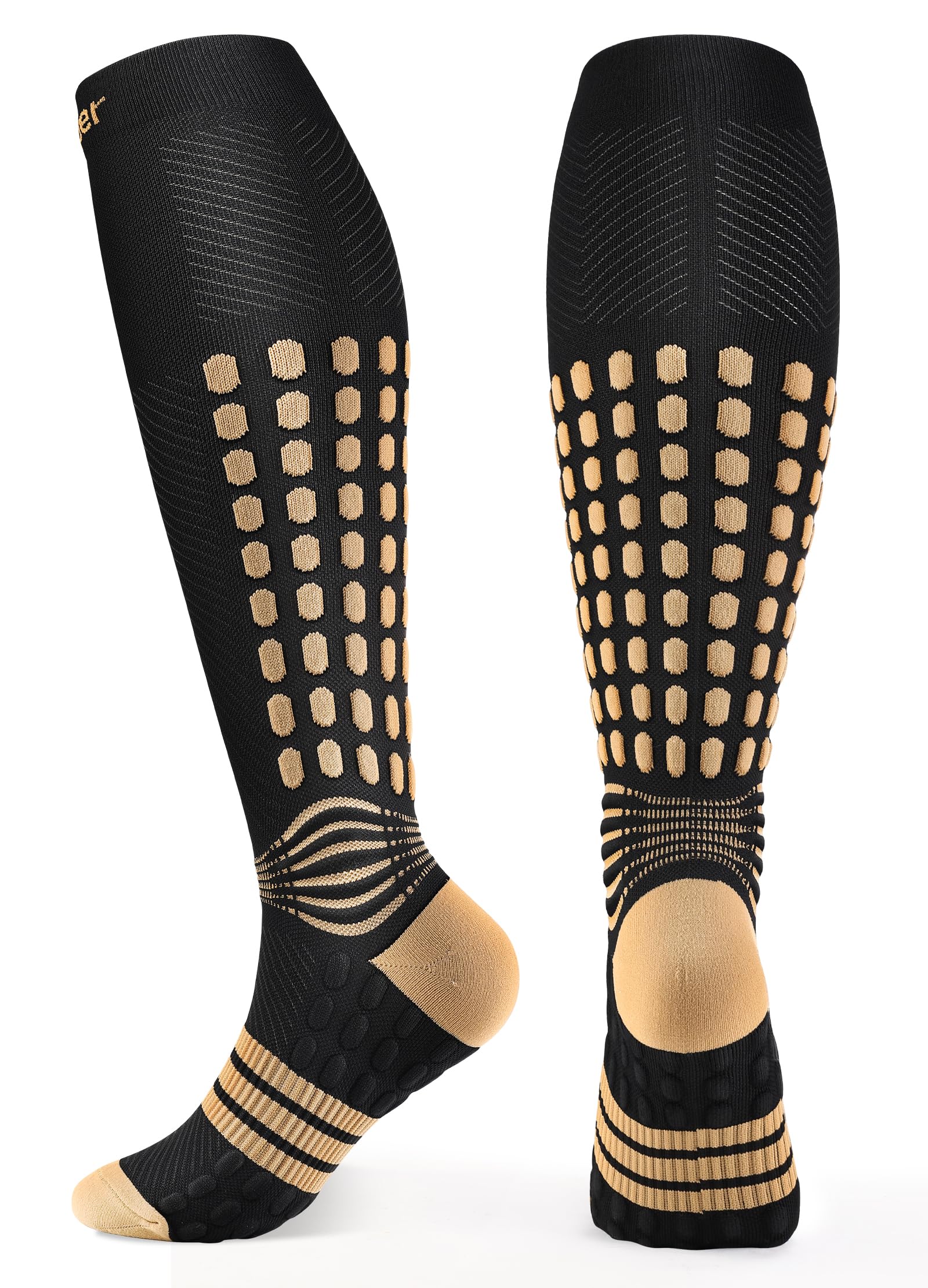
NEENCA has engineered what many users describe as the most comfortable medical-grade sock they have tried. The key is their patented Ankle Tuck Compression Tech, which incorporates six independent compression rings around the ankle joint. Instead of a uniform squeeze, these rings apply targeted pressure at the precise points where foot pain from plantar fasciitis and ankle swelling originates. The copper-infused fabric adds an antimicrobial layer that keeps the sock fresh even after a full shift or a long-haul flight.
Customer reviews consistently note the sock’s “evenly distributed compression” and its ability to reduce swelling without leaving red marks or feeling restrictive. The reinforced heel and toe are stitched with a flat seam, preventing the friction that causes blisters on long walks or runs. Several users wear size Medium with moderate swelling and report that the socks stay in place without slipping down or rolling at the top band.
For foot pain sufferers who need a reliable 20-30 mmHg option that holds its shape wash after wash, NEENCA delivers a noticeable reduction in arch and heel ache by the end of the first day. The graduate pressure ramp is strong at the ankle but forgiving above the calf, making it suitable for both athletic recovery and daily occupational wear.
Why it’s great
- Six-ring ankle design delivers pinpoint relief where foot pain originates
- Copper-infused nylon resists odor and maintains elastic memory longer than cotton blends
Good to know
- Some users find the aesthetic “ugly,” though this is secondary to performance
- Only one pair per purchase, which may not suit those needing a rotation set
2. PAPLUS Compression Socks for Men & Women

If your foot pain is centered in the arch and you prefer a low-cut sock that doesn’t cover your calf, PAPLUS offers an effective alternative. These ankle-length socks integrate a dedicated arch support band that wraps the midfoot, providing a stabilising squeeze that helps reduce strain on the plantar fascia during walking or running. The fabric is soft, breathable, and less restrictive than knee-high options, making it a popular choice for warm weather or casual daily use.
User feedback highlights how these socks “regulated foot blood pressure, reduced tingling, and eliminated severely cold toes” — indicating improved circulation that goes beyond simple comfort. The S/M size fits a size 7 foot well, and reviewers with size 7.5 men’s also report a great fit with no excessive tightness. The material washes well without shrinking or pilling, and the multiple-pair options make it easy to rotate.
The trade-off is that the compression level is lighter than a full 20-30 mmHg knee-high sock, so it works best for mild foot fatigue or as a recovery aid after exercise. It may not provide enough force for significant swelling or advanced plantar fasciitis. However, for someone who hates the look and feel of long compression socks, this is a discreet, highly functional alternative.
Why it’s great
- Ankle-height design avoids calf restriction while still supporting the arch
- Soft, breathable knit with durable construction that holds up to multiple washes
Good to know
- Compression is mild compared to knee-high 20-30 mmHg options
- No L/R foot markings, which some users expected from the product photos
3. BBFREY Medical Compression Socks 20-30 mmHg
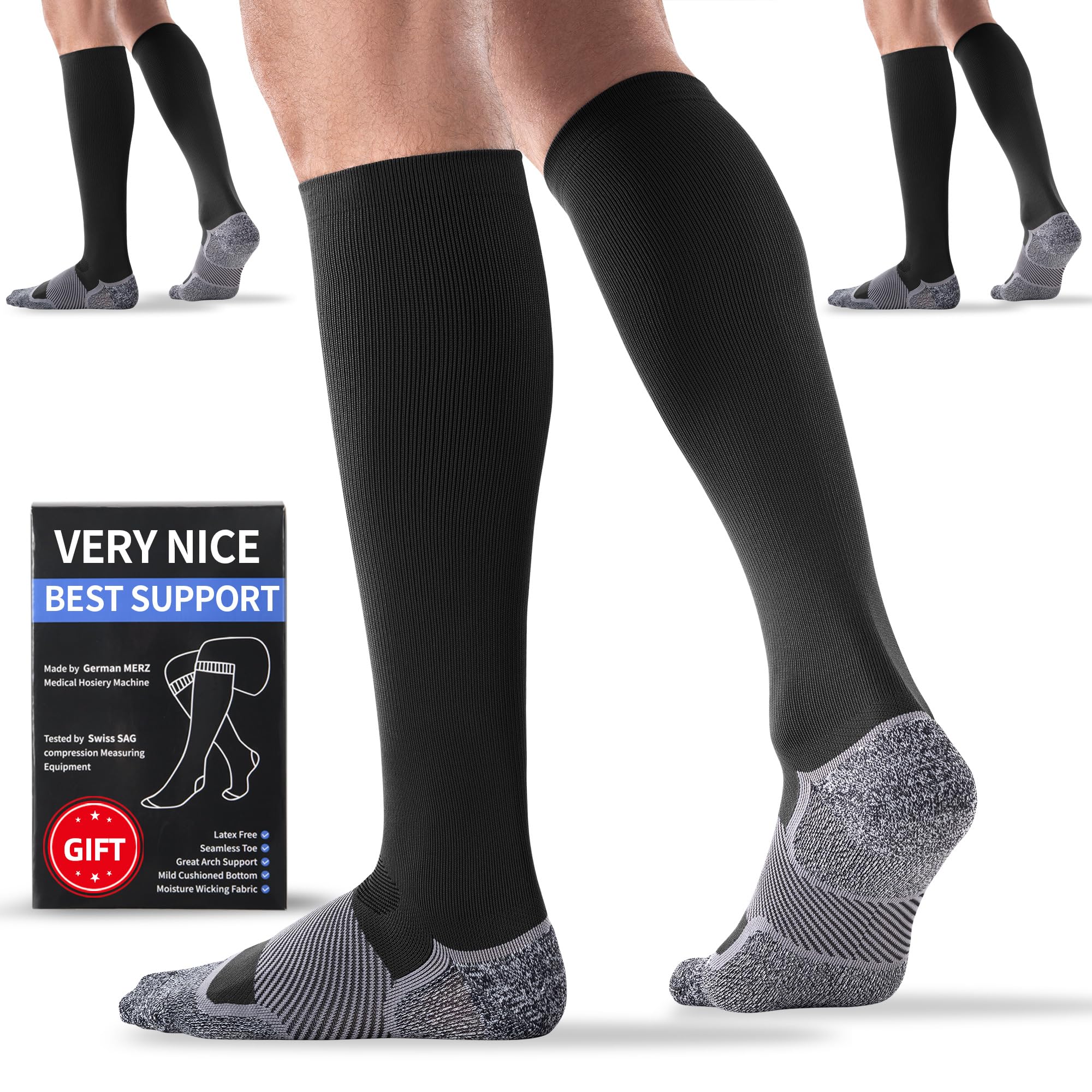
BBFREY positions itself as a medical-grade option built on German sock-making technology. The standout feature is the use of a unique inlay knitting method that embeds the elastic fibers within a softer outer layer. This construction allows the sock to deliver 20-30 mmHg of firm compression while keeping the fabric breathable and less abrasive against sensitive skin. The flat toe seam and lightly cushioned heel and toe add a layer of comfort that users with neuropathy or blister-prone feet will appreciate.
Customer reviews are consistently strong, with multiple users noting that the sock “effectively reduces edema” and that the foot feels “like a padded regular sock” rather than a thin nylon stocking. The size S/M fitted a women’s 10.5 shoe and 14.5-inch calf accurately, and reviewers report that the sock stays up for 11-plus hours without the top band cutting in or bruising the skin. The graduated compression is noticeably stronger at the ankle and foot, tapering correctly to a lighter grip at the top.
The only downside mentioned is a limited color and pattern selection, which is a cosmetic complaint rather than a performance issue. For heavy-duty foot pain that requires consistent, high-pressure support throughout a full workday or long-haul travel, BBFREY delivers a level of engineering and fit that rivals prescription brands at a fraction of the cost.
Why it’s great
- German inlay knit preserves 20-30 mmHg pressure through dozens of wash cycles
- Cushioned toe and heel with flat seam prevents blisters and raw spots
Good to know
- Color and pattern choices are limited compared to lifestyle-focused brands
- Air drying recommended to maintain elastic integrity long-term
4. Bluemaple 6 Pack Copper Compression Socks

Bluemaple’s six-pack is the most economical way to fill a sock drawer with graduated compression sleeves. The socks use copper-infused nylon that provides a firm squeeze at the ankle, graduating to a lighter feel at the calf. The wide top band is designed with 360-degree stretch to prevent rolling, which is a common pain point with cheaper compression socks. Multiple buyers confirm that the socks stay in place all day, even during 12-hour flights or full shifts on their feet.
Customer feedback highlights the “perfect compression” that is “tight yet do not pinch the skin behind the knee.” The socks breathe well, do not cause calf itching after extended wear, and maintain their shape after washing and drying without noticeable shrinkage. For users with small feet (size 6 women’s), the fit is accurate, and the design patterns are described as cute and stylish rather than clinical.
The catch is that the exact mmHg rating is not printed on the packaging or listing, and the compression feels slightly more moderate than the 20-30 mmHg targeted models. This makes them a strong option for daily comfort and mild foot fatigue, but they may not provide enough force for severe edema or acute plantar fasciitis. For most people, though, the combination of six pairs and reliable performance makes this the smartest entry-level buy.
Why it’s great
- Six pairs included give a full weekly rotation at a very low per-pair cost
- Wide top band with 360-degree stretch prevents rolling and digging
Good to know
- Exact mmHg rating is not disclosed; compression is medium-feel rather than clinical-grade
- Material is slightly on the thinner side, which may reduce durability over time
5. Doctor’s Select Bamboo Viscose Light Compression Socks
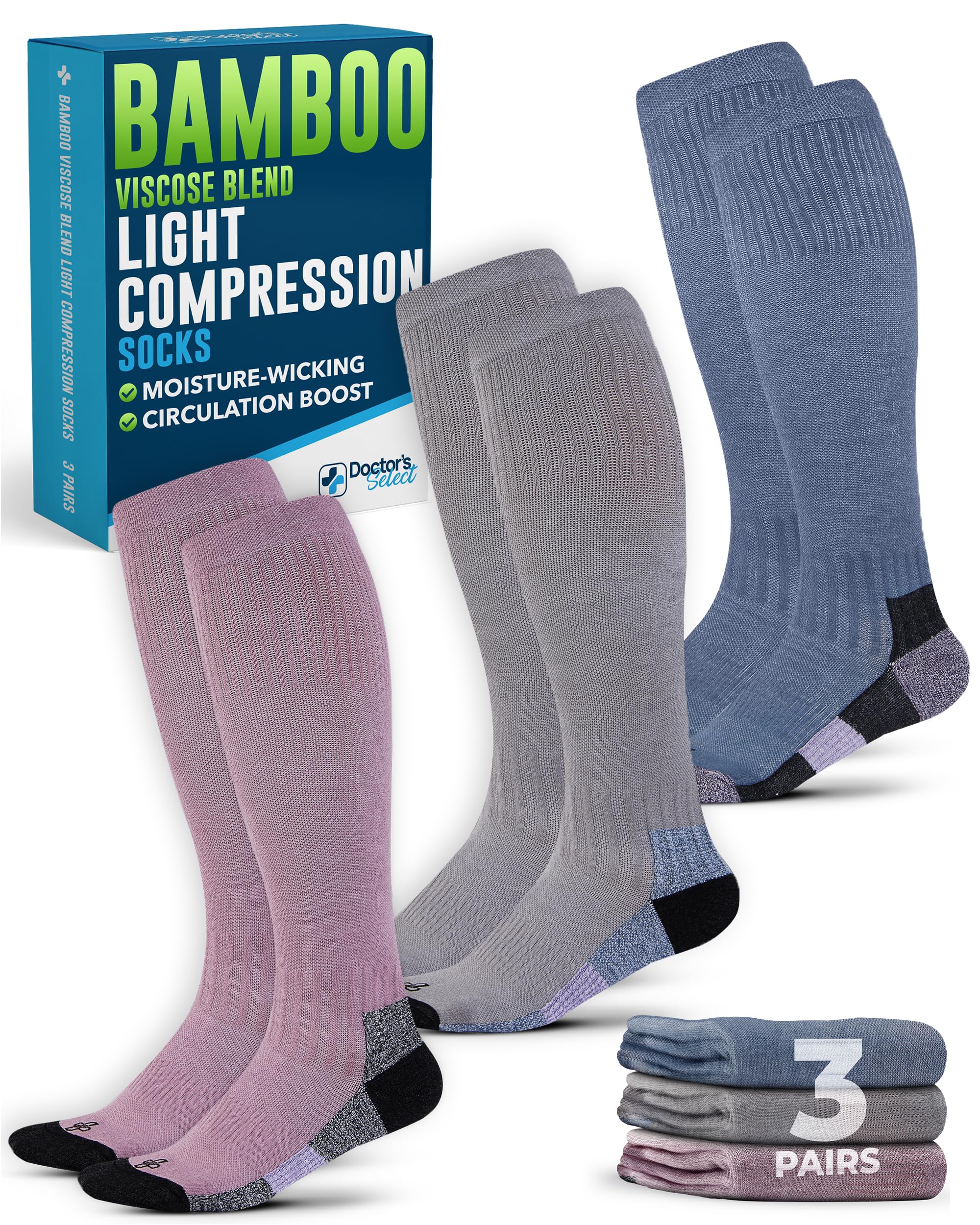
Doctor’s Select takes a gentler approach with an 8-15 mmHg compression level wrapped in bamboo viscose fiber. This is the go-to option for people whose foot pain is tied to everyday fatigue rather than clinical swelling or diagnosed plantar fasciitis. The bamboo fabric is exceptionally soft and lightweight — multiple users report that it “feels like a gentle hold” rather than a squeeze, which makes it ideal for sensitive skin or for those who find standard compression socks too hot or restrictive.
Reviewers who tried five other brands before settling on Doctor’s Select emphasize that these socks are “easy to put on” and do not leave deep indentation marks. The knit is breathable and kept feet warm but not sweaty on nine-hour flights, and one user wore them for over seven miles of walking without developing pain or swelling. The floral print is subtle and does not look medical, which adds to the appeal for casual or office wear.
The lower pressure level means these socks will not provide the mechanical arch support needed for moderate-to-severe foot pain. They are also slightly warmer than synthetic blends, which may be a drawback in hot climates. Still, for light daily compression that prioritizes comfort over therapeutic force, this is the best choice for mild foot ache or for people easing into compression wear for the first time.
Why it’s great
- Bamboo viscose fabric is ultra-soft and breathable, reducing skin irritation
- Low pressure profile makes them easy to don and comfortable for all-day casual wear
Good to know
- 8-15 mmHg is too mild for significant swelling or clinical plantar fasciitis
- Floral pattern may leave temporary imprints on the skin after long wear
FAQ
Can I wear 20-30 mmHg compression socks for plantar fasciitis all day?
How do I know if my compression socks are too tight?
Do copper-infused socks really help with foot pain?
Will compression socks help if I only have arch pain and no swelling?
Final Thoughts: The Verdict
For most users, the best compression socks for foot pain winner is the NEENCA Copper Compression Socks because its patented six-ring ankle technology delivers targeted graduated pressure exactly where plantar fasciitis and ankle swelling concentrate. If you want an ankle-height option with dedicated arch support for mild foot ache, grab the PAPLUS Ankle Running Socks. And for all-day medical-grade pressure with German-engineered knit that holds its shape after dozens of wears, nothing beats the BBFREY Medical Compression Socks 20-30 mmHg.

Mo Maruf
I created WellFizz to bridge the gap between vague wellness advice and actionable solutions. My mission is simple: to decode the research and give you practical tools you can actually use.
Beyond the data, I am a passionate traveler. I believe that stepping away from the screen to explore new environments is essential for mental clarity and physical vitality.