Our readers keep the lights on and my smoothie glass nicely filled. As an Amazon Associate, I earn from qualifying purchases.
If you are on your feet all day, traveling, or dealing with swelling, the right pair of compression socks can feel like a secret weapon. But 20-30 mmHg socks (the kind doctors often recommend for moderate support) can be hard to wear, tricky to put on, and confusing to choose. This guide cuts through the marketing to find the pairs that actually deliver relief without cutting off your circulation or wearing out after a few washes.
I’m Mohammad Maruf — the co-founder and writer behind WellFizz. This guide is built by comparing the manufacturers’ published specifications and the patterns across verified customer reviews, so you get each pick’s real strengths and trade-offs instead of marketing spin.
You will find five pairs of medical-grade socks that have been tested by real people in real situations—from 12-hour nursing shifts to post-surgery recovery. Whether you need easy-on access, wide calf fits, or a budget-friendly pack, here is the straightforward breakdown of the best compression socks 20-30 mmhg you can buy right now.
How To Choose The Best Compression Socks 20-30 MmHg
Not all compression socks are the same, even when they share the same 20-30 mmHg label. The biggest mistake buyers make is buying based on shoe size alone. Your calf measurement is actually more important, because a sock that is too tight around the top will leave painful red lines, while one that is too loose will slide down and offer zero support.
Fit: Measure Your Calf, Not Just Your Shoe
Every sock listed here needs two measurements: your ankle circumference and your widest calf circumference. Most brands provide a size chart in the product images. Take those measurements first thing in the morning when swelling is at its lowest—socks that fit well at 8 AM will still be comfortable after a full day on your feet. If your measurement falls between two sizes, go up a size.
Material and Breathability
A 20-30 mmHg sock is already a tight garment, so the fabric needs to move moisture away from your skin to prevent overheating. Nylon and spandex blends (like 80% nylon/20% spandex) offer a good balance of stretch and durability. If you live in a warm climate or run hot, look for a “mesh top” or a “breathable” knit panel—some buyers report that thicker socks can be too warm for summer wear.
Special Features: Zippers, Toe Seams, and Cushioning
If you have arthritis, weak grip, or severe swelling that makes bending over painful, a side zipper can be a total standout. However, zippered socks are usually thicker and the zipper hardware can feel bulky under slim pants. For daily wear, the “close toe” style with a seamless toe box prevents blisters, and a light cushion in the heel and foot absorbs shock when you are walking or standing all day.
Quick Comparison
On smaller screens, swipe sideways to see the full table.
| Model | Category | Best For | Key Spec | Amazon |
|---|---|---|---|---|
| Physix Gear | Best Overall | All-day wear & pain relief | 20-30 mmHg / graduated | Amazon |
| SB SOX | Wide Calf | Larger calves & durability | 20-30 mmHg / up to 24″ calf | Amazon |
| Ailaka Zipper | Easiest On/Off | Limited mobility & edema | 20-30 mmHg / YKK zipper | Amazon |
| BBFREY (3-Pack) | Best Value | Budget-friendly multiple pairs | 20-30 mmHg / 3 pairs | Amazon |
| Benirap Breathable | Breathable | Warm weather & activity | 20-30 mmHg / 2 pairs | Amazon |
In‑Depth Reviews
1. Physix Gear Compression Socks (20-30 mmHg)

20-30 mmHg graduated compression and consistent all-around performance make the Physix Gear Compression Socks the top pick for the widest range of people—from nurses pulling 12-hour shifts to anyone with severe knee osteoarthritis and swelling. Owners mention that the graduated compression (which is strongest at the ankle and gradually loosens up the calf) provides “excellent compression for severe knee osteoarthritis and swelling,” and the arch support keeps the foot stable inside the sock.
These socks stay up without rolling down, and the floral design is actually woven into the fabric rather than printed, so it does not peel off after washing. They fit most 15-16 inch calves and a size 10 shoe comfortably, and the cushion in the heel and toe adds enough padding for hard floors. One review noted that after a full shift, the socks significantly reduced foot and ankle swelling.
The honest limit: the toe area runs slightly short for larger feet (size 10-11), and a few buyers found the sock too long for their leg, causing wrinkles at the ankle that dug into the skin. If you have a longer calf or a high-arch foot, you might need to consider a different fit. The verdict: if you want one pair that covers the most bases for daily use, this is it.
Why it’s great
- Strong arch support and cushioned heel reduce foot fatigue
- Made of soft, high-quality fabric that holds up to repeated washing
- Popular floral patterns add style to a medical necessity
Good to know
- May be too long for shorter legs, causing ankle wrinkles
- Toe box can feel tight for shoe sizes 10-11
2. SB SOX Compression Socks (20-30 mmHg)

Where the Physix Gear socks top out around a 16-inch calf, the SB SOX line extends all the way to a 24-inch calf circumference with their XX-Large size—giving them a clear edge for anyone with larger legs. The fabric blend (80% nylon / 20% spandex) also holds its elasticity far longer than most competitors: one verified buyer reports that their pair “lasts 6+ years with no loss of elasticity (air dry only).”
These socks are built for heavy rotation. The toe and heel have less compression, so you can wiggle your toes freely while the calf gets firm support, and the top band stays put without digging in. After two long flights, reviewers noted “zero edema” compared to other brands, and the cushioned foot padding makes them comfortable for all-day standing.
The catch: the sizing is tricky for sensitive skin. Some buyers found that the Large size left deep red lines on the calf, and sizing up to XL solved the issue. If you have sensitive skin or are between sizes, order up. Anyone with a calf circumference over 16 inches or anyone who wants a sock that might outlast their shoes should choose these over the Physix Gear.
Where it shines
- Available in five sizes, from 11-inch to 24-inch calf circumference
- Toe area is free of compression for natural movement
- Multiple customers note extreme long-term durability
Worth noting
- Size chart needs careful reading; may run small for some calf shapes
- Some pilling over time, though only cosmetic
3. Ailaka Zipper Compression Socks (20-30 mmHg)

For anyone who struggles to pull on standard compression socks—elderly users, people with arthritis, or those recovering from surgery—a side zipper changes everything. The Ailaka socks use a YKK zipper with an extended handle, so you can zip them up without bending over or fighting the fabric. One reviewer with a broken foot wore three pairs rotated for six months and called them “comfortable, effective compression for swelling” and durable for daily wear.
The 20-30 mmHg pressure is graduated, meaning it is tightest at the ankle and loosens as it goes up, which helps blood flow back toward the heart. The fabric is 70% nylon and 30% spandex, giving it a firm hold that some reviewers point out feels “much tighter” than other socks with the same mmHg rating. That extra tightness can be a good thing if you need stronger support, but it also means you must measure your calf carefully.
The zippers are sturdy and lie flat, but they add a bit of bulk around the ankle that might feel noticeable under slim pants or in tight shoes. The standout spec here is the size range—from medium all the way to 5X-Large—so this is one of the few options for very large calves.
What stands out
- YKK zipper makes putting on and taking off effortless
- Available in sizes up to 5X-Large for severe swelling
- Durable enough to survive daily wear for months
The trade-offs
- Fits tighter than other 20-30 mmHg socks; size up if in doubt
- Zipper may feel bulky under very slim-fit pants
4. BBFREY Medical Compression Socks 3-Pair (20-30 mmHg)
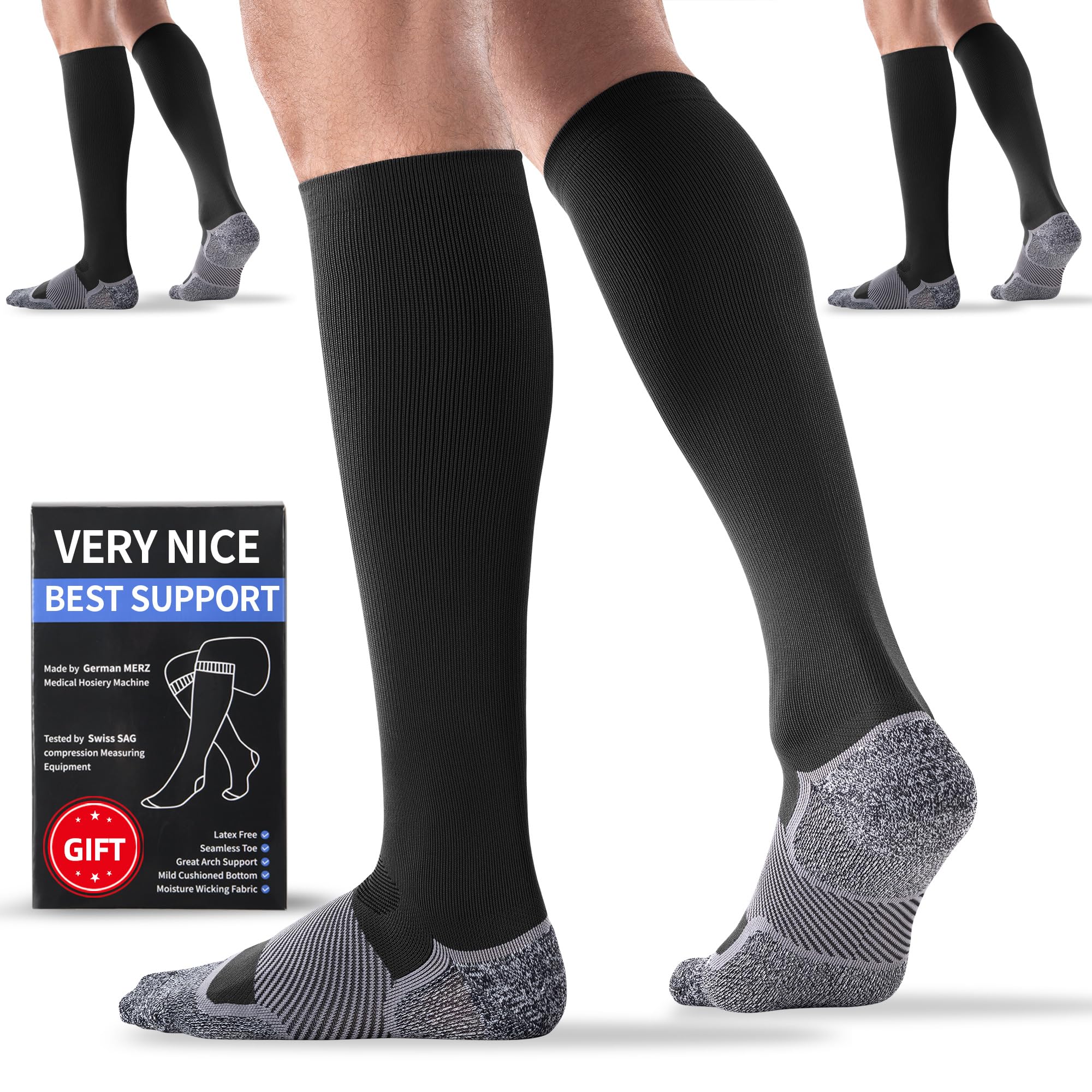
The single number that matters most in this category is cost-per-pair, and the BBFREY 3-pack scores the best in this roundup. The compression is accurate to the 20-30 mmHg rating, with a graduated design that is stronger at the feet and lighter toward the top. Buyers with size 10.5 women’s shoes and 14.5-inch calves found the size chart to be accurate and the socks stayed up for 11-hour shifts without slipping down.
The downside: you get three pairs, but the color and pattern options are limited compared to the single-pair competitors. The fabric is well-made with flat toe seams (to prevent blisters) and a lightly cushioned footbed that feels like a regular athletic sock. One reviewer noted the “snug arch support” and “wide seamless toe” as standout features that made the socks comfortable all day.
At this price point, you also get German-made knitting technology that the manufacturer says ensures lasting pressure and durability. If your main goal is to stock your drawer with reliable socks for daily use or travel without overthinking it, this pack delivers on both value and performance.
The upsides
- Three pairs for the price of one premium pair
- Flat toe seams prevent blisters even after all-day wear
- Graduated compression stays accurate through many washes
Keep in mind
- Limited color and style options compared to single-pair socks
- Some buyers wish for more cushioning in the footbed
5. Benirap Breathable Compression Socks 2-Pair (20-30 mmHg)
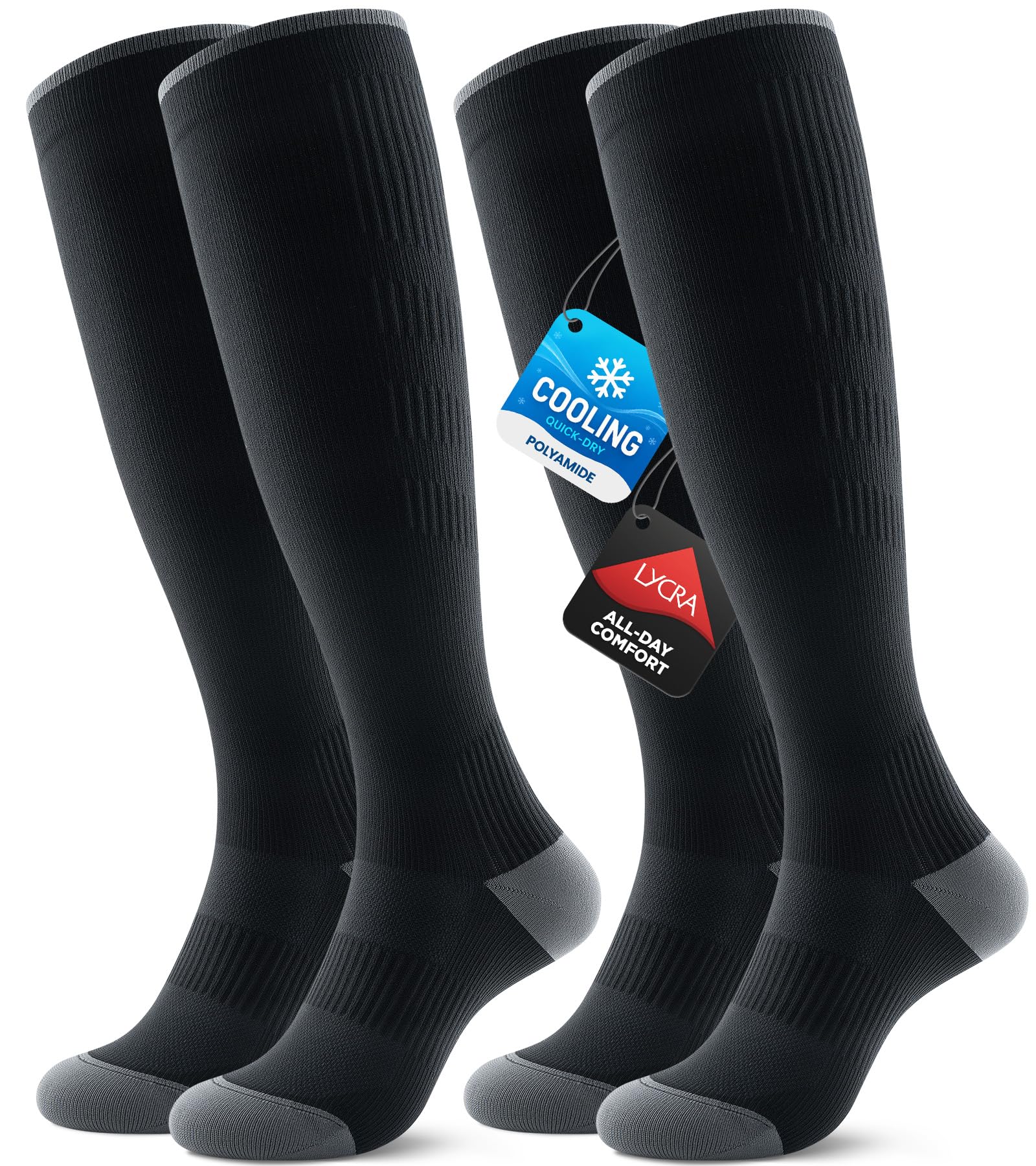
At 3.94 x 3.94 x 0.79 inches, these socks come in a package that is roughly half the volume of the Ailaka zipper socks (which measure 8.62 x 6.1 x 1.02 inches), and that smaller build carries through to the fabric itself. The Benirap socks use a breathable mesh panel at the top of the foot to let heat escape, which directly addresses a common complaint with 20-30 mmHg socks: they get too hot. One reviewer confirmed they are “very thick and warm socks,” noting they are best reserved for winter wear—so if you tend to run cold, this is actually a feature.
The 2-pack gives you a backup pair without the bulk of a 3-pack. The socks feature an Achilles heel protector, a reinforced toe with an invisible seam, and a thick terry sole for cushioning. The fabric is Oeko-Tex certified (meaning it is tested for harmful substances) and antimicrobial, which helps control odor during long days.
The honest limit here is temperature management: despite the breathable mesh top, several buyers find these socks too warm for spring and summer use. If you primarily need compression for warm-weather travel or outdoor sports, look at a thinner pair. But if you want a durable, well-cushioned pair for cooler months or air-conditioned environments, this 2-pack is a solid choice, and it is perfect for the budget buyer who prioritizes winter warmth and extra cushioning over year-round versatility.
Why we’d pick it
- Oeko-Tex certified fabric and antimicrobial treatment reduce odor
- Reinforced heel and invisible toe seam improve durability
- Thick terry sole offers excellent underfoot cushioning
A few caveats
- Very warm socks—best suited for cooler weather
- Hand washing is recommended, not machine washing
Understanding the Specs
20-30 mmHg Compression Level
This is the “medical grade” range often prescribed for moderate swelling (edema), varicose veins, post-surgery recovery, and deep vein thrombosis prevention. A higher number means more squeeze: 15-20 mmHg is mild support for travel, while 20-30 mmHg provides firm, therapeutic pressure that pushes blood upward from your ankles. If you are new to compression socks, start here—it is strong enough to feel effective but not so tight that it is unbearable.
Graduated vs. Uniform Compression
Graduated compression means the sock is tightest at your ankle (where blood pools) and gradually loosens as it moves up your calf. This design actively helps your veins push blood back toward your heart. Uniform compression, which squeezes the same amount everywhere, is much less effective for medical purposes and is mostly used in cheap “recovery” socks. Every pair in this guide uses graduated compression.
FAQ
How tight should 20-30 mmHg socks feel?
Can I wear 20-30 mmHg socks to bed?
How do I know if I need a zippered compression sock?
How long do compression socks last before losing their elasticity?
Final Thoughts: The Verdict
For most buyers, the compression socks 20-30 mmhg winner is the Physix Gear Compression Socks because they offer the best balance of support, comfort, and durability for the widest range of daily uses from nursing to travel. If you have larger calves or want a sock that might outlast your shoes, grab the SB SOX Compression Socks. And for anyone with limited mobility who needs easy-on access, the standout is the Ailaka Zipper Compression Socks.

Mo Maruf
I created WellFizz to bridge the gap between vague wellness advice and actionable solutions. My mission is simple: to decode the research and give you practical tools you can actually use.
Beyond the data, I am a passionate traveler. I believe that stepping away from the screen to explore new environments is essential for mental clarity and physical vitality.