Our readers keep the lights on and my smoothie glass nicely filled. As an Amazon Associate, I earn from qualifying purchases.
The difference between a standard shop vac and a commercial HEPA vacuum isn’t just a filter—it’s the difference between blowing fine dust back into the air you breathe and truly trapping it. For contractors, restoration pros, and facility managers, the choice dictates whether a job meets OSHA silica standards or sends a plume of respirable particles through a worksite. The stakes are high, the specs matter, and the wrong unit wastes hours and risks health.
I’m Mohammad Maruf — the founder and writer behind WellFizz. I’ve spent hundreds of hours analyzing the filtration systems, motor specs, and user durability reports across the commercial cleaning industry to distill what actually separates a workhorse from a liability.
Whether you are outfitting a hotel cleaning team, managing a renovation crew, or running a professional detailing service, this guide to the best commercial hepa vacuum breaks down the six-figure decisions into real-world, spec-level comparisons.
How To Choose The Best Commercial HEPA Vacuum
A commercial HEPA vacuum is a capital investment, not an impulse buy. The wrong choice means frequent filter clogs, lost suction, or failed air-quality inspections. Here are the four criteria that matter most.
True HEPA vs. HEPA-Type
The legal threshold for true HEPA is 99.97% capture of particles at 0.3 microns—the most penetrating particle size. “HEPA-type” or “HEPA-like” filters do not meet this standard. For OSHA silica Table 1 compliance and lead RRP rules, only true HEPA filtration suffices. Always verify the product’s certification, not just the marketing language.
Auto-Filter Cleaning
In commercial settings, fine dust (drywall, concrete, sanding debris) cakes onto filter pleats within minutes, choking airflow. Machines with automatic filter cleaning—pulsing jets of air to knock dust loose—maintain steady suction without operator intervention. This feature separates mid-range extractors from pro-grade units designed for continuous use.
Form Factor and Mobility
Backpack vacuums free both hands for staircases, furniture, and ceiling details. Uprights cover broad carpeted areas faster. Canister dust extractors dominate on construction sites with tool-activation and high-capacity collection. The right form factor depends on whether you’re cleaning hotel hallways or finishing drywall in a new build.
CFM, Water Lift, and Motor Power
Airflow (CFM) determines how much air moves through the hose. Static water lift (inches) measures raw suction power against resistance. A vacuum with high water lift but low CFM will struggle to move air through long hoses or large filter bags. Look for a balanced combination—at least 100 CFM and 90+ inches of water lift for most commercial tasks.
Quick Comparison
On smaller screens, swipe sideways to see the full table.
| Model | Category | Best For | Key Spec | Amazon |
|---|---|---|---|---|
| Bosch VAC090AH | Canister Dust Extractor | OSHA Silica compliance | 150 CFM / 97″ water lift | Amazon |
| Makita VC4210L | Wet/Dry Dust Extractor | Combined wet/dry + HEPA | 148 CFM / 92″ water lift | Amazon |
| DEWALT DWV010 | Canister Dust Extractor | Tool-actuated operation | 150 CFM / 15 Amp motor | Amazon |
| ProTeam ProForce 1500XP | Upright Dual-Motor | Hotel & hospitality carpet | 68 dB / HEPA media | Amazon |
| Windsor Sensor XP12 | Upright Commercial | Heavy carpet & restoration | 1200W motor / 21.6 lbs | Amazon |
| ProTeam ProForce 1200XP | Upright Dual-Motor | Residential & light commercial | 12″ cleaning path / CRI Silver | Amazon |
| ProTeam ProVac FS 6 | Backpack HEPA | Restaurant & foodservice | 159 CFM / 65.8 dB | Amazon |
| Atrix Ergo Pro | Backpack HEPA | Quiet office & stairs | 72 dB / 8 quart bag | Amazon |
| Sanitaire SC886G | Upright Bagged | Deep carpet + pet hair | 18 quart bag / 2000 hr motor | Amazon |
In‑Depth Reviews
1. Bosch VAC090AH
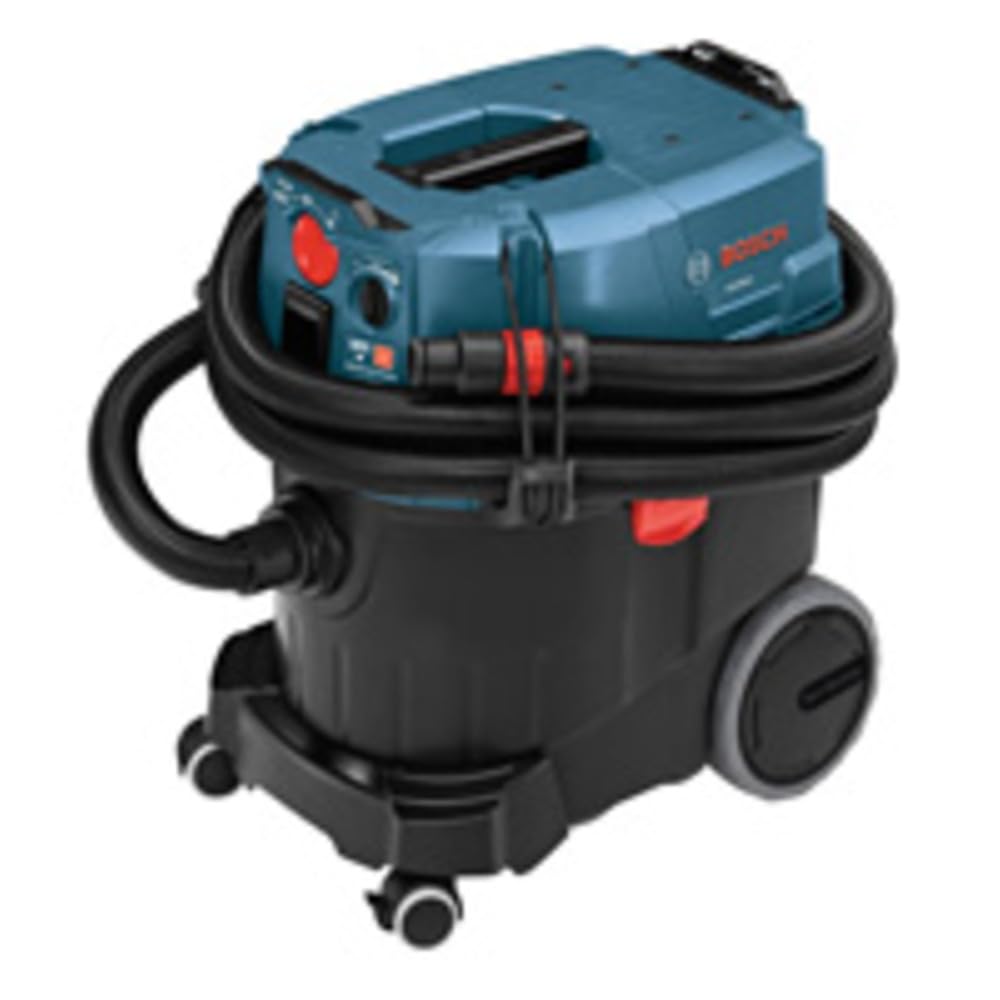
The Bosch VAC090AH is purpose-built for regulatory compliance. With 150 CFM airflow and a 97-inch static water lift, it outpaces most competitors in suction while maintaining HEPA-certified exhaust. The auto filter cleaning system pulses every 15 seconds to prevent dust loading, a critical feature when sanding drywall or cutting concrete indoors.
Its Power Broker dial lets you dial down suction for delicate applications, and the tool-actuated outlet turns the vacuum on and off with your power tool—saving seconds on every cycle. The fleece filter bag catches the bulk of debris before it reaches the HEPA element, extending filter life considerably. At 4488 quarts rated capacity, you will rarely stop to empty it on a full workday.
The design is compact and rolls smoothly on 20-inch casters, though the hose storage solution is a bit awkward. Users report the auto-clean thump can be disabled for noise-sensitive environments. For contractors needing OSHA silica Table 1 compliance, this is the most cost-effective path.
Why it’s great
- True HEPA with OSHA Table 1 compliance
- Auto filter clean every 15 seconds maintains peak suction
- Tool-actuation eliminates manual on/off cycling
Good to know
- Auto-clean thump is loud and may startle nearby workers
- No comprehensive attachment kit included at this price point
2. Makita VC4210L

The Makita VC4210L is the rare wet/dry extractor that doesn’t compromise on HEPA filtration. Its 12-amp motor produces 148 CFM and 92 inches of water lift, figures that rival dedicated dry-only dust extractors. The automatic filter cleaning system pulses every 20 seconds, and critically, it can be disabled in wet mode to avoid re-aerosolizing moisture.
Makita equipped this unit with a variable speed control—a standout feature for sanding and polishing tasks where full suction would pull the tool aggressively. The onboard tool-activated power outlet includes a 10-second delay to clear the hose after the tool shuts off. The two-stage filtration uses a main flat filter (99.95% at 2 microns) followed by the HEPA element (99.97% at 0.3 microns).
Users consistently note how quiet it runs compared to standard shop vacs, though the auto-clean “whump” is distinct. The 11-gallon capacity is generous for a HEPA extractor. Be aware the unit lacks a 2.5-inch hose port, so large debris pickup requires an adapter. For professional tradespeople who need both wet pickup and true HEPA in one machine, this is the benchmark.
Why it’s great
- Dual wet/dry capability with true HEPA certification
- Variable speed control adapts suction to the tool
- 10-second shutoff delay clears hose debris automatically
Good to know
- No 2.5-inch hose adapter for large debris handling
- Auto-clean noise is noticeable but can be disabled
3. DEWALT DWV010
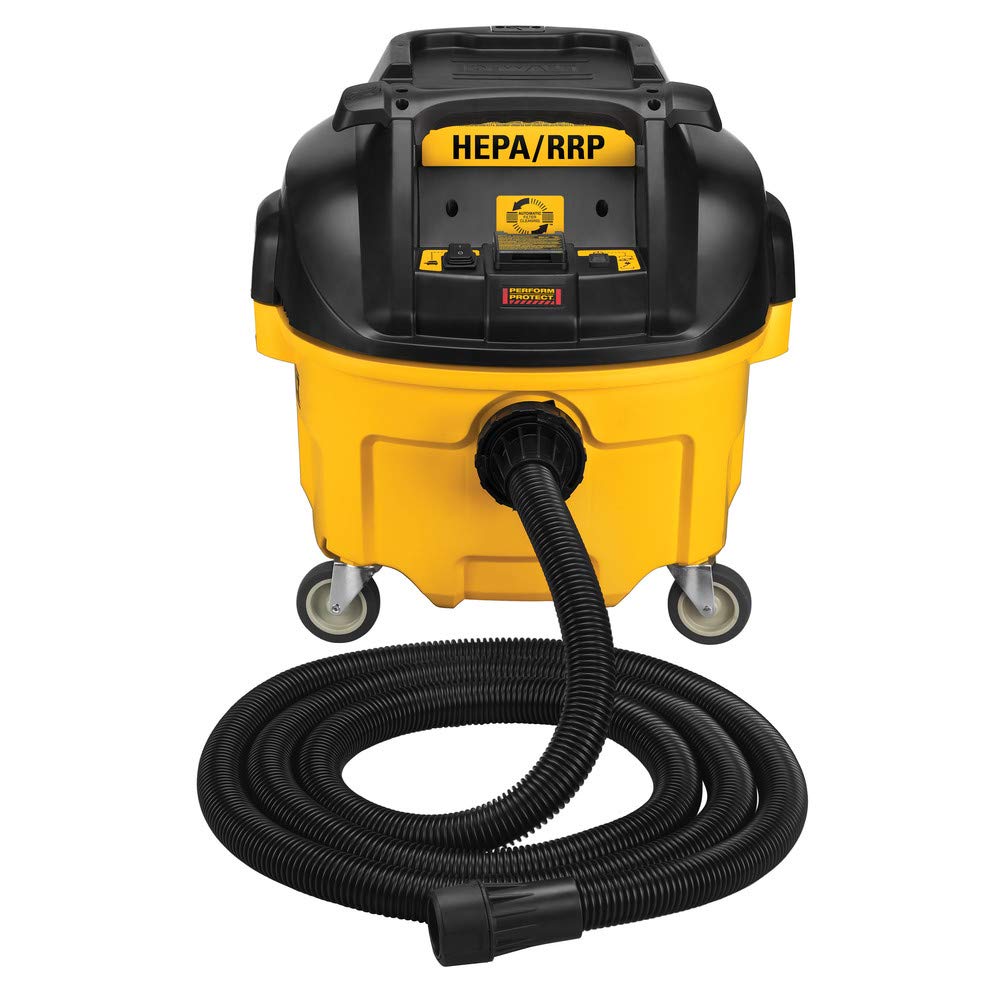
The DEWALT DWV010 bridges the gap between a high-end shop vac and a true HEPA dust extractor. Its 15-amp motor delivers 150 CFM, and the automatic filter cleaning pulses every 30 seconds to maintain airflow through fine dust loads. The Power Tool Actuation feature turns the vacuum on and off with a connected tool—native interoperability with DEWALT’s corded sanders and saws.
It meets the EPA RRP rule for HEPA vacuums when paired with the DWV9330 filter, making it compliant for lead-safe renovation work. The 8-gallon capacity is adequate for a single tradesperson’s day. The 15-foot anti-static hose reduces static shock and dust cling, a thoughtful detail for drywall and sanding dust. Universal hose connector swivels freely to avoid kinking.
Users report that suction is slightly lower than a standard shop vac due to the HEPA filter’s resistance, but the self-cleaning feature compensates by maintaining consistent performance. The friction-fit accessories can separate during heavy use, and the unit is heavy when full. For DEWALT ecosystem owners, the DWV010 integrates seamlessly; for others, the ProVac FS 6 or Bosch VAC090AH may offer better value.
Why it’s great
- Tool-actuation works natively with DEWALT corded tools
- 15-amp motor provides strong CFM for fine dust extraction
- Meets EPA RRP lead-safe renovation requirements
Good to know
- HEPA filter restricts airflow compared to non-HEPA shop vacs
- Friction-fit hose accessories can separate during heavy use
4. ProTeam ProForce 1500XP

The ProTeam ProForce 1500XP is the upright dual-motor reference for the hospitality industry. Two motors—one dedicated to suction, one to the brush roller—ensure the brush never bogs down on high-pile carpet. The four-level advanced filtration system ends with a HEPA media filter that traps 99.97% of particles at 0.3 microns, earning it a CRI Bronze certification.
The 50-foot power cord lets a housekeeper clean over 7,000 square feet without switching outlets. The large rubberized wheels glide over carpet transition strips without catching. On-board tools (wand, crevice tool, brush) are always within reach, and the 3.25-quart bag is quick to change via ProTeam’s proprietary bag dock—no dust exposure.
Users praise the quiet operation (68 dB with the brush engaged) and the consistent suction. However, the unit is noticeably top-heavy and can tip over when the hose is extended fully. The piano-hinge compartment holding the hose inlet has been reported as a failure point. For hotel chains and commercial cleaning fleets, the 1500XP is a proven workhorse, but the weight distribution takes adjustment.
Why it’s great
- Dual motors sustain brush power on thick carpet
- 50-foot cord covers large spaces without outlet changes
- CRI-certified HEPA media filtration improves indoor air quality
Good to know
- Top-heavy design tips easily when hose is fully extended
- Hose inlet compartment hinge is susceptible to breakage
5. Windsor Sensor XP12
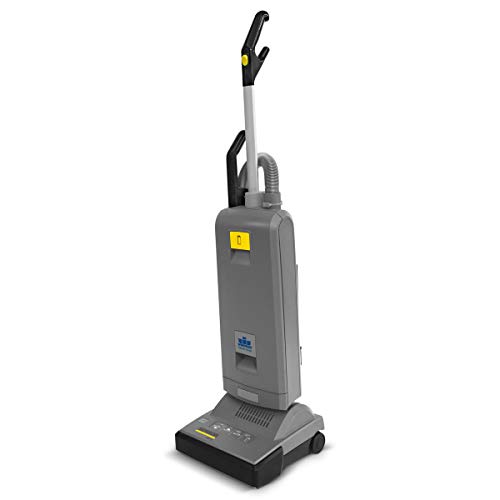
The Windsor Sensor XP12 is built for abuse in high-traffic commercial environments. Its 1200-watt motor and electronic automatic height adjustment mean the brush roller self-tunes to carpet depth—no manual dials or levers. The Super High Efficiency filtration traps 99.6% of particles at 0.3 microns, approaching true HEPA levels without the certification cost premium.
The handle is notably light at the grip, reducing operator fatigue during long shifts. On-board tools and an integrated wand make detailing around baseboards and under furniture seamless. The bagged design eliminates dust release during disposal—a critical feature for allergy-sensitive environments. The unit is heavy at 21.6 pounds, but the weight is balanced low for stability.
Users report the vacuum maintains strong suction even after years of use, but the plastic foot pedal for the height adjustment has a weak spring and can snap. The vacuum also tends to fall over when using the hose attachment. For commercial cleaners who prioritize durability and simple maintenance, the Sensor XP12 is tough to beat, provided you reinforce the pedal early.
Why it’s great
- Electronic auto height adjustment—no manual tuning
- Light handle weight reduces operator arm fatigue
- Bagged design with HEPA-level filtration for clean disposal
Good to know
- Plastic foot pedal spring is fragile and may break early
- Vacuum tips over when hose is used at full extension
6. ProTeam ProForce 1200XP

The ProTeam ProForce 1200XP is the sibling to the 1500XP, targeting residential cleaning services and light commercial use. The dual-motor system maintains independent power to both the brush roller and suction motor, ensuring you don’t lose pickup on thicker carpets. The four-level filtration ends with HEPA media and carries a CRI Silver certification—a higher cleanliness rating than the 1500XP’s Bronze.
The 12-inch cleaning head is nimble for tight spaces, and the L-shaped low-profile design slides under beds and furniture without lifting. The 50-foot cord provides the same range as the larger model, and the ultra-flexible hose extends to reach ceiling corners and ceiling fan blades. The bag capacity is 3.25 quarts, requiring more frequent changes than the Sanitaire SC886G.
Users praise the suction power and quiet operation (62 dB without the brush). However, the unit is top-heavy—reviewers note it tips over easily, potentially scuffing walls. The handle assembly can be tight during setup and prone to creasing. For cleaning companies that prioritize air quality certification and maneuverability in furnished homes, the 1200XP earns its place, but the weight distribution requires caution.
Why it’s great
- CRI Silver certification for superior allergen removal
- Dual motors preserve brush speed on plush carpets
- Low-profile L-shaped head fits under furniture easily
Good to know
- Top-heavy design tips over and may damage walls
- Small 3.25-quart bag requires frequent changes
7. ProTeam ProVac FS 6
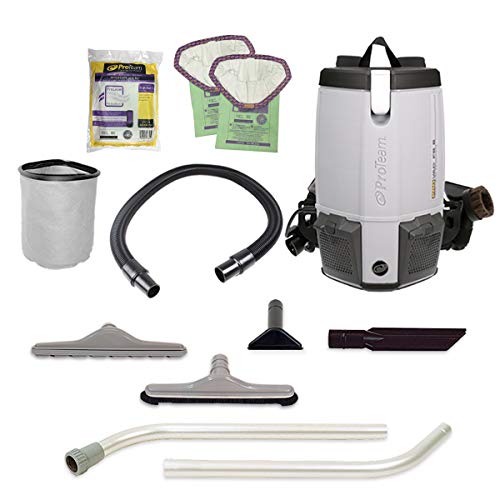
The ProTeam ProVac FS 6 is a backpack vacuum designed specifically for the foodservice industry—restaurants, bars, cafeterias, and hotel kitchens. It ships with a restaurant tool kit including crevice and upholstery tools optimized for cleaning around tables, chairs, and booth seating. The four-level filtration system uses a HEPA media filter certified to capture 99.97% of particulates at 0.3 microns.
At 159 CFM, it moves more air than any upright in this lineup. The FlexFit harness is adjustable and includes additional padding for long shifts. An open-weave fabric on the back pad helps keep the operator cooler during extended use. The 50-foot cord reduces outlet switching, and the 6-quart bag capacity is generous for a backpack unit. Sound output is limited to 65.8 dB—quiet enough for use during restaurant operating hours.
Users report the harness distributes weight well for a 15-pound unit, though the mass can become noticeable on the back after several hours. The suction is powerful enough for fine food debris and crumbs. The unit can overheat if used for extremely heavy dust loads like fire restoration powder. For professional restaurant cleaners and kitchen staff, the ProVac FS 6 is ergonomically tuned and HEPA-certified.
Why it’s great
- Highest CFM in the lineup at 159 for fast cleaning
- Ergonomic FlexFit harness with ventilation reduces fatigue
- Quiet 65.8 dB operation suitable for active dining areas
Good to know
- 15-pound weight can fatigue the back after long sessions
- May overheat when tasked with heavy powder/ash debris
8. Atrix Ergo Pro

The Atrix Ergo Pro backpack vacuum is the entry-level commercial HEPA solution without sacrificing critical filtration. The 1400W motor generates 106 CFM and uses a two-stage HEPA filtration system that traps 99.97% of particles at 0.3 microns. At 72 dB, it’s quieter than a telephone dial—ideal for office environments, hotels, and libraries where noise is a constraint.
The 8-quart HEPA filter bag is larger than most backpack options, reducing bag change frequency. The unit weighs 19.25 pounds, which is heavier than the ProVac FS 6 but distributed across a padded ergonomic harness. The included tool set covers carpet, hard floor, upholstery, and crevice cleaning—a genuinely comprehensive starter kit. The 50-foot cord covers extensive ground.
Users note that the suction is adequate for general commercial cleaning but not as aggressive as the ProTeam backpack or the Bosch extractor. The wand bottom clip is prone to rotation due to a faulty design, which can be frustrating. There is no adjustable suction control, so users must adapt their technique for delicate surfaces. For the price, it’s a reliable HEPA backpack suited to noise-sensitive commercial spaces, provided you handle the wand clip carefully.
Why it’s great
- Very quiet 72 dB operation for noise-sensitive environments
- 8-quart bag capacity reduces interruption for emptying
- Comprehensive attachment set included out of the box
Good to know
- Wand clip rotates due to faulty design—potential frustration
- No adjustable suction control for delicate surfaces
9. Sanitaire SC886G
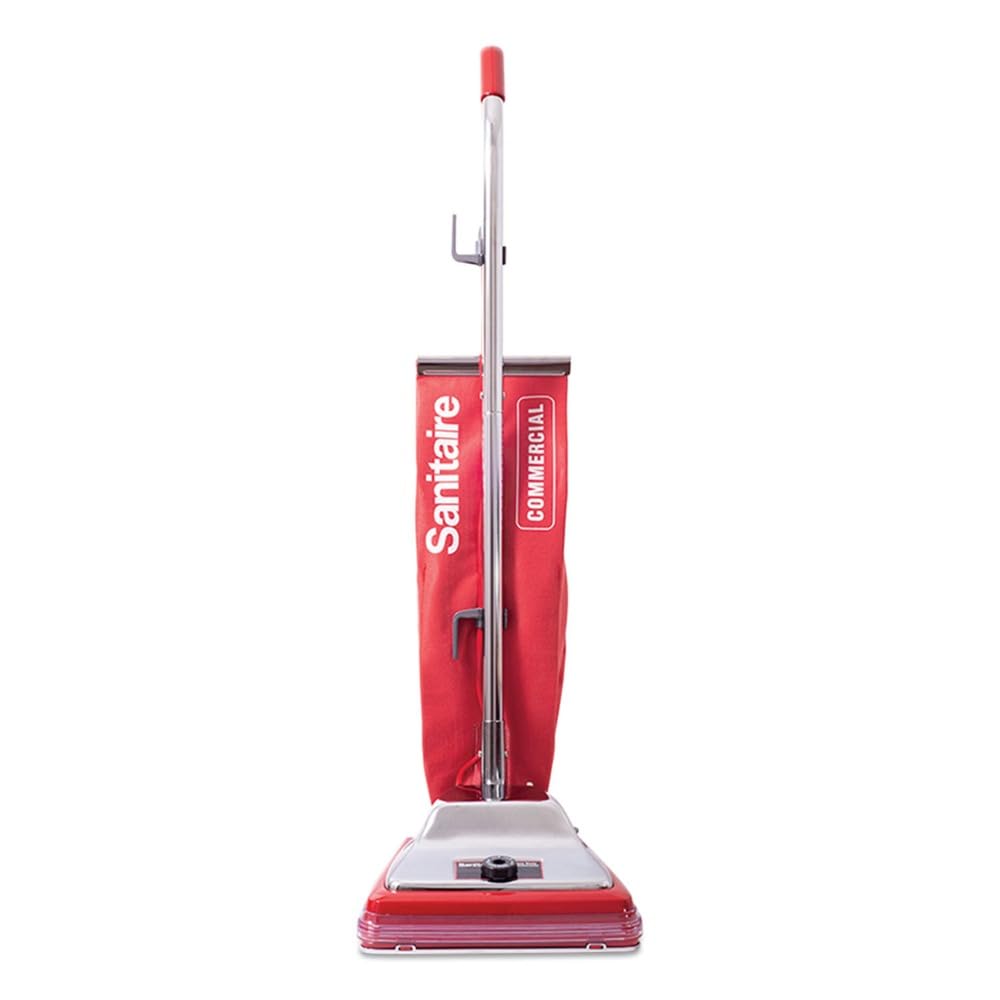
The Sanitaire SC886G is a plain-spoken commercial upright that focuses on brute-force carpet cleaning at a budget-friendly price. The extended-life motor is rated for over 2,000 hours—five times the lifespan of a standard household vacuum motor. The 18-quart shake-out bag is the largest capacity in this comparison, dramatically reducing downtime for emptying in high-traffic settings.
The tool-free brush roll and belt replacement, combined with a Quick Kleen fan chamber, make this one of the easiest commercial vacuums to maintain. The metal clip bag release system is simple and durable. The 50-foot detachable cord and 79 dBA sound level are squarely in the commercial norm. The beater bar agitates deep into carpet pile, pulling out sawdust, pet hair, and embedded dirt.
Users report exceptional performance on medium to high-pile carpet, though the brush roller cannot be disengaged for bare floors—using it on hard surfaces will scatter debris. The breakaway cord design automatically disconnects if stepped on, a safety feature some users hate and others appreciate. For facilities with extensive carpet, the Sanitaire SC886G offers the best capacity and motor longevity in its class.
Why it’s great
- 2000-hour motor life—five times household vacuum longevity
- Massive 18-quart bag for uninterrupted cleaning shifts
- Tool-free brush and belt replacement simplifies maintenance
Good to know
- Brush roller cannot be turned off—not for bare floors
- Breakaway cord disconnects if stepped on (polarizing feature)
FAQ
Can I use a regular shop vac and just add a HEPA filter?
What is the difference between HEPA media and true HEPA?
How often should the filter be replaced on a commercial HEPA vacuum?
Final Thoughts: The Verdict
For most users, the best commercial hepa vacuum winner is the Bosch VAC090AH because it balances true HEPA certification, OSHA silica compliance, and the most aggressive auto filter cleaning system (15-second interval) at a price that undercuts the premium tier. If you need wet/dry versatility without sacrificing HEPA, grab the Makita VC4210L. For deep carpet cleaning in hospitality environments, nothing beats the ProTeam ProForce 1500XP with its dual-motor sustained power and CRI-certified HEPA media filtration.

Mo Maruf
I created WellFizz to bridge the gap between vague wellness advice and actionable solutions. My mission is simple: to decode the research and give you practical tools you can actually use.
Beyond the data, I am a passionate traveler. I believe that stepping away from the screen to explore new environments is essential for mental clarity and physical vitality.