Our readers keep the lights on and my smoothie glass nicely filled. As an Amazon Associate, I earn from qualifying purchases.
The difference between a good night at the movies and a frustrating one often comes down to a single surface. You have paired a capable 4K projector with a powerful sound system, and yet you still see subtle undulations in the picture, or the image lacks the punch you expected. That bottleneck is your projection surface. A flimsy, poorly tensioned screen kills contrast, introduces hot spots, and turns a flagship projector into a mediocre experience. A proper fixed-frame or tensioned motorized screen is the one upgrade that transforms your entire home theater chain.
I’m Mohammad Maruf — the founder and writer behind WellFizz. I’ve spent hundreds of hours cross-referencing gain charts, frame thickness specs, viewing-angle measurements, and real owner experiences from dozens of models to isolate which cinema screens actually deliver the taut, uniform surface a serious home theater demands.
Whether you are outfitting a dedicated room with a fixed frame or need a motorized solution for a multi-purpose space, this guide cuts through the marketing to help you find the ideal best cinema screen for your specific projector, lighting, and installation constraints.
How To Choose The Best Cinema Screen
Selecting a cinema screen means balancing your projector’s lumen output, your room’s ambient light, and your installation space. The wrong screen can wash out a bright projector or introduce visible weave patterns. Here are the three critical decisions that will guide your choice.
Screen Gain and Viewing Angle
Gain measures how much light the screen reflects relative to a standard white surface. A gain of 1.0 is neutral, while 1.3 boosts brightness for projectors in the 2,000‑3,000 lumen range. Higher gain narrows the viewing angle, so if you have wide seating, look for a screen with a spec of 160° or wider. Most premium matte white surfaces hit a sweet spot of 1.0‑1.3 gain with a 170° viewing cone.
Fixed Frame vs. Motorized vs. Floor‑Rising
Fixed‑frame screens are the gold standard for permanent home theaters because the tensioned fabric stays perfectly flat and the velvet‑wrapped frame absorbs projector overshoot to improve perceived contrast. Motorized drop‑down screens save wall space and hide when not in use, but budget models can sag or show curl over time. Floor‑rising screens are ideal for ultra‑short‑throw projectors in living rooms, but they demand floor space and a flat, unobstructed path.
Material and Light Handling
Standard matte white PVC is excellent for light‑controlled rooms. If your space has windows or overhead lights, an Ambient Light Rejecting (ALR) screen with a lenticular or PET microstructure can preserve contrast by redirecting projector light toward the viewer while absorbing stray ceiling light. Acoustically transparent woven screens allow a center channel speaker to sit behind the fabric, but you may trade a small amount of brightness and gain for that placement flexibility.
Quick Comparison
On smaller screens, swipe sideways to see the full table.
| Model | Category | Best For | Key Spec | Amazon |
|---|---|---|---|---|
| Silver Ticket STR-169120-WAB | Premium Fixed Frame | Acoustic transparency & wide seating | 1.15 Gain / 160° | Amazon |
| Elite Screens ELECTRIC150H2 | Premium Motorized | Large-space motorized convenience | 150″ / 1.1 Gain | Amazon |
| Elite Screens ELECTRIC180H2 | Premium Motorized | Massive 180″ motorized setup | 180″ / 1.1 Gain | Amazon |
| AWOL VISION ALR-F220C | Premium Floor-Rising | UST projector with ALR | 120″ / 0.8 Gain / ALR | Amazon |
| NothingProjector NothPJ ALR | Premium Fixed ALR | Bright rooms with UST projectors | 85% ALR / 160° | Amazon |
| Elite Screens SF135HW2 | Mid-Range Fixed | Large 135″ on a budget | 135″ / 1.3 Gain | Amazon |
| AWOL VISION MW-120 | Mid-Range Fixed | Quick assembly with thin bezel | 120″ / 1.3 Gain / 170° | Amazon |
| Valerion Fixed Frame 120″ | Mid-Range Fixed | Wide 170° viewing angle | 120″ / 1.3 Gain / 170° | Amazon |
| Elite Screens ER100WH2 | Budget Fixed | Entry-level ISF certified performance | 100″ / 1.3 Gain | Amazon |
In‑Depth Reviews
1. Silver Ticket STR-169120-WAB

The Silver Ticket STR series is the top contender for anyone building a dedicated theater room who wants to hide a center channel speaker behind the screen. The woven acoustic material is dual‑layer, and owners consistently report zero audible sound loss, which is rare in this class. The 1.15 gain works well with projectors in the 2,000‑3,000 lumen range, and the 160° viewing angle means the side seats still see an even, bright image.
The frame itself is a heavy‑duty 3‑inch beveled aluminum wrapped in black velvet, giving the screen a thicker, more substantial bezel than thinner budget frames. The tensioning rod system is the star — it pulls the fabric uniformly tight so you do not get the corner ripples that plague spring‑only designs. Assembly is more involved than a basic fixed frame; many owners recommend watching the manufacturer’s video before starting.
The one catch is UST compatibility. Silver Ticket explicitly warns that some ultra‑short‑throw projectors do not play well with the STR frame geometry, so verify your projector model before buying. If you are using a standard or long‑throw projector, this screen delivers a flat, wrinkle‑free surface with audio transparency that rivals screens costing twice as much.
Why it’s great
- Acoustically transparent with no audible sound degradation
- Rigid 3‑inch aluminum frame resists warping
- Tensioning rods eliminate corner wrinkles
Good to know
- Assembly instructions are poorly sequenced; watch the video guide
- Not fully compatible with all UST projectors
2. Elite Screens Spectrum ELECTRIC150H2
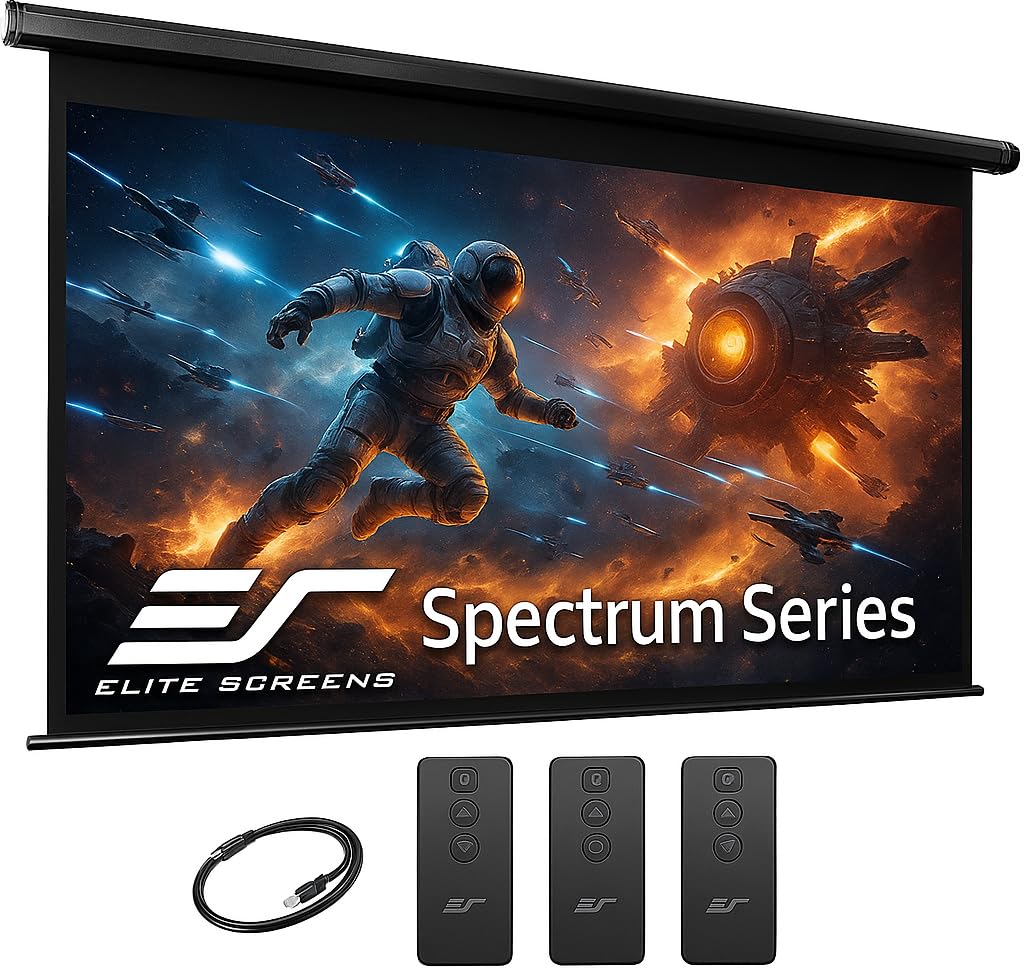
The Spectrum 150 is the right answer when you need a 150‑inch image but cannot dedicate a wall to a fixed frame. The motorized housing is finished in a durable black case that blends into a ceiling or wall, and the MaxWhite 2 matte surface delivers a uniform 1.1 gain with a 180° viewing angle — meaning the image stays consistent from every seat in a wide room. The ISF certification confirms the material reproduces color accurately without tinting.
Installation is plug‑and‑play. The screen arrives fully assembled in the housing, so you just mount it, wire the included wall box controller, and program the vertical drop stops. The IR remote works well, and the RJ45 input lets you integrate it with control systems if you are building a smart theater. Owners note the motor is quiet during operation; the screen stops smoothly at any preset height.
One important limitation: this motorized screen is not compatible with ultra‑short‑throw or short‑throw projectors. The fabric lacks the tension needed to stay perfectly flat for a projector sitting just inches from the surface. For standard‑throw projectors in a medium to large room, however, the Spectrum 150 is a reliable, large‑format motorized solution with excellent color accuracy.
Why it’s great
- Pre‑assembled housing simplifies ceiling installation
- Quiet motor with programmable drop stops
- ISF‑certified matte white surface for accurate color
Good to know
- Not compatible with short‑throw or UST projectors
- Initial plastic odor reported for the first few weeks
3. Elite Screens Spectrum ELECTRIC180H2
For home theaters where bigger is non‑negotiable, the Spectrum 180 delivers a massive 180‑inch diagonal image from a motorized housing that retracts cleanly when not in use. The MaxWhite 2 material is the same ISF‑certified matte white used on the 150‑inch model, so you get consistent 1.1 gain and a 180° viewing angle. The motor system includes both IR and RF remotes, plus an RF 12‑volt trigger for auto‑deployment when the projector powers on.
The housing is substantial — over 53 pounds — and requires two people for ceiling mounting. The programmable vertical drop position is essential at this size because you can adjust the screen height to avoid interfering with furniture or speakers. Owners who have owned the screen for several years report the motor still runs quietly and the fabric shows no sagging or curling, a testament to the roller mechanism’s build quality.
Like the 150‑inch variant, this model is restricted to standard‑throw projectors. The sheer size also demands a room with at least 15‑18 feet of throw distance. If you have the space and a projector bright enough to fill 180 inches, this motorized screen delivers a cinema‑scale image with reliable motorized convenience and the same accurate matte surface Elite Screens is known for.
Why it’s great
- 180‑inch diagonal in a motorized format
- Dual IR/RF remotes with selectable channels for multi‑screen setups
- Consistent matte white surface with no center crease
Good to know
- Heavy housing requires two people and sturdy ceiling anchors
- UST and short‑throw projectors are not compatible
4. AWOL VISION ALR-F220C
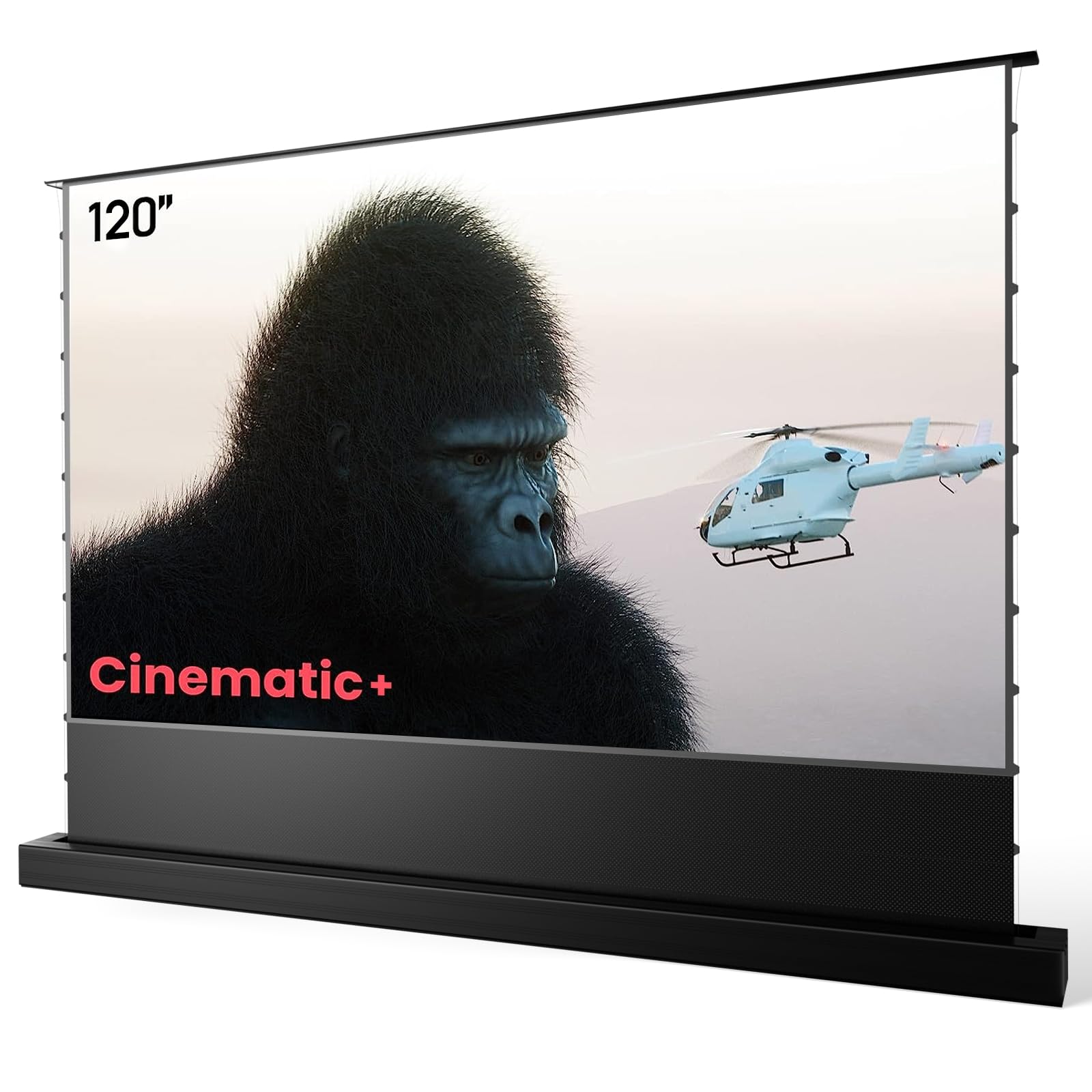
The AWOL ALR-F220C is the definitive floor‑rising screen for ultra‑short‑throw projectors. It eliminates the need for wall or ceiling mounting — the unit sits on the floor and rises at the push of a button. The HBSI ALR material rejects 95% of ambient ceiling light, which means you can watch with lamps on or during daytime without the washout that plagues standard white screens. The 0.8 peak gain is lower than a standard screen, but for UST projectors that typically output high lumens, the combination delivers deep blacks and punchy contrast.
The motorized mechanism includes a memory function that learns your preferred stop height, and the USB synchronization trigger can automatically raise the screen when your projector turns on. The acoustic‑transparent perforations (0.4mm holes) let you place a soundbar or center channel behind the fabric without muffling dialogue. Owners praise the build quality — the aluminum housing is heavy and stable, and the screen surface remains flat with no ripples even after repeated cycles.
The trade‑offs are floor space and stability. The unit weighs around 31 pounds and requires a clear, flat floor area. One owner reported the screen tipping over from a strong wind, though the screen material survived without damage. If your room has kids or pets, you may want to secure the base. For a dedicated UST setup where you want the screen to disappear when not in use, the AWOL ALR-F220C is unmatched in convenience and daylight performance.
Why it’s great
- 95% ambient light rejection for daytime viewing
- USB sync auto‑raises with projector power
- Acoustically transparent for behind‑screen audio
Good to know
- Requires significant floor space in front of the wall
- Base can tip in windy or high‑traffic environments without anchoring
5. NothingProjector NothPJ Classic Series ALR

The NothingProjector Classic Series ALR screen is engineered specifically for ultra‑short‑throw projectors in rooms that cannot be fully blacked out. The advanced PET Crystal material uses a lenticular microstructure to reject 85% of ambient light from above while reflecting projector light directly toward the viewer. The result is a image that maintains contrast even with ceiling lights on, which makes it a strong pick for living rooms or multi‑purpose spaces.
The fixed frame is ultra‑thin at just 10mm, giving the screen a modern, minimalist look that does not dominate the wall. The aluminum frame is sturdy and the spring‑loaded wall brackets make mounting easier than traditional fixed frames. Owners with decades of AV installation experience note the frame quality rivals much more expensive brands like Draper or Stewart. The 160° viewing angle ensures the picture stays consistent across a wide seating area.
Assembly is straightforward but the included instructions are sparse and poorly formatted, a common complaint. The gloves provided are too small, so have your own. Once assembled, the screen is wrinkle‑free and the ALR effect is dramatic — several owners report the projected image looks nearly identical with the lights on or off. If you have a UST projector and a bright room, this is one of the most effective fixed‑frame ALR screens at this price tier.
Why it’s great
- 85% ambient light rejection preserves contrast in lit rooms
- Ultra‑thin 10mm frame blends into the wall
- PET Crystal material is eco‑friendly and reduces glare
Good to know
- Assembly instructions are confusing and poorly translated
- Allergic to fiberglass; wear long sleeves and proper gloves during assembly
6. Elite Screens StarFrame SF135HW2
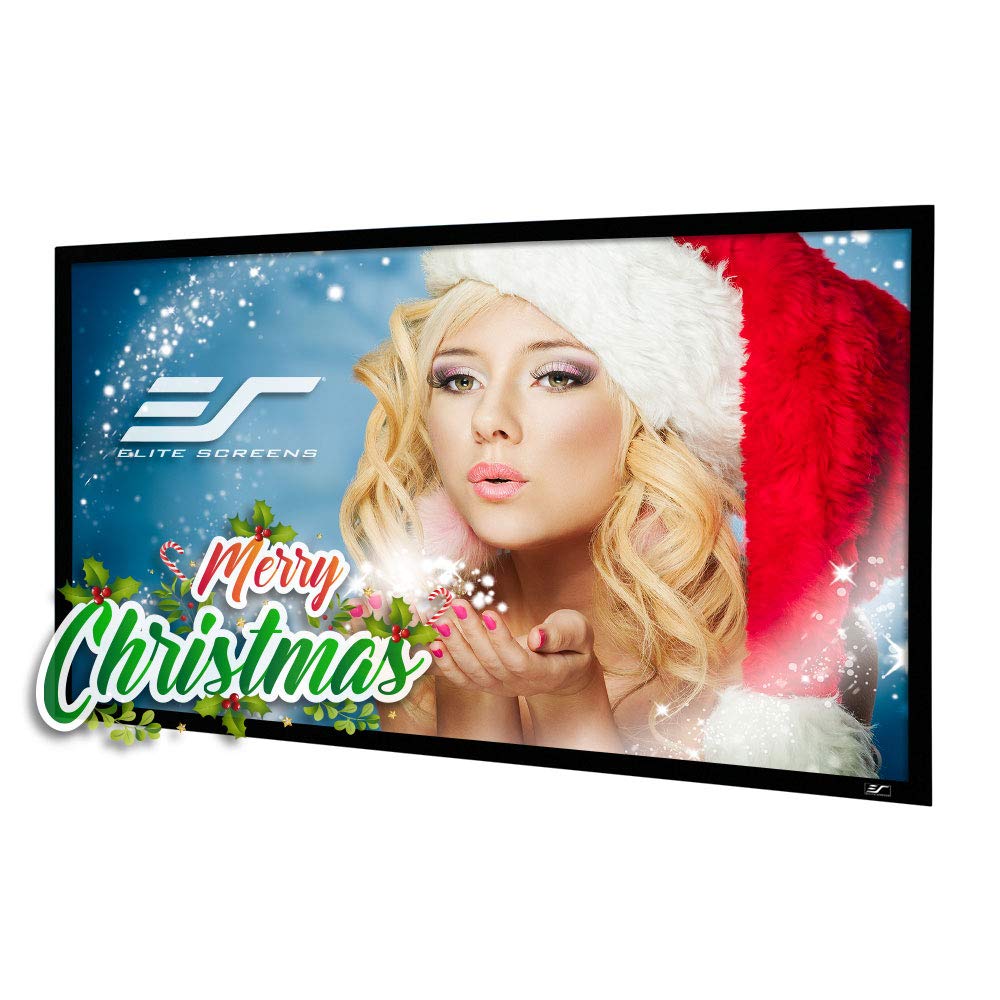
The Elite Screens StarFrame SF135HW2 brings a 135‑inch diagonal image and genuine ISF‑certified CineWhite UHD‑B material at a price that undercuts most 120‑inch competitors. The 1.3 gain provides a noticeable brightness boost for projectors in the 2,000‑4,000 lumen range, and the 180° viewing angle means the entire room sees a uniformly bright image. The 2.75‑inch velvet‑coated aluminum frame absorbs projector overspill to deepen on‑screen blacks.
The six‑piece frame assembles in about an hour with two people. The black‑backed screen material resists wrinkles, and owners consistently report a flat, tensioned surface after installation. The spring system is robust, though one owner noted the springs can stretch over time and recommends checking them during assembly. The screen is compatible with standard‑throw, short‑throw, and UST projectors, giving you flexibility if you upgrade your projector later.
The mounting brackets use a French cleat design that is secure once installed, but the screw spacing may not align perfectly with drywall studs. Some owners used toggle bolts for a secure mount. For the price, this is the largest ISF‑certified screen you can buy, and the CineWhite material delivers accurate color reproduction without the hot‑spotting that plagues cheaper high‑gain screens.
Why it’s great
- 135 inches from a ISF‑certified, 1.3 gain surface
- Velvet frame absorbs light overspill for better contrast
- Works with standard, short‑throw, and UST projectors
Good to know
- Mounting bracket holes may not align with stud spacing
- Spring tension system can require adjustment during assembly
7. AWOL VISION MW-120

The AWOL VISION MW-120 is a fixed‑frame screen that prioritizes a clean, modern look with its unusually thin bezel. The matte white PVC surface offers a 1.3 gain and a 170° viewing angle, making it suitable for medium‑bright rooms and standard‑throw projectors. The tensioning rod system is designed to keep the fabric flat without the need for extreme stretching, which reduces the risk of tearing the material during setup.
Assembly is one of the quickest in this category. Owners report completing a solo install in about an hour by lifting the frame onto the wall brackets from the bottom center. The included kit has all necessary hardware, and the black‑backed design prevents light bleed‑through. The thin bezel — noticeably thinner than the Elite Screens frames — makes the screen feel more like a mounted television panel than a traditional cinema screen.
A few owners noted minor hardware quality issues, such as missing bracket screws or a screw that snapped during assembly. The instructions are minimal and benefit from watching AWOL’s YouTube guide. At this price point, the MW‑120 delivers a clean, modern fixed‑frame screen with excellent picture quality, as long as you are comfortable dealing with slightly abbreviated packaging QC.
Why it’s great
- Very thin bezel gives a modern, TV‑like appearance
- Tensioning rod system creates a wrinkle‑free surface
- Solo installation possible in about one hour
Good to know
- Occasional missing screws in the package
- Instructions are sparse; rely on video guide
8. Valerion 120″ Fixed Frame Screen
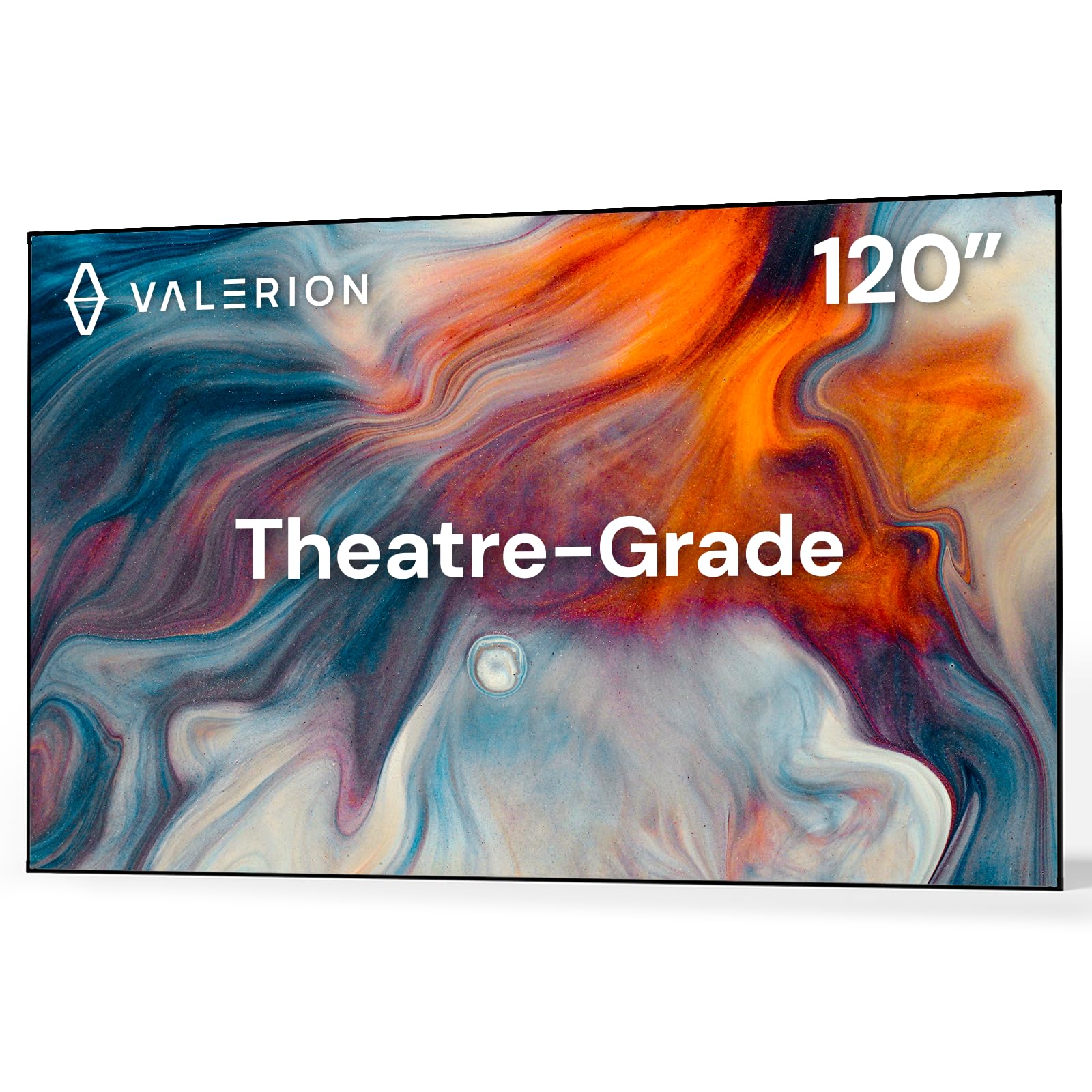
The Valerion 120‑inch fixed frame screen is designed around a wide 170° half‑gain viewing angle, which means the brightness falloff from center to edge is minimal — important for rooms with seating spread across a wide arc. The matte white surface with 1.3 gain pairs well with projectors in the 2,500‑3,500 lumen range, and the PVC material produces vibrant colors without introducing visible texture or grain.
The aluminum frame system is modular and uses a tension bolt mechanism that pulls the fabric tight from multiple points, which prevents the corner ripples that are common on cheaper screens. Owners transitioning from a pull‑down screen report a dramatic improvement in flatness and overall image quality. The wrinkle‑free surface is particularly important for 4K content, where even minor undulations become visible in fine detail.
Assembly requires two people, and the instructions are minimal — several owners strongly recommend watching a YouTube assembly video before starting. The screen ships in sizes up to 220 inches, so the 120‑inch model is on the smaller end of their lineup. The frame feels solid, and the matte coating does not produce excessive hot‑spotting. If you need a wide viewing angle without spending premium dollars, the Valerion is a strong midline option.
Why it’s great
- 170° half‑gain viewing angle keeps side seats bright
- Tension bolt system eliminates corner wrinkles
- Modular frame available up to 220 inches
Good to know
- Instructions are nearly useless; video assembly guide recommended
- Strong gloves needed to handle fiberglass‑reinforced material
9. Elite Screens Sable Frame 2 ER100WH2

The Elite Screens Sable Frame 2 ER100WH2 is the most affordable entry point into an ISF‑certified fixed‑frame screen. The CineWhite UHD‑B material with 1.3 gain delivers accurate color reproduction and a brightness boost that makes projectors under 3,000 lumens look punchier. The viewing area is 87 inches wide by 49 inches tall — a true 100‑inch diagonal in 16:9 that works well in medium‑sized rooms.
The velvet‑coated aluminum frame is 2.4 inches wide, which absorbs projector overshoot and gives the screen a professional theater appearance. Assembly takes longer than advertised — around two hours — and the instructions use a confusing scale that makes measuring the screen material placement tricky. The frame sections are flexible, so you need to be careful not to twist them during assembly, especially on the longest side. The push‑in tab system for holding the screen material is more reliable than the spring system used on older models.
The screen is compatible with standard‑throw, short‑throw, and UST projectors, making it a versatile foundation that you can keep even if you change projector types. Owners note a strong VOC smell from the vinyl that fades after a few days. At this price, you get ISF‑certified material and a velvet frame — two features that typically belong on screens costing significantly more. It is an unbeatable starter screen for anyone serious about home theater.
Why it’s great
- ISF‑certified CineWhite material at a very low entry price
- Velvet frame absorbs light for better perceived contrast
- Compatible with all projector throw types
Good to know
- Strong initial VOC smell from the screen material
- Frame is flexible during assembly; easy to twist out of square
FAQ
Can I use a 1.3 gain screen with an ultra‑bright 3,000+ lumen projector?
What is the difference between a tensioned fixed frame and a motorized drop‑down screen for 4K content?
Do I need an acoustically transparent screen if I don’t have space behind it?
Why does my fixed frame screen show a ripple after assembly, and how do I fix it?
Can I use a wall‑mount fixed frame screen with a ceiling‑mounted projector?
Final Thoughts: The Verdict
For most users, the best cinema screen winner is the Silver Ticket STR-169120-WAB because it combines a heavy‑duty 3‑inch aluminum frame, a woven acoustically transparent surface that does not degrade sound, and a tensioning system that produces a perfectly flat image — all at a price that undercuts most non‑transparent premium screens. If you want a motorized screen that hides away and prioritizes accurate color from an ISF‑certified matte surface, grab the Elite Screens Spectrum ELECTRIC150H2. And for a UST projector in a bright living room where ambient light rejection is non‑negotiable, nothing beats the NothingProjector NothPJ Classic Series ALR.

Mo Maruf
I created WellFizz to bridge the gap between vague wellness advice and actionable solutions. My mission is simple: to decode the research and give you practical tools you can actually use.
Beyond the data, I am a passionate traveler. I believe that stepping away from the screen to explore new environments is essential for mental clarity and physical vitality.