Our readers keep the lights on and my smoothie glass nicely filled. As an Amazon Associate, I earn from qualifying purchases.
A cockatiel’s diet is the single most powerful lever you have over its feather quality, lifespan, and daily energy. Yet most bags on the shelf are seed-heavy mixes that turn birds into selective eaters, leaving them deficient in calcium and vitamin A. This guide breaks down the actual nutritional density behind each formula so you can match the right pellet or blend to your bird’s specific needs.
I’m Mohammad Maruf — the founder and writer behind WellFizz. I’ve spent hundreds of hours cross-referencing ingredient labels, particle-size data, and feeding trials to separate marketing claims from genuine avian nutrition.
Whether you are converting a stubborn seed-junkie or maintaining a healthy adult, this review of the best cockatiel food options on Amazon will help you make an informed choice based on real specs.
How To Choose The Best Cockatiel Food
Not all cockatiel food is created equal. A bag that looks like a bargain can be packed with millet and sunflower seeds — high in fat and low in the vitamins your bird needs daily. Focus on these three pillars to sort the winners from the fillers.
Pellet vs. Seed Mix
Pellets deliver a complete, balanced nutrition in every bite because the bird cannot pick out only the tasty seeds. Seed mixes often lead to selective eating and calcium deficiencies. A good strategy is to use a pellet as the base diet and supplement with a high-quality seed mix for enrichment and foraging.
Ingredient Quality and Additives
Look for food that lists a clear protein source, such as ground flaxseed or real egg, near the top of the ingredient list. Avoid artificial colors, flavors, and preservatives. Beneficial extras include DHA omega-3 for brain and feather health, probiotics for digestive support, and whole bee pollen for immune function.
Particle Size and Foraging Value
Cockatiels are small birds with delicate beaks. Pellets should be mini-sized, around 2-3 mm in diameter, so they are easy to crack. A mix that contains multiple particle sizes encourages natural foraging behavior and reduces boredom. Overly large pellets can frustrate a cockatiel and lead to food refusal.
Quick Comparison
On smaller screens, swipe sideways to see the full table.
| Model | Category | Best For | Key Spec | Amazon |
|---|---|---|---|---|
| Mazuri Small Bird Maintenance | Pellet | Complete nutrition with foraging texture | Mixed particle size from 2-4 mm | Amazon |
| Vitakraft Vita Smart Gourmet | Seed & Pellet Mix | Transitioning seed-addicted birds | Includes dried papaya & pineapple pieces | Amazon |
| Psittacus Mini | Pellet | Premium low-fat pellet diet | 100% non-GMO, 450 g bag | Amazon |
| Kaytee Forti-Diet Egg-Cite | Seed Mix | High-protein with real egg and honey | Contains omega-3s from real egg | Amazon |
| Higgins Mayan Harvest Yucatan | Seed Mix | Foraging enrichment with probiotics | Encapsulated probiotics and DHA omega-3 | Amazon |
In‑Depth Reviews
1. Mazuri Small Bird Maintenance

Mazuri uses mixed particle sizes that mimic the natural seed scatter a cockatiel would encounter foraging on the ground. The pellets range from small crumbles to slightly larger chunks, which keeps your bird engaged and prevents boredom. Ground flaxseed provides a steady source of essential omega fatty acids that directly support feather condition during molts.
This formula contains no artificial colors or flavors and uses vitamin E as a natural antioxidant. The veterinary diet claim means it meets strict nutritional standards for all life stages. Several reviewers note that smaller-bodied cockatiels sometimes struggle with the larger pellets in the mix, though most birds manage after a short adjustment period.
For owners who want a complete, no-fuss pellet that also encourages natural foraging behavior, this bag delivers real value. The omega profile from flaxseed is a clear advantage over generic pellets that rely on synthetic vitamin supplements alone.
Why it’s great
- Mixed particle sizes support natural foraging instincts
- Ground flaxseed provides natural omega-3s
- No artificial colors or flavors
Good to know
- Larger pellets in the mix may be tough for very small cockatiels
- Only available in a 2.5 lb bag size
2. Higgins Mayan Harvest Yucatan Food Mix

Higgins packs this blend with whole bee pollen, encapsulated probiotics, and DHA omega-3. The probiotics survive storage because they are encapsulated, meaning they reach the bird’s gut alive. Bee pollen is a natural immune booster that many cockatiel owners report helps with appetite and feather vibrancy.
The ingredient profile includes star anise, juniper berries, and spearmint, which give the mix a distinctive aroma that birds find stimulating. It contains no artificial colors or preservatives. The seed-based formula is best used as a supplement to a primary pellet diet rather than a standalone food, as the seed-to-nutrient ratio is higher in fat than a complete pellet.
Owners of Quaker parrots and green-cheeked conures also praise this mix, which speaks to its broad appeal among small hookbills. The 3-pound bag lasts a long time, especially when stored in the refrigerator or freezer to maintain freshness of the probiotics and bee pollen.
Why it’s great
- Encapsulated probiotics survive storage and reach the gut
- Whole bee pollen boosts immune function
- Unique aromatic herbs stimulate foraging behavior
Good to know
- Best used as a supplement, not a complete diet
- Higher fat content than pellet-based options
3. Psittacus Mini Pellet

Psittacus is a European brand that formulates its Mini pellet specifically for species that naturally consume low-fat seeds — cockatiels, sun conures, and Galah cockatoos. The extruded pellet is 100% non-GMO with no artificial coloring or synthetic antioxidants. Many reviewers describe the smell as fruity, similar to apples, which helps with palatability.
The protein-to-fat ratio is carefully calibrated for adult birds during maintenance periods when they are not breeding. Psittacus recommends the pellet make up at least 70-80% of the total diet. The small pellet size is appropriate for cockatiel beaks, and several long-term owners report their 27-year-old cockatiels still eat it without issues.
One limitation is the bag size — 450 grams (roughly 1 pound) is smaller than domestic brands. If you have multiple birds, you will reorder frequently. Some owners wish the ingredient list was more transparent beyond the non-GMO claim, though the brand’s 20-year history in avian nutrition adds credibility.
Why it’s great
- Low-fat formula matches cockatiel natural diet
- Small pellet size is easy for cockatiels to crack
- 100% non-GMO with no synthetic additives
Good to know
- Small 450 g bag requires frequent reordering
- Higher price per pound than domestic alternatives
4. Kaytee Forti-Diet Egg-Cite Cockatiel Food

Real egg is the first differentiator here — it provides high-quality protein and essential fatty acids that directly support feather growth and muscle maintenance. The inclusion of honey adds natural sweetness that makes this seed mix highly palatable, even for picky eaters. Omega-3s are naturally present from the egg, supporting brain and heart health.
This is a seed-based mix, not a pellet, so selective eating is a risk. Cockatiels may pick out the millet and sunflower seeds while leaving the fortified pieces behind. Many owners report their birds love the taste and that the food arrives fresh in a sealed bag. The 5-pound bag is among the larger sizes available for cockatiel food in this tier.
For owners who have birds that refuse pellets entirely, this mix offers a nutritionally superior alternative to generic seed blends. The protein boost from real egg makes it especially useful during molting or breeding periods when protein demands increase.
Why it’s great
- Real egg provides high-quality protein and omega-3s
- Honey improves palatability for picky birds
- Large 5-pound bag offers good value for multi-bird households
Good to know
- Seed-based mix enables selective eating
- Not a complete pellet diet; supplement with veggies
5. Vitakraft Vita Smart Gourmet Cockatiel & Lovebird Food
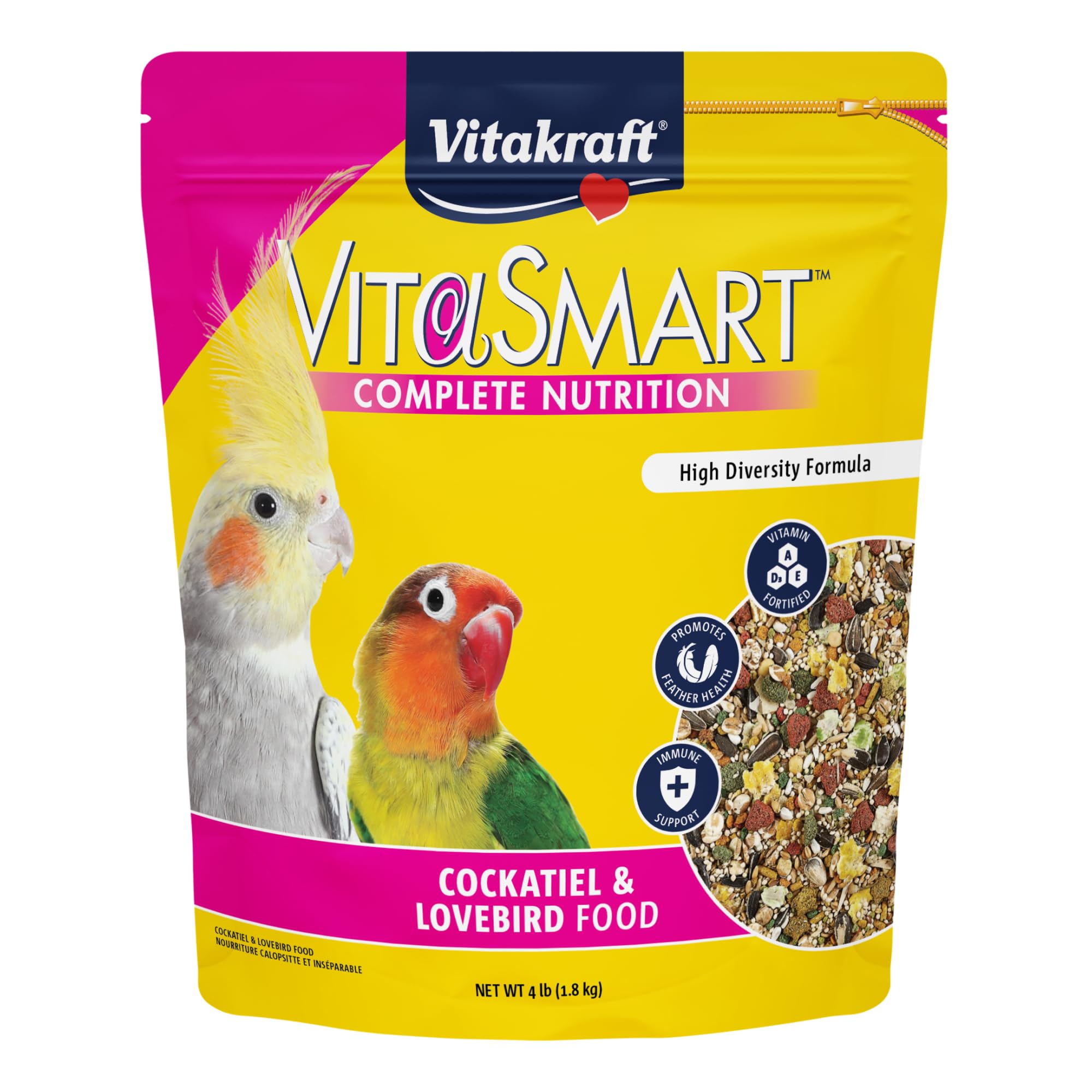
Vitakraft combines seeds, grains, pellets, and real dried fruit pieces — papaya and pineapple — to create a texture-rich mix that appeals to birds raised on seed-only diets. The inclusion of pellets within the blend introduces a complete nutrition source gradually, which helps owners transition their birds away from an all-seed diet.
The formula is fortified with a wide range of vitamins and minerals, and it includes omega-3 and omega-6 fatty acids to support feather health. The 4-pound bag is a practical size for single-bird households. Several reviewers note that while most birds love the fruit pieces, picky individuals may ignore the pellets entirely, so monitoring intake is important.
This is an excellent bridge product for birds that reject standard pellets. The visible fruit and varied seed types make mealtime exciting, and the brand’s 180-year history in pet nutrition adds a layer of trust. For a bird that already eats pellets well, a more pellet-dominant option would be a better long-term choice.
Why it’s great
- Dried fruit pieces add natural flavor and texture variety
- Pellet pieces inside the mix help transition seed addicts
- Omega fatty acids support feather health
Good to know
- Picky birds may ignore the pellet components
- Seed-heavy base means it is not a complete diet
FAQ
Can cockatiels eat only seed mixes?
How do I transition my cockatiel from seeds to pellets?
What fat percentage is ideal for a cockatiel pellet?
Are probiotics in bird food actually effective?
How should I store cockatiel food to maintain freshness?
Final Thoughts: The Verdict
For most users, the best cockatiel food winner is the Mazuri Small Bird Maintenance because it combines mixed particle sizes for foraging with a clean ingredient profile and ground flaxseed for natural omegas. If you want the most potent immune and digestive support from a seed mix, grab the Higgins Mayan Harvest Yucatan. And for a premium low-fat European pellet with proven results, nothing beats the Psittacus Mini.

Mo Maruf
I created WellFizz to bridge the gap between vague wellness advice and actionable solutions. My mission is simple: to decode the research and give you practical tools you can actually use.
Beyond the data, I am a passionate traveler. I believe that stepping away from the screen to explore new environments is essential for mental clarity and physical vitality.