Our readers keep the lights on and my smoothie glass nicely filled. As an Amazon Associate, I earn from qualifying purchases.
Building a trad rack means betting your safety on aluminum lobes gripping irregular granite, quartzite, or sandstone. The crack might flare, the rock might be slick, and a cam that walks deeper on every lead fall is a serious liability. Choosing the right camming device is about understanding lobe geometry, axle design, and stem flexibility—not just going with the brand your partner uses.
I’m Mohammad Maruf — the founder and writer behind WellFizz. My guides are built on dozens of hours comparing lobe articulation angles, trigger ergonomics, and head-width measurements across the most respected active protection models on the market.
Whether you are upgrading a half-rack or building your first set of trad draws, this guide to the best climbing cams breaks down the specific design choices that affect holding power, walking resistance, and ease of cleaning on real rock.
How To Choose The Best Climbing Cams
Selecting a climbing cam goes far beyond matching a color to a crack size. The key differentiators are the camming angle, the axle configuration, the lobe geometry, and the stem construction. Each of these factors directly influences how a cam seats, how much it walks under load, and how easily you can remove it after a fall.
Camming Angle and Axle Design
The standard camming angle of 13.75°—pioneered by Wild Country’s original Friend—balances holding power with clean release. A steeper angle bites harder but becomes harder to remove. Most premium cams use a dual-axle design, which increases the expansion range of each size, letting one cam cover a wider gap range than a single-axle model. This means you carry fewer pieces for the same coverage.
Lobe Construction: Solid vs. Independent
Standard cams feature paired lobes that move together on a shared axle. Totem’s Direct Loading system allows each lobe to load independently, making the cam perform like two separate units. This is critical in flaring, shallow, or irregular cracks where one side of the rock is uneven. Independent lobes conform to the shape rather than forcing a symmetrical fit that might blow out.
Stem Flexibility and Sling Type
A rigid stem transmits more vibration to the lobes, increasing walking. Flexible, single-stem designs—like the DMM Dragon’s cable stem—absorb movement and reduce walking. An extendable Dyneema sling, common on DMM and Wild Country models, lets you clip directly, reducing the need for a separate quickdraw and lowering rope drag on wandering routes.
Quick Comparison
On smaller screens, swipe sideways to see the full table.
| Model | Category | Best For | Key Spec | Amazon |
|---|---|---|---|---|
| Black Diamond Camalot C4 | Double-Axle | All-around trad, parallel cracks | Double-axle, 13.75° angle | Amazon |
| DMM Dragon Cam | TripleGrip Lobes | Low-walking, free-climbing racks | TripleGrip lobes, 8mm Dyneema sling | Amazon |
| Totem Cam Yellow 0.80 | Independent Lobes | Flaring, irregular, shallow cracks | Direct Loading, independent lobes | Amazon |
| Totem Cam Blue 0.65 | Independent Lobes | Small flaring cracks, micro placements | Ultra-narrow head, 0.65 size | Amazon |
| CAMP Tricam Evo | Active/Passive Hybrid | Horizontal cracks, anchors, Gunks | Three placement modes | Amazon |
| CAMP Dyneema Tricam Set | Ultralight Hybrid | Alpine, multipitch, weight savings | Dyneema sling, hybrid active/passive | Amazon |
| Wild Country Friend | Classic Double-Axle | All-around trad, original design | 13.75° angle, hollow dual axles | Amazon |
| Petzl Neox | Belay Device | Lead belaying, assisted braking | Cam-assisted, 3:1 mechanical advantage | Amazon |
| Pelican Rope Arborist 11.8mm | Climbing Line | Tree climbing, static line use | 24-strand, 7,000 lb breaking strength | Amazon |
In‑Depth Reviews
1. Black Diamond Camalot C4

The Camalot C4 is the benchmark that every other cam is measured against. Its dual-axle design delivers a wide expansion range per size, and the refined trigger geometry with a wider thumb loop makes one-handed placement feel intuitive even when you are pumped. The hot-forged lobes bite securely into parallel cracks, and the color-coded sling speeds up size selection on the fly.
At 0.11 pounds for the smallest unit, the C4 is lighter than previous versions while retaining the same holding strength. The Dyneema sling is durable and resists abrasion on granite and quartzite. Reviewers consistently call it the standard for a reason, praising its consistent production quality and high resale value.
The main limitation is that the C4 excels most in standard parallel cracks. In flaring or irregular fissures, you may need a supplemental or offset design. Still, for a well-rounded trad rack, the C4 is the first piece most climbers buy—and the one they trust most on a lead fall.
Why it’s great
- Proven dual-axle design with wide range
- Ergonomic trigger for easy one-handed use
- Lightweight, durable Dyneema sling
Good to know
- Less effective in flaring or offset cracks
- Standard lobes not independently loaded
2. DMM Dragon Cam

The DMM Dragon features TripleGrip cam lobes—three distinct lobes per side instead of the standard paired design. This additional surface area increases holding power and dramatically reduces walking, especially in softer rock or polished cracks. The single, flexible cable stem absorbs movement rather than transmitting it to the lobes, which further minimizes walking.
The built-in 8mm Dyneema extendable sling is a game-changer for free climbing and wandering routes. You clip directly to the sling, saving the weight and hassle of a separate quickdraw. The thumb press is hot-forged and ergonomic, though some users find it slightly less secure than the Camalot C4’s thumb loop.
Reviewers note that the Dragon is lighter than the equivalent Camalot for the same range, and the smooth action makes it a favorite for redpoint attempts. The #6 size feels stable, and users report that the Dragon is noticeably smoother than the BD #4 in comparable sizes.
Why it’s great
- TripleGrip lobes reduce walking significantly
- Extendable Dyneema sling saves weight
- Flexible stem absorbs movement
Good to know
- Thumb press less secure than Camalot C4 loop
- Does not come with a carabiner
3. Totem Climbing Cam – Yellow 0.80

Totem’s Direct Loading system is the defining innovation here. Each of the four lobes loads independently, meaning the cam can conform to uneven rock shapes that would cause a standard cam to shift or blow. The narrow head width makes placement and cleaning easier in tight or shallow cracks, and the strong springs combined with good stem flexibility reduce walking.
The Yellow 0.80 sits in the sweet spot of many trad racks—large enough for solid placements but small enough to fit in narrower sections of a splitter. Users report that these are the smoothest cams they own, with a feel of security that inspires confidence on every lead. The flexible stem also makes removal smoother than many competitors.
The main drawback is that Totem does not produce a full range of sizes from micro to big, so you will likely need to supplement with another brand for the ends of your rack. Still, for the sizes they do make, the holding power in irregular placements is unmatched.
Why it’s great
- Independent lobes conform to irregular cracks
- Narrow head eases placement and cleaning
- Strong springs reduce walking
Good to know
- Limited size range compared to Camalot or Dragon
- Higher per-unit cost than entry-level options
4. Totem Climbing Cam – Blue 0.65

The Blue 0.65 extends the Totem independent lobe system into the smaller end of the rack. The ultra-narrow head width allows it to fit into shallow, flaring, or offset cracks where a standard cam of similar range would not seat. The single-sided loading option is unique: you can load just one side of the cam, giving you even more adaptability in irregular pockets.
Users praise the Blue Totem for finding placements where nothing else seems to work. One reviewer noted that it goes on every route they lead, consistently shining in tricky spots. The high flexibility of the stem helps it conform to the rock, and the smooth operation makes adjustments easy even when you are pumped.
There is a reported failure event involving a Blue Totem where two cables broke at the lobe connection during a lead fall on a 5.7 crack. This is an unverified claim, but it underscores the importance of inspecting all gear before every climb and understanding the limits of any piece of active protection.
Why it’s great
- Fits in flaring and shallow cracks
- Independent lobes adapt to uneven rock
- Single-sided loading for irregular placements
Good to know
- Small size range limits rack coverage
- Unverified failure report raises inspection need
5. CAMP Tricam Evo

The Tricam Evo is a hybrid piece that functions as an active cam, a passive chock, and a wedge—three modes in one unit. This versatility is especially useful in horizontal cracks, solution pockets, and other placements where a standard cam would walk or a nut would not fit. The head shape allows for secure seating in places where nothing else works.
The updated sewing on the sling is stiffer, making one-handed placement and extraction easier. At 139 grams, it is light enough for alpine racks. Users in the Gunks—a notoriously tricky climbing area for gear—swear by the pink Tricam for anchor building and for annoying their second on the way up.
Placement requires a bit of practice. The Tricam must be set correctly to achieve bomber stability, and extraction can be difficult without a nut tool. But once you learn the feel, the holding power is exceptional. Many climbers consider the pink Tricam an absolute must-have piece of pro.
Why it’s great
- Three placement modes for tricky cracks
- Excellent in horizontal and pocket placements
- Lightweight and versatile for alpine use
Good to know
- Requires practice to place securely
- Extraction often requires a nut tool
6. CAMP Dyneema Tricam Set

The Dyneema Tricam Set takes the same versatile three-mode system as the standard Tricam and upgrades the slings to Dyneema for lower weight and higher abrasion resistance. The Dyneema sling also has a stiffer sew that facilitates one-handed placement and extraction, which is helpful when you are placing gear quickly on a lead.
These are particularly useful for horizontal cracks and anchor-building. The Dyneema sling also reduces rope drag when used on long traverses, since the sling itself can be oriented to reduce friction. Users report that the color-coding is clear and that the overall construction feels premium.
The trade-off is that the Dyneema version is priced higher than the standard nylon version, and the placement learning curve remains. Once you nail the technique, these become bomber pieces that can replace multiple sizes of passive nuts in your rack. A nut tool is still recommended for extraction.
Why it’s great
- Dyneema sling for lighter weight
- Excellent for horizontal cracks and anchors
- Stiffer sling eases one-handed use
Good to know
- Higher cost than standard nylon Tricam
- Extraction can still require a nut tool
7. Wild Country Friend

The Wild Country Friend is the original camming device, and the current version retains the classic 13.75° camming angle that balances holding power with clean release. The hollow dual axles reduce weight without sacrificing strength, and the extendable Dyneema sling saves you from carrying extra quickdraws on long alpine routes.
The Friend’s color coding is intuitive, and the trigger action is smooth right out of the box. Users report that these are bombproof and super solid without compromising weight. The hollowed axles make a noticeable difference on a full rack, and the familiar angle means you can place them quickly even on terrain you have not rehearsed.
The sling extension could be longer to replace the need for a separate runner on very long placements. The trigger is plastic, which is durable but may feel less premium than metal triggers on some competitors. For a cam that started the category, the updated Friend holds its own against newer designs.
Why it’s great
- Classic 13.75° camming angle for proven performance
- Hollow dual axles save weight
- Extendable Dyneema sling reduces rope drag
Good to know
- Sling extension could be longer
- Plastic trigger feels less premium than metal alternatives
8. Petzl Neox Belay Device
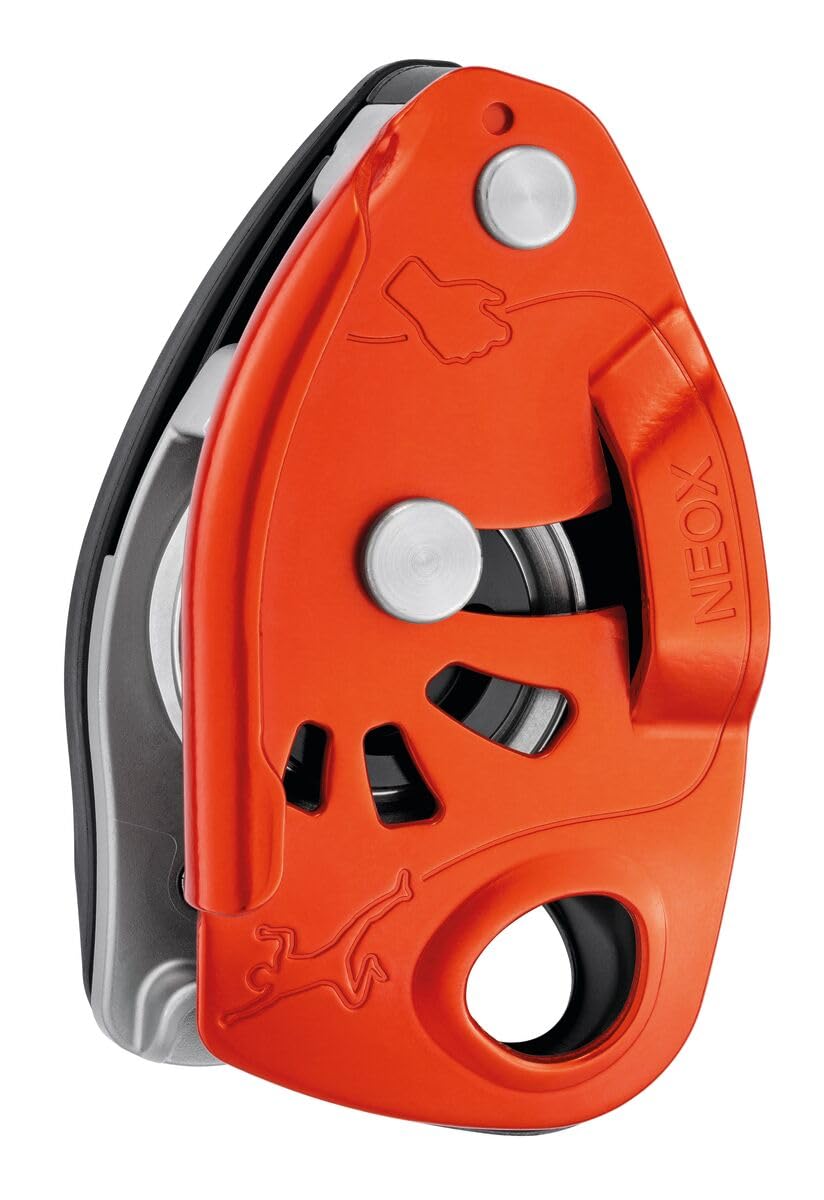
The Petzl Neox is not a cam in the trad protection sense—it is a cam-assisted belay device that pairs perfectly with a trad rack. The internal cam engages when the rope is weighted, blocking the rope and reducing brake-hand fatigue during falls. The stainless steel wheel rotates freely for smooth slack pay-out, so short roping becomes a thing of the past.
The 3:1 mechanical advantage during lowering gives you smooth, progressive control that both belayer and climber appreciate. It works well with 9.1mm to 9.6mm dynamic ropes, and the clicking sound provides reassuring feedback to newer climbers. One reviewer noted that the lead belaying slack payout is much easier than the older GriGri.
On larger diameter ropes (above 10mm), the cam can engage too easily, making slack pay-out less smooth. The device is also heavier than a standard tube-style belay plate, but for a full-time trad setup, the added safety and reduced fatigue are worth the weight.
Why it’s great
- Cam-assisted braking reduces belayer fatigue
- 3:1 mechanical advantage for smooth lowering
- Works well with thin dynamic ropes
Good to know
- Heavier than tube-style belay devices
- Can block too easily with thick ropes above 10mm
9. Pelican Rope Arborist 11.8mm
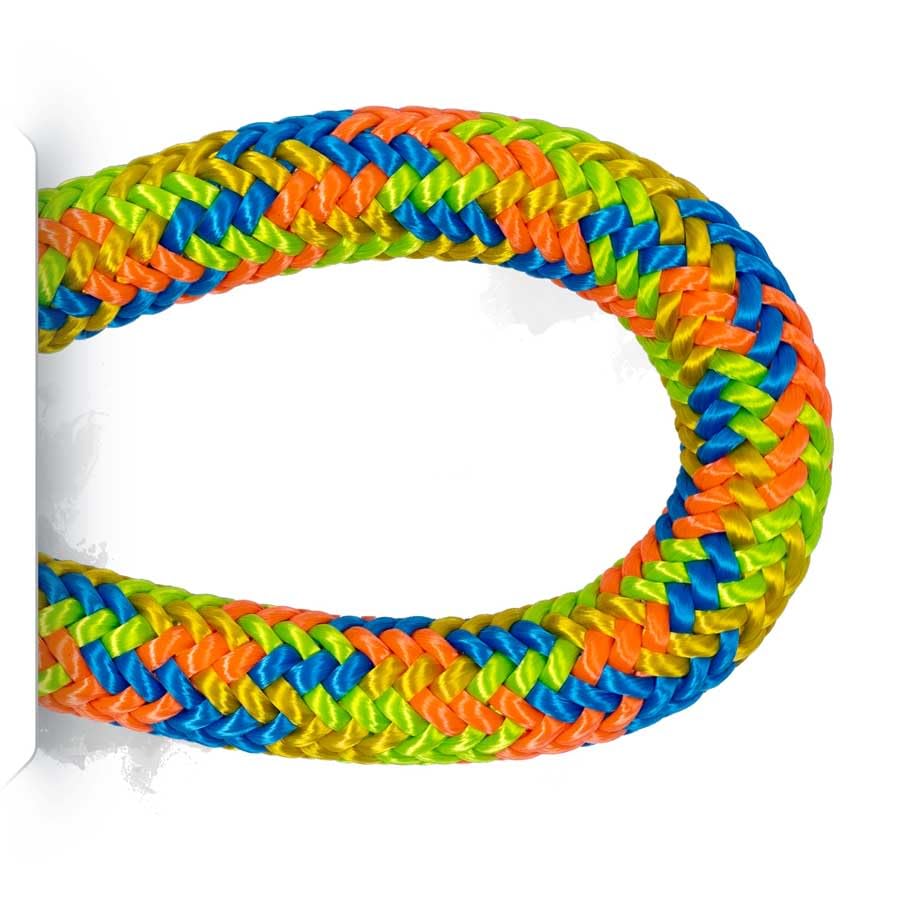
The Pelican Rope Arborist 11.8mm is a 24-strand static climbing rope designed primarily for tree work and rigging. While it is not a trad climbing cam, it is a useful addition for climbers who need a static line for hauling, top-rope anchor setups, or rappelling in non-dynamic environments. The 7,000 lb breaking strength gives you a wide safety margin for heavy loads.
The rope resists abrasion and chemical damage, making it suitable for rough surfaces. The high visibility Viper color helps with line management in low-light conditions. Users report that it runs smoothly through friction devices like the Petzl Rig or the Rope Runner, and the zero-milking construction keeps the cover stable over time.
The sewn eye on one end may be too large to fit through some smaller devices, so you may need to clip the other end instead. The rope is also more springy than some static lines, which can be noticeable during long rappels. For its intended purpose—tree climbing and heavy rigging—it delivers excellent value.
Why it’s great
- High breaking strength for heavy loads
- Abrasion and chemical resistant cover
- Runs smoothly through friction devices
Good to know
- Sewn eye may not fit small devices
- More springy than some static ropes
FAQ
What does the camming angle of 13.75° mean for my rack?
Why do some cams have extendable slings and others do not?
Can I mix cams from different brands on the same rack?
How often should I replace my climbing cams?
Final Thoughts: The Verdict
For most users, the best climbing cams winner is the Black Diamond Camalot C4 because it offers a proven double-axle design, ergonomic trigger, and reliable holding power across standard parallel cracks. If you want low-walking performance with an integrated sling, grab the DMM Dragon. And for flaring or irregular placements where nothing else holds, nothing beats the Totem Cam 0.80 with its independent Direct Loading lobes.

Mo Maruf
I created WellFizz to bridge the gap between vague wellness advice and actionable solutions. My mission is simple: to decode the research and give you practical tools you can actually use.
Beyond the data, I am a passionate traveler. I believe that stepping away from the screen to explore new environments is essential for mental clarity and physical vitality.