Our readers keep the lights on and my smoothie glass nicely filled. As an Amazon Associate, I earn from qualifying purchases.
Capturing the intricate veins of a leaf, the compound eye of an insect, or the delicate texture of a watch movement requires a tool that sees what the naked eye simply cannot. A standard camera lens hits a wall at close distances, but a dedicated close-up camera unlocks a hidden world of detail, making the ordinary extraordinary through life-size magnification and specialized optics.
I’m Mohammad Maruf — the founder and writer behind WellFizz. I’ve spent countless hours analyzing optical formulas, sensor specifications, and stabilization systems to identify the tools that deliver genuine macro performance without compromise.
Whether you are chasing extreme detail for professional product shots or exploring nature’s smallest wonders, finding the right best close up camera demands a clear understanding of magnification ratios, minimum focus distances, and the lens system that connects everything.
How To Choose The Best Close Up Camera
Not all cameras labeled “macro” deliver the same close-focusing performance. The difference between a lens that achieves 1:1 magnification and one that only offers a “macro mode” is the difference between capturing a life-size reproduction of a subject and merely zooming in on it. Focus on the mechanical and optical specs rather than marketing buzzwords to find a tool that lets you fill the frame with tiny details.
Magnification Ratio and Minimum Focus Distance
A 1:1 magnification ratio means your subject projects onto the sensor at life size — a dime covers the same area as a dime. Anything less than 1:1 (like 1:2 or 1:4) simply enlarges a smaller portion of the frame. Equally important is the minimum focusing distance: how close the lens allows you to get. However, working distance — the space between the lens front and the subject — matters more for lighting and avoiding shadows. A 90mm or 105mm macro lens provides a comfortable working distance, while a 30mm or 60mm lens forces you very close to the subject.
Sensor Size and Resolution
Full-frame sensors (like those in the Canon EOS R5 or Nikon D850) capture more light and offer lower noise at high ISOs, which matters when you stop down to f/8 or f/16 for depth of field in macro shots. APS-C and Micro Four Thirds sensors still produce excellent results but require more light or higher ISO to achieve equivalent sharpness at narrow apertures. Higher megapixel counts — 45MP and above — allow heavy cropping without losing detail, a real advantage when you cannot physically get closer to a skittish insect.
Image Stabilization and Handling
Macro photography magnifies every tiny movement of the camera. A 1:1 image of a hand-held camera can turn a sharp flower stamen into a blurred streak. In-body image stabilization (IBIS) and lens-based optical stabilization (VR/OS) work together to dampen these micro-shakes. Lenses with built-in stabilization, like the Canon RF 100mm f/2.8L IS or the Sony FE 90mm f/2.8 Macro OSS, are particularly forgiving for hand-held close-up work. A sturdy tripod with a geared head remains the gold standard for critical sharpness.
Quick Comparison
On smaller screens, swipe sideways to see the full table.
| Model | Category | Best For | Key Spec | Amazon |
|---|---|---|---|---|
| Canon RF 100mm f/2.8L Macro | Lens | Professional macro & portrait | 1.4x magnification with SA Control | Amazon |
| Nikon Z MC 105mm f/2.8 VR S | Lens | Full-frame macro with VR | 1:1 magnification, S-Line optics | Amazon |
| Tamron 90mm f/2.8 Di III VXD | Lens | Affordable full-frame macro | 1:1, VXD linear AF motor | Amazon |
| Sony FE 90mm f/2.8 Macro G OSS | Lens | E-mount macro with stabilization | 1:1, Optical SteadyShot | Amazon |
| OM System 60mm f/2.8 Macro | Lens | Lightweight M4/3 macro | 1:1, weather-sealed | Amazon |
| Sony 30mm f/3.5 Macro | Lens | Everyday close-ups on E-mount | 1:1, 2.4cm working distance | Amazon |
| Xtra Muse Pocket Gimbal Camera | Camera | Vlogging & run-and-gun macro | 1-inch CMOS, 3-axis gimbal | Amazon |
| OM System Tough TG-7 | Camera | Rugged outdoor close-ups | 1cm macro, waterproof 15m | Amazon |
| Panasonic Lumix FZ80D | Camera | Superzoom bridge with macro | 60x optical zoom, Post Focus | Amazon |
| Nikon D850 | Camera | High-res DSLR for macro | 45.7MP BSI sensor, 9 fps | Amazon |
| Canon EOS R5 | Camera | Hybrid full-frame macro body | 45MP, 8K video, IBIS | Amazon |
In‑Depth Reviews
1. Canon RF 100mm f/2.8 L Macro IS USM

The Canon RF 100mm f/2.8 L Macro is the only lens in its class to exceed the standard 1:1 magnification, offering a true 1.4x life-size capture without extension tubes. This allows you to fill the frame with subjects smaller than a fingernail while maintaining a comfortable working distance — critical for lighting highly magnified subjects. The L-series optics deliver edge-to-edge sharpness with virtually no chromatic aberration, even wide open at f/2.8.
Hybrid Image Stabilization compensates for both angular and shift camera shake, a feature specifically engineered for macro shooting where parallax movement becomes visible at close distances. The SA (Spherical Aberration) Control Ring lets you dial in the bokeh character from smooth to heavily diffused, giving portrait and product shooters another creative lever. Autofocus via the Nano USM is near-silent and fast, though many macro shooters will default to manual focus for precise control at 1.4x.
Build quality is fully weather-sealed against dust and moisture, matching the EOS R5 and R3 bodies. The 67mm filter thread accepts common polarizers and diopters without step-up rings. For Canon RF system owners demanding the finest close-up optical performance available, this lens removes the need for any accessory macro tubes or diopters.
Why it’s great
- World’s first 1.4x max magnification in a standard macro prime
- Hybrid IS delivers up to 5 stops of shake correction for handheld close-ups
- SA Control Ring offers adjustable bokeh character for creative control
Good to know
- SA Control Ring is best locked at neutral for most macro work
- Heavier and larger than typical 100mm macros at 730g
- Premium price positions it for enthusiasts and professionals only
2. Nikon NIKKOR Z MC 105mm f/2.8 VR S
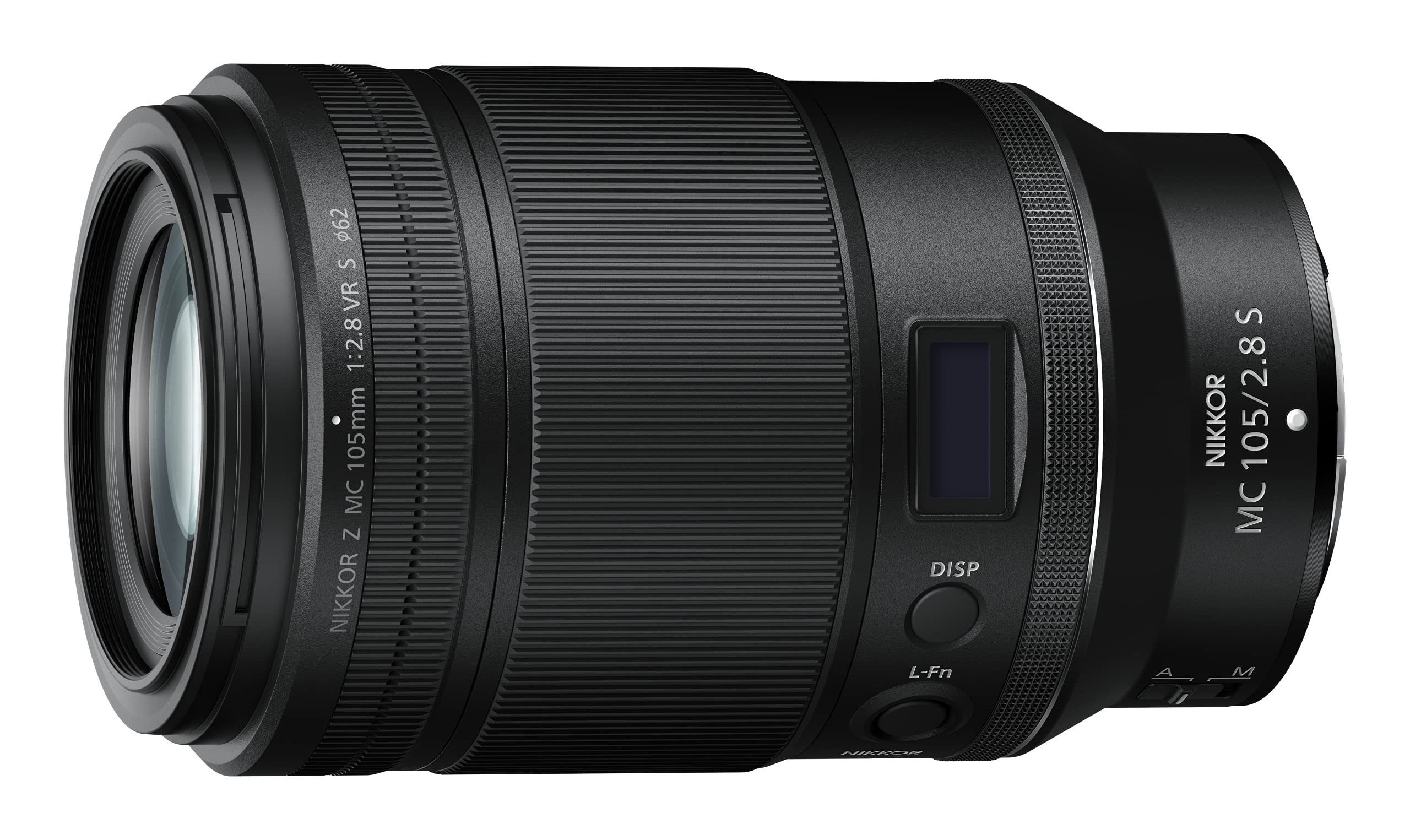
The Nikon Z MC 105mm f/2.8 VR S is the definitive macro lens for Nikon Z-series mirrorless cameras. Its S-Line optics produce extraordinary sharpness and contrast at 1:1 magnification, with virtually no distortion or chromatic aberration. The 105mm focal length offers a longer working distance than 90mm or 60mm lenses, letting you photograph skittish insects and small wildlife without disturbing them while retaining room for off-camera lighting.
Vibration Reduction (VR) combines with the Z body’s IBIS to provide multi-axis stabilization that handles hand-held macro shots at shutter speeds that would be impossible without correction. The bright f/2.8 aperture creates smooth, creamy bokeh for portraits and floral isolation shots. All moving parts are sealed against moisture and dust, making this lens a reliable partner for outdoor field work in damp or dusty environments.
Autofocus is responsive for general use, though macro shooters will appreciate the full-time manual focus override for micro-adjustments without flipping a switch. The programmable control ring can be set for aperture or exposure compensation, adding convenience during tripod-based focus stacking sessions.
Why it’s great
- Superb S-Line sharpness with no chromatic aberration
- VR stabilization pairs with in-body IBIS for rock-steady handheld shots
- Long working distance for insects and small wildlife
Good to know
- Focus breathing is noticeable at extreme close distances
- Significant focus hunting in crop mode on DX bodies
- f/2.8 can resolve too much detail for unretouched portraits
3. Tamron 90mm f/2.8 Di III VXD 1:1 Macro
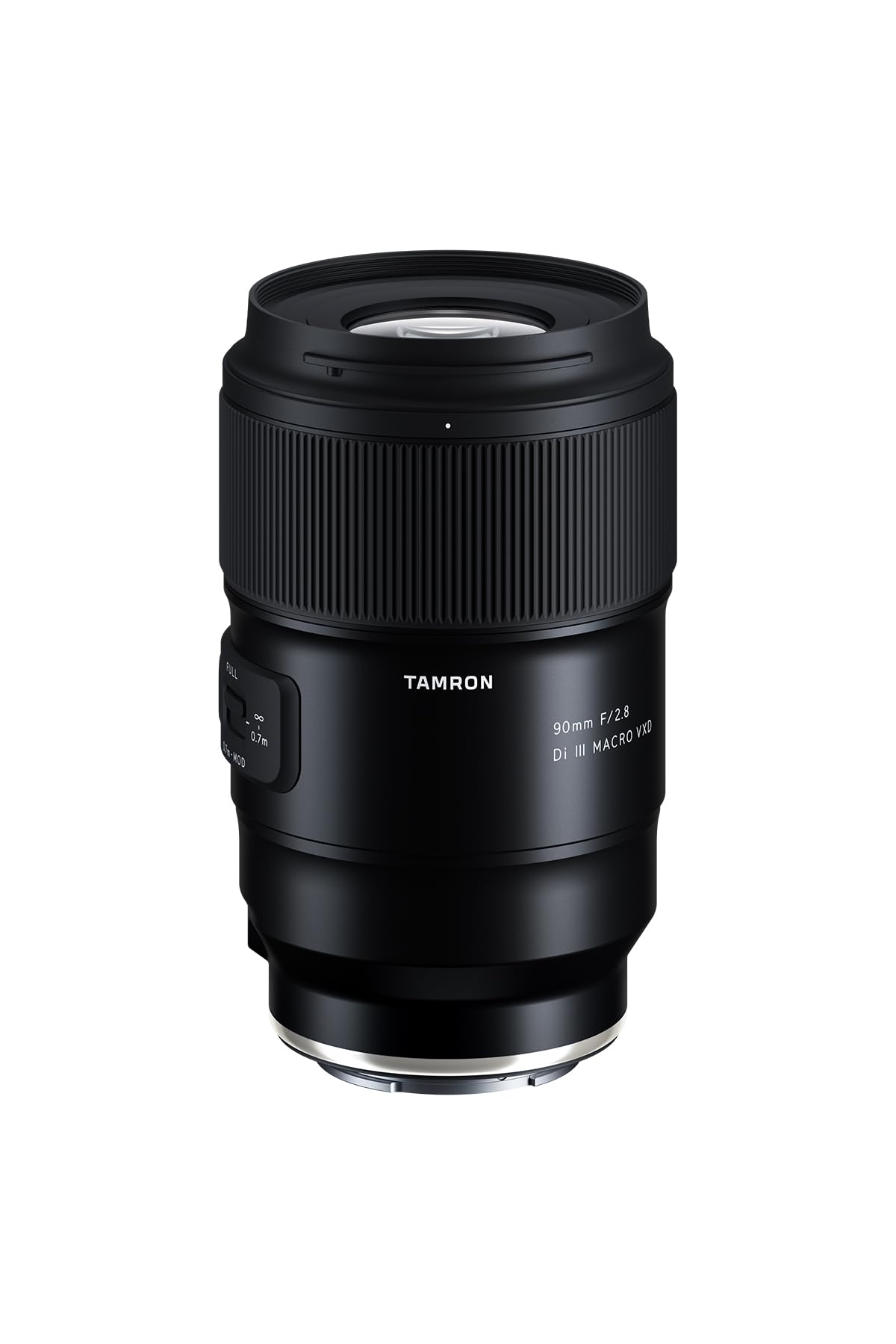
The Tamron 90mm f/2.8 Di III VXD brings a classic macro focal length to Sony E-mount at a price point that undercuts the Sony 90mm G while retaining professional-grade optical performance. The VXD (Voice-coil eXtreme Drive) linear motor delivers fast, near-silent focusing with excellent subject tracking, making this lens suitable for both macro detail work and portrait shooting. The 1:1 magnification ratio captures life-size images without extension tubes.
Flat-field optical performance is a standout feature — the lens maintains sharpness evenly across the entire frame during close-focusing, which is critical for product photography and copy work where edge-to-edge flatness is required. The BBAR-G2 and fluorine coatings resist smudges and flare, letting you shoot toward the sun without losing contrast. Moisture-resistant construction adds reliability during outdoor macro sessions.
At only 21.5 oz (610g), it is lighter than the Sony 90mm G, making it an easy choice for long walk-and-shoot sessions. The 67mm filter thread matches many other Tamron lenses, reducing the filter kit you need to carry. For Sony shooters who want true macro optics without paying a premium, this is the lens to grab.
Why it’s great
- Excellent flat-field sharpness ideal for product photography
- Fast and silent VXD autofocus with good tracking
- Competitive pricing for full-frame macro performance
Good to know
- No built-in optical image stabilization
- Focus-by-wire manual ring may feel less responsive to some users
- Renders skin texture in high detail for portraits without softening
4. Sony FE 90mm f/2.8 Macro G OSS

The Sony FE 90mm f/2.8 Macro G OSS is the reference macro lens for Sony full-frame E-mount shooters, combining a bright f/2.8 aperture with built-in Optical SteadyShot stabilization. The OSS system is particularly valuable for macro work, where tiny vibrations are magnified — it allows effective hand-held shooting at close distances that would otherwise demand a tripod. The Nano AR coating suppresses reflections and ghosting, preserving contrast when shooting shiny subjects like jewelry or wet leaves.
Sharpness is exceptional corner-to-corner, supported by Advanced Spherical elements and Super ED glass. The 9-blade circular aperture creates smooth, natural bokeh that isolates subjects beautifully. The push-to-lock manual focus ring provides instant switching between autofocus and manual control, a workflow advantage for macro shooters who fine-tune focus repeatedly. The Direct Drive SSM focuses quietly and precisely.
Dust and moisture-resistant construction protects the lens in outdoor environments. At 602g (21.3 oz), it balances well on A7-series bodies. The included round hood shades against flare while allowing easy filter access. For Sony users, this is the lens that sets the standard for macro image quality in the system.
Why it’s great
- Built-in Optical SteadyShot for hand-held macro shooting
- Tack-sharp edge-to-edge with superb bokeh
- Instant push-pull manual focus override for fine-tuning
Good to know
- Autofocus can hunt slightly at closest distances even with limiter engaged
- Requires supplemental lighting for dark macro subjects like insects
- High price positions it as a professional investment
5. OM System 60mm f/2.8 Macro
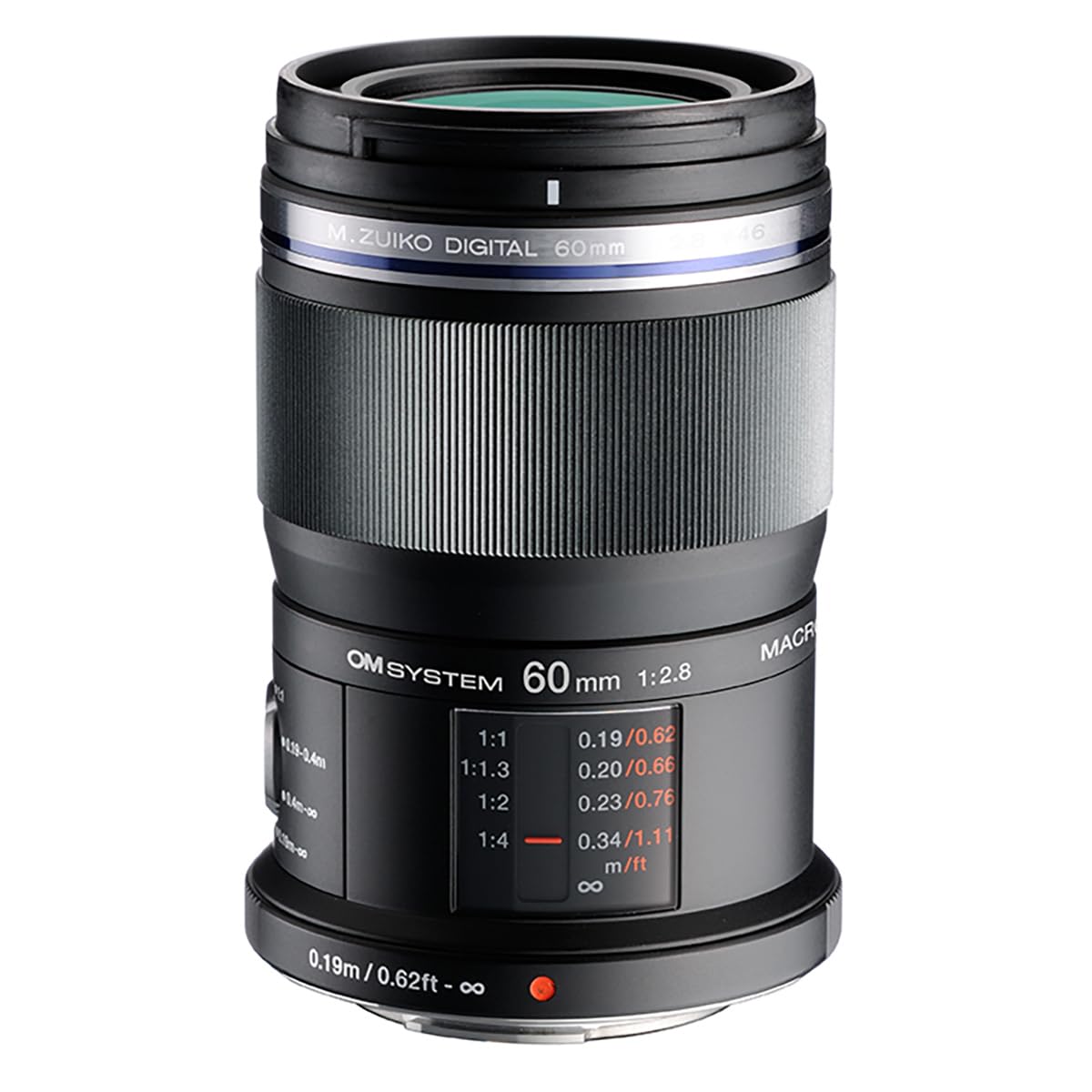
The OM System 60mm f/2.8 Macro is the go-to close-up lens for Micro Four Thirds shooters who value portability without sacrificing magnification. The 60mm focal length (120mm equivalent on full-frame) offers a comfortable working distance for flowers, small products, and tabletop macro. True 1:1 life-size magnification is achieved with a minimum focusing distance of just 7.4 inches, and the internal focusing system prevents the lens from extending physically — critical when you are working in tight spaces near a subject.
The MSC (Movie and Still Compatible) mechanism provides fast, quiet autofocus that works smoothly with the OM System focus stacking and focus bracketing modes. The ZERO (Zuiko Extra-low Reflection Optical) coating minimizes flare and ghosting, maintaining contrast even with bright backlighting. A focus limit switch allows the lens to skip unnecessary hunting between near and far distances, speeding up autofocus in the macro range.
Dust and splash-proof construction matches the weather-sealed OM-1 and E-M1 series bodies, making this a reliable field companion for damp forests and coastal shooting. The built-in working distance window lets you confirm subject distance at a glance without looking at an electronic display, a small but meaningful convenience during tripod work.
Why it’s great
- True 1:1 macro in a lightweight, portable package
- Internal focusing maintains constant lens length during close-ups
- Works seamlessly with camera focus bracketing and stacking features
Good to know
- No optical image stabilization; relies on in-body IBIS
- f/2.8 maximum aperture can be limiting in very low light
- Short working distance compared to 90mm or 105mm macro lenses
6. Sony 30mm f/3.5 Macro

The Sony SEL30M35 30mm f/3.5 Macro is the entry point to true 1:1 macro for Sony E-mount shooters, offering life-size magnification at a price that beats most other dedicated macro lenses. The 30mm focal length (45mm equivalent on APS-C) makes it a versatile everyday lens for close-ups of food, products, and small objects. The minimum working distance of just 2.4cm from the front element lets you get extremely close to fill the frame with small subjects.
Optical quality is impressive for its price tier, producing sharp, detailed images at close focus distances that outperform standard kit zooms and wider primes. The 6-group, 7-element construction with an internal stepping motor delivers smooth autofocus for both stills and video capture. The aluminum alloy mount adds durability that plastic-body lenses lack, and the rear-focusing design keeps the front element stationary during focus.
At f/3.5, this lens is slower than f/2.8 macro alternatives, meaning you will need more light or higher ISO to maintain shutter speed at close distances. The short focal length also means you must get very close to subjects, which can cast shadows or spook live insects. For flat work, product close-ups, and creative detail shots on a budget, this lens delivers genuine macro capability without breaking the bank.
Why it’s great
- True 1:1 macro at an accessible entry-level price
- Very lightweight and compact for daily carry
- Sharp close-up performance that outshines standard zoom lenses
Good to know
- Very short working distance makes lighting difficult for organic subjects
- f/3.5 maximum aperture limits low-light macro shooting
- Plastic barrel construction with only metal mount
7. Xtra Muse Pocket Gimbal Camera

The Xtra Muse is a compact vlogging camera built around a 1-inch CMOS sensor and a 3-axis gimbal stabilizer, designed for creators who need smooth 4K footage at up to 120fps. While not a traditional macro interchangeable lens camera, its close-focusing capability and face/object tracking make it a strong contender for close-up detail work in video — particularly for product reviews, tabletop demos, and run-and-gun content that requires sharp close-ups without a full rig.
The built-in Master Follow mode keeps subjects centered in the frame as you move, which is useful for dynamic close-up shots of hands-on activities and food preparation. The 2-inch touchscreen simplifies framing and focus point selection, while the 10-bit X-Log color mode allows for advanced color grading in post-production. The bundle includes a carrying bag, handle with 1/4-inch thread, and USB-C cable, providing everything needed for mobile production.
Battery life averages around 161 minutes, and the camera can be extended via external USB power for longer sessions. The 1-inch sensor performs well in bright to moderate light, though noise becomes visible in darker scenes. For vloggers and content creators who need smooth, stabilized close-up video without hauling a dedicated macro lens setup, this is a practical all-in-one solution.
Why it’s great
- Integrated 3-axis gimbal eliminates shake in handheld close-up video
- 1-inch CMOS captures 4K/120fps with good detail
- Face/object tracking keeps close-up subjects in frame
Good to know
- Not a true macro system — no interchangeable lenses or 1:1 magnification
- Low-light performance limited by 1-inch sensor size
- Battery life requires planning for extended shooting sessions
8. OM System Tough TG-7

The OM System Tough TG-7 is the ultimate close-up camera for harsh environments — it is waterproof to 15 meters, shockproof from 2.1 meters, crushproof to 100kg, and freezeproof to -10°C. Its variable macro system includes four dedicated macro modes, with the ability to focus as close as 1 centimeter from the lens end. The underwater microscope mode specifically optimizes the lens for extreme close-ups in wet conditions, making it a favorite for marine biology and snorkeling documentation.
The back-illuminated CMOS sensor and TruePic VIII processor deliver sharp 12MP images with bright F2.0 lens performance. The 4x optical zoom covers a 25-100mm equivalent range, and the lens maintains close-focusing capability through most of the zoom range — a rarity in rugged compact cameras. 4K video recording and 120fps high-speed movie capture add versatility for documenting fast-moving underwater subjects.
Five underwater modes (including underwater HDR and underwater snapshot) optimize white balance and exposure for submerged macro work. The anti-fog coating on the lens window prevents condensation in humid or rapidly changing temperature conditions. While the small sensor struggles in low light, the TG-7 is unmatched for its combination of ruggedness and true close-up macro capability in environments where no other camera would survive.
Why it’s great
- Extreme ruggedness — waterproof, shockproof, freezeproof, crushproof
- 1cm close-focusing with dedicated underwater microscope mode
- Variable macro system with 4 modes for different close-up scenarios
Good to know
- Small sensor produces visible noise in low light and indoors
- Battery life is modest and the gauge can drop suddenly
- Larger than typical action cameras like GoPro for pocket carry
9. Panasonic Lumix FZ80D

The Panasonic Lumix FZ80D is a bridge camera that packs a 60x optical zoom lens (20-1200mm equivalent) into a body that weighs just over 600g. Its macro mode allows close focusing at the wide end of the zoom, making it capable of capturing detailed close-up images of flowers, coins, and small objects. The Post Focus feature lets you shoot a series of images and then select the focus point after the fact, effectively simulating focus stacking for macro subjects without a computer.
Power Optical Image Stabilization (OIS) suppresses hand-shake vibration at extreme telephoto focal lengths, which also benefits close-up shots where camera movement is magnified. The 2,360K-dot electronic viewfinder provides a bright, glare-free composition experience even in direct sunlight. 4K Video and 4K Photo modes let you extract 8MP still frames from video, useful for capturing fleeting macro moments like a bee landing on a flower.
The small 1/2.3-inch sensor limits low-light performance and dynamic range compared to larger sensors, and images can appear grainy even at base ISO when pixel-peeping. Battery life runs through power quickly when using the zoom heavily, so a spare pack is recommended. For beginners and travelers who want a single camera that can do everything from extreme telephoto to close-up macro, the FZ80D offers remarkable versatility at a budget-friendly price.
Why it’s great
- Post Focus mode simplifies macro depth-of-field control
- 60x zoom range covers everything from wide to super telephoto
- Lightweight body ideal for travel and hiking
Good to know
- Small sensor produces noticeable noise in anything but bright light
- Battery drains quickly when zooming and recording 4K
- Interface is complex; takes time to learn all the settings
10. Nikon D850

The Nikon D850 remains one of the most capable DSLRs ever built for macro photography, powered by a 45.7MP back-side illuminated (BSI) full-frame sensor that produces images with extraordinary detail and dynamic range. Its Focus Shift Shooting mode automates the capture of multiple images at different focus points, which can then be stacked in software to achieve front-to-back sharpness in macro subjects — a major productivity boost for product and nature photographers.
The 153-point autofocus system delivers fast, accurate phase-detection focusing, though live view contrast-detect AF is slower and used more often for precise manual focusing on a tripod. The tilting touchscreen allows comfortable composition at low angles, useful for ground-level macro work. The optical viewfinder provides a bright, lag-free view of the subject, which many macro purists still prefer over electronic finders for fine manual focus adjustments.
With up to 9 fps continuous shooting at full resolution, the D850 can capture fast-changing macro action like insects taking flight. ISO 64 base sensitivity delivers the cleanest possible images for maximum detail retention. However, the RAW files are massive (approx. 50-60MB each), demanding substantial storage and processing power. For Nikon shooters who demand ultimate resolution for large prints or extreme cropping, the D850 paired with the 105mm f/2.8 VR is the gold standard DSLR macro combination.
Why it’s great
- 45.7MP BSI sensor provides incredible detail and dynamic range
- Focus Shift Shooting automates macro focus stacking
- Tilting touchscreen and bright OVF aid precise composition
Good to know
- Large RAW files require fast SD/XQD cards and significant storage
- Video autofocus is inferior to mirrorless alternatives
- Heavier than many mirrorless bodies for all-day macro hiking
11. Canon EOS R5

The Canon EOS R5 is a full-frame mirrorless camera that redefines what a close-up camera body can do, combining a 45MP stacked CMOS sensor with In-Body Image Stabilization (IBIS) that provides up to 8 stops of correction. This stabilization is transformative for macro photography — it allows hand-held close-ups at shutter speeds that were previously impossible without a tripod, letting you capture fine details without the weight and setup time of a tripod rig.
Dual Pixel CMOS AF II covers approximately 100% of the frame with 1,053 AF points. For macro work, the Eye Control AF is surprisingly useful — you simply look at the part of the frame you want in focus, and the camera moves the focus point there, reducing the need for joystick or touchscreen adjustment. The bright, high-resolution electronic viewfinder provides a real-time preview of depth of field and exposure, critical for composing macro shots without guesswork.
8K video recording at up to 30fps and 4K at 120fps allows for extreme close-up video capture with rich detail and smooth slow motion. The DIGIC X image processor handles the massive data pipeline with minimal lag, and the RF mount delivers compatibility with the Canon RF 100mm f/2.8L Macro for the ultimate macro combination. The R5 is expensive, but for photographers who need professional stills and video close-up capabilities in one body, it delivers unmatched hybrid performance.
Why it’s great
- 8-stop IBIS enables hand-held macro shots at incredibly slow shutter speeds
- 45MP sensor captures extreme detail with broad dynamic range
- Eye Control AF simplifies focus point selection in macro composition
Good to know
- Battery life is shorter than DSLR counterparts (~650 shots)
- Overheating concerns with extended 8K recording are real in hot environments
- Premium price with lens investments adds up quickly
FAQ
What magnification ratio do I need for true macro photography?
Is a dedicated macro lens better than using extension tubes or close-up filters?
Why does working distance matter for macro photography?
Should I prioritize a full-frame or crop sensor camera for macro work?
Final Thoughts: The Verdict
For most users, the best close up camera winner is the Canon RF 100mm f/2.8 L Macro because its 1.4x magnification exceeds standard macro and its hybrid stabilization makes handheld close-ups incredibly consistent. If you want a lighter, more affordable macro lens that still delivers 1:1 sharpness with a long working distance, grab the Tamron 90mm f/2.8 Di III VXD. And for rugged outdoor macro work in extreme conditions — underwater, dusty trails, or freezing weather — nothing beats the OM System Tough TG-7 with its 1cm close-focusing and waterproof design.

Mo Maruf
I created WellFizz to bridge the gap between vague wellness advice and actionable solutions. My mission is simple: to decode the research and give you practical tools you can actually use.
Beyond the data, I am a passionate traveler. I believe that stepping away from the screen to explore new environments is essential for mental clarity and physical vitality.