Our readers keep the lights on and my smoothie glass nicely filled. As an Amazon Associate, I earn from qualifying purchases.
Indoor bouldering demands a shoe that can transfer every ounce of power from your legs through your foot onto a plastic hold, often at precarious angles and over massive volumes. The wrong shoe leaves you slipping off slopers, struggling to hook on overhangs, or nursing aching arches after a single session.
I’m Mohammad Maruf — the founder and writer behind WellFizz. After hours spent analyzing rubber compounds, midsole stiffness, last shapes, and heel tension systems across dozens of models, I’ve built this guide to help you cut through the noise.
Whether you’re a dedicated gym rat or just starting your journey on the mats, finding the right fit is critical. This guide covers the best climbing shoes for indoor bouldering to match your foot shape, skill level, and performance goals.
How To Choose The Best Climbing Shoes For Indoor Bouldering
Indoor bouldering places unique demands on a shoe. You need enough precision to stand on dime-sized edges, enough sensitivity to read the surface of a rounded volume, and enough rubber to withstand repeated scraping against textured plastic. The choice starts with understanding how three core design elements — asymmetry, downturn, and rubber — align with your foot shape and climbing style.
Asymmetry and Downturn: The Aggression Scale
A flat, symmetrical shoe keeps the foot in a natural position, making it ideal for long sessions and beginners. A moderate downturn with slight asymmetry supports edging on steeper terrain without sacrificing all-day comfort. A heavily asymmetric, aggressively downturned shoe — often called a “performance” last — pulls the big toe toward the center and curls the foot, maximizing power transfer onto tiny holds. For indoor bouldering, the level of aggression you need matches the grade range you climb. Intermediate boulderers tackling V4-V6 will benefit from a moderate downturn, while advanced climbers projecting V8+ typically reach for the aggressive option.
Rubber Compound and Thickness
The sole rubber is your only contact point with the hold. Softer compounds like Vibram XS Grip 2 or TRAX SAS provide superior stickiness on slopers and volumes, but wear faster. Harder compounds like Vibram XS Edge or CAT rubber 1.5 offer better edging support and durability at the cost of some sensitivity. For indoor bouldering, a 4mm soft-to-medium rubber strikes the best balance — you get enough grip for technical problems without losing the feedback needed to feel the hold.
Heel and Toe Hooking Performance
Bouldering frequently demands heel hooks to control body position on overhangs and toe hooks to pull yourself onto volumes. A well-designed heel cup should be snug without dead space, locking the heel in during aggressive movements. The toe rand rubber should extend far enough over the top of the big toe to protect the shoe during toe hooks. Shoes with a “lock harness” closure or a padded heel pocket often provide the most secure fit for these dynamic movements.
Quick Comparison
On smaller screens, swipe sideways to see the full table.
| Model | Category | Best For | Key Spec | Amazon |
|---|---|---|---|---|
| SCARPA Drago | Premium | Advanced bouldering & competition | Vibram XS Grip 2, 3.5mm | Amazon |
| La Sportiva Solution | Premium | Aggressive overhang performance | P3 Platform, 3.5mm XS Grip2 | Amazon |
| EVOLV Phantom | Premium | Maximum power on small holds | TRAX SAS, aggressive downturn | Amazon |
| SCARPA Instinct VS | Premium | Wide feet & precise edging | Vibram XS Edge, 3.5mm | Amazon |
| EVOLV Kronos | Mid-Range | Intermediate all-around use | TRAX SAS, 4mm | Amazon |
| Ocun Ozone | Mid-Range | Wide feet & moderate aggression | Vibram, 4mm | Amazon |
| SCARPA Origin | Mid-Range | Beginner to early intermediate | Vision, 5mm | Amazon |
| Ocun Jett QC | Budget | Budget-friendly gym shoe | CAT rubber 1.5, 4mm | Amazon |
| Ocun Striker QC | Budget | Entry-level comfort | CAT rubber 1.1, 4mm | Amazon |
In‑Depth Reviews
1. SCARPA Drago

The SCARPA Drago is a specialized weapon for indoor bouldering, built with an extremely soft, sensitive platform that transmits every texture of the hold to your foot. The 3.5mm Vibram XS Grip 2 rubber offers exceptional stickiness on slopers and volumes, while the lack of a stiff midsole allows your foot to mold around irregular surfaces. This shoe targets advanced climbers who need maximum feel and trust in their footwork on technical problems.
Reviewers consistently highlight the Drago’s incredible fit for narrow feet, with a snug heel pocket that locks in during heel hooks. The unlined leather upper stretches minimally, and the shoe breaks in quickly — often within two to three sessions. Several experienced climbers report switching to the Drago as their primary indoor shoe after decades in other brands, praising its ability to make smearing feel instinctive.
Be aware that the soft sole compromises edging performance on very small, sharp footholds compared to stiffer shoes. The rubber also wears faster than harder compounds, making the Drago a higher-maintenance choice. It is not suitable for beginners due to its aggressive downturn and lack of support for novice footwork.
Why it’s great
- Exceptional stickiness on slopers and volumes
- Highly sensitive feel for precise footwork
- Comfortable heel fit for narrow feet
Good to know
- Edging performance is limited on tiny holds
- Rubber wears faster than harder compounds
- Not suitable for beginner climbers
2. La Sportiva Solution
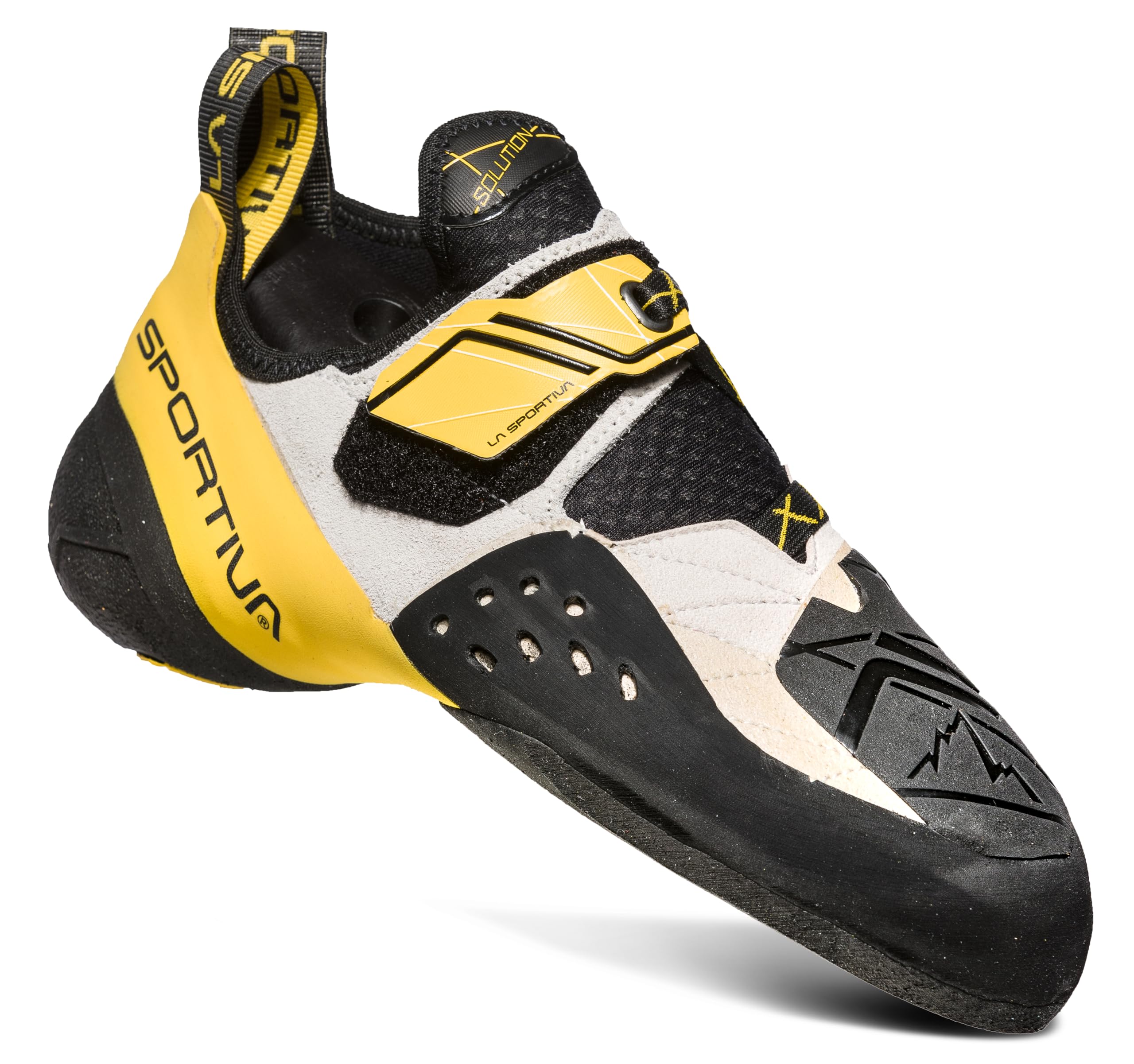
The La Sportiva Solution has been a benchmark aggressive bouldering shoe for years, featuring a pronounced downturn and a high asymmetry that concentrates power over the big toe. The P3 (Permanent Power Platform) system maintains the shoe’s downturned shape over its lifespan, preventing the toe from flattening out. The 3.5mm Vibram XS Grip 2 sole ensures reliable stickiness on steep plastic.
Experienced climbers praise the Solution for its excellent performance on overhangs and in competition setting. The slipper-style closure with a Lock Harness system keeps the heel securely engaged during dynamic heel hooks. Reviewers note that the sizing runs small — most recommend going at least a full size up from street shoe size for a performance fit.
This is not a shoe for beginners. The aggressive profile can be uncomfortable during long sessions on vertical or slab terrain. The rigid platform also reduces sensitivity compared to softer models, making smearing less intuitive. Budget-minded climbers should note the premium price point.
Why it’s great
- Maintains downturn shape over time with P3 platform
- Excellent heel hook security
- High precision on small edges
Good to know
- Very aggressive, not comfortable for all-day wear
- Requires significant downsizing for optimal fit
- Less sensitive for smearing on volumes
3. EVOLV Phantom

The EVOLV Phantom is purpose-built for hard bouldering, with an aggressively cambered shape and a plastic midsole that is thicker at the forefoot to maintain the downturn. The midsole tapers toward the toe, providing the sensitivity needed for technical foot placements. The 6-point single-pull closure system wraps the foot securely, minimizing dead space. The TRAX SAS rubber compound is among the stickiest available for indoor use.
Advanced climbers report that the Phantom shines on steep overhangs and moon boards, where the aggressive shape and stiff forefoot translate power directly onto small holds. After a break-in period of around five sessions, the shoe molds to the foot for a glove-like fit. Several reviewers note that the sizing is true to other EVOLV models, with a recommendation to go half a size down from street shoe for a performance fit.
Some users have reported quality control issues with the plastic buckle, though EVOLV’s customer service was responsive in replacing defective units. The Phantom is not suitable for beginners or those climbing primarily on vertical terrain, as the aggressive downturn can cause discomfort during edging on slabs.
Why it’s great
- Excellent power transfer on small holds
- Secure closure system for a snug fit
- Sticky TRAX SAS rubber for confident foot placements
Good to know
- Buckle durability may be a concern
- Long break-in period for full comfort
- Not ideal for vertical or slab climbing
4. SCARPA Instinct VS

The SCARPA Instinct VS is designed with a wider toe box and a moderate downturn, making it one of the few aggressive shoes that accommodates wider feet without sacrificing performance. The 3.5mm Vibram XS Edge rubber on the sole provides excellent edging support, while the Bi-Tension rand system allows the climber to adjust the tension for precision on small footholds. The heel cup is structured for secure heel hooks.
Reviewers with wide feet consistently report that the Instinct VS fits better than the La Sportiva Solution or SCARPA Drago, providing a snug performance fit without painful pressure points. The shoe breaks in within a few sessions and maintains its shape well over months of use. Many long-time climbers consider it their go-to shoe for both indoor bouldering and sport climbing due to its balance of comfort and aggression.
Sizing is critical with the Instinct VS — most reviewers recommend going at least a full size up from street shoe size. The shoe has poor breathability due to the leather and microsuede upper. Some users note that the XS Edge rubber is less sticky than XS Grip 2, making smearing on volumes slightly less secure.
Why it’s great
- Excellent fit for wide feet
- Great edging precision
- Secure heel hooking
Good to know
- Sizing runs very small; size up significantly
- Poor breathability
- Less sticky on slopers than softer rubber
5. EVOLV Kronos

The EVOLV Kronos is designed for climbers stepping out of beginner shoes and ready to tackle steeper terrain without jumping into an aggressive last. It features a slight downturn and a comfortable dual-strap closure system that provides a snug fit without excessive pressure. The TRAX SAS rubber offers a good balance of stickiness and durability for gym use.
Reviewers praise the Kronos for its versatility — it performs well on vertical slabs and moderate overhangs, making it a solid choice for gym rats who climb a variety of problems. The synthetic upper minimizes stretch, so the fit remains consistent over time. Many intermediate climbers describe it as a noticeable upgrade from rental or entry-level shoes, providing better grip and precision at a reasonable price.
Sizing is reported as inconsistent across batches, with some users needing to go half a size up and others finding true-to-size fits. The shoe is not aggressive enough for hard bouldering or projecting steep overhangs, as the moderate downturn limits power transfer. The rubber may wear faster than harder compounds on abrasive plastic.
Why it’s great
- Versatile for slab to moderate overhangs
- Comfortable dual-strap closure
- Good grip for intermediate climbers
Good to know
- Inconsistent sizing between batches
- Not aggressive enough for hard bouldering
- Rubber may wear quickly on abrasive holds
6. Ocun Ozone
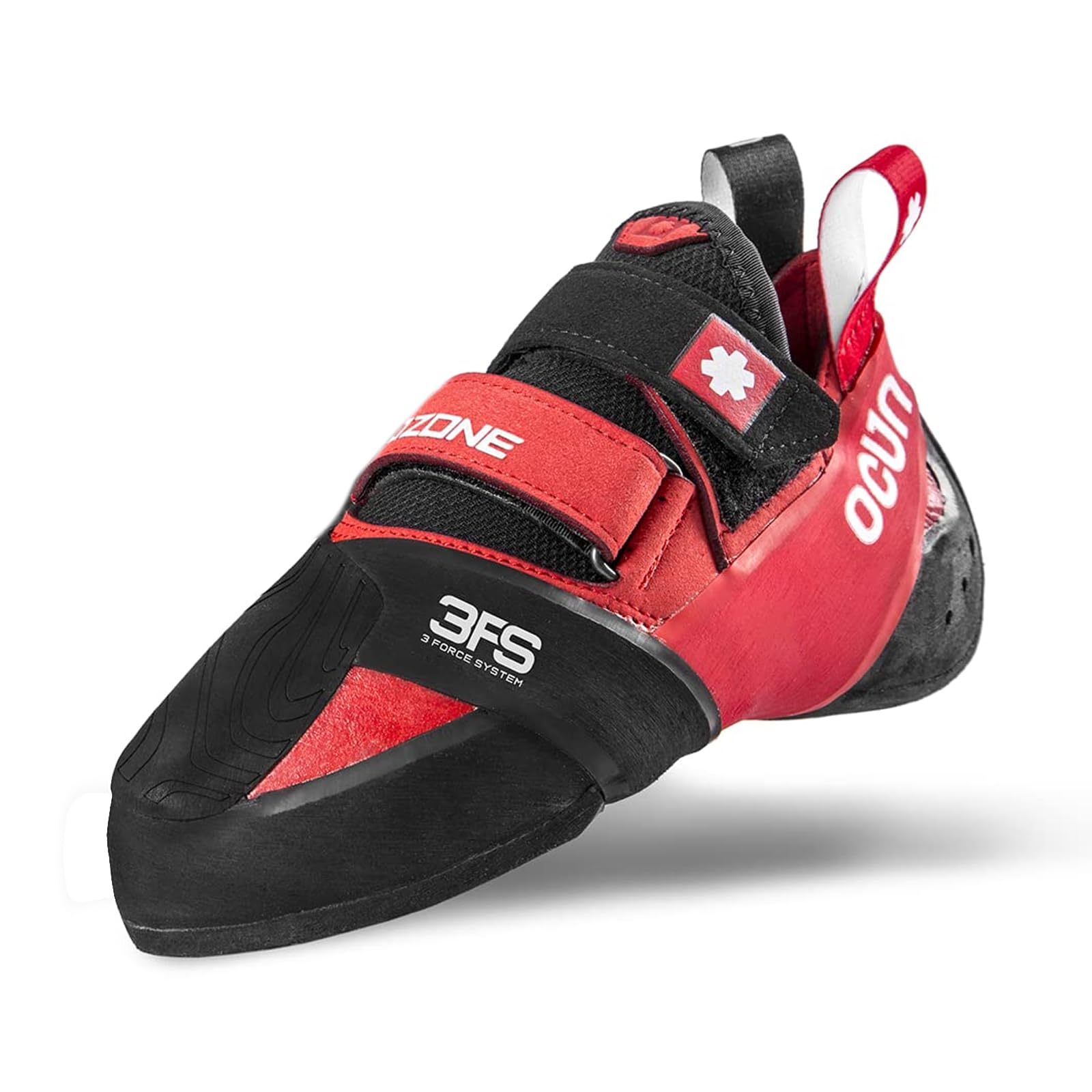
The Ocun Ozone is a mid-range bouldering shoe that prioritizes comfort without abandoning performance. It uses a 3D Fit Middle midsole for moderate stiffness, providing enough support for edging while remaining flexible enough for smearing. The Vibram 4mm rubber outsole offers good grip on indoor holds. The Asymetrix last provides a moderate asymmetry that balances precision with all-day wearability.
Users with Morton’s toe (a longer second toe) report that the Ozone’s slightly centered toe point accommodates this foot shape better than many competitors. The high-volume fit makes it suitable for wider feet, and the microfiber upper resists stretching. Several reviewers note that the shoe feels comfortable straight out of the box, with minimal break-in required.
Sizing is a common concern — many users report that the Ozone runs small and requires going at least a full size up from street shoe. The heel cup may feel loose for those with narrow heels, leading to potential heel-slip during aggressive hooks. The moderate downturn limits its performance on very steep overhangs compared to more aggressive models.
Why it’s great
- Comfortable fit for wide feet and Morton’s toe
- Good balance of edging and smearing
- Minimal break-in period
Good to know
- Runs small; requires significant sizing up
- Heel may feel loose on narrow heels
- Not aggressive enough for steep overhangs
7. SCARPA Origin

The SCARPA Origin is a flat, neutral climbing shoe designed for beginner to early-intermediate boulderers. Its 5mm Vision outsole is thick and durable, providing a stable platform for learning proper footwork on vertical terrain. The slight asymmetry helps guide the foot toward the toe without the aggressive pull of a performance last, making it comfortable for long gym sessions.
New climbers consistently rate the Origin highly for its comfort and ease of use. The shoe fits true to size for most users, though some recommend going half a size up for a snug performance fit. The suede upper molds to the foot over time, and the shoe requires minimal break-in. Parents and coaches often recommend it as a first climbing shoe upgrade over rentals.
Experienced climbers note that the Origin lacks the precision and power needed for bouldering past the V6 grade. The undefined edges make edging on tiny footholds difficult, and the flat profile struggles on steep overhangs. This shoe is best viewed as a starting point, not a long-term investment for advanced indoor bouldering.
Why it’s great
- Very comfortable for beginners
- Durable 5mm outsole for gym use
- Minimal break-in required
Good to know
- Lacks precision for advanced bouldering grades
- Flat profile limits overhang performance
- Undefined edges on tiny footholds
8. Ocun Jett QC

The Ocun Jett QC is an all-round climbing shoe that brings moderate performance at a budget-friendly price point. It features a 2D Fit Hard midsole for stiffness that supports edging on vertical terrain, paired with a 4mm CAT rubber 1.5 outsole. The lightweight design (376 grams per pair) makes it comfortable for warm-up laps and long gym sessions.
Budget-conscious climbers and gym regulars appreciate the Jett QC for its durability and comfort. The microfiber upper resists odor and maintains its shape over time. Reviewers note that the shoe fits true to street shoe size for a snug, performance-oriented fit, though some recommend going half a size up for wider feet. The moderate profile works well on slab and moderate boulder problems.
The Jett QC lacks the aggression and sensitivity required for hard bouldering and steep overhangs. The CAT rubber 1.5 compound is less sticky than Vibram XS Grip 2, reducing confidence on slopers. The 2D Fit Hard midsole also limits smearing ability on volumes.
Why it’s great
- Lightweight and comfortable for long sessions
- Good edging support for vertical terrain
- Durable microfiber upper
Good to know
- Not sticky enough for slopers
- Lacks sensitivity for technical bouldering
- Limited performance on steep overhangs
9. Ocun Striker QC

The Ocun Striker QC is an affordable entry-level shoe that prioritizes comfort and ease of use for new climbers. It features a 2D Fit Middle midsole that provides moderate support without being too stiff, paired with a 4mm CAT rubber 1.1 outsole. The Entratic Competition last offers a moderate asymmetry that helps guide the foot onto holds without the aggressive pull of performance shoes. The microfiber upper is vegan-friendly and resists odor.
New climbers and families find the Striker QC an excellent value for gym sessions. The shoe fits wider feet well, with a roomy toe box that prevents painful pressure. Several reviewers highlight the comfortable fit straight out of the box, with no break-in period needed. The Velcro closure allows easy on-and-off, ideal for gym use.
The Striker QC’s rubber compound is less sticky than premium options, which may reduce confidence on slippery volumes or slopers. The moderate asymmetry limits precision on very small footholds. Experienced climbers will outgrow this shoe quickly, but it serves as a solid starting point for building foundational technique.
Why it’s great
- Comfortable fit for wide feet
- Great value for beginners
- No break-in required
Good to know
- Less sticky rubber limits confidence on slopers
- Limited precision on small footholds
- Not suitable for advanced bouldering
FAQ
How should climbing shoes fit for indoor bouldering?
Can I use the same shoe for both bouldering and sport climbing?
What does a 4mm rubber sole mean for durability?
Final Thoughts: The Verdict
For most users, the best climbing shoes for indoor bouldering winner is the SCARPA Drago because its soft, sticky sole and high sensitivity give you unmatched trust on gym plastic and volumes. If you prefer a more supportive fit with excellent edging for wide feet, grab the SCARPA Instinct VS. And for aggressive overhang bouldering and competition performance, nothing beats the La Sportiva Solution.

Mo Maruf
I created WellFizz to bridge the gap between vague wellness advice and actionable solutions. My mission is simple: to decode the research and give you practical tools you can actually use.
Beyond the data, I am a passionate traveler. I believe that stepping away from the screen to explore new environments is essential for mental clarity and physical vitality.