Our readers keep the lights on and my smoothie glass nicely filled. As an Amazon Associate, I earn from qualifying purchases.
Raising a healthy flock starts at the feeder, and the window between chick starter and layer feed is where most backyard keepers get it wrong. A grower feed with the right protein balance—typically 16% to 19%—determines feather quality, skeletal development, and eventual egg production without pushing harmful rapid weight gain. That narrow protein band is the difference between pullets that mature on schedule and birds that struggle with leg issues or poor plumage.
I’m Mohammad Maruf — the founder and writer behind WellFizz. I spend my time digging into feed labels, comparing ingredient sourcing, and analyzing how protein percentage, amino acid profiles, and additive quality translate into real flock performance so you don’t have to second-guess your bag choice.
The right formula delivers steady growth without the risks of early layer feeds or incomplete rations. This guide breaks down the specs, sourcing, and real keeper experiences to help you confidently pick the best chicken grower feed for your birds.
How To Choose The Best Chicken Grower Feed
Picking a grower feed is more than grabbing the cheapest bag. The wrong protein level, poor ingredient sourcing, or a form your birds reject can stall growth or create health issues. Focus on these three factors to match the feed to your flock’s specific needs.
Protein Percentage and Amino Acid Profile
Grower feeds sit between starter (20%–24%) and layer (16%) rations. Target 16% to 19% protein: too low and feathering and muscle development lag; too high and you risk rapid growth that strains bones and joints. Look for feeds that list specific amino acids like methionine and lysine, which are critical for feather and tissue formation.
Feed Form: Pellets, Crumbles, or Whole Grain
Pelleted feeds reduce dust and selective feeding, forcing birds to eat a balanced bite each time. Crumbles work well for smaller birds and bantams that struggle with pellets. Whole grains appeal to visual eaters and ferment beautifully, but some birds pick out favorites and leave the rest, creating nutritional gaps.
Ingredient Sourcing and Additives
Organic, Non-GMO, and soy-free claims matter if you want to avoid fillers linked to digestive issues or poor egg quality later. Probiotics and prebiotics improve gut health and nutrient absorption, especially during the stress of rapid growth. Avoid medicated feeds unless you have a specific disease risk on your property.
Quick Comparison
On smaller screens, swipe sideways to see the full table.
| Model | Category | Best For | Key Spec | Amazon |
|---|---|---|---|---|
| Scratch and Peck Whole Grain Grower Mash | Organic Whole Grain | Fermentation & picky eaters | 17% Protein, 40 lbs, Corn & Soy-Free | Amazon |
| Mile Four Organic Chicken Feed Grower | Organic Whole Grain | Premium organic feeding | 18% Protein, 23 lbs, Corn & Soy-Free | Amazon |
| Kalmbach Henhouse Reserve Layer Feed | Premium Textured | Laying hens in mixed flocks | 18% Protein, 50 lbs, with LifeGuard | Amazon |
| New Country Organics Grower/Broiler Feed | Organic Soy-Free | Hot climate growers | 19% Protein, 25 lbs, Low Starch | Amazon |
| Manna Pro All Flock Crumbles | All Flock Crumble | Mixed species & bantams | 16% Protein, 25 lbs, Probiotics | Amazon |
| Premium Poultry All Flock Pellets | All Flock Pellet | Diverse flock one-feed solution | 18% Protein, 40 lbs, Probiotics | Amazon |
| Nutrena Country Feeds Layer Pellets | Layer Pellet | Pullets transitioning to lay | 16% Protein, 50 lbs, Prebiotics | Amazon |
In‑Depth Reviews
1. Scratch and Peck Feeds Whole Grain Grower Mash

Scratch and Peck delivers a 17% protein whole grain mash that skips corn and soy entirely, using visible, intact grains your birds can identify and peck selectively. The mash form makes it an exceptional candidate for fermentation: keep reports note their chickens transitioned from rejecting pellets to cleaning the feeder after switching to this fermentable mash. The 40-pound bag offers a competitive per-pound cost when you factor in the organic and Non-GMO certifications.
This feed shines with picky eaters and ducks, who take to the visible seeds and grains naturally. The corn-free, soy-free formula avoids common fillers that can trigger digestive upset in sensitive breeds, while the 17% protein level hits the sweet spot for growing pullets and cockerels without pushing rapid, unhealthy weight gain.
The trade-off is the price point: it sits at the premium end of the market. Some bags arrive with more dust and fines than expected, though this varies by shipping handling. Birds that prefer a uniform crumble or pellet may take a few days to adjust to the varied texture of whole grains.
Why it’s great
- Exceptional fermentation results reported by keepers
- Visible whole grains appeal to visual eaters
- Corn-free, soy-free, organic, Non-GMO certified
Good to know
- Premium price compared to conventional feeds
- Some dust and fines in the bag
- Texture may require adjustment for pellet-trained birds
2. Mile Four Organic Chicken Feed Grower

Mile Four crafts a 23-pound bag of 18% protein whole grain grower feed from 100% USA-grown organic grains, milling fresh and avoiding corn and soy fillers. The whole grain form lets birds eat visually, with keepers reporting shiny plumage and bright combs after switching. The compostable bag with a sturdy handle simplifies carrying and pouring, a practical touch for daily use.
This feed ferments well, with multiple reviews noting their pullets abandoned starter feed once offered this mix. The corn-free and soy-free ingredient list reduces the risk of vitamin and mineral deficiencies linked to filler-heavy rations. Keepers report increased egg production when using this as a daily feed, despite some using it only as a supplement due to the cost.
The biggest limitation is the bag size: 23 pounds is smaller than most competitors, pushing the per-pound cost higher than bulk options. Some birds that are accustomed to pellets will initially pick around the whole grains. If you have a large flock, you will be ordering frequently.
Why it’s great
- 100% USA-grown organic grains, fresh milled
- Corn-free, soy-free, non-medicated formula
- Fermentation-friendly whole grain texture
Good to know
- Small 23 lb bag means frequent repurchasing for larger flocks
- Higher cost per pound than many competitors
- Whole grain form may not suit all birds
3. Kalmbach Feeds Henhouse Reserve 18% Layer Feed
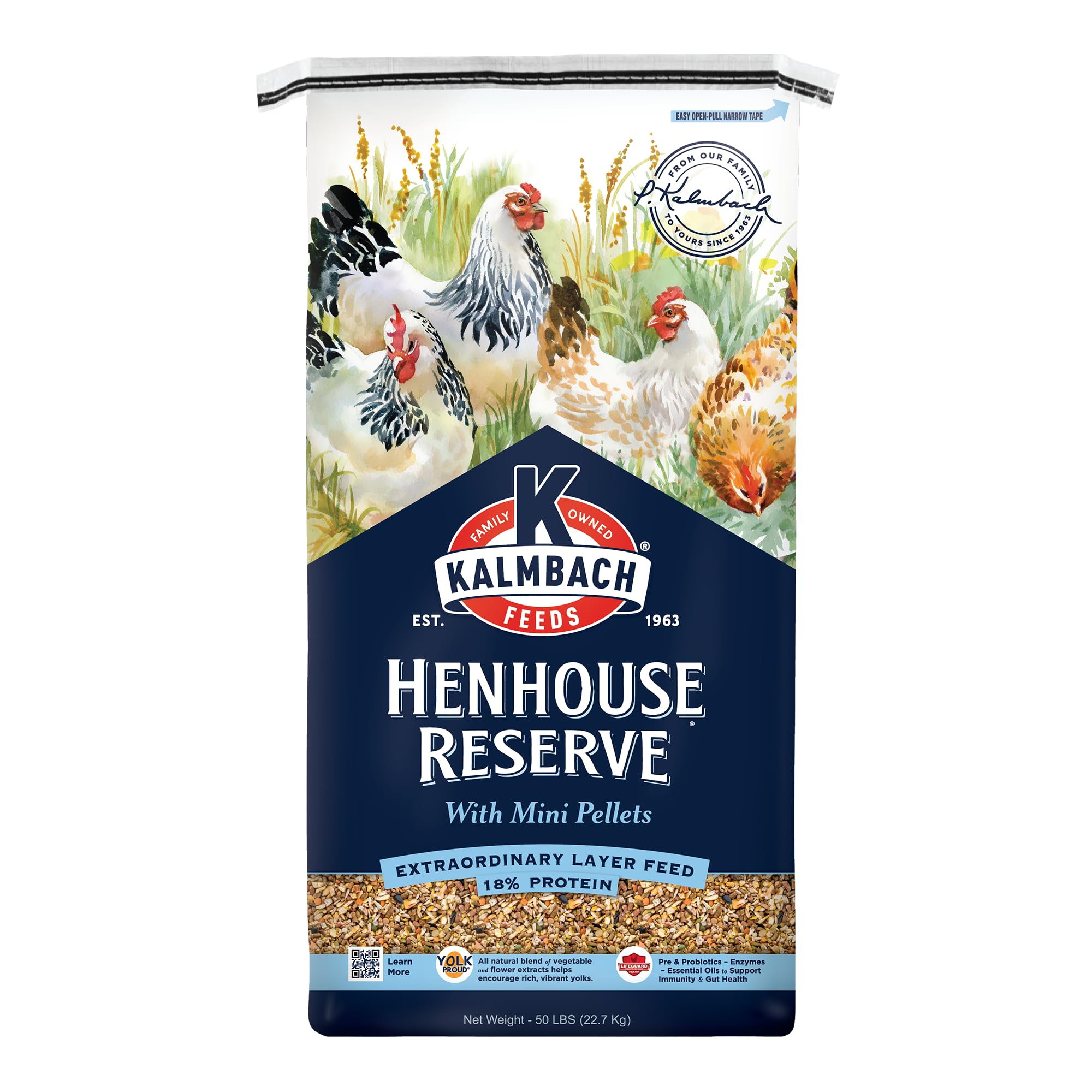
Kalmbach’s Henhouse Reserve combines 18% protein with whole grain texture and a proprietary LifeGuard blend of prebiotics, probiotics, essential oils, and enzymes to support digestion and immune function. The Yolk Proud additive promotes deep golden yolks, making this a top choice for keepers who show eggs or sell to discerning buyers. The 50-pound bag is a solid value for a premium product.
Keepers consistently note better shell strength, cleaner eggs, and higher daily production after switching to this feed. Birds find the textured mix appealing, with one reviewer calling it “chicken crack.” The fortified formula eliminates the need for extra scratch grain, simplifying feeding routines for flocks that have already transitioned to lay.
Some birds selectively leave the pellet pieces and eat the whole grains first, creating potential nutritional gaps if you don’t monitor consumption. The price is above standard layer feeds, though the yolk quality and digestive health benefits justify the upcharge for dedicated keepers. This is a layer feed, not a straight grower, so reserve it for birds that have reached laying age.
Why it’s great
- Yolk Proud additive visibly deepens yolk color
- LifeGuard blend supports immunity and digestion
- 50 lb bag offers good value in the premium tier
Good to know
- Birds may selectively eat around pellets
- Designed for adult layers, not growing pullets
- Premium price vs standard layer feeds
4. New Country Organics Grower/Broiler Feed
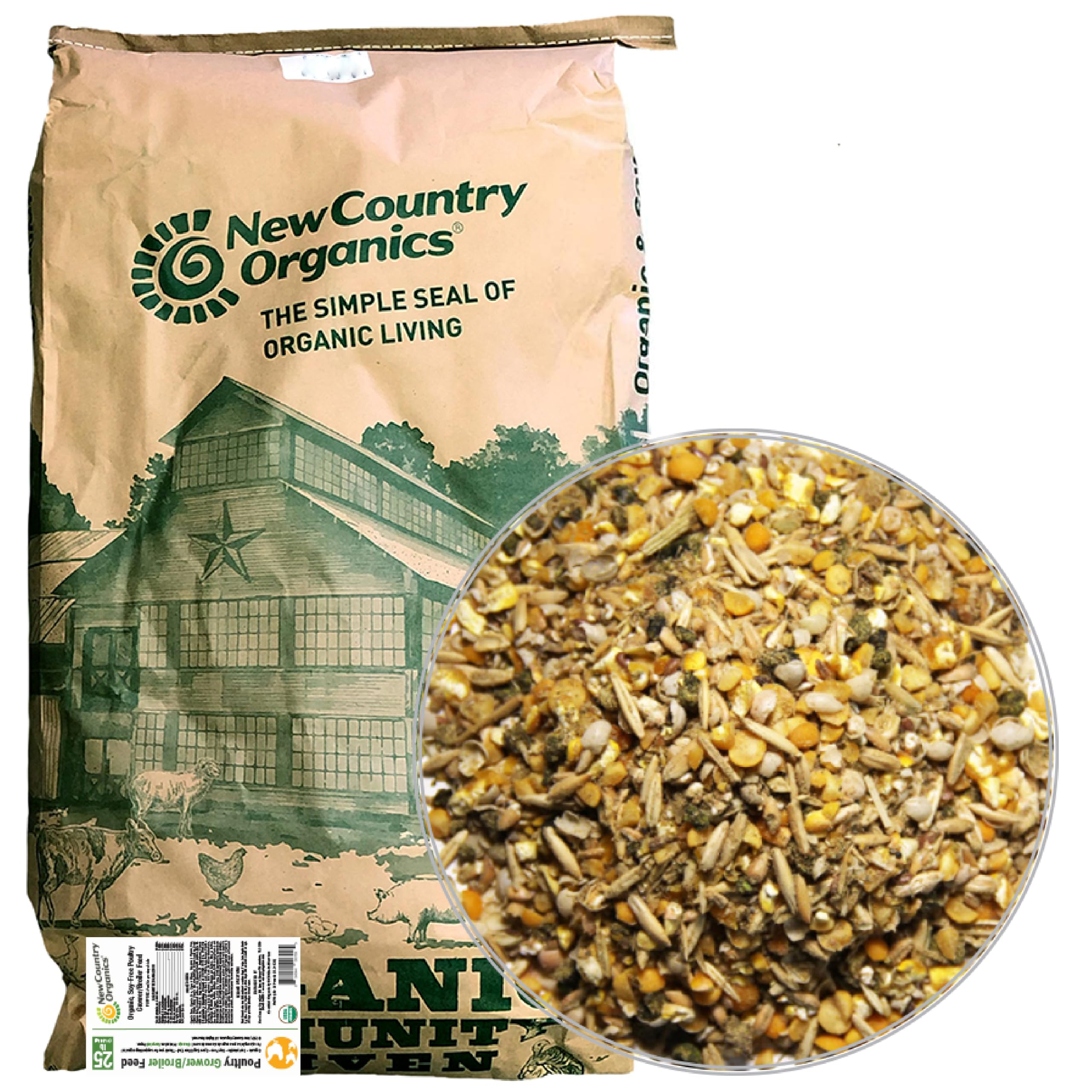
New Country Organics targets growers with a 19% protein, soy-free formula that incorporates organic alfalfa, kelp, and flaxseed for a nutrient-dense profile. The low starch content makes it a smart choice for hot climates, helping birds maintain appetite and digestion during heat stress. The 25-pound paper bag is easy to handle but less durable than woven poly bags.
This feed ferments easily in warm weather, with Texas keepers reporting clean fermentation and strong bird health. The soy-free recipe appeals to those avoiding GMO-related fillers, and the higher protein level supports broiler development effectively. The inclusion of Poultry Nutri-Balancer adds a complete vitamin and mineral premix that covers gaps in pasture-raised flocks.
Bag quality is a recurring issue: several keepers received ripped or ant-infested bags due to Amazon shipping handling. The fine powder content can be high, creating dust when pouring. The price per pound is also elevated relative to standard organic grower feeds, making it a premium choice for targeted use rather than daily bulk feeding.
Why it’s great
- Low starch formula ideal for hot climate feeding
- Soy-free with organic alfalfa, kelp, and flaxseed
- Ferments cleanly in warm conditions
Good to know
- Shipping can result in torn or infested bags
- High dust and fines content in some batches
- Smaller 25 lb bag at a premium price
5. Manna Pro All Flock Crumbles

Manna Pro’s 16% protein crumble is formulated for mixed flocks including chickens, ducks, turkeys, geese, and quail. The crumble texture is small enough for bantams and seramas to eat comfortably, and the probiotic addition supports digestive health across species. The 25-pound bag is a practical size for small to medium flocks without committing to a 50-pound sack.
Keepers praise the feed for keeping their guinea fowl, pekin ducks, and quail healthy and active. The crumble form reduces selective feeding compared to whole grains, ensuring each bird gets a balanced bite. The lack of artificial colors and flavors aligns with the preferences of keepers who prioritize clean ingredient lists.
A few keepers noted that the probiotic load caused loose droppings and soiled eggs when fed exclusively to laying hens at high rates. The feeding instructions show some inconsistency—one line says “feed freely” while another suggests mixing with other feed. Consider this an all-flock maintenance feed rather than a targeted grower, and watch your birds’ droppings when first introducing it.
Why it’s great
- Crumble size works well for bantams and small breeds
- Probiotics support gut health across species
- Versatile for chickens, ducks, quail, and turkeys
Good to know
- Probiotics may cause loose droppings in some birds
- 16% protein is on the lower end for growing birds
- Feeding rate instructions are ambiguous
6. Premium Poultry All Flock Pellets
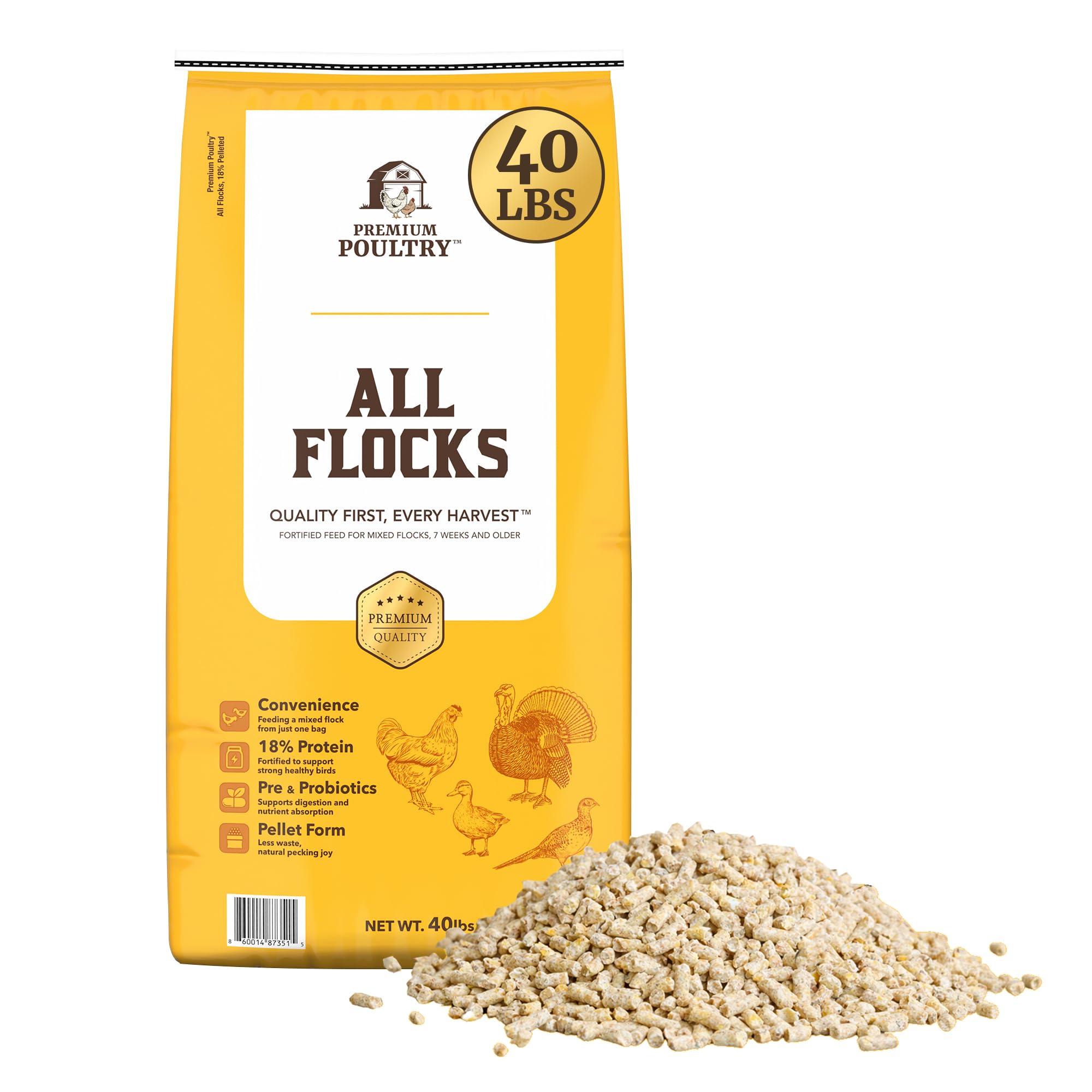
Premium Poultry delivers an 18% protein pelleted feed designed for mixed flocks of chickens, ducks, geese, turkeys, and game birds. The pellet form reduces dust and prevents selective feeding, forcing each bird to consume a balanced ration. The inclusion of both prebiotics and probiotics targets digestive health and nutrient absorption, a combination that supports birds during the stress of rapid growth phases.
Keepers consistently note that even spoiled birds that normally reject pellets cleaned up this feed. The 40-pound bag offers a solid mid-range price point for a complete all-flock formula, and the made-in-USA manufacturing reassures buyers about ingredient sourcing. Multiple reviews highlight that peacocks, ducks, and chickens all ate the feed equally enthusiastically.
This feed is designed for adult birds and growing juveniles past the starter phase. It is a complete feed, not a supplement, so you can use it as the sole ration for a diverse flock. The protein level at 18% is ideal for growers but may be slightly high for sedentary adult birds or mixed flocks with low production demands.
Why it’s great
- Pellets reduce waste and prevent selective feeding
- 18% protein suits growers and mixed flocks
- Prebiotics and probiotics included for gut health
Good to know
- Not a starter feed; intended for birds past 8 weeks
- 18% protein may be high for low-production adults
- Relatively new brand with limited long-term reviews
7. Nutrena Country Feeds 16% Layer Pellets

Nutrena’s 16% protein pellet is a straightforward layer feed that works well for pullets transitioning into lay when complete layer nutrition is needed. The 50-pound bag provides excellent value for keepers with large flocks, and the prebiotic and probiotic blend supports digestion and nutrient absorption during the demanding laying period. It is a complete feed with no additional supplementation required.
Keepers report that their hens eat it readily, lay consistently, and maintain good health. The pellet form holds together well in feeders and reduces dust. For keepers who need a single feed for their laying flock and want the convenience of Amazon delivery, this is a reliable fallback option that gets the job done without fuss.
The protein level at 16% is appropriate for layers but on the lower side for growing birds that are not yet laying. The online price is higher than brick-and-mortar feed stores—several reviews note paying nearly double the local feed store price. This is more of a convenience purchase for emergency situations or for keepers without local access to feed suppliers.
Why it’s great
- Large 50 lb bag offers great value per pound
- Complete layer feed, no extra supplementation needed
- Prebiotics and probiotics support digestion
Good to know
- Online price is significantly higher than feed stores
- 16% protein is too low for growing pullets
- Primarily a layer ration, not a grower-specific feed
FAQ
Can I feed grower feed to laying hens?
How long should pullets stay on grower feed?
Is soy-free grower feed necessary for my flock?
Final Thoughts: The Verdict
For most keepers raising a healthy backyard flock, the best chicken grower feed winner is the Scratch and Peck Whole Grain Grower Mash because its 17% protein, corn-free and soy-free organic formula, and fermentation-friendly whole grain texture deliver steady growth without fillers. If you want a clean, USA-grown organic option that ferments beautifully, grab the Mile Four Organic Chicken Feed Grower. And for a simple, budget-friendly all-flock pellet that works across multiple species, nothing beats the Premium Poultry All Flock Pellets.

Mo Maruf
I created WellFizz to bridge the gap between vague wellness advice and actionable solutions. My mission is simple: to decode the research and give you practical tools you can actually use.
Beyond the data, I am a passionate traveler. I believe that stepping away from the screen to explore new environments is essential for mental clarity and physical vitality.