Our readers keep the lights on and my smoothie glass nicely filled. As an Amazon Associate, I earn from qualifying purchases.
Walking across a freshly refinished wood floor should feel like gliding, not cringing over every scuff mark. The wrong clear coat turns that satisfaction into constant maintenance, yellowing under sunlight, or peeling within months. An oil-based polyurethane delivers deep amber warmth but demands patience with drying times, while a water-based formula dries fast and stays crystal-clear but may lack the abrasion resistance a busy hallway needs.
I’m Mohammad Maruf — the founder and writer behind WellFizz. I’ve spent hundreds of hours analyzing application methods, cure cycles, and real-world durability data across different floor finish formulations to build this guide for wood floor owners who want the right protection the first time.
Every gallon listed here has been evaluated for hardness, self-leveling behavior, yellowing tendency, and repairability so you can confidently choose the best clear coat for wood floors without guessing which chemistry suits your project.
How To Choose The Best Clear Coat For Wood Floors
A clear floor finish does more than add shine — it absorbs foot traffic, pet claws, furniture drag, and occasional spills. The wrong choice can cloud within a year, chip at edges, or require full sanding to recoat. Understanding the base chemistry, sheen level, and application demands is the only way to avoid a costly do-over.
Water‑Based vs Oil‑Based Formulas
Water-based polyurethanes dry fast (recoat in 1–2 hours), have low odor, and stay crystal-clear over time, making them ideal for light woods like maple, ash, or birch. Oil-based formulas penetrate deeper, add a warm amber tone, and form a harder film, but require 4–8 hours between coats and emit strong fumes during application.
Sheen Level and Visual Depth
Satin is the most popular floor finish because it hides minor scratches and dust while still reflecting light. Gloss provides maximum depth and shine but shows every footprint. Matte masks imperfections well but offers less abrasion resistance because the flatter surface has fewer hard resin peaks per square inch.
Hardness and Repair Cycle
Aluminum-oxide infused water-based finishes (like those using nano-technology) create a ceramic-hard surface that resists scuffs for years. The trade-off is that spot repairs are difficult — a full-screen recoat is usually required. Softer finishes are easier to buff and recoat in high-wear zones but need more frequent maintenance.
Quick Comparison
On smaller screens, swipe sideways to see the full table.
| Model | Category | Best For | Key Spec | Amazon |
|---|---|---|---|---|
| Bona Mega Wood Floor Finish | Water-Based OCP | Professional-grade durability with zero ambering | 500–600 sq ft/gal coverage | Amazon |
| Rust-Oleum Varathane Diamond Water-Based | Water-Based | Aluminum-oxide scuff resistance for heavy traffic | Nano-technology formula | Amazon |
| General Finishes High Performance Topcoat | Water-Based | Flawless self-leveling on furniture and floors | 1–2 hour recoat time | Amazon |
| Minwax Fast Drying Polyurethane | Oil-Based | Warm amber finish on oak or walnut floors | 600 sq ft/gal coverage | Amazon |
| Diamond Brite Interior Polyurethane | Oil-Based | Thick, non-yellowing clear gloss for businesses | 500 sq ft/gal coverage | Amazon |
| ZAR 33912 Oil Based Polyurethane | Oil-Based | Self-leveling matte finish for DIY beginners | 125–150 sq ft/qt coverage | Amazon |
| Minwax Polycrylic Water-Based Finish | Water-Based | Ultra-fast drying on low-traffic indoor projects | 2-hour recoat time | Amazon |
In‑Depth Reviews
1. Bona Mega Wood Floor Finish Satin

Bona’s waterborne formula uses oxygen-crosslinking polyurethane technology — a one-component system that avoids the short pot life of two-part finishes. It delivers 500 to 600 square feet of coverage per gallon, which is exceptionally efficient for a premium product. The satin sheen is subtle enough to hide dust but reflective enough to add depth to old-growth fir or red oak.
DIYers report that it self-levels beautifully when applied with a lambswool or microfiber pad, leaving no bubbles or swirl marks even on wide-plank floors. The low-VOC composition means almost no odor during application, and it dries hard enough for light foot traffic in under two hours. Professional floor finishers frequently choose Bona for historic restorations because it never adds an amber cast to pale woods.
Bona recommends scuff-sanding between coats, and the 1-gallon container is sufficient for two to three coats on an average living room. The higher upfront cost is offset by reduced labor time and the absence of yellowing over years of sunlight exposure.
Why it’s great
- Self-leveling with a microfiber pad — almost zero brush marks
- Dries in under two hours, allowing three coats in one day
- Completely non-yellowing on white oak and maple
Good to know
- Raises grain more than oil-based alternatives on first coat
- Requires dedicated lambswool or microfiber applicator
2. Rust-Oleum Varathane Diamond Water-Based Interior Floor Polyurethane

Varathane Diamond incorporates patented aluminum-oxide nano-technology into a water-based carrier, creating a floor finish that resists scuffs and scratches at a level approaching commercial gymnasium coatings. Users who applied it in an ice cream shop reported the surface looked new after two years of heavy daily traffic — a testament to its ceramic-like hardness.
The satin finish stays crystal-clear on pine and does not yellow or darken the natural wood tone. It can be applied with a brush, roller, or spray, and many floor pros thin it with 5 percent distilled water for better flow on the first coat. The coverage is listed at 100 square feet per gallon, which is less than other water-based options — budget for at least four coats on a full room.
Complaints center on the need for multiple coats to achieve a uniform film thickness. Users report that three coats look good, but four coats deliver the true diamond-level hardness the brand promotes. Cleanup with soap and water is straightforward, and the low-odor formula makes indoor application comfortable without full PPE.
Why it’s great
- Aluminum-oxide nano-particles deliver extreme scratch resistance
- Non-yellowing formula keeps light woods looking natural
- Low odor with soap-and-water clean-up
Good to know
- Coverage is only 100 sq ft/gal — requires 4+ coats for full protection
- Needs to be stirred thoroughly before and during application
3. General Finishes High Performance Water Based Topcoat Satin

General Finishes markets this as the hardest, most durable consumer polyurethane topcoat available, and the feedback from users with butcher-block counters and high-use desktops supports the claim. The water-based formula flows out exceptionally well, eliminating brush strokes even when applied by first-time users. The satin sheen is soft but distinct — not flat, not shiny.
Recoat time is only 1 to 2 hours, allowing a full four-coat build in a single day. Users report that it sands between coats without gumming up sandpaper, a sign of proper cross-linking. The 1-quart size covers 125 to 150 square feet, which is a manageable amount for smaller projects like a single room or a set of hardwood cabinets.
A note on compatibility: General Finishes warns against applying this clear coat over bright white paint because a chemical reaction can cause yellowing. Over stained wood, however, it remains water-clear indefinitely. The higher price per quart is justified by the consistency of the finish and the ease of application that eliminates costly rework.
Why it’s great
- Flows and levels so well that beginners achieve professional results
- Fast recoat window speeds up multi-coat workflows
- No yellowing on maple or light-colored hardwoods
Good to know
- Not recommended over bright white or very light paint
- Quart size is small for large floor areas
4. Minwax Fast Drying Polyurethane Protective Wood Finish Clear Gloss
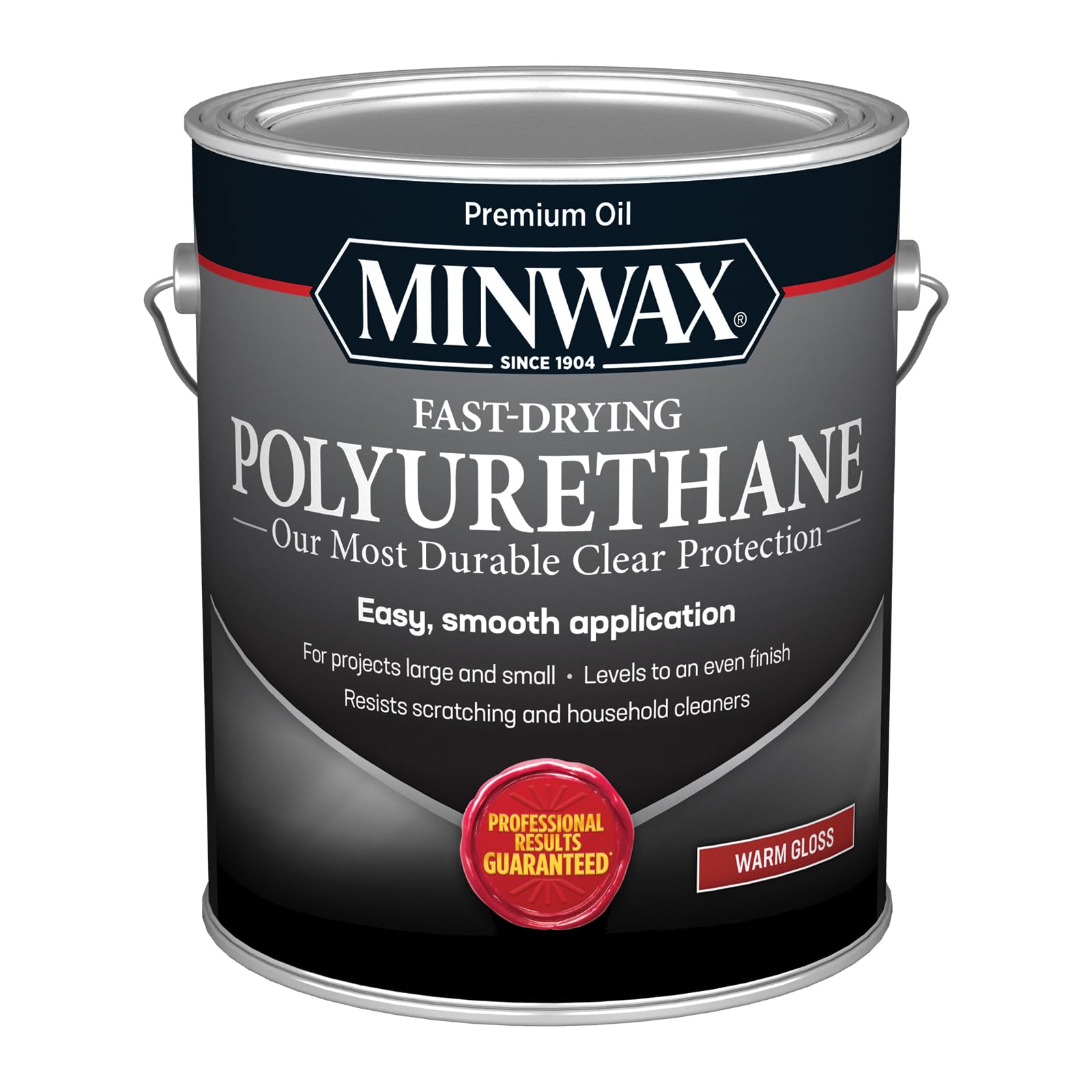
Minwax’s oil-based polyurethane is the benchmark that many DIYers cut their teeth on. The gloss sheen delivers a warm, rich amber tone that enhances the grain of oak, walnut, and cherry — exactly what traditionalists want from a wood floor finish. The fast-drying claim is real: recoat after 4 to 6 hours, which is aggressive for an oil-based product but achievable in warm, well-ventilated spaces.
Coverage is listed at 600 square feet per gallon, the highest on this list, making it economical for large open floor plans. The oil-based formula requires mineral spirits for cleanup, and the strong odor demands proper ventilation and respirator use. Users note that thin coats are essential to avoid streaks and bubbles, especially when using a natural bristle brush.
Durability is excellent across multiple independent reviews — floors finished with this product resist water rings, foot traffic scuffs, and alcohol spills. The gloss sheen will show scratches more readily than satin, so it is best suited for formal living areas rather than entryways. The can should be stirred deeply because solids settle quickly.
Why it’s great
- Oil-based formula adds warm amber depth to darker woods
- 600 sq ft per gallon — best coverage value on the list
- Fast-dry for an oil-based product — 4–6 hour recoat
Good to know
- Strong fumes require respirator and extreme ventilation
- Gloss finish reveals every footprint and dust speck
5. Diamond Brite Interior Polyurethane Clear Gloss 1 Gallon

Diamond Brite is manufactured in Louisville, Kentucky, and its oil-based polyurethane has a noticeably thicker consistency than competitors. Users report that it builds a substantial film with fewer coats — two coats of Diamond Brite deliver the same thickness as four coats of thinner alternatives. This makes it an attractive option for commercial spaces, school floors, and busy households where application time is limited.
The finish is ultra-clear with minimal ambering, which is unusual for an oil-based polyurethane. It can be applied with a lambswool bonnet, natural bristle brush, or high-quality roller — flexiblity that matters when covering large areas quickly. Coverage is 500 square feet per gallon, and the gloss sheen is bright enough to make the wood grain pop.
Drying time is slower than water-based formulas, especially in humid climates like Louisiana, as multiple reviews note. The thick formula also means it does not self-level as aggressively as thinner urethanes — some brushing technique is required to avoid lap marks. Patience between coats pays off with a hard, durable finish that resists abrasion and stains.
Why it’s great
- Thick consistency builds a protective film in fewer coats
- Ultra-clear formula — minimal amber for an oil-based poly
- Works with lambswool, brush, or roller for versatile application
Good to know
- Dries slowly in humidity — plan for longer cure times
- Does not self-level as well as thinner water-based finishes
6. ZAR 33912 Oil Based Polyurethane Wood Finish Quart Clear

ZAR’s oil-based polyurethane selects a matte sheen that appeals to DIYers who want a low-reflective, natural-looking floor finish. The formula self-levels aggressively, which means even a first-time user applying with a foam brush can achieve an even, bubble-free surface. Reviews consistently praise how the first coat looks like the final finish — a rare quality in floor coatings.
The quart size covers 125 to 150 square feet, which is ideal for small rooms, closets, or furniture projects. The matte finish darkens the wood slightly, adding depth without the high-shine look of gloss. Users report that the coating holds up well after six months of heavy use, including foot traffic and pets, with no visible wear through the film.
One trade-off is the umber tint — the finish has a faint brownish cast that is noticeable on pale base coats like white oak or ash. For darker woods or projects where a slight warm tone is acceptable, this is a minor compromise. The quart container costs significantly less than gallon alternatives, making this an affordable entry point for testing oil-based polyurethane.
Why it’s great
- Self-levels beautifully — beginners get professional-looking results
- Matte sheen hides dust and scratches better than gloss
- Durable film holds up under heavy everyday use
Good to know
- Faint umber tint may alter light wood color
- Quart size is small — buy multiple for a whole room
7. Minwax Polycrylic Water-Based Protective Finish Satin

Minwax Polycrylic is a water-based, crystal-clear protective finish designed for indoor wood surfaces like furniture, cabinets, and low-traffic flooring. It dries ultra-fast — recoats in just 2 hours — and cleans up easily with soap and water. The satin sheen stays subtle and non-yellowing, making it a solid choice for light woods where color neutrality matters.
The formula has low odor, so it is comfortable for indoor use without heavy ventilation. Users have successfully applied it to tongue-and-groove flooring with a brush or sponge, and it dries from a milky appearance to full clarity within each coat. The finish resists damage from abrasion, scuffing, chipping, and household chemicals like alcohol and water.
However, Minwax explicitly warns that Polycrylic is NOT recommended for floors. In practice, some users use it on floor surfaces in low-traffic rooms like bedrooms, but it lacks the impact and scratch resistance of dedicated floor polyurethanes. The thin consistency also runs easily on vertical surfaces, requiring careful brush control. For built-in shelves, cabinets, and furniture, this is a top-tier choice — for main-floor living areas, choose a floor-specific alternative.
Why it’s great
- Dries crystal clear with zero yellowing on light woods
- Low-odor formula is comfortable to apply indoors
- Fast 2-hour recoat allows multiple coats per day
Good to know
- Manufacturer does not recommend for floor applications
- Thin formula runs easily on vertical surfaces
FAQ
Can I apply a water-based clear coat over an existing oil-based finish?
How many coats of clear coat do I need on a wood floor?
Why does my clear floor finish look milky after drying?
Final Thoughts: The Verdict
For most users, the best clear coat for wood floors winner is the Bona Mega Wood Floor Finish because its oxygen-crosslinking chemistry delivers professional-grade hardness without yellowing or strong fumes. If you want aluminum-oxide-level scratch resistance for a busy hallway with pets, grab the Rust-Oleum Varathane Diamond. And for an oil-based, warm-toned finish that brings out the richness of oak or walnut, nothing beats the Minwax Fast Drying Polyurethane.

Mo Maruf
I created WellFizz to bridge the gap between vague wellness advice and actionable solutions. My mission is simple: to decode the research and give you practical tools you can actually use.
Beyond the data, I am a passionate traveler. I believe that stepping away from the screen to explore new environments is essential for mental clarity and physical vitality.