Our readers keep the lights on and my smoothie glass nicely filled. As an Amazon Associate, I earn from qualifying purchases.
The kitchen is the hardest-working room in the house, and the cloth you grab determines whether a spill becomes a streak-free victory or a lint-covered mess. Between scrubbing caked-on grease off the stovetop and polishing a wine glass until it sparkles, the right fabric can save you time, money, and frustration.
I’m Mohammad Maruf — the founder and writer behind WellFizz. My approach here is rooted in cross-referencing material science with real-world use cases, from absorbency ratios and drying speed to fabric durability across repeated machine washes.
Whether you prioritize eco-conscious reuse or raw scrubbing power, this guide breaks down the top contenders to help you find the best cleaning cloths for kitchen tasks without the guesswork.
How To Choose The Best Cleaning Cloths For Kitchen
With options ranging from Swedish dishcloths to cotton terry towels to microfiber rolls, the choice comes down to three core factors: material composition, drying speed, and texture. A cloth that excels at drying wine glasses will struggle to lift baked-on grease, and vice versa.
Material Blend and Absorbency
The most effective kitchen cloths use a balanced fabric that holds liquid without dripping. Cellulose-cotton blends (70/30 ratio) absorb up to 15–20 times their dry weight, making them ideal for spill cleanup. Microfiber, typically a polyester-nylon mix, relies on split fibers to trap grease and dust rather than pure volume absorption. Pure cotton offers a soft, gentle feel but takes longer to dry and can hold odors if not laundered frequently.
Drying Speed and Odor Resistance
A cloth that stays damp for hours becomes a breeding ground for bacteria and mildew. Swedish dishcloths and lightweight microfiber sheets dry within minutes when laid flat or hung, while thick cotton towels require more airflow. Look for construction that prevents sour smells between uses — quick-drying materials eliminate the need for constant bleaching.
Texture and Scratching Risk
Non-stick pans, glass stovetops, and stainless steel sinks scratch easily if you use abrasive cloths. Microfiber and cellulose blends are non-scratch by design, while some cotton weaves can trap hard particles. A cloth with a smooth or slightly textured surface lifts food residue without marring delicate surfaces.
Quick Comparison
On smaller screens, swipe sideways to see the full table.
| Model | Category | Best For | Key Spec | Amazon |
|---|---|---|---|---|
| Papaya Reusable Paper Towels | Swedish Dishcloth | Eco-conscious all-purpose wiping | Absorbs 20x its weight, 2-pack | Amazon |
| Utopia Towels Kitchen Towels 12 Pack | Cotton Terry | Drying dishes and glassware | 100% ring-spun cotton, 15×25 in | Amazon |
| MR.SIGA Microfiber Cleaning Cloth 12 Pack | Microfiber | Streak-free windows and stainless steel | 12.6×12.6 in, reinforced edges | Amazon |
| Lucomb Swedish Dish Cloths 10 Pack | Swedish Dishcloth | Budget-friendly decorative wiping | Absorbs 15x its weight, 10-pack | Amazon |
| SOOWASH Microfiber Cleaning Cloths Roll 75 Pack | Microfiber Roll | Grabbing a fresh sheet for messy spills | 180 GSM fabric, 75 pre-cut sheets | Amazon |
In‑Depth Reviews
1. Papaya Reusable Paper Towels

The Papaya cloths hit the sweet spot between absorbency and practicality. With a 70/30 cellulose-cotton blend, they absorb 20 times their dry weight — enough to soak a countertop spill without leaking. The included patented hook promotes air drying, which prevents the sour smell that plagues traditional sponges and rags.
Users report that these cloths clean glass stove tops in a single pass, lifting grease without streaking. At 8.5 x 7.3 inches each, they are compact enough to rinse and reuse immediately but large enough for standard countertop wiping. The two-pack replaces roughly 17 rolls of paper towels over several months of use.
Machine washable and dishwasher safe, the Papaya cloths hold up longer than many Swedish dishcloth alternatives. Some users note that the material feels slightly stiff at first but softens after the first wash, and the printed patterns add a decorative touch to the sink area.
Why it’s great
- Fast-drying cellulose-cotton blend resists odors effectively
- Dishwasher and machine washable for deep sanitation
Good to know
- Only two sheets per pack, so you may need to order multiple sets
- The biodegradable packaging complaint raises valid eco-concerns
2. Utopia Towels Kitchen Towels 12 Pack
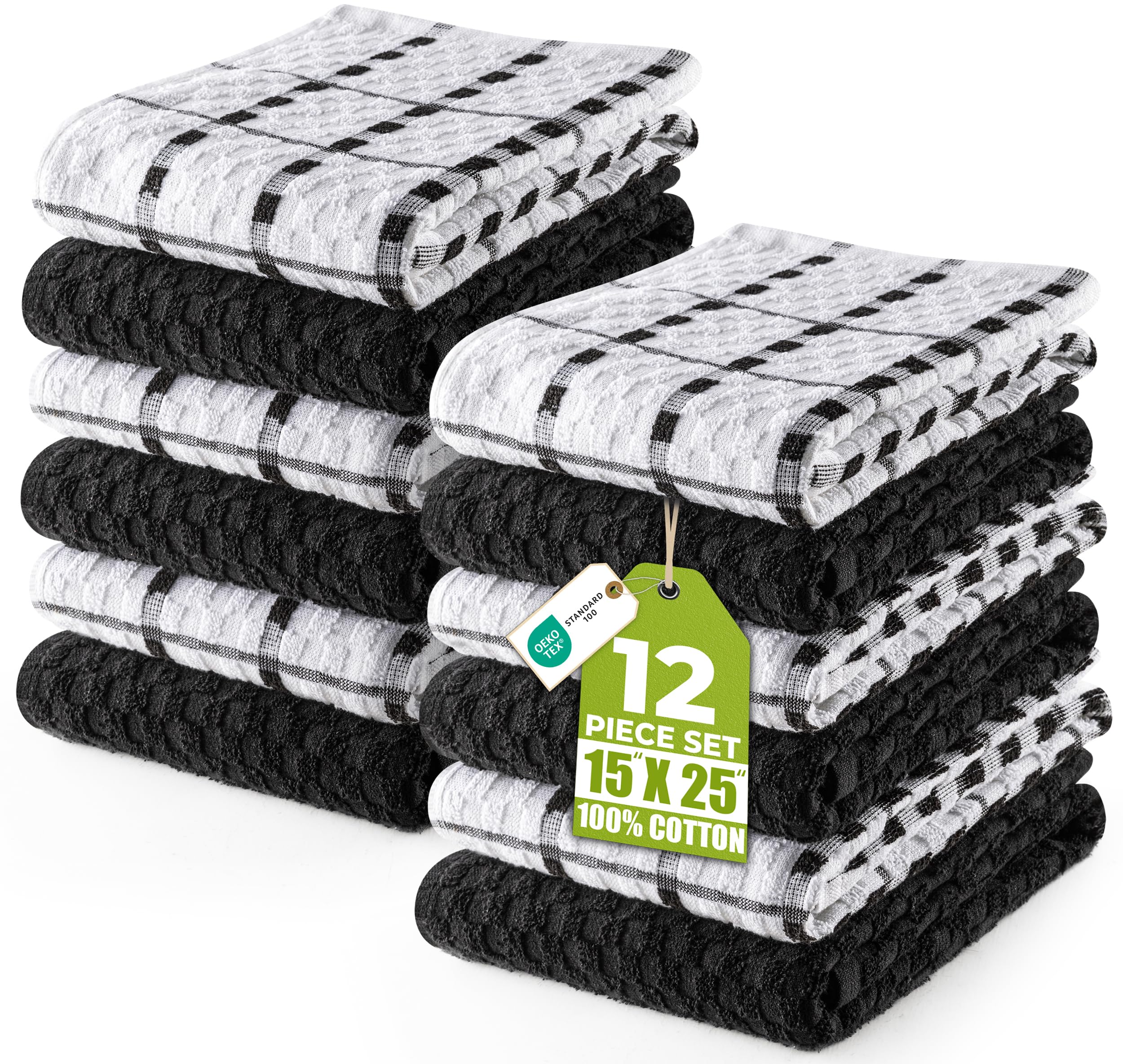
The Utopia Towels set is the gold standard for traditional dish drying. Each 15 x 25 inch towel is woven from ring-spun cotton, which produces longer, finer fibers for a softer feel and higher absorbency than standard cotton. The dobby weave pattern adds texture that grabs moisture without leaving lint behind.
After a single wash, the fabric loosens up and becomes noticeably more absorbent — a common trait for quality cotton. Users consistently report that these towels hold their shape through hundreds of wash cycles, maintaining their edges and color without fraying. The 12-pack provides enough rotation to always have a dry towel ready.
While they excel at drying glassware and polishing stainless steel, these cotton towels are slower to air-dry than microfiber or Swedish dishcloths. They work best as a dedicated drying towel rather than an all-purpose scrubbing cloth, as the cotton texture does not lift dried-on grease as aggressively as microfiber.
Why it’s great
- Ring-spun cotton construction resists fraying and stays soft
- Generous 15×25 inch size covers large serving platters and sheet pans
Good to know
- Requires line drying or low-heat tumble to prevent shrinkage
- Not ideal for scrubbing baked-on grease without a cleaning agent
3. MR.SIGA Microfiber Cleaning Cloth 12 Pack

MR.SIGA’s microfiber cloths are engineered for precision cleaning where residue and lint are unacceptable. The split microfiber strands trap grease particles and dust rather than pushing them around, which makes these cloths particularly effective on glass stovetops, mirrors, and stainless steel appliances. The reinforced edge stitching prevents fraying after repeated washing.
At 12.6 inches square, each cloth offers a balanced surface area — large enough to fold into a grippable pad but small enough for one-handed use on countertops. Users note that the microfiber material feels noticeably thicker and denser than generic alternatives, which improves both absorbency and scrubbing power without scratching.
These cloths wash well with mild detergent and maintain their structure over many cycles. The absence of lint or particles after washing makes them a reliable choice for households where dust-free cleaning is a priority. They are slightly less effective as a standalone drying cloth compared to cotton, but they excel at wet cleaning and polishing.
Why it’s great
- Thick, dense microfiber weave lifts grease without scratching surfaces
- Reinforced edges hold up through dozens of machine washes
Good to know
- Not recommended for air-drying alone; microfibers can trap moisture if bunched
- Some users find the 12.6-inch size slightly small for full countertop passes
4. Lucomb Swedish Dish Cloths 10 Pack
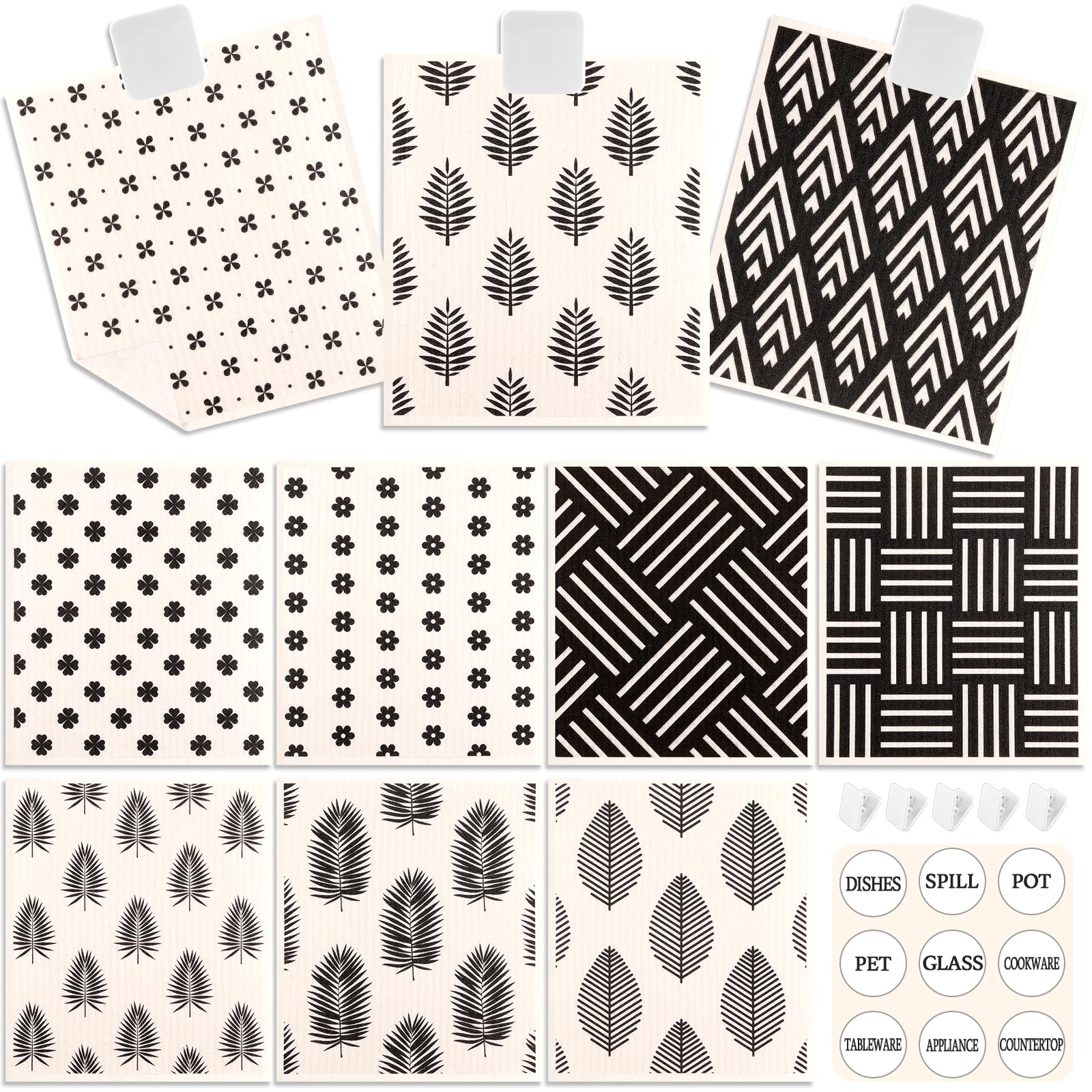
Lucomb delivers a volume-driven approach to Swedish dishcloths, packaging ten patterned sheets with self-adhesive clips for convenient hanging. Made from the same 70/30 cellulose-cotton blend as pricier alternatives, these cloths absorb 15 times their dry weight and dry quickly enough to prevent bacterial buildup between uses.
The variety of printed patterns — geometric designs, cat motifs, and floral prints — allows users to color-code cloths for different tasks (one for dishes, one for counters, one for produce). The stamped texture on the surface helps lift small dried-on food bits from microwaves and plates without requiring heavy scrubbing.
While the absorbency and durability are on par with the best Swedish dishcloths, some users note that the colors may fade faster than solid alternatives after repeated washing. The included sticky-back clips add a convenient drying solution, though they may lose adhesion on textured cabinet surfaces over time.
Why it’s great
- High cloth count per pack provides enough rotation for a full week
- Decorative patterns allow task-specific color coding
Good to know
- Printed patterns may fade after several machine washes
- Clips are best suited for smooth cabinet surfaces only
5. SOOWASH Microfiber Cleaning Cloths Roll 75 Pack
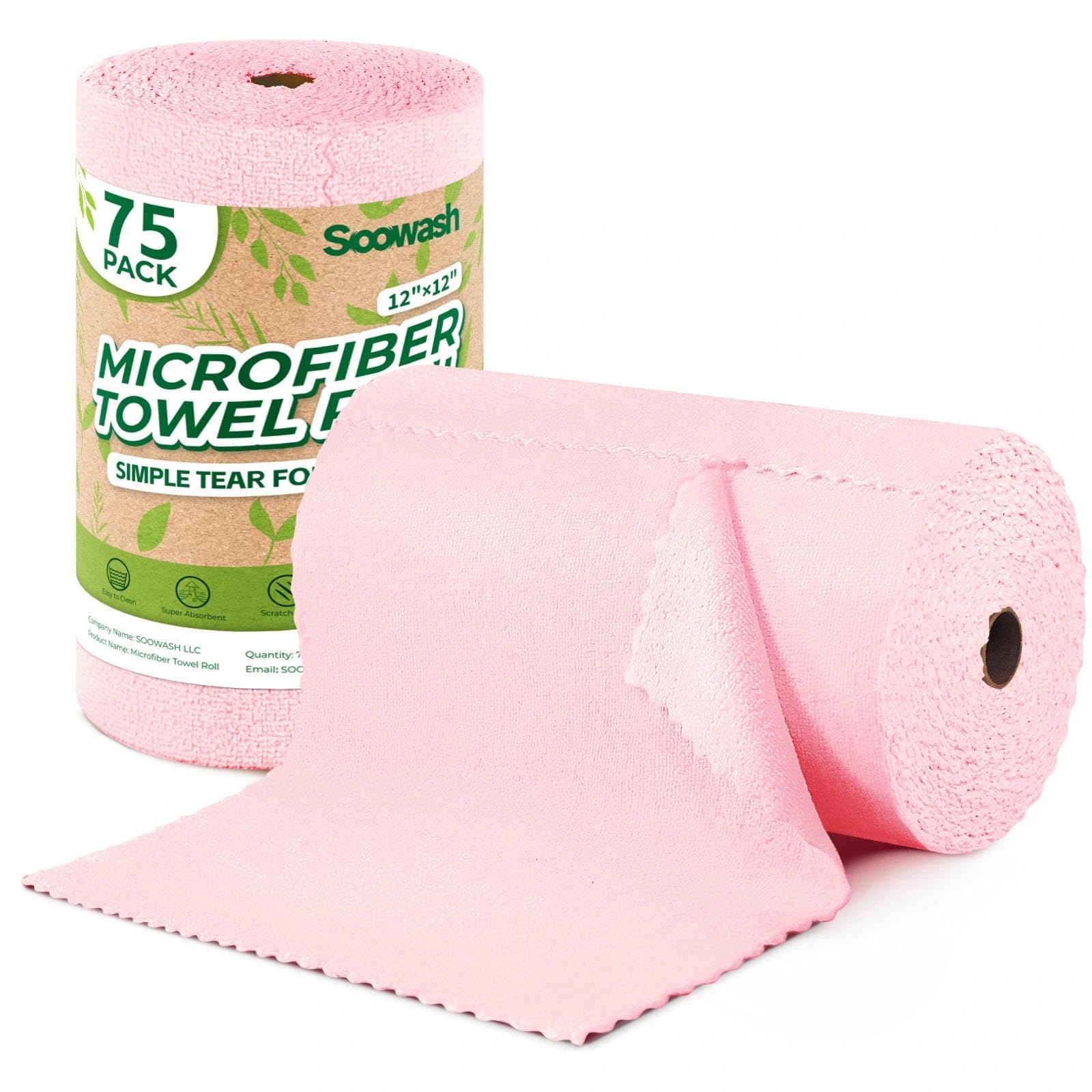
The SOOWASH roll reimagines the disposable paper towel model with a reusable microfiber alternative. Each 12 x 12 inch sheet is pre-perforated and can be torn off one at a time, making it ideal for high-mess scenarios where you want a fresh cloth for each task. The 180 GSM fabric weight delivers a density that balances absorbency and flexibility.
Users report that these cloths absorb roughly seven times their weight in water, which is lower than cellulose-cotton blends but still effective for typical kitchen spills. The tear-away format is especially useful for auto detailing, workshop cleanup, and pet messes where washing a reusable cloth immediately isn’t practical. The sheets can be washed and reused up to 50 times before they start losing integrity.
The microfiber material is non-scratch and safe for glass, screens, and stainless steel, though it should not be used on hot surfaces or in the microwave. Some users note that the pink dye may bleed in the first wash, so separating the initial load from light-colored laundry is wise.
Why it’s great
- Tear-away design offers disposable convenience with reusable durability
- 180 GSM fabric provides thicker feel than bargain microfiber rolls
Good to know
- Color may bleed and fade significantly during the first machine wash
- Not suitable for high-heat drying — air dry only to preserve fabric
FAQ
How often should I wash kitchen cleaning cloths?
Can I use Swedish dishcloths on cast iron cookware?
Final Thoughts: The Verdict
For most users, the cleaning cloths for kitchen winner is the Papaya Reusable Paper Towels because the cellulose-cotton blend absorbs heavily while drying fast enough to stay fresh between uses. If you want a large-format classic drying towel that handles glassware and stainless steel without lint, grab the Utopia Towels 12 Pack. And for high-mess scenarios where you want to tear off a fresh sheet for each spill, nothing beats the SOOWASH Microfiber Cleaning Cloths Roll.

Mo Maruf
I created WellFizz to bridge the gap between vague wellness advice and actionable solutions. My mission is simple: to decode the research and give you practical tools you can actually use.
Beyond the data, I am a passionate traveler. I believe that stepping away from the screen to explore new environments is essential for mental clarity and physical vitality.