Our readers keep the lights on and my smoothie glass nicely filled. As an Amazon Associate, I earn from qualifying purchases.
That faint, musty odor when you lift the cover or the gritty film that clings to the shell at the waterline isn’t just unsightly—it’s biofilm, body oils, and mineral scale hiding inside your plumbing and clinging to your acrylic surfaces. Standard sanitizers alone can’t reach the organic sludge that builds up in jet lines, heater coils, and filter pleats over time, which is why a dedicated purge and surface cleaner is the only way to restore water clarity without a full tear-down.
I’m Mohammad Maruf — the founder and writer behind WellFizz. I’ve spent hundreds of hours analyzing hot tub care formulations, comparing enzymatic break-down agents, chelating compounds, and surfactant profiles to determine what actually dissolves the hidden gunk that regular chemicals leave behind.
Whether you are refreshing a neglected spa or sticking to a quarterly maintenance routine, the right formula makes the difference between murky water and a truly clean soak. This guide breaks down the top options to help you find the best cleaner for hot tubs that matches your exact water chemistry and maintenance habits.
How To Choose The Best Cleaner For Hot Tubs
Hot tubs create a unique environment—warm, agitated, and full of narrow plumbing—that traps organic material like lotions, body oils, and sunscreen. A cleaner that works on a pool or a bathroom tub will not penetrate the biofilm inside your jet lines. Selecting the right product means matching the cleaner’s chemistry to the specific problem you are solving: hidden plumbing biofilm, visible surface scum, hard-water scale, or filter clogging.
Identify Your Primary Problem
If your water smells stale even after shocking or you see foamy residue when the jets run, you need a deep plumbing purge that uses enzymes or surfactants to dislodge biofilm from the pipes. If the shell shows a white, chalky ring or brown staining, a chelating agent that binds calcium and metals is the right choice. For filters that look dirty after a quick rinse, an acid-based soak restores flow. Using a surface cleaner on plumbing gunk will only mask the odor temporarily.
Match the Cleaner to Your Sanitizer System
Some purge formulas are compatible with both bromine and chlorine systems, while stain and scale removers may interact differently depending on your total alkalinity and pH levels. Check the product label for compatibility—using an incompatible chelating agent with a high-chlorine environment can cause clouding. If you maintain a saltwater system, look for a cleaner that specifically states it works with salt-chlorine generators.
Consider the Treatment Frequency
Deep plumbing purges are typically used every three to four months when you drain and refill the spa. Surface cleaners and scale controls are often dosed weekly or as needed to prevent buildup between drain cycles. Filter cleaners should be used every four to six weeks, with a deeper acid soak once or twice per year. A product that promises both deep cleaning and weekly maintenance is usually optimized for one task, so buying separate products for each job yields better results.
Quick Comparison
On smaller screens, swipe sideways to see the full table.
| Model | Category | Best For | Key Spec | Amazon |
|---|---|---|---|---|
| Natural Chemistry Spa Purge | Enzymatic Purge | Dissolving biofilm in plumbing lines | 33.8 fl oz per bottle | Amazon |
| Bio Ouster Power Purge Kit | Surfactant Purge | Flushing gunk from jets and tubes | 2 fl oz per 500 gallons | Amazon |
| AquaDoc Spa Stain and Scale Control | Chelating Agent | Preventing metal stains and calcium scale | 32 fl oz, weekly dose | Amazon |
| Quick N Brite Heavy Duty Cleaning Gel | Surface Cleaner | Removing waterline scum and hard-water spots | 32 oz gel with sponge & cloth | Amazon |
| Leisure Time Filter Clean 2-Pack | Acid Filter Soak | Deep cleaning cartridge and DE filters | 64 fl oz total (2 quart bottles) | Amazon |
In‑Depth Reviews
1. Natural Chemistry Spa Purge
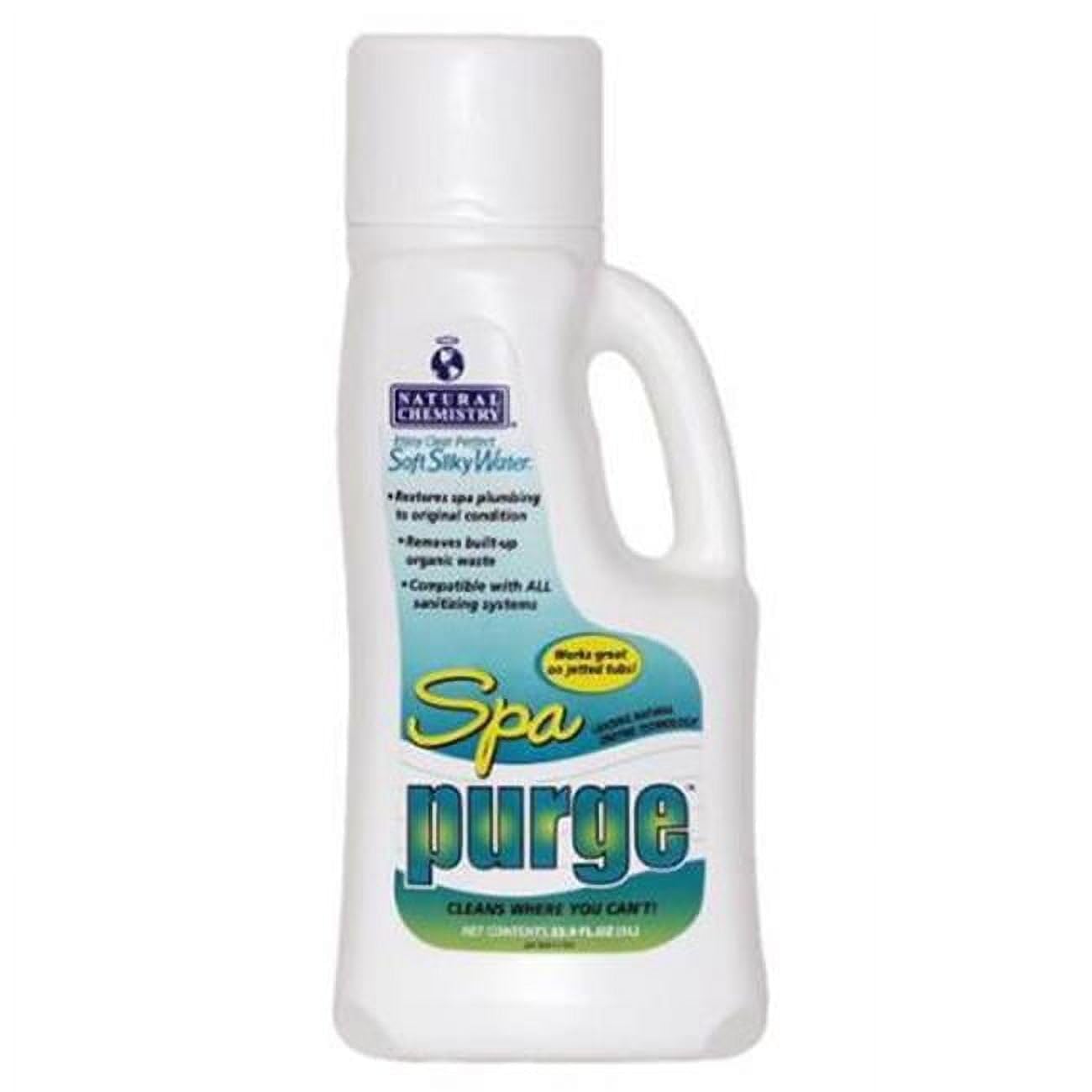
This enzymatic formula targets the organic biofilm that standard sanitizers leave behind. Instead of simply loosening debris with surfactants, Spa Perfect uses enzymes to break down waste into carbon dioxide and water, which are then harmlessly absorbed into the spa environment. Running the jets for ten minutes after pouring the full bottle produces a noticeable foam—that foam is the dissolved gunk exiting your plumbing. Many users report seeing visible particles they had never removed with bleach or chlorine alone.
The 33.8-ounce bottle treats a standard 300-400 gallon spa in a single application. Directions recommend running the jets for five to ten minutes after the initial pour, then covering the spa and letting it sit overnight before draining and refilling. This extended contact time allows the enzymes to fully penetrate the biofilm layer inside heater tubes and jet manifolds. User reviews consistently note improved water clarity and a reduction in stale odors after the first treatment cycle.
One practical consideration: the overnight soak step requires planning because you cannot use the spa during that period. Some users report that a second short jet run and a partial drain after the soak help prevent any re-depositing of loosened particles onto the shell surface. For a mid-range price point that delivers professional-grade enzymatic cleaning, this product sets the standard for deep plumbing purges.
Why it’s great
- Enzymatic action dissolves biofilm rather than just scrubbing it loose
- Large 33.8 oz bottle covers one full treatment
- Works with both bromine and chlorine systems
Good to know
- Requires overnight soak—no spa use during treatment
- Foam can be heavy if jets run too long initially
2. Bio Ouster Power Purge Hot Tub Jet Cleaner Kit

Bio Ouster Power Purge uses a fast-acting surfactant formula that lifts and suspends organic buildup from jet lines and tubes. The treatment process is faster than enzymatic options—just twenty minutes of jet circulation followed by draining the spa. The included microfiber towel is a smart addition because it lets you wipe the shell as water drains, preventing the loosened film from drying onto the acrylic surface and forming a sticky residue.
The dosage is 2 ounces per 500 gallons of water, making the 2-ounce bottle suitable for a single treatment in a standard spa. The formula is designed to work with both acrylic and inflatable spa materials, which expands its usefulness for owners of portable or temporary setups. Users report that the foam produced during the cycle carries visible debris to the surface, and the towel makes cleanup straightforward. Several reviewers with well-maintained tubs noted less extreme foaming but still saw enough residue to confirm the product was working.
Because this is a surfactant-based purge rather than an enzymatic one, it does not break down organic matter on a molecular level—it lifts and suspends it so that draining removes it physically. For routine quarterly maintenance on a spa that is already relatively clean, this approach is effective and less time-consuming. The manufacturer recommends using it every three to four months alongside a weekly care product for best results.
Why it’s great
- Fast 20-minute purge cycle—no overnight soak needed
- Works for acrylic and inflatable spas
- Included microfiber towel helps prevent residue redeposit
Good to know
- Small bottle—single treatment only, no refill economy
- Surfactant lifts rather than dissolves organic debris
3. AquaDoc Spa Stain and Scale Control

Hard water is a common headache for hot tub owners—calcium and magnesium deposits not only create a chalky ring on the shell but also clog heater elements and reduce flow. AquaDoc’s formula uses a chelating agent that binds to these minerals, keeping them suspended in the water so they don’t precipitate out as scale. A weekly dose of 1 to 2 ounces per 300 gallons prevents the buildup from forming in the first place, making it a preventive product rather than a reactive one.
The 32-ounce bottle provides roughly 16 to 32 weekly treatments depending on your spa size and water hardness. Users with very hard fill water report that combining this with a weekly maintenance schedule keeps their heater elements cleaner and reduces the frequency of full descaling treatments. The liquid is clear and odorless, and it mixes easily without affecting pH or alkalinity levels. Reviewers who use it consistently note that the white crust that used to form at the waterline after a few weeks simply stopped appearing.
One thing to keep in mind: this product does not remove existing heavy scale or metal stains—it prevents new deposits. If you already have a visible ring or brown staining, you will need to physically clean the surface with a non-abrasive gel first, then start the weekly scale control program to keep it away. It is compatible with both bromine and chlorine systems, so it fits seamlessly into an existing chemical routine.
Why it’s great
- Prevents scale and metal stains before they form
- Weekly dosing stretches the bottle for months
- Compatible with bromine and chlorine systems
Good to know
- Does not remove existing heavy scale or stains
- Requires consistent weekly dosing for effectiveness
4. Quick N Brite Heavy Duty Hot Tub Cleaner Kit

While plumbing purges handle what is inside the lines, you still need a way to clean the visible surfaces—the waterline scum ring, the cover, and the jet trim. Quick N Brite uses a non-abrasive gel formula that tackles body oils, hard-water spots, and years of accumulated residue without scratching acrylic. The kit includes a sponge and a microfiber cloth, so you have everything needed for one thorough cleaning session right out of the box.
The gel has a shampoo-like consistency and requires a good shake before use because it can separate during storage. Users report that it cuts through the sticky scum ring that standard spa wipes cannot remove. Applied full-strength with the included scrubby sponge, it lifts stubborn deposits with minimal scrubbing effort. After wiping, a rinse with clean water leaves the surface shiny and residue-free. The product is biodegradable and contains no harsh fumes, making it comfortable to use indoors or in an enclosed gazebo.
This cleaner is designed for the shell and cover, not for plumbing lines. If you use it immediately after a deep purge, you can wipe away any film that was loosened during the drain process before refilling. One quart (32 ounces) is enough for multiple full-spa cleanings, and because the gel is concentrated, a small amount goes a long way. For owners who want a gentle but effective surface cleaner with no abrasive risk, this kit earns a high recommendation.
Why it’s great
- Non-abrasive gel safe for acrylic surfaces and covers
- Complete kit—no separate sponge or cloth to buy
- Biodegradable formula with no strong odor
Good to know
- Only for surface cleaning—does not purge plumbing
- Gel separates over time; needs shaking before use
5. Leisure Time O-02BX Filter Clean 2-Pack

No hot tub care routine is complete without proper filter maintenance, and this acid-based soak delivers results that enzymatic or detergent cleaners cannot match. Leisure Time Filter Clean uses a blend of hydrochloric and sulfuric acids to dissolve mineral scale, oil deposits, and organic grime that accumulates deep inside filter pleats. A single overnight soak restores flow rate and leaves cartridge, DE, and sand filters looking like new—users commonly report that filters come out bright white after years of use.
The two-pack provides 64 fluid ounces total, enough for multiple soaking sessions. To use, dilute the concentrate in a bucket of water according to the instructions, submerge the filter, and let it sit overnight for maximum effect. Users with high-flow cartridges such as the Hayward C3030 note that consistent quarterly enzyme washes followed by an annual acid soak extend filter life well beyond the typical replacement interval. The acid solution is strong—it will etch concrete and corrode metal—so you must soak filters in a plastic container away from metal fixtures.
Because this is a powerful acid cleaner, the resulting used solution is classified as corrosive hazardous waste (D002) and requires proper disposal—do not pour it onto the ground or into a gutter. This is not a product for casual weekly maintenance; it is a deep restorative soak for when filters no longer rinse clean. For owners who want to extend filter replacement intervals and maximize water flow, this two-pack is a cost-effective investment in long-term filtration efficiency.
Why it’s great
- Acid formulation restores bright white filters and full flow
- Two quart bottles provide multiple soaking sessions
- Compatible with cartridge, DE, and sand filters
Good to know
- Strong acid requires careful handling and proper disposal
- Not for weekly use—best reserved for quarterly or annual deep soaks
FAQ
Can I use a plumbing purge with an inflatable hot tub?
How often should I run a deep purge on my hot tub?
Do I need a surface cleaner if I already use a plumbing purge?
What is the difference between a filter soak and a plumbing purge?
Final Thoughts: The Verdict
For most users, the best cleaner for hot tubs winner is the Natural Chemistry Spa Purge because its enzymatic action targets the biofilm that standard chemicals leave untouched, delivering a deep clean from the plumbing outward. If you want a fast monthly maintenance flush without the overnight soak, grab the Bio Ouster Power Purge Kit. And for preventing hard-water scale and metal stains between drain cycles, nothing beats the weekly dosing of AquaDoc Spa Stain and Scale Control.

Mo Maruf
I created WellFizz to bridge the gap between vague wellness advice and actionable solutions. My mission is simple: to decode the research and give you practical tools you can actually use.
Beyond the data, I am a passionate traveler. I believe that stepping away from the screen to explore new environments is essential for mental clarity and physical vitality.