Our readers keep the lights on and my smoothie glass nicely filled. As an Amazon Associate, I earn from qualifying purchases.
A classroom printer lives a hard life. It handles stacks of worksheets, last-minute lesson plans, permission slips, and full-color project printouts—often from multiple devices across a shared network. If your printer jams, dries out, or runs out of ink mid-week, the whole day stalls. You need a machine built for volume, reliability, and minimal downtime, not a fussy home-office model that demands constant attention.
I’m Mohammad Maruf — the founder and writer behind WellFizz. I have spent countless hours dissecting the print speeds, ink costs, wireless reliability, and page yields of the most popular all-in-one printers to identify which models actually survive a classroom workload.
After analyzing dozens of units across every price tier, these nine machines stand out as the strongest contenders for the best classroom printer—each chosen for its specific balance of speed, cost-per-page, and real-world durability.
How To Choose The Best Classroom Printer
Choosing a printer for a classroom is different from buying one for a home office. You are optimizing for shared access, high monthly page volumes, low interruption, and predictable operating costs. Here are the four factors that separate a classroom workhorse from a desk ornament.
Print Technology: Laser vs. Inkjet
If your classroom prints mostly black-and-white worksheets, handouts, and tests, a monochrome laser printer is almost always the better choice. Laser printers produce sharp, smudge-proof text at speeds of 30+ pages per minute, and their toner cartridges yield thousands of pages before needing replacement. Inkjet printers can produce color, but the per-page cost is higher and the print heads can clog if the machine sits idle over a long weekend or summer break. For color-heavy projects like art displays or posters, a Supertank inkjet offers the lowest running costs of any color option.
True Cost-Per-Page and Yield
The purchase price of the printer is a small fraction of what you will spend over its lifetime. A printer with a low entry cost but tiny, expensive cartridges will drain a classroom budget fast. Look for machines that use high-yield cartridges (2,000+ pages per toner) or Supertank systems that include enough ink for 5,000–6,000 pages in the box. Divide the cost of a full set of replacement cartridges by the page yield to get your real cost-per-page. For a busy classroom, anything above 3–4 cents per black-and-white page is too expensive.
Connectivity and Network Sharing
A classroom printer must be easy for every teacher, aide, and sometimes student device to reach. Dual-band Wi-Fi (2.4 GHz and 5 GHz) ensures the printer stays connected even when the network is congested. Support for Apple AirPrint, Mopria, and a dedicated mobile app removes the need to install drivers on every laptop. Ethernet is a bonus if your school network is wired or if Wi-Fi is unreliable. Avoid printers that require a single always-on computer acting as a print server—this is a failure point that will cause frustration.
Automatic Duplex and Paper Capacity
Automatic duplex printing (printing on both sides) cuts paper usage in half. For a classroom that prints hundreds of pages per week, that is a meaningful cost and environmental saving. A paper tray capacity of at least 150 sheets is the bare minimum; 250 sheets is better for busy weeks. An automatic document feeder (ADF) on the scanner also saves time when copying multi-page worksheets or tests.
Quick Comparison
On smaller screens, swipe sideways to see the full table.
| Model | Category | Best For | Key Spec | Amazon |
|---|---|---|---|---|
| HP LaserJet Pro MFP 3101sdw | Monochrome Laser | High-volume B&W printing for small teams | 40 ppm, 250-sheet tray | Amazon |
| Brother MFC-L2820DW | Monochrome Laser | Multi-function classroom hub with fax | 34 ppm, 50-sheet ADF | Amazon |
| Brother HL-L2480DW | Monochrome Laser | Compact classroom desk with touchscreen | 36 ppm, 2.7″ touchscreen | Amazon |
| Canon imageCLASS MF275dw | Monochrome Laser | Reliable all-in-one with fast first print | 30 ppm, 5.3 sec first print | Amazon |
| HP LaserJet MFP M234sdw | Monochrome Laser | Entry-level laser for small classrooms | 30 ppm, dual-band Wi-Fi | Amazon |
| Epson EcoTank ET-4950 | Color Supertank | Color classrooms with huge ink savings | 18 ppm, 3 years ink included | Amazon |
| Epson EcoTank ET-2980 | Color Supertank | Budget-friendly color printing | 15 ppm, 3 years ink included | Amazon |
| Xerox C235dni | Color Laser | Vibrant color documents for presentations | 24 ppm color, auto duplex | Amazon |
| Canon PIXMA TS7720 | Color Inkjet | Budget home classroom color prints | 15 ppm B&W, 2.7″ touchscreen | Amazon |
In‑Depth Reviews
1. HP LaserJet Pro MFP 3101sdw
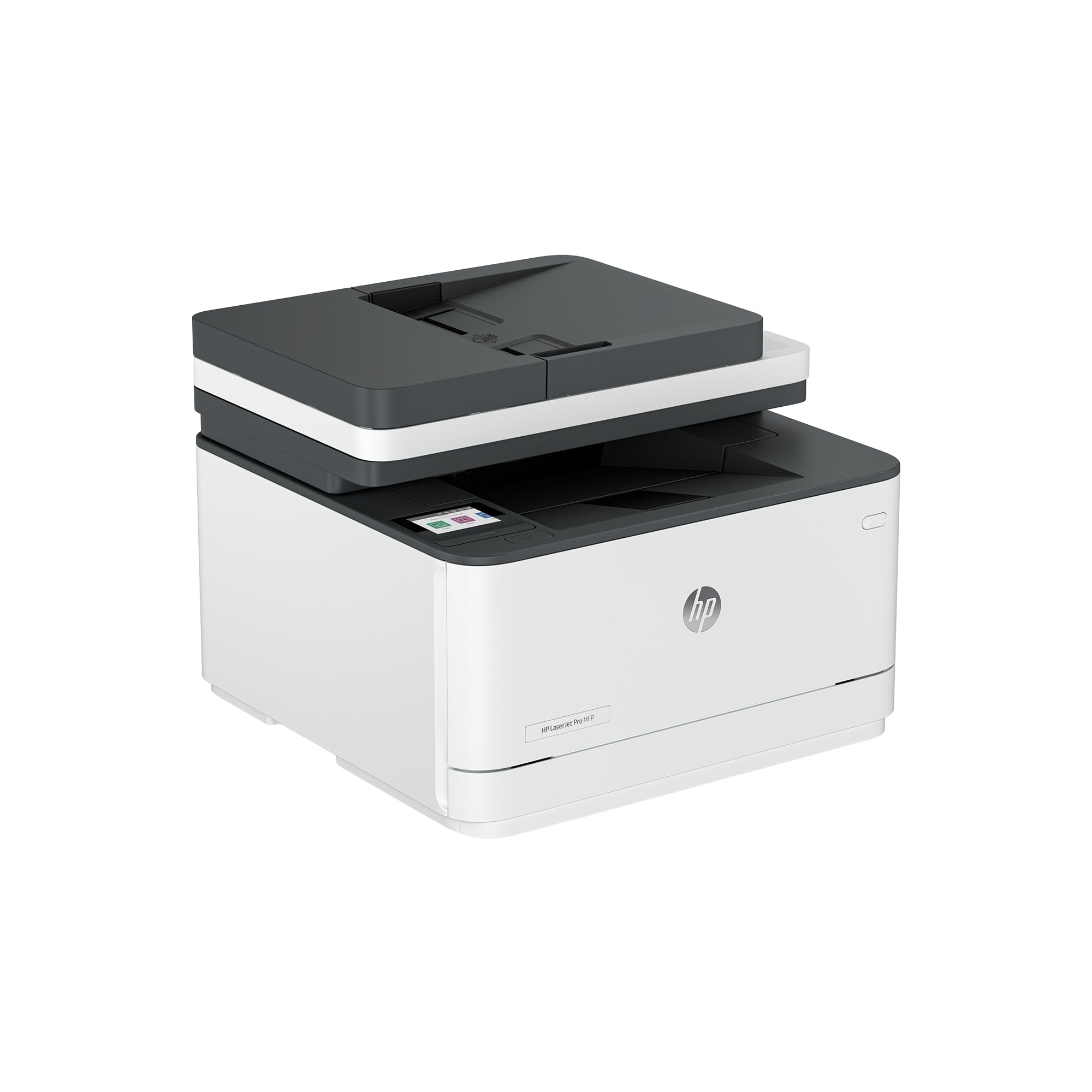
This is the printer you buy when you are tired of slow, jamming machines that can’t keep up with a busy classroom. The 3101sdw prints black-and-white documents at up to 40 pages per minute—fast enough to clear a 30-page stack of worksheets in under a minute. The 250-sheet input tray handles a full week of printing without refilling, and the 50-sheet automatic document feeder makes quick work of scanning or copying multi-page packets.
Wireless connectivity is rock-solid thanks to HP’s dual-band Wi-Fi with self-reset, which automatically detects and resolves connection drops. The HP Smart app lets teachers print directly from a phone or tablet, and the printer supports AirPrint and Mopria out of the box. The included toner cartridge yields roughly 1,000 pages, enough to get started, and high-yield replacements keep the per-page cost low.
One important consideration: HP locks out non-HP toner cartridges through firmware updates. If you plan to use third-party cartridges, decline the firmware updates. For schools that stick with genuine HP supplies, the print quality is consistently sharp and the reliability is excellent. Multiple users report flawless operation after a year of heavy use.
Why it’s great
- Fastest print speed in its class at 40 ppm
- 50-sheet ADF saves time on multi-page copying
- Dual-band Wi-Fi with self-reset stays connected
Good to know
- Firmware updates block non-HP toner
- Starter toner is low-yield (1000 pages)
2. Brother MFC-L2820DW

The MFC-L2820DW is a true all-in-one hub for a classroom that needs print, copy, scan, and fax in a single compact unit. It prints black-and-white documents at 34 pages per minute and includes a 50-page automatic document feeder for hands-free copying and scanning of multi-page worksheets and tests. The 2.7-inch color touchscreen is intuitive enough that teachers can navigate settings without a manual.
Connectivity is flexible: dual-band Wi-Fi, Ethernet, and USB are all built in. The Brother Mobile Connect app allows printing and scanning from any smartphone or tablet, and the printer supports cloud scanning to Google Drive, Dropbox, and OneNote. The flatbed scan glass is large enough for book pages or oversized documents.
The TN830 high-yield toner cartridge delivers up to 3,000 pages, making the per-page cost very attractive for high-volume classrooms. Brother printers are known for their reliability and minimal paper jams. The fax function is a bonus for schools that still need to send or receive documents via phone line. Setup can be slightly confusing for first-time users, but once configured, the machine runs without issues.
Why it’s great
- Includes fax for legacy school communication
- 50-sheet ADF for efficient multi-page scanning
- Cloud scan to Google Drive and Dropbox
Good to know
- Setup instructions can be vague for beginners
- Only monochrome; no color output
3. Brother HL-L2480DW

If desk space is at a premium, the HL-L2480DW packs impressive speed and a large touchscreen into a compact footprint. It prints black-and-white documents at 36 pages per minute with automatic duplex, and the 2.7-inch color touchscreen makes navigating menus and settings straightforward. The 250-sheet paper tray reduces the need for constant refills.
Wireless connectivity includes dual-band Wi-Fi (2.4 GHz and 5 GHz), Ethernet, and USB. The Brother Mobile Connect app enables printing and scanning from mobile devices, and the printer can scan directly to cloud services like Google Drive and Dropbox without a computer. The manual feed slot handles envelopes and specialty paper for occasional classroom projects.
The TN830 high-yield toner produces up to 3,000 pages, keeping the cost-per-page low. Users report consistent print quality with sharp text and no smudging, even after months of daily use. The printer is quieter than most laser models, which is a plus in a classroom environment. The only limitation is that it lacks an automatic document feeder, so multi-page scanning must be done page by page on the flatbed.
Why it’s great
- High speed of 36 ppm for busy classrooms
- Intuitive 2.7-inch color touchscreen
- Low per-page cost with high-yield toner
Good to know
- No ADF for multi-page scanning
- Only monochrome; no color
4. Canon imageCLASS MF275dw

The Canon imageCLASS MF275dw is a monochrome laser all-in-one that delivers consistent, fast performance for a classroom. With print speeds of 30 pages per minute and a first print time of just 5.3 seconds, it handles quick print jobs without delay. The 6-line adjustable touchscreen is easy to use whether you are sitting or standing, and the 35-sheet automatic document feeder allows for efficient multi-page copying and scanning.
Wireless setup is simple with the Canon PRINT Business app, and the printer supports AirPrint and Mopria for mobile printing. The 150-sheet paper cassette is adequate for moderate volume, though a larger tray would be welcome for busier weeks. Automatic duplex printing saves paper, and the Energy Star certification keeps power costs down.
The Canon 071 toner cartridge delivers crisp, clean text with a yield of up to 4,000 pages for the high-yield version. This makes the per-page cost among the lowest in this category. Users praise the printer’s reliability, with several reporting trouble-free operation for years. The scanner can occasionally send random images to a connected PC, which is a minor quirk in an otherwise excellent machine.
Why it’s great
- Very fast first print at 5.3 seconds
- Low per-page cost with high-yield toner
- Reliable wireless with easy mobile setup
Good to know
- No separate envelope feeder
- Non-touch control panel can be fiddly
5. HP LaserJet MFP M234sdw
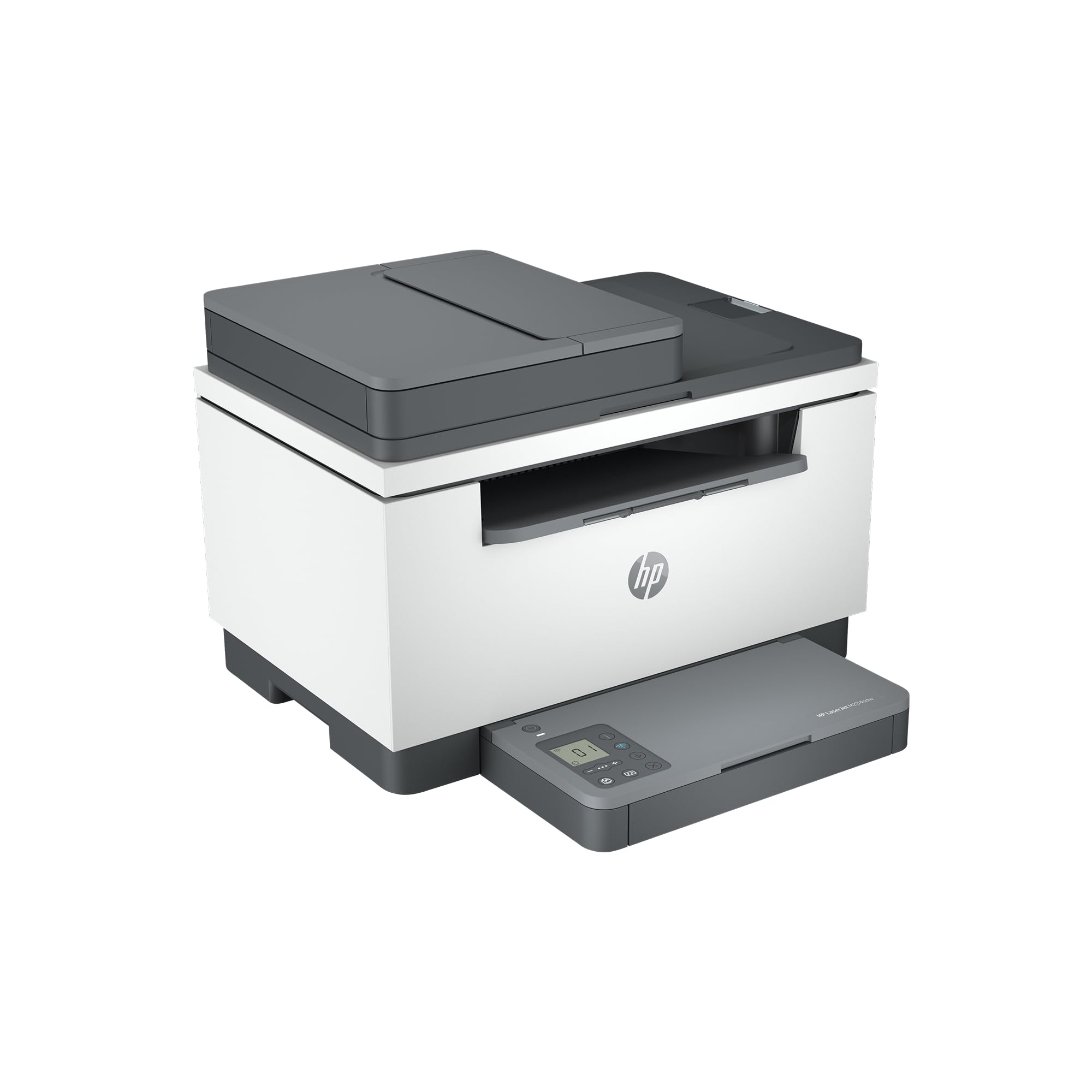
The HP LaserJet MFP M234sdw is an entry-level monochrome laser that proves you don’t need to spend a fortune to get fast, reliable printing. It prints black-and-white documents at 30 pages per minute and includes automatic duplex for two-sided printing. The built-in dual-band Wi-Fi with self-reset detects and fixes connectivity issues automatically, which is a lifesaver in a busy classroom where network drops are common.
Setup is straightforward through the HP Smart app, and wireless printing works from any mobile device, PC, or tablet. The 150-sheet input tray is sufficient for low-to-medium volume classrooms, and the automatic document feeder on the scanner makes copying multi-page handouts easy. The printer is compact enough to fit on a small desk or cart.
Print quality is good for a 300 dpi laser, with crisp text that works well for worksheets and handouts. The included toner cartridge yields roughly 700 pages, which is lower than some competitors. High-yield replacements are available, but this printer is clearly designed for lighter volume. Some users note that the control panel is mounted on the paper tray, which can feel wobbly when the tray is pulled out.
Why it’s great
- Dual-band Wi-Fi with auto-reset for stable connection
- Automatic duplex printing saves paper
- Compact footprint fits small desks
Good to know
- Starter toner is low-yield (700 pages)
- Control panel on paper tray feels wobbly
6. Epson EcoTank ET-4950
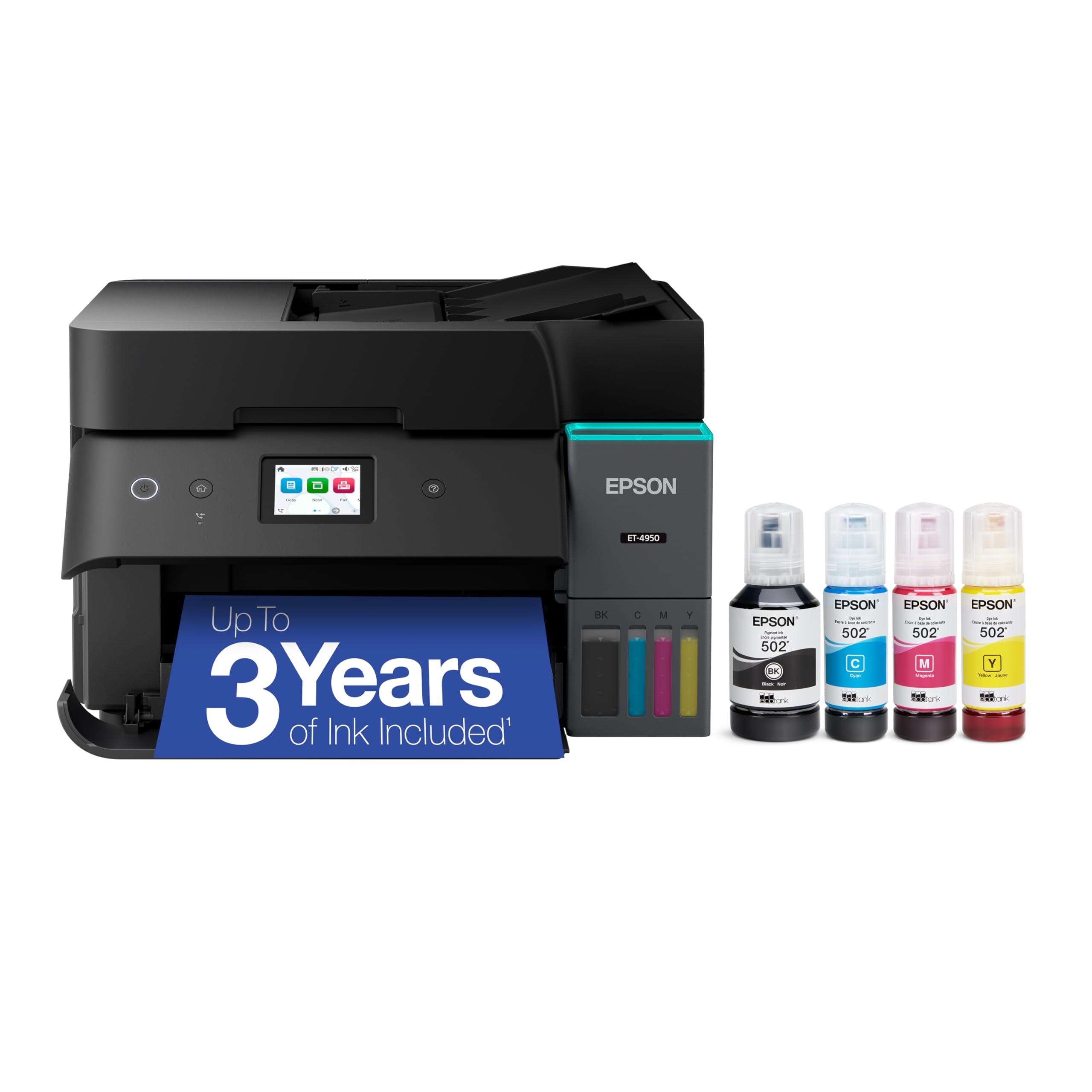
For a classroom that needs high-volume color printing—art projects, posters, presentations, and colorful worksheets—the Epson EcoTank ET-4950 is the most cost-effective option. The cartridge-free Supertank system includes enough ink in the box to print up to 6,600 black pages and 5,500 color pages, which is about three years of typical classroom use. Each replacement ink bottle set is equivalent to roughly 80 individual cartridges, slashing the per-page cost dramatically.
Print speeds are 18 pages per minute for black and 9 pages per minute for color, which is slower than a laser but acceptable for a color unit. The 250-sheet paper tray handles moderate volume, and the automatic document feeder enables efficient multi-page scanning and copying. The 2.4-inch color display provides easy navigation, and the printer supports AirPrint, Mopria, and the Epson Smart Panel app for mobile printing.
The ET-4950 also includes fax functionality, Ethernet, and USB connectivity. Print quality is good for office documents and decent for photos, though the 600 DPI resolution means it won’t match a dedicated photo printer for fine detail. Users report that wireless setup is straightforward and the printer is reliable after months of daily use. The build quality is plastic, so careful handling is recommended.
Why it’s great
- Huge ink supply: 6,600 black pages included
- Very low per-page color cost
- Includes ADF and fax
Good to know
- Slower print speeds than laser printers
- Plastic build feels less durable
7. Epson EcoTank ET-2980
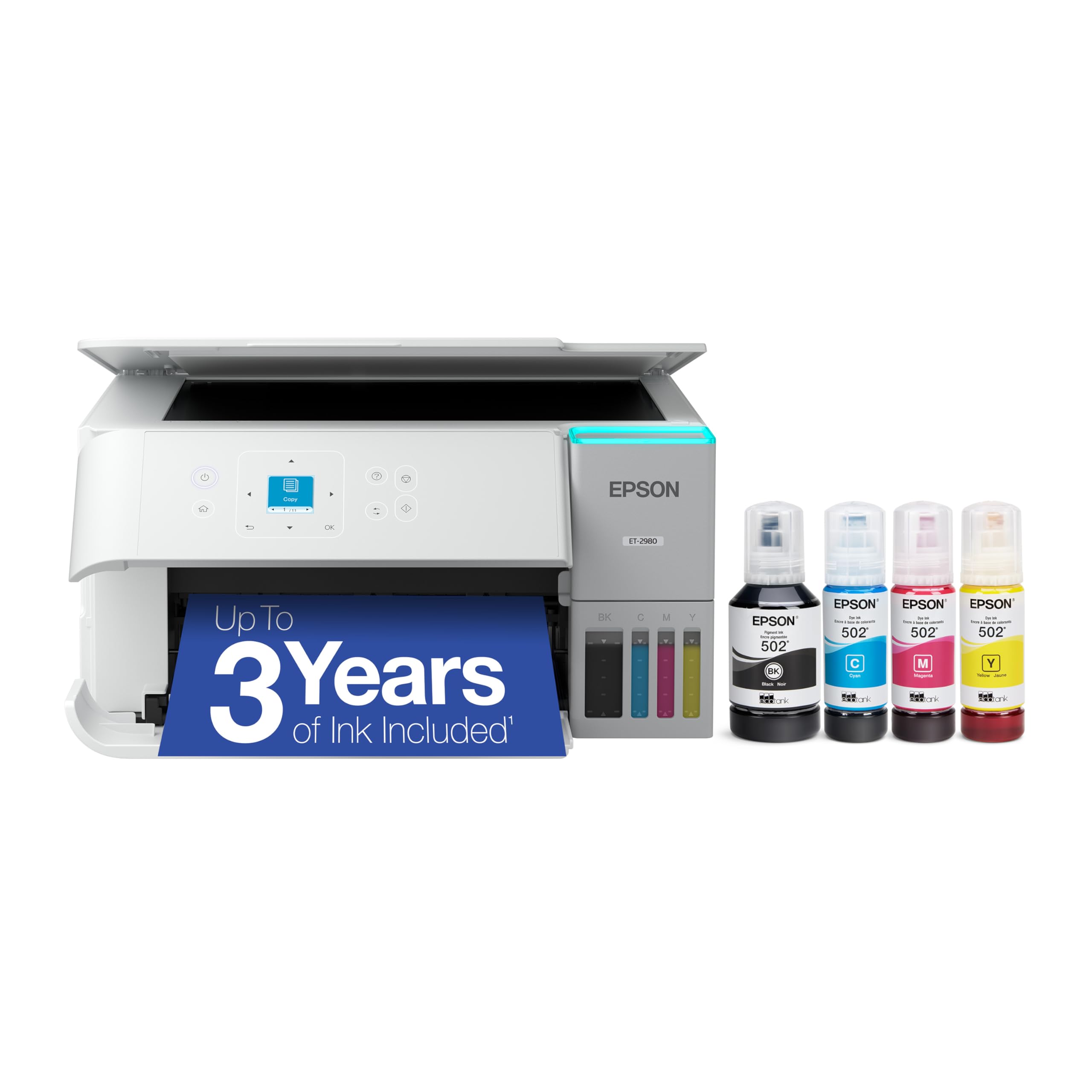
The ET-2980 is the most affordable entry point into Epson’s Supertank ecosystem, making it a strong candidate for a budget-conscious classroom that still needs color printing. It includes enough ink in the box for up to 6,600 black pages and 5,500 color pages—about three years of typical use. The cartridge-free design means no more scrambling for replacement cartridges mid-semester.
Print speeds are 15 pages per minute for black and 8 pages per minute for color, which is fine for low-to-medium volume classrooms. The 2.4-inch color display is smaller than the ET-4950 but still functional for basic navigation. The printer supports automatic duplex printing and wireless connectivity via the Epson Smart Panel app, AirPrint, and Mopria.
One limitation is the lack of an automatic document feeder; multi-page scanning must be done manually on the flatbed. The paper tray holds 100 sheets, which may require refilling during busy weeks. Print quality is solid for documents, with fast-drying ink that resists smearing. Users note that setup can be time-consuming but is straightforward if you follow the instructions carefully.
Why it’s great
- Lowest entry price for a Supertank color printer
- Three years of ink included in the box
- Fast-drying prints with no smear
Good to know
- No ADF for multi-page scanning
- Small 100-sheet paper tray
8. Xerox C235dni
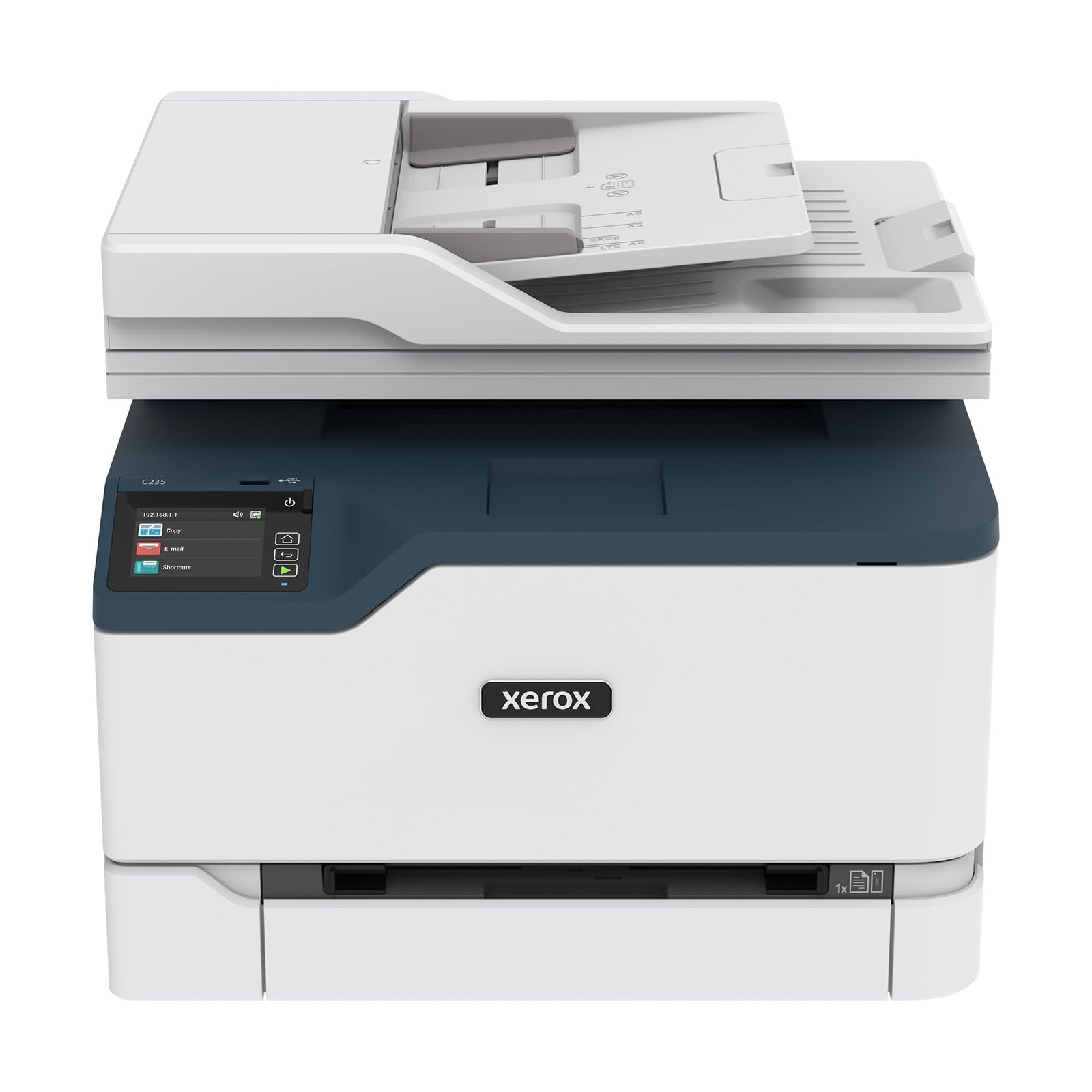
If your classroom regularly prints color presentations, reports, or handouts, the Xerox C235dni is a color laser that produces vibrant, professional-quality output. It prints at 24 pages per minute in both black and color, with automatic duplex to save paper. The included starter toners yield 500 pages, and high-yield cartridges are available to reduce ongoing costs.
Wireless connectivity includes built-in Wi-Fi, Apple AirPrint, and Mopria, making it easy to print from laptops, tablets, and smartphones. The Xerox Easy Assist App simplifies the setup process, guiding you through installation without needing a computer. The printer also functions as a standalone copier and scanner, with a flatbed and ADF for multi-page jobs.
Color laser output is sharp and saturated, making it ideal for materials where visual impact matters. The monthly duty cycle of up to 30,000 pages means it can handle heavy classroom use. Some users reported issues with paper quality affecting print darkness, so using standard 20 lb laser paper is recommended. The build quality is solid, and the brand reliability is well known. The starter toner is low-yield, so budget for a high-yield replacement soon after purchase.
Why it’s great
- Vibrant color laser output for presentations
- High 30,000-page monthly duty cycle
- Supports AirPrint and Mopria
Good to know
- Starter toner is low-yield (500 pages)
- Paper quality significantly affects print darkness
9. Canon PIXMA TS7720

The PIXMA TS7720 is a compact all-in-one inkjet that works for a low-volume classroom or a teacher’s desk that needs occasional color prints. It prints 15 pages per minute in black and 10 in color, with a 2.7-inch LCD touchscreen for easy navigation. The printer supports automatic duplex printing and wireless connectivity through the Canon PRINT app.
Setup is generally smooth, though some users reported it took about an hour to complete the initial configuration. The printer uses two ink cartridges (one black, one color), which simplifies replacement compared to four-cartridge systems. However, the included starter cartridges are low-yield and will need replacement quickly with regular use. The per-page cost is higher than laser or Supertank options, making this a better fit for light use.
Print quality is good for a home inkjet, with crisp black text and decent color photos. The scanner is flatbed-only with no ADF, so multi-page copying requires manual effort. The 4-hour auto-off default is a known frustration; you must enable Auto Power On in settings to allow remote wake. For a classroom that prints infrequently, this is a fine budget choice, but for daily volume, a laser or Supertank will save more time and money.
Why it’s great
- Compact size fits small desks
- Intuitive 2.7-inch touchscreen display
- Simple two-cartridge ink system
Good to know
- High per-page cost with standard cartridges
- Starter ink is low-yield and empties quickly
- No ADF for multi-page scanning
FAQ
Is a laser or inkjet printer better for a classroom?
How many pages should a classroom printer handle per month?
What is the difference between standard and high-yield toner cartridges?
Does a classroom printer need an automatic document feeder?
Can a classroom printer connect to multiple devices easily?
Final Thoughts: The Verdict
For most classrooms, the best classroom printer winner is the HP LaserJet Pro MFP 3101sdw because it combines the fastest print speed at 40 ppm, a 50-sheet ADF, and a 250-sheet tray in a reliable package that handles heavy weekly volume without complaint. If you want the lowest long-term operating costs for color, grab the Epson EcoTank ET-4950. And for a compact, monochrome laser that fits on any teacher’s desk, nothing beats the Brother HL-L2480DW.

Mo Maruf
I created WellFizz to bridge the gap between vague wellness advice and actionable solutions. My mission is simple: to decode the research and give you practical tools you can actually use.
Beyond the data, I am a passionate traveler. I believe that stepping away from the screen to explore new environments is essential for mental clarity and physical vitality.