Our readers keep the lights on and my smoothie glass nicely filled. As an Amazon Associate, I earn from qualifying purchases.
A chronograph tells you one thing that matters: how fast your projectile actually leaves the barrel. Without accurate velocity data, the drop charts, wind holds, and energy calculations you rely on are built on guesswork. A good chronograph for shooters eliminates that guesswork and replaces it with hard numbers you can use to build a precise DOPE card, tune a handload, or verify your airsoft rifle meets field limits.
I’m Mohammad Maruf — the founder and writer behind WellFizz. I’ve spent hundreds of hours analyzing the technical specifications, user experiences, and performance data across the entire spectrum of shooting chronographs, from budget-friendly optical units to premium radar-based systems, to understand which models actually deliver consistent, reliable readings in real-world conditions.
Whether you are a precision rifle handloader, a competitive shooter, or an airgun enthusiast, finding the right tool starts here. This guide breaks down the best options available to help you choose the ideal chronograph for shooters based on your specific needs and budget.
How To Choose The Best Chronograph For Shooters
Reading raw velocity numbers sounds simple, but the shooting conditions at your range — lighting, weather, muzzle blast — can turn a cheap optical unit into a paperweight. The technology you choose and the build quality of the sensors directly determine how many usable readings you get per session. Focus on three areas: sensing method, data handling, and physical durability.
Optical vs. Radar: The Single Most Important Decision
Optical chronographs use infrared light gates positioned over a known distance (sensor spacing) to calculate velocity. They are generally more affordable but require precise alignment with the bullet’s path and good ambient lighting to avoid error readings. Radar-based units use Doppler shift and sit beside the barrel, eliminating the need to shoot through a physical frame — a massive advantage at the range. Radar units cost more but deliver nearly 100% read success with zero setup frustration.
Data Management and App Integration
A chronograph that only displays a number on a screen forces you to manually log every shot — a tedious process that invites transcription errors. Models with Bluetooth and a companion app automatically capture string data, calculate average velocity, extreme spread, standard deviation, and energy, and allow easy export for load development. For handloaders and precision competitors, this feature alone justifies the step up in price.
Build Quality and Portability
A plastic frame might survive a few trips to the range, but the vibration from a high-power rifle or a gust of wind can destabilize a flimsy tripod, causing missed readings. Look for a unit with a solid base, a robust tripod mount, and, ideally, an included carry case. For radar units, size and pocketability become key factors — the smallest models go from case to setup in under a minute.
Quick Comparison
On smaller screens, swipe sideways to see the full table.
| Model | Category | Best For | Key Spec | Amazon |
|---|---|---|---|---|
| Garmin Xero C1 Pro | Radar | Precision rifle & general use | 100–5000 FPS, 6h battery | Amazon |
| Athlon Velocity Pro | Radar | High-value radar performance | 65–5000 FPS, IP67 rated | Amazon |
| Caldwell G2 | Optical | Versatile indoor/outdoor use | 18” sensor spacing | Amazon |
| Caldwell Ballistic 2.0 | Optical | Budget Bluetooth kit | +/-0.1% accuracy | Amazon |
| Competition Electronics ProChrono DLX | Optical | Reliable pick for handloaders | Bluetooth + audible FPS | Amazon |
| Xcortech X3200 MK3 | Optical | Compact for airsoft & airgun | 14 IR sensors, 2x AA | Amazon |
In‑Depth Reviews
1. Garmin Xero C1 Pro

The Garmin Xero C1 Pro sets the standard for ease of use. It sits beside your firearm, requiring no physical alignment or shooting through a frame. Just turn it on, point it toward the muzzle, and shoot — it reliably captures every shot from 100 to 5,000 FPS. The pocket-sized form factor and IPX7 water resistance make it the most portable radar chronograph on the market. You can set it up in under a minute and have it ready to log data before you squeeze the trigger.
Battery life is a standout feature at up to six hours, enough for a full day at the range without hunting for a power source. The large backlit LCD screen is easy to read in direct sunlight. When paired with the free ShotView app via Bluetooth, the Xero automatically records every shot, calculates extreme spread and standard deviation, and lets you tag strings by rifle and load. The data export is clean and useful for building accurate DOPE cards.
Build quality is premium across the board, though the included tripod mount feels somewhat light for the price point. Some users note the screen could be larger for easier viewing at a glance. Despite these minor trade-offs, the Xero C1 Pro delivers a hassle-free, consistently accurate experience that makes older optical chronographs feel like antique technology. For serious shooters, this is the definitive choice.
Why it’s great
- Zero setup frustration — radar design eliminates frame alignment
- Near 100% shot capture rate, even in poor light
- 6-hour battery for all-day sessions
Good to know
- Premium pricing compared to optical models
- Included tripod can feel flimsy
- Screen is small for some users
2. Athlon Optics Velocity Pro
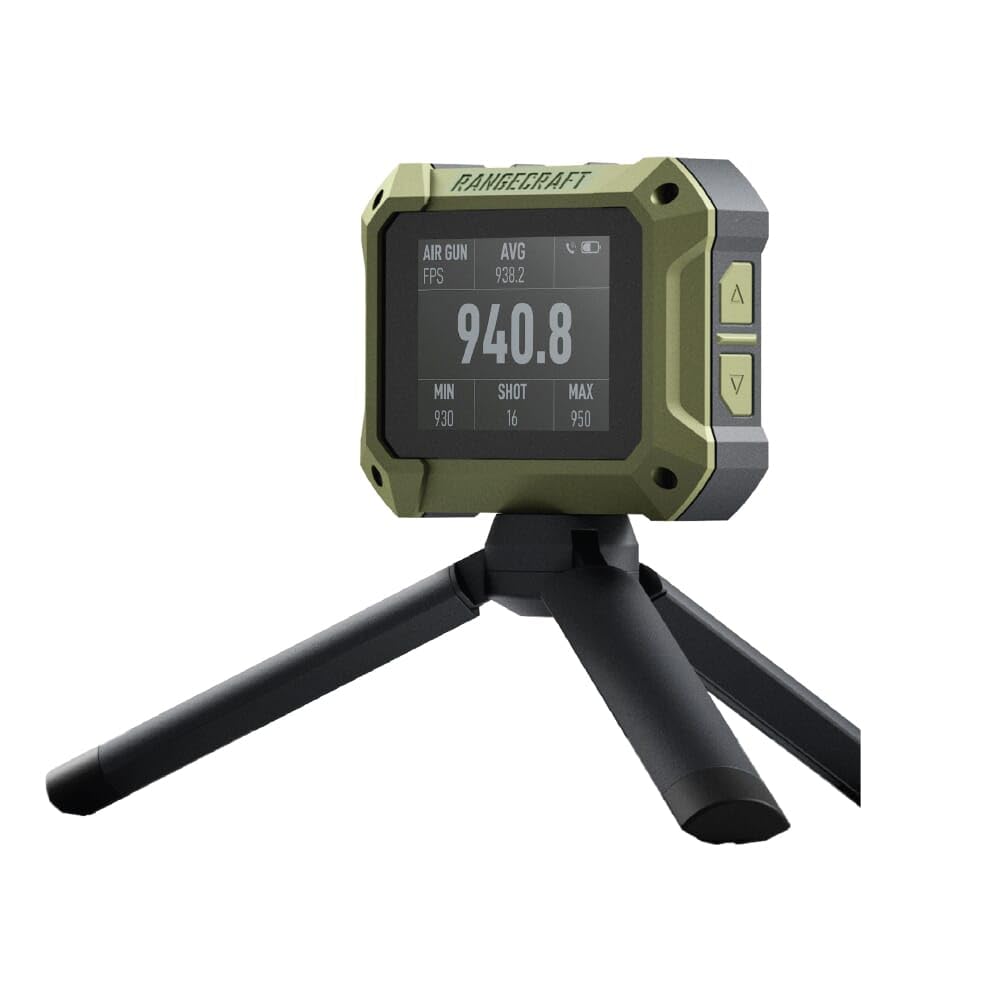
The Athlon Velocity Pro brings Doppler radar performance to a more accessible price point than the top-tier market leaders. It measures projectile speeds from 65 to 5,000 FPS with +/-0.1% accuracy — essentially lab-grade data from a unit that weighs just 4.7 ounces. Like the Garmin, it sits beside the barrel, so your rifle’s zero and barrel harmonics remain untouched. The IP67 rating means it can handle rain and dust without hesitation.
The onboard memory stores up to 50 sessions with 100 shots each, which is generous for load development work. Deleting a bad shot from a string is a simple button press. The Athlon Ballistics Lite app syncs sessions via Bluetooth and allows you to rename strings, exclude data, and associate readings with rifle and bullet profiles. Users consistently report that it registers every shot in a string, even with rapid-fire sequences that cause optical units to stumble.
The 2.4-inch LCD screen is sharp and legible, and the battery lasts through several hours of active use. Some users find the tripod mount adequate but not premium, and the included case is compact and functional. For handloaders looking for radar reliability without the top-shelf price, the Velocity Pro is an excellent middle-ground solution that delivers very similar performance to units costing significantly more.
Why it’s great
- Radar accuracy at a mid-range price point
- IP67 waterproof for all-weather range use
- Stores up to 50 sessions locally
Good to know
- App integration is functional but less refined than Garmin’s
- Tripod head could be sturdier
- Rechargeable battery is not user-swappable
3. Caldwell G2 Ballistic Precision Chronograph

The Caldwell G2 is the best optical chronograph for indoor use, thanks to its unique upside-down design and integrated LED light panels. The 18-inch sensor spacing — wider than many competitors — improves accuracy by giving the bullet more distance to trigger the start and stop sensors. It reads from 5 to 9,999 FPS and is factory-calibrated to within +/-0.25%. The included rechargeable battery keeps the LEDs running for about two hours per charge.
Bluetooth connectivity works reliably with the Caldwell app, which logs velocity, notes, and weather conditions for each session. The app calculates average velocity, extreme spread, and standard deviation automatically, making it simple to review trends across multiple loads. The front-facing LCD display is easy to see from behind the rifle, reducing the need to walk downrange between strings.
Where the G2 falls short is build quality: the tripod and hinge assembly are notoriously flimsy, and several users report the stand breaking during initial setup. The unit is also sensitive to lighting conditions and can produce false readings with certain indoor lights. If you upgrade the tripod and use consistent incandescent or natural light, the G2 is a powerful tool for indoor load testing.
Why it’s great
- Integrated LED panels solve indoor lighting issues
- Wide 18-inch sensor spacing for better accuracy
- Rechargeable battery with Bluetooth app support
Good to know
- Flimsy tripod often needs replacement
- Sensitive to fluorescent lighting indoors
- Battery is not user-replaceable
4. Competition Electronics ProChrono DLX
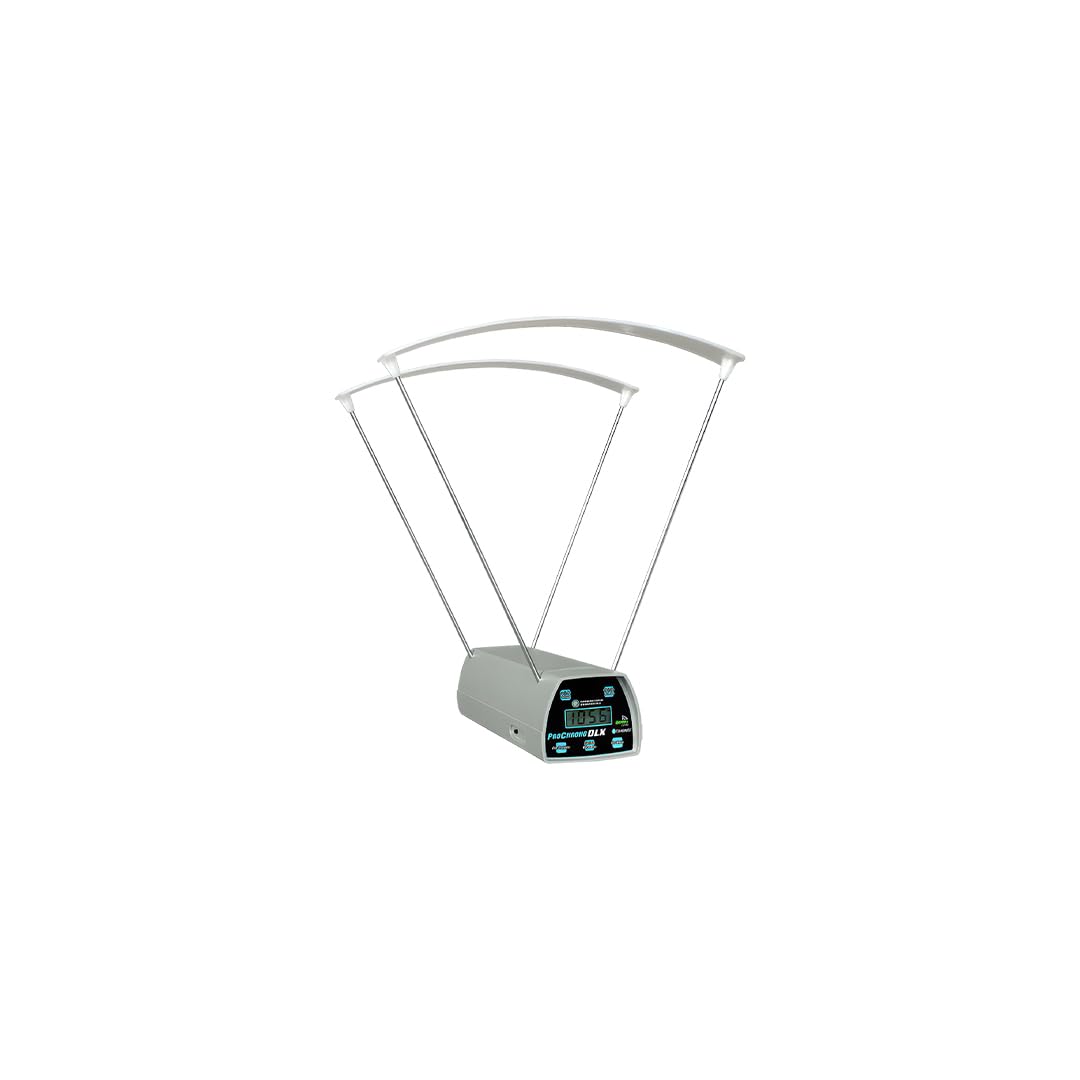
The ProChrono DLX stands out for its excellent Bluetooth app integration and audible FPS readout — a feature that lets you hear your velocity immediately after each shot without taking your eyes off the scope. It reads velocities accurately for handloads and factory ammunition, covering everything from pistol rounds to high-velocity rifle loads. Users consistently report fewer error readings compared to other optical units in the same price tier.
The companion app is one of the smoothest in the optical category. It automatically builds a shot list with bullet weight, energy, and power factor, and it allows full data export in PDF or Access database formats. You can customize the shot list with notes, and the app syncs effortlessly with Android and iOS devices. The indoor performance is solid, though removing the diffusers on overcast days improves reading reliability.
The primary drawback is the physical construction: the plastic housing is functional but feels somewhat fragile, and the diffuser arms need careful handling during setup. Some units have arrived damaged from shipping. However, for handloaders who prioritize data management and want a Bluetooth-enabled optical unit that doesn’t require a tripod upgrade out of the box, the ProChrono DLX delivers dependable performance at a fair price.
Why it’s great
- Audible FPS readout keeps your eyes on target
- Excellent Bluetooth app with full data export
- Fewer error readings than competing optical models
Good to know
- Plastic housing feels less durable
- Diffuser arms require careful handling
- Some units arrive damaged during shipping
5. Caldwell Ballistic Precision Chronograph 2.0 with Bluetooth Premium Kit

The Caldwell Ballistic Precision Chronograph 2.0 is an all-in-one kit that includes the chronograph, LED light kit, adjustable tripod (16 to 51 inches), and a nylon carry case. Factory-calibrated to +/-0.1% accuracy, it is one of the most precise optical units available. The large LCD screen and simple three-button interface make it easy to operate, and the free Caldwell Mobile App records muzzle velocity, average velocity, min/max, kinetic energy, and power factor.
Setup is straightforward for an optical chronograph. You align the unit, extend the diffuser bars, and shoot through the sensor frame. The Bluetooth connection to the app works reliably for most users, and the data capture is clean enough for serious load development. The adjustable tripod is a welcome inclusion, though its build quality is minimal — it’s usable but not rugged. The carry case keeps everything organized for transport.
Where this kit loses points is in durability and environmental sensitivity. In direct sunlight, the unit can overheat and require a cool-down break. Gunpowder residue from high-power rifles can coat the diffusers and cause errors, requiring frequent cleaning. The included tripod is prone to wobbling in wind. For bench shooters who shoot in moderate conditions and want a complete kit out of the box, this is a solid entry-level package.
Why it’s great
- Factory-calibrated to +/‑0.1% accuracy
- Includes tripod, LED kit, and carry case
- Intuitive app with full data logging
Good to know
- Overheats in direct sunlight
- Tripod is cheap and wobbly
- Powder residue can obscure diffusers
6. Xcortech X3200 MK3 Airsoft Shooting Chrono
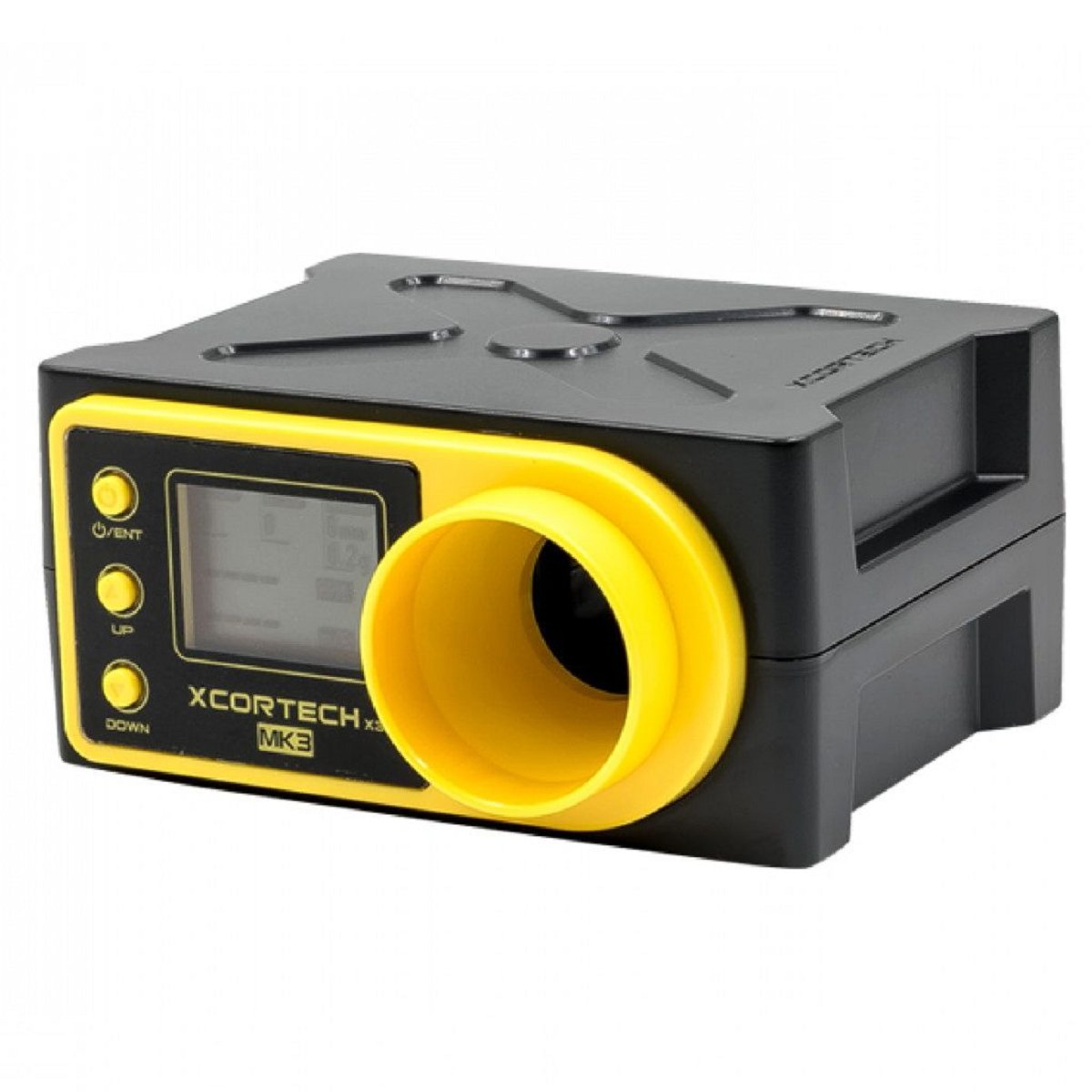
The Xcortech X3200 MK3 is purpose-built for airsoft and airgun shooters who need a compact, reliable chronograph for field use and load verification. It uses 14 highly sensitive infrared sensors to capture velocity, rate of fire (in BBs per second or per minute), and calculated energy in both joules and joules per square centimeter based on the projectile weight and diameter you configure. The interface is intuitive, with a backlit display and simple navigation buttons.
It runs on two AA batteries and features an auto-shutoff function to extend battery life, which is useful for extended sessions at the airsoft field. The unit supports multiple units of measurement, including FPS, MPS, RPM, and RPS. The compact form factor (roughly 5×6.5 inches) fits easily into a gear bag. Users consistently report that it is accurate enough to settle bragging rights among friends and confirm that rifles meet field velocity limits.
The main limitation is that the unit only includes preset projectile weights of 0.20g, 0.25g, and 0.43g for Joule calculation, which is fine for common airsoft BBs but less flexible for unique pellet weights. It is also an optical sensor chronograph, so it requires proper lighting and alignment to avoid error readings. For the price, it is a rugged and reliable tool that serves its niche perfectly.
Why it’s great
- Compact and easy to pack for field use
- 14 IR sensors for accurate readings
- Calculates energy in joules with configurable BB weight
Good to know
- Only supports 0.20g, 0.25g, and 0.43g presets
- Requires proper lighting for optimal performance
- Limited to airsoft and airgun applications
7. Garmin Xero C1 Pro Bundle with Microfiber Cloth

This is essentially the same exceptional Garmin Xero C1 Pro radar chronograph, bundled with a GPS City microfiber cleaning cloth for screen maintenance. All the core performance attributes apply: compact pocket-sized design, ability to measure projectiles from 100 to 5,000 FPS, simple side-of-barrel placement, and up to six hours of battery life. The IPX7 water resistance means you can keep shooting through rain without worrying about damage. It is the most hassle-free chronograph you can buy.
The ShotView app integration is seamless — it tracks every shot, calculates extreme spread and standard deviation, and allows easy data management across multiple rifles and loads. The button-operated interface is intuitive, and the backlit display is readable in any light. Users consistently report that this unit catches every shot, eliminates the frustration of optical alignment, and saves significant time and ammunition compared to older mounting systems.
The criticisms are minor: the screen could be larger, the included tripod is adequate but not premium, and the price is undeniably high. This bundle adds no extra functional value beyond the base unit, but the microfiber cloth is a thoughtful addition for keeping the lens clean. If budget is not the primary constraint, this is the chronograph that ends the search for most serious shooters.
Why it’s great
- Same best-in-class radar performance as base model
- IPX7 water resistance for all-weather use
- Fits in a shirt pocket for ultimate portability
Good to know
- High investment similar to base unit
- Same small screen as base model
- Bundle adds only a cleaning cloth
FAQ
Can a radar chronograph be used for airsoft and airguns?
Why does my optical chronograph miss shots on sunny days?
Final Thoughts: The Verdict
For most users, the chronograph for shooters winner is the Garmin Xero C1 Pro because it delivers radar reliability, zero setup frustration, and seamless app integration in a genuinely pocket-sized package. If you want radar performance at a lower investment, grab the Athlon Velocity Pro. And for indoor load development on a budget, nothing beats the value of the Caldwell G2 with its integrated LED lighting and wide sensor spacing.

Mo Maruf
I created WellFizz to bridge the gap between vague wellness advice and actionable solutions. My mission is simple: to decode the research and give you practical tools you can actually use.
Beyond the data, I am a passionate traveler. I believe that stepping away from the screen to explore new environments is essential for mental clarity and physical vitality.