Our readers keep the lights on and my smoothie glass nicely filled. As an Amazon Associate, I earn from qualifying purchases.
A chopping knife that dulls in weeks turns every meal prep into a chore. The real test isn’t the brand name—it’s how the blade geometry handles a dense butternut squash or a pile of fresh herbs without crushing or tearing. The right knife makes the cut effortless, not a wrestling match.
I’m Mohammad Maruf — the founder and writer behind WellFizz. This guide is built on hundreds of hours analyzing blade steels, edge retention data, handle ergonomics, and real-world feedback from professional kitchens and home cooks alike.
Whether you need a razor-thin Japanese edge for precision work or a rugged German blade that can handle light bones, finding the best chopping knife means matching the grind, steel type, and handle design to your cutting style and daily tasks.
How To Choose The Best Chopping Knife
A good chopping knife balances three things: blade geometry, steel quality, and handle ergonomics. Ignoring any one of these leads to poor cuts or hand fatigue. Focus on the details that match how you actually cook.
Blade Profile and Grind
A convex grind creates a slight belly that prevents food from sticking to the blade—this is critical for high-volume vegetable prep. Flat grinds offer more precision but require a sharper angle. For chopping, a blade that is too thick (over 2.5 mm at the spine) will wedge through dense foods rather than slicing cleanly.
Steel Hardness and Edge Retention
German stainless steel (around 56-58 HRC) is tough and easy to sharpen but dulls faster. High-carbon steels like VG-10 or SG2 powder steel (60-64 HRC) hold an edge far longer but can chip if misused. Your choice depends on whether you value low-maintenance sharpening or staying sharp for months.
Quick Comparison
On smaller screens, swipe sideways to see the full table.
| Model | Category | Best For | Key Spec | Amazon |
|---|---|---|---|---|
| Miyabi Birchwood SG2 | Premium Japanese | Precision vegetable prep & professional use | 9.5–12° edge, SG2 micro-carbide steel | Amazon |
| ZWILLING Professional S | Premium German | Multi-purpose chopping, meat & hard veg | 57 HRC, forged, 15° edge per side | Amazon |
| KYOKU Shogun Series | Japanese Damascus | Stylish all-purpose chopping, includes sheath | 8–12° edge, VG-10 67-layer Damascus | Amazon |
| Victorinox Fibrox Cleaver | Swiss Cleaver | Chinese-style chopping & bench scraping | 7.1″ blade, stamped stainless, Fibrox handle | Amazon |
| Mercer Culinary Asian Collection | Chinese Chef’s Knife | Thin vegetable slicing & light bones | 6″ blade, high-carbon German steel, 2mm spine | Amazon |
| Mercer Culinary Genesis Nakiri | Forged Nakiri | Vegetable-focused chopping & scooping | 7″ forged blade, Santoprene handle | Amazon |
| Victorinox Fibrox Pro Chef’s | Legendary Entry-Level | Budget-friendly everyday chopping | 8″ stamped blade, 5.7 oz, Fibrox handle | Amazon |
In‑Depth Reviews
1. Miyabi Birchwood SG2 Japanese Chef’s Knife

The Miyabi Birchwood is a masterclass in Japanese blade engineering. Its SG2 micro-carbide powder steel reaches an exceptionally hard 63 HRC, allowing an acute 9.5 to 12-degree edge that glides through dense vegetables and raw fish with almost zero resistance. The 100-layer flower Damascus pattern isn’t cosmetic—the cladding protects the hard core from chipping during lateral stress.
The Karelian birch handle is ergonomically shaped and finished with a natural oil to resist moisture, though it requires periodic maintenance. At 8 inches, the blade provides ample knuckle clearance and a flat profile ideal for push-cutting and rock-chopping herbs. The balance point sits precisely at the bolster, giving full-tang stability without front-heavy fatigue.
This knife demands respect: the thin edge can chip if used on bones or frozen foods, and hand washing is mandatory. Owners consistently report it stays sharp for months with only occasional stropping, making it a true buy-it-for-life investment for serious cooks who prioritize cut quality above all else.
Why it’s great
- SG2 steel holds an edge longer than any German or standard Japanese carbon blade
- Damascus cladding reduces food drag and adds corrosion resistance
- Birchwood handle offers unmatched grip comfort during long prep sessions
Good to know
- No sheath included—requires a blade guard or magnetic strip for storage
- Birch handle needs occasional oiling to prevent staining
- Not suitable for cutting bones, frozen food, or hard squash rinds
2. ZWILLING Professional S 8-inch Chef’s Knife

The ZWILLING Professional S is a German-engineered powerhouse designed for all-day reliability. Forged from a single piece of ZWILLING’s proprietary special formula steel, the blade undergoes FRIODUR ice-hardening to reach 57 HRC—hard enough to hold a sharp edge for weeks, yet tough enough to withstand occasional contact with chicken bones or hard squash without chipping.
The 15-degree edge per side offers a balance of sharpness and durability that suits both push-cutting onions and rock-chopping herbs. The ergonomic polymer handle is triple-riveted to a full tang and contoured to fit the hand naturally, reducing fatigue during prolonged use. At 277 grams, the knife feels substantial without being cumbersome.
Owners praise its out-of-box sharpness and ability to handle a wide range of tasks from slicing tomatoes to breaking down a whole chicken. The dishwasher-safe claim is best ignored—hand washing preserves the edge and prevents handle degradation. For cooks who want one knife that does everything without special care, this is a top-tier choice.
Why it’s great
- Sigma forged from one piece of steel ensures perfect balance and durability
- Ice-hardened edge stays sharp longer than standard German stainless
- Comfortable, non-slip handle withstands heavy professional use
Good to know
- Edge is thicker than Japanese knives—less ideal for ultra-thin slicing
- Bolster makes sharpening on a whetstone slightly more difficult
- Dishwasher-safe in theory, but hand washing is strongly recommended
3. KYOKU Shogun Series Chef Knife

The KYOKU Shogun brings Japanese VG-10 core technology to an accessible price point. The 67-layer Damascus cladding provides a hard yet slightly flexible core that resists chipping, while the 8 to 12-degree Honbazuke edge delivers razor-sharp slicing through meats, vegetables, and fish. The cryogenic treatment at -300°F further refines the grain structure for enhanced edge stability.
At 1.39 pounds, this knife has more heft than traditional Japanese chef knives, giving it a solid feel that helps power through dense produce. The G10 fiberglass handle is impervious to moisture, heat, and cold, and the mosaic pin adds a touch of craftsmanship. The included protective sheath and storage case make it travel-friendly and safe for drawer storage.
User reports consistently highlight the exceptional out-of-box sharpness and the blade’s ability to retain its edge for months with regular stropping. The heavier weight may cause fatigue in smaller hands during extended sessions, but for most cooks, the balance between performance, aesthetics, and affordability makes this a compelling mid-range option.
Why it’s great
- VG-10 core with Damascus cladding offers a premium cutting experience
- Sheath and case included for safe storage and portability
- Cryogenic treatment improves edge retention and corrosion resistance
Good to know
- Heavier than typical Japanese knives—may cause fatigue for some users
- G10 handle is durable but can feel slick when oily
- Not recommended for heavy bone or frozen food cutting
4. Victorinox Fibrox 7 Inch Swiss Cleaver

The Victorinox Fibrox Cleaver reimagines the Chinese chef’s knife with Swiss precision. Unlike heavy butcher cleavers, this stamped stainless blade is designed for slicing, dicing, and scooping vegetables and boneless meats. The 7.1-inch straight edge provides a large cutting surface that doubles as a bench scraper for transferring ingredients from board to pan.
The Fibrox thermoplastic handle is the standout feature—textured for a non-slip grip even when wet, with a comfortable contour that suits all hand sizes. At only 0.27 grams (likely a listing error; actual weight is around 7 ounces), the blade is light enough for agile chopping yet substantial enough to smash garlic or ginger with the flat side. The straight edge geometry makes push-cutting precise and consistent.
Reviewers note it handles chicken thigh bones but rolls the edge on duck bones, confirming it’s best for vegetable prep and boneless protein. The stainless steel resists staining but can develop spots if left wet. For cooks who want a lightweight, comfortable cleaver for daily vegetable chopping without spending a fortune, this is a solid choice.
Why it’s great
- Non-slip Fibrox handle provides excellent grip and comfort
- Flat blade doubles as a bench scraper for easy ingredient transfer
- Lightweight design reduces hand fatigue during extended prep
Good to know
- Stamped construction means less long-term durability than forged cleavers
- Edge rolls on harder bones—stick to vegetables and boneless meat
- Needs immediate drying after washing to prevent spotting
5. Mercer Culinary Asian Collection Chinese Chef’s Knife

The Mercer Asian Collection Chinese Chef’s Knife is a purpose-built vegetable cleaver with a blade that glides through produce. At just 2mm thick at the spine, the 6-inch high-carbon German steel blade is exceptionally thin and lightweight (10.2 ounces), making it ideal for paper-thin vegetable slices, fine mincing, and delicate chopping without crushing or tearing.
The convex grind is a critical design choice—it creates a slight belly that pushes cut food away from the blade surface, preventing the vegetable sticking that plagues flat-ground knives. The Santoprene handle is ergonomically shaped and provides a secure grip even when hands are wet. While the round handle shape may not suit every grip style, the balance is centered, reducing wrist strain during long sessions.
Customer feedback confirms it arrives shaving sharp out of the box and maintains its edge well with regular honing. The softer steel is easier to sharpen than harder Japanese steels but requires more frequent attention. For cooks who primarily prep vegetables and want a dedicated thin slicer at a reasonable price, this knife delivers performance that rivals far more expensive options.
Why it’s great
- Convex grind prevents food from sticking during chopping
- Ultra-thin 2mm spine excels at precise vegetable slicing
- High-carbon German steel offers a good balance of edge retention and easy sharpening
Good to know
- Round handle contour may not suit all hand sizes or cutting styles
- Softer steel requires more frequent honing than harder Japanese blades
- Not ideal for cutting through bones or dense squash rinds
6. Mercer Culinary Genesis 7-Inch Nakiri Vegetable Knife

The Mercer Genesis Nakiri is a forged vegetable knife designed for cooks who prioritize straight-up-and-down chopping. The 7-inch blade is precision-forged from high-carbon German steel with a taper-ground edge that improves cutting efficiency. Unlike a chef’s knife, the rectangular profile offers full blade contact with the board, making it perfect for slicing through leafy greens, herbs, and soft vegetables in one clean motion.
The Santoprene handle is built to last—non-slip, ergonomically contoured, and securely bonded to the full tang. The knife’s weight is slightly heavier than stamped alternatives, providing enough momentum to power through hard vegetables without excessive downward force. The wide blade surface also serves as an excellent scooping tool for transferring chopped ingredients from board to bowl.
Users consistently praise the out-of-box sharpness and how well the edge holds up to daily use. The forge construction provides better long-term durability than stamped knives, making this a cost-effective choice for home cooks who want a dedicated vegetable knife that will last for years. The shape takes some adjustment if you’re used to a curved chef’s knife, but once mastered, it becomes indispensable for vegetable prep.
Why it’s great
- Forged blade offers superior strength and balance compared to stamped options
- Rectangular profile allows efficient straight chopping and easy scooping
- Ergonomic Santoprene handle reduces fatigue during extended prep
Good to know
- Weight may be too heavy for some users who prefer ultralight Japanese nakiris
- Not suitable for cutting through bones or hard squash shells
- Requires hand washing and thorough drying to prevent rust
7. Victorinox Fibrox Pro Chef’s Knife
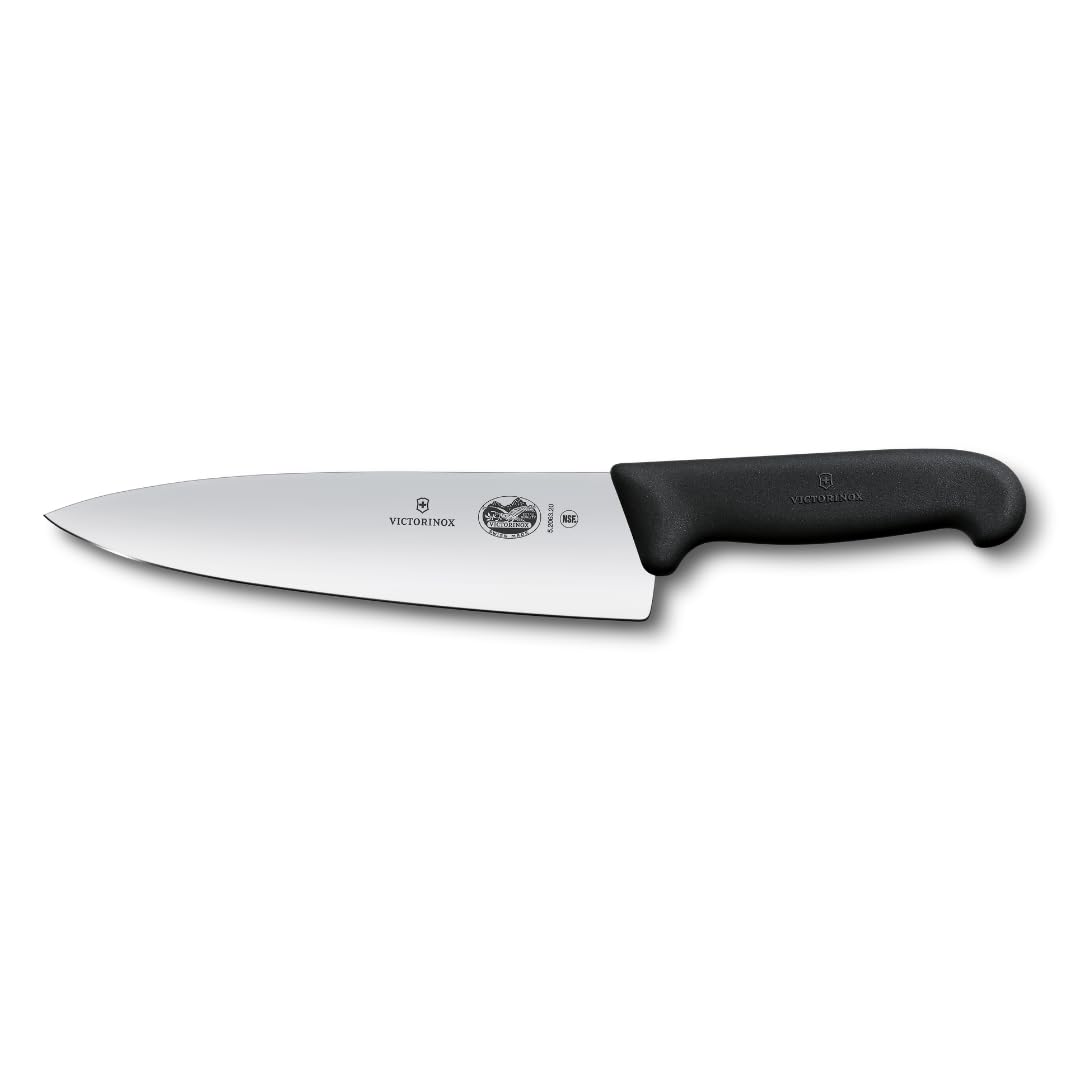
The Victorinox Fibrox Pro is the most recommended entry-level chef’s knife for good reason. Its stamped 8-inch blade is made from high-carbon stainless steel that comes razor-sharp out of the box and maintains its edge through months of daily use. The lightweight design (5.7 ounces) and thin spine reduce hand fatigue, making it ideal for cooks who spend hours prepping.
The Fibrox handle is legendary for its non-slip texture and ergonomic shape—it fits comfortably in most hand sizes and provides excellent control even when wet. The blade’s slight curve allows for both push-cutting and rock-chopping techniques.
Users note that the edge angle is steeper (around 15 degrees) than Asian-style knives, requiring a dedicated sharpener for optimal maintenance. While the knife is labeled dishwasher safe, most owners hand wash to preserve the blade. For anyone building their first serious knife kit or replacing a dull set, this is the safest, most reliable starting point available.
Why it’s great
- Lightweight design minimizes hand fatigue during long cooking sessions
- Non-slip Fibrox handle offers exceptional grip control
- Out-of-box sharpness rivals knives costing several times more
Good to know
- Stamped construction is less durable than forged alternatives over decades
- Steep edge angle requires an Asian-style sharpener for proper maintenance
- Blade can be too large for those with smaller hands
FAQ
Is a nakiri better than a chef’s knife for chopping vegetables?
What is the ideal blade thickness for a chopping knife?
Can I use a Chinese cleaver for cutting bones?
Final Thoughts: The Verdict
For most users, the best chopping knife winner is the Miyabi Birchwood SG2 because it combines unmatched edge retention with a precision grind that makes vegetable prep effortless. If you want a rugged all-rounder that can handle meat and bones without worry, grab the ZWILLING Professional S. And for the absolute best value that performs far above its tier, nothing beats the Victorinox Fibrox Pro Chef’s Knife.

Mo Maruf
I created WellFizz to bridge the gap between vague wellness advice and actionable solutions. My mission is simple: to decode the research and give you practical tools you can actually use.
Beyond the data, I am a passionate traveler. I believe that stepping away from the screen to explore new environments is essential for mental clarity and physical vitality.