Our readers keep the lights on and my smoothie glass nicely filled. As an Amazon Associate, I earn from qualifying purchases.
A child’s first monster truck rally, a Fourth of July fireworks display, or a long-haul flight can quickly turn from exciting to overwhelming when the noise hits unprotected ears. The right hearing defender doesn’t just muffle the roar—it preserves the fun while safeguarding developing auditory systems that are far more sensitive than adult ears. The science is clear: sustained exposure above 85 decibels can cause permanent damage, and events like concerts and sporting events often peak well past that threshold.
I’m Mohammad Maruf — the founder and writer behind WellFizz. I’ve spent hundreds of hours analyzing independent acoustic lab data, cross-referencing parental feedback across thousands of verified purchases, and evaluating the real-world fit and materials of the top-selling children’s hearing protection models.
This guide breaks down the critical specs that separate genuine protection from glorified headbands, from Noise Reduction Ratings to cup materials and headband tension. Here, you’ll find my top picks for the best children’s ear defenders that balance certified safety with the comfort a toddler will actually tolerate.
How To Choose The Best Children’s Ear Defenders
Selecting the right pair for your child requires looking past the cute colors and straight to the acoustic engineering. Three factors determine whether a pair actually protects hearing during a loud event and whether a child will wear them without a fight.
Noise Reduction Rating and Frequency Attenuation
The NRR number printed on the box is measured in a lab, not a stadium. Real-world attenuation is typically about half the rating. A defender rated at 31 dB NRR might deliver 15–16 dB of actual reduction in a chaotic environment like a monster truck event. That’s still enough to bring a 120 dB roar down to a safe 104 dB range, but only if the defender seals perfectly around the ear. Look for models that publish attenuation data at low, mid, and high frequencies rather than just a single headline NRR figure.
Cup Material, Foam Density, and Seal Integrity
Thin, brittle plastic cups can crack under the stress of a child throwing them into a backpack, and the acoustic seal can break if the foam inside is too soft. High-density acoustic polyurethane foam (usually 60–80 kg/m³) absorbs sound energy more consistently across frequencies than cheaper open-cell foams. The cup itself should be a rigid ABS or polycarbonate shell that resists flexing when the child moves their head. A 360-degree swivel mechanism on the cups helps maintain the seal as the child tilts or turns.
Headband Tension and Weight Distribution
Children’s skulls are still developing, and clamping force that feels fine to an adult can cause headaches or red marks within minutes. The ideal headband applies just enough pressure to hold the cups flush against the ear canal without compressing the temporal region. Padded headbands wider than 2 cm distribute the load more evenly. Adjustable sizing that accommodates both a 6-month-old and a 4-year-old eliminates the need to buy a new pair every season.
Quick Comparison
On smaller screens, swipe sideways to see the full table.
| Model | Category | Best For | Key Spec | Amazon |
|---|---|---|---|---|
| BANZ Baby Earmuffs | Premium | Highest noise reduction for infants | 31 dB NRR | Amazon |
| ZIPZ Baby & Toddler Earmuffs | Mid-Range | Customizable shells for sensory-sensitive toddlers | ANSI-Certified | Amazon |
| JLab JBuddies Protect Earmuffs | Mid-Range | Growing child from infant to teen | 23 dB NRR | Amazon |
| MelonArt Kids Ear Protection | Mid-Range | Sensory sensitivity and autism focus | 27 dB NRR | Amazon |
| 2-in-1 Baby Ear Muffs | Budget-Friendly | Infant travel and everyday use | Two headbands included | Amazon |
In‑Depth Reviews
1. BANZ Baby Earmuffs Infant and Toddler Hearing Protection Headphones
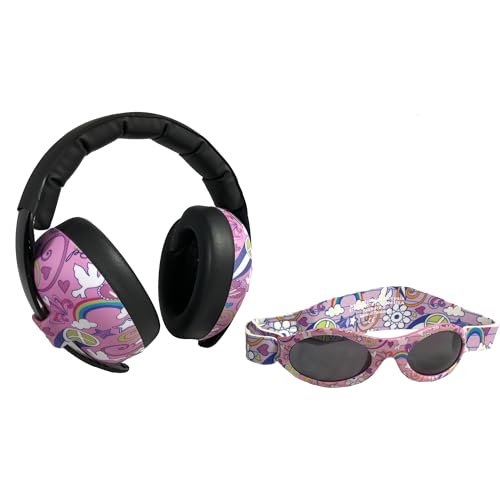
BANZ holds the highest Noise Reduction Rating in this roundup at 31 dB, a spec backed by real-world performance at events like air shows and tractor pulls where parents report babies sleeping through 120+ dB noise without flinching. The low-profile cup design means less leverage for a baby to pull them off compared to bulkier industrial-style earmuffs, and the neoprene headband distributes pressure without digging into soft tissue.
The set bundles Adventure BANZ sunglasses with Category 3 UV protection, adding value for outdoor events. The neoprene strap and rubber nose bridge keep the glasses planted during active movement, though some reviewers noted the sunglasses left red marks on children with larger head shapes. The earmuffs themselves carry a plastic construction that is durable but feels lighter than premium alternatives.
Battery life isn’t a concern here—there are no electronics, no active noise cancellation, just passive acoustic foam and a rigid shell. Some parents found the sizing maxes out before the advertised 24-month mark for children in the 99th percentile head circumference. For infants up to about 18 months with average head size, this is the most effective and comfortable passive defender available.
Why it’s great
- Industry-leading 31 dB NRR for maximum passive attenuation
- Low-profile cup design is harder for babies to pull off
- Bundled UV-protective sunglasses add outdoor versatility
Good to know
- Size may cap out before 24 months for large-headed toddlers
- Sunglasses can leave red marks on the nose bridge
- No carrying case included for travel storage
2. ZIPZ Baby & Toddler Earmuffs
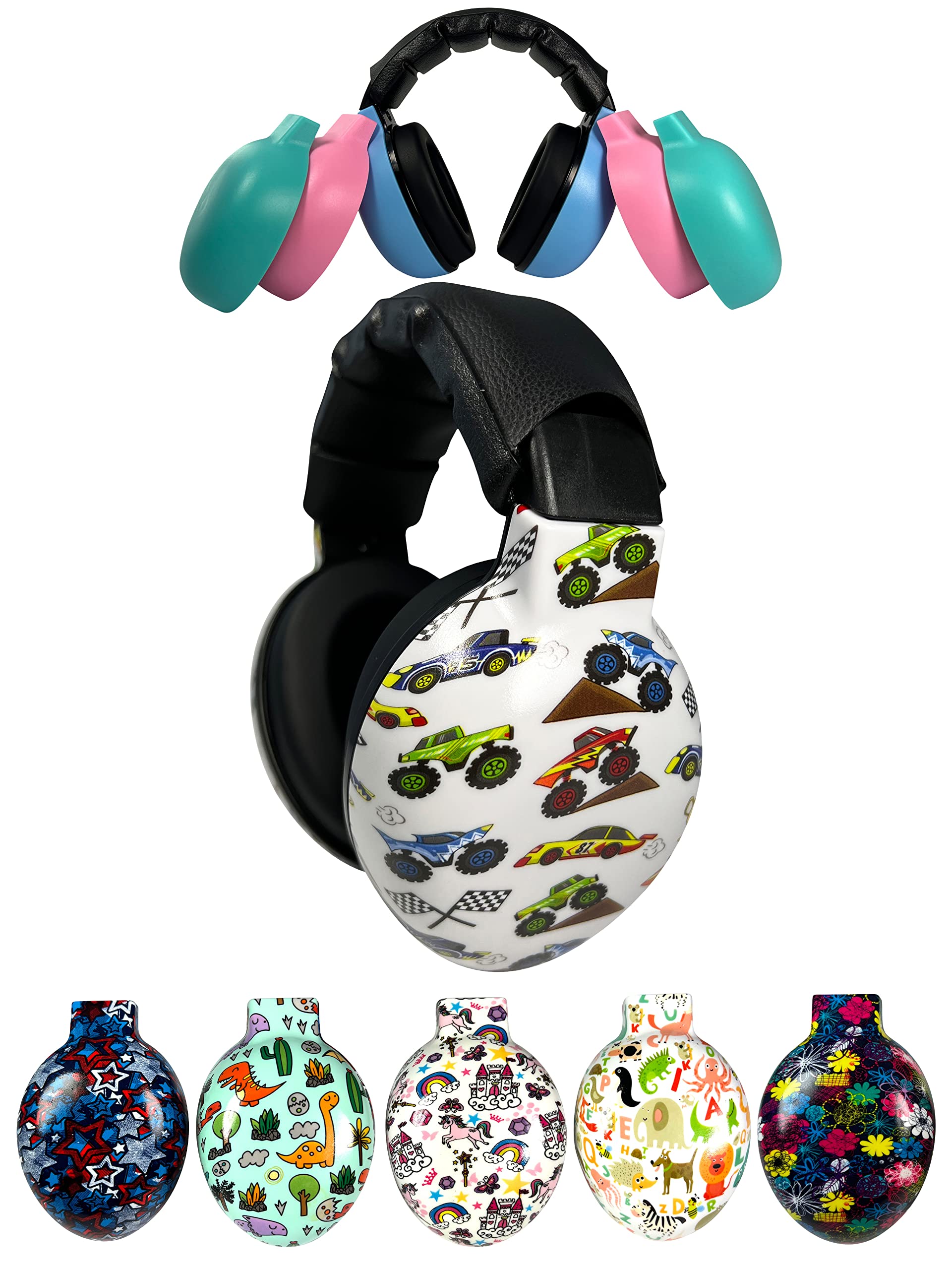
ZIPZ tackles the biggest behavioral hurdle with children’s ear defenders—getting the child to actually wear them—by using magnetic interchangeable outer shells that kids can customize. The base unit carries ANSI certification for safety, and parents report children who previously refused to wear headphones now ask for them by name, particularly for Monster Jam events. The adjustable headband spans from newborn to age 4, which is a wider range than most competitors offer.
The soft padding on both the headband and ear cups uses premium sound-blocking foam, though some reviewers noted that the decorative shells can detach too easily if the child is actively playing. The magnetic connection is strong enough for seated events like concerts or car rides, but roughhousing or tossing into a bag may cause shell separation. The core earmuff unit itself remains functional regardless of shell position.
Shells are sold separately for each theme—cars, dinosaurs, princesses, or animals—so the total cost for a fully customizable set can climb if you buy multiple themes. The base unit at its entry-level price point is competitive, but the accessory ecosystem is clearly designed to drive repeat purchases. The novelty factor genuinely helps with compliance for sensory-resistant toddlers, making this a strong option for the 2–3 age bracket.
Why it’s great
- Magnetic interchangeable shells keep kids excited to wear hearing protection
- ANSI-certified safety with adjustable fit from newborn to 4 years
- Soft headband and ear padding designed for extended wear
Good to know
- Decorative shells can fall off during active play
- Optional shell themes are sold separately, increasing total cost
- Some units only ship with a single shell color despite advertising multiples
3. JLab JBuddies Protect Earmuffs
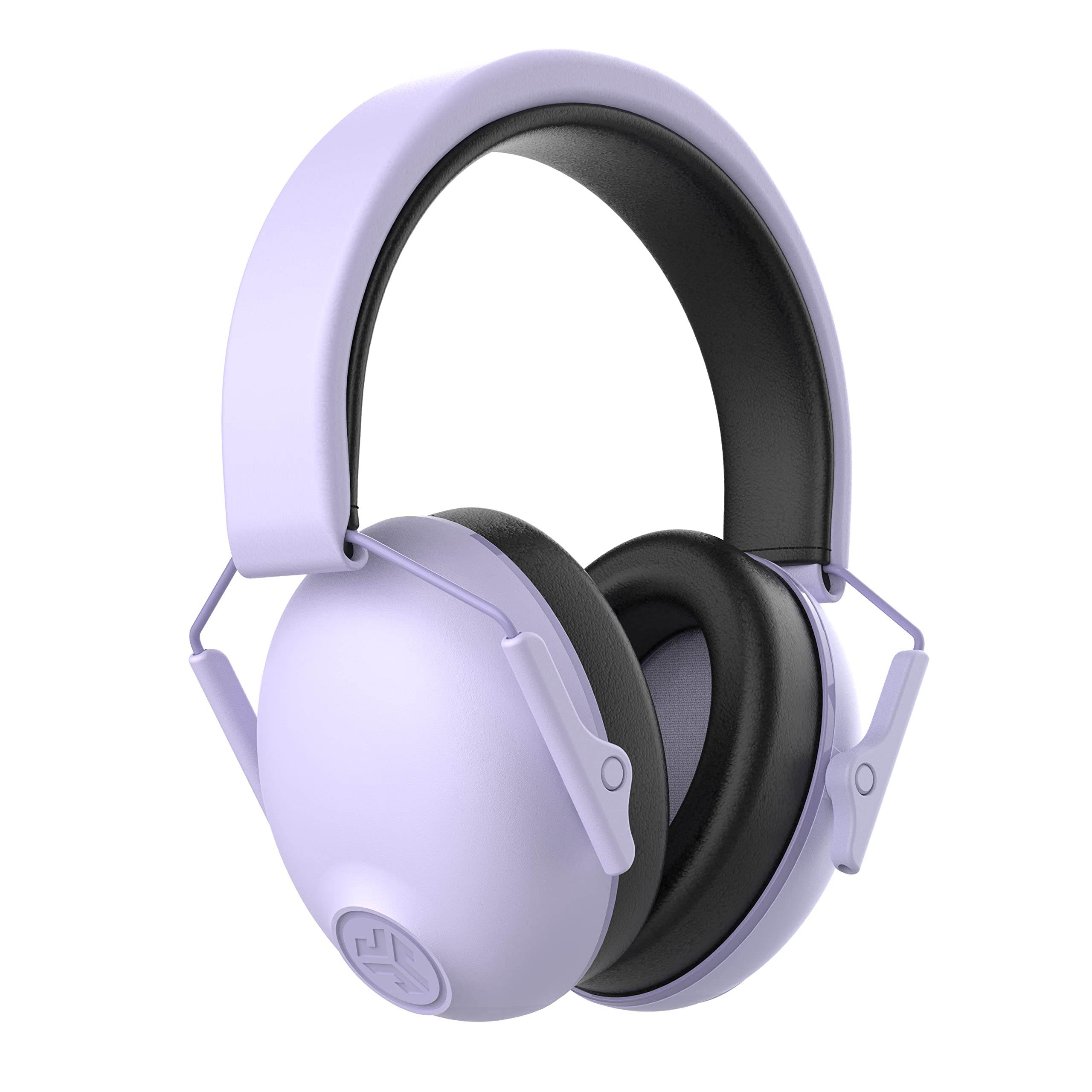
JLab’s JBuddies Protect are officially Monster Jam approved and designed with a headband that adjusts from infant all the way through teenage head sizes. The adjustable mechanism is a sliding rail system that extends significantly further than most children’s defenders, and the Cloud Foam earcups use a dual-layer approach: acoustic foam to absorb waves and EVA foam to create a tight seal. The result is a consistent 23 dB NRR that meets safety standards without over-compressing the ears.
The foldable design collapses into a compact shape that fits easily into a diaper bag or carry-on, and parents of sound-sensitive children report that the defenders helped their kids enjoy loud family gatherings and concerts without meltdowns. The earcups swivel for a better seal during active movement, and the overall build quality is sturdier than the ultra-light budget options. The padding is dense enough for long flights yet soft enough that toddlers don’t complain.
The 23 dB NRR is lower than the premium BANZ or the MelonArt options, so for extreme noise environments like air shows or operating heavy machinery nearby, you might want a higher-rated pair. The trade-off is comfort and fit range—these are the only defenders on this list that can realistically grow with a child from age 1 to age 14, making them the best long-term value if you only want to buy once.
Why it’s great
- Adjustable headband fits infants to teens, eliminating the need for multiple purchases
- Dual-layer acoustic and EVA foam provides reliable 23 dB NRR
- Foldable and portable design packs flat for travel
Good to know
- 23 dB NRR is lower than premium options for extreme noise
- Foam density may feel too firm for some children during extended wear
- No carrying case or storage pouch included
4. MelonArt Kids Ear Protection Earmuffs

MelonArt brings a 27 dB SNR rating (European standard roughly equivalent to a high-20s NRR) along with solid ABS cups and high-density acoustic sponge that absorbs noise across a broad frequency range. The 360-degree swiveling ear cups automatically adjust to the child’s head angle, maintaining the acoustic seal when the child turns their head to look around. The memory foam cushions are wrapped in breathable protein leather, which reduces sweat buildup during warmer events.
Parents of children with autism spectrum disorder specifically praise these defenders for creating a calmer auditory environment without completely isolating the child from their surroundings. The 27 dB reduction knocks down the sharp peaks of fireworks or PA system feedback while still allowing conversation-level sounds through. The foldable frame collapses into a compact shape, and the lightweight 190-gram construction makes them easy for a toddler to carry.
The active noise cancellation label on the listing is misleading—these are purely passive defenders with no electronic noise cancellation. The clamping force is moderate, which works well for stationary events like concerts or flights but may slip slightly during active play like running or jumping. The colors (mint, pink, orange) are fun but limited to three options, which may not appeal to all kids.
Why it’s great
- 27 dB SNR with high-density acoustic foam for broad-frequency attenuation
- 360-degree swiveling cups maintain seal during head movement
- Lightweight 190-gram frame with breathable protein leather cushions
Good to know
- Active noise cancellation is not present; these are purely passive
- Clamping force may loosen during active running or jumping
- Limited to three color options
5. 2-in-1 Baby Ear Muffs Noise Protection

This budget-friendly 2-in-1 set from an Amazon-native brand offers a unique solution for the smallest ears: it comes with both a traditional headband and a soft elastic strap that wraps under the chin. The chin strap prevents the earmuffs from sliding off during naps or when the baby is lying down, which is a common failure point for traditional over-the-head defenders. The package includes a small carrying bag for storage.
Parents report that even babies with 99th percentile head sizes fit comfortably, and the lightweight 8-ounce construction means the baby doesn’t seem to notice the weight. The acoustic foam provides enough reduction for church services, loud music, or fireworks, though it doesn’t carry a published NRR rating, so you’re trusting the manufacturer’s claim rather than a third-party certified number. The ear cups are smaller than standard defenders, which is intentional for the 1–36 month range.
The dual-headband system is a clever workaround for babies who resist overhead gear, but the elastic strap under the chin can be a choking hazard if left on unsupervised. The build quality is noticeably lighter than the premium options—the plastic cups flex under firm pressure, and the foam density is lower. For occasional use like a single flight or a holiday fireworks session, the value proposition is strong, but for frequent or high-decibel environments, a certified option with a published NRR is safer.
Why it’s great
- Two wearing modes: traditional headband and chin-strap elastic for lying down
- Lightweight 8-ounce design is comfortable for infants
- Works well for babies with 99th percentile head circumference
Good to know
- No published NRR rating, lacking third-party certified specs
- Chin strap presents a potential choking hazard if unsupervised
- Cups are less rigid than premium alternatives for heavy-duty use
FAQ
At what decibel level do I need ear defenders for my child?
Can my child wear ear defenders while sleeping on a plane?
How do I clean children’s ear defenders without damaging the foam?
Are ear defenders safe for newborns with soft skulls?
Will ear defenders prevent my child from hearing me speak?
Final Thoughts: The Verdict
For most users, the best children’s ear defenders winner is the BANZ Baby Earmuffs because it delivers the highest certified NRR at 31 dB in a low-profile design that infants tolerate without protest. If you want a pair that grows from infancy through the teen years with maximum versatility, grab the JLab JBuddies Protect. And for a sensory-sensitive toddler who refuses bulky headphones, nothing beats the customizable magnetic shells of the ZIPZ Baby & Toddler Earmuffs.

Mo Maruf
I created WellFizz to bridge the gap between vague wellness advice and actionable solutions. My mission is simple: to decode the research and give you practical tools you can actually use.
Beyond the data, I am a passionate traveler. I believe that stepping away from the screen to explore new environments is essential for mental clarity and physical vitality.