Our readers keep the lights on and my smoothie glass nicely filled. As an Amazon Associate, I earn from qualifying purchases.
That first cut through a ripe tomato should feel effortless—a clean, gliding separation, not a squishy crush. The wrong chef’s knife turns every meal prep into a frustrating battle with your own ingredients. Finding the right one isn’t just about a sharp edge; it’s about the precise balance of steel type, blade geometry, and handle feel that transforms chopping from a chore into a rhythm.
I’m Mohammad Maruf — the founder and writer behind WellFizz. I’ve spent hundreds of hours analyzing blade steels, edge retention data, handle ergonomics, and forging methods to cut through the marketing noise and find the tools that actually deliver on the cutting board.
Whether you’re breaking down a chicken or mincing garlic for a weeknight sauce, this guide to the best chef’s knife is built to help you choose the one blade that will earn a permanent spot in your hand.
How To Choose The Best Chef’s Knife
The best chef’s knife for your kitchen balances steel hardness, blade geometry, and handle ergonomics against your specific cutting style. Ignoring any one of these elements can lead to a knife that feels clumsy, dulls quickly, or causes hand fatigue.
Steel Type and Hardness
High-carbon stainless steel offers a strong balance of corrosion resistance and edge retention. Japanese VG-10 steel, often found in Damascus-layered blades, reaches a higher Rockwell hardness (58-60 HRC) and holds a razor edge longer, but can be more brittle. German X50CrMoV15 steel, used in forged knives from Solingen, is softer (around 57 HRC) but tougher and easier to sharpen. Your choice depends on whether you prioritize edge longevity or ease of maintenance.
Forged vs. Stamped Construction
A forged knife is shaped from a single rod of hot steel—heavier, denser, and typically featuring a full tang that extends through the handle for superior balance. A stamped knife is laser-cut from a sheet of steel, making it lighter and more affordable. Forged knives generally offer better weight distribution and durability over decades, while stamped knives from reputable brands can still deliver excellent performance at a lower entry point.
Handle Ergonomics and Balance
The handle material determines grip security and fatigue over long prep sessions. Traditional polypropylene or Fibrox handles provide a secure, slip-resistant grip when wet. Wood handles like ebony offer a warm, classic feel but require more care. The knife’s balance point—ideally at the pinch grip or slightly forward—dictates how naturally the blade feels in your hand. A 7-9 ounce knife is considered nimble for precision work, while heavier knives provide more momentum for chopping through dense vegetables or meat.
Quick Comparison
On smaller screens, swipe sideways to see the full table.
| Model | Category | Best For | Key Spec | Amazon |
|---|---|---|---|---|
| Made In Cookware 8″ Chef Knife | Forged | Balanced daily performance | 8.5″ blade, Nitrogen-treated X50CrMoV15 steel | Amazon |
| WÜSTHOF 8″ Gourmet Chef’s Knife | Stamped | Mid-weight precision | 240g, high-carbon stainless steel | Amazon |
| KAN Core Professional Chef Knife | Forged | High-end Japanese precision | VG-10 core, 60 HRC, Ebony handle | Amazon |
| ZWILLING Professional S 8-inch | Forged | Heavy-duty rocking motion | Forged, 57 HRC, 15° edge angle | Amazon |
| KYOKU Shogun Series 8″ Chef Knife | Forged | Value Damascus performance | VG-10 core, 67 layer Damascus, 58-60 HRC | Amazon |
| Victorinox Fibrox Pro 8″ Chef’s Knife | Stamped | Lightweight, no-slip grip | 7.9″ blade, 5.7 oz, TPE handle | Amazon |
| Dexter-Russell 8″ Chef’s Knife S145-10PCP | Stamped | Budget-friendly, NSF certified | 7.2 oz, High-carbon stainless steel | Amazon |
In‑Depth Reviews
1. Made In Cookware 8″ Chef Knife
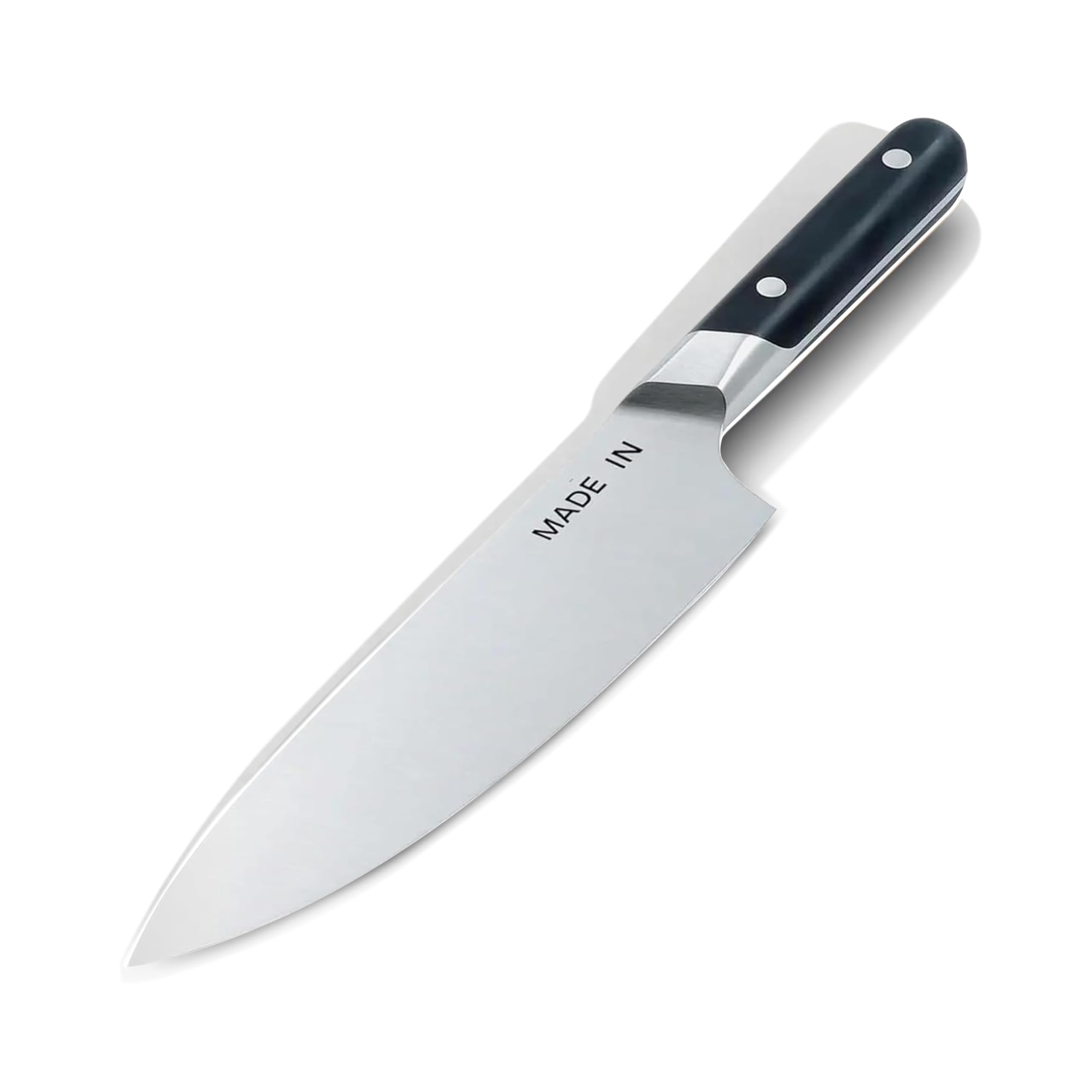
Forged by a fifth-generation bladesmith in Thiers, France, this knife uses nitrogen-treated X50CrMoV15 stainless steel—a treatment that boosts hardness and corrosion resistance beyond standard European formulas. The 8.5-inch blade offers a full inch of extra cutting length over the standard 8-inch category, which translates to cleaner, longer slices through large squash or whole roasts.
The full-tang design is perfectly balanced at the pinch point, giving you precise control without the handle pulling down during delicate work. At 8 ounces, it feels substantial but never cumbersome, and the POM handle resists moisture without becoming slippery. Users consistently report that this knife holds its factory edge for weeks with only occasional stropping.
The bolster is absent, which means the entire edge can be sharpened from heel to tip without interference—a practical advantage for anyone who plans to maintain their own tools. The included packaging is cleverly humorous, but the knife itself is dead serious about performance.
Why it’s great
- Nitrogen-treated steel offers exceptional edge retention in the mid-range
- Absent bolster allows easy full-edge sharpening
- Ideal 8.5-inch length for versatile prep work
Good to know
- POM handle may feel slick to some users compared to textured rubber
- Hand wash only—dishwasher will dull and damage the blade
2. WÜSTHOF 8″ Gourmet Chef’s Knife

WÜSTHOF’s Gourmet series is stamped from high-carbon stainless steel, but don’t let the construction method mislead you—this is a precision-ground blade with a laser-controlled edge that arrives incredibly sharp. At 240 grams, it’s lighter than forged German knives, which makes it an excellent choice for cooks who favor speed and agility over brute-force chopping.
The synthetic polypropylene handle is resistant to fading, heat, and impact. It provides a secure, non-slip grip even during long prep sessions. The blade geometry features a subtle curve that facilitates a natural rocking motion for mincing herbs or dicing onions.
The Gourmet series represents WÜSTHOF’s entry-level line, but the Solingen heritage is unmistakable in the fit and finish. The edge is precise and consistent, and the knife feels perfectly neutral in the hand—neither blade-heavy nor handle-heavy.
Why it’s great
- Lightweight design reduces hand fatigue during long prep sessions
- Resists corrosion and staining better than many forged knives
- Comfortable, fade-resistant handle
Good to know
- Stamped construction lacks the heft some cooks prefer for heavy cutting
- Hand wash recommended despite manufacturer’s claim of dishwasher safety
3. KAN Core Professional Chef Knife 8-inch

The KAN Core knife uses a VG-10 Japanese super steel core clad in 66 layers of Damascus stainless steel, achieving a Rockwell hardness of 60 HRC—significantly harder than German steels. This hardness translates to exceptional edge retention; users report needing sharpening only every 3-4 weeks even with daily use. The hammered finish reduces food sticking while adding a stunning visual depth.
Weight is balanced precisely at the pinch point, encouraging a proper blade grip and minimizing hand fatigue. The ebony wood handle is dense, warm, and naturally moisture-resistant, though it will develop a patina over time if not dried promptly. The generous belly curve allows for an efficient rocking chop that feels natural for both right and left-handed users.
This knife arrives shaving sharp out of the box and has been favorably compared to Japanese knives costing twice as much. The included customer support from the owner is notably responsive, with replacements offered for any defects.
Why it’s great
- VG-10 core at 60 HRC delivers superior edge retention
- Perfectly balanced at the pinch point for precision control
- Stunning Damascus pattern with a practical hammered finish
Good to know
- Ebony handle requires care—hand wash and dry immediately
- Harder steel is less forgiving if used to cut through bone or frozen foods
4. ZWILLING Professional S 8-inch Chef’s Knife

ZWILLING’s Professional S is a benchmark in forged German knife design. The special formula high-carbon stainless steel is ice-hardened using the FRIODUR process, resulting in a blade that resists corrosion and holds a 15-degree-per-side edge with impressive resilience. The Sigma Forge process creates a single-piece full tang from bolster to pommel for exceptional balance.
The ergonomic polymer handle features three rivets and is perfectly bonded to the tang, eliminating any gaps where food particles can collect. At 277 grams, it carries a reassuring heft that powers through dense squash and root vegetables without requiring downward pressure. The bolster transitions smoothly into the blade, allowing a comfortable pinch grip.
Owners consistently report this knife outperforms Cutco and other premium brands in sharpness and edge retention. The 57 HRC hardness makes it easier to sharpen at home than harder Japanese steels, making this an excellent choice for cooks who prefer to maintain their own edge.
Why it’s great
- Ice-hardened FRIODUR blade stays sharp longer than standard German steel
- Full tang with seamless handle bond for perfect hygiene and balance
- Softer 57 HRC is easy to sharpen with standard stones or rods
Good to know
- Heavier weight may cause fatigue during very long prep sessions
- Dishwasher safe claim is technically true but hand washing preserves the edge
5. KYOKU Shogun Series 8″ Chef Knife

Kyoku’s Shogun series brings a forged Japanese VG-10 Damascus blade to the mid-range price point. The 67-layer Damascus cladding is cryogenically treated to stabilize the steel structure, then sharpened to an 8-12 degree edge using the traditional three-step Honbazuke method. The result is a knife that glides through produce with almost no resistance.
The fiberglass handle with mosaic pin is designed to withstand cold, heat, and moisture without warping. At 1.39 pounds, this knife is heavier than many Japanese-style blades, giving it a solid, planted feel that appeals to cooks transitioning from German knives. The included sheath and gift case add practical storage value.
Users consistently note that a month of daily use with only stropping maintains its factory sharpness. The generous belly clearance allows for comfortable knuckle clearance during chopping, and the blade’s thin profile excels at precise work like mincing garlic or slicing raw fish.
Why it’s great
- Authentic 67-layer Damascus with a true VG-10 core for excellent edge retention
- Heavier build provides a confident, planted feel during rock-chopping
- Comes with protective sheath and storage case
Good to know
- Fiberglass handle lacks the warmth of natural wood or textured rubber
- Hard blade is more prone to chipping if misused against bones or frozen foods
6. Victorinox Fibrox Pro 8″ Chef’s Knife
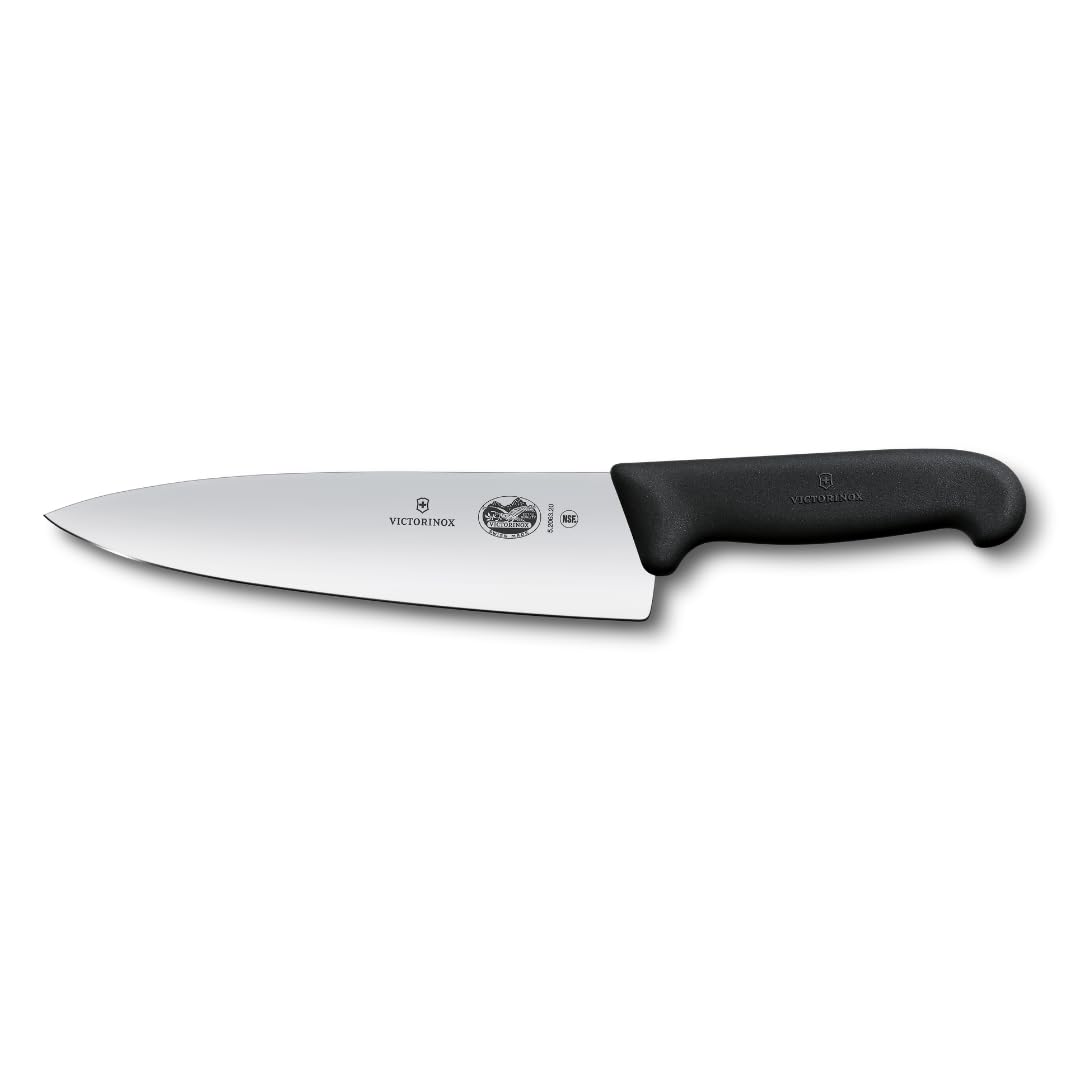
The Victorinox Fibrox Pro is the most recommended budget-friendly chef’s knife in the culinary world, and for good reason. At only 5.7 ounces, it feels almost weightless, reducing hand fatigue dramatically during extended prep sessions. The high-carbon stainless steel blade is laser-tested for a consistent edge that arrives sharp enough to slice through a tomato with no pressure.
The thermoplastic elastomer handle provides a non-slip grip even when your hands are wet or greasy—a feature professional cooks value during high-volume service. The blade profile is versatile, with a gentle curve that works for both push-cutting and rock-chopping. Owners report that the edge holds for 2-3 months of home use before needing a touch-up.
This knife earned the top recommendation from America’s Test Kitchen for years not because it’s the best-looking knife, but because it delivers professional-level cut quality at an entry-level price. The lightweight design makes it especially suitable for cooks with smaller hands or those who prefer a nimble, agile feel.
Why it’s great
- Extremely lightweight design (5.7 oz) minimizes fatigue
- Non-slip TPE handle excels in wet conditions
- Top-rated by America’s Test Kitchen for years
Good to know
- Lacks the balance and heft preferred for heavy chopping or dense squashes
- Stamped blade will dull faster than forged alternatives under heavy use
7. Dexter-Russell 8″ Chef’s Knife S145-10PCP
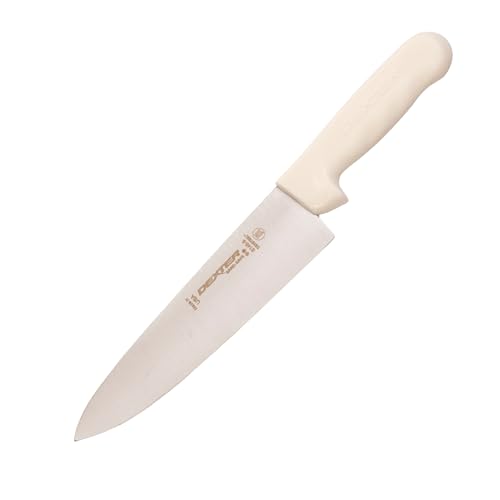
Dexter-Russell has been a name in commercial kitchens for generations, and the S145-10PCP SANI-SAFE knife brings that industrial heritage home. The high-carbon stainless steel blade is individually ground and honed, delivering a sharp edge that professional users trust for breaking down proteins and chopping vegetables in high-volume environments. The 7.2-ounce weight feels nimble and quick.
The white textured polypropylene handle is NSF certified for sanitation standards and offers a secure grip even with wet or gloved hands. The curved blade design facilitates a rocking motion that is efficient for mincing herbs and dicing onions. Users report this knife stays sharp longer than expected for a budget tier, and it holds up well to the abuse of daily commercial use.
This is not a knife for collectors or aesthetic purists—the white handle stains easily and the blade is thin enough to nick if misused. But for a cook who wants a sharp, functional, and affordable tool that performs reliably, the Dexter-Russell is a proven workhorse.
Why it’s great
- NSF certified for professional sanitation requirements
- Lightweight and nimble for fast, repetitive cutting tasks
- Proven durability in commercial kitchen environments
Good to know
- Thin blade can nick or bend if used to cut through bone
- White polypropylene handle stains easily and feels basic in hand
FAQ
What Rockwell hardness is ideal for a chef’s knife?
Can I put my chef’s knife in the dishwasher?
How often should I sharpen my chef’s knife?
Final Thoughts: The Verdict
For most users, the best chef’s knife winner is the Made In Cookware 8″ Chef Knife because its nitrogen-treated French steel, absent bolster, and ideal 8.5-inch length deliver a near-perfect balance of edge retention, balance, and sharpening convenience. If you want a lighter, more agile blade with decades of proven design, grab the WÜSTHOF 8″ Gourmet Chef’s Knife. And for budget-conscious cooks who refuse to compromise on sharpness, nothing beats the Victorinox Fibrox Pro.

Mo Maruf
I created WellFizz to bridge the gap between vague wellness advice and actionable solutions. My mission is simple: to decode the research and give you practical tools you can actually use.
Beyond the data, I am a passionate traveler. I believe that stepping away from the screen to explore new environments is essential for mental clarity and physical vitality.