Our readers keep the lights on and my smoothie glass nicely filled. As an Amazon Associate, I earn from qualifying purchases.
Specs are compiled from manufacturer listings and verified buyer reviews and can change over time — please confirm the key details on the product page before buying.
Dropping your phone into a plastic box and hoping for a real virtual reality experience is a gamble — too many budget headsets deliver blurry lenses, a narrow view that feels like looking through a paper towel roll, and a strap that digs into your skull after ten minutes. The good ones give you a genuinely rich 360-degree view, clear optics you can tune to your own eyesight, and a comfortable fit that lets you watch a full movie or play a round of a game without reaching for the Advil. This guide cuts through the noise to find the cheap VR headset for Android that actually delivers on those promises.
I’m Mohammad Maruf — the founder and writer behind WellFizz. This guide is built by comparing the manufacturers’ published specifications and the patterns across verified customer reviews, so you get each pick’s real strengths and trade-offs instead of marketing spin.
The best budget phone-powered VR viewers are the ones that nail the field of view, lens clarity, and phone compatibility — and the winner here does exactly that. Whether you are after the widest panoramic immersion or the most comfortable marathon-watching session, this breakdown of the best cheap vr headset for android will point you to the right buy.
Our Picks at a Glance


How To Choose The Best Cheap VR Headset For Android
A phone-based VR headset is just a pair of lenses in a box — but the difference between a box that works and a box that makes you motion-sick depends on a few key specs. Here is what to look for.
Field of View (FOV)
This single number determines how much of your peripheral vision is filled. A wider FOV (measured in degrees) means you see less of the black border around the image and feel more like you are inside the scene. Budget headsets range from 100 to 120 degrees; the wider end is always worth chasing.
Phone Compatibility
Not every headset fits every phone. Check the supported screen size range (usually stated in inches) and whether your phone’s camera bump or case forces it out of the tray. Some headsets accept phones up to 7 inches, while others max out at 6.5 inches — a mismatch means either no fit or cut-off edges.
Lens Adjustment (IPD and Focus)
Interpupillary distance (IPD — the space between your eyes) and focal distance adjustments let you tune the lenses to your own face. Without them, you are stuck with whatever blur the factory set. These adjustments are the difference between a headache and an enjoyable session.
Quick Comparison
| Model | Best For | Field of View | Phone Size Range | Controller | Amazon |
|---|---|---|---|---|---|
| Sylpmoplar VR Glasses★ Best Overall | Budget Beginner | 108 degrees | 4.7 to 6.5 inches | Remote Control | Amazon |
| VRG Pro 3D VR GlassesAlso Great | Widest Panoramic View | 120 degrees | 5 to 7 inches | Knob/Button Control | Amazon |
| Haptique 3D VR Headset | Best Comfort & Clarity | 120 degrees | 4.5 to 6.7 inches | Remote Control | Amazon |
| ONN Smartphone Headset | Simple Kickback Viewer | 100 degrees | Generic | App Control | Amazon |
| CoCerKet VR Headset | Ventilated Long Sessions | 120 degrees | 4.7 to 7 inches | Bluetooth Motion-Sensing | Amazon |
| SARLAR 3D VR Headset | Lightweight Comfort | 102 degrees | 4.0 to 6.5 inches | None | Amazon |
| VR SHINECON Headset | Built-In Headphones | 100 degrees | 4.7 to 6 inches | Button/Remote Control | Amazon |
In‑Depth Reviews
1. Sylpmoplar VR Glasses
A no-regrets entry point that includes a remote controller and works with most 4.7-to-6.5-inch phones.
For the buyer who wants to test the VR waters without spending much, the Sylpmoplar is a safe bet that includes everything you need in the box — a remote controller (batteries not included), a cleaning cloth, and a user manual. The field of view is 108 degrees, which is narrower than the 120-degree leaders but still wide enough to feel rich, especially for a first-time user. The lightweight ergonomic design and adjustable side buckles reduce pressure on the face, and the company recommends taking a break every half hour to protect your eyes.
The independent dual lenses support myopia correction up to 600 degrees, so nearsighted users can watch without glasses. Phone compatibility is solid for non-curved smartphones from 4.7 to 6.5 inches, covering the vast majority of Android models. However, one recurring buyer observation is that “large phones (iPhone Max, Note Ultra) cut off edges” — so if you carry a true phablet, the screen edges will be cropped. The remote pairs via Bluetooth but some customers note occasional disconnections, and the headset lacks the sponge or PU leather padding of pricier models, which can cause discomfort during longer sessions.
The overall buyer consensus is that the quality exceeds expectations for the price, with the remote being a genuine bonus at this cost. This is the headset to grab when you are not sure how much VR you will actually use and do not want to over-invest.
Low-risk starter: Includes a remote controller and lens adjustments at a price that leaves room to upgrade later. One real limit: Large phones (over 6.5 inches) may have their edges cut off in the tray, so measure your phone’s screen before buying.
2. 5~7inch VRG Pro 3D VR Glasses
The widest viewing angle in the budget tier that actually uses every pixel of a 6-inch screen.
If you want to feel like you are inside the 360-degree video instead of watching it through a porthole, the VRG Pro is the pick. Its 120-degree wide-angle lens is the widest FOV you will find at this price — with a 120-degree FOV versus the ONN headset’s 100-degree FOV, so the black border practically disappears. The optical trick is a detachable frame that accepts phones up to 7 inches, meaning your Android phablet fits without cropping off the edges. As buyers report, this one “boost 6″ screen use unlike competitors.”
Comfort holds up for extended sessions thanks to a removable sponge eye mask that stays soft against the face and can be cleaned when it gets sweaty. The independent knob controls let you dial in the pupil distance (IPD — the space between your eyes) and the focus, so nearsighted viewers can skip their glasses entirely. The trade-off is that no QR code comes in the box for one-tap app calibration; owners create their own barcode for optimal settings, which adds a few minutes to setup.
The overall crowd sentiment is positive, with a broad base of owners reporting that it works perfectly with Samsung phones right from the start. The thing everyone raves about is how much screen real estate it captures — that 120-degree angle paired with the large phone tray means you are not wasting any of your phone’s display.
What wins people over
- 120-degree FOV is the widest budget option available, giving you a truly rich view.
- Fits phones from 5 to 7 inches, including larger Android phablets.
- Comfortable removable sponge pad and independent IPD/focus knobs for glasses-free use.
The honest trade-offs
- No included QR code for app setup; you will need to find or create one.
- The basic model comes with knob and button control, not a Bluetooth remote.
Your best bet if: you own a larger phone (6 inches or bigger) and want the widest possible field of view without stepping into premium price territory. Reach for this when panoramic immersion is the goal.
Look elsewhere if: you want a plug-and-play kit with a QR code in the box — the VRG Pro needs a few minutes of tinkering to dial in the focus.
3. Haptique 3D VR Headset
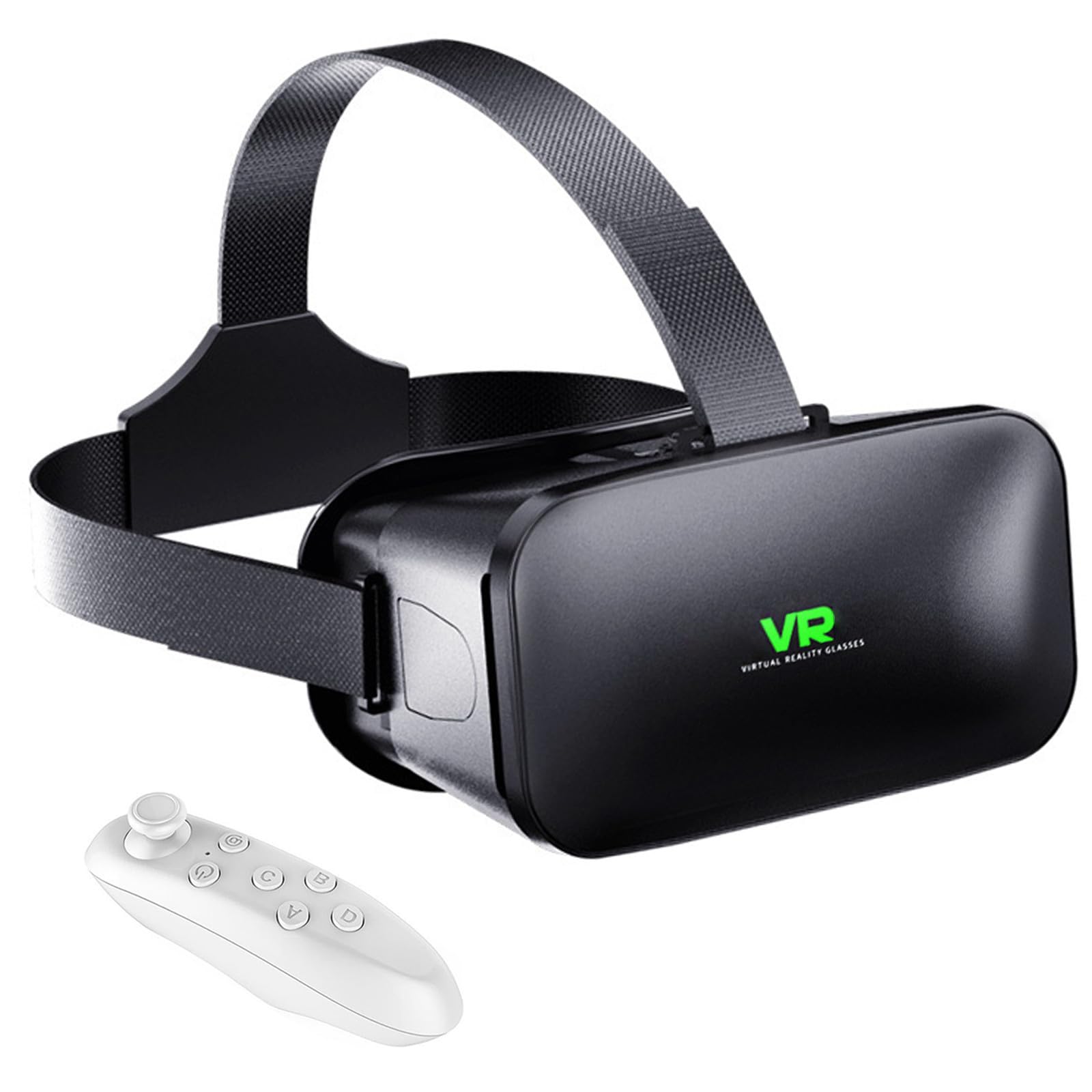
The most comfortable budget headset, with a PU leather face mask and anti-blue light optics.
The Haptique stands apart from the pack with its build quality and comfort touches that feel a tier above the rest. Instead of the usual foam that soaks up sweat, the face mask is made from soft, breathable PU leather (a synthetic leather that is easy to wipe clean) — and the double spherical optical lenses include an anti-blue light coating to reduce eye fatigue during a long movie. At 120 degrees, the FOV matches the VRG Pro, giving you that same wide, rich window into 360-degree video.
Phone compatibility is broad at 4.5 to 6.7 inches, but the standout detail is that it accommodates a Samsung Galaxy A32 5G with its case still on — a rare courtesy that saves you the hassle of popping the case every time. The included remote controller handles volume and playback, though some owners mention the remote does not always pair smoothly and that you may need to start videos manually. The interpupillary and focus adjustments are there, giving you the same glasses-free experience as the top pick.
What wins people over is the combination of clear optics and the plush, comfortable head strap that makes this a solid introductory VR viewer for both adults and kids. The crowd gives it strong marks for comfort and lens clarity, with the only real friction being the finicky remote and the lack of an included QR code for Google Cardboard apps.
Why it stands out
- Soft PU leather mask is comfortable for long wear and easy to clean.
- Anti-blue light coating on the lenses helps reduce eye strain during longer sessions.
- Large phone slot fits many phones with a protective case still attached.
The catch
- The included remote control is hit-or-miss; some owners find it unresponsive.
- No QR code in the box for easy app calibration.
Reach for this when: comfort and eye protection matter most — the PU leather mask and anti-blue light lenses make this the gentlest budget headset for movie binges.
Think twice if: you rely on a flawless Bluetooth remote; the Haptique’s controller gets mixed reviews for reliability.
4. ONN Smartphone Headset

The simplest VR viewer available — no frills, just a padded face guard and adjustable straps.
The ONN headset strips the concept down to its bare essentials: a sweatproof padded face guard, optical lenses, an adjustable comfort strap, and a phone cradle. There is no remote controller, no Bluetooth pairing, no fancy features — you snap your phone into the cradle and watch. The field of view is 100 degrees, which is the narrowest in this lineup and noticeably more tunnel-like than the 120-degree models, but still enough for casual 360-video viewing. The whole unit is light and straightforward, making it a decent choice for a child or someone who just wants to dip a toe in.
among the most-discussed points among owners is the build quality of the sliding phone tray — a few units arrived with a broken white slider, though most owners found it easy to fix without extra parts. The comfort fit is generally praised, and the padded face guard blocks out ambient light well. At this FOV and feature level, the ONN is best understood as a minimalist entry point that does exactly what it says on the box: it holds your phone in front of your eyes. It is not trying to compete with the FOV or lens quality of the more advanced picks.
Best for a kid or a one-time user: Simple, cheap, and sweatproof, with no setup complexity. The honest limitation: The 100-degree FOV feels noticeably boxier than the 120-degree options, and the plastic sliders are fragile — treat them gently.
5. CoCerKet VR Headset
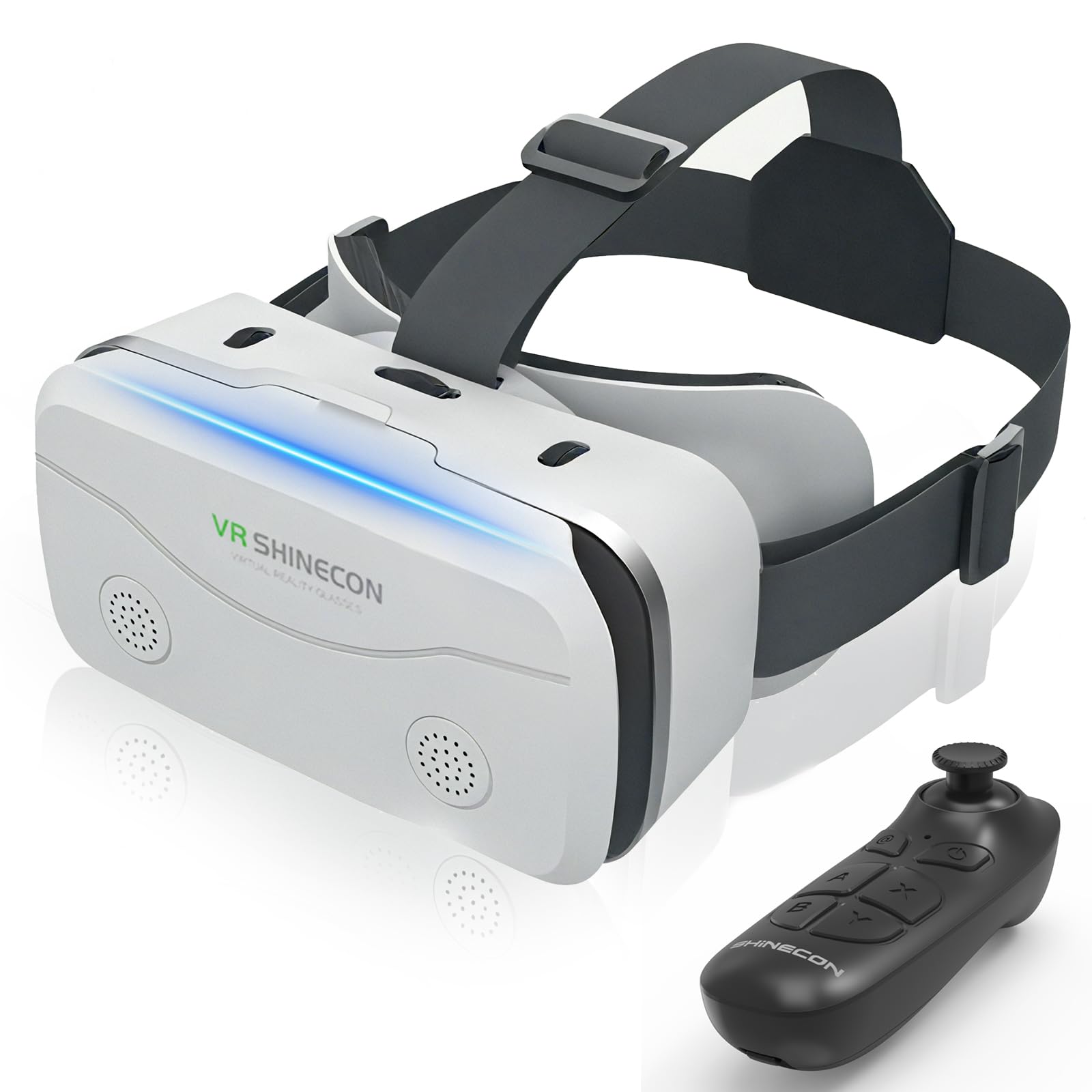
The breathable foam padding and heat-dissipating design make this the best pick for marathon VR sessions.
Getting hot and sweaty inside a VR headset is a common complaint, and the CoCerKet directly addresses it with a ventilated design using breathable sponge padding and a three-axis fixed headband that keeps the unit stable without clamping down. The result is a noticeably cooler experience during longer movie binges or gaming sessions. The 120-degree aspirated optics (aspherical lenses reduce distortion at the edges compared to standard spherical lenses) and a 1080p high-resolution display target mean the image is clear across the entire view — no blurry edges.
The Bluetooth motion-sensing controller uses a high-precision sensor for responsive input, and the phone tray accepts devices from 4.7 to 7 inches The catch is reliability: while some reviewers point out the headset exceeded expectations with clear lenses and a quick-connecting controller, others found the controller unusable or the product difficult to open. The quality feedback is split, making this a higher-variance pick than the top-rated Haptique.
Go long with this one: If you plan to watch full movies or play games for an hour or more, the ventilation and breathable headband are a real comfort advantage. Know before you buy: The Bluetooth controller gets mixed reviews for reliability — some units pair well, others do not work at all.
6. SARLAR 3D VR Headset
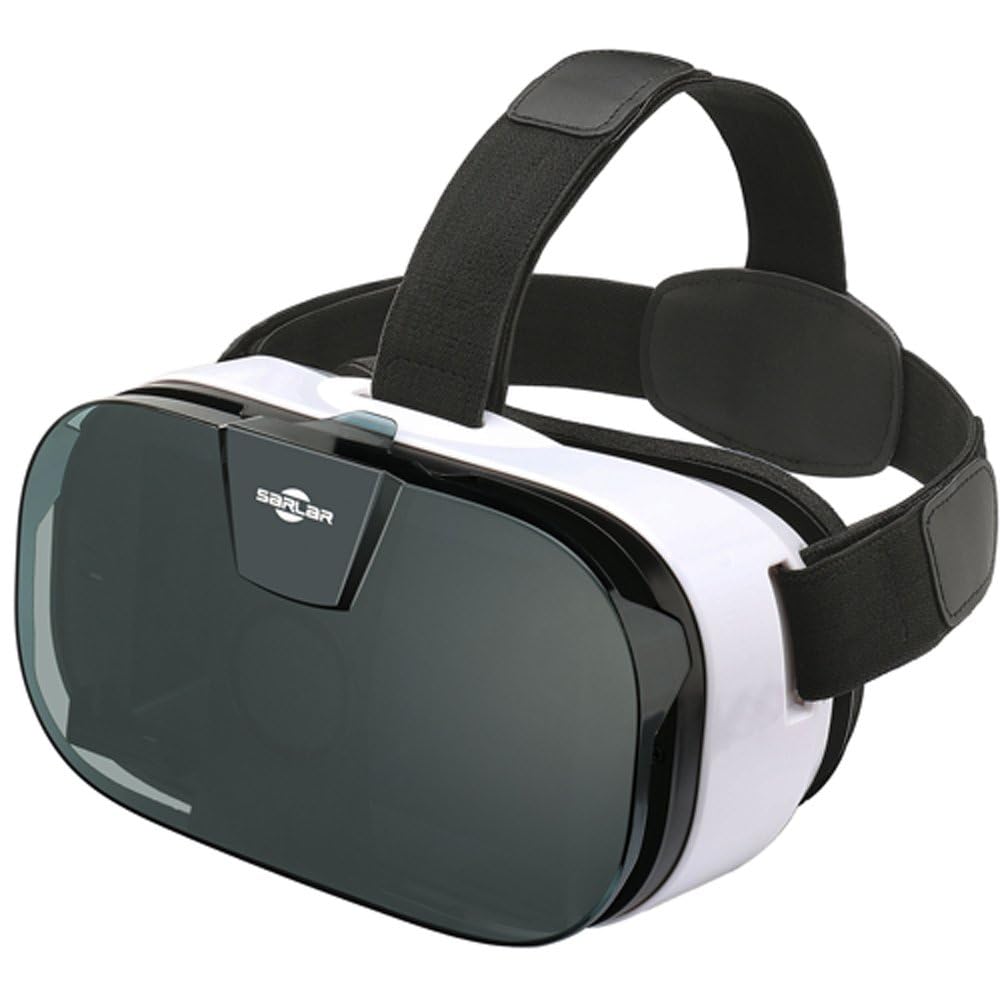
The featherlight design at 9.28 ounces that you barely notice on your head during a full movie.
Weight is the enemy of comfort in VR, and the SARLAR is the lightest unit in this lineup at just 9.28 ounces. The extra cushioning around the eyes and nose bridge distributes that weight evenly, and the Velcro straps adjust to fit any head size securely. The field of view is 102 degrees, versus the ONN headset’s 100 degrees and the 120-degree class leaders, and the screen is magnified by 5.2 times for a panoramic feel. The aspheric lens technology reduces distortion, though several shoppers say the lens quality is not the sharpest, causing eye strain for some.
Phone compatibility covers 4.0 to 6.5 inches, which includes the vast majority of Android phones including large models like the Oneplus 6t. The built-in middle-line adjustment calibrates for different phone sizes, and the included protective case adds value. The biggest complaint is the plastic build — it feels fragile and can break if dropped, so this is not the headset for a toddler’s playroom. The overall value pitch is a comfortable, lightweight viewer for a reasonable outlay, provided you manage it carefully.
Your best match if: you prioritize comfort over FOV and want the lightest headset you can put on for a long session — the 9.28-ounce design is genuinely easy to wear. An honest caution: The plastic is fragile, and lens quality is the most common negative feedback; treat it gently.
7. VR SHINECON Headset

The only budget headset with built-in adjustable headphones for an all-in-one audio solution.
No separate earbuds needed — the VR SHINECON integrates adjustable earphones with a 3.5mm audio jack, delivering a stereo sound experience inside the headset itself. The headphones use 3D phase sound technology for spatial audio (audio that feels like it comes from specific directions around you), and the volume and playback controls are built into the bottom of the unit, so you can adjust without fumbling for your phone. The FOV is 100 degrees, which matches the ONN headset, giving you a solid but not panoramic view. The lenses use Japanese SLR optical PMMA material (an acrylic plastic known for its optical clarity) with a 45mm short focal length that is designed to match the natural angle of human eyes.
The biggest talking point across hundreds of owners is the compatibility — or lack thereof. The headset fits phones 4.7 to 6 inches and uses a 3.5mm stereo jack for audio, which is a problem for newer phones that have dropped the headphone port. Many buyers report that the remote controller is essentially useless with modern iOS and Android devices, and the visual quality gets mixed feedback for distortion. The build quality and the headphones themselves, however, are consistently praised. This is a specialized pick for someone with an older phone that still has a 3.5mm jack and who wants a single-unit audio solution.
The unique advantage
- Built-in adjustable headphones with volume controls on the headset itself — no separate audio gear needed.
- Lens adjustments support myopia up to 600 degrees for glasses-free viewing.
The real friction
- Requires a 3.5mm headphone jack on your phone; many modern Android phones do not have one.
- The remote control is widely reported as non-functional with newer phones.
Grab this if: you have an older Android phone with a 3.5mm jack and want a self-contained VR headset with headphones built in — no extra earbuds to carry. skip it if: you own a recent phone without a headphone jack or you expect the Bluetooth remote to work reliably; it is the most compatibility-fussy headset in this roundup.
Understanding the Specs
Field of View (FOV)
The width of the virtual world you see measured in degrees. A 100-degree FOV feels like watching a movie through a diving mask — you see the black plastic border. A 120-degree FOV pushes that border into your peripheral vision, so you feel inside the scene instead of peeking in from the outside. This is the single most important number for immersion in a phone-based VR headset.
IPD (Interpupillary Distance) Adjustment
The distance between your two eyes varies from person to person. Without an IPD slider, the lenses are locked in place and the image will look blurry or cause eye strain for anyone whose eyes are not exactly at that factory setting. An adjustable IPD lets you slide the lenses closer together or farther apart until the image snaps into sharp focus, which is essential for comfortable viewing.
Phone Tray Size
Measured in the supported screen diagonal (like 4.7 to 6.5 inches), this determines whether your phone fits inside the headset. A headset that says 4.7 to 6.5 inches will not accept a 6.8-inch phablet. If your phone is on the large side (6.5 inches or bigger), look for a headset that explicitly supports 7-inch phones — otherwise the edges of your screen will be cut off or the phone simply will not close inside the tray.
Lens Material and Type
Spherical lenses are the cheap standard — they work but cause distortion and blur at the edges of your vision. Aspherical lenses (sometimes called aspirated optics) are flatter and keep the image sharp from the center all the way to the edges. PMMA (acrylic) is a common optical-grade plastic used in budget headsets; it is lighter than glass but can scratch more easily. The lens type directly affects how clear the picture looks across the whole view.
FAQ
Will a cheap VR headset work with my Samsung Galaxy S23?
What is the difference between a 100-degree and a 120-degree FOV?
Can I wear my glasses inside a phone VR headset?
Does a phone VR headset need batteries or charging?
Why does the image look blurry in my new VR headset?
What VR apps should I download for my Android phone?
How long can I safely use a phone VR headset?
Is a phone VR headset worth buying compared to a standalone VR like Meta Quest?
Final Thoughts: The Verdict
For most people, the best cheap vr headset for android winner is the VRG Pro 3D VR Glasses because its 120-degree field of view and 7-inch phone compatibility deliver the most rich experience at the lowest price. If you want the most comfortable build with anti-blue light lens protection, grab the Haptique 3D VR Headset. And for a no-regrets entry point that includes a remote controller and still delivers solid clarity, the Sylpmoplar VR Glasses is the one to reach for.
How We Picked
We do not accept paid placement. Every pick is matched to a real buyer and a real use-case; we do not hands-on test units.
Sources & Methodology
Specifications: manufacturer listings and product documentation. Review insights: verified customer reviews, as of July 2026. Pricing: not shown on this page (it changes often); check the current price via the retailer link.
As an Amazon Associate, WellFizz earns from qualifying purchases. This does not affect which products we feature.
Related Guides

Mo Maruf
I created WellFizz to bridge the gap between vague wellness advice and actionable solutions. My mission is simple: to decode the research and give you practical tools you can actually use.
Beyond the data, I am a passionate traveler. I believe that stepping away from the screen to explore new environments is essential for mental clarity and physical vitality.