Our readers keep the lights on and my smoothie glass nicely filled. As an Amazon Associate, I earn from qualifying purchases.
Finding a miter saw that delivers clean, square cuts without demanding a four-figure investment is the central challenge for any serious DIYer or weekend warrior. The market is flooded with options, but separating a machine that will frustrate you from one that will serve you for years comes down to knowing exactly which compromises are worth making and which ones will ruin your workpiece.
I’m Mohammad Maruf — the founder and writer behind WellFizz. I’ve spent hundreds of hours dissecting the specifications, reading through the engineering details, and analyzing user experiences across the full spectrum of budget and mid-range miter saws to find the ones that actually perform where it counts.
Whether you’re trimming out a room or building a deck, this guide to the best cheap miter saw options will help you invest your money in the features that matter most for precision and durability.
How To Choose The Best Cheap Miter Saw
In this price tier, every dollar saved usually means a feature sacrificed. Knowing which features are essential for your specific work and which are optional marketing gloss will keep you from buying a saw that either underperforms or overpays.
Motor Power and Speed
The motor is the heart of the saw. A 10-amp motor running at 4,800 RPM is adequate for most trim, baseboard, and 2x lumber. A 15-amp motor reaching 5,000 to 5,500 RPM provides better torque for denser hardwoods and faster cuts through thicker stock. In the cheap miter saw category, motors below 10 amps are often underpowered and will bog down on pressure-treated lumber or oak.
Cutting Capacity and Sliding Mechanism
A non-sliding saw can crosscut a 2×8 or 2×10 depending on blade diameter. A sliding saw extends that capacity significantly, allowing you to cut wider boards like 4x4s or even 6x6s in a single pass. However, sliding saws require more bench depth and have more moving parts that can introduce play over time. For typical DIY tasks like cutting baseboards or picture frames, a non-sliding 10-inch saw is plenty. For decking or furniture making with wider stock, a sliding model is the better call.
Miter and Bevel Adjustment
A single-bevel saw tilts the blade in one direction (usually left) for angled cuts, while a compound saw adds a bevel tilt for crown molding and complex joinery. Positive miter detents at common angles (15°, 22.5°, 31.6°, 45°) let you lock in precise angles without measuring each time. Cheap miter saws with loose detents or vague angle markings will waste your time and material — look for models with clear, indexed stops.
Cutline Visibility: Laser vs Shadow Line
Lasers project a red line where the blade will cut, which is helpful but can drift out of calibration. LED shadow lines cast a sharp shadow of the blade’s kerf and are inherently more accurate because they cannot go out of alignment. In the budget segment, a shadow line is rare but superior when present. A laser is still very useful but check reviews for calibration drift.
Quick Comparison
On smaller screens, swipe sideways to see the full table.
| Model | Category | Best For | Key Spec | Amazon |
|---|---|---|---|---|
| Metabo HPT C10FCG2 | Single Bevel | General trim & baseboard | 15 Amp, 5000 RPM, 24.2 lbs | Amazon |
| DOBAMAN DMS01A | Sliding | Wide boards & DIY projects | 15 Amp, Dual Speed, 37.5 lbs | Amazon |
| SKIL MS6306-00 | Sliding | Compact jobs & crown molding | 10 Amp, 4800 RPM, Shadow Line | Amazon |
| Ryobi TS1346 | Single Bevel | DIY furniture & picture frames | 14 Amp, 5500 RPM, LED Cutline | Amazon |
| Genesis GMS1015LC | Single Bevel | Crown molding & fine trim | 15 Amp, 60T Blade, Laser Guide | Amazon |
| Marvtool JS-1013C3 | Sliding | Light occasional use | 15 Amp, 5000 RPM, 25.6 lbs | Amazon |
| Hoteche P805218A | Sliding | Small projects & trim | 15 Amp, 4500 RPM, Laser Guide | Amazon |
| Evolution R210CMS | Compound | Multi-material cutting | 1200W, 8-1/4″ Blade, 12.8 lbs | Amazon |
| Evolution R185SMS+ | Sliding | Metal & wood in one saw | 1500W, 7-1/4″ Blade, Laser Guide | Amazon |
In‑Depth Reviews
1. Metabo HPT C10FCG2
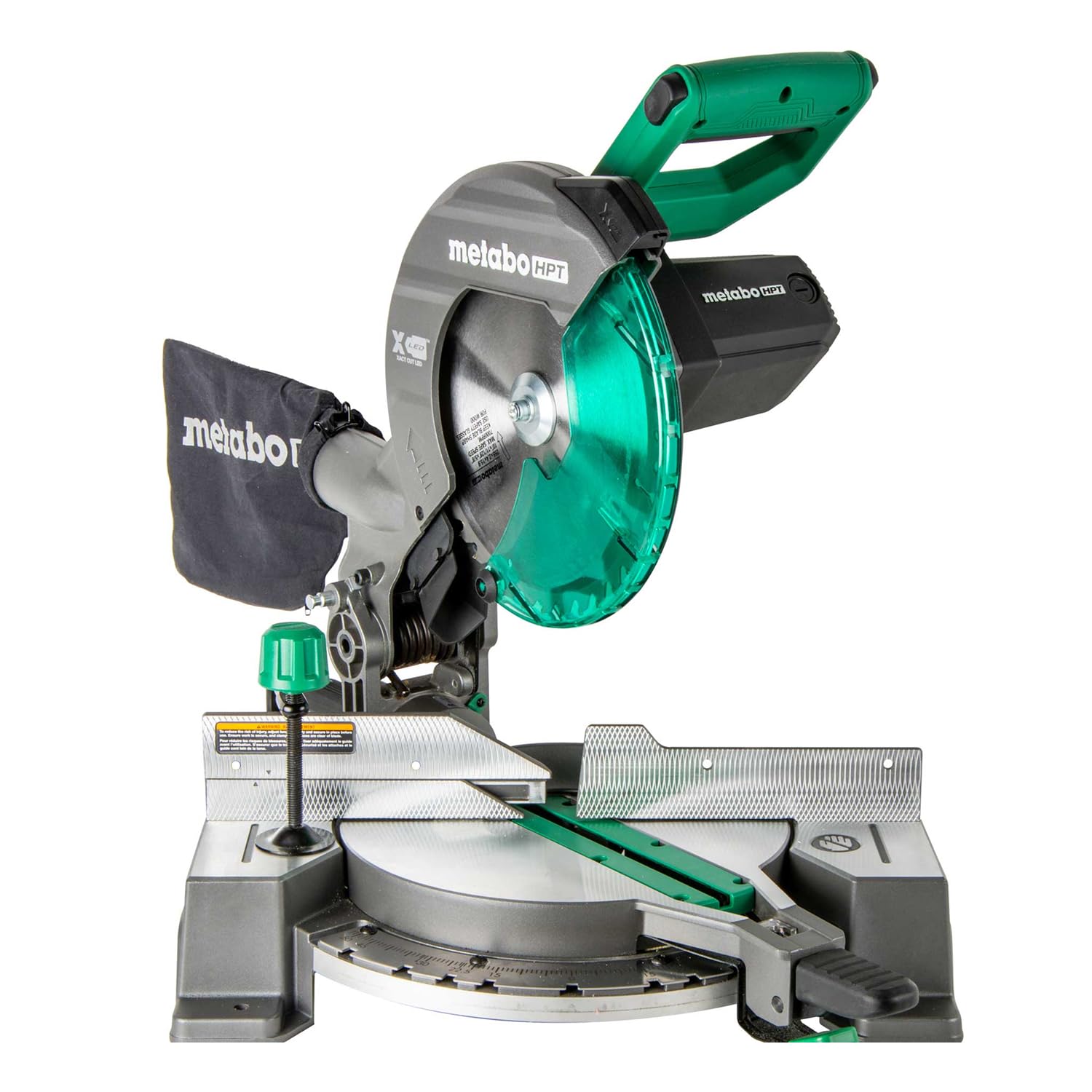
The Metabo HPT C10FCG2 is the benchmark for what a cheap miter saw should be: a 10-inch single bevel compound saw with a 15-amp motor spinning up to 5,000 RPM. At just over 24 pounds, it’s one of the lightest saws in this tier, making it genuinely portable for job site use or moving between the garage and the backyard. The Xact Cut shadow line provides dead-accurate cut indication without the calibration drift that plagues many budget lasers.
Out of the box, users consistently report accurate 90-degree and 45-degree cuts with minimal setup adjustment. The 0-52° miter angle range left and right, combined with a 0-45° bevel tilt to the left, covers all standard trim and framing angles. The vice clamping system holds work securely, and the large table offers stable support for material up to 2×8 dimensions. The included 40-tooth TCT blade is decent for general-purpose cutting, though upgrading to a Diablo blade will noticeably improve finish quality on hardwoods.
The primary trade-off at this price point is dust collection — the small integrated port is adequate but not excellent, and the saw lacks a sliding mechanism, which limits crosscut capacity to about 8 inches nominal. Nevertheless, the 5-year manufacturer warranty and Japanese-engineered reliability make this the safest bet for anyone wanting a no-nonsense, accurate miter saw without overspending.
Why it’s great
- Shadow line guide is inherently accurate and never needs calibration.
- Extremely lightweight at 24.2 lbs for easy transport.
- Powerful 15-amp motor cuts cleanly through hardwoods.
- Preset miter detents at common angles for quick setup.
Good to know
- Dust collection is mediocre; a shop vac improves it marginally.
- No sliding mechanism limits crosscut capacity to around 8 inches.
- Included blade okay for softwood, but upgrade recommended for hardwoods.
2. DOBAMAN DMS01A

The DOBAMAN DMS01A is a sliding compound miter saw that brings a surprising set of features to the mid-range tier. Its 15-amp pure copper motor operates at two speeds — 5,000 RPM for wood and 3,200 RPM for soft metals and PVC — giving you material-specific control that is rare in this price bracket. The 13-inch sliding rail, paired with extendable side tables, allows crosscuts up to 4×13 inches, easily handling 2×10 lumber and larger crown molding.
The ambidextrous design with dual lock switches makes it comfortable for both left- and right-handed operators, a thoughtful touch often reserved for premium saws. The built-in laser guide provides a clear cut line, and the 9 positive miter stops lock into common angles with a satisfying click. It ships with three TCT blades (two 40-tooth, one 48-tooth), covering wood, PVC, and light metal cutting right out of the box. Users report that the saw arrives mostly assembled and cuts accurately with minimal tweaking.
The main compromise is the build quality of the included blades — several users recommend replacing them with a quality Diablo blade for noticeably smoother cuts on dense hardwoods. The laser guide, while convenient, can shift slightly over time and may need periodic recalibration. At 37.5 pounds, it’s heavier than a non-sliding saw but still manageable for bench mounting. For DIYers who need sliding capacity without paying for a name brand, this is a compelling choice.
Why it’s great
- Dual-speed motor optimizes cuts for wood versus metal or PVC.
- Sliding rail delivers up to 13-inch crosscut capacity.
- Ambidextrous design with dual lock switches for all users.
- Comes with three different TCT blades for immediate versatility.
Good to know
- Included blades are entry-level; upgrade for hardwoods.
- Laser guide may need occasional recalibration.
- Heavier than non-sliding saws at 37.5 lbs.
3. SKIL MS6306-00

The SKIL MS6306-00 is a compact sliding miter saw that prioritizes footprint and accuracy over raw power. Its 10-amp motor spins at 4,800 RPM — modest compared to 15-amp competitors — but the fixed compact rail system minimizes the bench depth required, allowing it to sit flush against a wall and work in tight spaces. The LED shadow line delivers exceptional cut-line visibility without the calibration issues of a laser, and it’s accurate right out of the box according to most users.
This saw excels at crosscutting up to 2×10 lumber and nested crown molding up to 3-1/2 inches. The quick miter lock and positive detents at 0°, 15°, 22.5°, 31.6°, and 45° make angle changes fast and repeatable. At under 25 pounds, it’s lightweight enough for a single person to carry between job sites or store on a shelf. Users consistently praise its clean, square cuts on engineered hardwood flooring and salvaged timber, noting that the shadow line is more reliable than the lasers on more expensive saws.
The trade-off is that the 7-1/4-inch blade limits depth of cut compared to 10-inch models, and the 10-amp motor can struggle with heavy pressure-treated lumber or thick hardwoods. Single bevel to the left only means you’ll need to flip the workpiece for compound bevels on the right side. The included carbide blade is fine for general use, but upgrading to a 40-tooth or 60-tooth blade will improve finish on finer work. For anyone who values accuracy and a small footprint, this is a top contender.
Why it’s great
- LED shadow line is more accurate and reliable than lasers.
- Compact rail system saves bench space and allows wall-flush placement.
- Lightweight and easy to carry at under 25 lbs.
- Quick miter lock with positive detents for repeatable angles.
Good to know
- 7-1/4-inch blade limits depth compared to 10-inch saws.
- 10-amp motor lacks torque for thick hardwoods.
- Single bevel only to the left; no right tilt.
4. Ryobi TS1346

The Ryobi TS1346 is a 10-inch compound miter saw that punches above its weight class with a 14-amp motor capable of 5,500 RPM — the highest no-load speed in this roundup. That extra power translates to faster cuts through pressure-treated lumber and dense hardwoods without bogging down. The LED cutline indicator illuminates the kerf area, casting a clear shadow that aligns with the blade path, though it’s not as refined as the shadow line on the SKIL.
Users who replaced the stock 24-tooth carbide blade with a Diablo 80-tooth blade report exceptional finish quality on picture frames and furniture-grade cuts. The factory-set 45-degree miter angle was verified as dead-on by multiple buyers, which speaks to consistent manufacturing tolerances. The 1-1/4-inch dust port connects to a standard shop vac hose, and the included dust bag catches enough debris for occasional use without filling the room with sawdust.
The main drawbacks are its price point, which sits near the top of the budget-friendly tier, and the non-sliding design that limits crosscut capacity to about 8 inches. The single bevel tilts left only, so right-side compound bevels require flipping the workpiece. For a DIYer who plans to build furniture, frames, or shelving, this saw offers the motor power to handle a wide range of materials, but you’ll want to factor in the cost of a better blade.
Why it’s great
- 14-amp motor at 5,500 RPM is the most powerful in this group.
- LED cutline indicator eliminates laser calibration drift.
- Factory 45-degree setting is accurate out of the box.
- Dust port fits standard shop vac hose.
Good to know
- Stock 24-tooth blade is rough; budget for an upgrade.
- Non-sliding, max crosscut around 8 inches.
- Single bevel left only — no right tilt capability.
5. Genesis GMS1015LC

The Genesis GMS1015LC is built around one key advantage: it ships with a 60-tooth carbide-tipped blade installed, giving you fine finish cuts on crown molding, baseboard, and picture frames right out of the box without an immediate upgrade expense. The 15-amp motor delivers ample power, and the electric brake stops the blade in seconds for safety and workflow efficiency. Nine positive miter stops at common angles lock in quickly and hold firm during cutting.
The integrated laser guide projects a red line ahead of the cut, which most users find accurate and helpful, though a few report needing to recalibrate after several months of use. The die-cast aluminum base keeps the saw light enough for occasional relocation, and the two included extension wings provide additional support for longer workpieces. The saw handles 2x4s and 4x4s easily, and the dust bag collects enough to keep the work area reasonably clean, though a shop vac is still recommended for heavy use.
The negative reviews center on the saw’s limitations with metal cutting — heat from metal shavings can melt plastic components, so this is strictly a wood, PVC, and composite saw. The miter detents are plastic and can wear over time, and the laser batteries (included AAA) may need replacement sooner than expected. For a dedicated woodworking saw focused on trim and crown molding, the GMS1015LC offers excellent value with a blade that’s ready for fine work.
Why it’s great
- Includes a high-quality 60-tooth carbide blade for finish cuts.
- Electric brake stops the blade in seconds for safety.
- Die-cast aluminum base is lightweight and accurate.
- Two extension wings support longer boards.
Good to know
- Plastic miter detents can wear with heavy use.
- Not suitable for cutting metal; heat damages components.
- Laser guide may need periodic recalibration.
6. Marvtool JS-1013C3
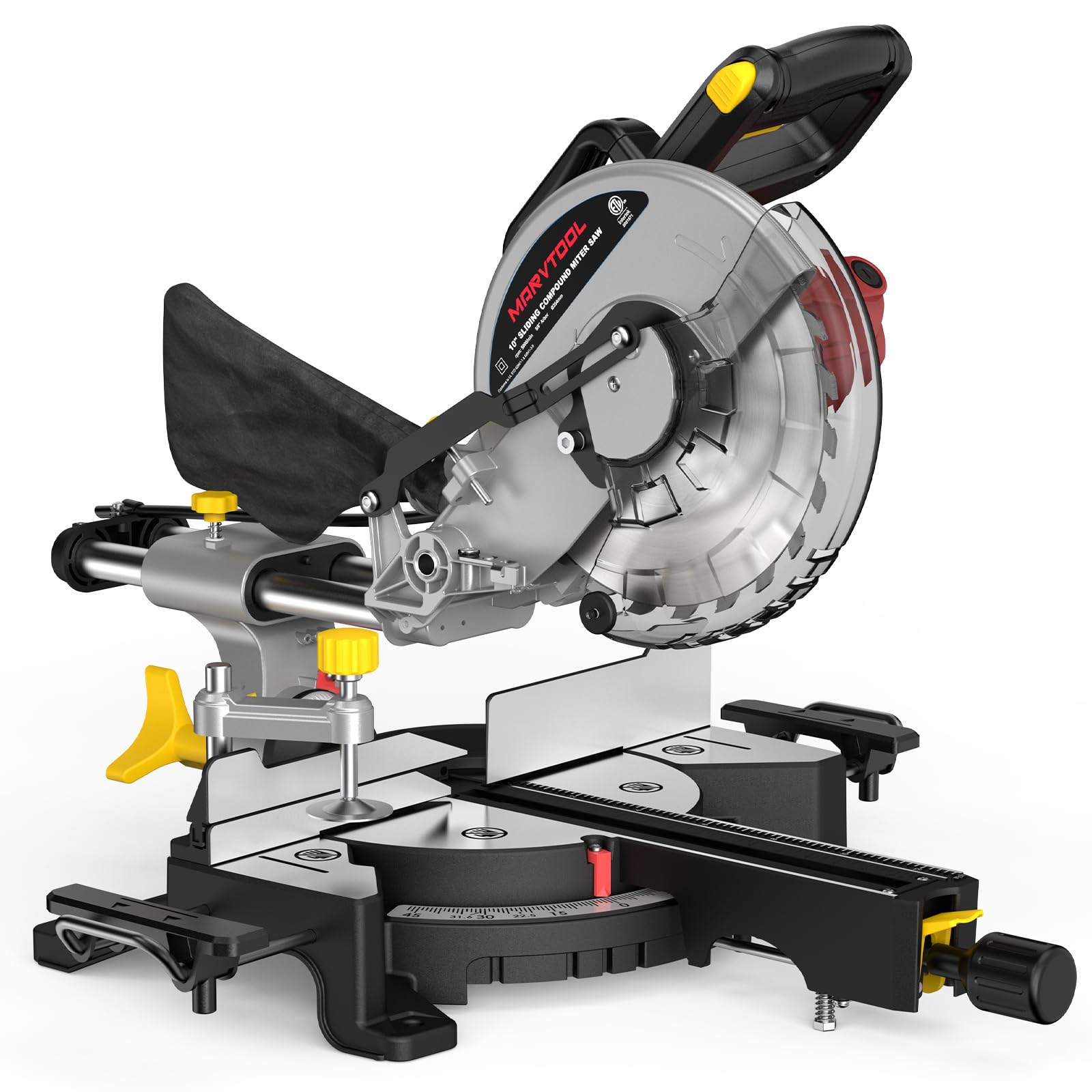
The Marvtool JS-1013C3 is a 10-inch sliding compound miter saw designed for the occasional DIYer who needs sliding capacity without paying a premium. Its 15-amp motor reaches 5,000 RPM, and the sliding rail allows crosscutting of wider boards like 2x10s and 4x4s. At 25.6 pounds, it’s impressively light for a sliding saw, making it easy to move from the garage to the job site or store on a shelf.
Users report that the saw arrives mostly assembled, with the handle packed separately to prevent shipping damage. The pre-installed 36-tooth TCT blade cuts softwoods and hardwoods cleanly for general-purpose work, and the two extension tables offer extra support for longer boards. The single bevel tilts left 0-45°, and the miter base adjusts left and right with positive stops at common angles. The dust collection bag is basic but keeps the area cleaner than no bag at all.
The obvious concession is build quality — the plastic components, including the miter handle and bevel lock, feel less robust than name-brand competitors. There is no laser guide or shadow line, so cut line indication relies on the blade kerf alignment, which takes practice. The extension tables are short and may not adequately support long stock without additional support. For the DIYer who needs a sliding saw for occasional projects and has realistic expectations about material quality, this is a functional entry point.
Why it’s great
- Sliding rail provides wide crosscut capacity for the price.
- Lightweight at 25.6 lbs for a sliding saw.
- 15-amp motor handles most DIY materials.
- Extension tables included for longer workpieces.
Good to know
- No laser or shadow line; cut line requires practice to align.
- Plastic components feel less durable than metal parts.
- Extension tables are short for very long boards.
7. Hoteche P805218A
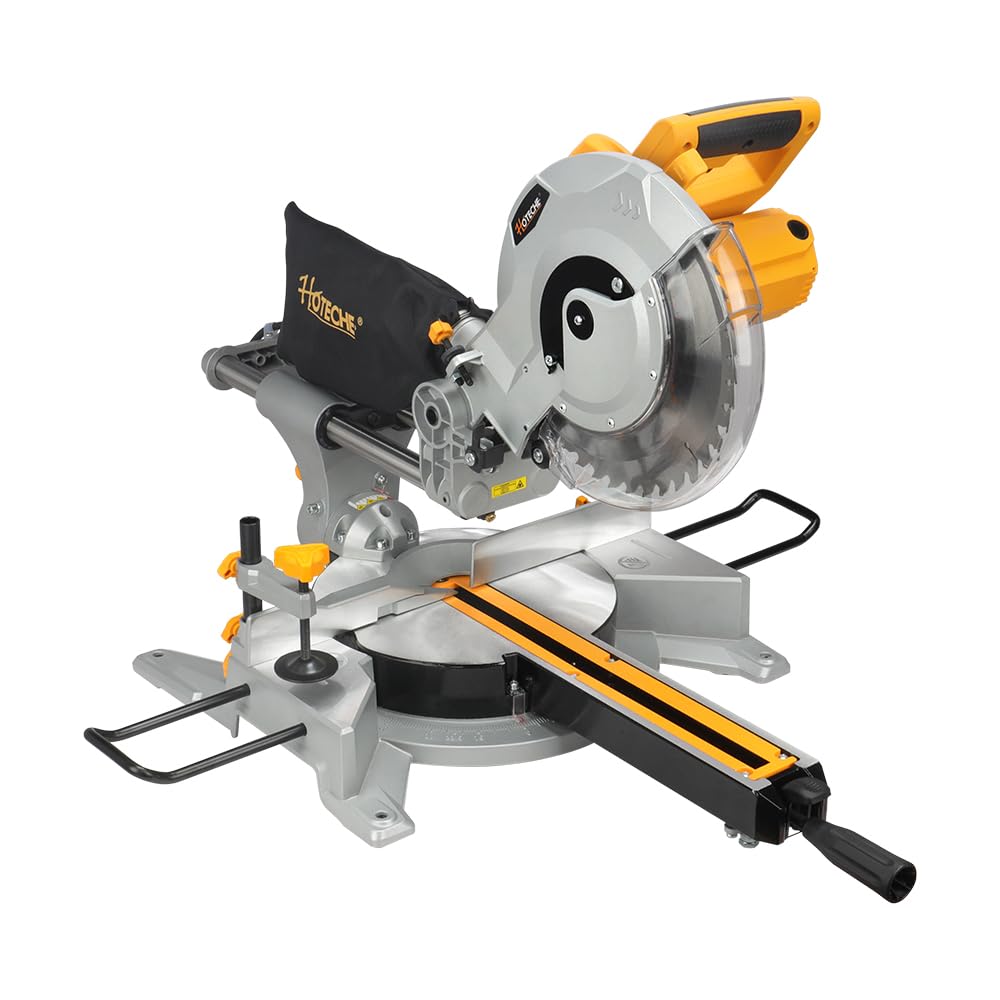
The Hoteche P805218A is a 10-inch sliding compound miter saw powered by an 1800W (approximately 15-amp equivalent) motor running at 4,500 RPM. It’s built for DIYers tackling window casing, baseboard, and small furniture projects. The sliding mechanism extends the crosscut capacity, and the single bevel tilts left 0-45° for compound cuts. A laser guide provides cut line indication, which users report is helpful for alignment once calibrated.
The included accessory kit is generous for the price point: a 40-tooth TCT blade, two hex wrenches, a dust bag, an extension bar, and a pair of extra carbon brushes for motor maintenance. Users note that the saw cuts through 1×2 strips and pine like a hot knife through butter, and the laser sight is genuinely useful for lining up cuts. The G-clamp style work clamp secures the workpiece firmly, though its locking mechanism is somewhat unintuitive at first.
The limitations are practical: the fence is not set back far enough to allow extremely wide cuts, and the 4,500 RPM motor is slightly slower than the 5,000+ RPM competitors, though adequate for most home projects. At 34.9 pounds, it’s heavier than some sliding saws in its tier. The assembly instructions for the locking mechanism are unclear, and some beginners may need to watch a tutorial. For the weekend woodworker who doesn’t need production-level speed, this is a solid, well-equipped sliding saw.
Why it’s great
- Laser guide improves cut line accuracy for beginners.
- Comes with two extra carbon brushes and extension bar.
- Sliding rail increases capacity for wider boards.
- Well-suited for window casing and small trim projects.
Good to know
- Motor speed of 4,500 RPM is slower than some competitors.
- Assembly and locking mechanism instructions are unclear.
- Heavier at 34.9 lbs; less portable than lighter sliding saws.
8. Evolution R210CMS

The Evolution R210CMS is a uniquely compact 8-1/4-inch compound miter saw designed specifically for multi-material cutting. Its 1200W hi-torque motor and patented gearbox system, paired with an included Japanese TCT blade, can cut through steel, aluminum, wood with embedded nails, plastic, and more without generating sparks, heat, or burrs on mild steel. This makes it the go-to choice for anyone who frequently works with metal extrusions, aluminum angles, or rebar.
Users who cut aluminum extrusions like 2020 series report clean, burr-free cuts after a simple setup. The saw is exceptionally easy to set up and use right out of the box. The 45-degree miter angle capability left and right, combined with a 0-45° bevel tilt, covers all standard compound angles. At just 5.8 kg (approximately 12.8 pounds), it’s the lightest saw in this list and can easily be carried in one hand to a job site or stored in a small cabinet.
The downsides are significant for woodworking-focused buyers. The 8-1/4-inch blade limits cutting capacity compared to 10-inch saws, and the small blade means fewer teeth per inch stock, producing a rougher cut on wood unless you swap in a finer blade. The onboard angle markings are useless, according to multiple users, and chips fly everywhere despite the vacuum port — this is a messy saw best used in a workshop with a dedicated dust extractor. For mixed-material jobs where portability is critical, it’s a unique tool, but for pure woodworking, a 10-inch saw is generally better.
Why it’s great
- Cuts steel, aluminum, wood, and plastic with one blade.
- Extremely lightweight at 12.8 lbs for true portability.
- No sparks or burrs when cutting mild steel.
- Convertible arbor can accept standard 5/8-inch blades.
Good to know
- 8-1/4-inch blade limits depth and capacity versus 10-inch saws.
- Very messy; chips fly everywhere without a shop vac.
- Onboard angle markings are inaccurate; verify with a square.
9. Evolution R185SMS+

The Evolution R185SMS+ takes the multi-material cutting DNA of the R210CMS and adds a sliding mechanism and a more powerful 1500W motor. This is a 7-1/4-inch sliding compound miter saw with a 50-50 degree miter range and a 0-45 degree bevel tilt. The included premium Japanese TCT blade is designed for cutting steel, aluminum, wood with embedded nails, and plastic with virtually no sparks or heat when cutting mild steel, just like its smaller sibling.
The sliding rail increases the crosscut capacity significantly, allowing you to cut wider workpieces such as 4×4 posts or larger metal extrusions. The laser cutting guide provides a clear reference line, and the carry handle makes it easy to transport. The build quality is notably better than many budget sliding saws — users praise the smooth ball bearing slides and the robust motor that handles thick steel without bogging down. Evolution backs it with a 3-year limited warranty.
The trade-off is the 7-1/4-inch blade, which limits the maximum depth of cut compared to 10-inch saws, making it less ideal for thick hardwoods or large dimensional lumber. The laser guide, while present, is a secondary feature and isn’t as refined as the shadow lines found on some pure woodworking saws. The saw excels in its niche: the handyman or fabricator who needs one saw to cut steel conduit, aluminum angles, and pressure-treated lumber on the same day. For pure woodworking, a dedicated wood saw with a larger blade will offer better finish and capacity.
Why it’s great
- Sliding rail provides extra crosscut capacity for wider workpieces.
- Cuts steel, aluminum, and wood without changing blades.
- Smooth ball bearing slides and robust motor.
- 3-year warranty and good customer support from Evolution.
Good to know
- 7-1/4-inch blade limits depth; less suitable for thick lumber.
- Laser guide is secondary; not as accurate as shadow line.
- Plastic components near the blade may melt from metal shavings.
FAQ
Can I cut metal with a cheap miter saw designed for wood?
How important is the included blade on a budget miter saw?
What does single bevel mean and why does it matter for crown molding?
Final Thoughts: The Verdict
For most users, the best cheap miter saw winner is the Metabo HPT C10FCG2 because it combines a powerful 15-amp motor, a reliable shadow line guide, and a lightweight chassis at a price that’s hard to beat. If you need sliding capacity for wider boards and don’t mind a few more pounds, grab the DOBAMAN DMS01A. And for the mixed-material worker who cuts steel and wood in equal measure, nothing beats the Evolution R185SMS+.

Mo Maruf
I created WellFizz to bridge the gap between vague wellness advice and actionable solutions. My mission is simple: to decode the research and give you practical tools you can actually use.
Beyond the data, I am a passionate traveler. I believe that stepping away from the screen to explore new environments is essential for mental clarity and physical vitality.