Our readers keep the lights on and my smoothie glass nicely filled. As an Amazon Associate, I earn from qualifying purchases.
Landing the right processor without draining your wallet is the single most critical decision in a budget PC build. A weak CPU creates a bottleneck that no amount of GPU horsepower can fix, while overspending on cores you don’t need leaves less room for the parts that actually boost gaming performance. The trick is knowing which specs directly translate to real-world speed for your specific workload.
I’m Mohammad Maruf — the founder and writer behind WellFizz. I’ve spent hundreds of hours analyzing CPU benchmarks, spec sheets, and real-world gaming data to find which affordable processors deliver genuine value without hidden compromises.
This roundup breaks down the best options for gamers, streamers, and productivity users who need maximum performance per dollar when shopping for a best cheap cpu that fits their specific build and budget.
How To Choose The Best Cheap CPU
Budgets are tight, but a poorly chosen processor can cost you more in frustration and forced upgrades down the line. Focus on the specs that actually dictate real-world performance rather than marketing buzzwords. Here is how to narrow the field.
Core and Thread Count: Match to Your Workload
A 6-core, 12-thread CPU hits the sweet spot for modern gaming and multitasking. For pure gaming, single-core speed matters more than raw core count — a fast 6-core chip often matches an 8-core in most titles. Content creators or streamers benefit from 8 cores or more. Avoid quad-core processors unless your budget is extremely limited and gaming is light.
Cache Size: The Hidden FPS Booster
L3 cache acts as high-speed memory reserved for frequently used data. More cache reduces the time your CPU spends waiting for data from system RAM, lifting minimum frame rates and reducing stutter. Processors with 32MB or more of L3 cache generally deliver smoother gaming. The Ryzen 5 5600X with 35MB of cache outperforms many competitors with higher clock speeds but smaller caches.
Platform Longevity: AM4 vs. AM5 vs. LGA1700
Socket choice determines your upgrade path. Intel’s LGA1700 platform supports both DDR4 and DDR5, but the socket is considered end-of-life with no new processors expected. AMD’s AM4 platform is mature and affordable with many upgrade options, while AM5 offers future compatibility but requires more expensive DDR5 memory. For a cheap CPU build, AM4 or LGA1700 with DDR4 provides the best value today.
Unlocked vs. Locked: Overclocking Value
“K” or “KF” Intel processors and most AMD Ryzen CPUs are unlocked for overclocking. Overclocking extracts free performance but requires a better cooler and sometimes a higher-end motherboard. Locked CPUs run at their rated boost clocks out of the box and consume less power. For budget builders, a locked CPU with a stock cooler offers a simpler, cheaper path to solid performance.
Quick Comparison
On smaller screens, swipe sideways to see the full table.
| Model | Category | Best For | Key Spec | Amazon |
|---|---|---|---|---|
| AMD Ryzen 5 5600X | Mid-Range | 1080p/1440p Gaming | 35MB Cache, 65W TDP | Amazon |
| AMD Ryzen 5 7600X | Mid-Range | Future-Proof AM5 Builds | 38MB Cache, 5.3 GHz Boost | Amazon |
| Intel Core i5-12600KF | Mid-Range | Hybrid Performance & Gaming | 10 Cores (6P+4E), 4.9 GHz | Amazon |
| AMD Ryzen 7 5800XT | Mid-Range | AM4 Upgrade & Gaming | 8 Cores, 36MB Cache | Amazon |
| AMD Ryzen 9 5900XT | High-End | Multitasking & Streaming | 16 Cores, 72MB Cache | Amazon |
| Intel Core i3-14100F | Budget | Entry-Level Gaming | 4 Cores, 12MB Cache | Amazon |
| Intel Core i5-12600 | Budget | Office & Light Gaming | 6 Cores, 18MB Cache | Amazon |
In‑Depth Reviews
1. AMD Ryzen 5 5600X

The Ryzen 5 5600X has defined the value-for-money standard in budget gaming PCs. Its 6-core, 12-thread Zen 3 architecture delivers a 4.6 GHz max boost clock and a generous 35MB of cache, translating to over 100 FPS in modern titles like Cyberpunk 2077 at 1080p Ultra when paired with a capable GPU. The 65W TDP keeps thermals manageable even with the included Wraith Stealth cooler.
Benchmarks show a Cinebench R23 multi-core score around 11,000 points, placing it ahead of Intel’s 10th-gen i7 chips and matching the i5-12600K in raw gaming throughput. The AM4 platform compatibility means you can drop this into an older B450 or B550 motherboard with a simple BIOS update, making it a drop-in upgrade for existing AMD builders without replacing the entire system.
Real-world performance is consistently smooth. Owners report Shadow of the Tomb Raider hitting approximately 140 FPS at 1080p Ultra, with the stock cooler keeping temperatures in the mid-70s°C under load. The unlocked multiplier allows easy overclocking with a modest aftermarket cooler, pushing all-core clock speeds toward 4.65 GHz without voltage instability.
Why it’s great
- Industry-leading gaming performance per dollar for 1080p and 1440p
- Low 65W TDP runs cool with the bundled cooler
- Drop-in upgrade friendly with AM4 motherboards
Good to know
- No integrated graphics require a dedicated GPU
- Stock cooler adequate for gaming but gets loud under sustained loads
2. AMD Ryzen 5 7600X

The Ryzen 5 7600X brings AMD’s Zen 4 architecture to the mid-range with a 5.3 GHz max boost clock and 38MB of total cache. This 6-core, 12-thread processor sits on the AM5 platform, giving builders access to DDR5 memory and PCIe 5.0 support. The single-core performance is exceptional, allowing it to keep pace with faster, pricier chips in gaming scenarios when paired with a strong GPU like an RTX 4070 Super.
Thermal behavior is the primary consideration here — the 7600X runs hot, with stock configurations hitting 80-85°C under gaming loads even with a quality air cooler. An aftermarket cooler is essentially mandatory, and a 240mm AIO liquid cooler is recommended for sustained multi-core workloads. The AM5 platform does offer a clear upgrade path to future Ryzen 9000-series processors, making this a more future-resilient choice than LGA1700 options.
Gaming performance is outstanding for the tier. Users report silky smooth 1440p gaming in titles like Baldur’s Gate 3 and Cyberpunk 2077 with no CPU-related stutter. The DDR5 support ensures memory bandwidth isn’t a bottleneck, and the PCIe 5.0 lanes allow future GPU upgrades without platform changes. For builders willing to invest in proper cooling and DDR5, this chip delivers premium-tier speed at a mid-range price point.
Why it’s great
- Leading single-core performance for gaming at 5.3 GHz boost
- AM5 platform provides a clear upgrade path to future CPUs
- DDR5 and PCIe 5.0 support for modern builds
Good to know
- Runs hot; an aftermarket cooler is required, preferably liquid
- No cooler included in the package
3. Intel Core i5-12600KF

The Core i5-12600KF uses Intel’s hybrid architecture with six Performance-cores and four Efficient-cores for a total of 16 threads. The 4.9 GHz boost clock and 16MB of L3 cache make it a strong contender for gaming and multitasking. The unlocked multiplier means overclocking is straightforward on Z690 or Z790 boards. Owners report stable undervolts of -0.050V for drastically reduced temperatures.
This processor is a proven runner for shooter games and competitive titles. Upgrading from a 12100F or 12400F yields noticeable gains in multi-threaded workloads. Thermal performance is impressive — users report maximum temperatures of 63°C with a cheap air cooler under normal gaming loads. The LGA1700 platform supports both DDR4 and DDR5, giving builders flexibility to reuse existing memory or upgrade to faster kits.
A critical consideration is the LGA1700 socket’s dead-end status. Intel has confirmed no future processor generations will use this socket, meaning any upgrade will require a new motherboard. Despite this, the 12600KF’s current price makes it an exceptional value for a build intended to last 3-4 years without requiring a CPU swap. The high-frequency P-cores handle gaming effortlessly while the E-cores manage background tasks.
Why it’s great
- Hybrid architecture balances gaming performance and multitasking
- Excellent thermal performance with minimal cooling investment
- Dual DDR4/DDR5 support provides memory flexibility
Good to know
- LGA1700 socket is end-of-life with no future upgrade path
- No integrated graphics require a dedicated GPU
4. AMD Ryzen 7 5800XT

The Ryzen 7 5800XT boosts AMD’s Zen 3 architecture to an 8-core, 16-thread configuration with a 4.8 GHz max boost clock and 36MB of L3 cache. This processor targets gamers who need extra multi-threaded performance for streaming or content creation alongside their gaming sessions. The included Wraith Prism cooler with RGB LED is a step up from the Stealth cooler, but it still struggles under sustained all-core loads.
Thermal behavior is this chip’s defining characteristic. The 5800XT runs hot due to the dense 8-core CCD arrangement — users consistently report that the stock cooler is inadequate, with temperatures exceeding 85°C under extended Cinebench runs. A -30 tower cooler like the Thermalright Assassin X or a 240mm AIO liquid cooler is strongly recommended to unlock the processor’s full potential. Precision Boost Overdrive sees noticeable gains with proper cooling.
As a drop-in upgrade for existing AM4 builds, the 5800XT makes strong sense. Transitioning from a Ryzen 5 5600X or older Zen 2 chip provides a dramatic FPS lift in CPU-bound 1440p titles. The processor handles 1440p gaming with a GPU like the Radeon 6800 without bottlenecks, and the DDR4 compatibility means no memory replacement needed. For builders refreshing an older system, this delivers near-flagship performance on an existing platform.
Why it’s great
- 8 cores provide streaming and productivity headroom
- Drop-in upgrade for existing AM4 motherboards
- Includes Wraith Prism cooler with RGB lighting
Good to know
- Stock cooler is inadequate for sustained multi-core loads
- Runs hot under Precision Boost Overdrive; aftermarket cooling recommended
5. AMD Ryzen 9 5900XT
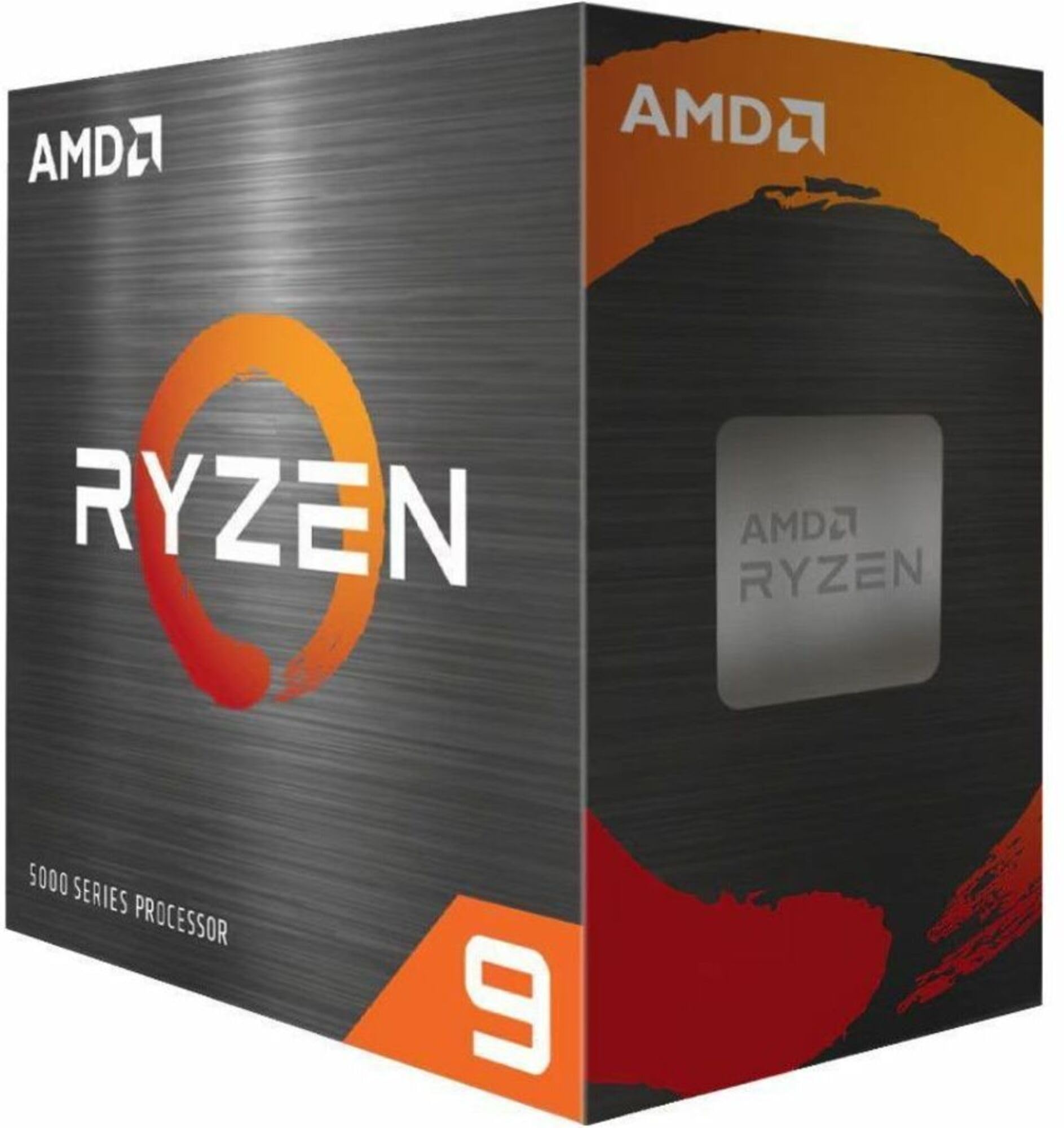
The Ryzen 9 5900XT brings 16 cores and 32 threads of Zen 3 power to the AM4 platform with a 4.8 GHz boost clock and an enormous 72MB of cache. This processor is less about pure gaming and more about workstation-class multi-threaded performance — transcoding, compiling, virtualization, and heavy multitasking are where it shines. The 130W TDP requires robust cooling, with most users opting for a 360mm AIO liquid cooler.
Gaming performance is strong but nuanced. The dual CCD design means games are typically confined to one 8-core CCD, making effective gaming performance similar to a Ryzen 7. Some users report needing to disable the second CCD for reduced latency in competitive titles. The 5900XT runs cooler than the 5950X and offers better multi-threaded performance due to less thermal throttling, making it an efficient choice for CPU-intensive applications like AutoCAD.
Power consumption is high, but the value proposition against the 5700X3D and 5800X3D is compelling. The 5900XT outperforms the 5700X3D in gaming benchmarks while costing less, and the 5800X3D’s roughly 4 percent gaming advantage comes at a significantly higher price. For a mixed-use system that handles AAA gaming, streaming, and productivity, this chip extends the life of a DDR4-based AM4 build with flagship-level multi-threading at a mid-range price.
Why it’s great
- 16 cores deliver exceptional multi-threaded workstation performance
- 72MB cache improves hit rates for data-intensive workloads
- Better value than X3D chips for mixed-use builds
Good to know
- No cooler included; requires a high-end AIO liquid cooler
- Dual CCD design can add latency in some gaming scenarios
6. Intel Core i3-14100F

The Core i3-14100F is Intel’s entry-level gaming champion. Four Performance-cores with eight threads hit 4.7 GHz boost speeds, and the 12MB of L3 cache keeps game loading snappy. The 65W TDP is easily handled by the included RM1 thermal solution. Owners report booting Windows 11 in roughly 8 seconds from an NVMe drive, with smooth 60 FPS gameplay in titles like Hogwarts Legacy and Baldur’s Gate 3 when paired with a mid-range GPU like an RX 580 or Arc A580.
DDR4 and DDR5 memory support gives this budget chip surprising flexibility. Builders can reuse older DDR4 kits to keep costs down, or opt for faster DDR5 memory for improved performance in memory-sensitive games. The LGA1700 platform compatibility with Intel 600 and 700 series motherboards means pairing options are plentiful, though a BIOS update is required for 600-series boards. The PCIe 5.0 support ensures no storage or GPU bandwidth bottleneck for modern components.
The quad-core limitation is the primary constraint. While the 14100F handles 1080p gaming admirably, CPU-intensive open-world titles or simultaneous streaming and gaming will push it to its limits. Background tasks like Discord, Chrome tabs, and streaming software eat into the thread count, potentially causing stutter in demanding scenarios. For pure budget gaming with a dedicated GPU and no heavy multitasking, it delivers surprisingly capable results for the investment.
Why it’s great
- Excellent price-to-performance for entry-level 1080p gaming
- DDR4 and DDR5 support maximizes motherboard flexibility
- Low power draw is easily managed with the included cooler
Good to know
- Four cores limit multitasking and heavy game performance
- No integrated graphics require a dedicated GPU
7. Intel Core i5-12600

The Core i5-12600 is the locked, integrated-graphics version of Intel’s 12th-gen mid-range. Six cores with 12 threads reach up to 4.80 GHz, and the 18MB of L3 cache provides solid responsiveness for everyday computing. The included Intel UHD Graphics 770 allows for a functional desktop without a dedicated GPU, making this chip ideal for office builds, home theater PCs, or budget systems where a discrete GPU purchase can be deferred.
Gaming performance of the locked i5-12600 closely matches the unlocked 12600KF in most real-world scenarios at 1440p resolution, as the GPU becomes the bottleneck before the CPU. The non-K version runs cooler and consumes less power, making it suitable for smaller cases with limited airflow. The bundled RM1 cooler is adequate for the 65W base power, though sustained loads will benefit from an aftermarket tower cooler for lower noise levels.
A known issue with the LGA1700 socket is the integrated loading mechanism design, which can cause uneven cooler contact and elevated temperatures. Some users recommend a contact frame replacement to ensure optimal thermal transfer. For builders who need integrated graphics for troubleshooting, office work, or light gaming without a dedicated GPU, the i5-12600 provides a capable foundation with the flexibility to add a powerful graphics card later.
Why it’s great
- Integrated graphics eliminate the need for a dedicated GPU initially
- Runs cooler and quieter than unlocked K variants
- Solid 1440p gaming performance when paired with a discrete GPU
Good to know
- LGA1700 ILM design may require a contact frame fix
- No E-cores mean less multitasking headroom than the 12600K
FAQ
Is a 6-core CPU enough for gaming in 2024?
Should I buy a CPU with integrated graphics for a budget build?
Does CPU cache size affect gaming FPS?
Should I buy an AM4 CPU or spend more for AM5?
Final Thoughts: The Verdict
For most users, the best cheap cpu winner is the AMD Ryzen 5 5600X because it delivers class-leading gaming performance with efficient 65W power draw, a generous 35MB cache, and drop-in compatibility with affordable AM4 motherboards. If you want a future-proof platform with DDR5 and PCIe 5.0 support, grab the AMD Ryzen 5 7600X. And for multi-threaded workstation tasks like video transcoding and virtualization, nothing beats the AMD Ryzen 9 5900XT on a budget.

Mo Maruf
I created WellFizz to bridge the gap between vague wellness advice and actionable solutions. My mission is simple: to decode the research and give you practical tools you can actually use.
Beyond the data, I am a passionate traveler. I believe that stepping away from the screen to explore new environments is essential for mental clarity and physical vitality.