Our readers keep the lights on and my smoothie glass nicely filled. As an Amazon Associate, I earn from qualifying purchases.
Carbon fiber filaments promise metal-like stiffness at a fraction of the weight, but moisture sensitivity, nozzle wear, and poor layer adhesion turn many promising prints into a stringy mess. Choosing the wrong CF blend can waste hours of calibration and leave you with brittle, delaminated parts that fail under real stress.
I’m Mohammad Maruf — the founder and writer behind WellFizz. I’ve spent hundreds of hours analyzing material datasheets, cross-referencing extrusion temperatures, and breaking down user stress-test results to find the carbon fiber nylon blends that actually deliver on stiffness without cracking.
After looking closely at tensile strength, heat deflection temperatures, and real-world print reliability across five popular options, I’ve built a clear ranking of the best cf filament choices for engineering-grade, functional parts that won’t let you down.
How To Choose The Best CF Filament
Printed parts need to handle real stress, temperature, and repeated use. Picking a carbon fiber nylon blend means weighing stiffness, heat resistance, printability, and moisture behavior — not just the brand name on the spool.
Base Polymer: PA6 vs. PA12 vs. PAHT
PA6-CF offers the best stiffness-to-price ratio for most functional parts but absorbs moisture quickly, requiring diligent drying. PA12-CF is much less moisture-sensitive, prints more consistently, and is tougher (less brittle), though it typically costs more. PAHT-CF (partially crystalline polyamide) sits in between, offering high heat deflection and lower water absorption than PA6, making it a strong mid-range choice for heat-resistant parts.
Carbon Fiber Percentage
Most CF blends fall between 15% and 20% carbon fiber by weight. Higher fiber content (20%) delivers greater stiffness and dimensional stability but can reduce impact strength and layer adhesion. The 15% blends, like those from YXPOLYER, strike a better balance for parts that see torsional or impact loads rather than pure axial compression.
Printing Requirements
Every carbon fiber nylon filament demands a hardened steel nozzle — brass will erode in a single print. Enclosed printers with chamber temperatures of 50-60°C dramatically reduce warping on large flat parts. A nozzle temperature range of 270-300°C is standard, and a bed temperature of 100-120°C with PVA glue or Magigoo PA ensures first-layer adhesion without lifting.
Quick Comparison
On smaller screens, swipe sideways to see the full table.
| Model | Category | Best For | Key Spec | Amazon |
|---|---|---|---|---|
| Creality Hyper PA6-CF | Premium | Industrial & automotive parts | RFID-equipped; ±0.02mm tolerance | Amazon |
| YXPOLYER PA6-CF | Mid-Range | Lightweight functional prototypes | 15% short carbon fiber content | Amazon |
| ELEGOO PAHT-CF | Mid-Range | High-temp enclosed printer parts | Heat deflection up to 194°C | Amazon |
| Polymaker Fiberon PA612-CF15 | Mid-Range | Low-moisture-sensitive nylon printing | PA612 base; 0.5kg spool | Amazon |
| SUNLU PA6-CF | Budget | High-stiffness parts on a budget | 20% carbon fiber; HDT 209°C | Amazon |
In‑Depth Reviews
1. Creality Hyper PA6-CF
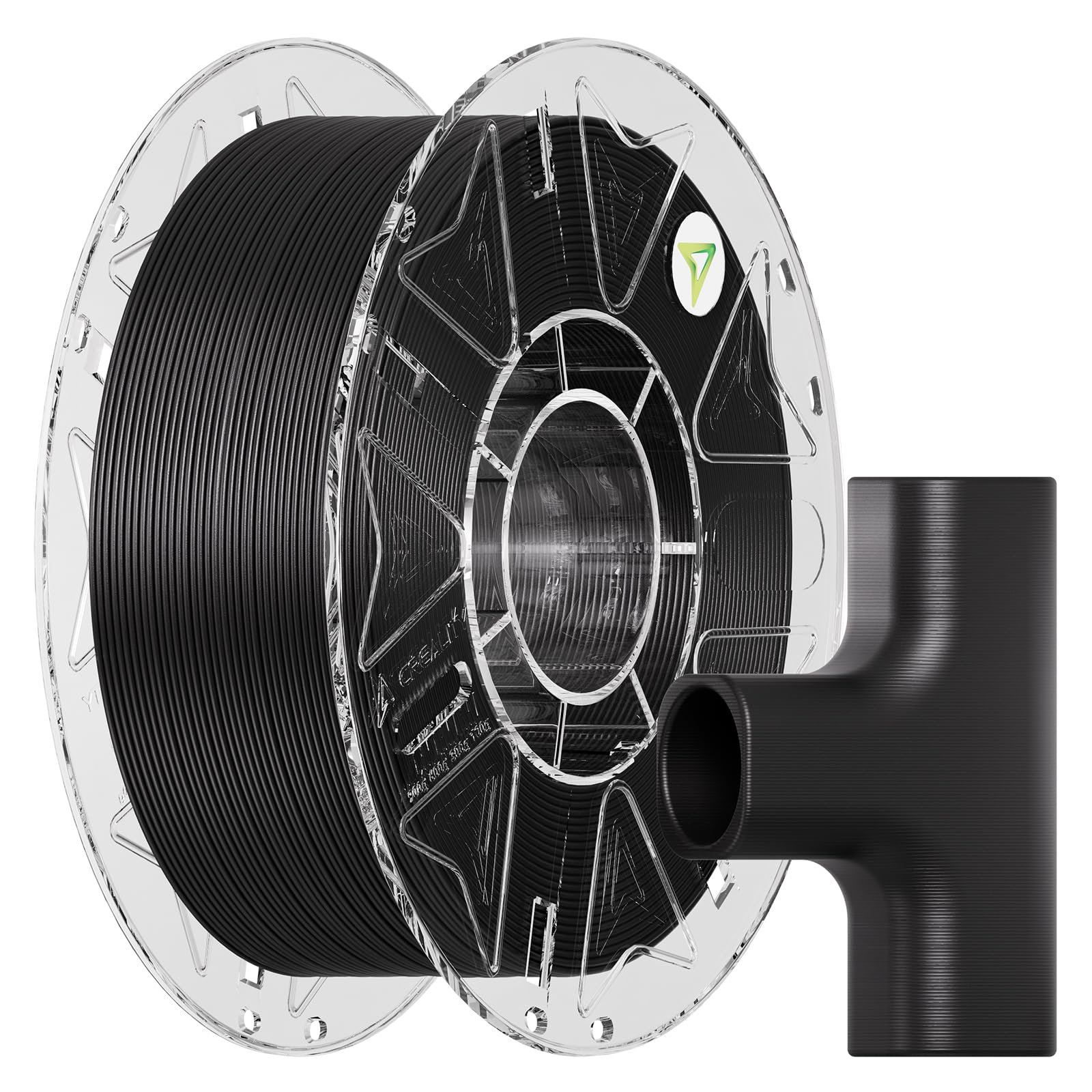
The Creality Hyper PA6-CF is the most complete package for anyone stepping into industrial-grade carbon fiber printing. The RFID chip integration with the Creality Filament System eliminates guesswork — the printer automatically reads optimal temperature and speed settings, which is a massive time-saver for users unfamiliar with dialing in PA6 parameters.
With a heat deflection temperature of 186°C at 0.45 MPa and a diameter tolerance of ±0.02mm, this filament produces dimensionally stable parts that resist deformation under mechanical load and moderate heat. Users report prints coming out perfect straight from the vacuum seal, which suggests excellent quality control at the factory.
Real-world applications shine: motorcycle accessories hold up to weather and vibration without cracking. The carbon fiber reinforcement provides genuine impact resistance, and the low warping tendency makes large flat components feasible even on printers with modest chamber temperatures.
Why it’s great
- RFID auto-tuning for Creality CFS systems
- Very low warping; reliable first layer adhesion
- Excellent stiffness-to-weight ratio for functional parts
Good to know
- Requires hardened steel nozzle (0.6mm recommended)
- Should be dried before use despite good factory packaging
- Premium price tier for a single-kilogram spool
2. YXPOLYER PA6-CF
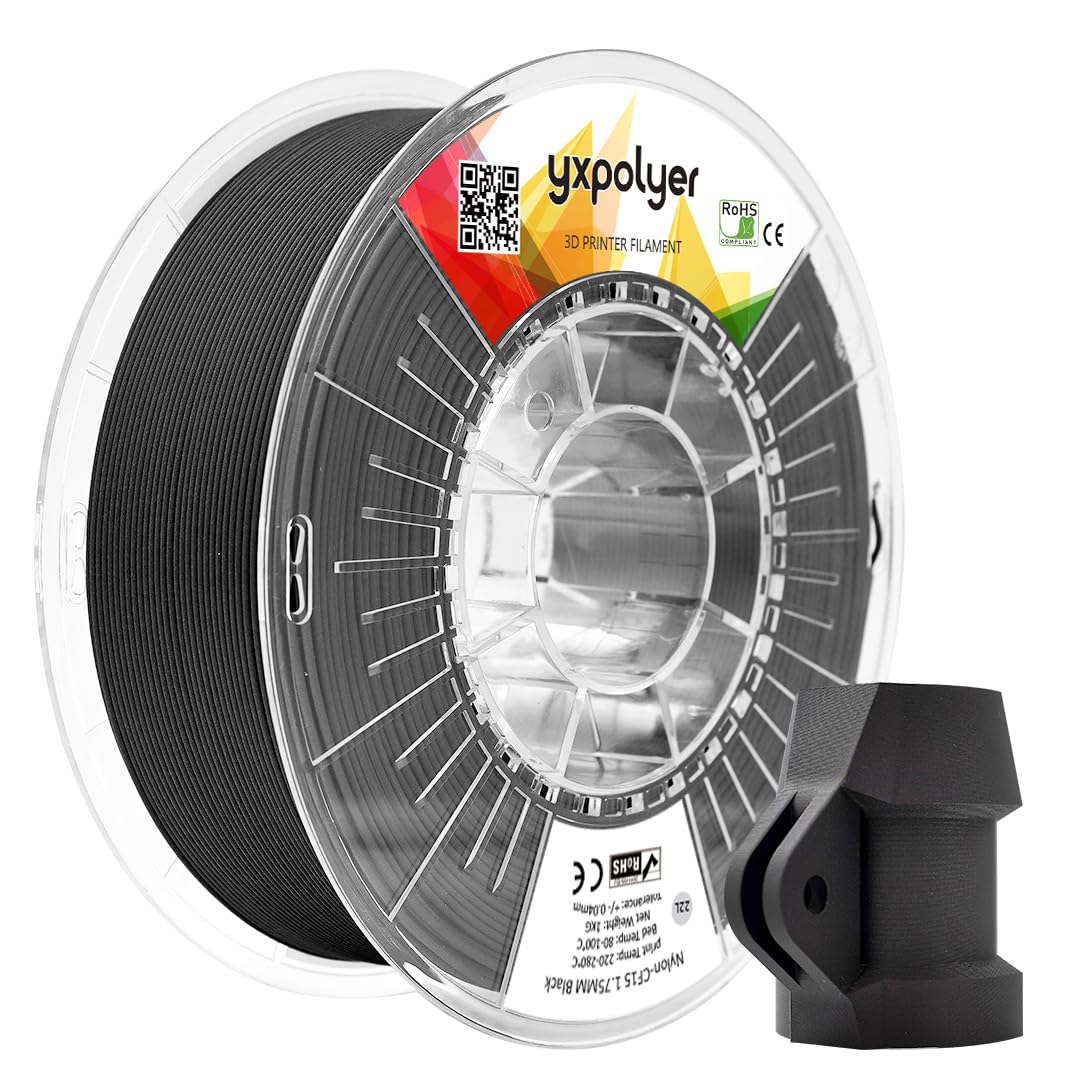
YXPOLYER’s PA6-CF with 15% short carbon fiber strikes a clever balance between stiffness and toughness. Higher fiber loads (20%) can make parts brittle under sudden impact, but this blend retains enough nylon ductility to survive torsional and flexural loads often found in mechanical fixtures and jigs.
The PC spool is a thoughtful touch — it won’t warp or shed dust like cardboard spools during long heated drying cycles. Users printing on open-frame printers with a stainless steel 0.4mm nozzle report results comparable to PLA in terms of ease, which is rare for any nylon-based CF filament. Warping is minimal and easily managed with a brim and PVA glue.
Heat resistance holds up to 200°F over extended periods, and the matte finish takes laser engraving cleanly. While it won’t beat the stiffness of a 20% CF blend, for users who need a part that bends slightly before breaking, this is the smarter choice.
Why it’s great
- Easier to print than most PA6-CF blends
- PC spool survives high-temp drying without deformation
- Excellent toughness for parts under torsional load
Good to know
- Color is a dark grey, not solid black
- One reported nozzle clog after sitting
- Best performance requires an enclosed printer with a 60°C chamber
3. ELEGOO PAHT-CF
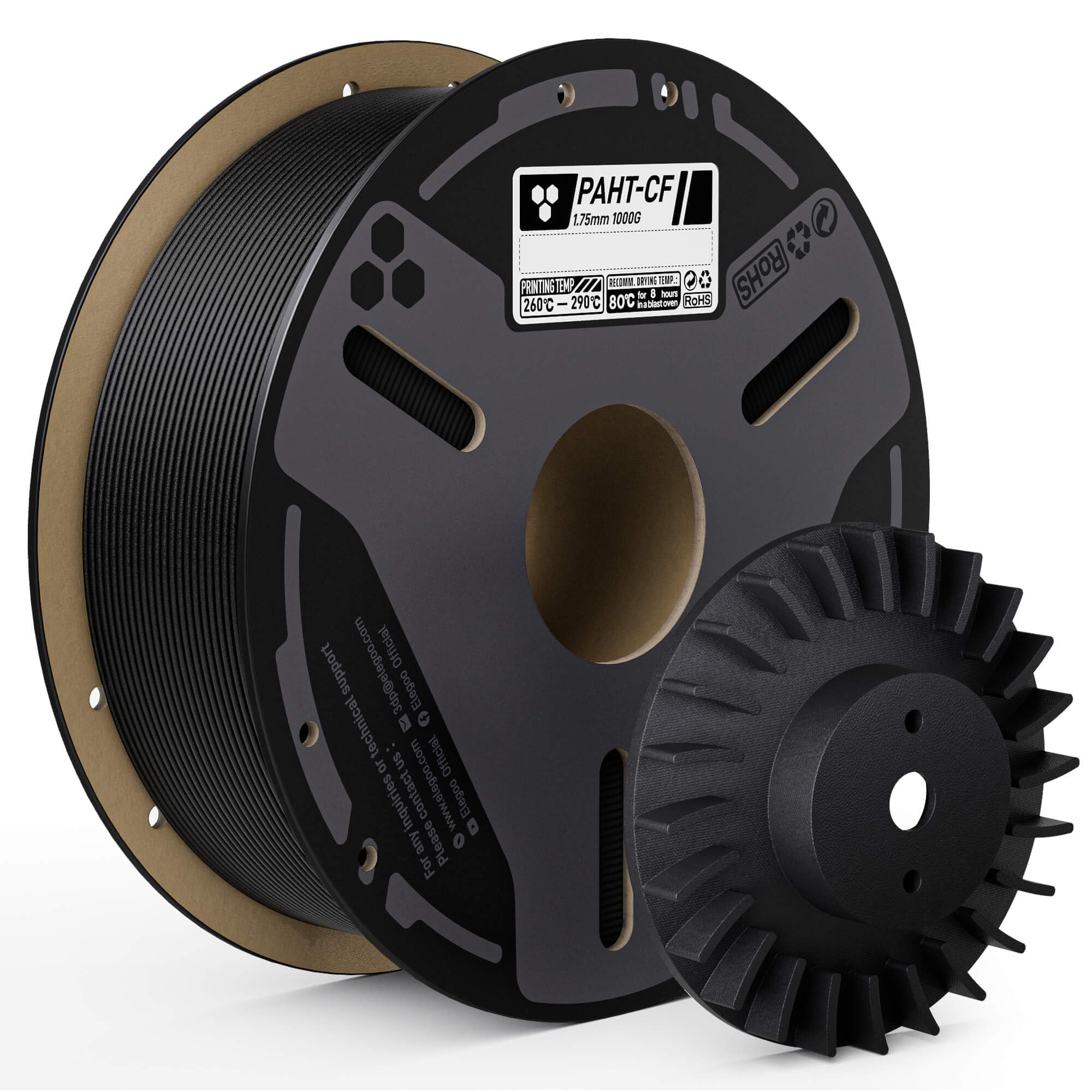
ELEGOO’s PAHT-CF uses a partially crystalline polyamide (PAHT) base that is chemically closer to PA612 than standard PA6. The result is a filament that absorbs significantly less moisture than typical PA6-CF blends, meaning fewer steam pops and less stringing during long prints — a genuine practical advantage for workshops without a dedicated filament dryer.
With a rated heat deflection up to 194°C and a print temperature range of 260-300°C, this material is a strong contender for hot-end components, toolhead shrouds (like the Nevermore filter), and other parts that sit near heated beds or extruders. The dimensional accuracy is excellent out of the box, with users reporting zero calibration failures after proper tuning.
The caveat is that the 194°C heat deflection claim appears optimistic — one user reported sagging at 90°C. Drying thoroughly before printing is non-negotiable, and toxic fumes mean an enclosed printer with proper ventilation is mandatory. For the price, it performs like pricier PPA-CF alternatives.
Why it’s great
- Much lower water absorption than standard PA6-CF
- Excellent layer adhesion and dimensional accuracy after tuning
- Competitive price for a high-temp nylon CF blend
Good to know
- Reported sagging at 90°C contradicts the 194°C spec
- Must be thoroughly dried; factory seal is not sufficient
- Enclosed printer required due to toxic fumes during printing
4. Polymaker Fiberon PA612-CF15

Polymaker’s Fiberon PA612-CF15 is specifically engineered for users frustrated with PA6’s moisture obsession. The PA612 base polymer absorbs significantly less water than PA6 or PA66, so prints are far less prone to the sudden stringing, bubbling, and diameter swelling that plague standard nylon-CF filaments during humid weather.
The 0.5kg spool is a smart admission that not everyone needs a full kilo of a specialized material — especially for prototyping or small-batch functional parts. Dimensional accuracy is top-tier: users report near-perfect Benchy prints straight from the factory packaging, with no stringing, fantastic overhangs, and a stiff, glassy surface finish characteristic of well-printed CF composites.
Layer adhesion is notably strong — reviewers struggled to break the chimney on a test Benchy. The only real trade-off is that the rough carbon fiber surface texture means you’ll want a 0.6mm or larger nozzle to avoid clogs, and gloves are recommended to avoid fiber splinters.
Why it’s great
- Low moisture sensitivity vs. PA6-CF blends
- Near-perfect dimensional accuracy out of the bag
- Excellent layer adhesion and very stiff prints
Good to know
- Only 0.5kg per spool — smaller volume than most competitors
- Rough surface requires hardened steel nozzle (0.6mm+)
- Carbon fibers can splinter; gloves recommended during handling
5. SUNLU PA6-CF
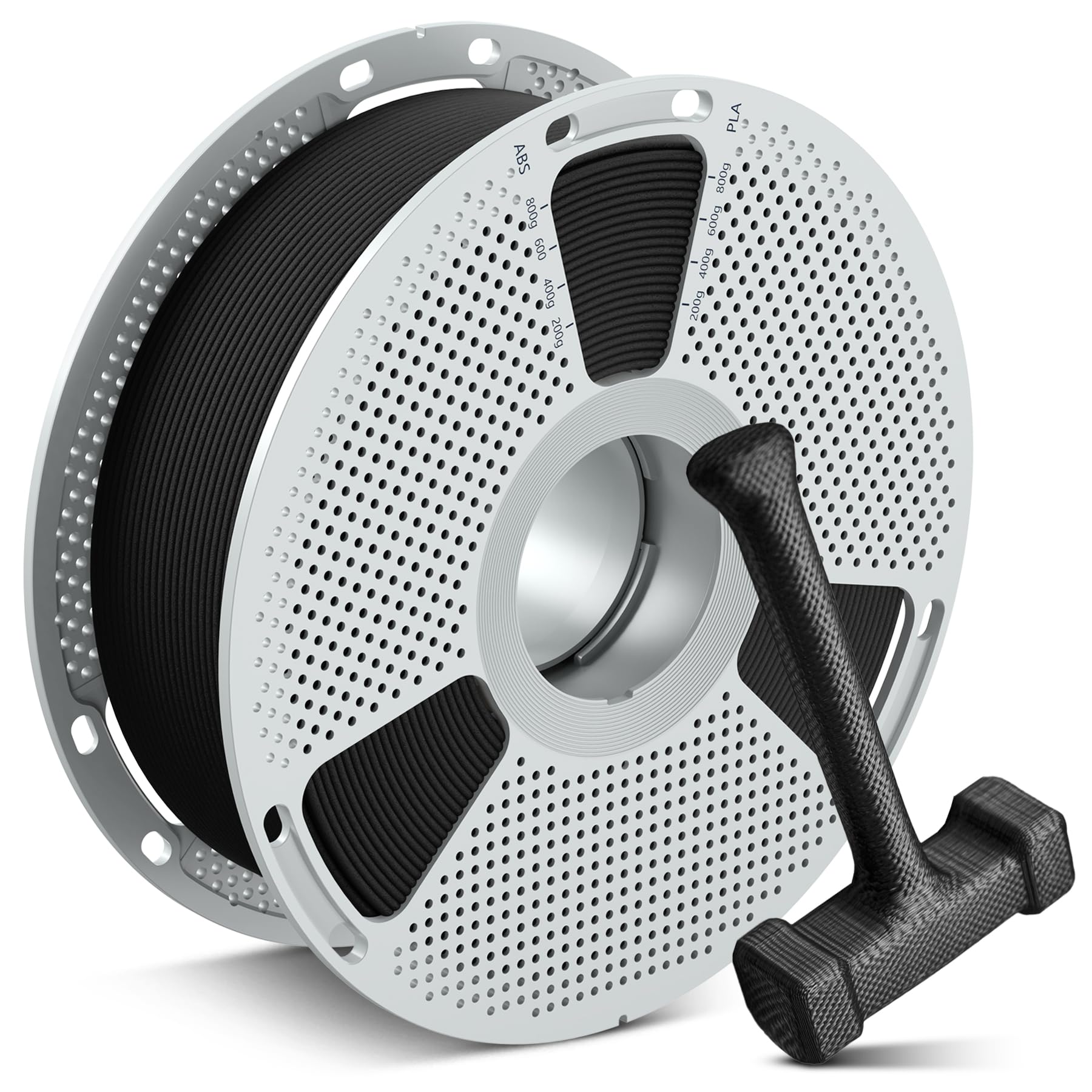
SUNLU’s PA6-CF packs a 20% carbon fiber load into a budget-friendly package, delivering heat deflection up to 209°C — the highest nominal HDT in this lineup. For parts that sit near motors, exhaust components, or hot-end assemblies, this thermal ceiling provides genuine headroom that PLA and standard nylon simply cannot match.
Printing requires discipline: the filament is brittle straight from the wrapper and can snap inside the extruder or AMS if not handled carefully. Users who pre-dry at 180°F for 4-16 hours and print below 100mm/s report flawless results with a matte, stiff finish and excellent layer adhesion. The stiffness is genuinely impressive — one user found their printed part stronger than a metal lathe component in a direct replacement test.
The main risk is consistency: a small number of users report loose spool winding and diameter variance up to 1.89mm, which can cause jams. For the price, it’s a gamble with a high upside — but only if you’re comfortable with aggressive drying and careful spool management.
Why it’s great
- Highest heat deflection (209°C) in the budget tier
- Very low moisture absorption out of the bag
- Excellent stiffness for structural replacement parts
Good to know
- Not compatible with AMS/CFS due to brittleness
- Occasional loose spool winding and diameter inconsistency
- Requires aggressive pre-drying and slow print speeds
FAQ
Do I need an enclosed printer for CF filament?
Can I print CF filament with a brass nozzle?
What’s the difference between PA6-CF and PA12-CF?
Final Thoughts: The Verdict
For most users, the best cf filament winner is the Creality Hyper PA6-CF because it combines RFID auto-configuration, a tight ±0.02mm tolerance, and genuine impact resistance in a package that prints reliably for both beginners and experts. If you want lower water absorption and a more forgiving learning curve, grab the Polymaker Fiberon PA612-CF15. And for budget-driven projects where raw stiffness is the only priority, nothing beats the SUNLU PA6-CF.

Mo Maruf
I created WellFizz to bridge the gap between vague wellness advice and actionable solutions. My mission is simple: to decode the research and give you practical tools you can actually use.
Beyond the data, I am a passionate traveler. I believe that stepping away from the screen to explore new environments is essential for mental clarity and physical vitality.