Our readers keep the lights on and my smoothie glass nicely filled. As an Amazon Associate, I earn from qualifying purchases.
Harsh echoes, reverb that smears dialogue, and the hollow sound of an untreated room are problems that degrade audio clarity and create a stressful environment. Tackling these issues requires material that actually absorbs energy rather than reflecting it, which is where purpose-built acoustic foam steps in.
I’m Mohammad Maruf — the founder and writer behind WellFizz. My market research for this guide involved cross-referencing over a hundred verified buyer experiences, NRC performance claims, and density specs across five leading acoustic panel designs to identify which absorb noise effectively and which just look the part.
To help you cut through the clutter, I have built this guide to the best ceiling tiles for sound absorption, evaluating each option on real-world echo reduction and material integrity.
How To Choose The Best Ceiling Tiles For Sound Absorption
Selecting acoustic ceiling tiles involves more than just matching colors to your decor. The material density, thickness, and installation method directly determine how much echo your room retains. Understanding a few core specifications will save you from buying panels that look the part but fail acoustically.
Thickness and Density
Thicker panels with higher density absorb more acoustic energy across a wider frequency range. Two-inch foam is the standard for treating mid and high frequencies — the ones responsible for echo, reverb, and harsh reflections. One-inch panels can reduce slap echo but leave lower mid-range frequencies untreated. Look for density ratings around 25 kg/m³ or higher for consistent performance.
NRC Rating and Fire Retardancy
The Noise Reduction Coefficient (NRC) measures how much sound a material absorbs on a scale from 0 to 1. An NRC of 0.75 means it absorbs 75% of incident sound. While many foam panels do not publish an exact NRC, 2-inch wedge or pyramid designs typically achieve 0.70–0.85 for mid frequencies. Fire retardancy is non-negotiable for ceiling applications — look for explicit flame-retardant certification to meet building safety standards.
Installation Method and Surface Compatibility
Ceiling installation is trickier than wall mounting because gravity works against adhesive. Self-adhesive backing works well on smooth, clean drywall but fails on textured ceilings. For secure ceiling attachment, mechanical fasteners like T-pins, staples, or spray adhesive are more reliable. If your ceiling is popcorn or heavily textured, plan for an adhesive method that bridges the uneven surface.
Quick Comparison
On smaller screens, swipe sideways to see the full table.
| Model | Category | Best For | Key Spec | Amazon |
|---|---|---|---|---|
| 4 Pack Acoustic Panels 48x24x2″ | Premium | Recording studios & home offices | 2-inch wedge, fast recovery, fire resistant | Amazon |
| 24 Pack Acoustic Foam Panels 2″ | Premium | Multi-room coverage & color matching | Dual-color (12 blue + 12 black), 2-inch thick | Amazon |
| 36 Pack AUSLET Pyramid Panels 2″ | Mid-Range | Home theaters & gaming rooms | Pyramid profile, 36 sq ft coverage, high density | Amazon |
| 4 Pack Egg Crate Panels 48x24x2″ | Mid-Range | Large wall coverage & echo reduction | Egg crate profile, fire retardant, fast recovery | Amazon |
| Acoustic Wall Panels 18-Pack 0.4″ | Entry-Level | Budget room treatment & aesthetic decor | Self-adhesive, brick pattern, 15.75 sq ft coverage | Amazon |
In‑Depth Reviews
1. 4 Pack Acoustic Panels 48 x 24 x 2″ (Black-4 Pack)

These 2-inch thick wedge panels use high-density acoustic foam that recovers its shape in roughly five seconds after unpacking, eliminating the multi-day wait common with other vacuum-sealed foams. The uniform density across the entire foam block ensures consistent sound absorption without soft spots that compromise acoustic performance.
Fire-retardant polyester construction adds a genuine safety layer for ceiling installations where building code compliance matters. Users consistently report significant echo reduction in home offices and recording spaces, with particular effectiveness on mid and high-frequency reflections that muddy microphone clarity and voice chat quality.
Adhesive performance on ceilings is the weak point — some users report panels falling when mounted with included adhesive on textured surfaces. Using T-pins or spray adhesive designed for ceilings is the recommended workaround for permanent installation. The wedge profile offers a professional, low-profile look that blends into studio environments without dominating the visual space.
Why it’s great
- Near-instant foam recovery saves installation time
- Fire-retardant material meets safety standards
- Uniform density provides consistent sound absorption
Good to know
- Adhesive not reliable on textured ceilings
- Ineffective for low-frequency bass trapping alone
2. 24 Pack Acoustic Foam Panels 2″ x 12″ x 12″ (12 blue+12 black)

This 24-pack splits the color palette evenly between blue and black, offering the flexibility to create visual patterns that standard monotone panels lack. Each tile measures the classic 12×12 inch footprint at a full 2-inch thickness, providing the depth needed to absorb mid-range frequencies that cause slap echo in untreated rooms.
The polyurethane foam is rated as flame-retardant and odorless right out of the vacuum pack. Recovery time is industry standard — give the tiles 24 to 48 hours to fully expand in a ventilated area, or speed up the process with a hot water soak followed by a gentle squeeze. Users report that the double-sided tape included in the box is not strong enough for ceiling mounting, with T-pins emerging as the preferred solution for overhead installation.
Customer feedback consistently highlights the effectiveness of these panels for drum room treatment and home office echo reduction. Some units arrive with minor dimensional inconsistencies, but the overall thickness and density deliver solid acoustic improvement for the pack price. The blue panels add a design element that works well in gaming setups and creative studios.
Why it’s great
- Dual-color option enables custom visual layouts
- Full 2-inch thickness for mid-frequency control
- Odorless and flame-retardant construction
Good to know
- Included adhesive tape too weak for ceilings
- Some tiles may have slight size variation
3. 36 Pack AUSLET Acoustic Panels 12 x 12 x 2″

The AUSLET pyramid-profile panels offer 36 square feet of coverage from a single pack, making them a high-value option for treating larger ceiling areas. The 2-inch pyramid peaks provide multiple angled surfaces that scatter and absorb sound energy, which is particularly effective for reducing flutter echo in rooms with parallel walls and hard ceilings.
Made from high-density polyurethane foam rated at either 25 kg/m³ or 30 kg/m³, the material is fire-retardant and environmentally friendly. The vacuum-sealed packaging requires patience — the foam expands to full size within roughly an hour when exposed to air, though some users recommend a gentle fan to speed up the process. No adhesive is included, so you will need to supply your own double-sided tape or spray adhesive for installation.
Customer reports are generally positive for echo reduction in noisy environments like home theaters and rehearsal rooms, with measurable sound transmission reduction observed between adjacent rooms. Quality control is the main variable — a small percentage of packs contain panels that arrived compressed and did not fully recover, though the majority report excellent value for the price. The pyramid aesthetic is more aggressive visually than wedge foam, which may be a consideration for living spaces.
Why it’s great
- 36 panels cover a large area in one purchase
- Pyramid design effectively diffuses flutter echo
- Choice of two density grades for performance tuning
Good to know
- No adhesive included in the package
- Occasional quality variance in foam recovery
4. 4 Pack Egg Crate Panels 48x24x2″
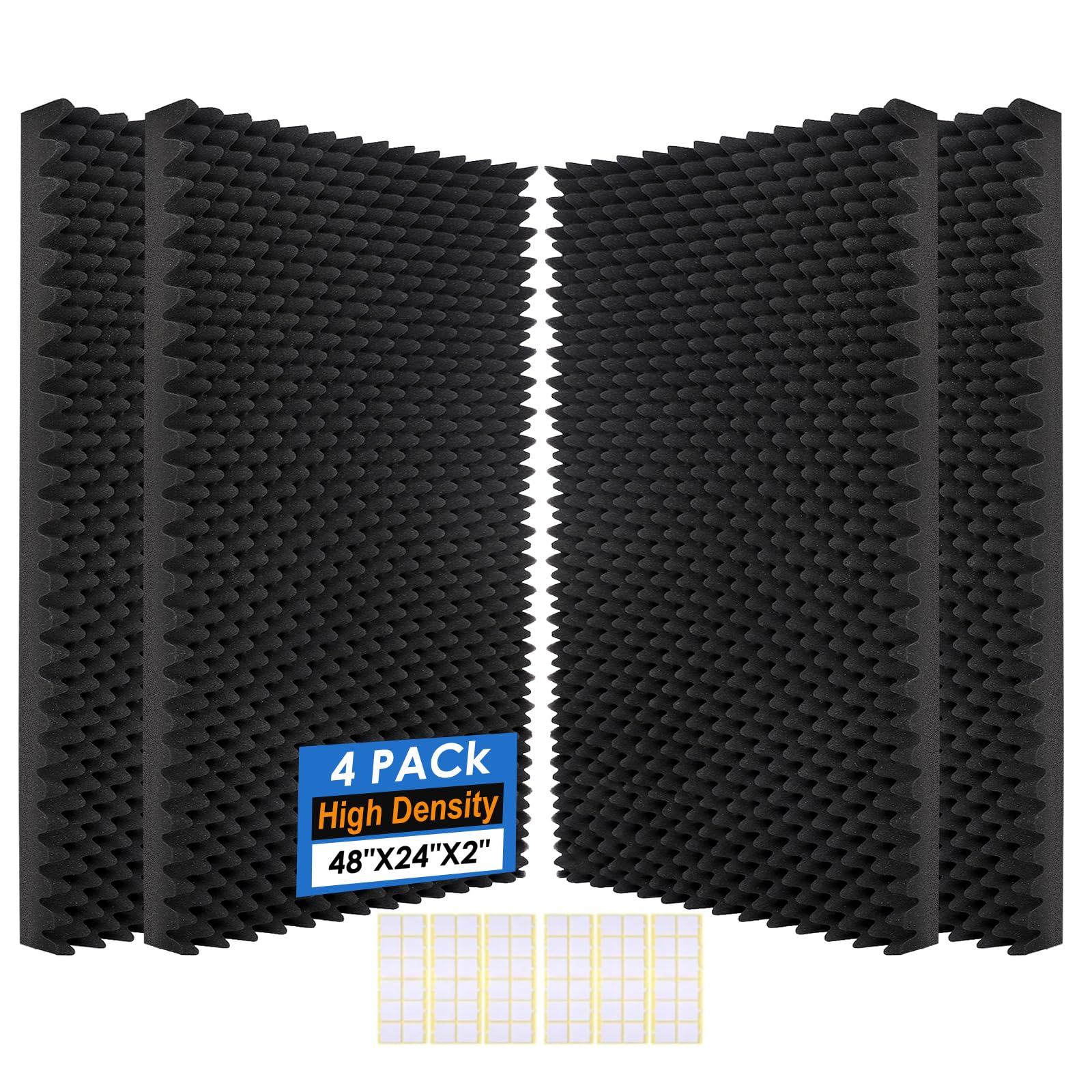
Each panel measures 48 inches by 24 inches by 2 inches, which means four panels cover 32 square feet with fewer seams and faster installation than 12×12 tiles. The egg crate contour is a classic acoustic geometry that increases surface area for sound absorption, making it a solid choice for reducing ambient reverb in open-concept rooms or large home offices.
The polyurethane foam is rated at 25 kg/m³ density and is fire-retardant, meeting basic safety requirements for residential ceiling use. Recovery from vacuum packaging is quicker than most — placing the panels in a ventilated area for 2 to 8 hours restores full shape, or you can accelerate the process with a brief water soak followed by air drying. Each panel comes with double-sided tape stickers, but the adhesive is best suited for smooth walls rather than ceiling installation.
Users report substantial noise reduction from adjacent rooms and effective dampening of drumming and snoring noise. The main drawback is that some panels arrived with uneven cuts or required multiple days to fully expand when left to air dry. For ceiling applications, supplementing with spray adhesive or map tacks is strongly recommended to prevent gravity from working against the tape over time.
Why it’s great
- Large format panels minimize installation seams
- Fast recovery from vacuum packaging
- Effective echo reduction for mid and high frequencies
Good to know
- Included tape weak for overhead mounting
- Cut consistency varies between batches
5. Acoustic Wall Panels 18-Pack, 12″x12″x0.4″ Brick Pattern
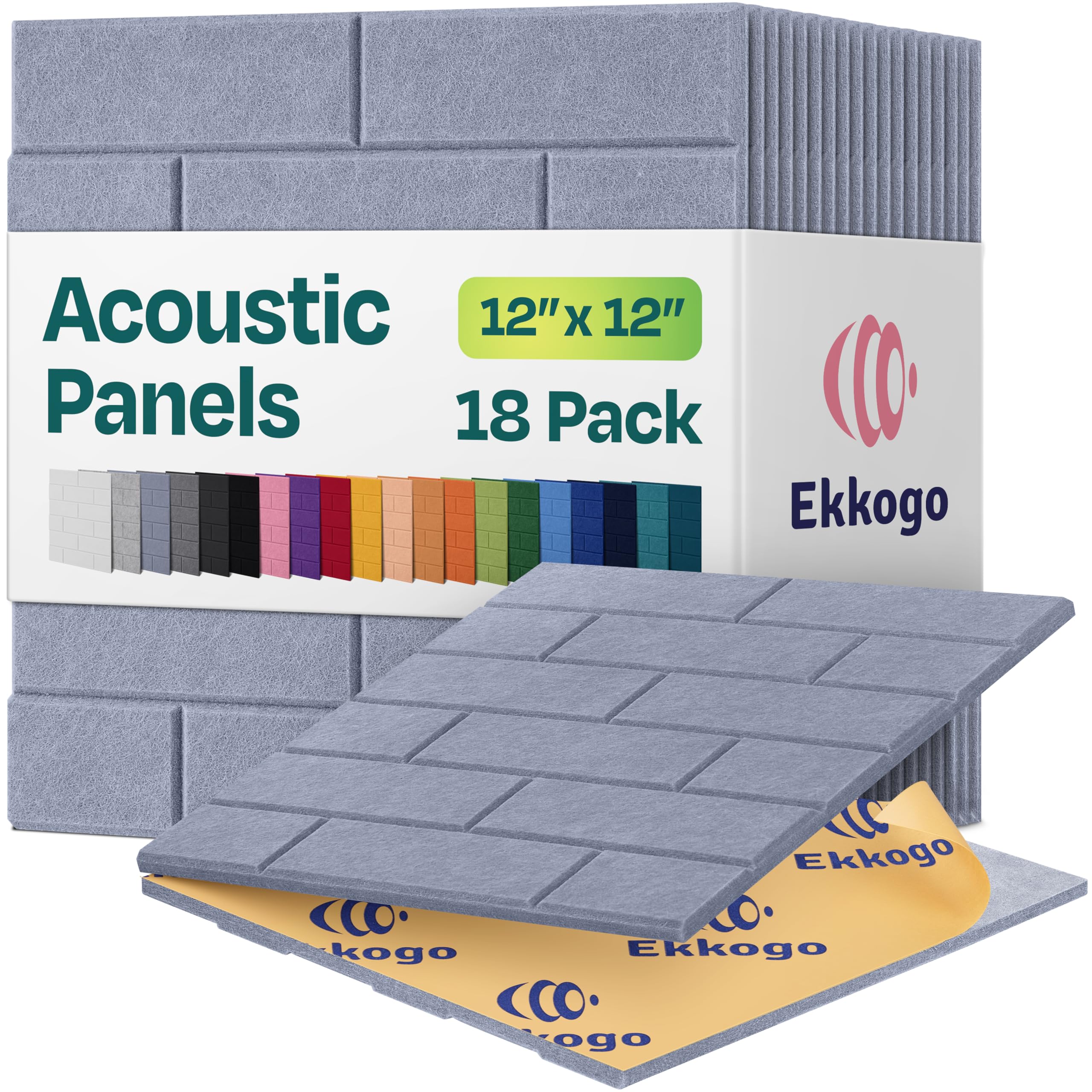
This entry-level option prioritizes aesthetics and ease of installation over deep frequency absorption. The panels are only 0.4 inches thick and made from high-density polyester felt weighing 5.9 oz/ft², which is sufficient for reducing slap echo and surface reflections in small spaces like bedrooms and home offices. The 3D brick pattern adds a decorative texture that looks intentional rather than purely functional.
Self-adhesive backing simplifies installation — peel and stick directly onto clean, smooth surfaces. The felt material is flame-retardant and eco-friendly, meeting basic safety standards. Coverage is approximately 15.75 square feet from the 18-pack, which is enough for a small accent wall or partial ceiling section. Users with semi-detached homes report noticeable reduction in neighbor noise after covering a single wall.
The thin profile is the limiting factor here — 0.4 inches cannot absorb the same range of frequencies that 2-inch foam can. Some users experienced panels falling from walls over time, indicating that the adhesive grip weakens on textured or dusty surfaces. This is a cosmetic-first treatment that reduces echo without claiming soundproofing capability. For rooms where appearance matters more than professional-grade acoustics, these are a functional compromise.
Why it’s great
- Decorative brick design blends into decor
- Self-adhesive backing for quick installation
- Flame-retardant and eco-friendly material
Good to know
- Thin profile limits low-frequency absorption
- Adhesive may fail on textured or dusty walls
FAQ
How does acoustic ceiling tile thickness affect echo reduction?
Will these tiles stop sound from traveling between rooms?
What is the best way to install acoustic foam on a ceiling?
How long does vacuum-packed acoustic foam take to expand fully?
Final Thoughts: The Verdict
For most users, the best ceiling tiles for sound absorption winner is the 4 Pack Acoustic Panels 48x24x2 because its fast-recovery wedge foam and fire-retardant construction deliver professional-grade echo reduction without the multi-day expansion wait. If you want multi-room coverage with a color aesthetic, grab the 24 Pack Acoustic Foam Panels. And for budget-conscious room treatment where appearance matters, nothing beats the decorative convenience of the Acoustic Wall Panels 18-Pack.

Mo Maruf
I created WellFizz to bridge the gap between vague wellness advice and actionable solutions. My mission is simple: to decode the research and give you practical tools you can actually use.
Beyond the data, I am a passionate traveler. I believe that stepping away from the screen to explore new environments is essential for mental clarity and physical vitality.