Our readers keep the lights on and my smoothie glass nicely filled. As an Amazon Associate, I earn from qualifying purchases.
Carbon monoxide binds to hemoglobin roughly 200 times more efficiently than oxygen, meaning by the time you feel drowsy or headachy, your body is already suffocating from the inside. A properly certified monitor is the only reliable way to know what your bloodstream cannot detect.
I’m Mohammad Maruf — the founder and writer behind WellFizz. I’ve spent countless hours reading through sensor datasheets, comparing UL-listed certifications, and cross-referencing real-world alarm response times to separate the units that truly protect from those that simply beep.
Every home with a fuel-burning appliance, attached garage, or gas fireplace needs a functioning detector on every sleeping level. That’s why I focused this guide on the best carbon monoxide monitor options that combine reliable electrochemical sensing with clear alerts and practical power configurations.
How To Choose The Best Carbon Monoxide Monitor
Unlike smoke detectors, CO alarms must detect a colorless, odorless gas at very low parts-per-million concentrations. Sensor type, power source, and certification standards are the three non-negotiable filters that determine whether a unit works when it matters most.
Sensor Technology: Electrochemical Is The Only Standard
Every monitor on this list uses an electrochemical cell designed to react specifically with carbon monoxide molecules. Biometric or metal-oxide sensors found in cheaper travel detectors can drift over time and produce false negatives. Look for UL 2034 listing, which mandates that the alarm sounds before CO reaches 100 PPM over a specific duration — that’s the real performance benchmark.
Power Configuration: Battery, Plug-In, Or Sealed Lithium
Battery-only units offer placement flexibility but require annual battery swaps. Plug-in units with battery backup maintain monitoring during power outages, which is critical since CO risk rises when furnaces cycle during blackouts. Sealed 10-year lithium batteries remove the replacement guesswork entirely — the whole unit gets swapped at end of life, and there is no low-battery chirp to ignore.
Display Features and Peak Level Memory
A digital display showing real-time PPM readings helps you spot rising levels before the alarm threshold is crossed. Peak level memory stores the highest CO concentration recorded since the last reset, which is valuable for diagnosing intermittent leaks from a water heater or a car left running in an attached garage.
Quick Comparison
On smaller screens, swipe sideways to see the full table.
| Model | Category | Best For | Key Spec | Amazon |
|---|---|---|---|---|
| First Alert CO710A | Premium | Zero-maintenance with temp readout | Sealed 10-year lithium battery | Amazon |
| Kidde KN-COPP-3 2-Pack | Premium | Whole-home plug-in coverage | Plug-in with 9V backup, 2-pack | Amazon |
| Kidde KN-COEG-3 | Mid-Range | CO plus explosive gas detection | Digital display reads CO or GAS | Amazon |
| First Alert SMCO500V | Mid-Range | Smoke and CO combination unit | Voice alerts with location naming | Amazon |
| Kidde 900-CUDR-V | Mid-Range | Self-testing smoke and CO combo | 24/7 self-checking components | Amazon |
| First Alert CO400-3 3-Pack | Value | Multi-floor battery-only coverage | 3-pack, 85 dB alarm, battery op | Amazon |
| Siterwell GS828A 2-Pack | Budget | Travel and small-space portable | 10-year life, LCD real-time PPM | Amazon |
In‑Depth Reviews
1. First Alert CO710A 10-Year Carbon Monoxide Alarm with Temperature & Digital Display

The CO710A solves the single biggest annoyance of CO detectors: battery changes. Its sealed 10-year lithium power cell means no chirping at 2 AM, no annual scramble for AAs, and no risk of running unprotected after the batteries die. The backlit digital display cycles between real-time PPM levels and ambient room temperature, which is genuinely useful near a basement furnace or garage entry.
The peak level memory function logs the highest CO concentration the sensor has recorded since the last reset, giving you concrete data to bring to a HVAC technician or gas company. At 62 dB the alarm is loud enough to wake most sleepers through a closed door, though not as ear-splitting as some plug-in units. The compact footprint sits unobtrusively on a nightstand or mounts flush to drywall with the included bracket.
Owners consistently report reliable triggering — one review notes the unit caught exhaust fumes drifting into a garage from a running truck outside. The electrochemical sensor meets UL 2034 standards, and because the entire unit is replaced at year 10, you never have to wonder if the sensor has drifted out of spec. The temperature readout is a bonus that becomes unexpectedly handy for spotting cold drafts or furnace cycling patterns.
Why it’s great
- No battery swaps for the full decade
- Backlit display shows both PPM and room temp
- Peak level memory helps diagnose intermittent leaks
Good to know
- Does not detect explosive gas, only CO
- Cannot interconnect with other alarms
2. Kidde Carbon Monoxide Detector, Plug In Wall with 9-Volt Battery Backup, Digital LED Display – 2 Pack

This Kidde 2-pack covers two levels of a home right out of the box, and the plug-in design means the AC power keeps the internal sensor circuitry active even when the 9V backup is drained. The digital LED display shows PPM readings in real time, and the peak level memory stores the last CO event so you can see exactly how high concentration spiked — one verified review reported readings of 463 and 268 PPM that likely prevented serious injury.
The 85 dB alarm is genuinely loud — reviewers note it cuts through noise-cancelling headphones and sleep masks. The 9V backup battery is included in the box and keeps the unit monitoring during power failures, which is when CO risk from portable generators and furnace cycling is highest. The compact white housing plugs directly into a standard 120V outlet, and the tamper-resistant locking feature makes it suitable for rental units and code compliance.
Kidde’s limited 10-year warranty covers the alarm electronics, and the KN-COPP-3 is third-edition design with improved humidity tolerance (5 to 95% non-condensing). The 2-pack pricing makes it more economical per square foot than buying singles, and the independent AC power source removes the variable of battery drain from the reliability equation. For whole-home coverage with zero hardwiring, this is the most practical drop-in solution available.
Why it’s great
- Two units cover main and upper floors
- AC power with 9V backup for outage protection
- Peak level memory records highest PPM spike
Good to know
- Requires outlet proximity for each unit
- 9V battery must be installed for backup function
3. Kidde Carbon Monoxide + Explosive Gas, Natural Gas & Propane Alarm, Plug-in with 9V Battery Backup, Digital Display

The KN-COEG-3 is a genuine multi-threat detector that senses carbon monoxide, explosive natural gas, and propane from a single plug-in housing. The digital LED display shows either the current CO PPM reading or the word “GAS” when explosive gas is detected, which eliminates confusion about which threat triggered the 85 dB alarm. The 9V battery backup keeps the sensor operational during outages, and the peak level memory logs the last CO or gas event for later review.
This unit is ideal for homes with gas stoves, gas water heaters, propane fireplaces, or any space where a leak could produce either CO or raw natural gas. Reviewers consistently report that the alarm picks up propane quickly — one verified user tested it by intentionally releasing a small amount near the detector and confirmed immediate response. The plug-in design includes a tamper-resistant bracket, and the unit fits into standard 120V outlets without blocking the adjacent socket.
The operating humidity tolerance (5 to 95%) is wider than many competitors, making it a solid choice for basements and utility rooms where moisture fluctuations are common. The 3rd edition design includes self-diagnostic circuitry that checks the sensor every 10 seconds. The only tradeoff is that the gas detection aspect adds complexity — the unit cannot distinguish between natural gas and propane on the display, but the alarm is identical for both, so you evacuate regardless.
Why it’s great
- Detects CO plus natural gas and propane
- Digital screen reads PPM or GAS clearly
- Battery backup maintains protection during outages
Good to know
- Battery compartment can be stiff to open initially
- Does not detect methane at low concentrations before alarm
4. First Alert SMCO500V, Interconnect Battery-Operated Combination Smoke & Carbon Monoxide Alarm with Voice Alerts

The SMCO500V combines photoelectric smoke detection and electrochemical CO sensing in one battery-operated unit, then adds voice alerts that announce the specific hazard type (“Fire!” or “Warning Carbon Monoxide”) and the unit’s location. This is a massive upgrade over generic beeping — in a real emergency, knowing whether to grab a fire extinguisher or evacuate for gas exposure saves critical seconds. The voice prompts also reduce the chance of ignoring a false cooking alarm.
Through First Alert’s wireless interconnect feature, multiple SMCO500V units can be paired so that when one detects smoke or CO, all units sound the same voice alert across the home. This eliminates the need for hardwiring between floors. The battery operation means no electrician is required, and the units mount to standard electrical boxes or directly to drywall with included anchors. The Precision Detection sensor is calibrated to reduce nuisance alarms from cooking steam while still responding quickly to smoldering fires.
Some users report intermittent false alarms on a small percentage of units, though most reviews highlight easy setup and reliable daily performance. The 10-year limited warranty covers the alarm electronics, and the integrated AA batteries (included) power the unit for its full service life. For households that want both smoke and CO coverage without separate devices, the SMCO500V delivers the most informative alarm experience available in a battery-powered form factor.
Why it’s great
- Voice alerts name the exact hazard and location
- Wireless interconnect between compatible units
- Combines smoke and CO detection in one device
Good to know
- Some units have reported false alarm issues
- No digital PPM display for CO concentration levels
5. Kidde Smoke & Carbon Monoxide Detector, AA Battery Powered, Voice Alerts, LED Warning Light Indicators

The Kidde 900-CUDR-V features continuous 24/7 self-testing that monitors the internal electronics and sensor circuitry every moment it is powered. If a component starts to drift or fails, the unit emits a distinct chirp and amber LED indicator — a clear signal that the detector needs replacement before an emergency occurs. This is a meaningful upgrade over units that only self-check when you manually press the test button.
The voice alarm announces the specific threat — “Fire!” for smoke detection and “Warning Carbon Monoxide” for CO — which reduces confusion during evacuation. The photoelectric smoke sensor is optimized for smoldering fires (the most common residential fire type), while the electrochemical CO sensor meets UL 2034 standards. The 85 dB alarm is supported by three LED indicators: green for normal operation, amber for error, and red for a detected event, making status checks quick.
The battery operation (two included AAs) means no hardwiring is needed, and the universal mounting bracket fits standard junction boxes or drywall. Some users have reported intermittent false alarms after several months, though the majority describe reliable performance, easy installation, and accurate voice prompts. The 10-year limited manufacturer warranty provides a safety net, and the product style (6th Edition) represents Kidde’s latest sensor calibration and nuisance-alarm reduction algorithms.
Why it’s great
- 24/7 self-testing checks components continuously
- Voice alarm announces fire vs. CO specifically
- Battery operated for flexible placement
Good to know
- Some units developed false alarms after a few months
- No digital display for real-time PPM readings
6. FIRST ALERT CO400-3 Carbon Monoxide Detector, Battery Operated, White, 3-Pack

The CO400-3 3-pack delivers three UL-listed electrochemical CO detectors at a per-unit cost that makes it practical to place one on every floor of a typical home plus a bedroom. Each unit runs on AA batteries and operates independently, so no hardwiring, no outlet proximity requirement, and no interconnect pairing struggles. The 85 dB alarm is loud enough to wake occupants on the same floor through a closed door.
The battery-powered design means these units can be mounted anywhere: hallway ceilings, bedroom walls, basement beams, or even garages where outlets are scarce. The compact dimensions (5 x 3.4 x 1.5 inches) keep them unobtrusive, and the test/reset button is easy to reach. First Alert’s electrochemical sensor meets UL 2034 standards, and the 5-year limited warranty covers the alarm electronics against defects.
Reviewers consistently highlight the value proposition of buying three units at once — one user installed them on every floor outside bedrooms and reports reliable triggering during a real CO event. The tradeoff is that there is no digital display, no peak level memory, and no voice alerts. It is a straightforward, no-frills detector that prioritizes coverage area over diagnostic features. For those replacing expired units across multiple floors, this pack solves the problem in one shipment.
Why it’s great
- Three units cover every level of a home
- Battery operation allows flexible placement
- UL listed electrochemical sensor for reliability
Good to know
- No digital readout of current PPM levels
- No battery backup beyond the installed AAs
7. Siterwell Carbon Monoxide Detectors, 10 Year Product Life Portable with LCD Digital Display, 2-Pack
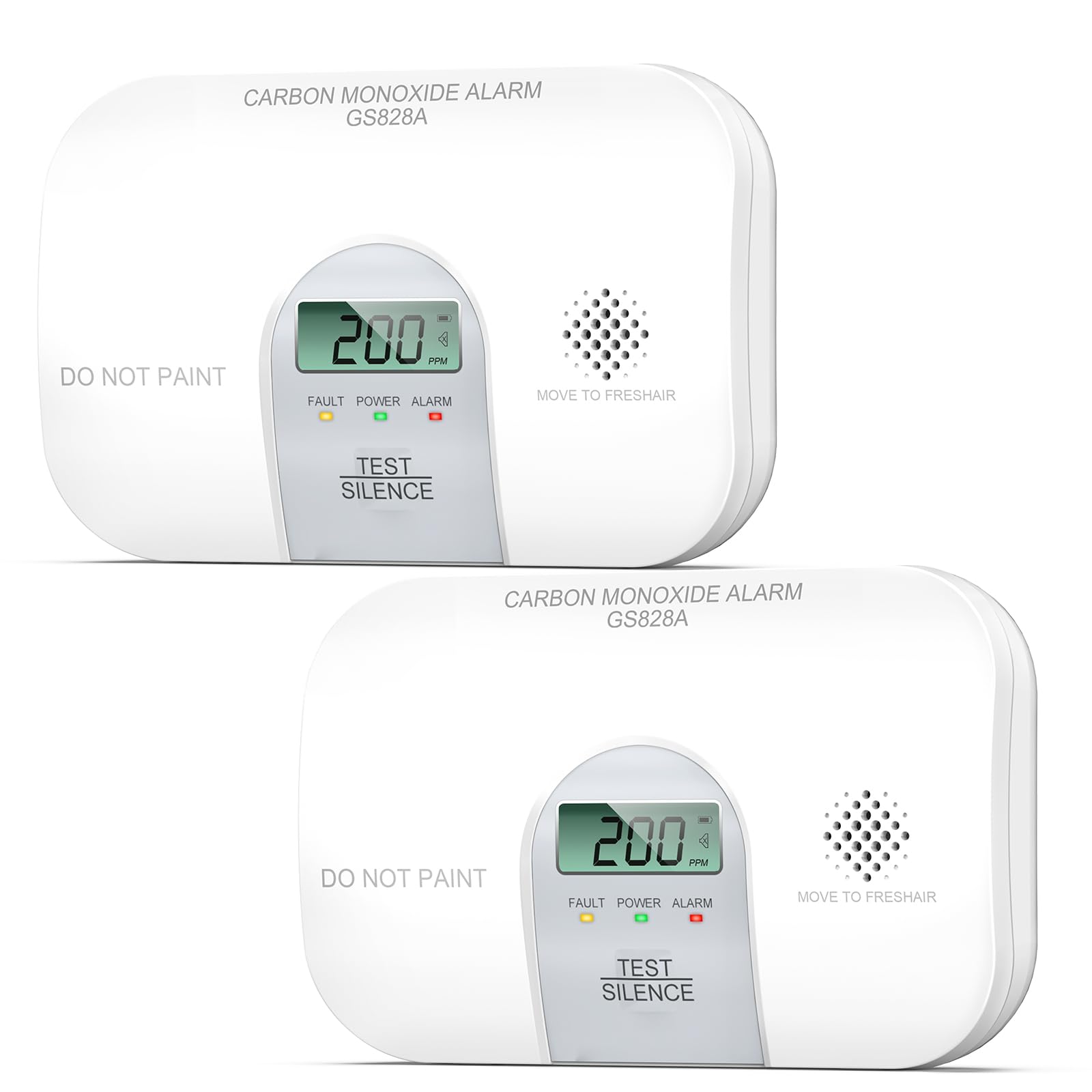
The Siterwell GS828A stands out for its portable design — it can sit upright on any flat surface via a built-in kickstand, mount to a wall, or slide into a suitcase for hotel room use. The backlit LCD screen displays real-time CO levels in PPM, and a tri-color LED flashes green (normal), yellow (fault), or red (alarm) for immediate status at a glance. The electrochemical sensor is ETL listed and triggers an 85 dB alarm when dangerous CO is detected.
The unit runs on two built-in AA alkaline batteries that Siterwell rates for the full 10-year product life, though realistically you will need to swap batteries as they deplete. The compact 0.84-pound weight makes it genuinely travel-friendly — several reviewers mention taking it on vacation or to rental cabins where CO detectors are not always installed. The 3-year limited warranty is shorter than some competitors, but the price per unit in the 2-pack keeps the barrier to entry very low.
One quirk: the green power LED that flashes every 20 minutes is bright enough to disturb light sleepers in a dark room, so you may want to position it away from direct line of sight to the bed. The non-backlit display is readable in daylight but requires ambient light at night. For the price and portability, this is a sensible backup unit for travelers or for covering a small apartment where budget is the primary constraint.
Why it’s great
- Portable with kickstand for tabletop use
- LCD shows real-time PPM concentration
- Two units cover multiple areas affordably
Good to know
- Green status light is bright in dark bedrooms
- 3-year warranty is shorter than industry average
FAQ
Where is the best place to install a carbon monoxide monitor in a home?
What does UL 2034 certification actually mean for a CO detector?
Should I choose a plug-in detector or a battery-powered one?
Can a carbon monoxide detector detect a natural gas or propane leak?
Final Thoughts: The Verdict
For most users, the best carbon monoxide monitor winner is the Kidde Plug-In 2-Pack because it covers two floors with AC reliability and automatic battery backup at a per-unit cost that beats buying singles. If you want zero maintenance and a temperature display, grab the First Alert CO710A. And for detecting both CO and explosive gas in a home with gas appliances, nothing beats the versatility of the Kidde KN-COEG-3.

Mo Maruf
I created WellFizz to bridge the gap between vague wellness advice and actionable solutions. My mission is simple: to decode the research and give you practical tools you can actually use.
Beyond the data, I am a passionate traveler. I believe that stepping away from the screen to explore new environments is essential for mental clarity and physical vitality.