Our readers keep the lights on and my smoothie glass nicely filled. As an Amazon Associate, I earn from qualifying purchases.
Sleeping in a car sounds simple until you actually try it. The seat is angled, the headrest is in the wrong place, the belt cuts across your chest, and your head does that slow “bob… bob… snap” that wakes you up the second you start to drift off. Ten minutes later you are more tired than when you started, and you are wondering how people do road trips without arriving feeling like a pretzel.
Here’s the uncomfortable truth: most “car pillows” are either (1) a cute plush thing that feels nice for three minutes, or (2) a stiff block of foam that forces your head forward and makes your shoulders tense. The real win is matching the pillow to your seat geometry, your neck length, and the way you actually fall asleep. That is exactly how you land on the best car pillow for sleeping for your body—not the one that simply looks plush in photos or feels good for five minutes.
To build this guide, I did what most listicles skip: I compared design categories (seat‑belt “cocoons,” headrest neck supports, and airplane‑style chin wraps), dug into real buyer feedback patterns, and looked at the details that actually decide comfort—like rebound speed, strap geometry, cover friction, and whether a pillow supports your jaw (the missing piece behind most head‑bobbing).
Below you will find a tight, practical shortlist of 10 options. Each one earned its spot because it solves a specific sleep problem in a car, not because it has a fancy name. Pick the one that matches your situation and you will feel it on the very first trip.
In this article
How to Choose the Best Car Pillow For Sleeping for Your Ride
Car seats were designed for driving posture first—not for deep sleep. That means the “right” pillow is less about softness and more about stability: keeping your head supported without fighting your natural posture. Use this framework and you will know exactly what to buy (and what to ignore).
1. Identify your real sleep posture (most people have two)
In a car, you don’t have a mattress to spread out on. You end up in one of these patterns, even if you start upright:
- Upright + chin drop: Your head falls forward as the jaw relaxes. This is the classic “head bob.” You need chin support or a stabilizing strap system.
- Side lean: Your head wants to tip toward the window or door pillar. You need side walls (a “cocoon” pillow) or a wider headrest surface.
- Reclined drift: In the passenger seat, you recline a little and the head slides into a half‑side, half‑back angle. You need a pillow that supports the curve between neck and shoulder without forcing your head forward.
2. Choose the right category (this matters more than brand)
These 10 products fall into three categories. Pick the category first, then pick the model.
- Back‑Seat “Cocoon” Pillows (seat belt + side wings): These create a soft boundary on both sides of your head, so you can lean without collapsing. They are unbeatable for kids and passengers who actually want to sleep on long drives—but they are bulky.
- Headrest Neck Pillows (driver + daily comfort): These fill the gap between your neck and the seat headrest. They are great for reducing tension and keeping posture consistent, but they won’t stop a strong chin drop unless the shape supports the jaw.
- Airplane‑Style Neck Pillows (chin support + compact): These are for people who fall forward, travel often, or want a single pillow for car + flight. They can work brilliantly, but only if the strap/closure actually holds.
3. Thickness is a double‑edged sword
A common complaint in car pillow reviews is “it pushed my head forward.” That happens when the pillow is too thick for your seat’s headrest position. Thick can feel plush, but it can also force your neck into a forward curve, creating shoulder tension.
- If you drive a lot: Look for a pillow described as “just the right thickness” or “doesn’t push the head forward.”
- If you nap as a passenger: A thicker pillow can be amazing—especially if you recline slightly—because it supports the back of the skull, not just the neck.
4. Materials: memory foam vs. fiber fill vs. PP cotton
“Soft” is not a material. Here’s what changes the experience.
- Memory foam: Best for consistent support and pressure relief. The best ones rebound fast (so they don’t stay dented) and have a breathable cover so you don’t overheat.
- High‑loft fiber fill: Light, airy, and cooler. Great for people who hate heat build‑up. The trade‑off is less “locked in” support compared to dense foam.
- PP cotton: Plush and forgiving, often used in big cocoon pillows. It’s great for side‑lean sleepers, but it can be bulky and may need fluffing to keep shape.
5. Strap design decides whether the pillow stays “where you need it”
In real life, pillows don’t fail because the foam is bad—they fail because the pillow moves. A great strap system should:
- Anchor to the headrest or seat belt without sliding down during the night.
- Adjust quickly so different passengers can use it without a wrestling match.
- Use reliable closures (buckles, strong hook‑and‑loop, or stable clips) that don’t pop open when you change positions.
Quick Comparison: 10 Best Car Pillow For Sleeping Picks
These are organized in a “real‑world” order: full‑support road trip solutions first, then compact travel‑friendly options, then headrest upgrades for everyday driving comfort.
On smaller screens, swipe or scroll sideways to see the full table.
| Model | Type | Best For | Key Feature | Amazon |
|---|---|---|---|---|
| Atablyn Back‑Seat U‑Shaped Travel Pillow | Cocoon | Long road trips (adults + kids) | “Hug” support + adjustable buckle | Amazon |
| FHSGGP Car Sleeping Pillow “Cocoon” | Cocoon | Deep sleep in back seat | Patented seat‑belt support | Amazon |
| FlyHugz® Neck Travel Pillow | Neck Pillow | Compact chin support (car + flights) | Lightweight + adjustable velcro | Amazon |
| MOAOO U‑Shaped Seat‑Belt Travel Pillow | Cocoon | Kids in booster seats | Memory foam + plush “rabbit fur” cover | Amazon |
| YFONG Head‑Strap Travel Pillow + 3D Eye Mask | Stabilizer | Preventing head bobbing | 360° head lock + blackout eye mask | Amazon |
| WEERSHUN Memory Foam Travel Neck Pillow | Neck Pillow | Leaning forward or upright sleep | Chin wrap + anti‑stick cover | Amazon |
| QUEEN ROSE Car Travel Pillow for Sleeping | Headrest | Cool, soft naps (no foam heat) | High‑loft fiber fill + washable velvet cover | Amazon |
| SPRFUFLY 2‑Pack Headrest Pillows + Eye Masks | Headrest | Driver + passenger set | Two pillows + two sleep masks | Amazon |
| Wigoo 2026 Upgrade Car Neck Pillow (2‑Pack) | Headrest | Daily commuting comfort | Ergonomic thickness + breathable “ice yarn” cover | Amazon |
| BEBAS Enlarged Car Headrest Pillow | Headrest | Wide support for passengers | Large surface + three‑point contour | Amazon |
In‑Depth Reviews: 10 Best Car Pillow For Sleeping Options, Ranked
Instead of repeating the product page, each review below focuses on what actually matters in a car: how the pillow behaves after 20 minutes, whether it stays put, and what real buyers tend to love (or regret) after the first trip.
1. Atablyn Travel Pillow for Car Back Seat (U‑Shaped) – The “Hug” That Lets You Sleep
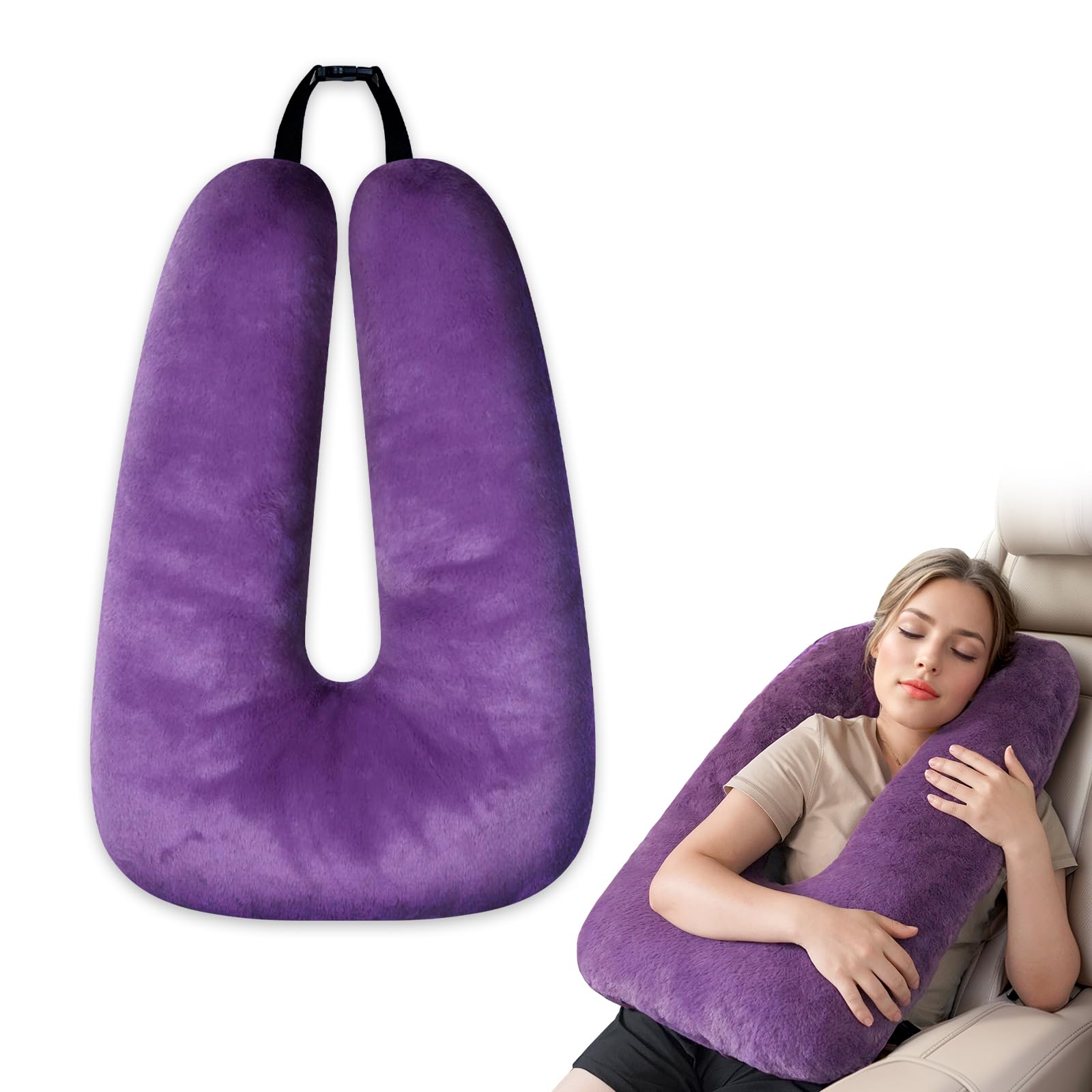
This is the pillow that makes passengers say, “Oh… that’s what I was missing.” The Atablyn U‑shaped back‑seat pillow isn’t trying to be a tiny neck cushion. It’s a soft boundary that your head can lean into from multiple directions. Think of it like a supportive “hug” you can rest your cheek on—especially helpful when your sleep style is more “side drift” than “upright.”
Real buyers consistently describe the same moment: once the pillow is in place, it becomes more comfortable to sit with it than without it. That tells you something important about the design—this is not a pillow you have to “try to use.” It naturally catches the head and shoulders, and the plush cover reduces that annoying friction that can wake you when you reposition.
Where this model quietly wins is adaptability. If you have narrow shoulders, you can treat it more like a teddy-bear pillow—wrap your arms around it and let your head rest to one side. If you want more loft, the big zipper opening makes it possible to add a bit of extra stuffing (a trick road‑trippers love) and tune the firmness to your preference.
Why it’s the top pick
- Side‑lean stability: The U shape creates “walls,” so your head stops drifting into awkward angles.
- Comfort feels instant: Plush surface helps you relax fast—especially on rough roads.
- Works for adults and kids: Big enough to share across the family without feeling toy‑sized.
- Adjustable + customizable: Strap helps keep position; large opening makes loft tuning easy.
Good to know
- Best used as a back‑seat or passenger solution—this is a “sleep tool,” not a minimalist neck pad.
- On very narrow shoulders, you may prefer hugging it to keep it centered against your body.
Ideal for: Families and road‑trippers who want one pillow that genuinely improves back‑seat sleep for a wide range of body sizes.
2. FHSGGP Travel Pillow Car Sleeping Aid – The Cocoon That Stops the “Sleep Slump”

If your problem is the full-body “slump” that happens when you fall asleep sitting up—head forward, shoulders rounded, then a neck kink when you wake—FHSGGP is built to interrupt that cycle. Its signature is the cocoon‑style shape that supports your head no matter which way it tips. That matters on real road trips because you don’t stay perfectly still; you micro‑adjust constantly, and your pillow has to keep up.
The reason people love this pillow isn’t just softness. It’s the way the shape encourages alignment: your head has a place to go, and it doesn’t feel like it’s balancing on the seat belt. Many families describe kids sleeping longer and “staying put” instead of folding sideways. Adults mention something even more telling: they’ve tried multiple travel pillows, and this is the first one that didn’t leave them with neck pain after dozing off.
The trade‑off is size. This is a full support system, not a toss‑in‑your‑purse pillow. But if your typical trip is measured in hours (not minutes), the bulk is the price of comfort.
Why it works so well
- All‑direction head support: Great for kids who toss, turn, and side‑lean in the back seat.
- Reduces “slumping”: Supports the upper body so you don’t collapse into a painful C‑shape.
- Comfortable for long hauls: Many buyers report real, uninterrupted sleep on multi‑hour drives.
- Easy to set up: Once you learn your sweet spot, it becomes a repeatable routine.
Good to know
- Bulky—plan where it will live in the car when not in use.
- If you are trying to pack ultra‑light, a compact neck pillow may fit your style better.
Ideal for: Families who do long-distance driving and want back‑seat naps that feel closer to couch‑level comfort.
3. FlyHugz® Neck Travel Pillow – Small, Supportive, and Surprisingly “Locked In”

FlyHugz is for people who want one pillow that works in a car, on a plane, and on a couch—without carrying something the size of a throw blanket. The shape is designed to keep your head upright with soft chin support, which is the missing ingredient in most U‑shaped neck pillows. When your jaw relaxes, the head wants to fall forward; a little chin support stops that motion before it turns into a full head‑bob.
What makes FlyHugz stand out in real feedback is not “fluffiness.” It’s repeatable positioning. When the closure is snug, the pillow behaves like a light brace (in a good way): it keeps your neck from working overtime to hold your head up. That is why frequent travelers tend to describe arriving “less wrecked” after long transit.
Two fit notes matter. First, if you have a larger neck or you dislike anything that feels snug, you will want to use the adjustable closure generously instead of cinching tight. Second, some users mention the closure material can be a weak point; treat it like any travel gear—adjust it before you try to fall asleep, not after your head is already dropping.
Why travelers keep it
- Chin support: Helps stop forward head‑drop—the root of most “I can’t sleep in cars” complaints.
- Compact footprint: Easier to pack than cocoon pillows, while still providing structure.
- Comfortable fabric: Breathable cover helps reduce that hot-neck feeling on long rides.
- Works for adults and kids: Adjustable fit lets families share a single style.
Good to know
- If you hate snug collars, you may prefer a back‑seat cocoon pillow instead of a neck wrap.
- Spend one minute dialing in the closure—fit is the whole game with this style.
Ideal for: Frequent travelers and commuters who want a compact pillow that actually prevents chin‑drop, not just cushions the sides.
4. MOAOO Travel Pillow for Car Trips – Booster‑Seat Friendly Soft Support
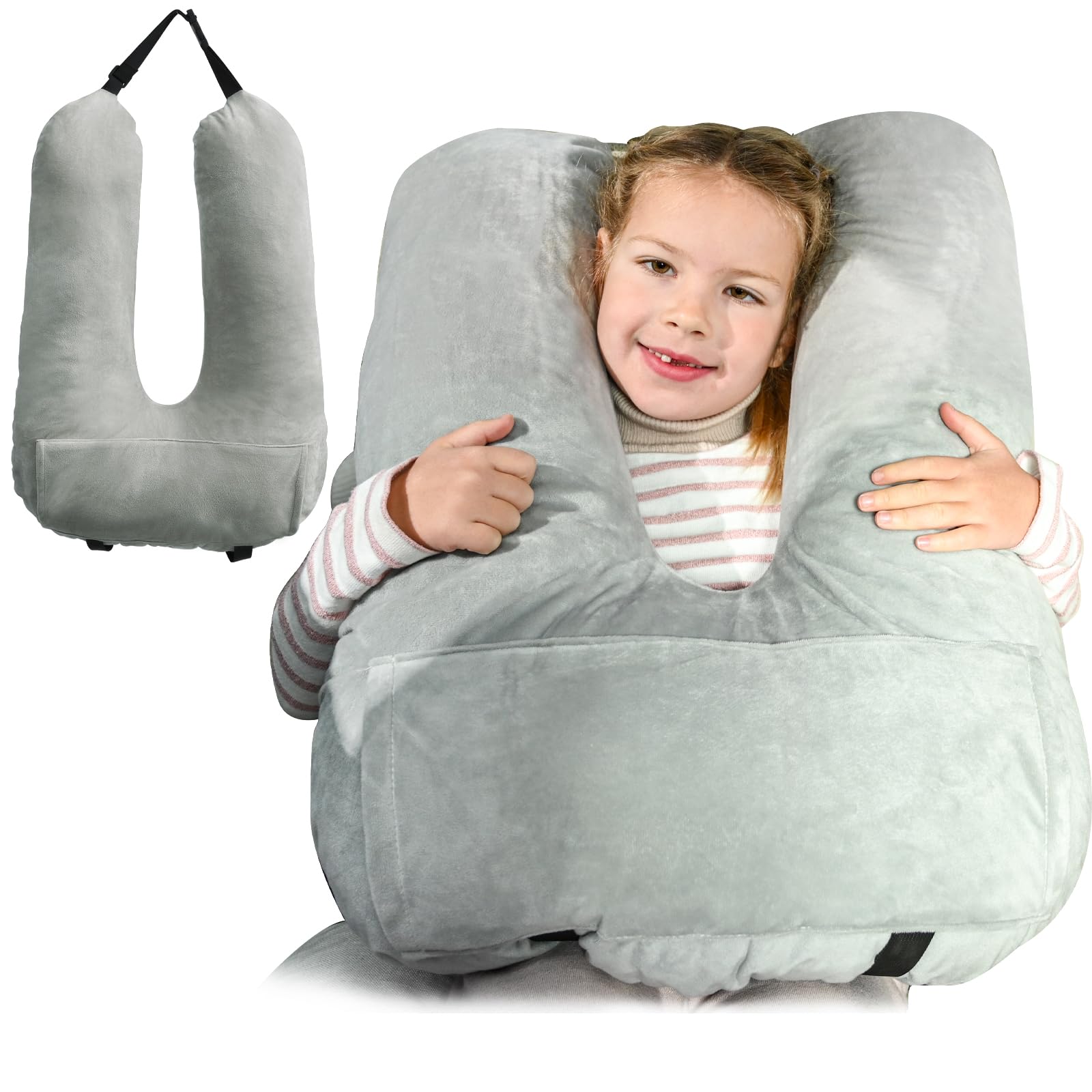
MOAOO nails a very specific family problem: kids falling asleep in a booster seat and ending up with their head resting awkwardly on the seat belt. The U‑shaped form is meant to pair with the belt path, giving the head a soft place to settle so it doesn’t “swing” with every turn or braking moment.
Unlike big PP‑cotton cocoons, this one leans into memory foam, which matters for repeatability. Foam holds shape better during a long trip, so the support doesn’t disappear after the first hour. Parents also love the “plush” feel—imitation rabbit fur fabric sounds like marketing until you realize it changes friction. A softer, grippier surface can keep a sleeping head from sliding off.
This is one of those pillows that quietly works for adults too—especially in the passenger seat when you want something cozy to lean into. Just remember the core strength: it’s a “soft landing zone” for the head and neck, not a rigid posture trainer.
Why families like it
- Booster‑seat nap helper: Keeps the head supported without constant repositioning.
- Memory foam consistency: Holds shape through a long drive instead of flattening fast.
- Comfortable fabric: Soft surface helps reduce sliding and feels cozy against the cheek.
- Adult‑friendly: Works for passenger naps, not only kids.
Good to know
- Memory foam can run warmer than fiber fill; if you overheat easily, consider a high‑loft option.
- Like most vacuum-packed pillows, it needs time to fully fluff back to shape.
Ideal for: Parents who want a softer, more structured alternative to kids slumping sideways on long drives.
5. YFONG Travel Pillow + 3D Eye Mask – The “Head Lock” System
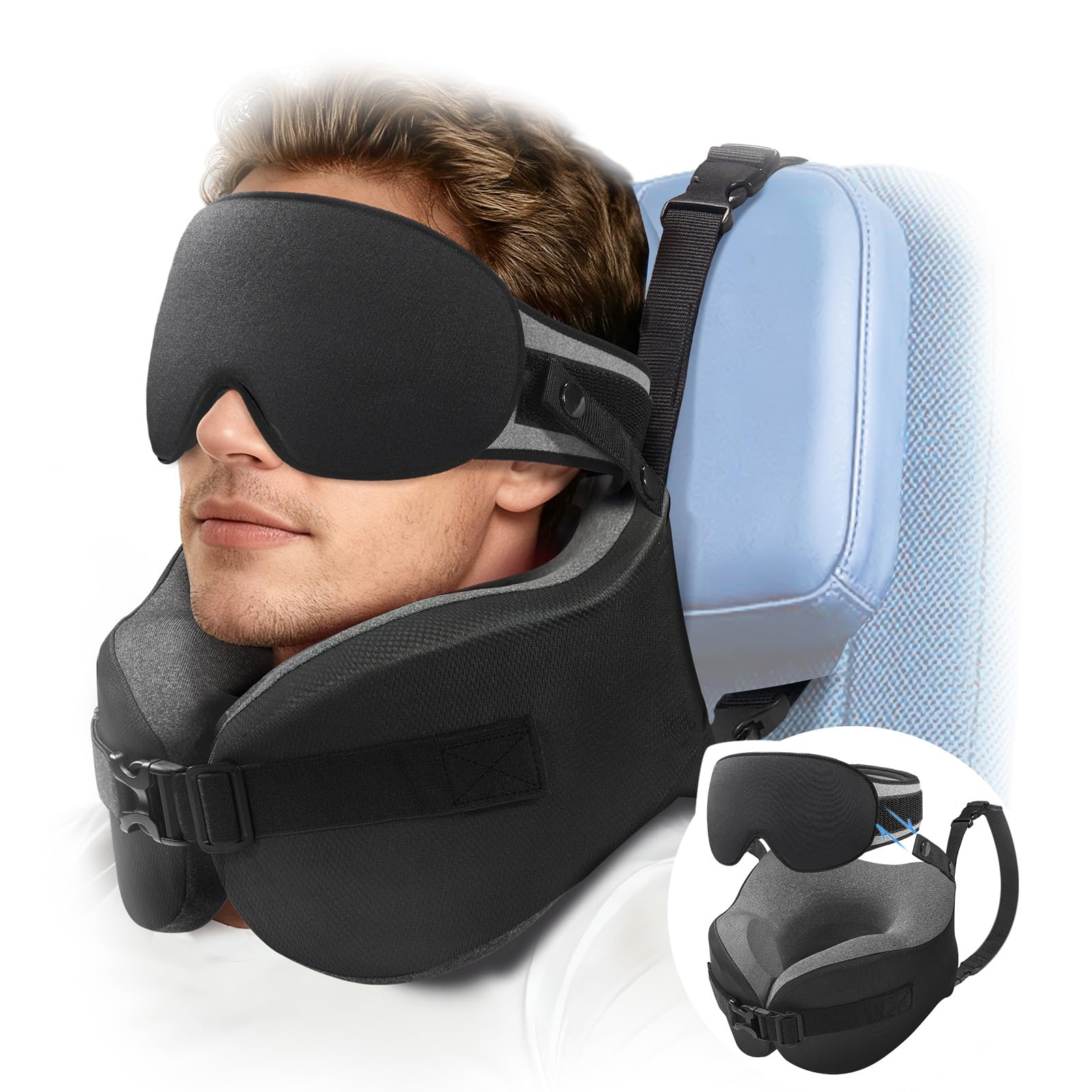
YFONG is not a “normal” pillow. It’s a stability system—a neck pillow plus a strap‑based head support and a 3D contoured eye mask that blocks light. If you are the kind of sleeper whose head instantly falls forward (and wakes you), this style can be a game-changer because it removes the balancing act entirely.
The big win is the 360° support concept: your chin, the sides of your jaw, and the back of your neck all get contact points, which reduces the head‑bobbing reflex. Some users describe it feeling like a legit neck brace—in the best way—because it keeps your head upright long enough to actually enter deeper sleep.
There are two real‑world caveats. First, the design assumes a seat with a supportive headrest shape (think: headrest wings or a place to anchor straps). Second, fit can be tight for larger necks; several buyers love the concept but wish there was a bigger size. If you fall into that group, you’ll want to check the sizing carefully and avoid over-tightening.
Why it’s different
- Head-bob prevention: Strap support + chin cradle stabilizes the head better than most pillows.
- Blackout combo: 3D eye mask helps you actually stay asleep in bright environments.
- Modular use: Pillow and mask can be used separately depending on the trip.
- Good for upright sleepers: Designed for people who can’t recline much.
Good to know
- Fit can feel small for larger neck sizes; comfort depends heavily on sizing.
- The carry bag can take a couple tries to pack neatly—practice once at home.
Ideal for: People who wake up from head bobbing and want a more “locked in” sleep setup for upright seats.
6. WEERSHUN Travel Pillow – Versatile Shape for Upright or Lean‑Forward Sleep
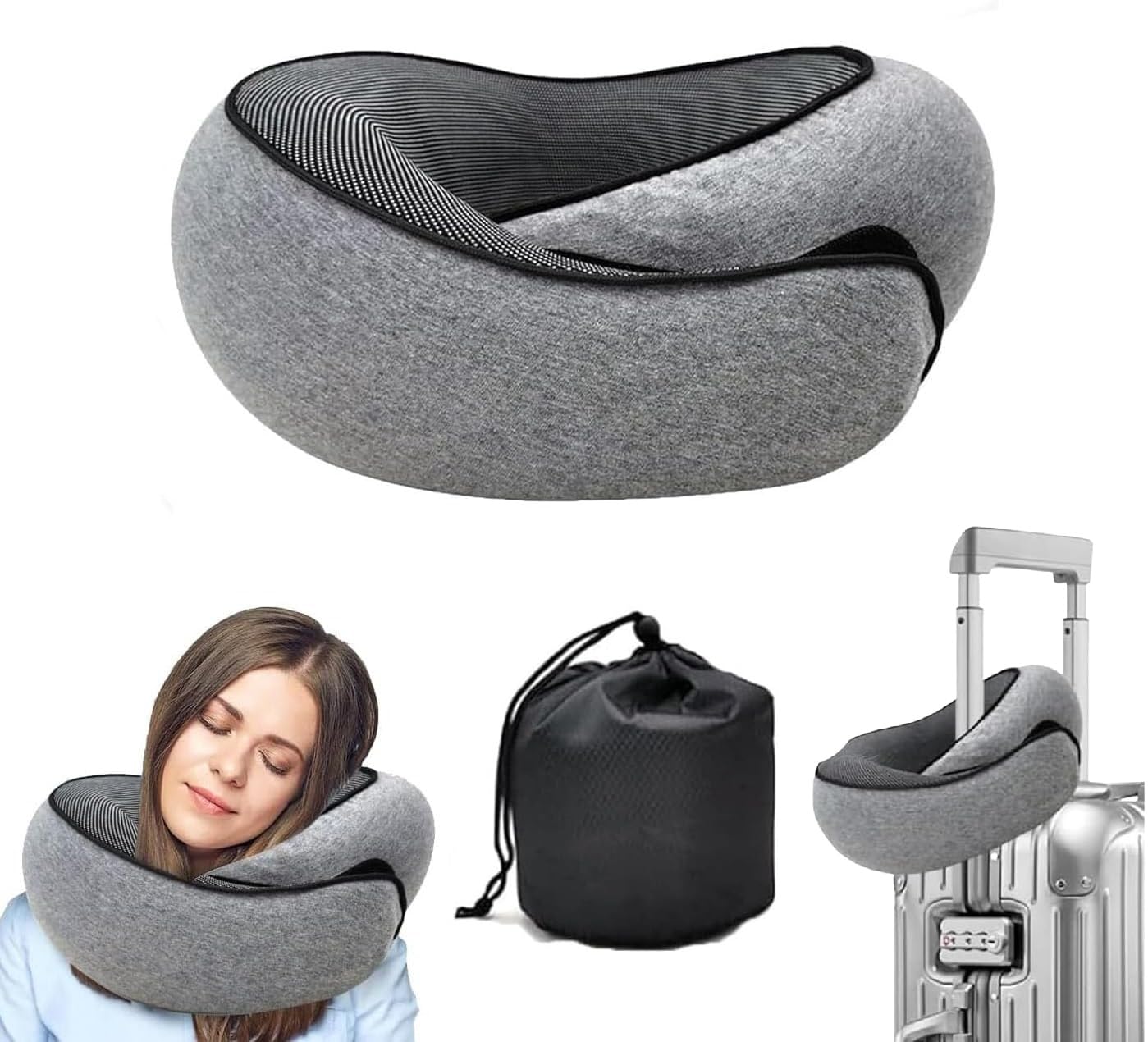
WEERSHUN sits in a sweet spot between “simple U pillow” and “complex strap system.” The standout feature is the chin‑wrap function, which helps you maintain a more upright posture when you doze off. That’s valuable for car passengers who can’t recline much (or who simply don’t like reclining).
A surprisingly helpful detail is the anti‑stick cover concept. It sounds minor, but it solves a real travel issue: pillows picking up lint, hair, and whatever is living in your bag. A cover layer helps keep the pillow clean when it is packed away, which is especially useful if you keep it in the car full‑time.
Like many vacuum‑packed foam pillows, WEERSHUN benefits from a little “air time” after unboxing so the foam rebounds. Some buyers mention a normal initial odor that fades with ventilation. Once it’s fully expanded, the pillow tends to feel thick in the right places—supportive where your chin and neck need it, not just stuffed everywhere.
Why it’s a smart buy
- Better upright support: Chin wrap helps reduce forward head drop.
- Travel‑friendly: Folds and packs down easier than cocoon pillows.
- Cover practicality: Anti‑stick layer helps keep it cleaner in bags and car storage.
- Multi‑use: Works for cars, planes, and office chairs without feeling “car-only.”
Good to know
- Foam needs time to rebound after vacuum packing.
- If you’re very sensitive to smells, air it out before the first long trip.
Ideal for: People who want upright support with a simpler setup than strap‑heavy “head lock” designs.
7. QUEEN ROSE Car Travel Pillow for Sleeping – Soft Support Without the “Foam Heat”

If memory foam makes you feel like your neck is trapped in a warm scarf, QUEEN ROSE is the alternative. It uses high‑loft fiber filling—more airflow, more “cloud” feel, and less temperature build‑up. That makes it a strong pick for summer driving, warm climates, or anyone who simply runs hot.
The design is also refreshingly simple. It attaches to the headrest, gives you a soft U‑shaped cradle, and helps limit neck strain that comes from slumping. Many owners end up using it outside the car too (couch lounging is a common one), which is a good sign: it’s comfortable without requiring a learning curve.
The key is expectation. Fiber fill is gentle support, not rigid structure. If you want a “locked in” feel, you’ll prefer memory foam or a cocoon pillow. If you want comfort that stays pleasant across seasons—and a cover you can toss in the wash—this one does the job nicely.
Why it’s lovable
- Breathable comfort: High‑loft fiber fill stays cooler than dense foam for many sleepers.
- Gentle neck cradle: Soft support helps you relax without feeling restricted.
- Easy upkeep: Zippered, machine‑washable cover is road‑trip practical.
- Quick install: Adjustable strap and stable buckle design keeps setup simple.
Good to know
- Less structured than foam—amazing for cozy naps, less ideal for strong chin‑drop sleepers.
- For very tall passengers, you may need to adjust height carefully to hit the neck (not the back of the head).
Ideal for: Passengers who want cool, soft comfort and easy cleaning—especially on warm-weather trips.
8. SPRFUFLY 2‑Pack Headrest Pillows + Eye Masks – Practical Comfort for Two Seats

Some purchases are not about finding “the one perfect pillow.” They’re about upgrading your entire car setup quickly. That’s the appeal of this SPRFUFLY bundle: two headrest pillows plus two sleep masks, ready for driver and passenger (or two kids) without buying separate kits.
The pillows use memory foam and a breathable cover, and the installation is simple—buckle strap around the headrest, adjust height, done. In feedback, people tend to love the softness and the immediate reduction in neck strain on longer drives. The sleep masks are a genuinely useful add‑on for passengers who want to nap without sunlight leaking in.
The “real life” note is fit. Some people feel it’s perfect; others wish it gave stronger support. That’s typical for smaller headrest pillows—if your seat headrest is far back or your neck is long, you may need to position it carefully to avoid it landing on the back of your head instead of the neck curve.
Why it’s worth it
- Two‑seat upgrade: Great for couples or families—both front seats can be comfortable.
- Easy to clean: Removable cover makes it more practical than fixed fabric pillows.
- Sleep masks included: Helps turn a passenger seat into a nap‑friendly space fast.
- Universal fit: Works across many vehicles, including seats without obvious metal posts.
Good to know
- Support level is “medium soft”—if you want a firmer, posture‑training feel, look at denser headrest pillows.
- Getting the height right is critical; take 30 seconds to dial in the placement.
Ideal for: Anyone who wants a fast, affordable comfort upgrade for two seats—especially when passenger naps are part of the routine.
9. Wigoo 2026 Upgrade Car Neck Pillow (2‑Pack) – Ergonomic Support That Doesn’t Bulge

Wigoo’s strength is restraint. Many car headrest pillows fail because they are too thick—your head ends up pushed forward, your shoulders tense up, and you remove it after two drives. Wigoo is designed around a “right thickness” approach: supportive enough to fill the gap behind the neck without turning the seat into a forward‑head posture machine.
The memory foam is described as high‑density with fast rebound, which matters because a pillow that “bounces back” quickly keeps supporting you even if you shift your posture throughout the drive. The cover is also built for comfort in real conditions—breathable fabric that feels cooler and less sticky than typical synthetic covers.
Where Wigoo shines in buyer feedback is vehicle fit and aesthetics. It tends to look like it belongs in the seat (especially in modern interiors), and the adjustable strap keeps it from sliding around. The main limitation is body variation: shorter users sometimes find it hits higher than expected, landing closer to the back of the head than the neck. If that’s you, placing it slightly lower—or choosing a wider pillow—can make the difference.
Why it’s a smart upgrade
- Ergonomic thickness: Supports the neck without forcing the head forward.
- Fast rebound: Holds shape and support even with frequent posture changes.
- Breathable feel: A strong choice for people who dislike hot, sweaty headrests.
- Two‑pack convenience: Easy to outfit both front seats in one buy.
Good to know
- Shorter drivers may need to experiment with height to align with the neck curve.
- If you prefer very firm support, you may want a denser feel than “soft supportive.”
Ideal for: Daily commuters who want a comfortable neck support that looks clean, stays in place, and doesn’t feel bulky.
10. BEBAS Enlarged Car Headrest Pillow – Big Surface Comfort (Best When Reclined)
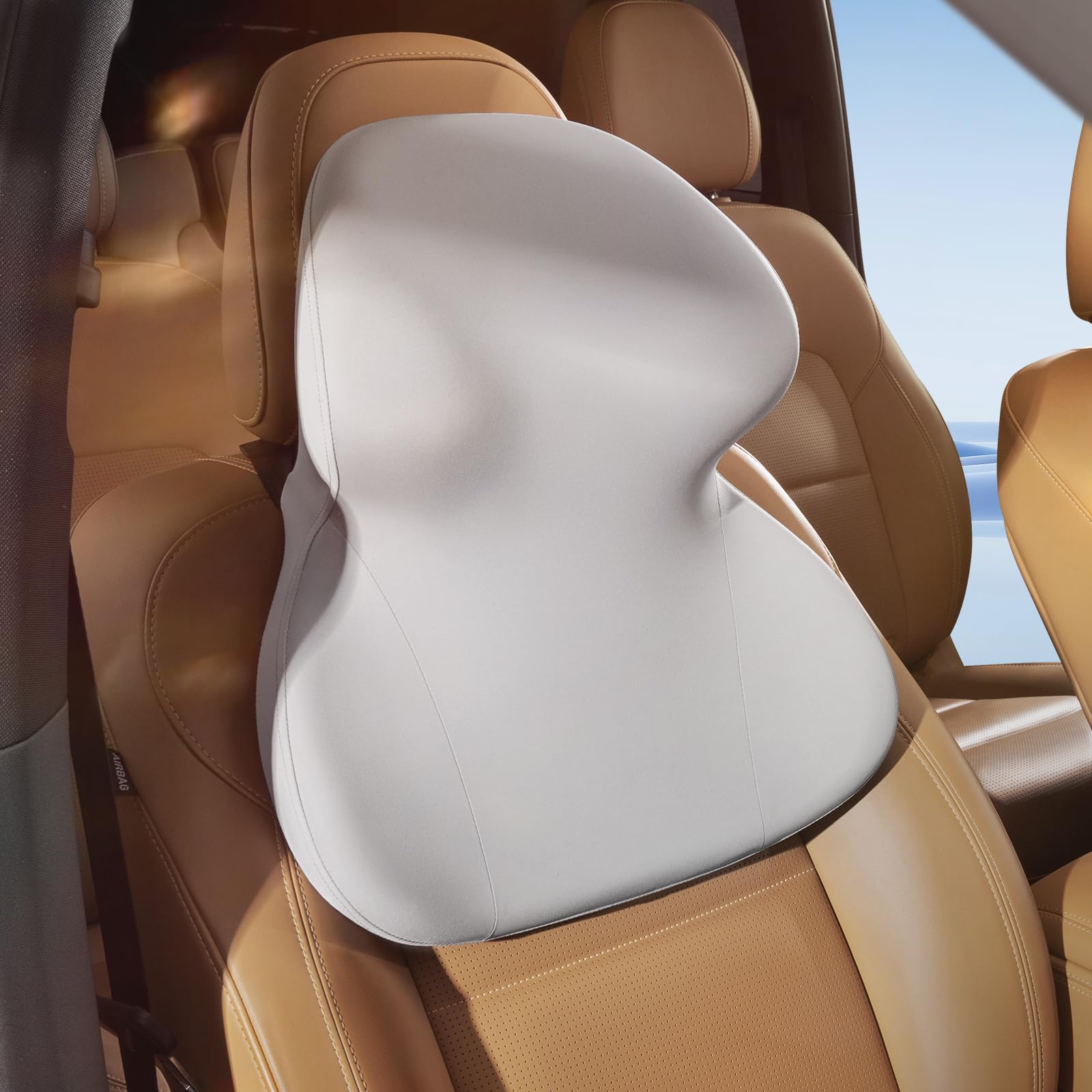
BEBAS is the “big pillow” in the headrest category. The enlarged surface area is genuinely useful if you are a side‑lean sleeper because it gives your head more room to rest without falling off the edge. It also supports the neck‑shoulder transition, which is where a lot of tension accumulates during long rides.
The key thing to know (and real buyers say it clearly) is that thickness is both the feature and the risk. The pillow adds noticeable depth to the seat, which can push the head and shoulders forward if you sit fully upright. That is why it tends to shine more as a passenger comfort tool—especially when the seat is slightly reclined—than as a strict driving posture pillow.
The fabric is designed to be breathable and the cover is removable and washable, which matters more than you think: car pillows get touched by sunscreen, hair products, snacks, and the occasional spilled coffee. Being able to clean it easily extends the “new pillow” feeling far longer.
Why it can be amazing
- Large resting area: Better for side‑lean sleepers than small neck pads.
- Three‑point contour: Designed to reduce the neck‑shoulder gap and ease tension.
- Comfortable foam feel: Supportive enough for longer rides without feeling like a brick.
- Washable cover: Keeps the pillow fresh over months of use.
Good to know
- Thickness can push posture forward in very upright positions; works best when slightly reclined.
- Shorter users may find alignment tricky—placement takes a bit of experimentation.
Ideal for: Passengers who want a larger, more pillow‑like headrest cushion for long trips and nap-friendly reclining.
Support Guide: Understanding Car Pillow Design (Without the Hype)
If you want to buy once and love it, you need to understand what you are actually paying for. The best products are not “more plush.” They are better engineered for how bodies fall asleep in seats.
Memory Foam: Density + Rebound
High‑density foam supports without collapsing, while rebound speed decides how “alive” the support feels as you shift positions. If foam rebounds too slowly, it can feel like you are sinking and losing support. Fast rebound keeps the neck supported through micro‑movements—especially useful on bumpy roads.
A practical tip: if a pillow is described as “soft but supportive” and “rebounds quickly,” it tends to work better for mixed sleepers who shift between upright and side‑lean positions.
Fiber Fill & PP Cotton: Loft + Airflow
Fiber fill and PP cotton are about softness and breathability. “Loft” is the pillow’s ability to stay fluffy. High‑loft fills feel cooler and more forgiving, which many people prefer for summer travel. The trade‑off is that these fills can compress over time and may need fluffing, especially on multi‑day trips.
If overheating is your problem, a high‑loft pillow with a washable cover can be a smarter long-term choice than dense foam—comfort stays pleasant longer.
FAQ: Car Sleeping Pillows
Why do I wake up from “head bobbing,” and which style fixes it?
How do I stop a headrest pillow from hitting my head instead of my neck?
Can I wash these pillows?
Why does some memory foam smell when I open it?
Final Thoughts: The Verdict
If you want the most universally satisfying road‑trip upgrade, the best car pillow for sleeping for most families is the Atablyn Back‑Seat U‑Shaped Travel Pillow because it supports multiple sleep angles without needing a perfect posture. For deep back‑seat sleep, step up to the FHSGGP Cocoon Pillow. And if you want a compact option that still tackles chin‑drop, the FlyHugz Neck Travel Pillow is the clean, travel‑friendly pick.

Mo Maruf
I created WellFizz to bridge the gap between vague wellness advice and actionable solutions. My mission is simple: to decode the research and give you practical tools you can actually use.
Beyond the data, I am a passionate traveler. I believe that stepping away from the screen to explore new environments is essential for mental clarity and physical vitality.