Our readers keep the lights on and my smoothie glass nicely filled. As an Amazon Associate, I earn from qualifying purchases.
Navigating a cancer diagnosis fundamentally shifts how you look at the world, and most importantly, how you view your own home. Your house is no longer just a place to relax after a long day; it must become a profoundly safe, meticulously protected sanctuary. When undergoing aggressive treatments like chemotherapy, radiation, or immunotherapy, the body’s white blood cell count often plummets. This fragile physical state, known clinically as neutropenia, means that your immune system is temporarily stripped of its natural defenses, leaving you highly vulnerable to airborne threats that a healthy body would effortlessly swat away.
If you are searching for the best air purifier for cancer patients, you are taking a brilliant, proactive step toward commanding your recovery environment. However, you must understand that shopping for medical-grade indoor air quality is vastly different from picking up a basic desk fan. You cannot afford to rely on generic models that just push stale air around the room. Everyday household air is teeming with microscopic invaders: dangerous fungal spores (like Aspergillus, which can be devastating to immunocompromised lungs), aerosolized bacteria, volatile organic compounds (VOCs) off-gassing from furniture and harsh cleaning chemicals, and insidious pet dander.
But here is the harsh truth that most generic home appliance buying guides completely ignore: not every heavily marketed air purifier is safe for an oncology patient. Some units produce trace amounts of ozone, which can severely irritate already inflamed mucous membranes and compromised lungs. Furthermore, we have to talk about nausea. A notoriously agonizing side effect of chemotherapy is hyperosmia (an extreme, heightened sensitivity to smells). The scent of cooking garlic, a nearby pet, or the off-gassing of a household surface cleaner can trigger violent nausea. To combat this, your chosen purifier requires a dense, robust Activated Carbon layer that physically absorbs and neutralizes these Volatile Organic Compounds (VOCs) before they can reach the patient’s nose.
In this exhaustively researched guide, we are looking far beyond the glossy marketing spec sheets. We have analyzed real-world feedback from families, caregivers, and immunocompromised patients to evaluate 13 outstanding models. From massive whole-house defenders with dual intakes to whisper-quiet bedside guardians, these units are specifically graded on their ability to create a sterile, odorless, and deeply restful environment. When you finally find the best air purifier for cancer patients, it provides an invaluable sense of relief, knowing that every breath taken is contributing to healing rather than harm.
In this article
- How to Choose the Best Air Purifier For Cancer Patients
- Quick Comparison: 13 Best Air Purifier For Cancer Patients Picks
- In‑Depth Reviews: Evaluating the Best Air Purifiers for Cancer Recovery
- The Science: Why Air Quality Matters During Oncology Treatments
- FAQ: Finding the Best Air Purifier For Cancer Patients
How to Choose the Best Air Purifier For Cancer Patients
When you are shopping to protect an immunocompromised individual, the standard rules of buying household appliances simply don’t apply. You aren’t just trying to reduce dusting frequency; you are building an invisible, mechanical fortress against pathogens, allergens, and toxic compounds. Here is the rigorous, expert decision framework you must use to evaluate an air purifier before bringing it into a recovery space.
1. True HEPA Filtration is Non-Negotiable
The terms “HEPA-type,” “HEPA-like,” or “99% efficient” are dangerous marketing gimmicks that you must avoid. You need True HEPA (or H13/H14 Medical Grade HEPA). True HEPA filters are rigorously tested and certified to capture at least 99.97% of airborne particles as small as 0.3 microns. Many premium units even capture particles down to 0.1 microns.
Why does this microscopic distinction matter? Fungal spores (like Aspergillus), which thrive in household dust, damp basements, and old HVAC systems, are incredibly dangerous to patients with neutropenia. True HEPA physically traps these spores, alongside bacteria-carrying dust mites, fine wildfire smoke particulate, and allergens, permanently removing them from the patient’s breathing zone.
2. The Zero Ozone Rule (Crucial for Lung Health)
This is perhaps the most critical safety warning for caregivers: Do not buy an air purifier that generates ozone. Some purifiers use ionizers, plasma generators, or electrostatic precipitators that release ozone gas as a byproduct of the cleaning process to make the air smell “crisp.”
While healthy lungs might only experience mild irritation from ozone, a cancer patient undergoing chest radiation or taking toxic chemotherapy drugs (like bleomycin) often has highly sensitive, inflamed lung tissue and mucous membranes. Ozone can trigger severe coughing, chest tightness, asthma attacks, and shortness of breath. Always look for certifications like CARB (California Air Resources Board) compliance and explicit “Zero Ozone” verification. If a unit has an optional ionizer, ensure it can be permanently toggled off.
3. Activated Carbon for VOCs and Odor Nausea
Chemotherapy dramatically alters a patient’s sense of smell. Normal household odors—cooking onions, brewing coffee, the scent of new furniture off-gassing Volatile Organic Compounds (VOCs), or harsh chemical cleaning agents used to sanitize the home—can instantly trigger violent, exhausting bouts of nausea and vomiting.
A True HEPA filter alone cannot stop odors or chemical gases; they pass right through the physical fiberglass webbing. You need a thick, high-quality Activated Carbon Filter. The porous carbon chemically adsorbs gas molecules, neutralizing odors and locking away harmful VOCs, making the air smell “crisp” and significantly reducing those miserable nausea triggers.
4. Defense Against Airborne Pathogens (UV-C & Specialized Filters)
Patients dealing with a low white blood cell count have a drastically reduced ability to fight off common colds, the seasonal flu, or bacterial infections. While a HEPA filter traps these viruses and bacteria, certain models take it a step further. Purifiers equipped with safely enclosed UV-C light technology or specially treated antimicrobial filters actually neutralize and destroy the DNA/RNA of these pathogens, ensuring they cannot multiply inside the filter housing.
5. Sizing, CADR, and “Over-Speccing” Your Room
CADR stands for Clean Air Delivery Rate. It measures exactly how much clean air the unit pushes out per minute. A common mistake is buying a tiny desktop purifier for a large master bedroom and expecting medical-grade results.
When dealing with compromised immunity, my golden rule is to over-spec the machine. If the patient’s bedroom is 200 square feet, buy a purifier rated for 500 to 1000 square feet. Why? A larger machine can easily cycle the air in a small room 4 to 5 times per hour on a very low, whisper-quiet fan speed. A smaller machine will have to run on its absolute loudest, highest setting to achieve the same air turnover, completely disrupting the patient’s crucial rest.
Quick Comparison: 13 Best Air Purifier For Cancer Patients Picks
Use this table to quickly identify which model aligns with your room size and specific health concerns. Then, dive into the extensive, detailed reviews below to understand exactly how they perform in real-world caregiving scenarios.
On smaller screens, swipe or scroll sideways to see the full table.
| Model | Coverage Area | Best Defense Feature | Ideal Match For… | Amazon |
|---|---|---|---|---|
| LEVOIT Vital 200S-P | Up to 1875 sq. ft. | Washable Pre-Filter + Laser AQI Sensor + Massive U-Shaped Intake | Most homes needing a powerful, low-maintenance, smart “Best Overall” shield. | Amazon |
| KNKA APH4000 | Up to 3500 sq. ft. | Dual Filter System + Incredible Whole-House Coverage + Eco Mode | Open-concept living spaces where the patient spends most of the day. | Amazon |
| Clorox Medium Room | Up to 1000 sq. ft. | Specifically tested to reduce 99.9% of Viruses & Bacteria | Highly immunocompromised patients requiring intense pathogen reduction. | Amazon |
| LEVOIT Vital 100S-P | Up to 1073 sq. ft. | Light Detection Sleep Mode + Washable Filter in a compact footprint | Large master bedrooms requiring smart sensing without a massive physical footprint. | Amazon |
| GermGuardian AC4825E | Up to 743 sq. ft. | True HEPA + UV-C Light for destroying airborne germs | Patients who want the extra biological defense of zero-ozone UV-C sanitization. | Amazon |
| LEVOIT Core 300-P | Up to 1073 sq. ft. | Proven 360-degree cylindrical filtration with ultra-quiet 24dB Sleep Mode | Standard bedrooms requiring a reliable, time-tested classic that guarantees quiet sleep. | Amazon |
| LUNINO K2 | Up to 3000 sq. ft. | Double-Sided Intake for 2x faster air turnover | Homes with heavy dust problems or lingering cooking odors that trigger nausea. | Amazon |
| ECOSELF HAP603 | Up to 2400 sq. ft. | 2X-Power Filtration + 22dB QuietMax Sleep Mode | Light sleepers who need robust filtration without any disruptive mechanical noise. | Amazon |
| MOOKA PR1 | Up to 2200 sq. ft. | Dedicated “Pet Mode” to aggressively tackle heavy dander and hair | Families with pets who want to safely keep their furry friends near the patient. | Amazon |
| ECOSELF HAP609 | Up to 1800 sq. ft. | Instant-react Auto Mode with a highly visible color-coded AQI ring | Caregivers who want a hands-off, “set it and forget it” visual indicator system. | Amazon |
| LEVOIT Core 200S-P | Up to 675 sq. ft. | Smart Voice Control + VeSync App in a budget-friendly package | Tech-savvy families and bedridden patients who want to monitor the room air remotely. | Amazon |
| WESTHEY AP02 | Up to 1650 sq. ft. | H13 True HEPA with deeply soothing optional ambient night light | Budget-conscious buyers needing a solid H13 filter for secondary recovery rooms. | Amazon |
| LEVOIT Core Mini-P | Up to 255 sq. ft. | Ultra-portable 2.2 lb desktop design with Aroma Pad | Placing directly on a nightstand to create a localized bubble of clean, soothing air. | Amazon |
In‑Depth Reviews: Evaluating the Best Air Purifiers for Cancer Recovery
A manufacturer’s spec sheet cannot tell you how an air purifier behaves when a patient is trying to sleep through bone-deep fatigue, or how easily an emotionally exhausted caregiver can swap a filter. I evaluate these machines based on real-world medical sanctuary needs: pathogen capture, ease of maintenance, quietness, and smart-sensor reliability. Here is the deep dive into the absolute best models available.
1. LEVOIT Vital 200S-P – The Ultimate, Low-Maintenance Medical-Grade Shield

If you are setting up a central recovery room, or a large living space where the patient will spend the vast majority of their time resting, the LEVOIT Vital 200S-P is the most well-rounded, dependable investment you can make. What elevates this machine to the top spot is a brilliant engineering choice: the massive U-shaped air inlet combined with a washable pre-filter.
In many homes, airborne pet dander and thick household dust will rapidly clog a standard HEPA filter, severely reducing its ability to catch microscopic threats like mold spores or smoke. The Vital 200S-P allows caregivers to simply pop off the front grill, remove the pre-filter, and rinse it under the sink. This ensures the expensive inner HEPA core remains pristine and highly efficient at capturing the 0.1 to 0.3-micron pathogens that actually threaten an immunocompromised patient.
Real-world feedback from families managing chronic illness consistently highlights the incredible sensitivity of its laser dust sensor. If someone starts cooking down the hall, or a window is opened letting in seasonal pollen, the auto-mode instantly detects the intrusion and ramps up the fan speed to neutralize the threat before it reaches the patient’s lungs. Combined with the VeSync app, which allows a caregiver to monitor the exact air quality (AQI) from another room, it provides profound peace of mind. And crucially, its dedicated Sleep Mode utilizes a light-detection sensor—turning off all harsh LED lights and dropping the noise to a whisper-quiet hum when the room goes dark, ensuring the restorative sleep necessary for healing is never disrupted.
Why it’s a medical sanctuary essential
- Washable Pre-Filter – Saves immense money on replacement filters and keeps the main HEPA core operating at peak medical-grade efficiency.
- Hyper-Sensitive Auto Mode – The laser sensor reacts instantly to cooking smoke, VOCs, and dust, adjusting fan speed automatically.
- Custom Filter Options – You can buy specific replacement filters tailored for Toxins/VOCs or Pet Allergies, depending on your home’s unique needs.
- Seamless Smart App – Caregivers can adjust schedules, check air quality, and monitor filter life from their phone without disturbing the patient.
Good to know
- The machine is physically larger than cylindrical models; you will need dedicated floor space for its U-shaped intake to breathe properly.
- On its absolute highest “Turbo” setting, the air rush is loud, though the Auto mode rarely needs to push it this high for long.
Ideal for: Primary living spaces or large master suites where the patient spends the majority of their day, offering the ultimate balance of heavy-duty filtration and smart, hands-off automation.
2. KNKA APH4000 – Massive Whole-House Filtration with Dual Cartridge Power
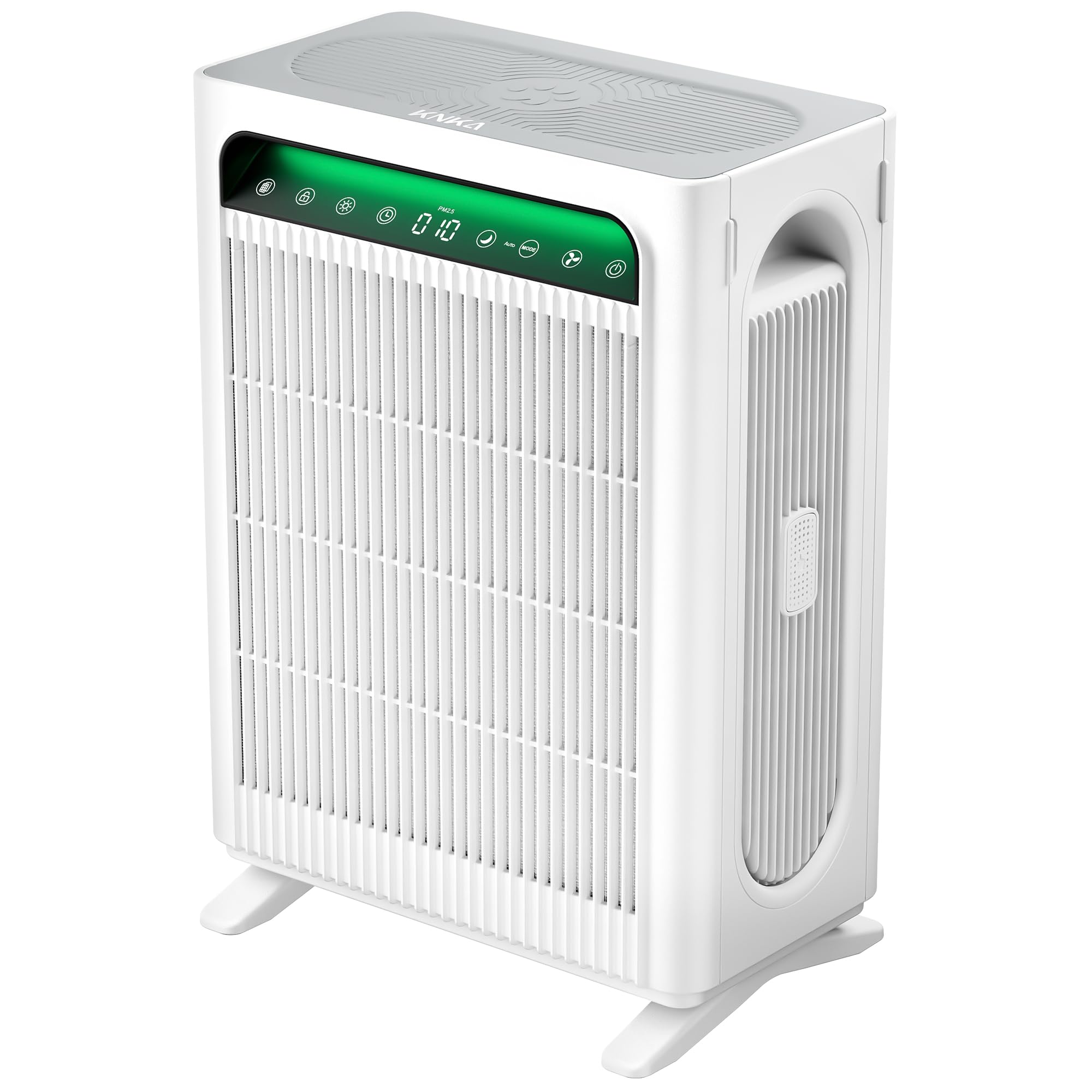
When dealing with an open-concept home layout, a standard bedroom air purifier simply will not have the velocity or fan strength to push clean air across vast spaces. The KNKA APH4000 is a heavy-duty powerhouse specifically engineered for massive volumes of air, boasting the ability to filter up to 3,500 square feet. This makes it an incredibly strategic choice for families who want to establish a clean-air perimeter encompassing the kitchen, living room, and dining area where the patient might walk or rest during the day.
The secret to its massive CADR (Clean Air Delivery Rate of 226 CFM) is its dual-cartridge design. It pulls in polluted air from both the front and the back simultaneously, running it through two entirely separate 3-stage filtration systems (Washable Pre-Filter, True HEPA, and Activated Carbon). Because it has double the surface area of a standard purifier, it can cycle air incredibly fast without the motor having to scream at a high pitch. In fact, many users note that even when processing a tremendous amount of air, the acoustic profile drops to a remarkable 22dB on sleep mode.
For an oncology patient sensitive to odors, the KNKA is a lifesaver during meal prep. Cooking odors that would normally spread through an open floor plan and induce nausea are rapidly sucked into the dual carbon filters. The unit also features an intelligent ECO Mode; when the built-in sensor determines the air is pristine (green zone), it puts the machine into standby, saving electricity and extending the life of the dual filters, only kicking back on when it detects a new influx of particulate.
Why it’s a powerhouse
- Immense 3500 sq. ft. Coverage – Easily handles open floor plans, ensuring the patient isn’t confined to one small “clean” room.
- Dual Filtration System – Two sets of filters mean faster air exchange and better trapping of VOCs and heavy allergens.
- Dedicated Pet Mode – Quickly clears the air of dander so patients don’t have to isolate from their pets.
- Smart ECO Mode – Automatically goes into standby when the air is perfectly clean, saving on energy bills and filter wear.
Good to know
- Because it utilizes two filters simultaneously, replacement costs will naturally be higher when it comes time to swap them out.
- It requires placement away from walls so both the front and rear intakes are completely unobstructed.
Ideal for: Open-concept homes, large living rooms, and spaces where caregivers want to establish a massive, whole-house boundary of purified air.
3. Clorox Medium Room Air Purifier – Specifically Tested for Virus & Bacteria Reduction

When the immune system is severely compromised by chemotherapy, the primary concern shifts from standard household dust to highly dangerous biological pathogens. Clorox, a brand synonymous with deep sanitization for over a century, engineered this purifier specifically to address those microscopic biological threats. Independent testing confirms its True HEPA filter reduces 99.9% of viruses and bacteria (like Staph aureus and MS2 virus) as the air passes through the media.
It utilizes a 360-degree cylindrical filter, which means it pulls in air from every direction in the room rather than just a flat front panel. This creates an aerodynamic vortex effect that is incredibly efficient at clearing a 225 sq. ft. room five times per hour (or a 1000 sq. ft. room once an hour). That high ACH (Air Changes per Hour) is exactly what oncologists recommend for maintaining a sterile home environment.
Caregivers highly rate the accuracy of its PM2.5 digital display. Instead of just a colored light, you get an exact numerical reading of the particulate matter in the air. If a visitor walks in carrying pollen on their jacket, or a damp towel introduces mold spores into the air, the sensor detects it, visually alerts you, and ramps up the fan to capture the threat. It does all of this while maintaining a whisper-quiet profile that seamlessly blends into the background of a recovery room. The active carbon layer also gets high marks for neutralizing heavy musty smells and chemical odors.
Why it excels in clinical defense
- Targeted Pathogen Capture – Independently tested to physically capture 99.9% of viruses and bacteria in the filter media.
- 360-Degree Air Intake – Can be placed anywhere in the room and will efficiently pull air from all angles.
- Precise Digital AQI – Provides exact PM2.5 numerical readouts, removing all guesswork about the room’s safety.
- Trusted Brand Engineering – Built with the robust durability and strict standards expected from the Clorox name.
Good to know
- While it captures viruses, it does not actively “kill” them with UV; they are trapped permanently in the HEPA webbing until disposal.
- The cylindrical filter is a single, unified piece, meaning you cannot replace just the carbon or just the HEPA separately.
Ideal for: Highly immunocompromised patients where capturing and trapping airborne bacteria, mold spores, and viruses is the absolute highest priority.
4. LEVOIT Vital 100S-P – The Perfect Smart Companion for Master Suites
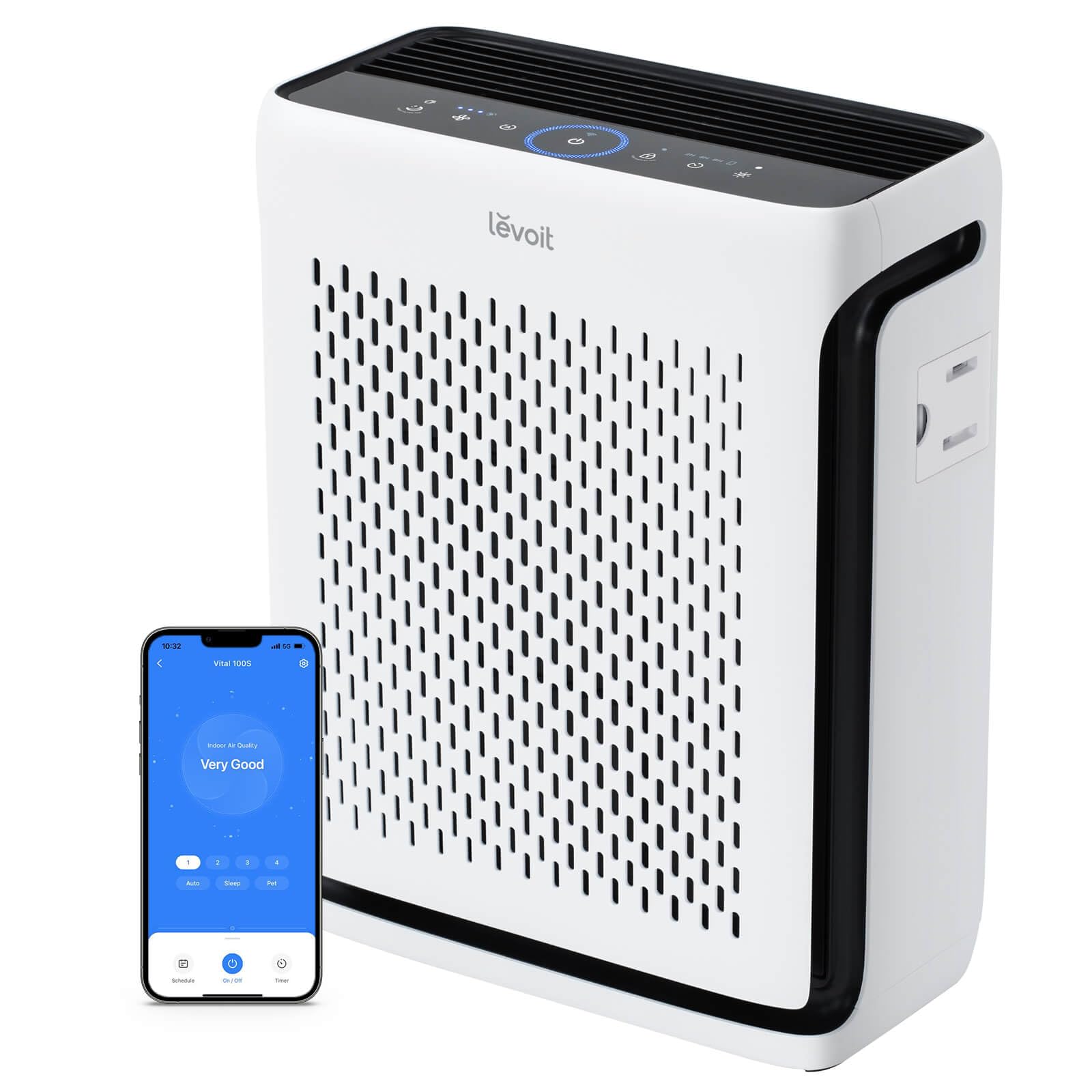
The LEVOIT Vital 100S-P takes the brilliant, highly acclaimed architecture of the larger 200S-P and shrinks it down into a more compact footprint, making it the absolute perfect choice for a master bedroom or a dedicated recovery suite. It retains the crucial washable pre-filter, which is a massive advantage over standard cylindrical purifiers. Being able to wipe away surface dust and pet hair weekly without degrading the True HEPA core is a massive cost-saver for families dealing with the financial strain of long-term medical care.
What makes this unit a standout for a patient’s bedroom is its sophisticated light detection system. When the room goes dark at night, the Vital 100S-P automatically dims its display lights and limits the Auto Mode fan speed to a whisper-quiet 23 decibels. A patient who is exhausted from radiation therapy will never be jolted awake by a sudden, loud fan spike or a glaring LED display staring at them from across the room.
Caregivers love this unit because of the VeSync app. If you are sleeping in another room, or are at work, you can open the app on your phone, check the exact air quality in the patient’s room, and adjust the fan speed or set a schedule without ever opening their door and risking waking them up. It also features a dedicated “Pet Mode” which is incredibly useful if the patient draws emotional support from a family dog or cat, allowing the animal to remain in the room while the machine aggressively handles the dander.
Why it’s a bedroom champion
- Light Detection Sleep Mode – Automatically dims lights and softens noise when the room gets dark to protect sleep cycles.
- Washable Front Pre-Filter – Easily removes pet hair and large dust, preserving the expensive HEPA filter inside.
- Remote Caregiver Control – Adjust settings and monitor AQI via the app without entering the room and waking the patient.
- Dedicated Pet Mode – Safely filters out heavy dander so emotional support pets can stay close to the patient.
Good to know
- It is built for medium-to-large bedrooms (up to 1073 sq. ft.); it will struggle if placed in a massive open-concept living room.
- You must connect it to a 2.4GHz WiFi network to utilize the smart app features and remote monitoring.
Ideal for: Master bedrooms and dedicated recovery suites where quiet, uninterrupted sleep and remote caregiver monitoring are essential.
5. GermGuardian AC4825E – True HEPA with Airborne Germ-Destroying UV-C

For well over a decade, the GermGuardian AC4825 series has been an absolute staple in homes requiring serious biological air management. What separates this tall, slim tower from the rest of the pack is its active UV-C light technology. While a standard HEPA filter physically traps particles, the optional UV-C bulb actively works to destroy the DNA of airborne viruses, bacteria, and mold spores that pass through the chamber, rendering them unable to replicate.
For a cancer patient recovering at home, mold spores are a terrifying invisible threat. The addition of a UV-C light provides a secondary layer of “kill” defense that standard mechanical filters simply cannot offer. Critically, GermGuardian has ensured this unit is Zero Ozone Verified. Often, older UV-C purifiers or ionizers can accidentally produce ozone, but this unit has been independently tested to ensure it remains completely safe for compromised lungs.
Because it is a tower design, it has a remarkably small footprint, making it easy to tuck into the corner of a cramped bedroom or next to a hospital bed. The operation is entirely manual—just a reliable rotary dial—which many elderly patients or those frustrated by complicated digital screens heavily prefer. On its lowest setting, it produces a very smooth, consistent white noise that many users report helps drown out household sounds, aiding in deeper daytime naps.
Why it’s a biological defender
- Active UV-C Bulb – Adds a layer of biological defense by actively destroying the DNA of germs, bacteria, and mold.
- Zero Ozone Verified – Completely safe for oncology patients, ensuring no lung-irritating ozone is produced.
- Simple, Foolproof Controls – A physical rotary dial makes it incredibly easy to operate without needing a smartphone or app.
- Slim Tower Footprint – Easily fits into tight corners or next to bedside tables without eating up floor space.
Good to know
- It lacks an auto-sensor; you must manually adjust the fan speed if the air quality in the room changes.
- The UV-C bulb will eventually burn out and require replacement alongside the HEPA filter (usually every 10 to 12 months).
Ideal for: Patients who want the peace of mind of active UV-C germ destruction in a simple, easy-to-use, analog tower format.
6. LEVOIT Core 300-P – The Undisputed King of Reliable Cylinder Filtration

If you want an air purifier that simply works perfectly out of the box with zero learning curve, the LEVOIT Core 300-P is legendary in the air purification community. It utilizes a highly efficient cylindrical design, drawing dirty air in from all 360 degrees and pushing pure, clean air straight up towards the ceiling to create an excellent room-circulating vortex. It is purely manual, meaning you set the speed and let its 56W high-torque motor do the heavy lifting.
For a cancer patient’s room, its greatest strength is its QuietKEAP technology. On Sleep Mode, it operates at a barely perceptible 24 decibels. To put that in perspective, it is quieter than a normal human whisper. You can also completely kill the display lights with the push of a button, ensuring absolute pitch-black darkness. Despite this silent profile, the motor guarantees that the air is still being actively pulled through the True HEPA and activated carbon layers all night long.
Like the Vital series, the Core 300-P allows you to customize your defense. If the patient is highly sensitive to chemical smells and VOCs, you can swap the standard filter for LEVOIT’s specialized “Toxin Absorber” filter. This customization ensures that as the patient’s sensitivities change throughout their chemotherapy cycles, the machine can adapt to protect them. It is robust, practically indestructible, and incredibly easy to maintain.
Why it’s a time-tested favorite
- True 360-Degree Vortex – Pulls air from all sides, preventing dead zones of dirty air in the bedroom.
- Ultra-Quiet 24dB Sleep Mode – Practically silent operation combined with a “display off” feature for perfect sleep hygiene.
- Customizable Filters – Swap in the Toxin/VOC filter to specifically combat nausea-inducing chemical odors.
- Incredibly Reliable – Backed by millions of users, it is a sturdy, well-engineered machine that rarely encounters mechanical issues.
Good to know
- This specific model (Core 300-P) does not have an Auto Mode or laser sensor; you must manually adjust the three fan speeds.
- The pre-filter is attached to the main HEPA drum, meaning you must gently vacuum it rather than aggressively washing it in a sink.
Ideal for: Standard bedrooms where absolute reliability, whisper-quiet sleep, and powerful 360-degree mechanical filtration are prioritized over smart features.
7. LUNINO K2 – Double-Sided Intake for Rapid Odor and Dust Clearing
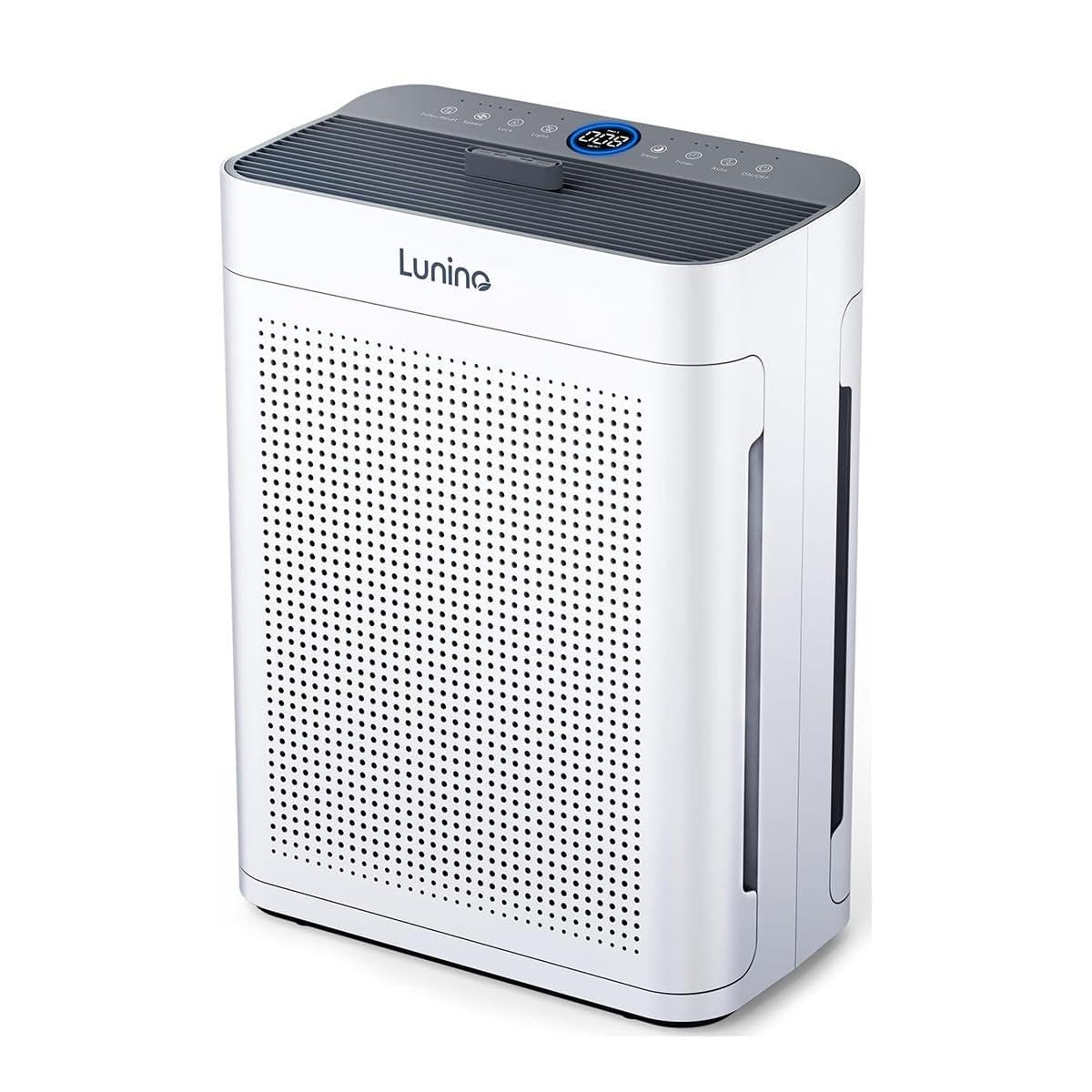
The LUNINO K2 tackles the problem of poor indoor air quality through sheer surface area. Rather than a standard front-intake or cylindrical design, it features two massive, flat filtration panels on both the left and right sides of the machine. This allows it to pull in a tremendous volume of air simultaneously, delivering what the manufacturer accurately calls “2x faster purification.” When an immunocompromised patient is dealing with a sudden influx of dust from a cleaning session or a strong cooking odor, speed is everything.
Real users frequently praise how quickly the LUNINO K2 neutralizes odors. This is a massive benefit for chemotherapy patients who experience sudden bouts of nausea triggered by lingering smells. The machine features an internal air quality sensor that reads the exact PM2.5 level. If a sudden odor or smoke enters the room, the auto-adjusting wind speed kicks into high gear, aggressively cycling the room’s air until the threat is neutralized, and then quietly dropping back down to its 15dB sleep state.
Furthermore, both sides feature washable pre-filters. Vacuuming or rinsing these pre-filters ensures the deep-layered HEPA and Activated Carbon remain pristine for much longer. It also features a top-mounted aromatherapy pad, though caregivers should use this cautiously, as introduced scents can sometimes overwhelm a sensitive patient. However, if a specific, mild essential oil (like ginger or peppermint) helps soothe their nausea, this feature is a wonderful, gentle delivery system.
Why it excels at rapid clearing
- Double-Sided Intake – Two massive filter panels pull air twice as fast, neutralizing sudden odors rapidly.
- 15dB Sleep Mode – Operates at an incredibly low acoustic level, ensuring the patient’s rest is completely undisturbed.
- Washable Pre-Filters – Protects the HEPA cores and saves money by allowing easy removal of surface pet hair and dust.
- Precise Auto Mode – Takes the guesswork out of operation by reacting instantly to spikes in airborne particulates.
Good to know
- Because it breathes from two opposite sides, it must be placed perpendicularly to a wall, requiring a bit more strategic room placement.
- The display PM2.5 sensor takes a minute or two to calibrate accurately upon startup before giving a true reading.
Ideal for: Homes that battle heavy dust or sudden, strong cooking odors where the patient requires rapid air turnover to prevent nausea.
8. ECOSELF HAP603 – Silent Operation Engineered for Restorative Sleep
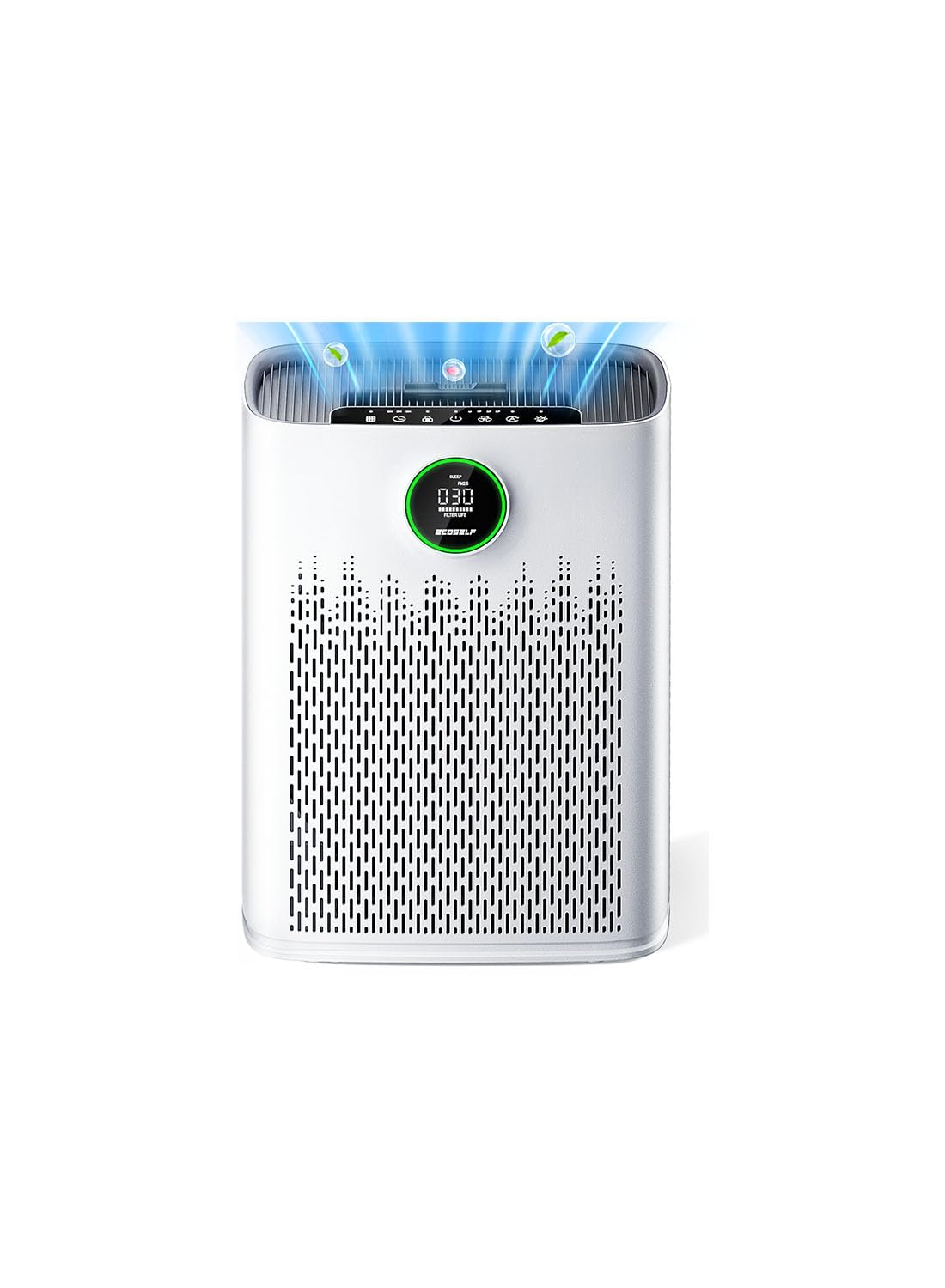
The ECOSELF HAP603 is an elegant, highly capable purifier that strikes a beautiful balance between raw power and sensory comfort. Rated to handle large spaces up to 2400 sq. ft., it brings professional-grade True HEPA filtration into a design that feels incredibly soothing in a bedroom or quiet study. For cancer patients, managing stress and maintaining a calm environment is a crucial component of the healing process, and this machine is built to be as unobtrusive as possible.
Its standout feature is the 22dB QuietMax Sleep Mode. Mechanical humming from fans can cause tension headaches for patients dealing with radiation fatigue. The HAP603 utilizes advanced motor dampening to push massive amounts of air through the 360-degree intake while remaining virtually silent. The front-facing PM2.5 infrared sensor keeps a constant, vigilant watch over the air quality, visually communicating safety through a sleek digital display so the caregiver knows the room is secure at a glance.
Additionally, the built-in aromatherapy sponge allows caregivers to introduce anti-nausea scents (like peppermint or chamomile) into the purified airflow. Because it disperses the scent through the clean air vortex, the distribution is gentle and even, avoiding the harsh “scent wall” effect that typical plug-in air fresheners create, which can easily trigger sickness in sensitive patients.
Why it’s soothing for recovery
- QuietMax 22dB Operation – Engineered to prevent acoustic stress, making it ideal for patients prone to headaches or light sleeping.
- Aromatherapy Ready – Allows the gentle dispersion of soothing, nausea-reducing essential oils into the clean air stream.
- Infrared AQI Tracking – Keeps caregivers constantly informed of the invisible particulate matter in the room.
- Broad Coverage Area – Capable of turning over air in large master suites easily without straining the motor.
Good to know
- Caregivers must be cautious with the aromatherapy feature; only use scents approved by the patient, as smell sensitivities change rapidly.
- The bright white exterior is sleek but can show scuffs or dust buildup easily, requiring occasional wipedowns.
Ideal for: Light sleepers and patients who benefit from the gentle dispersion of therapeutic, nausea-combating essential oils in a whisper-quiet environment.
9. MOOKA PR1 – The Aggressive Defender for Homes with Pets
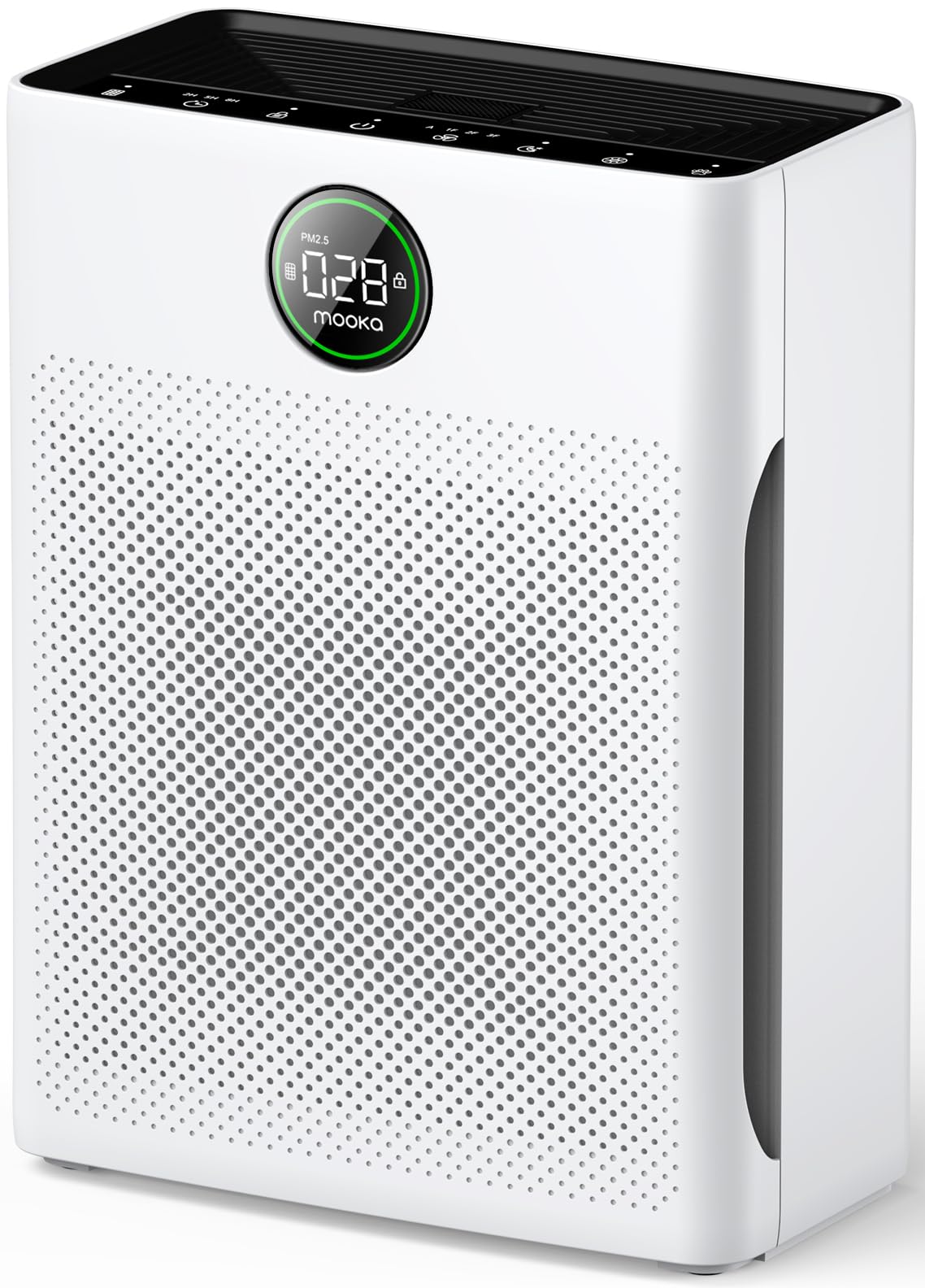
For many oncology patients, a family dog or cat provides immeasurable emotional support, reducing anxiety and depression during grueling treatment cycles. However, pet dander, shedding hair, and the microscopic bacteria pets track in from outside are direct threats to a compromised immune system. The MOOKA PR1 is a robust machine specifically engineered to bridge this gap, allowing the patient to keep their furry friends close without compromising their respiratory safety.
This model covers a massive 2,200 sq. ft. and features an innovatively engineered “Pet Mode.” When activated, the unit alters its intake velocity to specifically target heavier particulate matter like floating pet hair and dense dander clusters, capturing them before they can settle onto the patient’s bedding. Because pet hair will quickly destroy a HEPA filter, MOOKA included a robust, easily washable pre-filter. Caregivers can pull it out, wash away the trapped fur in the sink, dry it, and pop it back in, keeping maintenance costs incredibly low.
The PM2.5 sensor provides real-time feedback on the screen, and the auto mode will adjust dynamically if the dog suddenly shakes off dust in the room. Operating at a low 26dB on sleep mode, it won’t disturb the patient or the pet. It is a rugged, highly functional machine that tackles the messiest airborne realities of household life safely.
Why it’s perfect for pet owners
- Aggressive Pet Mode – Calibrated to suck in heavy pet dander and hair that standard purifiers often miss.
- Washable Pre-Filter – Essential for homes with pets; prevents the HEPA core from suffocating under a blanket of fur.
- Strong Odor Neutralization – The carbon layer works overtime to eliminate the “wet dog” or litter box smells that can cause nausea.
- Real-Time AQI Sensor – Visually alerts the caregiver when pet-related allergens spike in the room.
Good to know
- When Pet Mode is engaged, the fan runs at a higher, more audible velocity, which might be too loud for watching TV or sleeping.
- The sensor is located on the back left; ensure this area is kept a few inches away from walls for accurate readings.
Ideal for: Patients who rely on the emotional support of indoor pets but desperately need to eliminate the dander, hair, and odors they bring into the room.
10. ECOSELF HAP609 – Instant-React Auto Mode with Bright Visual Cues
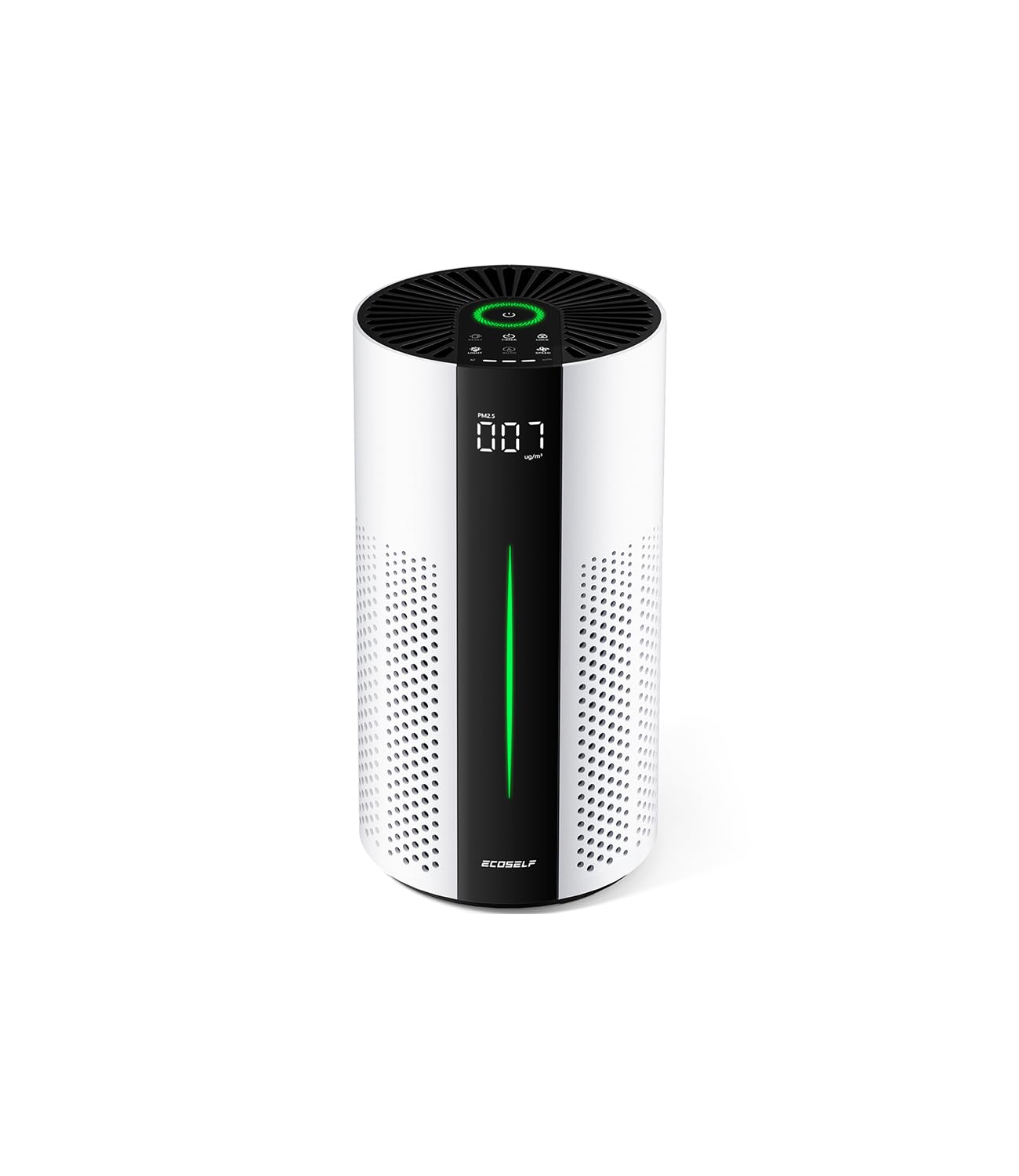
Caregivers are often completely overwhelmed managing medications, meals, and doctor appointments. They simply do not have the mental bandwidth to constantly adjust an air purifier. The ECOSELF HAP609 is the perfect “set it and forget it” machine. It utilizes a highly visible, color-shifting LED ring (Green, Blue, Amber, Red) combined with a precise PM2.5 sensor. You can glance at the unit from across the room and instantly know the air is safe (Green) or if a threat has been detected (Red).
The 360-degree cylindrical air intake pulls in polluted air from all angles, meaning you can place it almost anywhere in the room without worrying about “dead zones” where dust and allergens settle. When the sensor detects smoke, pollen, or an influx of VOCs, the Auto Mode instantaneously kicks the fan into a higher gear, scrubs the room, and then powers down to a whisper-quiet 20dB state.
For an oncology patient, 20 decibels is virtually imperceptible. It guarantees that the air is constantly being circulated and purified without any grating mechanical whine. The 1-to-24 hour timer is also a fantastic feature for caregivers who want to blast the room with high-velocity purification while the patient is away at a doctor’s appointment, ensuring they return to a perfectly sterile-feeling environment.
Why it’s a caregiver’s best friend
- Highly Intuitive Auto Mode – Requires zero manual adjustment; the machine does all the thinking and reacting for you.
- Clear Color-Coded Ring – Provides instant, across-the-room visual confirmation that the patient’s air is clean.
- 20dB Sleep Mode – One of the quietest machines on the market, ensuring zero acoustic stress during recovery.
- 360-Degree Pull – Eliminates dead zones by drawing in air from every angle in the room.
Good to know
- The bright LED ring is fantastic during the day, but must be manually switched to sleep mode at night to prevent lighting up the room.
- The cylindrical filter is a unified piece, so the entire cartridge must be replaced every 6 months.
Ideal for: Overwhelmed caregivers who want a hands-off, highly visual air purification system that guarantees safety without constant manual adjustment.
11. LEVOIT Core 200S-P – Smart Tech and Voice Control for Smaller Rooms

If you require the absolute reliability of the LEVOIT brand and the convenience of smart-home integration, but are outfitting a smaller room (or are on a strict budget), the Core 200S-P is a phenomenal choice. While it doesn’t have the massive coverage area of the 300 or Vital series, it utilizes the exact same high-efficiency True HEPA technology to capture 99.97% of 0.1-micron particles.
What makes the 200S-P brilliant for an oncology patient is the voice control integration. A patient bedridden from severe chemotherapy fatigue or dealing with neuropathy in their hands does not need to get up to adjust a fan dial. By simply linking the unit to Amazon Alexa or Google Assistant, the patient can say, “Alexa, turn the air purifier to Sleep Mode,” or “Alexa, turn off the purifier display light.” This returns a small but vital sense of autonomy and control to someone whose life currently feels dictated by medical schedules.
Furthermore, the caregiver can use the VeSync app to monitor filter life accurately based on actual usage, rather than just guessing based on a calendar. It is compact, incredibly lightweight (6.6 lbs), and can easily be moved from the bedroom to the living room couch depending on where the patient decides to rest for the day.
Why it’s a brilliant smart unit
- Voice Control Integration – Gives bedridden or fatigued patients the power to control their environment without moving.
- Ultra-Lightweight – At just 6.6 lbs, a caregiver can effortlessly carry it from room to room with one hand.
- True HEPA Defense – Retains LEVOIT’s strict medical-grade filtration standards in a smaller, budget-friendly package.
- Display Off Function – Completely blacks out the unit for pitch-dark, restorative sleeping environments.
Good to know
- It does not have an Auto Mode or a built-in laser particulate sensor; adjustments must be made manually or via the app/voice.
- It is strictly for smaller bedrooms; it will not effectively clear a large open-concept living area.
Ideal for: Smaller recovery bedrooms where the patient will heavily benefit from the autonomy of Voice Control, and caregivers want app connectivity on a budget.
12. WESTHEY AP02 – H13 True HEPA with a Soothing Ambient Night Light
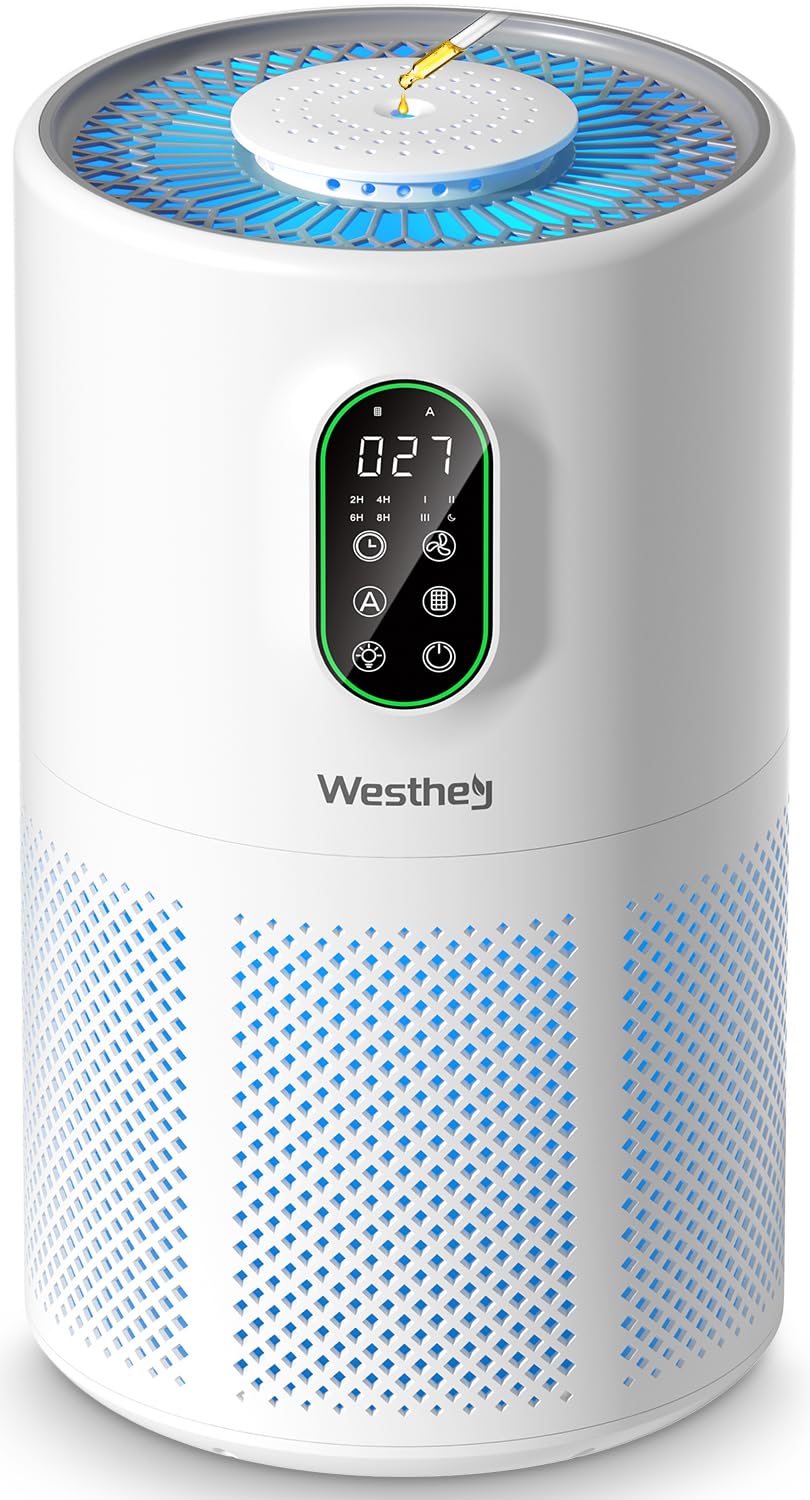
Medical treatments drain finances rapidly, and sometimes you need robust air filtration for secondary rooms without spending hundreds of dollars. The WESTHEY AP02 is a surprising over-performer in the budget category. It features an H13 True HEPA filter—the exact medical grade required to trap 99.98% of 0.3-micron pathogens—and is rated to push air through rooms up to 1650 sq. ft.
What sets the AP02 apart visually and functionally is its ambient night light feature. While absolute darkness is best for deep sleep, cancer patients frequently wake up in the middle of the night needing to use the restroom, take medication, or sip water. Turning on a harsh overhead light can be jarring and induce immediate nausea. The AP02 provides a soft, dynamic, colorful glow that safely illuminates the floor space without shocking the eyes.
It features an intelligent auto mode tied to a PM2.5 digital display, ensuring the machine reacts to dust and odors without manual input. At 15dB on sleep mode, it is remarkably silent for a budget machine. While it may not have the heavy-duty build quality of a Levoit or Clorox unit, it provides genuine H13 pathogen trapping at a price point that allows families to buy multiple units for different rooms in the house.
Why it’s a budget lifesaver
- H13 Medical Grade HEPA – Provides the exact same microscopic filtration quality as machines three times its price.
- Soothing Ambient Light – Provides a gentle, non-jarring glow for patients who need to navigate the room in the middle of the night.
- 15dB Operation – Astonishingly quiet on sleep mode, ensuring zero disruption to the patient’s rest.
- Aromatherapy Pad – Allows for the dispersion of soothing scents to combat treatment-induced nausea.
Good to know
- Replacement filters are specific to the Westhey brand, which may have less long-term availability than massive legacy brands.
- The build is lightweight plastic; it does not feel as robust or heavy-duty as premium units.
Ideal for: Budget-conscious families outfitting secondary rooms, or patients who appreciate a soft, non-jarring ambient nightlight for late-night wakeups.
13. LEVOIT Core Mini-P – The Ultimate 2.2 lb “Clean Air Bubble” Creator

Cancer treatment often involves moving around—from the master bedroom to the living room recliner, to temporary housing near a treatment center, or even into a hospital room for extended stays. In these scenarios, lugging a 15-pound appliance is impossible. The LEVOIT Core Mini-P weighs just 2.2 pounds and is barely 10 inches tall, making it the ultimate portable bedside companion.
Despite its diminutive size, it is a genuine Levoit product featuring a 3-in-1 filtration system (Pre-filter, Main particulate filter, and Activated Carbon). It is designed to sit directly on a nightstand, desk, or side table, blasting clean, purified air directly into the patient’s breathing zone.
Because it is so incredibly portable, caregivers can easily pick it up and move it into the bathroom while the patient showers, or onto the kitchen counter while they eat. It also includes an aroma pad. Many patients report that adding a single drop of peppermint or ginger oil to the pad and letting the Mini-P blow the gentle scent across their pillow is one of the most effective, drug-free ways to combat sudden waves of chemotherapy-induced nausea.
Why it’s the perfect bedside companion
- Targeted Clean Air Bubble – Perfect for placing on a nightstand to blow scrubbed air directly into the patient’s breathing zone.
- Ultra-Portable 2.2 lbs – So light that even a fatigued patient can carry it from the bedside table to a living room side table.
- Aroma Pad for Nausea – Disperses soothing essential oils gently directly into the patient’s immediate space.
- Trusted LEVOIT Filtration – Utilizes a legitimate 3-stage filter rather than the cheap sponges found in typical desktop fans.
Good to know
- It is strictly for personal space (up to 255 sq. ft. max); it will not clean a whole bedroom effectively on its own.
- The aroma pad requires manual drops of oil and must be replaced if you wish to change the scent profile to avoid mixing smells.
Ideal for: Creating a direct, localized bubble of clean, soothing air on a nightstand, side table, or desk, right next to the recovering patient.
The Science: Why Indoor Air Quality is Critical for Oncology Patients
When you are researching the best air purifier for cancer patients, it is vital to understand *why* air quality matters on a deep biological level. A healthy body handles indoor air pollution effortlessly, constantly cleaning itself via mucus and macrophages. A body undergoing chemotherapy, radiation, or a bone marrow transplant simply cannot. Here is what is actually happening in the air, and why these machines act as critical medical tools.
1. The Threat of Neutropenia
Many chemotherapy drugs aggressively attack rapidly dividing cells to stop cancer growth. Unfortunately, this means they also destroy the rapidly dividing healthy cells—most notably, the white blood cells produced in your bone marrow. When a patient’s absolute neutrophil count (ANC) drops significantly, they become neutropenic.
In a normal home, microscopic mold spores (like Aspergillus) float harmlessly in the air. A healthy immune system inhales them and destroys them instantly. For a neutropenic cancer patient, inhaling those same spores can lead to severe, life-threatening pulmonary infections. A True HEPA filter acts as an external immune system. By constantly pulling air through dense fiberglass meshes, the purifier physically traps these spores before they can enter the patient’s respiratory tract.
2. VOCs and Chemo-Induced Nausea
Volatile Organic Compounds (VOCs) are gasses emitted by everyday items: fresh paint, new mattresses, harsh bleach used to sanitize the bathroom, and even certain cooking processes. Healthy individuals barely notice them. However, chemotherapy radically heightens a patient’s olfactory sensitivity.
A lingering chemical smell isn’t just unpleasant; it can trigger violent bouts of nausea and vomiting, disrupting the patient’s ability to eat, hydrate, and maintain their weight. The Activated Carbon filters inside these purifiers act like chemical sponges, adsorbing these gases and neutralizing odors at the molecular level, creating a scent-neutral sanctuary that allows the stomach to settle.
3. The Danger of Secondary Smoke and Fine Particulates (PM2.5)
PM2.5 refers to particulate matter that is 2.5 microns or smaller in diameter. This includes wildfire smoke, exhaust fumes that drift in from the street, and fine household dust. These particles are so small they can bypass the body’s natural defenses (like nose hair and mucus) and travel deep into the alveoli of the lungs, and even cross over into the bloodstream.
For a patient whose body is already enduring immense systemic stress, forcing their cardiovascular system to deal with PM2.5 inflammation is highly detrimental to recovery. High-CADR air purifiers continuously strip these micro-invaders from the environment, lowering systemic inflammation and allowing the body to focus 100% of its energy on cellular healing.
4. Why Sleep Quality Dictates Recovery
Cellular repair peaks during deep REM sleep. If an air purifier is too loud, or if it emits a glaring blue light, it suppresses natural melatonin production and disrupts the patient’s sleep architecture. This is why a dedicated “Sleep Mode” is not a luxury feature—it is a strict medical necessity.
The models highlighted in this guide feature specialized brushless motors and shock-absorbing mounts to operate between 15dB and 24dB. At these levels, the sound is perceived as a very soft, continuous white noise, which actually aids in masking disruptive background sounds (like traffic or a settling house) while keeping the air clinically clean.
FAQ: Finding the Best Air Purifier For Cancer Patients
Are ionizers or ozone generators safe for cancer patients?
Do I need to run the air purifier 24/7?
Can an air purifier eliminate the need for surface cleaning?
How often should a caregiver change the HEPA filters?
Do air purifiers dry out the air or cause sore throats?
Is UV-C light actually necessary?
Final Thoughts: Building Your Protective Sanctuary
Choosing the best air purifier for cancer patients is one of the most proactive, protective decisions a family can make during treatment. It transforms a standard bedroom into a fortified medical sanctuary, shielding exhausted, vulnerable immune systems from invisible threats while combating the odors that trigger severe nausea.
Here is the clearest way to finalize your decision based on your specific home environment:
- Want the absolute best balance of smart app monitoring, zero-effort sleep mode, and bedroom-perfect True HEPA protection? Start with the LEVOIT Vital 100S-P. It is our top overall pick because it handles large bedrooms effortlessly, features a washable pre-filter, and operates whisper-quietly while caregivers monitor it from their phones.
- Is extreme pathogen reduction your absolute highest priority? The Clorox Medium Room Air Purifier is specifically tested to trap and reduce 99.9% of viruses and bacteria, offering immense clinical-level peace of mind from a trusted brand.
- Do you need to protect a massive, open-concept floor plan? The KNKA APH4000 utilizes massive dual filters to rapidly scrub up to 3500 sq. ft., making it the ultimate whole-house defender.
- Want the ultimate premium upgrade for large living spaces? The LEVOIT Vital 200S-P offers flawless AHAM verified airflow, a large U-shaped intake to swallow pet hair, and brilliant smart scheduling.
- Want hospital-style UV-C light sanitization in the bedroom? Choose the GermGuardian AC4825E. It physically destroys the DNA of trapped airborne germs and is strictly certified Zero Ozone safe.
- Are there beloved pets in the home shedding dander? The MOOKA PR1 features a dedicated “Pet Mode” designed to aggressively suck heavy dander and hair out of the air before it reaches the patient’s lungs.
- Are you looking for a proven, reliable, manual machine with no complicated electronics? The LEVOIT Core 300-P is a time-tested workhorse that just works, day in and day out, with an incredible 24dB sleep mode.
- Is the patient highly sensitive to noise and light while trying to sleep? Look into the ECOSELF HAP603 for its ultra-low 22dB sleep mode, or the ECOSELF HAP609 for a complete pitch-black, silent sleeping experience.
- Do you need an ultra-portable unit to sit right on the bedside table? The LEVOIT Core Mini-P weighs only 2.2 lbs and can easily be moved from room to room right alongside the patient.
Cancer treatment strips away a lot of control from your daily life, but indoor air quality is one variable you can absolutely conquer. By investing in a True HEPA, Zero Ozone purifier, you are doing more than just cleaning the air—you are providing a safe, odor-free, pathogen-reduced fortress where the body can dedicate 100% of its energy toward what truly matters: healing.

Mo Maruf
I created WellFizz to bridge the gap between vague wellness advice and actionable solutions. My mission is simple: to decode the research and give you practical tools you can actually use.
Beyond the data, I am a passionate traveler. I believe that stepping away from the screen to explore new environments is essential for mental clarity and physical vitality.