Our readers keep the lights on and my smoothie glass nicely filled. As an Amazon Associate, I earn from qualifying purchases.
A drafty window frame or an unsealed pipe penetration can quietly drain your home’s conditioned air, forcing your HVAC system to work harder and driving up monthly energy bills. The right canned spray foam insulation stops those leaks instantly, creating a rigid, airtight barrier that also dampens sound and blocks pests.
I’m Mohammad Maruf — the founder and writer behind WellFizz. I spend my time analyzing the chemical composition, R-value per inch, fire certification, and coverage claims of dozens of polyurethane foam sealants to separate high-performance formulas from watered-down fillers.
After comparing expansion ratios, cure times, and adhesion profiles across five top contenders, I’ve narrowed the field to the models that deliver real sealing power without the mess. This guide breaks down the best canned spray foam insulation for every common household gap, from hairline cracks to large cavity fills.
How To Choose The Best Canned Spray Foam Insulation
Not all aerosol foam cans are created equal. Some are designed for small cracks around windows, while others are formulated to coat large surfaces in a thick, closed-cell layer. Understanding a few core specs will save you from buying a can that either expands too aggressively and warps your door frame or doesn’t expand enough to seal a half-inch gap.
Fire Rating and Safety Compliance
Standard gap-filling foams are flammable even after curing, which can be a serious risk near electrical boxes or heat sources. Look for cans that carry a Class-A Fire Rating per ASTM E84 — these formulations include flame retardants that drastically reduce surface burning characteristics. For attic, garage, or any wall cavity application, a fire-rated foam is the only responsible choice.
R-Value Per Inch and Type of Foam
Closed-cell polyurethane foams typically deliver an R-value of around 5.6 to 6.0 per inch, meaning a 2-inch application provides roughly R-11 of thermal resistance. Open-cell or low-density fillers may only hit R-3.5 per inch. If soundproofing or moisture blocking matters, closed-cell is non-negotiable because its dense structure also acts as a vapor barrier.
Application Method: Straw vs. Gun
Straw-dispensed cans are perfect for small gaps, cracks, and holes — just shake, attach the straw, and squeeze. For larger surface-area insulation projects (like an entire bay in a wall or an attic knee wall), a gun-compatible foam is essential. Gun-applied foam lets you control flow rate, lay down even thickness, and reuse the gun across multiple cans, saving money and reducing waste.
Quick Comparison
On smaller screens, swipe sideways to see the full table.
| Model | Category | Best For | Key Spec | Amazon |
|---|---|---|---|---|
| Akfix 805 Gap Filler | Gap Filler | Window frames & small cracks | 12 oz per can, 2-pack | Amazon |
| Kraken Bond Gaps & Cracks | Gap Filler | Multi-surface crack sealing | UL certified, 12 oz per can | Amazon |
| Sprayman Spraycoat Fire Rated | Open Cell/Fire Rated | Soundproofing & thermal barriers | R-11.32 at 2 in, 20 sq ft coverage | Amazon |
| STANLEY F 990P Supercoat | Closed Cell/Class-A | DIY wall cavity insulation | R-11.32 at 2 in, Class-A fire rated | Amazon |
| Kraken Bond Fastcoat Fire Rated | Closed Cell/Fire Rated | Attic & garage wall coating | R-5.66 per inch, 27.1 oz can | Amazon |
In‑Depth Reviews
1. STANLEY F 990P Supercoat Spray Foam Insulation

The STANLEY Supercoat delivers a genuine closed-cell, Class-A fire-rated formula that bridges the gap between cheap straw cans and professional two-part systems. Each 27.1-ounce can covers roughly 20 square feet at a 1-inch thickness, giving you an R-value of 5.66 per inch — and stacking to 2 inches pushes that to R-11.32. That level of thermal resistance in a single-component aerosol is hard to beat for small-to-mid-size DIY projects.
Users consistently report that the foam adheres aggressively to wood, drywall, concrete, and even metal without sagging on vertical applications. The monolithic application means no seams or gaps between passes, which eliminates thermal bridging. One reviewer successfully insulated 2×4 bays to about 3.5 inches deep using ten-plus cans, noting the final seal was far tighter than fiberglass batt insulation.
The trade-off is that trimming cured foam is a chore — a sharp serrated knife or a foam rasp is mandatory. Some users also note that ceiling adhesion can be inconsistent if the can temperature isn’t stable at 68°F. For wall cavities and flat horizontal surfaces, though, this is the most reliable premium option currently available in a can.
Why it’s great
- Genuine closed-cell density with R-5.66 per inch
- Class-A fire rated (ASTM E84) for safety near electrical
- Adheres to a wide range of building materials without sagging
Good to know
- Requires a gun applicator (sold separately)
- Cured foam is very dense and difficult to trim
- Coverage claims can be optimistic on rough surfaces
2. Kraken Bond Fastcoat Fire Rated Spray Foam Insulation Kit
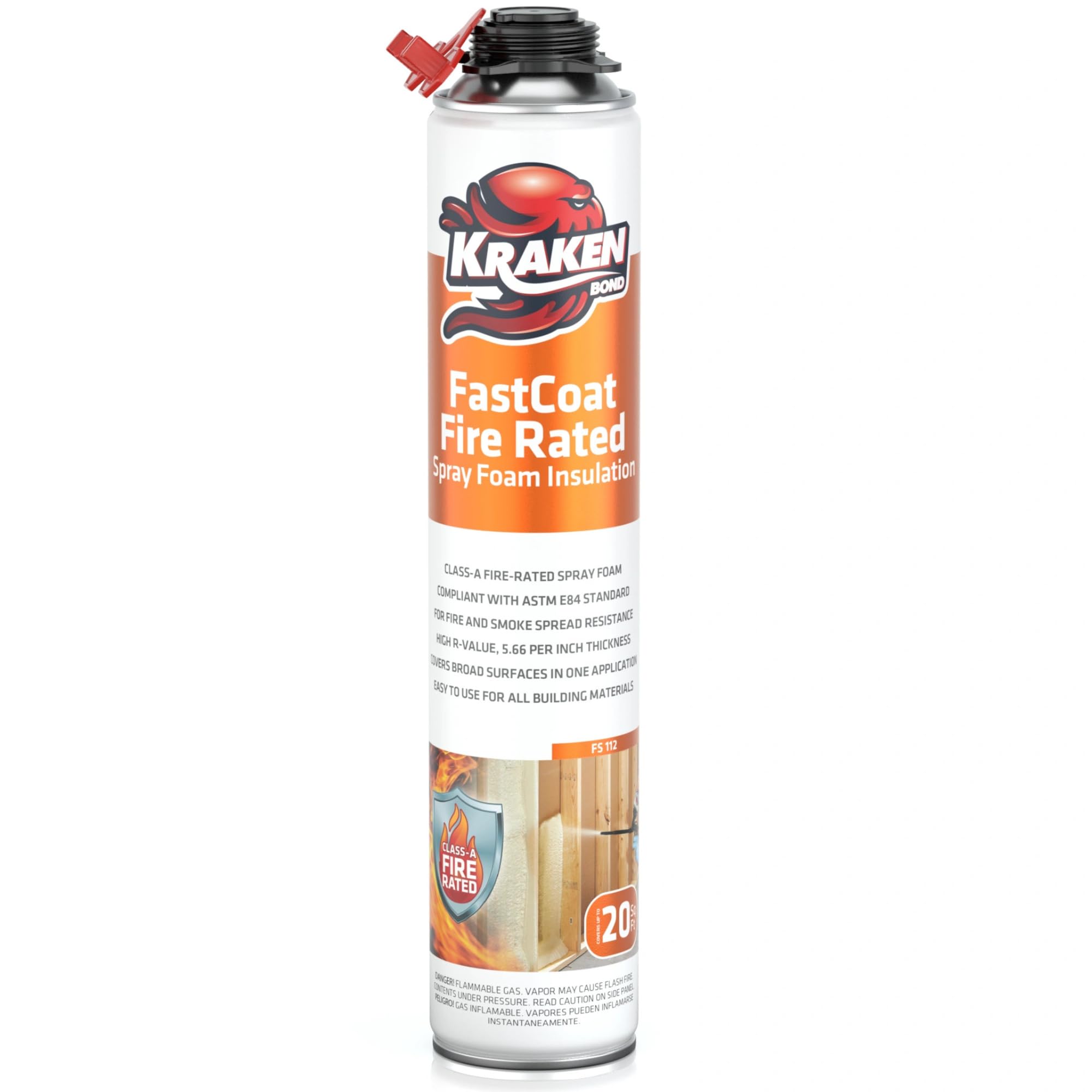
The Kraken Bond Fastcoat is a dedicated closed-cell, Class-A fire-rated foam that matches the STANLEY on safety specs but comes in a slightly larger 27.1-ounce can. Its per-inch R-value of 5.66 means a 2-inch application yields R-11.32, making it a legitimate contender for attic knee walls, garage ceilings, and rim joist sealing where fire code compliance is a concern.
DIY users who tackled full gambrel ceilings found that a 12-can kit covered nearly 374 square feet with one coat, though a second coat was needed for a full 2-inch fill. The included dual-nozzle system (vertical and ceiling orientations) simplifies overhead application, and users praise the low odor compared to some competing two-part foams. The foam cures to a rigid, watertight state that blocks both air infiltration and insect intrusion.
The main risk here is can consistency: a minority of buyers have received depressurized or expired cans that won’t spray. While the seller has historically responded well to replacement requests, the defect rate appears higher than the STANLEY alternative. For large projects, ordering a few extra cans is a wise hedge against potential waste.
Why it’s great
- Class-A fire rated with strong ASTM E84 compliance
- Ceiling nozzle designed for overhead application
- Low odor formula compared to many two-part kits
Good to know
- Occasional defective or depressurized cans reported
- Coverage claims are optimistic; budget for extra cans
- Gun and cleaner not included in single-can purchase
3. Akfix 805 Gap Filler Expanding Foam Sealant (2×12 Oz.)

The Akfix 805 is a straw-dispensed, single-component polyurethane foam designed specifically for small gaps around windows, doors, pipes, and electrical outlets. At 12 ounces per can with a two-pack, it offers the best cost-per-can ratio for the budget-conscious DIYer who needs to seal multiple small penetrations without spending on a gun system.
Users consistently highlight that this foam does not over-expand compared to some well-known orange-brand competitors. That controlled expansion is a real advantage when filling gaps around thin door frames or window casings where excessive pressure could cause warping. It cures in 3 to 5 minutes to a tack-free state, and full cure in 24 hours produces a rigid, paintable surface that weathers well over six months of outdoor exposure.
The trade-off for that controlled expansion is a softer final density. Some users found the cured foam to be spongy rather than rock-hard, which makes it less suitable for structural gap filling or load-bearing applications. Additionally, the can’s 12-ounce volume is small — for larger gaps, you may go through multiple cans quickly. For simple crack sealing, however, it delivers consistent results at a very accessible price.
Why it’s great
- Controlled expansion won’t warp window or door frames
- UL certified for safety and quality standards
- Fast tack-free time of 3–5 minutes
Good to know
- Cured foam remains relatively soft compared to closed-cell
- Small 12 oz can; larger gaps will require multiple units
- Not fire rated; avoid near heat sources or electrical boxes
4. Sprayman Spraycoat Fire Rated Spray Foam Insulation 20 Sq.Ft.
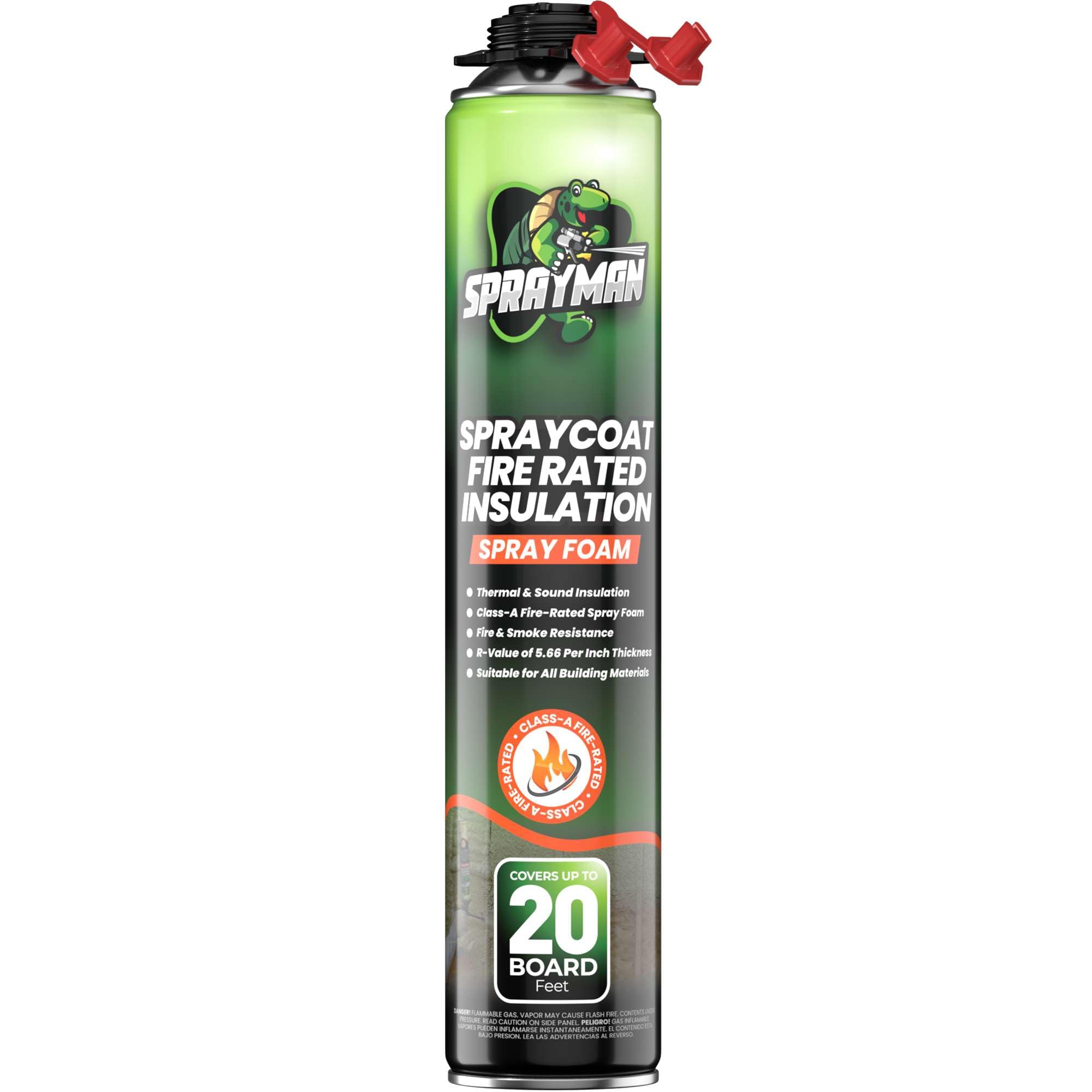
Sprayman’s Spraycoat is a Class-A fire-rated foam that positions itself as a thermal and acoustic solution for walls, ceilings, and even vehicle bodies. Each 29-fluid-ounce can claims 20 square feet of coverage at a 2-inch thickness with an R-11.32 rating. Its urethane adhesive formula bonds aggressively to concrete, drywall, metal, PVC, and fiberglass — making it unusually versatile for both home and marine applications.
Users who applied it for soundproofing report significant noise reduction, with one reviewer noting it effectively blocked train noise after a single application. The recommended technique is to mist surfaces with water before spraying, which improves adhesion and helps the foam flow into irregular cavities. The dual-nozzle system (vertical and ceiling) is included, though the gun itself must be purchased separately.
The biggest complaints center around can reliability: multiple users experienced clogs on all cans in a multi-pack, and the strong odor during application can trigger gas leak detectors. Coverage also falls short of the advertised 20 square feet when applied at full 2-inch thickness. This foam works well for small, sound-sensitive rooms, but the inconsistency makes it a gamble for larger jobs.
Why it’s great
- Class-A fire rated for enhanced safety compliance
- Effective soundproofing for interior walls and floors
- Adheres to a huge variety of substrates including metal and PVC
Good to know
- High rate of nozzle clogs reported across multiple cans
- Strong chemical odor can trigger gas/smoke detectors
- Actual coverage often less than advertised
5. Kraken Bond Gaps & Cracks Expanding Foam Sealant (2x12oz)
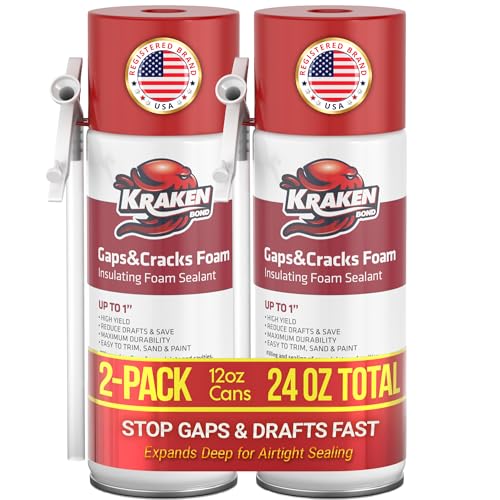
This straw-dispensed foam from Kraken Bond is aimed squarely at small crack sealing around window and door frames, electrical outlets, and pipe penetrations. Each 12-ounce can is UL certified, and the foam is formulated for easy dispensing with consistent expansion that won’t overwhelm thin panels. The application temperature range of 41°F to 86°F gives it some edge over competitors that require a strict 68°F sweet spot.
Some users have found creative uses beyond its intended scope — one reviewer stabilized outdoor planters by filling the bottom cavities, noting the foam dried quickly and bonded firmly. The high initial tack means the foam stays where you put it even on vertical surfaces, though cleanup requires the brand’s dedicated foam cleaner or acetone. Dried foam can be trimmed and painted after full cure.
The can size is the main limitation: at 12 ounces, you get noticeably less volume than a standard 16- or 20-ounce gap filler. Several users reported that the can seemed to run out quickly, and the foam itself is more runny than denser alternatives like Great Stuff. It works for quick patch jobs, but for any meaningful crack sealing, you’ll need the two-pack, and even then it may not fill deeper gaps in one pass.
Why it’s great
- UL certified for reliability and safety
- Wide application temperature range (41°F to 86°F)
- High tack formula grips vertical surfaces well
Good to know
- Small 12 oz cans run out quickly on larger gaps
- Foam consistency is more runny than premium brands
- Can clog mid-use; requires careful straw handling
FAQ
Can I use straw-dispensed foam for large wall cavities?
Do I need a special gun for closed-cell spray foam in a can?
Why does my spray foam can keep clogging mid-use?
Final Thoughts: The Verdict
For most users, the best canned spray foam insulation winner is the STANLEY F 990P Supercoat because it delivers true closed-cell density with a Class-A fire rating at a price that undercuts the competition on a per-can basis. If you need a fire-rated option for overhead attic work, grab the Kraken Bond Fastcoat. And for simple gap sealing around windows or pipes where you don’t want frame warping, nothing beats the predictable expansion of the Akfix 805 Gap Filler.

Mo Maruf
I created WellFizz to bridge the gap between vague wellness advice and actionable solutions. My mission is simple: to decode the research and give you practical tools you can actually use.
Beyond the data, I am a passionate traveler. I believe that stepping away from the screen to explore new environments is essential for mental clarity and physical vitality.