Our readers keep the lights on and my smoothie glass nicely filled. As an Amazon Associate, I earn from qualifying purchases.
Street photography demands a camera that disappears in your hand, focuses before your subject notices, and delivers rich files from shadows to highlights—all without weighing you down. The wrong body means missed moments, clumsy handling, or a setup that screams “tourist” instead of letting you blend into the urban flow.
I’m Mohammad Maruf — the founder and writer behind WellFizz. I’ve spent years analyzing sensor performance, autofocus algorithms, and lens ecosystems to separate the tools that truly serve the street shooter from the ones that just look the part.
Whether you crave a silent leaf shutter for candid captures or a compact full-frame body for low-light work, this guide breaks down the strongest contenders to help you find the best cameras for street photography.
How To Choose The Best Cameras For Street Photography
Street photography cameras live at the intersection of speed, size, and image quality. A 24-megapixel sensor might be all you need today, but the body you pick ties you to a lens system for years. Focus on the specs that matter in real-world candid shooting — not the spec sheet numbers that look good on paper.
Sensor Size and Low-Light Performance
APS-C sensors strike the best balance for street work — they keep the camera body compact while delivering solid dynamic range and acceptable noise up to ISO 6400. Full-frame sensors give you an extra stop or two of light-gathering ability, which helps when shooting into deep shadows or at dusk, but the body and lenses are larger. For most street shooters, a modern APS-C sensor paired with a fast prime lens is the sweet spot.
Autofocus Speed and Tracking
Phase-detection AF with eye/face tracking is non-negotiable for street candid shots. Contrast-detection-only systems hunt in dim alleyways and lose focus on moving subjects. A camera with 400+ phase-detection points and real-time tracking lets you compose quickly without endlessly tapping the shutter release. Mechanical shutter lag — measured in milliseconds — separates a sharp capture from a blurred one.
Body Size, Weight, and Discretion
A street camera should fit in a jacket pocket or a small sling bag without announcing itself. Anything over 600 grams with a standard zoom becomes a chore after a full day walking city blocks. Silent electronic shutters, tilting or flip-out touchscreens, and retro-styled bodies that don’t look expensive help you stay unnoticed. Magnesium-alloy construction adds durability without much weight.
Image Stabilization (IBIS vs. OIS)
In-body image stabilization (IBIS) is a game-changer for street photography at 1/15th of a second or slower. It lets you keep the ISO down in dim interiors and still get a sharp frame. Cameras without IBIS rely on lens-based optical stabilization (OIS) or your own steady hand — fine for daytime, but a real limitation when the sun goes down. At least 4 stops of IBIS compensation is the practical baseline.
Quick Comparison
On smaller screens, swipe sideways to see the full table.
| Model | Category | Best For | Key Spec | Amazon |
|---|---|---|---|---|
| Panasonic LUMIX G85 | Mirrorless MFT | Budget IBIS shooter | 16 MP MFT, 5‑axis IBIS | Amazon |
| OM System E-M10 Mark IV | Mirrorless MFT | Compact beginner | 20 MP MFT, 4.5‑stop IBIS | Amazon |
| Sony a6400 | Mirrorless APS-C | Speed & AF priority | 24.2 MP APS-C, 0.02s AF | Amazon |
| Nikon Z fc | Mirrorless APS-C | Retro style & handling | 20.9 MP APS-C, 209 phase‑detect | Amazon |
| Ricoh GR IIIx | Compact Fixed Lens | True pocket carry | 24.2 MP APS-C, 40mm f/2.8 | Amazon |
| Canon EOS R8 | Mirrorless Full‑Frame | Lightest full‑frame entry | 24.2 MP FF, 1053 AF zones | Amazon |
| Nikon Z50 II | Mirrorless APS-C | Versatile kit bundle | 20.9 MP APS-C, 9‑subject AF | Amazon |
| Canon EOS R7 | Mirrorless APS-C | Action & reach | 32.5 MP APS-C, 30fps e‑shutter | Amazon |
| Sony a7 III | Mirrorless Full‑Frame | Low‑light full‑frame | 24.2 MP FF BSI, 693 phase AF | Amazon |
| Fujifilm X100VI | Compact Fixed Lens | Film simulation & style | 40.2 MP APS‑C, 23mm f/2 | Amazon |
| Leica Q3 | Compact Full‑Frame | Ultimate build & DR | 60 MP FF, 28mm f/1.7 | Amazon |
In‑Depth Reviews
1. Sony a7 III Full-Frame Mirrorless Interchangeable-Lens Camera with 28-70mm Lens

The Sony a7 III strikes the ideal balance for street photographers who want full-frame depth of field without the bulk of a DSLR. Its 24.2-megapixel back-illuminated sensor delivers 15 stops of dynamic range, meaning shadow detail in an alleyway and highlight retention in a midday square both come out clean. The 693 phase-detection points cover 93% of the sensor area — you can compose with a subject off-center and the camera locks focus instantly.
Battery life is a standout for all-day walking: the NP-FZ100 battery shoots roughly 710 images per charge, so you rarely need a spare on a full day out. The silent shutter mode at up to 10 fps with continuous AF lets you capture candid expressions without alerting your subject. The 28-70mm kit lens is decent for starting, but pairing this body with a compact 35mm f/1.8 prime shrinks the whole setup into a true street rig.
The menu system is dense — Sony’s UI isn’t the most intuitive out of the box — but the core shooting experience is polished. The 5-axis IBIS pairs well with non-stabilized lenses for handheld shots at 1/15th of a second. For a one-body full-frame solution that handles everything from harsh noon light to dim evening streets, this remains the reference point.
Why it’s great
- Exceptional dynamic range for shadow/highlight recovery
- Silent mechanical and electronic shutter options
- Class-leading battery life for long street sessions
Good to know
- Bulky with kit zoom; better paired with a compact prime
- Sony menu system has a learning curve
2. Fujifilm X100VI Digital Camera

The Fujifilm X100VI is the street photographer’s dream compact — a fixed 23mm f/2 lens (35mm equivalent) on a 40.2-megapixel X-Trans sensor, all packed into a body that fits a coat pocket. The 6-stop in-body image stabilization is a massive upgrade from previous generations, letting you shoot at 1/8th of a second handheld in dim cafés and subway platforms. The built-in 4-stop ND filter opens up f/2 in harsh sunlight for shallow depth-of-field candids.
Fujifilm’s film simulations — now including REALA ACE — deliver JPEGs straight out of camera that many shooters use without any post-processing. That’s a real advantage on the street, where you want to edit and share from your phone quickly via the improved app. The hybrid optical/electronic viewfinder lets you frame with no lag (OVF) or check exact exposure (EVF) with a flick of the lever.
The autofocus is contrast-detection based, and while it’s improved, it still lags behind Sony’s phase-detection speed — especially for fast-moving subjects entering the frame from the side. Battery life is shorter than a mirrorless interchangeable body, so carrying a spare is wise. But for the shooter who values a discreet, single-focal-length ethos with world-class color science, nothing else in this price tier feels as intentional.
Why it’s great
- Stunning JPEG colors with film simulations — no editing needed
- Truly pocketable with a high-resolution sensor
- Hybrid viewfinder gives instant access to both OVF and EVF
Good to know
- Fixed 23mm lens is a creative constraint — no zoom
- Autofocus is contrast-based and slower than Sony/Canon
3. Ricoh GR IIIx Urban Edition

The Ricoh GR IIIx is the ultimate minimalist street camera — a magnesium-alloy body roughly the size of an iPhone 13 mini with a 40mm equivalent f/2.8 lens that is optically superb. The 24.2-megapixel APS-C sensor punches well above its compact size, delivering DNG raw files that hold up next to much larger systems. The snap focus mode (zone focusing) is a street photographer’s secret weapon: set it to a fixed distance, and you never wait for autofocus.
Three-axis IBIS provides effective stabilization for handheld shots down to 1/10th of a second. The touch-screen tap-to-shoot preset turns the whole display into a shutter button, mimicking smartphone operation for low-angle candids. The in-lens ND filter cuts light by 2 stops, letting you shoot wide open in bright conditions for more separation from busy backgrounds.
The GR IIIx has weaknesses: autofocus hunts in low contrast, the battery is small (around 200 shots), and there is no built-in flash or EVF — you compose via the rear screen only. But for the shooter who wants to carry a camera everywhere and never think about gear, this is the purest distillation of a street tool in this lineup.
Why it’s great
- True pocket-size with a large APS-C sensor
- Snap focus mode lets you zone-focus instantly
- Excellent raw file quality and color profile
Good to know
- No viewfinder — composing is via rear screen only
- Small battery requires a spare for full-day use
4. Nikon Z50 II with Two Lenses

The Nikon Z50 II is the entry-level APS-C mirrorless that actually gives you professional control without overwhelming menus. The 20.9-megapixel DX sensor is paired with the EXPEED 7 processor, delivering accurate colors and reliable autofocus with 9 distinct subject-detection modes including birds, cars, and animals — useful when a street scene includes moving vehicles or pets. The 231 phase-detection points cover the frame well for candid compositions.
The two-lens kit is a genuine value: the 16-50mm f/3.5-6.3 VR pancake zoom is compact enough for daily carry, and the 50-250mm f/4.5-6.3 VR adds reach for compressed street scenes from a distance. Both lenses have optical stabilization, though the body itself lacks IBIS — so low-light handheld shots benefit from the lens VR. The Picture Control button gives instant access to 31 built-in presets, letting you dial in a look quickly on the street.
The flip-out LED screen is handy for waist-level shots but drains battery faster than expected. The kit batteries are minimal, so picking up a spare is a must for a full day out. The menus are a departure from Nikon DSLR conventions, but the core shooting experience — especially with the 16-50mm collapsed to pocket size — makes this a strong all-in-one starter package for street photography.
Why it’s great
- Two-lens kit covers wide to telephoto street needs
- Reliable subject-detection autofocus with moving targets
- Built-in presets for quick on-the-go looks
Good to know
- No in-body stabilization — relies on lens VR
- Flip screen is a battery drain; carry a spare
5. Canon EOS R8 Mirrorless Camera Body

Canon’s lightest full-frame RF-mount camera, at just under 460 grams, the EOS R8 is a compelling street tool if you want full-frame image quality without the weight penalty. The 24.2-megapixel sensor is derived from the R6 II, delivering 40 fps electronic shutter with full autofocus — so when a fleeting street moment unfolds, you can fire a burst and pick the sharpest frame. The Dual Pixel CMOS AF II covers the entire sensor area with 1,053 zones and intelligent subject detection.
The vari-angle 1.62-million-dot touchscreen is excellent for waist-level and overhead compositions, and the 2.36-million-dot OLED EVF at 120 fps refresh rate keeps the scene smooth even in fast panning. There is no IBIS, so you must rely on lens-based stabilization — but paired with an RF 35mm f/1.8 IS STM macro lens, the combination is compact and stabilized. The R8’s low-light ISO handling is genuinely impressive, staying clean up through ISO 12800.
The battery life is the weakest link — you’ll get roughly 500 shots or an hour of 4K video before needing a swap. The mechanical shutter maxes out at 6 fps, so the electronic shutter at 40 fps is the real workhorse, but it introduces some rolling shutter with fast side-to-side motion. For the street photographer who wants a light full-frame walkaround with Canon’s superb color science and autofocus, this is the most accessible entry point.
Why it’s great
- Incredibly light for a full-frame body
- 40 fps electronic shutter with full AF for decisive moments
- Excellent high-ISO and color science straight out of camera
Good to know
- No IBIS — lens stabilization required for low-light handheld
- Small battery; plan for a spare on long shoots
6. Nikon Z fc with 16-50mm Zoom Lens

The Nikon Z fc marries a classic FM/FE film-camera aesthetic with modern mirrorless performance. The top-plate dials for shutter speed, ISO, and exposure compensation are tactile and direct — you can set your exposure without taking your eye from the 2.36-million-dot EVF. The 20.9-megapixel DX CMOS sensor with EXPEED 6 delivers clean, detailed files with natural color reproduction that matches Nikon’s DSLR heritage.
The 209-point phase-detection autofocus with eye detection for humans and animals is reliable in most street conditions, though it can hunt slightly in very low contrast scenes (dusk alleyways). The vari-angle touchscreen, inherited from the Z50, is useful for discreet waist-level framing. The 16-50mm retractable kit lens collapses into a compact unit that makes the whole package easy to slip into a small bag.
Some users note the wireless transfer via SnapBridge can be inconsistent — using an SD card reader is faster and more reliable. The body shell, while charming, does not have the same deep magnesium build as the Z series; it’s more polycarbonate with metal top plates. But the handling experience — the way the dials click, the EVF placement, the shutter feel — makes you want to shoot more, which is the whole point for street work.
Why it’s great
- Dedicated shutter speed, ISO, and EC dials for quick manual control
- Compact and stylish design encourages daily carry
- Good image quality with natural, accurate colors
Good to know
- Build is partially polycarbonate — less robust than full magnesium
- Wireless transfer can be flaky; better to use a card reader
7. Sony Alpha a6400 Mirrorless Camera

The Sony a6400 is the speed demon of the sub- APS-C segment. Its 0.02-second autofocus with Real-Time Eye AF and Real-Time Tracking locks onto subjects and holds them even as they walk through crowds. The 425 phase-detection and 425 contrast-detection points cover 84% of the sensor — you can place your subject at the edge of the frame and the camera will track them across the composition. At 11 fps with continuous AF, you can fire off a burst and guarantee at least one sharp frame from a fast-moving street encounter.
The 24.2-megapixel sensor with BIONZ X processor produces crisp, natural colors and solid dynamic range. The 180-degree flip-up touchscreen is useful for waist-level candids, though the touch functionality is limited to focus point selection — not menu navigation. The compact body (only 403 grams with battery) pairs perfectly with small primes like the Sigma 30mm f/1.4 or Sony 35mm f/1.8 OSS.
The biggest downsides are the lack of IBIS — so you need stabilized lenses for low light — and the old micro-USB port instead of USB-C. The 4K video is oversampled from 6K, which is great quality, but the rolling shutter is noticeable with fast pans. For pure speed and focus accuracy in a compact APS-C body, this is still the benchmark.
Why it’s great
- Blistering 0.02s autofocus with reliable eye/face tracking
- Compact and lightweight, ideal for one-handed street shooting
- 11 fps burst with continuous AF for action moments
Good to know
- No in-body stabilization — relies on lens OSS
- Limited touchscreen functionality and micro-USB port
8. Canon EOS R7 Mirrorless Camera (Body Only)

The Canon EOS R7 delivers the highest resolution APS-C sensor in this roundup at 32.5 megapixels, paired with a 5-axis IBIS system rated for up to 8 stops of compensation — the most effective stabilization here. That combination is ideal for street photographers who crop heavily in post or shoot in low light without a tripod. The Dual Pixel CMOS AF II uses 651 zones covering nearly 100% of the frame, with subject detection for people, animals, and vehicles.
At 15 fps mechanical or 30 fps electronic, the R7 captures split-second moments with pre-burst RAW (half-second buffer) to ensure you never miss the decisive instant. The dual SD card slots (UHS-II compatible) allow for overflow or backup on long street sessions. The magnesium-alloy body is weather-sealed for shooting in light rain, and the ergonomics — with a deep, comfortable grip — are praised by users who spend hours walking.
The body is relatively compact for an APS-C with IBIS, but it’s still larger than the a6400 or X100VI. The RF-S lens ecosystem is still developing; most high-quality lenses use the full-frame RF mount, which adds size with an adapter. For street shooters who want the highest resolution, best stabilization, and Canon’s excellent autofocus, the R7 is a serious tool.
Why it’s great
- Class-leading 8-stop IBIS for the steadiest handheld shots
- 32.5 MP sensor allows aggressive cropping while retaining detail
- Dual UHS-II SD slots for backup and overflow
Good to know
- Larger than typical street APS-C bodies
- RF-S lens selection is limited; must adapt full-frame RF glass
9. Leica Q3 Compact Digital Camera
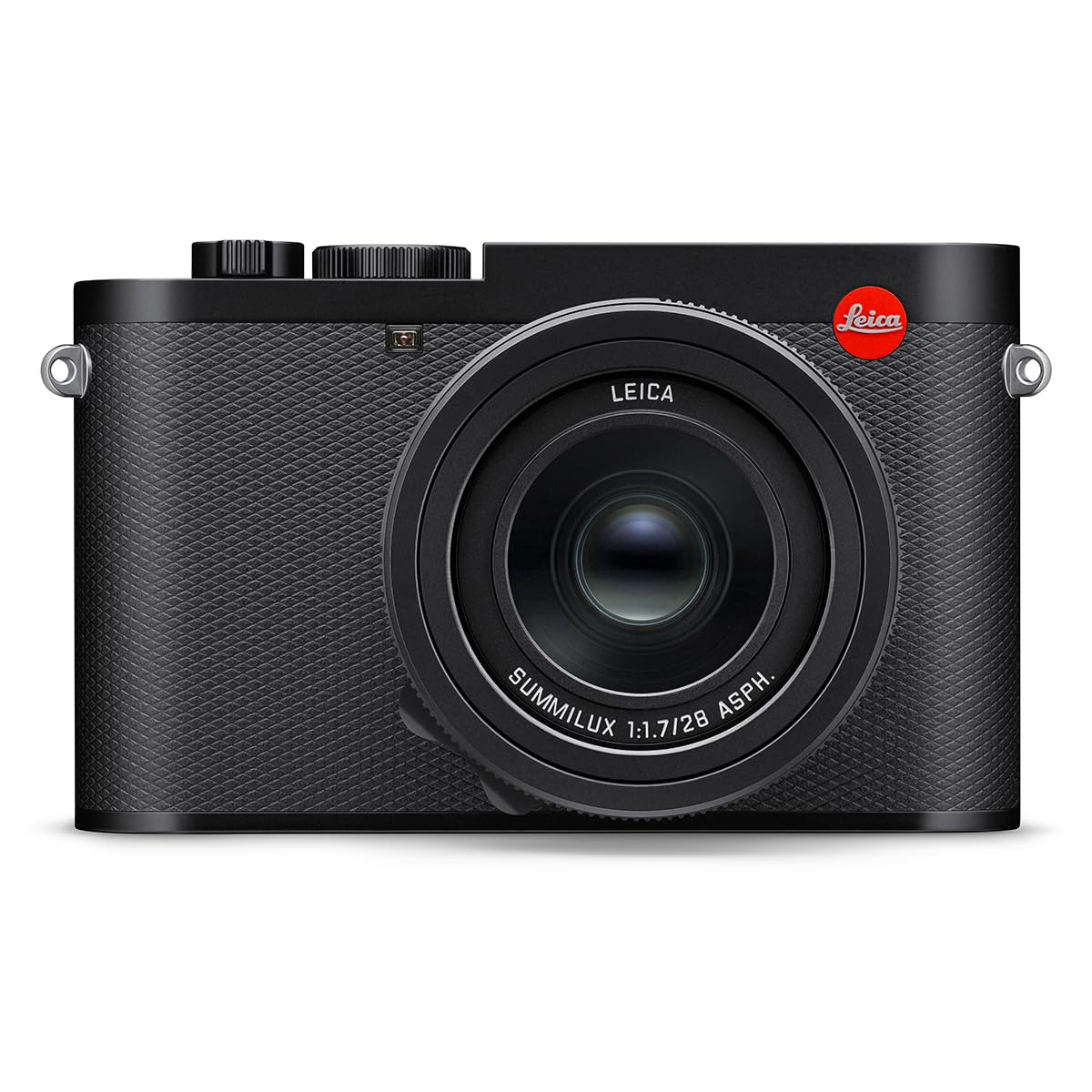
The Leica Q3 is the most premium fixed-lens camera available for street photography, packing a 60-megapixel full-frame BSI CMOS sensor with a Summilux 28mm f/1.7 ASPH lens that is optically flawless. The Triple Resolution Technology lets you shoot at 60MP, 36MP, or 18MP — the 18MP mode acts like a pixel-binned high-ISO monster, keeping noise minimal at ISO 6400 and above. The digital zoom offers in-camera crops up to 90mm while maintaining at least 15MP resolution.
The Maestro IV processor with 8GB of memory enables quick continuous shooting and seamless operation. The hybrid autofocus (contrast + phase detection) with 256 points is fast and accurate, though not as quick as Sony’s 693-point system. The built-in 3.68-million-dot OLED EVF is crisp, and the 3-inch rear touchscreen tilts for waist-level work. The magnesium-alloy body is dust and splash resistant, suitable for all-weather street use.
The Q3’s greatest strength for street is the combination of a world-class lens and a full-frame sensor in a single-body package — no lens swapping, no adapter, no compromises. The drawbacks are real: no interchangeable lens means you stick with 28mm (or digital crops), the price is the highest in this guide, and battery life is moderate. But for the shooter who wants the absolute best image quality from a compact body, the Q3 is the ultimate.
Why it’s great
- 60 MP full-frame sensor with triple-resolution flexibility
- Superb 28mm f/1.7 Summilux lens with fast aperture
- All-weather magnesium build for real street conditions
Good to know
- Fixed 28mm focal length — no lens interchangeability
- Highest price point in this guide, limiting accessibility
10. OM System Olympus E-M10 Mark IV Silver Micro Four Thirds System Camera

The OM System E-M10 Mark IV is the smallest interchangeable-lens camera with in-body stabilization on this list, making it a natural for street photographers who prioritize portability. The 20-megapixel Micro Four Thirds sensor with 5-axis IBIS rated at up to 4.5 stops lets you shoot at 1/4th of a second handheld in dim settings — a real advantage for evening cityscapes without a flash. The 14-42mm EZ pancake kit lens collapses into a flat unit, turning the whole camera into something you can slide into a jacket pocket.
The flip-down touchscreen with dedicated selfie mode is useful for waist-level street compositions and for checking your framing when shooting from the hip. The 121 contrast-detection autofocus points are adequate for static subjects but slower to track moving pedestrians compared to phase-detection systems. The 16 Art Filters, including a new Instant Film mode, provide creative JPEG looks on the fly without post-processing.
The E-M10 Mark IV is built primarily from polycarbonate with some metal elements — it feels solid but not as durable as magnesium-alloy bodies. The Micro Four Thirds ecosystem is vast and affordable, with excellent small primes like the 17mm f/1.8 or 25mm f/1.8 that keep the kit compact. For street shooters who want the smallest possible interchangeable-lens camera with effective IBIS, this is a compelling choice.
Why it’s great
- Smallest interchangeable-lens body with effective IBIS
- Flip-down touchscreen enables discreet waist-level compositions
- Extensive and affordable Micro Four Thirds lens ecosystem
Good to know
- Contrast-detect AF is slower for moving subjects in street
- No external charger included; charges in-camera via USB
11. Panasonic LUMIX G85 4K Digital Camera, 12-60mm Power O.I.S. Lens

The Panasonic G85 is the entry-level mirrorless that proves you don’t need to spend heavily for effective image stabilization. The 16-megapixel Micro Four Thirds sensor lacks a low-pass filter, resolving more fine detail than older 16MP sensors, and the 5-axis Dual IBIS (in-body + lens OIS) delivers noticeable shake reduction even with non-stabilized lenses. The 12-60mm Power O.I.S. kit lens provides a useful 24-120mm equivalent range, covering wide street scenes and compressed detail shots from across the street.
The G85 is built around a magnesium-alloy frame with weather sealing — unusual at this price tier — allowing you to shoot in light drizzle without worry. The OLED live viewfinder (2.36 million dots) is clear and responsive, and the rear 3-inch tilt-and-touch LCD helps with low-angle compositions. The 49 autofocus points are contrast-detection based; they are reliable in good light but struggle in dim conditions and with fast-moving subjects entering the frame.
4K Photo mode at 30 fps and Post Focus let you pull stills from video and adjust focus points after capture — niche features that can salvage an otherwise missed moment. The G85 is heavier than the E-M10 Mark IV (about 505g with battery and kit lens), which is noticeable after a long day. But for the street shooter on a strict budget who needs IBIS, weather sealing, and a versatile kit zoom, the G85 is the best value proposition, and the low-resolution sensor is not a problem. The Panasonic G85 is an excellent choice.
Why it’s great
- Weather-sealed magnesium body at an accessible price point
- Effective 5-axis Dual IBIS with the kit lens
- 4K 30 fps burst shooting for capturing fleeting moments
Good to know
- Contrast-detect AF is slow in low light
- Heavier than some competitors; weight may fatigue on full-day shoots
FAQ
Do I need a full-frame sensor for good street photography?
Is in-body image stabilization (IBIS) essential for street photography?
What is the ideal focal length for street photography?
Final Thoughts: The Verdict
For most street photographers, the best cameras for street photography winner is the Sony a7 III because its full-frame dynamic range, blazing fast autofocus, and incredible battery life make it a one-body solution for everything from daylight candids to late-night alley shots — all while offering a mature lens ecosystem. If you want a pocketable fixed-lens camera that delivers out-of-camera JPEG magic, grab the Fujifilm X100VI. And for the pure minimalist who wants the highest image quality in the smallest possible package, nothing beats the Leica Q3.

Mo Maruf
I created WellFizz to bridge the gap between vague wellness advice and actionable solutions. My mission is simple: to decode the research and give you practical tools you can actually use.
Beyond the data, I am a passionate traveler. I believe that stepping away from the screen to explore new environments is essential for mental clarity and physical vitality.