Our readers keep the lights on and my smoothie glass nicely filled. As an Amazon Associate, I earn from qualifying purchases.
Getting cinematic footage on a tight budget isn’t about buying the most expensive camera — it’s about choosing the right sensor size, lens ecosystem, and stabilization for the stories you want to tell. The best budget filmmaking cameras balance 4K resolution, reliable autofocus, and color depth without forcing you into a restrictive smartphone workflow.
I’m Mohammad Maruf — the founder and writer behind WellFizz. I’ve spent hundreds of hours analyzing the sensor performance, codec options, and real-world shooting behavior of every camera in this crowded price tier.
Whether you’re shooting a short film, a YouTube documentary, or a wedding highlight reel, this guide is built around the best cameras for filmmaking on a budget, chosen for their specific advantages in image quality, usability, and long-term value.
How To Choose The Best Cameras For Filmmaking On A Budget
Filmmaking cameras differ from stills cameras in their need for continuous recording, reliable autofocus during video, and color science that grades well. On a budget, you must prioritize sensor performance and the availability of affordable, high-quality glass over marketing gimmicks like ultra-high megapixel counts.
Sensor Size and Crop Factor
An APS-C or Micro Four Thirds sensor offers a good balance between low-light capability and cost. Full-frame sensors like the one in the Sony a7 III provide superior dynamic range and shallower depth of field, but they demand pricier lenses. For budget filmmaking, a large APS-C sensor with a fast prime lens often delivers the best cinematic look per dollar.
Stabilization: IBIS vs. Lens-Based
In-Body Image Stabilization (IBIS) is a major advantage for handheld run-and-gun shooting. Cameras like the Panasonic LUMIX G85 offer 5-axis IBIS that works with any lens, saving you the cost of a gimbal. Lens-based stabilization (like Canon’s IS or Nikon’s VR) is better but only works with specific glass. For narrative filmmaking, the Sony a6400 lacks IBIS but makes up for it with exceptional autofocus, so you may need a gimbal.
Codec and Color Depth
10-bit 4:2:2 internal recording gives you far more flexibility in color grading than 8-bit. The DJI Osmo Pocket 3 and the Sony ZV-E10 offer 10-bit options, while most entry-level mirrorless cameras are limited to 8-bit. For serious filmmaking, 10-bit is a priority because it reduces banding in skies and shadows.
Quick Comparison
On smaller screens, swipe sideways to see the full table.
| Model | Category | Best For | Key Spec | Amazon |
|---|---|---|---|---|
| Sony a7 III | Full-Frame | Cinematic narrative, low-light | 24.2MP BSI Full-Frame, 10fps | Amazon |
| Nikon Z50 II | APS-C | Travel vlogging, hybrid shooting | 20.9MP DX, 4K/60p, 31 presets | Amazon |
| Sony a6400 | APS-C | Fast action, real-time AF | 0.02s AF, 425 phase points | Amazon |
| Canon EOS R50 V | APS-C | Vlogging, live streaming | 24.2MP APS-C, 4K/30p uncropped | Amazon |
| Sony ZV-E10 | APS-C | Content creators, product showcase | 24.2MP, 4K oversampled from 6K | Amazon |
| Nikon Z 30 | APS-C | Webcam, streaming, casual vlog | 4K/30p, flip screen, USB-C power | Amazon |
| Panasonic LUMIX G100 | MFT | Audio quality, mobile content | 4K/24p, 360° tracking mic | Amazon |
| Panasonic LUMIX G85 | MFT | Handheld shooting, IBIS value | 16MP MFT, 5-axis Dual I.S. | Amazon |
| DJI Osmo Pocket 3 | Compact | Vlogging, travel, active shooting | 1″ CMOS, 4K/120fps, 3-axis gimbal | Amazon |
| Canon EOS R100 | APS-C | Beginner filmmaking, education | 24.1MP APS-C, 4K/24p | Amazon |
| DJI Osmo Nano | Compact | Action POV, run-and-gun vlog | 1/1.3″ sensor, 4K/60fps, 143° FOV | Amazon |
In‑Depth Reviews
1. Sony a7 III

The Sony a7 III is the budget filmmaking camera that punches far above its price tier, offering a full-frame 24.2MP back-illuminated Exmor R sensor with 15 stops of dynamic range. That latitude lets you recover shadows and highlights in post without banding, which is critical for narrative work shot in available light.
The 693-phase detection AF points cover 93% of the sensor, delivering reliable eye tracking for talent. Rolling shutter is moderate in 4K, but the camera’s ability to shoot 14-bit uncompressed RAW stills and oversampled 4K video means you can produce cinema-ready footage without renting a cinema camera. The included 28-70mm kit lens is adequate for run-and-gun but you will want a fast prime for shallow depth of field.
Battery life is exceptional at around 710 shots per charge, and the dual SD card slots give you backup during long shoots. The main trade-off is the 8-bit 4:2:0 internal recording, which limits color grading headroom compared to 10-bit rivals. Still, for a full-frame body at this price, the image quality is unbeatable.
Why it’s great
- Full-frame sensor with 15-stop dynamic range for cinematic grading.
- Incredible battery life for all-day shoots.
- Fast and accurate 693-point phase detection AF.
Good to know
- 8-bit internal recording; no 10-bit option without external recorder.
- Kit lens is slow for low light.
2. Nikon Z50 II (Two Lens Kit)

The Nikon Z50 II brings a 20.9MP DX-format sensor and 4K UHD/60p recording into a lightweight body that fits comfortably in a small bag. The two-lens kit (16-50mm f/3.5-6.3 VR and 50-250mm f/4.5-6.3 VR) gives you a 24-375mm equivalent focal range, covering wide landscapes to telephoto interviews without swapping bags.
While the 8-bit internal codec is a limitation for heavy grading, the Z50 II’s color science produces pleasing in-camera looks with its 31 built-in presets. The autofocus system is solid, detecting people, dogs, cats, birds, and vehicles automatically. Electronic VR helps smooth shaky handheld footage, though it crops the frame slightly.
The in-camera 120fps 1080p slow-motion mode is usable for stylistic b-roll, and the built-in flash helps in dim interiors. SnapBridge wireless transfer is fast for sharing previews. Serious filmmakers may want a fast prime like the NIKKOR Z 24mm f/1.8 to improve low-light performance, but the kit lenses offer excellent versatility for the price.
Why it’s great
- Two-lens kit covers wide to telephoto out of the box.
- Excellent in-camera color presets for quick output.
- Compact and light enough for all-day travel.
Good to know
- 8-bit video limits color grading flexibility.
- No IBIS; relies on lens VR and electronic stabilization.
3. Sony a6400

The Sony a6400 remains a go-to for budget filmmaking because of its blazing-fast 0.02-second autofocus with 425 phase-detection points covering 84% of the sensor. In real-world shooting, that means you can rely on real-time eye tracking for your subject without losing focus pulls, which is rare at this price point.
The 24.2MP APS-C sensor delivers sharp 4K video oversampled from the full sensor width, providing excellent detail. The 180-degree flip-up screen makes solo vlogging straightforward. However, there is no IBIS — you will need a gimbal or tripod for smooth handheld footage. The rolling shutter in 4K is noticeable, so fast pans are risky.
The touchscreen is limited to focus-point selection and not full menu navigation. Battery life is average, and the menu system is notoriously complex. Despite these quirks, the image quality and autofocus speed make it a favorite for documentary and run-and-gun filmmakers who prioritize focus over stabilization.
Why it’s great
- Industry-leading autofocus speed and accuracy.
- Sharp 4K oversampled video with no pixel binning.
- Compact body with 180° flip screen for vlogging.
Good to know
- No IBIS; expect to use external stabilization.
- Obvious rolling shutter in 4K panning.
4. Canon EOS R50 V
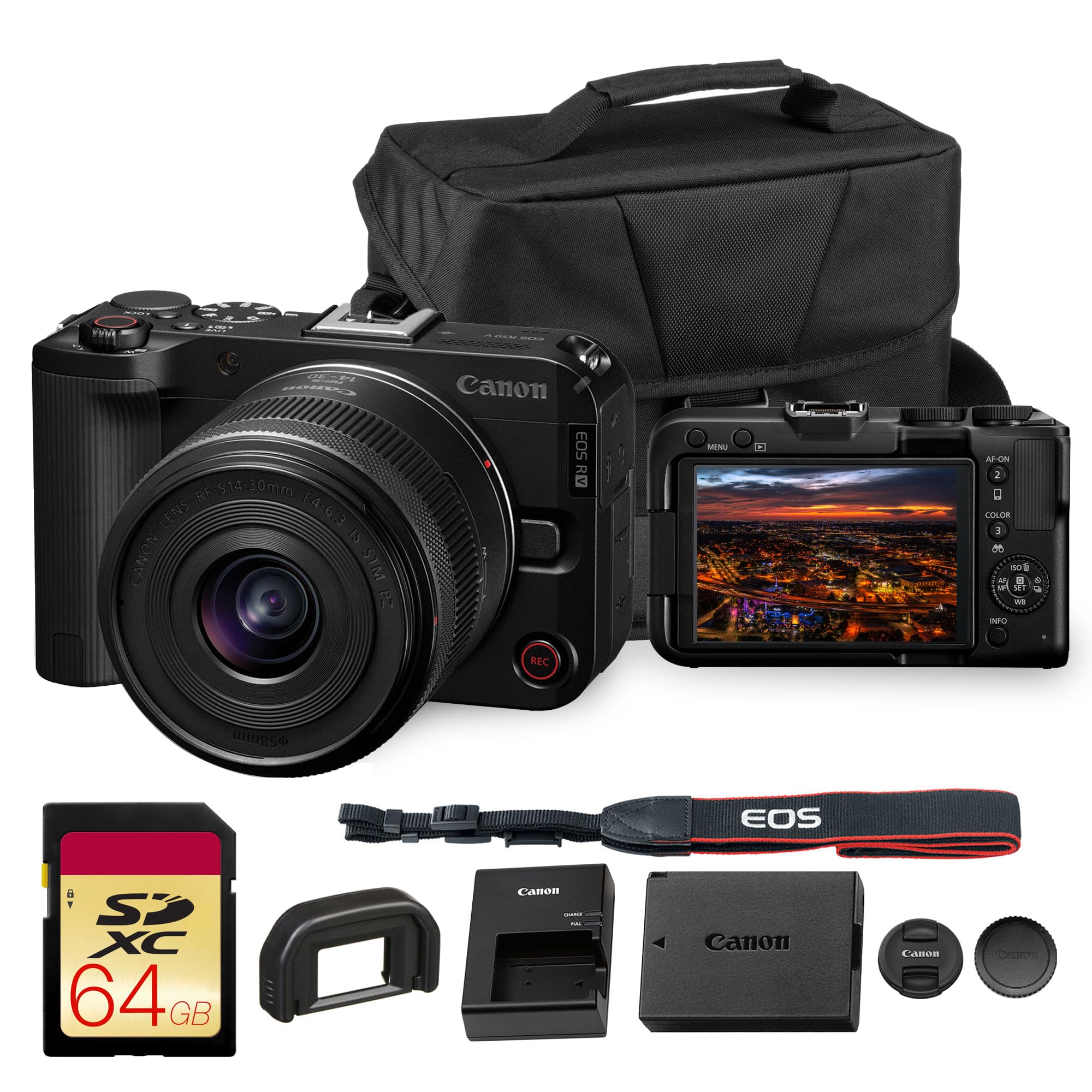
The Canon EOS R50 V is purpose-built for video-first creators, offering uncropped 4K/30p recording from a 24.2MP APS-C sensor paired with the DIGIC X processor. The fully articulating flip screen is ideal for high and low-angle shots during narrative productions.
Dual Pixel CMOS AF with eye, face, and subject detection locks onto talent quickly, and the included 14-30mm f/4-6.3 IS STM PZ lens has power zoom for smooth focal length adjustments mid-shot. The camera supports vertical video mode for social media, and livestream-ready USB-C connectivity means you can use it as a webcam without capture cards.
The 10-bit color depth in 4K is a standout feature at this price, giving you far more grading flexibility than the usual 8-bit offerings. The trade-off is a relatively small lens selection for the RF-S mount compared to Sony E or Micro Four Thirds, though the kit lens is quite versatile for its range.
Why it’s great
- 10-bit 4K recording for superior color grading.
- Fully articulating flip screen for creative angles.
- Built-in livestream via USB-C; webcam ready.
Good to know
- Small RF-S lens ecosystem.
- No built-in flash for fill light.
5. Sony ZV-E10
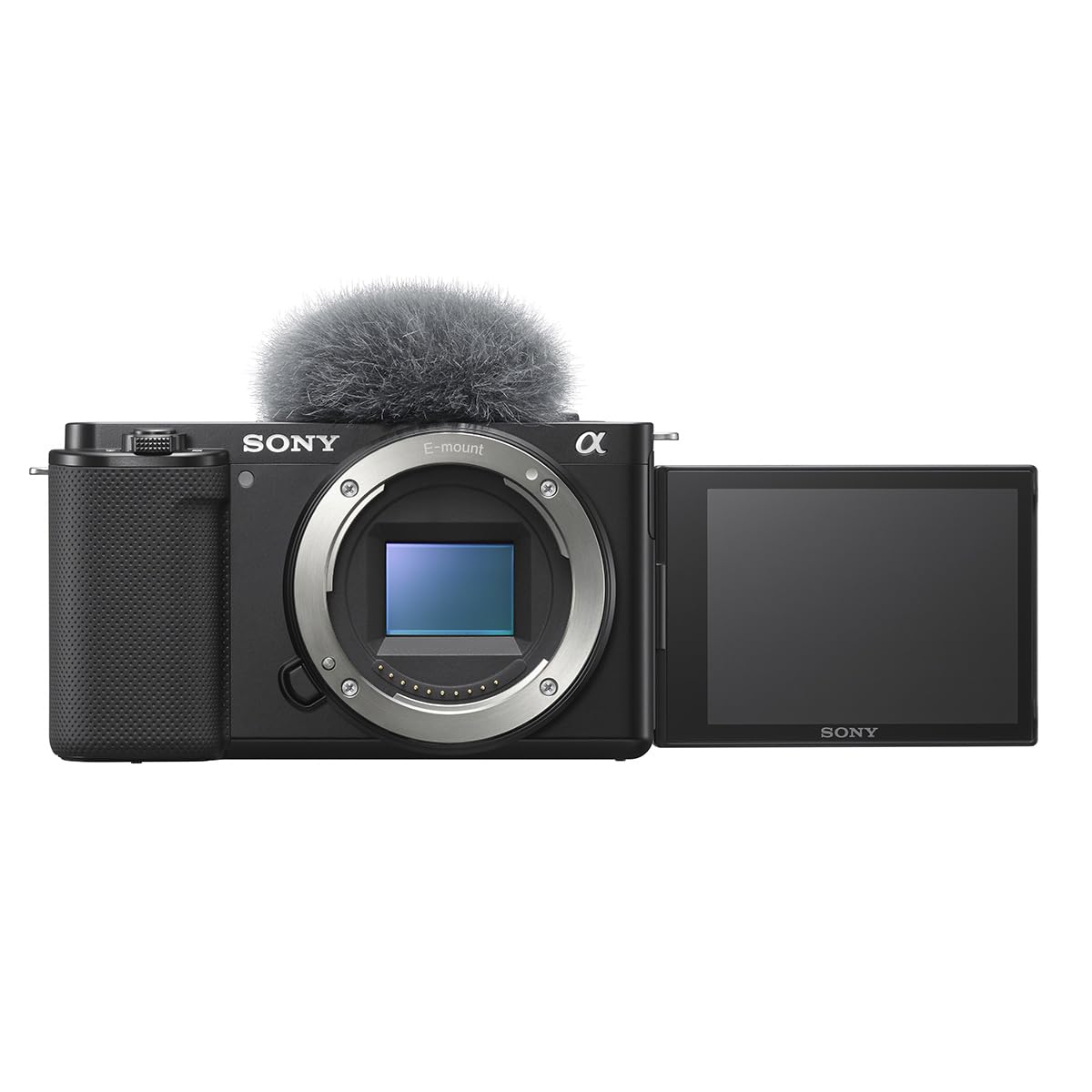
The Sony ZV-E10 takes the core sensor of the a6400 (the 24.2MP APS-C Exmor CMOS) and wraps it in a body designed specifically for content creators. The key advantage is the 4K oversampled from 6K, delivering noticeably sharper footage than many rivals in the same price band.
Product Showcase mode automatically transitions focus from your face to an object held up to the lens, which saves hours of post-production time for reviews and tutorials. The Background Defocus button lets you toggle between sharp and blurred backgrounds instantly. The built-in stereo microphone is decent for scratch audio, but you will want an external mic for any serious production.
The 8-bit internal recording is a limitation for grading, and the lack of IBIS means you need a gimbal for walking shots. The battery life is about 25-30 minutes of 4K recording watch. Despite these caveats, the image sharpness and reliable autofocus make the ZV-E10 one of the best value options for solo YouTube filmmakers.
Why it’s great
- 4K oversampled from 6K for extremely sharp video.
- Product Showcase and Background Defocus for efficient content creation.
- Light and compact body for handheld use.
Good to know
- No IBIS; requires external stabilization.
- Battery drains quickly in 4K recording.
6. Nikon Z 30

The Nikon Z 30 is Nikon’s most compact mirrorless camera and is designed specifically for vloggers and web creators. The 20.9MP DX-format sensor delivers crisp 4K resolution with autofocus that features eye tracking for both people and pets, making it easy to maintain focus while moving.
This camera excels as a streaming webcam — it can run for 120 minutes at 1080p via USB-C with constant power, bypassing the 29-minute recording limit that plagues many mirrorless cameras. The flip-out selfie screen with a red REC light is a small but useful touch for solo recording. The built-in stereo microphone has adjustable sensitivity and offers decent sound for its size.
The Z 30 lacks IBIS, so handheld footage will be shaky without a gimbal or a lens with VR. It also has no viewfinder, which can be a challenge in bright sunlight. The lens selection for the Z DX mount is still growing, but the camera works with almost any F-mount lens via the FTZ adapter. For a pure video-production-focused budget build, it is hard to beat this value.
Why it’s great
- No 29-minute recording limit; live streaming via USB-C.
- Eye-detection autofocus for people and pets.
- Flip-out selfie screen with red REC light.
Good to know
- No viewfinder for outdoor shooting.
- No IBIS; relies on lens stabilization.
7. Panasonic LUMIX G100

The Panasonic LUMIX G100 is a Micro Four Thirds camera that prioritizes audio quality, featuring a high-performance 360-degree tracking microphone that automatically adjusts pickup pattern based on subject location. For budget filmmaking where audio is often neglected, this is a huge time-saver.
The 16MP sensor captures 4K/24p and 4K/30p video, and the 5-axis Hybrid I.S. (using gyro information from the lens and body) provides decent stabilization. The 12-32mm kit lens is compact and versatile, though its variable aperture limits low-light performance. The V-Log L recording option gives you a flat color profile for grading, though it is 8-bit.
The G100 also works as a webcam, and the frame marker overlay helps you compose for vertical social media. The biggest limitation is the short 4K recording time — the camera stops recording at a certain duration due to heat management, which can be a dealbreaker for long interviews or events.
Why it’s great
- Built-in 360-degree tracking microphone captures clear audio.
- V-Log L profile for color grading.
- Compact body with 12-32mm kit lens for portable shooting.
Good to know
- Short 4K recording time due to heat management.
- No external mic input jack.
8. Panasonic LUMIX G85

The Panasonic LUMIX G85 remains a staple of budget filmmaking because of its class-leading 5-axis in-body image stabilization. This IBIS works in both photo and video modes, producing smooth handheld shots even at moderate walking speeds. The 16MP Micro Four Thirds sensor with no low-pass filter delivers sharp 4K 3840×2160 footage.
The 12-60mm Power O.I.S. kit lens provides a practical 24-120mm equivalent range, and the dual stabilization (IBIS + lens OIS) is effective in low light. The magnesium alloy body is weather-sealed for light rain, which is rare at this price level. The OLED viewfinder and articulating touchscreen are both crisp and responsive.
Autofocus can be sluggish in low-light 4K mode, and battery life is below average — you will want spares for a full-day shoot. The lack of a headphone jack makes audio monitoring difficult without an external recorder. Despite its age, the G85 still offers the best stabilization value for filmmakers who shoot handheld.
Why it’s great
- Outstanding 5-axis IBIS for smooth handheld video.
- Weather-sealed magnesium alloy body.
- Sharp 4K QFHD video with no low-pass filter.
Good to know
- Weak low-light autofocus in 4K mode.
- Below-average battery life.
9. DJI Osmo Pocket 3

The DJI Osmo Pocket 3 packs a 1-inch CMOS sensor into a pocket-sized gimbal camera that shoots 4K resolution at up to 120fps. The physical 3-axis stabilization is built right into the camera body — no gimbal rig needed, which saves both money and setup time.
The 2-inch rotatable touchscreen lets you switch between horizontal and vertical shooting instantly. The D-Log M and 10-bit color depth allow for grading with up to one billion colors, a major advantage for a camera of this size. ActiveTrack 6.0 keeps the subject center-frame while you move, perfect for walking interviews or cinematic one-person shots.
Battery life on the standard battery is about 166 minutes, but the Creator Combo includes a battery handle for extended runtime. The wide-angle lens attachment and DJI Mic 2 transmitter included in the combo make it a complete content creation system. The trade-off is the small sensor compared to interchangeable lens cameras, which limits shallow depth of field and extreme low-light performance.
Why it’s great
- Built-in 3-axis gimbal delivers smooth footage without extra gear.
- 10-bit D-Log M color profile for advanced grading.
- Rotatable screen for horizontal/vertical content switching.
Good to know
- Fixed lens; no interchangeable glass for creative effects.
- Small sensor limits low-light performance.
10. Canon EOS R100

The Canon EOS R100 is the smallest and most affordable body in the EOS R series, with a 24.1MP APS-C sensor and the DIGIC 8 processor. It offers 4K video at 24fps and Full HD 1080p at 60fps, making it a solid entry-level option for student filmmakers or micro-budget projects where every dollar counts.
Dual Pixel CMOS AF covers 143 zones with human face and eye detection, giving you reliable focus for portraits and slow-moving subjects. The 6.5fps continuous shooting is useful for capturing b-roll action. The RF-S 18-45mm kit lens provides a standard zoom range for learning composition on a budget.
The 8-bit video and the 4K 24fps cap mean you have limited slow-motion and grading headroom. The built-in flash is helpful for fill but not cinematic. The menu system is beginner-friendly with scene-specific explanations, and the battery lasts a full day of mixed use. It is not a pro filmmaker’s tool, but it is a capable learning platform.
Why it’s great
- Very affordable entry into the Canon RF mirrorless ecosystem.
- Dual Pixel CMOS AF with face and eye detection.
- Long battery life for extended learning sessions.
Good to know
- 4K video is limited to 24fps; no 60fps for slow motion.
- 8-bit recording limits color grading.
11. DJI Osmo Nano
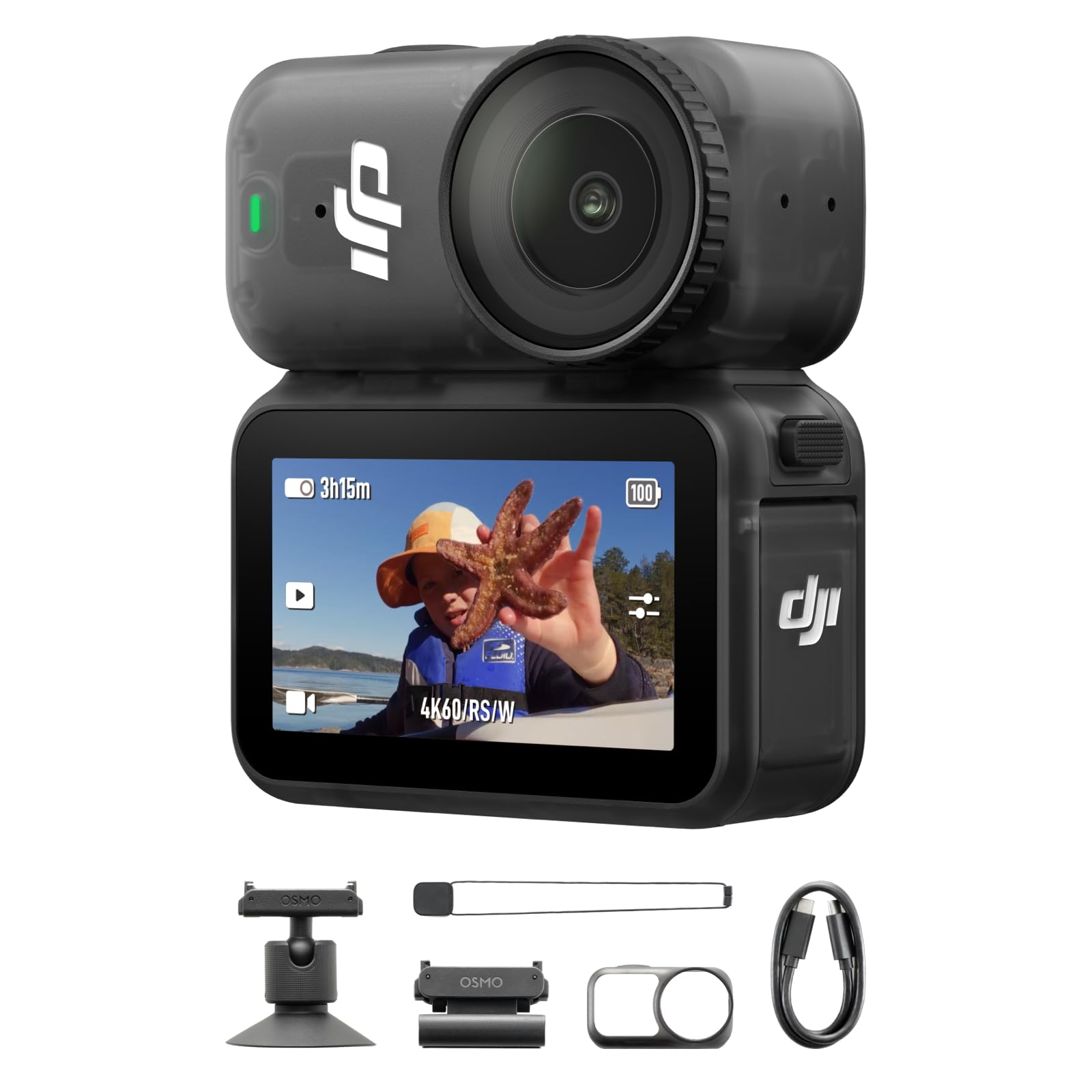
The DJI Osmo Nano is a tiny magnetic action camera with a 1/1.3-inch sensor that records 4K/60fps with a 143-degree ultra-wide field of view. For filmmaking on a budget, it is perfect for creating immersive POV shots, B-roll, or dangerous-placement camera angles without risking a real cinema body.
The built-in 128GB of on-board storage means you can start recording immediately, and the microSD expansion gives you even more capacity. The magnetic mounting system allows quick attachment to hats, bags, or vehicles, and the 10-bit D-Log M color performance provides some grading flexibility. The camera is waterproof to 10 meters without a housing, adding underwater shots to your toolkit.
The battery lasts about 200 minutes, and it supports direct connection to two DJI microphones for clean audio. The main drawback for narrative filmmaking is the fixed wide-angle lens, which limits the shallow depth-of-field look that many directors want. For action sequences, sports broadcast, and experimental POV segments, it is an incredibly cheap and capable addition to any kit.
Why it’s great
- Ultra-wide 143° FOV for immersive POV shooting.
- 128GB built-in storage ready to record out of the box.
- Waterproof to 10m for underwater shots.
Good to know
- Fixed wide-angle lens; no shallow depth of field.
- Learning curve for operating with no screen.
FAQ
What is the most important spec for filmmaking on a budget?
Can I use a smartphone instead of a budget camera for filmmaking?
Is 8-bit or 10-bit better for budget filmmaking?
Do I need a gimbal for budget filmmaking?
Final Thoughts: The Verdict
For most filmmakers, the best cameras for filmmaking on a budget winner is the Sony a7 III because full-frame dynamic range and proven reliability create a foundation that grows with your future productions. If you want to prioritize stabilization and shoot handheld without a gimbal, grab the Panasonic LUMIX G85. And for an ultra-portable action-POV setup that shoots 10-bit color, nothing beats the DJI Osmo Pocket 3.

Mo Maruf
I created WellFizz to bridge the gap between vague wellness advice and actionable solutions. My mission is simple: to decode the research and give you practical tools you can actually use.
Beyond the data, I am a passionate traveler. I believe that stepping away from the screen to explore new environments is essential for mental clarity and physical vitality.