Our readers keep the lights on and my smoothie glass nicely filled. As an Amazon Associate, I earn from qualifying purchases.
Picking a router on a budget usually means accepting weak signals, frequent drops, or confusing setup — but that trade-off is no longer necessary. The latest entry-level and mid-range WiFi 6 and AC models deliver real-world speeds, stable coverage across 1,500 square feet or more, and features like beamforming and MU-MIMO that were once reserved for premium hardware.
I’m Mohammad Maruf — the founder and writer behind WellFizz. I’ve spent countless hours cross-referencing real customer data, hardware specs like processor architecture and antenna configuration, and real-world performance complaints to separate genuinely good budget routers from the ones that will frustrate you.
Whether you need a mesh system for tricky floor plans or a single powerful unit for gaming and streaming, this guide to the best budget wifi router gives you the honest, spec-driven breakdown you need without the marketing noise.
How To Choose The Best Budget WiFi Router
Not all cheap routers are created equal. The difference between a frustrating experience and a smooth one comes down to a handful of specs and design choices that matter more than the price tag. Here’s what to focus on.
WiFi Generation: AC vs. AX
The biggest single decision is whether to buy an AC1200/AC1750 router or pay a bit more for an AX1500/AX1800 WiFi 6 model. WiFi 6 (802.11ax) handles multiple devices far better thanks to OFDMA and MU-MIMO, and it reduces latency during gaming or video calls. At budget prices, the premium for AX is often small, and the real-world benefit is noticeable if you have more than five or six devices connected.
Coverage and Antenna Design
A router’s coverage claim (1,500 sq. ft., 2,000 sq. ft., etc.) is measured in ideal lab conditions. In a real home with walls, floors, and interference, you’ll get less. Look for external, adjustable antennas — they usually outperform internal antennas for signal shaping. Beamforming, which focuses the signal toward connected devices, is a must-have feature in this price range.
Wired Connectivity and Processor
Budget routers often skimp on the processor, leading to lag when multiple devices stream or download simultaneously. A tri-core or dual-core processor at 1.5 GHz or higher makes a noticeable difference. Gigabit Ethernet ports are non-negotiable — you need at least four LAN ports and one WAN port that can handle your ISP’s top speed.
Quick Comparison
On smaller screens, swipe sideways to see the full table.
| Model | Category | Best For | Key Spec | Amazon |
|---|---|---|---|---|
| TP-Link Archer AX10 (Renewed) | WiFi 6 | Gaming & streaming on a budget | 1.5 GHz tri-core processor | Amazon |
| Cudy WR1500 | WiFi 6 | High device count homes | Supports 60+ connected devices | Amazon |
| D-Link DIR-1260 | AC1200 | Parental controls & mesh roaming | High-power amplifiers | Amazon |
| NETGEAR RAX30 (Renewed) | WiFi 6 | Covering up to 2,000 sq. ft. | AX2400 — 2.4 Gbps aggregate speed | Amazon |
| Google Wifi (1-pack) | Mesh AC1200 | Whole-home mesh coverage | 1,500 sq. ft. per node | Amazon |
| NETGEAR R6700AX | WiFi 6 | Simple setup & ISP replacement | AX1800 — 1.8 Gbps aggregate | Amazon |
| TP-Link Archer A7 | AC1750 | Proven long-term reliability | Qualcomm CPU — 2,500 sq. ft. | Amazon |
In‑Depth Reviews
1. TP-Link Archer AX10 (Renewed)

The Archer AX10 brings WiFi 6 to a price point where most routers still rely on AC tech. Its 1.5 GHz tri-core processor handles multiple streams and gaming traffic without buffer bloat, and the combination of OFDMA and MU-MIMO means more devices can communicate simultaneously without dragging down the network. Real-world reports show users jumping from 50 Mbps to over 500 Mbps after replacing older routers, which is dramatic for a budget-tier unit.
Setup is straightforward via the TP-Link Tether app, though some users report needing to access the web interface for certain configurations. The renewed units are generally in like-new condition, but it’s worth factory resetting and updating firmware immediately. Beamforming focuses the signal on connected devices rather than broadcasting in all directions, giving stronger coverage in the rooms you actually use.
This router is a no-brainer for anyone on a strict budget who still wants WiFi 6 performance. It’s not the fastest AX router available, but it punches well above its weight for streaming, gaming, and general household use. The JD Power award for customer satisfaction (2017 and 2019) adds a layer of trust for a refurbished product.
Why it’s great
- WiFi 6 with tri-core processing at entry-level pricing
- Beamforming and OFDMA improve real-world coverage
- Excellent value for gaming and high-speed streaming
Good to know
- Renewed unit may need factory reset and firmware update
- Setup via IP address sometimes required instead of default URL
2. Cudy AX1500 WR1500

The Cudy WR1500 is aggressively priced for a WiFi 6 router with external 5 dBi antennas. It’s a 2-in-1 unit that can function as a router or an access point, which adds flexibility for people using it to extend an existing network. The real draw is its device capacity — rated for 60+ simultaneous connections — which is unusual at this price level and makes it a strong candidate for smart homes with many IoT gadgets.
Setup is simple, and users consistently report that the coverage surprises them, with strong signals passing through several walls and floors. The build quality is light and the chassis is plastic, but performance is solid for the cost. WPA3 security is included, which is a welcome find in a budget router and future-proofs your network against common exploits.
If you have a lot of devices — phones, laptops, smart bulbs, cameras — and you don’t want to spend much, the WR1500 handles concurrent connections better than most AC routers at double the price. The trade-off is a less polished app experience compared to TP-Link or Netgear, but the core networking performance is reliable.
Why it’s great
- Supports 60+ devices without slowing down
- WPA3 security standard included
- 2-in-1 router and access point mode
Good to know
- Plastic build feels less durable than competitors
- App interface is basic compared to larger brands
3. D-Link DIR-1260 AC1200

The DIR-1260 is an AC1200 router that compensates for its older WiFi standard with high-power amplifiers that provide noticeably wider coverage than typical budget routers. Users report signal strength quadrupling compared to ISP-provided routers, and the dual-core processor handles moderate traffic well. The standout feature is profile-based parental controls, which give you granular control over individual devices and schedules — a major plus for families.
Mesh Smart Roaming allows devices to switch between the DIR-1260 and any compatible D-Link mesh extenders seamlessly, though the automatic band steering (2.4 GHz vs. 5 GHz) can be inconsistent. Many users end up manually separating the bands to force devices onto the faster 5 GHz channel. Gigabit Ethernet ports on all four LAN connections ensure wired devices don’t bottleneck.
For homes that need strong coverage without WiFi 6, this is a solid mid-range choice. It’s especially good for parents who want to manage screen time without paying a subscription, and the easy setup makes it accessible for non-technical users.
Why it’s great
- High-power amplifiers for wider real-world coverage
- Detailed profile-based parental controls
- Mesh Smart Roaming for multi-node setups
Good to know
- Automatic band steering can be unreliable
- AC1200 speeds may feel dated for heavy gaming
4. NETGEAR Nighthawk RAX30 (Renewed)

The RAX30 is a 5-stream AX2400 router rated for up to 2,000 square feet, which puts it well above typical budget coverage specs. In real-world testing, users report that it maintains strong performance even when placed in basements or on the far side of two-story homes. The 2.4 Gbps aggregate speed is overkill for most internet plans, but the extra headroom ensures that multiple 4K streams, video calls, and gaming sessions don’t compete for bandwidth.
Setup via the Nighthawk app is smooth, and the renewed units often arrive in like-new condition with a generic brown box. Some users expect documentation, but the QR code on the unit streamlines setup. The 4 x 1G Ethernet ports allow you to wire in consoles, desktops, and streaming players without sacrificing wireless performance.
If your home is larger than average and you need WiFi 6 coverage that actually reaches the far corners, the RAX30 delivers without requiring a mesh system. It’s a premium-tier router at a mid-range price point, especially in its renewed form.
Why it’s great
- AX2400 speed with 2,000 sq. ft. coverage rating
- 5-stream technology for better multi-device performance
- Nighthawk app provides straightforward setup
Good to know
- Renewed unit may arrive without printed manual
- Requires Nighthawk app for full feature access
5. Google Wifi AC1200 (1-pack)

Google Wifi uses a mesh architecture that eliminates dead spots by having each node communicate with others — no range extenders that halve your speed. A single puck covers up to 1,500 square feet, and adding more pucks scales the system to cover 4,500 square feet seamlessly. Retired IT professionals and regular users alike report that the system solves coverage problems that extenders and single routers couldn’t fix.
Setup takes about 15 minutes through the Google Home app, and the system automatically handles band steering between 2.4 GHz and 5 GHz. Parental controls allow you to pause internet on specific devices, restrict adult content, and manage screen time — all without additional subscriptions. The internal antenna design keeps the unit compact and visually unobtrusive.
For homes with concrete walls, multiple floors, or oddly shaped layouts, Google Wifi is the most reliable budget-friendly mesh solution. The single-pack is perfect for apartments or small homes, and you can expand later without replacing hardware. Speeds are capped at AC1200, but for most internet plans (under 500 Mbps), this is more than enough.
Why it’s great
- True mesh eliminates dead spots without speed loss
- Easy 15-minute setup via Google Home app
- Flexible expandable system for future coverage needs
Good to know
- AC1200 speeds cap faster internet plans
- Requires Google account for full functionality
6. NETGEAR R6700AX
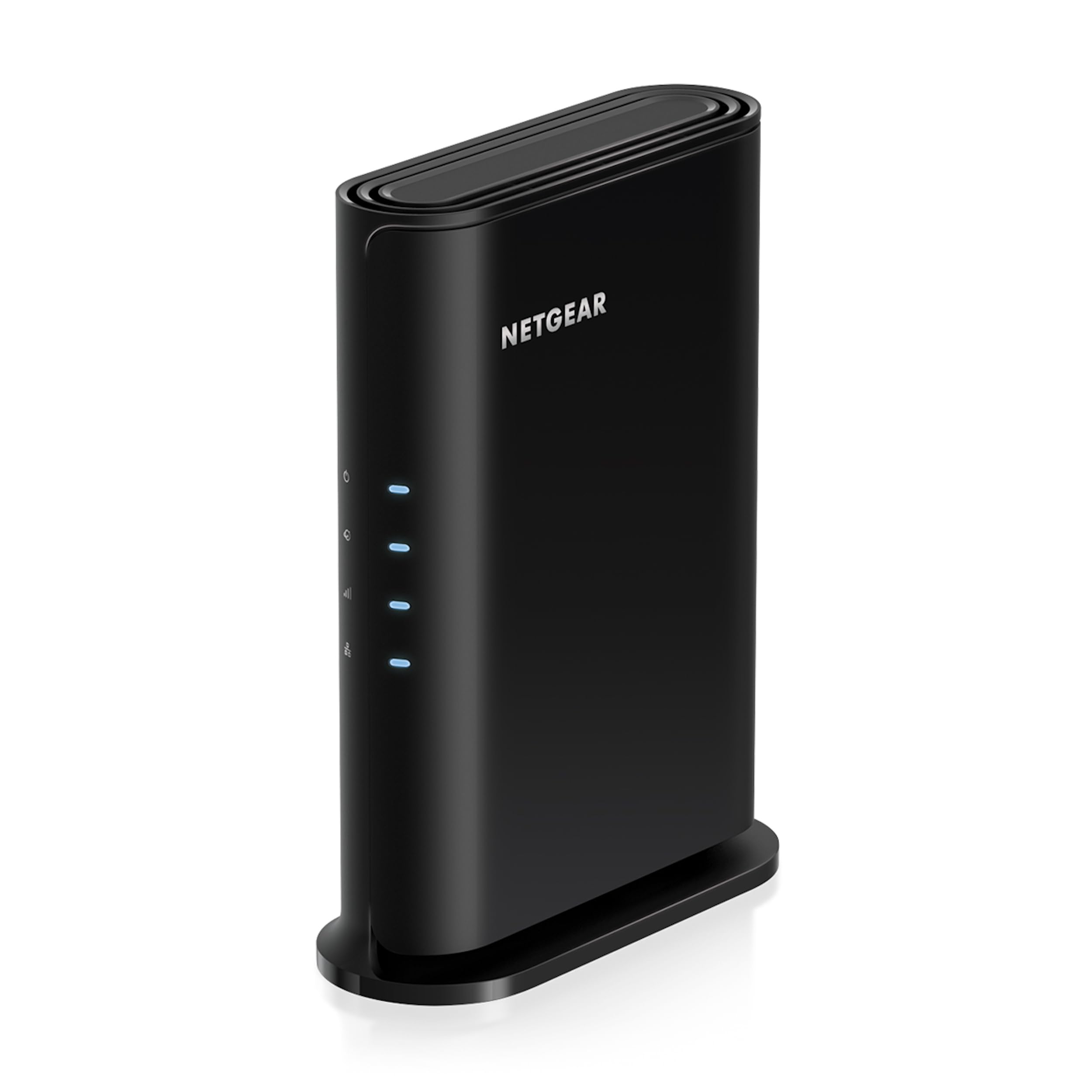
The R6700AX is a straightforward AX1800 router that focuses on doing the basics well — strong WiFi 6 coverage up to 1,500 square feet, support for 20 devices, and 4 Gigabit Ethernet ports for wired connections. Users consistently mention that setup via the Nighthawk app takes less than 10 minutes, and many report saving + per month by replacing their ISP’s rental router. Speeds in real-world tests show around 113 Mbps down on a 100 Mbps plan, with low ping for gaming.
WPA3 encryption and automatic firmware updates are included at no cost, which keeps your network secure without extra subscriptions. The router is compact with internal antennas, so it won’t look out of place in a living room. It’s not a mesh system, so larger homes may need an extender, but for small to medium homes, it provides solid, interference-free performance.
This is the ideal router for someone who wants to stop paying rental fees without sacrificing performance. It’s also a great choice for non-tech users who need a set-it-and-forget-it solution with strong parental controls and device prioritization.
Why it’s great
- Easy setup saves monthly ISP rental fees
- WPA3 security and automatic updates included
- Compact design with strong coverage for small homes
Good to know
- Limited to 1,500 sq. ft. — not suitable for large homes
- No mesh capability; cannot pair with another router
7. TP-Link Archer A7 AC1750

The Archer A7 has been a staple of the budget router category for years, and for good reason — it just works. With a Qualcomm CPU and AC1750 speeds, it’s rated for coverage up to 2,500 square feet, and users consistently report strong signals reaching 300 feet into their backyards. Download speeds in the 350-380 Mbps range over WiFi are common, and wired connections push even higher.
Setup takes only a few minutes via the TP-Link Tether app, and the router supports Alexa voice commands for basic controls like guest network and parental controls. The three external antennas are adjustable, allowing you to optimize signal direction. After five years of use, many owners report zero issues — a testament to its build quality and reliable firmware.
If WiFi 6 isn’t a requirement and you want a proven, affordable router that handles multiple devices and offers great range, the Archer A7 is still a top contender. It’s especially appealing for users who want to spend as little as possible while getting performance that rivals routers twice its price.
Why it’s great
- Proven long-term reliability — many units last 5+ years
- Excellent range for a single router at this price point
- Alexa and app control for convenience
Good to know
- AC1750 is outdated compared to WiFi 6 alternatives
- App setup can have minor connectivity hiccups initially
FAQ
Is WiFi 6 worth it on a budget router?
How many devices can a budget router handle?
Should I buy a renewed or refurbished router?
Do budget routers have good parental controls?
Final Thoughts: The Verdict
For most users, the best budget wifi router winner is the TP-Link Archer AX10 (Renewed) because it combines genuine WiFi 6 performance with a tri-core processor at an entry-level price that doesn’t compromise on coverage or features. If you want a mesh system to handle tricky floor plans, grab the Google Wifi. And for reliable long-term performance with no fuss, nothing beats the TP-Link Archer A7.

Mo Maruf
I created WellFizz to bridge the gap between vague wellness advice and actionable solutions. My mission is simple: to decode the research and give you practical tools you can actually use.
Beyond the data, I am a passionate traveler. I believe that stepping away from the screen to explore new environments is essential for mental clarity and physical vitality.