Our readers keep the lights on and my smoothie glass nicely filled. As an Amazon Associate, I earn from qualifying purchases.
Short filmmaking demands a camera that balances cinematic image quality with practical run-and-gun usability—a body that captures rich log profiles, delivers reliable autofocus, and fits within a budget that doesn’t crush your entire production fund. The wrong choice leaves you fighting rolling shutter, poor low-light performance, or codecs that choke your editing timeline.
I’m Mohammad Maruf — the founder and writer behind WellFizz. I analyze camera specifications, sensor readout speeds, dynamic range measurements, and codec efficiency across the to price tier to separate production-ready tools from spec-sheet traps for narrative and documentary-style short films.
Whether you’re a director of photography putting together a kit for festival submissions or a solo filmmaker building your first rig, this guide narrows the field to the best bodies that prioritize image quality, color science, and practical workflow — delivering the most reliable camera for short films in 2025 without forcing you to rent gear you can’t afford.
How To Choose The Best Camera For Short Films
Selecting a camera for narrative short filmmaking requires evaluating specs that matter on set and in the edit bay. Below are the critical differentiators that separate a cinema tool from a vlogging camera.
Dynamic Range and Log Profiles
A short film lives or dies by its ability to hold highlight detail and shadow information. Look for a sensor offering at least 13 stops of dynamic range with a flat log profile like V-Log, S-Log3, C-Log3, or Blackmagic RAW. These profiles let you recover skin tones and sky textures during color grading without banding or noise.
Codec and Recording Format
Internal 4:2:2 10-bit recording at minimum gives professional color depth for chroma keying and fine tonal adjustments. ProRes and Blackmagic RAW offer broad editing compatibility without transcoding, while heavily compressed H.265 can slow down older workstations. For narrative control, the ability to record 6K oversampled to 4K or internal RAW like Cinema RAW Light or N-RAW matters more than simple resolution numbers.
Stabilization and Rigging
In-body image stabilization (IBIS) allows handheld walking shots without a gimbal, which saves setup time on a short film schedule. However, some cinema-focused bodies (Blackmagic Pocket series, Sony FX30) prioritize sensor cooling and build quality over IBIS. If you plan to shoot mostly on sticks or gimbals, IBIS is less critical than a robust tripod mount and active cooling to prevent thermal shutdown during long takes.
Autofocus Reliability for Moving Subjects
Phase-detect autofocus with subject tracking lets a solo operator pull focus on actors reliably. Sony’s AI-based tracking and Canon’s Dual Pixel CMOS AF II are industry standards for fast, repeatable face and eye detection. Blackmagic and some Nikon models rely more on manual focus via peaking and magnification, which works for controlled sets but slows down documentary-style shoots.
Battery Life and Thermal Management
Short films often involve extended takes and location changes where swapping batteries every 30 minutes kills momentum. Look for models with NP-FZ100-style batteries (Sony FX30, a6700) or external power options via USB-C or a V-lock plate. Cameras with active internal fans like the Sony FX30, Panasonic S5II, and Blackmagic Pocket 6K G2 sustain unlimited 4K recording without overheating, which matters during multi-hour interview or dialogue scenes.
Quick Comparison
On smaller screens, swipe sideways to see the full table.
| Model | Category | Best For | Key Spec | Amazon |
|---|---|---|---|---|
| Sony FX30 | Cinema APS-C | Dedicated Cinema Workflow | S-Cinetone, Dual Base ISO, Active Cooling | Amazon |
| Panasonic S5II | Full-Frame Hybrid | Hybrid Photo/Video & Unlimited 4K | 14+ Stop V-Log, Phase Hybrid AF, Active I.S. | Amazon |
| Blackmagic Pocket 6K G2 | Super 35 Cinema | RAW/ProRes Workflow & Color Grading | 12-Bit Blackmagic RAW, CFast 2.0 + SSD | Amazon |
| Nikon RED Z Cinema ZR | Full-Frame Cinema | Professional RED Color Science | 6K R3D RAW, 15+ Stops, 32-bit Float Audio | Amazon |
| Nikon Z6 III | Full-Frame Hybrid | Internal 6K RAW & Low-Light | 6K/60p N-RAW, 4K/120p, 4000-nit EVF | Amazon |
| Sony Alpha 6700 | APS-C Compact | AI Tracking & 4K/120p Slow Motion | 6K Oversampled 4K/60p, 4K/120p, AI AF | Amazon |
| Canon EOS R8 | Full-Frame Lightweight | Lightweight Full-Frame & 4K/60p C-Log3 | Uncropped 4K/60p Oversampled 6K, 180fps | Amazon |
| Blackmagic Pocket 4K | MFT Cinema | Budget Cinematic RAW & Vintage Lenses | 13 Stops DR, Dual ISO, MFT Mount, ProRes | Amazon |
| Canon EOS RP | Entry Full-Frame | Budget Full-Frame & Photo/Video Crossover | RF Mount, 4K Upsampled, Flip Screen | Amazon |
| DJI Osmo Pocket 3 | Pocket Gimbal | Walk-and-Talk B-Roll & Solo Vlog | 1″ CMOS, 4K/120fps, D-Log M, 3-Axis | Amazon |
| Insta360 X5 | 360° Action | Immersive 360° & Invisible Selfie Stick | Dual 1/1.28″ Sensors, 8K30fps 360°, IPX8 | Amazon |
In-Depth Reviews
1. Sony Cinema Line FX30

The Sony FX30 is purpose-built for cinematic short film production with a 20.1 MP Exmor R APS-C sensor that shoots 6K oversampled 4K in S-Cinetone and S-Log3. Its active internal fan lets you record unlimited 4K 4:2:2 10-bit without thermal shutdown, which is crucial for dialogue scenes or interview-heavy narratives that run longer than 30 minutes per take. The Dual Base ISO (640 and 2500) delivers clean low-light performance, and the full-size HDMI port means you can monitor with a professional field recorder without a fragile adapter.
Autofocus performance is Sony’s best: real-time eye tracking for humans and animals works reliably for T-stop wide-open shooting. The FX30 also supports user LUT embedding directly into clips and on the LCD, so your on-set monitor matches your graded final. The NP-FZ100 battery provides roughly 90 minutes of shooting, and the USB-C port supports external power packs for extended location days.
Build quality matches Sony’s larger cinema bodies with a magnesium alloy frame and weather sealing. The high-capacity NP-FZ100 battery offers better endurance than the pocket-series bodies, though full-day shoots still require a V-lock plate or multiple spares. For indie productions that need a dedicated cinema sensor without switching to full-frame lens costs, the FX30 delivers the most professional feature set at this tier.
Why it’s great
- Active cooling system prevents overheating during unlimited 4K/60p recording
- S-Cinetone color science delivers cinematic skin tones straight from the sensor
- Dual Base ISO (640/2500) provides excellent low-light latitude for exterior and interior scenes
Good to know
- No in-body stabilization; requires gimbal or tripod for smooth handheld shots
- APS-C sensor demands careful lens selection to avoid crop factor on wide shots
- Battery life is moderate at around 90 minutes of continuous recording
2. Panasonic LUMIX S5II
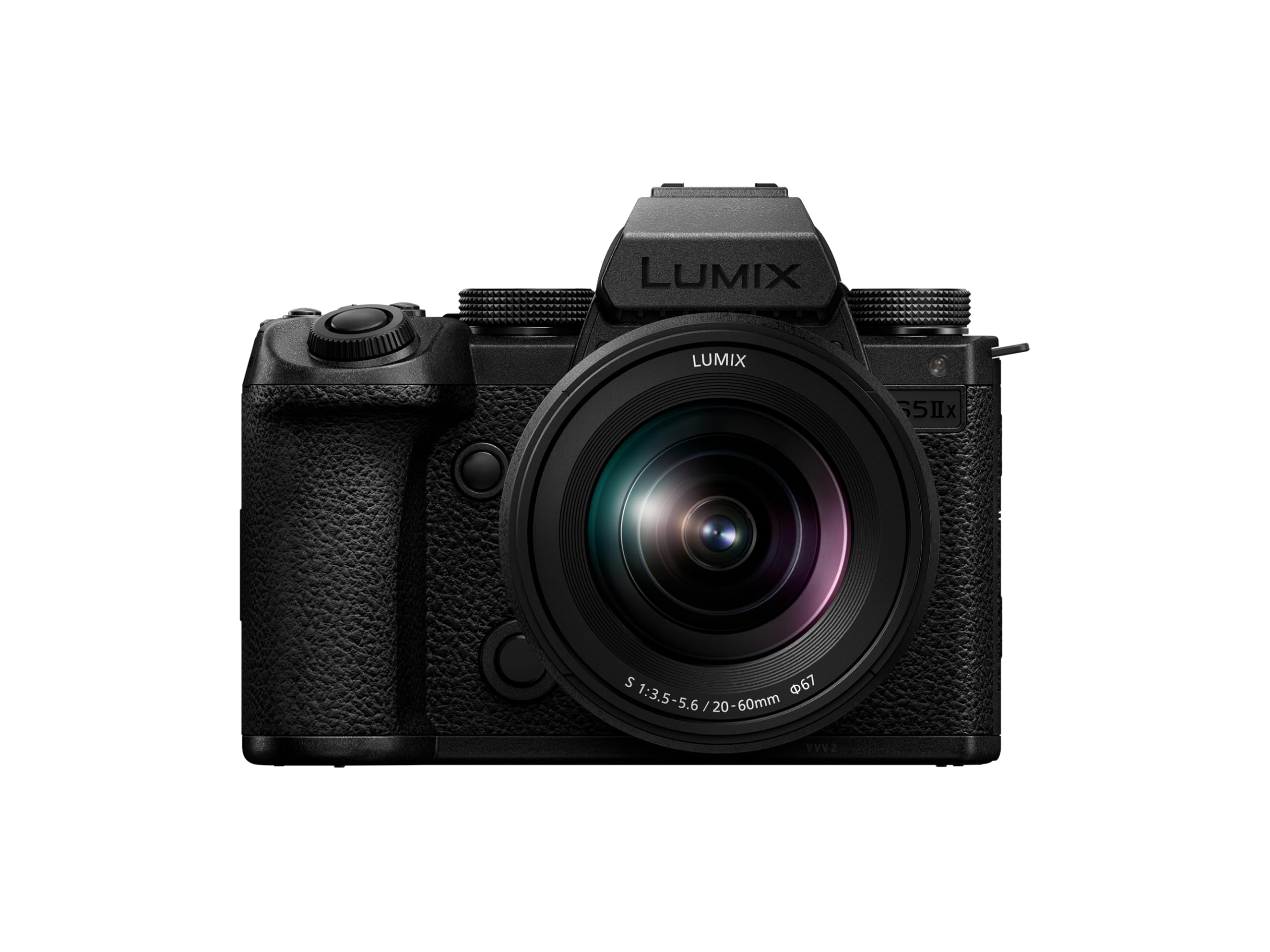
The Panasonic S5II is the most complete hybrid short film camera under , pairing a 24.2 MP full-frame sensor with the brand’s first reliable phase-detect autofocus system. It captures 14+ stops of dynamic range in V-Log/V-Gamut, which grades beautifully for narrative work, and the built-in fan enables unlimited 4:2:2 10-bit recording in all modes without thermal throttling. The Active I.S. system smooths walking shots enough that many sequences can skip the gimbal entirely.
Video specs are robust: 6K open gate 30p, oversampled 4K 60p, and 4K 30p with V-Log. The body includes a high-resolution L-mount system compatible with Leica and Sigma lenses, giving you access to affordable cinema primes. The Real Time LUT feature lets you bake in a custom look for on-set monitoring, which is a time-saver for fast-turnaround productions. The full-size HDMI and XLR adapter add-on make it location-ready for professional audio.
The ergonomics favor long shooting days with a deep grip and well-placed controls, and the magnesium alloy frame handles location bumps. For filmmakers who need one camera that shoots stills competently and delivers cinema-quality 4K with reliable autofocus, the S5II is the smartest all-around investment in this group.
Why it’s great
- Reliable phase-detect AF with subject tracking for gimbal and slider work
- Active I.S. reduces the need for a gimbal on controlled walking shots
- Unlimited 4:2:2 10-bit recording with active cooling and V-Log/V-Gamut
Good to know
- Battery life is below average; expect around 60 minutes of continuous video
- L-mount native lens selection is smaller than Sony E or Canon RF ecosystems
- Heavier than the Sony a6700 or Canon R8 at about 1.6 pounds body-only
3. Blackmagic Pocket Cinema Camera 6K G2

The Blackmagic Pocket Cinema Camera 6K G2 remains the gold standard for image quality at its price point, recording 6K 12-bit Blackmagic RAW internally to CFast 2.0 cards or external SSDs via USB-C. The Super 35 sensor captures 13 stops of dynamic range with dual native ISO up to 25,600, and the included DaVinci Resolve Studio license means your entire post-production pipeline is ready on day one. The active EF mount opens up thousands of affordable cinema and still lenses, from vintage Nikkors to modern Sigma Art primes.
The 5-inch tilting LCD is bright enough for outdoor monitoring without an external field recorder, and the mini XLR input with phantom power gives you professional audio capture without a separate recorder. The built-in active fan keeps the sensor cool during long takes, and the USB-C recording to Samsung T5/T7 SSDs is a reliable, low-cost alternative to expensive CFAST cards.
Battery life remains the weak link: the included NP-F570 lasts roughly 45 minutes, so you’ll need a V-lock plate or grip battery for full-day narrative shoots. The workflow is manual-focus-only (no phase-detect AF), which suits controlled sets but slows down documentary-style shooting. For short film teams that prioritize color depth, codec flexibility, and a direct path to the grade, the 6K G2 is the most cost-effective cinema body available.
Why it’s great
- Professional 12-bit Blackmagic RAW internal recording with excellent color science
- Active EF mount supports thousands of affordable and vintage lenses
- Includes DaVinci Resolve Studio license for immediate post-production workflow
Good to know
- Short battery life (about 45 minutes per NP-F570 charge)
- No phase-detect autofocus; requires manual focus or external follow-focus system
- Larger and heavier than hybrid mirrorless options at roughly 2.5 pounds with cage
4. Nikon RED Z Cinema | ZR

The Nikon RED Z Cinema ZR is a revolutionary entry that brings RED’s legendary color science into a compact full-frame body weighing just 1.18 pounds. It records 6K full-frame REDCODE RAW (R3D NE) with over 15 stops of dynamic range and dual base ISO, giving short film DPs the same post-production flexibility as a Komodo at a significantly lower weight. The 4-inch DCI-P3 swivel touchscreen provides accurate color monitoring on set, and the Nikon Z mount adapts to almost any lens system via third-party adapters.
Audio capture is industry-leading with 32-bit float recording — you can clip the input and still recover clean dialogue in post. Fast boot times and no black-shading calibration mean you spend less time waiting and more time shooting. The body handles 6K 60fps R3D internally, and the CFexpress Type B slot supports high-bitrate RAW recordings without dropped frames.
File sizes are massive, and you’ll need a fast CFexpress card and a modern workstation with RED-compatible software (DaVinci Resolve Studio recommended). The ZR is a dedicated cinema camera: no stills mode, no IBIS, and no in-body stabilization. For narrative short films that demand RED’s color pipeline and the lightest possible rig, this is the most compact full-frame cinema option you can buy.
Why it’s great
- True RED color science with 15+ stops dynamic range and R3D RAW workflow
- Ultra-light 1.18-pound body with 4-inch DCI-P3 color-accurate monitor
- 32-bit float audio recording captures clean dialogue without gain-staging
Good to know
- Large R3D file sizes require fast CFexpress Type B storage and a powerful editing rig
- No in-body stabilization, no still photo mode, and limited native lens selection
- Does not include a battery charger or external charging solution in the box
5. Nikon Z6 III

The Nikon Z6 III is a hybrid workhorse that records 6K/60p N-RAW internally and oversampled 4K UHD with 10-bit color, making it one of the most affordable paths to a full RAW video workflow. The 24.5 MP full-frame sensor delivers ISO 100–64,000 (expandable to 204,800), so you can shoot candlelit interiors without supplemental lighting. The 4000-nit EVF is the brightest in this class, allowing you to nail focus in direct sunlight — a major advantage for outdoor location shooting on a budget.
Video features include 4K/120p slow motion, Full HD/240p, and professional monitoring tools like waveform and false color. The subject-detection autofocus uses deep learning to track human faces down to 3% of the frame, and the 5-axis IBIS provides up to 5 stops of stabilization for handheld walk-ups. The body is weather-sealed and comfortable for all-day handheld shooting with a deep grip.
Battery life runs about 2 hours of continuous video, which is acceptable for a full-frame mirrorless. The dual card slot accepts CFexpress Type B and SD UHS-II. The Z6 III is best for short film teams that need RAW internal recording without stepping up to a dedicated cinema body, and who prefer Nikon’s color rendering and Z-mount lens ecosystem.
Why it’s great
- 6K/60p N-RAW internal recording eliminates external recorder necessity
- 4000-nit EVF critical for manual focus in bright outdoor locations
- Excellent high-ISO performance with clean image at 12,800
Good to know
- Autofocus, while improved, still lags behind Sony and Canon for fast tracking
- Menu system is less intuitive than competitors for video-specific settings
- CFexpress Type B cards are more expensive than SD or standard CFast options
6. Sony Alpha 6700

The Sony Alpha 6700 packs a 26 MP APS-C Exmor R sensor with the same BIONZ XR processor and dedicated AI chip as Sony’s full-frame models, enabling real-time subject recognition that stays locked on an actor’s eye even during erratic movement. It records 6K oversampled 4K at up to 60p in 4:2:2 10-bit, plus 4K/120p for smooth slow-motion inserts. The compact body (about 1.1 pounds) is easy to rig on a gimbal or shoulder mount for all-day handheld work.
The AI autofocus is the best in this price tier: it recognizes humans, animals, birds, insects, cars, and trains with adjustable tracking sensitivity. The 5-axis in-body stabilization smooths handheld footage enough for narrative dialogue scenes without a gimbal. The vari-angle touchscreen and headphone/mic jacks make run-and-gun short film production straightforward with minimal additional accessories.
The Sony E-mount ecosystem is the most extensive for APS-C, with native Sigma and Tamron zooms designed specifically for video. Battery life with the NP-FZ100 is excellent for this size, delivering roughly 90 minutes of continuous recording. The main trade-offs are the small body’s limited heat dissipation (expect 4K/60p to overheat after about 25 minutes) and the lack of a full-size HDMI port.
Why it’s great
- Industry-leading AI autofocus locks onto subjects with high reliability
- Compact and lightweight design is ideal for gimbal and travel rigs
- 6K oversampled 4K/60p delivers excellent sharpness and color depth
Good to know
- No active cooling leads to thermal shutdown during extended 4K/60p recording
- Micro-HDMI port is fragile for professional monitoring setups
- APS-C sensor demands careful lens choice for wide-angle narrative work
7. Canon EOS R8

The Canon EOS R8 is the lightest full-frame RF-mount camera at 0.9 pounds, making it a natural choice for short films that prioritize mobility without sacrificing sensor size. It shoots uncropped 4K 60p oversampled from 6K, Full HD 180fps slow motion, and includes C-Log 3 for post-production color grading. The 24.2 MP full-frame CMOS sensor works well in low light, with clean images up to ISO 6400.
Dual Pixel CMOS AF II covers 100% of the frame with subject detection for people and animals. The vari-angle LCD touchscreen is useful for low-angle narrative shots. While the body lacks in-body stabilization, RF lenses with optical IS help smooth out handheld footage. The R8 also functions as a basic webcam via UVC/UAC, which is useful for remote productions or live-streaming events.
The single SD UHS-II card slot and LP-E17 battery (rated for about 290 shots) limit extended shooting sessions without a spare. The body also lacks a headphone jack and full-size HDMI, which complicates professional monitoring. For narrative teams that need a second full-frame B-camera or a compact A-camera for lightweight location shoots, the R8 delivers strong images in a travel-friendly size.
Why it’s great
- Uncropped 4K/60p oversampled from 6K provides sharp, detailed footage
- Extremely lightweight (0.9 pounds) makes gimbal work effortless
- C-Log 3 with good dynamic range for entry-level color grading
Good to know
- No in-body stabilization, no headphone jack, and no full-size HDMI port
- Single SD card slot and small LP-E17 battery limit long shoot days
- Limited codec and bitrate options compared to dedicated cinema bodies
8. Blackmagic Pocket Cinema Camera 4K

The Blackmagic Pocket Cinema Camera 4K is the entry point for narrative filmmakers who want RAW recording without a five-figure investment. The 4/3-inch sensor records 12-bit CinemaDNG RAW and 10-bit ProRes up to 4K DCI at 60fps, with 13 stops of dynamic range and dual native ISO up to 25,600. The micro four-thirds mount allows you to adapt vintage lenses from Canon FD to Olympus OM, giving short films a distinct look without expensive modern glass.
The 5-inch LCD touchscreen is large enough for pull-focus monitoring, and the mini XLR input with phantom power eliminates the need for a separate audio recorder on simple setups. Recording to SD UHS-II, CFast 2.0, or external USB-C SSD gives you flexible storage options based on budget and bitrate requirements. The included DaVinci Resolve Studio license covers your grading, editing, and audio post.
Battery life is limited to about 45 minutes with the included LP-E6, and the body is bulky compared to mirrorless hybrids. The camera requires manual focusing — no autofocus system exists — so a follow-focus system and focus puller are recommended for narrative dialogue. This is the best option for beginners who want to learn true cinema camera workflow on a tight budget..
Why it’s great
- Affordable entry into 12-bit CinemaDNG RAW recording
- MFT mount adapts to nearly any vintage or modern lens system
- Includes full DaVinci Resolve Studio license for post-production
Good to know
- No autofocus; requires full manual focus setup with follow-focus gear
- Battery life is short (about 45 minutes per charge)
- Sensor size is smaller than Super 35, requiring wider lenses for the same field of view
9. Canon EOS RP

The Canon EOS RP is a budget-conscious full-frame entry that works best as a beginner’s first narrative camera, especially if your eventual upgrade path includes the Canon RF ecosystem. It records 4K with a significant crop and a 30-minute limit, so its true strength lies in 1080p video, where the 26 MP full-frame sensor delivers pleasing skin tones and solid low-light performance for interior scenes. The RF 24-105mm F4-7.1 kit lens provides a versatile zoom range for outdoor location work.
The vari-angle touchscreen and Dual Pixel CMOS AF make focus easy for beginners learning manual aperture and shutter control. The body is lightweight (just under a pound) and comfortable for handheld work, and the RF mount accepts EF lenses via adapter, opening up a wide range of affordable used glass. The battery life is decent for still photographers but will require spare LP-E17 packs for a full day of video shooting.
This is a stills-first camera with video as a secondary feature. You cannot record 4K beyond 30 minutes, and the 4K mode crops the sensor heavily, making wide shots difficult. The EOS RP is best for filmmakers who need an affordable full-frame body for photo and video content creation while they save for a dedicated cinema body.
Why it’s great
- Most affordable path to a full-frame sensor with Canon color science
- Excellent Dual Pixel CMOS AF for manual-focus beginners
- Lightweight and easy to carry for all-day location shooting
Good to know
- 4K video has a heavy crop and a 30-minute recording limit
- No log profile, no headphone jack, and no 10-bit internal recording
- Kit lens is soft at the edges for critical narrative work
10. DJI Osmo Pocket 3 Creator Combo
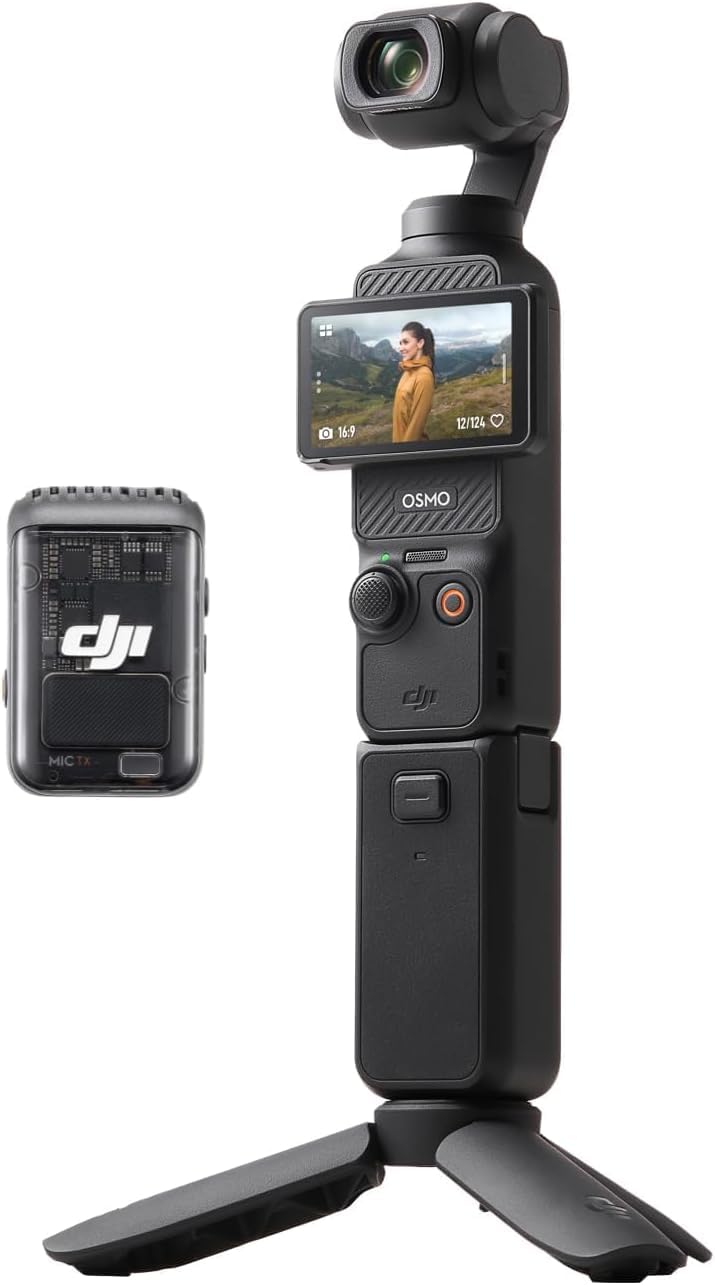
The DJI Osmo Pocket 3 is a specialized tool for capturing ultra-smooth B-roll, walk-and-talk scenes, and establishing shots without a heavy camera rig. The 1-inch CMOS sensor shoots 4K at 120fps with 3-axis mechanical stabilization that eliminates the need for a separate gimbal. The 2-inch rotatable touch screen switches between horizontal and vertical modes instantly, which is useful for social media variants of your short film.
The Creator Combo includes the DJI Mic 2 transmitter, a wide-angle lens, battery handle, mini tripod, and carrying bag, making it a complete kit for solo filmmaking. ActiveTrack 6.0 keeps subjects centered, while D-Log M and 10-bit color enable basic color grading in post. The stereo microphones and wireless mic connection capture clean dialogue for interview scenes.
This is not a primary narrative camera — its fixed lens and small sensor mean limited shallow depth of field and poor performance in very low light. The gimbal mechanism is fragile and requires careful handling. For narrative teams that need a reliable secondary camera for insert shots, gimbal moves, or a lightweight travel setup, the Osmo Pocket 3 fills that niche better than any other option in this guide.
Why it’s great
- 3-axis gimbal provides gimbal-quality stabilization in a pocket-sized body
- D-Log M and 10-bit color allow basic grading for consistent color
- Creator Combo includes wireless mic, tripod, and wide-angle adapter
Good to know
- Fixed wide-angle lens limits shallow depth of field and focal flexibility
- Small 1-inch sensor struggles in low-light interior narrative scenes
- Fragile gimbal requires careful handling and is not repairable by the user
11. Insta360 X5 Essentials Bundle

The Insta360 X5 is a 360-degree action camera that records 8K30fps spherical video from dual 1/1.28-inch sensors, offering a completely unique perspective for short films. The invisible selfie stick effect creates third-person views that are impossible with conventional cameras, and the InstaFrame mode allows you to reframe the shot in post-production — you point the camera in one direction and choose the angle later. The FlowState stabilization and 360-degree Horizon Lock keep the horizon level even during full body rotations.
The X5 is waterproof to 49 feet without a housing, making it suitable for underwater shots, rain scenes, or water sports sequences. The advanced AI processing in the app can automatically create highlight clips or reframed sequences, reducing editing time for experimental short films. The 4-mic array with wind guard captures clear audio even at high speed.
The 360-degree workflow requires specialized editing software (Insta360 Studio or the mobile app) and produces files that are larger than standard 4K clips. The fixed fisheye lenses create a distinct look that may not suit narrative dialogue or traditional cinematography. For short films that need immersive environmental shots, action sequences, or creative transitions, the Insta360 X5 is a one-of-a-kind tool.
Why it’s great
- Captures immersive 360-degree footage for unique storytelling perspectives
- Waterproof to 49 feet without housing for underwater narrative sequences
- Invisible selfie stick effect creates impossible third-person and drone-like angles
Good to know
- Requires specialized 360-editing software and produces large file sizes
- Fisheye lens look is not suitable for traditional narrative cinematography
- Battery life is shorter than expected, especially when shooting 8K 360°
FAQ
Is a full-frame sensor necessary for short films?
What codec should I choose for narrative short films?
Why does rolling shutter matter for short filmmaking?
Do I need an external monitor for narrative work?
Can I use vintage lenses for short films?
Final Thoughts: The Verdict
For most short film productions, the camera for short films winner is the Panasonic S5II because it combines full-frame image quality, reliable phase-detect autofocus, and unlimited 4:2:2 10-bit recording with active cooling — all in a body that won’t require a separate gimbal for walking shots. If you want a dedicated cinema workflow with RED color science, grab the Nikon RED Z Cinema ZR. And for a raw, codec-flexible sensor that teaches you true filmmaking discipline on a budget, nothing beats the Blackmagic Pocket 6K G2.

Mo Maruf
I created WellFizz to bridge the gap between vague wellness advice and actionable solutions. My mission is simple: to decode the research and give you practical tools you can actually use.
Beyond the data, I am a passionate traveler. I believe that stepping away from the screen to explore new environments is essential for mental clarity and physical vitality.