Our readers keep the lights on and my smoothie glass nicely filled. As an Amazon Associate, I earn from qualifying purchases.
The transition from a standard athletic shoe to a five-toe design is one of the most radical changes you can make to your gait, foot strength, and overall lower-body biomechanics. Where conventional sneakers lock your toes in a tapered cage and raise your heel, these minimalist alternatives let each digit spread, grip, and sense the ground independently—rebuilding intrinsic foot muscles that most shoes render dormant. The catch is that the market is now flooded with dozens of models that vary wildly in sole thickness, upper material, tread depth, and toe-pocket construction, making it hard to know which pair will actually hold up to your chosen activity.
I’m Mohammad Maruf — the founder and writer behind WellFizz. My deep-market research focuses on the intersection of biomechanics and footwear engineering, analyzing sole flex profiles, midsole stack heights, and proprietary rubber compounds to separate functional minimalist designs from those that merely mimic the look.
To cut through the noise, I’ve analyzed dozens of pairs across multiple activity categories—road running, trail hiking, gym training, and casual walk—to bring you this curated guide to the best 5 finger shoes available right now, ranked by construction quality, ground feedback, and real-world durability.
How To Choose The Best 5 Finger Shoes
Five-finger shoes are not a one-size-fits-all category. The main differentiators come down to sole thickness, upper material, and the specific activity you plan to do in them. Understanding these three variables will prevent you from buying a pair that feels either too protective (no ground feedback) or too fragile (no protection from sharp terrain).
Sole thickness and ground feel
The stack height of the sole dictates how much tactile information reaches your foot. Models with a 3–4mm rubber layer deliver an intense barefoot sensation and are ideal for gym floors, yoga mats, and smooth pavement. A 5–7mm sole, often with a segmented tread pattern, provides enough cushion to absorb small rocks on light trails while still preserving a natural flexion range. Beginners transitioning from heavily cushioned shoes often prefer the middle ground to avoid overwhelming their plantar fascia.
Upper breathability and drying speed
Because your toes sit in individual pockets, moisture management is critical. Mesh uppers dry fast and ventilate well during warm-weather runs, but they let sand and small debris through. Hemp and stretch-woven synthetics offer a balance of breathability and durability, while suede or leather panels add weather resistance but trap heat. If you plan to use the shoes for water crossings or wet-weather hiking, look for a quick-dry synthetic upper with drainage ports in the sole.
Tread pattern and terrain compatibility
Not all five-finger soles are equal when it comes to traction. Smooth rubber with a light siping pattern works for road running and gym use. A chevron or multi-directional lug pattern—like the ones Vibram uses on its KSO and V-Aqua models—adds bite on loose dirt, grass, and wet rock. For heavy trail use, a deeper lug with a rock plate layer prevents bruising from sharp stones while maintaining flexibility.
Quick Comparison
On smaller screens, swipe sideways to see the full table.
| Model | Category | Best For | Key Spec | Amazon |
|---|---|---|---|---|
| Vibram V-Run | Road Running | Athletes seeking injury recovery | 4mm sole; 4 oz. | Amazon |
| Vivobarefoot Primus Lite 3.5 | Training | CrossFit & daily wear | 3mm insole; zero drop | Amazon |
| Vibram KSO ECO | Cross-Training | Light trails & gym | 5mm rubber; hemp upper | Amazon |
| Vibram V-Aqua | Water | Wet expeditions & hiking | Quick-dry synthetic | Amazon |
| Xero Shoes Prio Suede | Casual Athletic | Daily walking & deadlifts | 5.5mm FeelTrue sole | Amazon |
| Hike Footwear HF Stride | Budget | Indoor & casual wear | Ultra-light; slip-on | Amazon |
| Dansko Peony | Walking | Healthcare & all-day wear | Arch support; 1.5 lb. | Amazon |
In-Depth Reviews
1. Vibram Women’s FiveFingers V-Run
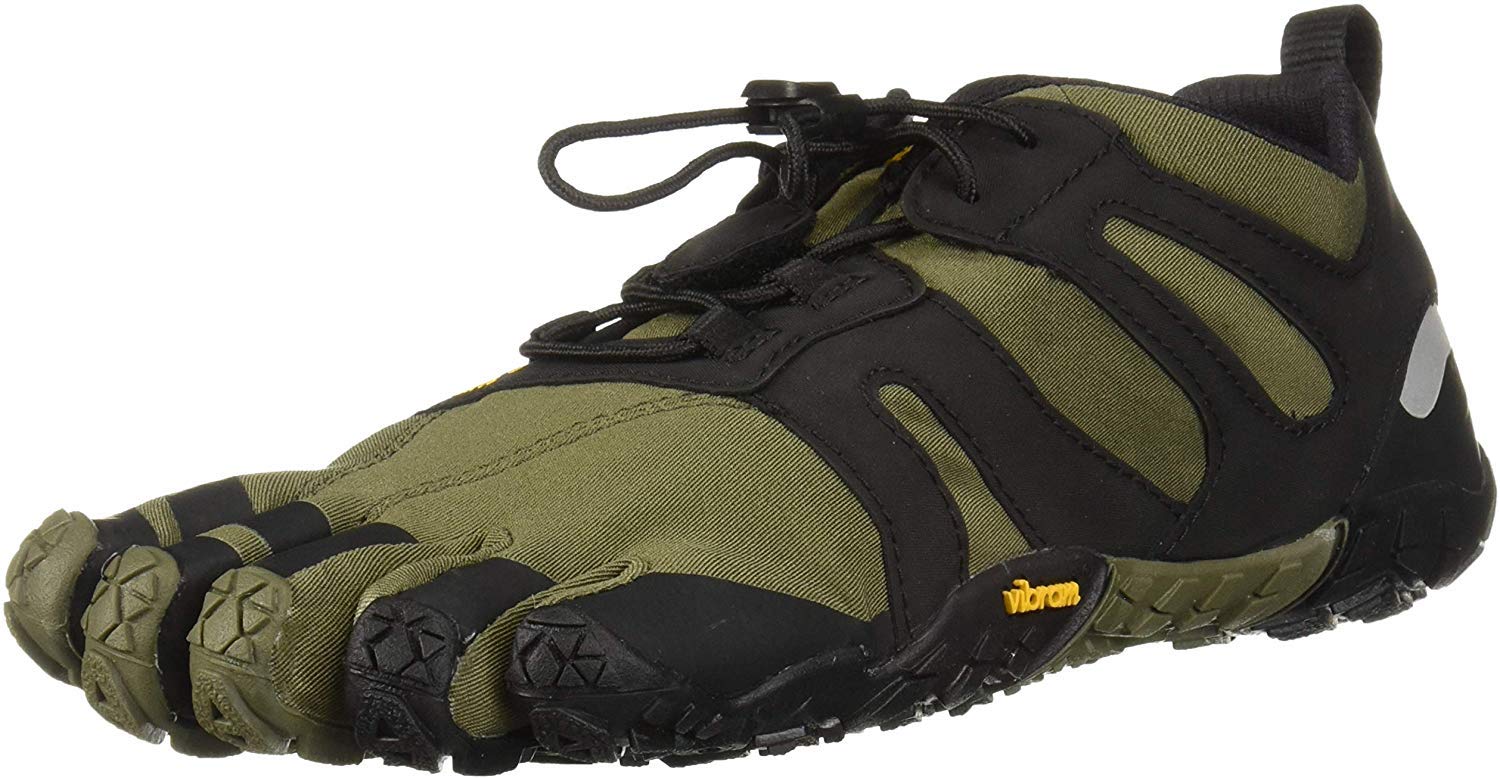
The Vibram V-Run earns the top spot because it solves the two biggest problems road runners face with minimalist footwear: knee pain and shin splints. Verified users who switched from traditional running shoes report that the 4mm rubber sole and toe-grip stability eliminated chronic pain on three-plus-mile runs, while the near-total ground feedback retrained their foot-strike pattern. The upper is open mesh, which keeps feet cool during summer miles but is thin enough that you will feel the wind through the fabric. This is not a trail shoe—the sole tread is minimal—but on dry pavement and gym floors, the V-Run is the gold standard for natural running mechanics.
Sizing is the one area where caution pays off. Multiple reviewers note that this model runs a full size to a size and a half smaller than other Vibram styles; many had to go up from their usual size to get the toe pockets seated correctly. Once broken in, the upper stretches about half a size to conform to the foot. The toe pockets are slightly longer than necessary, which can feel odd until you lace them snug. For users transitioning from arch-support shoes, expect a two-week adaptation period where your calves and plantar fascia adjust to the zero-drop platform.
Durability is better than expected for such a lightweight shoe. Several owners have logged 300–400 miles before noticing any sole separation or upper fraying. The outsole rubber grips well on dry concrete and track surfaces, but it becomes noticeably slick on wet painted lines or smooth locker-room floors. If your primary use is road running or gym weightlifting with occasional outdoor jogging, the V-Run delivers the most natural foot strike in the category without sacrificing structural integrity.
Why it’s great
- Exceptional ground feel with enough rubber to absorb road shock
- Breathable mesh upper prevents sweat buildup during longer runs
- Helped users eliminate knee pain and shin splints within weeks
Good to know
- Runs small; order a full size up from your usual fit
- Wet traction on smooth surfaces is poor
- Thin upper offers minimal protection from cold wind
2. Vivobarefoot Primus Lite 3.5

The Primus Lite 3.5 is Vivobarefoot’s answer to the athlete who wants the ground feel of a five-toe design without the individual toe pockets—a non-five-finger shoe for the barefoot committed. But if you are open to a wide toebox design that still lets toes splay naturally, this shoe is one of the most versatile trainers on the market. The 3mm insole combined with a flexible outsole gives you enough feedback to feel changes in floor texture during deadlifts while providing a thin barrier against abrasive surfaces. Multiple users with unstable ankles and bad knees report that this shoe restored their confidence in lateral movements and dynamic drills.
Sizing here is inconsistent with most other barefoot brands. Users with low-volume feet found that ordering a half-size down from Brannock measurement gave the best fit, while those with higher-volume feet stayed true to size. The upper is a seamless fabric that breathes well, and reviewers noted zero odor issues even after months of daily use without socks. The white color option is notoriously hard to keep clean—stains from dirt and grass set into the woven fabric and resist gentle washing methods.
Versatility is the main selling point. You can wear these for CrossFit WODs, long walks on pavement, and casual office settings without looking out of place. The outsole holds up against abrasion from rope climbs and kettlebell swings, but the thin sidewall means lateral stability is lower than in shoes with a structured heel cup. For users who want a single pair of shoes for training, daily wear, and recovery, the Primus Lite 3.5 is a durable, low-maintenance workhorse.
Why it’s great
- Excellent ground feel for strength training and dynamic movement
- Seamless fabric upper prevents blisters and hot spots
- Breathable and odor-resistant over extended use
Good to know
- White fabric stains easily and is difficult to clean
- Sizing runs slightly long for low-volume feet
- Minimal lateral support for heavy side-to-side drills
3. Vibram FiveFingers KSO ECO
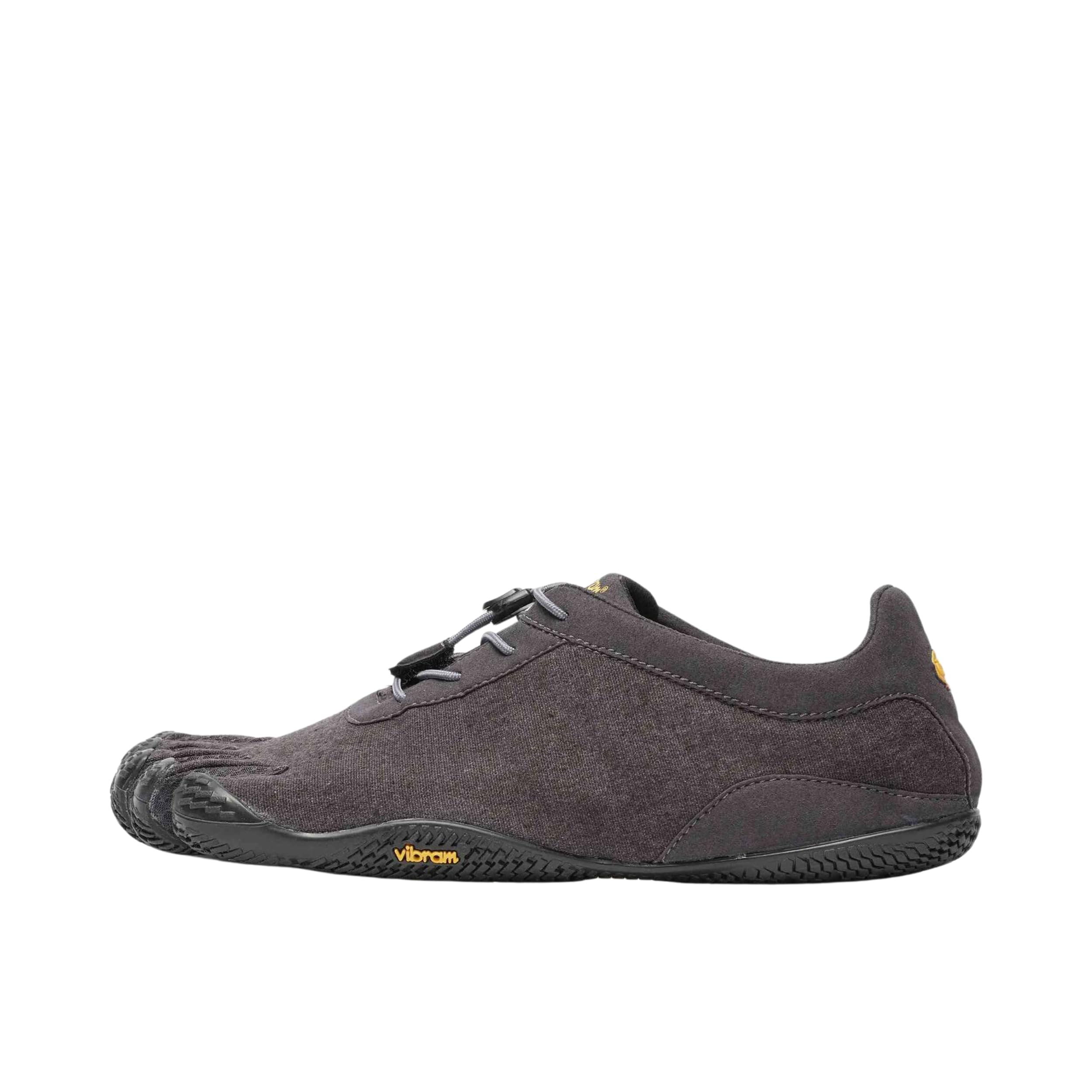
The KSO ECO is the most comfortable toe-pocket shoe Vibram makes, thanks to a hemp-and-stretch-woven upper that molds to the shape of each digit like a custom glove. Where earlier five-finger models felt abrasive between the toes during the break-in period, the ECO’s natural fiber construction is soft from the first wear and creates a snug cradle without restricting movement. The 5mm rubber sole provides enough thickness to handle light trail debris—small gravel, pine needles, and packed dirt—while still delivering the tactile feedback that barefoot enthusiasts chase. Verified users who have owned multiple Vibram generations overwhelmingly call this their favorite iteration.
On grass, sand, and dirt the outsole grips with authority, but asphalt and rough concrete will punish the thin sole on longer runs. The hemp upper breathes well and dries faster than cotton or leather, but it is not waterproof and will soak through on wet grass or puddles. Some users reported that the seams around the toe pockets can tear if you pull too aggressively when removing the shoes; a careful, rolling removal technique extends the lifespan considerably. With three-times-per-week use, owners typically see around 400 miles before the upper fabric begins to fail.
The break-in period is near zero compared to other barefoot shoes, but sizing requires attention. Several customers who normally wear a 40 ordered a 41 to accommodate slightly thicker toes or a higher instep. If you plan to wear socks—which thicker toe socks require—going up a full size is advisable. The heel cup is minimal, so the shoe can slip during explosive movements until you tighten the hook-and-loop strap securely. For mixed terrain use from gym to light trail, the KSO ECO offers the best toe-box feel and material quality at a mid-range investment.
Why it’s great
- Hemp upper molds perfectly to each toe for a custom fit
- Excellent grip on grass, dirt, sand, and loose rock
- Short or no break-in period compared to other models
Good to know
- Thin sole transmits sharp rock pain on rough terrain
- Seams at toe pockets can tear if removed roughly
- Sizing runs small; go up one full size
4. Vibram Women’s FiveFingers V-Aqua

If your adventures involve water crossings, wet rocks, or sandy shorelines, the V-Aqua is purpose-built to handle conditions that would destroy a standard mesh five-finger shoe. The synthetic upper is designed to drain water instantly and dry within minutes, preventing the heavy, waterlogged feeling that plagues most amphibious footwear. Owners who have used these for hiking through streams, swimming between islands, and even rock climbing report that the outsole holds traction on wet stone and algae-covered surfaces better than any other barefoot model they have tested. The near-barefoot feel is preserved, with just enough rubber to protect against sharp shells and submerged roots.
Fit consistency is better than many Vibram models. Users who have owned eight different Vibram styles rank the V-Aqua as the most comfortable for everyday wear, though several note that the shoe runs slightly small—size 40 fits like a standard 39.5. The toe pockets are deep enough to accommodate slightly longer toes without feeling cramped, and the heel retention is secure enough for cycling and light jogging on packed sand. A small percentage of wearers struggled to get their pinky toe into the correct pocket during the first few wears, a common complaint that usually resolves once the upper stretches.
Durability is a highlight here. One reviewer reported getting seven years of use from a previous pair, taking them through hiking, swimming, and climbing before needing a replacement. The construction feels denser than the KSO ECO, with reinforced stitching around the toe-splay zones. The trade-off is breathability on dry land: the synthetic upper does not ventilate as freely as mesh, so in hot, dry conditions your feet will feel warmer than they would in a road-running model. For water-centric use cases, however, the V-Aqua is the most reliable amphibious five-finger shoe on the market.
Why it’s great
- Drains and dries rapidly after full submersion in water
- Excellent wet-surface traction on rock and algae
- Durable construction with reinforced stitching around toe pockets
Good to know
- Runs slightly small; consider sizing up half a size
- Upper feels warm in hot, dry conditions
- Toe pockets may require a brief break-in period for proper alignment
5. Xero Shoes Men’s Prio Suede
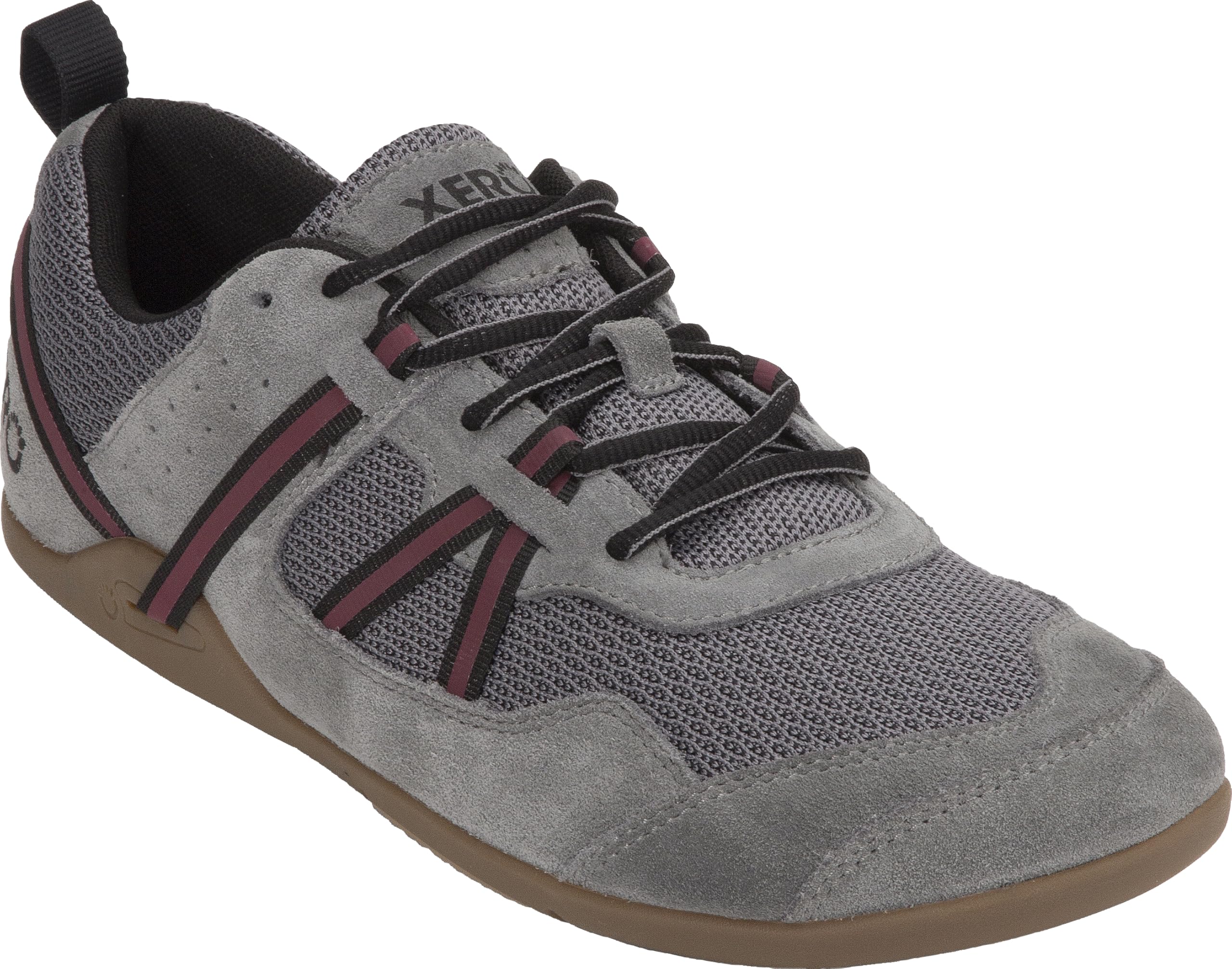
The Xero Prio Suede bridges the gap between barefoot function and street-ready aesthetics better than most models in this category. The 5.5mm FeelTrue outsole provides enough rubber to absorb the shock of concrete walking while still delivering ground feedback that improves posture and gait. Users who spend eight-plus hours a day on hard flooring—warehouse workers, tradespeople, and retail employees—report that the wide toe box and zero-drop platform dramatically improved their hip and lower-back comfort compared to conventional work shoes. The suede upper adds a level of durability that mesh shoes lack; it resists scuffs and light abrasions from daily wear.
The huarache-style strap-and-lace closure system is the most polarizing feature. Some users love the adjustability it provides for dialing in midfoot tension, while others find the straps weak and prone to loosening during dynamic movement. For walking and casual use the straps hold fine, but for running or agility drills you may need to retighten mid-session. The suede also makes the Prio less breathable than mesh models, so warm-weather wear can lead to foot sweat if you skip socks. On the positive side, the outsole is surprisingly non-marking and works well on gym floors for deadlifts and squats.
Long-term durability is solid. One reviewer reported over 100 miles of combined walking, hiking, and running with minimal sole wear, while another noted that the suede upper still looked presentable after a full year of daily use. The main warning from owners concerns wet or oily surfaces: the rubber compound is slippery on vinyl or polished concrete floors, making it a poor choice for restaurant or hospital settings. For general-purpose daily wear and gym training, the Prio Suede offers a rare combination of barefoot function and casual style that can pass in most social settings.
Why it’s great
- 5.5mm sole offers a good balance of ground feel and shock absorption
- Suede upper adds durability and a more conventional look
- Wide toe box improves posture and reduces hip/back pain on hard floors
Good to know
- Strap-and-lace system can loosen during dynamic movement
- Upper is less breathable than mesh models in hot weather
- Traction on wet or oily smooth floors is poor
6. Hike Footwear HF Stride
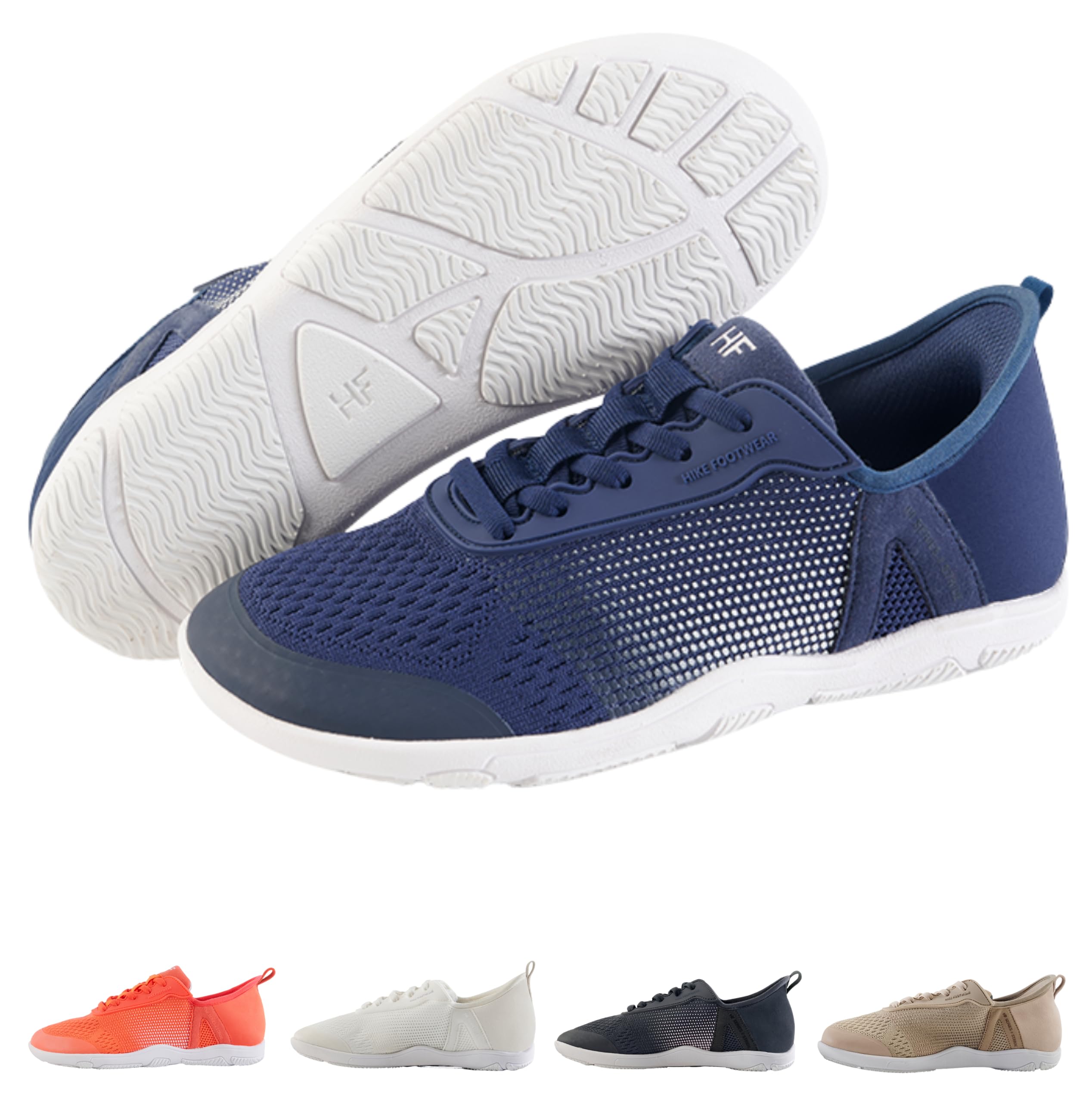
The HF Stride is an entry-level barefoot shoe that prioritizes ease of use and a slip-on design over premium materials. The thin sole delivers a genuine barefoot sensation on indoor surfaces like tile and hardwood, and users who transitioned from standard shoes reported dramatic improvements in balance, as well as reduced back, hip, and knee pain within the first week. The wide toe box allows for unrestricted splay, and the shoe is light enough to wear all day without feeling like you are dragging weight around your feet. For someone who is curious about barefoot footwear but hesitant to invest in a premium Vibram or Vivobarefoot model, the HF Stride is a low-risk entry point.
Construction quality reflects the budget-friendly positioning. The upper material is a simple stretch-woven fabric that lacks the structural reinforcement found in higher-priced competitors. One user noted that the right shoe’s tongue would not stay centered and that tightening the laces created uncomfortable pressure points—a flaw that would likely not appear in a more expensive model. The outsole offers decent traction on clean, dry floors, but it is not designed for wet outdoor surfaces or loose gravel. The lace arrangement also differs from the promotional images for some units, arriving tied in a standard knot rather than the stretch-lace system pictured in the product photos.
Sizing runs slightly large. Users who normally wear between an 8.5 and 9 found that a size 9 provides a comfortable fit even with thin socks. The lack of arch support is intentional for the barefoot category, but the shoe also lacks any midfoot strap or heel retention feature, which means the foot can slide forward during descents or fast walking. For casual indoor wear, light walking, and initial barefoot adaptation, the HF Stride works well. For trail use or any activity that demands lateral stability, step up to a model with a more secure closure system.
Why it’s great
- Genuine barefoot feel that improves balance and joint comfort indoors
- Slip-on design makes them easy to take on and off
- Wide toe box allows full toe splay immediately out of the box
Good to know
- Lace and tongue construction can be inconsistent between pairs
- Outsole offers limited grip on wet or uneven outdoor surfaces
- No midfoot retention system; foot may slide during faster movements
7. Dansko Peony Women’s Walking Sneakers

The Dansko Peony stands apart from the rest of this list because it is not a true minimalist shoe—it integrates arch support and a cushioned midsole, making it a transitional option for wearers who need structure but want a lightweight, breathable walking sneaker with a roomy toe box. Healthcare workers and post-surgery users especially praise the Peony for providing arch support that rivals Hoka at a lighter weight, while the stain-resistant upper and rubber outsole with good grip hold up to long shifts on hospital floors. The Perf upper design enhances breathability, and the stretchy lacing accommodates a range of instep heights comfortably straight out of the box.
The biggest concern is durability at the price point. Multiple users report that the shoe began falling apart after less than three months of regular use—the sole separating from the upper or the fabric fraying at stress points. This is inconsistent with Dansko’s usual reputation for heavy-duty construction, and it suggests that while the first-wear experience is excellent, the long-term value may not match that of a Vibram or Vivobarefoot shoe. The arch support also means that this is not a barefoot shoe in the traditional sense; if your goal is to rebuild foot strength through zero-drop minimalism, the Peony’s cushioning and support will work against that adaptation.
For the right user, however, the Peony fills a real gap: a comfortable, supportive walking shoe that does not cramp the toes. It is a solid choice for people who need to be on their feet all day but cannot tolerate the extreme ground feel of a true five-finger shoe. The break-in period is short, the fit is true to size with room for thick socks, and the arch support genuinely reduces foot fatigue for those with flat arches or plantar fasciitis. If your priority is all-day comfort in a medical or retail environment rather than pure barefoot adaptation, the Dansko Peony offers a supportive alternative.
Why it’s great
- Excellent arch support for users with flat feet or plantar fasciitis
- Stain-resistant upper and lightweight rubber outsole for shift wear
- True-to-size fit with room for thick socks and orthotics
Good to know
- Durability issues reported; some pairs fail within three months
- Arch support contradicts the barefoot/minimalist training philosophy
- Not designed for trail running or aggressive outdoor use
FAQ
Do I need to wear socks with five-finger shoes?
How long does it take to transition from regular shoes?
Can I run marathons in five-finger shoes?
Final Thoughts: The Verdict
For most runners and gym-goers who want the purest barefoot experience without compromising durability, the winner of the best 5 finger shoes ranking is the Vibram V-Run because it delivers an unmatched combination of road-running ground feel, injury recovery benefits, and proven mileage longevity. If you want a more versatile trainer that works equally well for CrossFit, walking, and casual wear, grab the Vivobarefoot Primus Lite 3.5. And for those who need a dedicated water and wet-terrain shoe that drains fast and grips wet rock, nothing beats the Vibram V-Aqua.

Mo Maruf
I created WellFizz to bridge the gap between vague wellness advice and actionable solutions. My mission is simple: to decode the research and give you practical tools you can actually use.
Beyond the data, I am a passionate traveler. I believe that stepping away from the screen to explore new environments is essential for mental clarity and physical vitality.