Our readers keep the lights on and my smoothie glass nicely filled. As an Amazon Associate, I earn from qualifying purchases.
That sunken, leathery brown spot on the bottom of your first tomato of the season isn’t a disease — it’s a distress signal for calcium starvation. When developing fruit can’t pull enough calcium from the soil, cell walls collapse at the blossom end, ruining the harvest before it even begins. The right calcium supplement stops this before it starts and keeps the entire plant producing strong, dense fruit all season long.
I’m Mohammad Maruf — the founder and writer behind WellFizz. I spend my weeks dissecting fertilizer labels, comparing micronutrient ratios, and analyzing grower reports to separate what actually fixes deficiencies from what just fills a bag.
Whether you are growing heirloom tomatoes in raised beds, peppers in containers, or leafy greens in a hydroponic system, you need a calcium source that reaches the roots fast and stays available. This guide covers the five most effective options to help you pinpoint the best calcium for plants for your specific growing setup and budget.
How To Choose The Best Calcium For Plants
Choosing a calcium supplement for plants is not about grabbing the cheapest bag on the shelf. The form of calcium — liquid concentrate, dry powder, or granular organic blend — determines how fast the roots can absorb it. Your growing medium, the stage of growth, and whether you are targeting prevention or correction all steer the decision.
Form Factor: Liquid vs. Granular vs. Powder
Liquid calcium supplements, like spray-on or water-in concentrates, act within hours to days and work best when you already see the first signs of blossom end rot. Granular organic fertilizers release calcium slowly over weeks as soil microbes break them down, making them ideal for pre-planting soil amendment. Powders that dissolve in water sit in the middle — they mix into a solution for immediate root or foliar feeding but require precise measurement to avoid clogging or over-salting the medium.
Calcium-to-Magnesium Ratio
Calcium and magnesium compete for uptake at the root zone. A pure calcium source can lock out magnesium if used exclusively, while a balanced Cal-Mag product delivers both in a ratio — typically around 3:1 or 2:1 — preventing deficiency in either nutrient. For soil growers with hard water, a simple calcium-only product may be enough. For coco coir or hydroponic systems, a combined Cal-Mag is almost mandatory because those mediums hold almost no native calcium or magnesium.
Additional Nutrients and Organic Certification
Many calcium fertilizers include complementary nutrients like nitrogen (for leaf growth), phosphorus (for flowering), or micronutrients (iron, zinc, boron) that improve overall plant health. If you already use a complete nutrient regimen, a pure calcium supplement avoids throwing off your existing ratio. Organic certification matters if you are growing food crops and want to avoid synthetic additives — look for OMRI-listed labels that confirm the product meets organic production standards.
Quick Comparison
On smaller screens, swipe sideways to see the full table.
| Model | Category | Best For | Key Spec | Amazon |
|---|---|---|---|---|
| FoxFarm Happy Frog Tomato & Vegetable | Granular Organic | Vigorous feeding in soil beds | 5-7-3 NPK with mycorrhizae | Amazon |
| TPS Cal-Mag Complete | Liquid Concentrate | Hydroponics & indoor plants | 32 oz ready-to-mix | Amazon |
| Southern Ag Stop Blossom-End Rot | Liquid Spray/Water-in | Quick correction of rot | 32 oz foliar & root drench | Amazon |
| Espoma Organic Tomato-Tone | Granular Organic | Tomatoes & vegetables | 3-4-6 NPK with 8% calcium | Amazon |
| RAW Calcium/Mag | Water-Soluble Powder | Budget DIY nutrient mixing | 2 oz concentrated powder | Amazon |
In‑Depth Reviews
1. FoxFarm Happy Frog Tomato & Vegetable Fertilizer

The FoxFarm Happy Frog formulation brings a 5-7-3 NPK profile built specifically for heavy feeders like tomatoes, peppers, and squash. It delivers calcium to prevent blossom end rot while adding mycorrhizal fungi that expand the root surface area, improving both water and nutrient absorption. The granular form integrates easily into the top few inches of soil and releases nutrients as the plant needs them.
Growers report zero blossom end rot on plants that previously produced damaged fruit, with some noting a yield increase visible within two weeks of first application. The fertilizer works well in both in-ground rows and large containers, and it does not produce the strong fishy smell common with organic amendments. Many users combine it with Happy Frog potting soil for a consistent nutrient chain from transplant to harvest.
The price point sits near the top of the category, but the inclusion of beneficial microbes and the proven calcium delivery make it a value choice for anyone serious about fruit quality. A single 4-pound bag covers roughly 20 square feet of garden space when applied at the recommended rate every four to six weeks.
Why it’s great
- Prevents blossom end rot with targeted calcium
- Mycorrhizal fungi improve root efficiency
- Odorless organic granules
Good to know
- Higher price per bag than basic fertilizers
- Requires reapplication every month
2. TPS Cal-Mag Complete

TPS Cal-Mag Complete is a liquid calcium-magnesium supplement fortified with chelated micronutrients (iron, zinc, manganese, and boron) that correct deficiencies across both soil and hydroponic systems. The 2-0-0 analysis provides a small nitrogen boost from calcium nitrate while the magnesium keeps chlorophyll production high for continuous photosynthesis. It mixes at a 1:200 ratio — roughly 2.5 mL per gallon — making a single 32-ounce bottle last through several feeding cycles.
Hydroponic growers and coco coir users rely on this product because those inert mediums hold almost no native calcium or magnesium. Indoor vegetable gardeners report that weekly use completely prevents blossom end rot on tomatoes and crown rot on squash, even in high-yield setups where fruit loads are heavy. The added micronutrients also reduce common issues like leaf tip burn and interveinal chlorosis.
The price per ounce is competitive with larger gallon-sized competitors, and the liquid form dissolves instantly with no sediment or nozzle clogging. Follow the mixing instructions carefully — the concentrate is potent, and overfeeding can lock out other nutrients in recirculating systems.
Why it’s great
- Works in soil, hydroponics, and coco coir
- Includes chelated micronutrients
- Prevents blossom end rot reliably
Good to know
- Must measure carefully to avoid over-concentration
- Small bottle for the price
3. Southern Ag Stop Blossom-End Rot

Southern Ag Stop Blossom-End Rot is a liquid calcium concentrate designed for immediate foliar and root-drench application when you spot the first telltale brown spot. Half a teaspoon mixed with 11 ounces of water creates a spray that delivers calcium directly to developing fruit through the leaves, bypassing any soil uptake issues. The same solution can be poured around the root zone for longer-lasting soil correction.
Growers consistently report that a single application halts the progression of blossom end rot on existing fruit and prevents new damage on subsequent clusters. The product also stops bloom drop in peppers and squash, which is often caused by the same calcium deficiency that triggers fruit rot. Many gardeners use it as a rescue treatment mid-season after granular fertilizers failed to deliver enough calcium fast enough.
At a mid-range price point for a 32-ounce bottle, this product offers an affordable safety net for any tomato or pepper grower. The active ingredient is the same calcium chloride found in expensive garden center sprays but at a fraction of the cost. Store the bottle in a cool, dry place — the concentrate can crystallize if exposed to temperature extremes.
Why it’s great
- Works within days on active rot
- Can be used as foliar spray or root drench
- Cost-effective compared to brand-name sprays
Good to know
- Not a complete fertilizer — calcium only
- May cause leaf spotting if used in direct sun
4. Espoma Organic Tomato-Tone
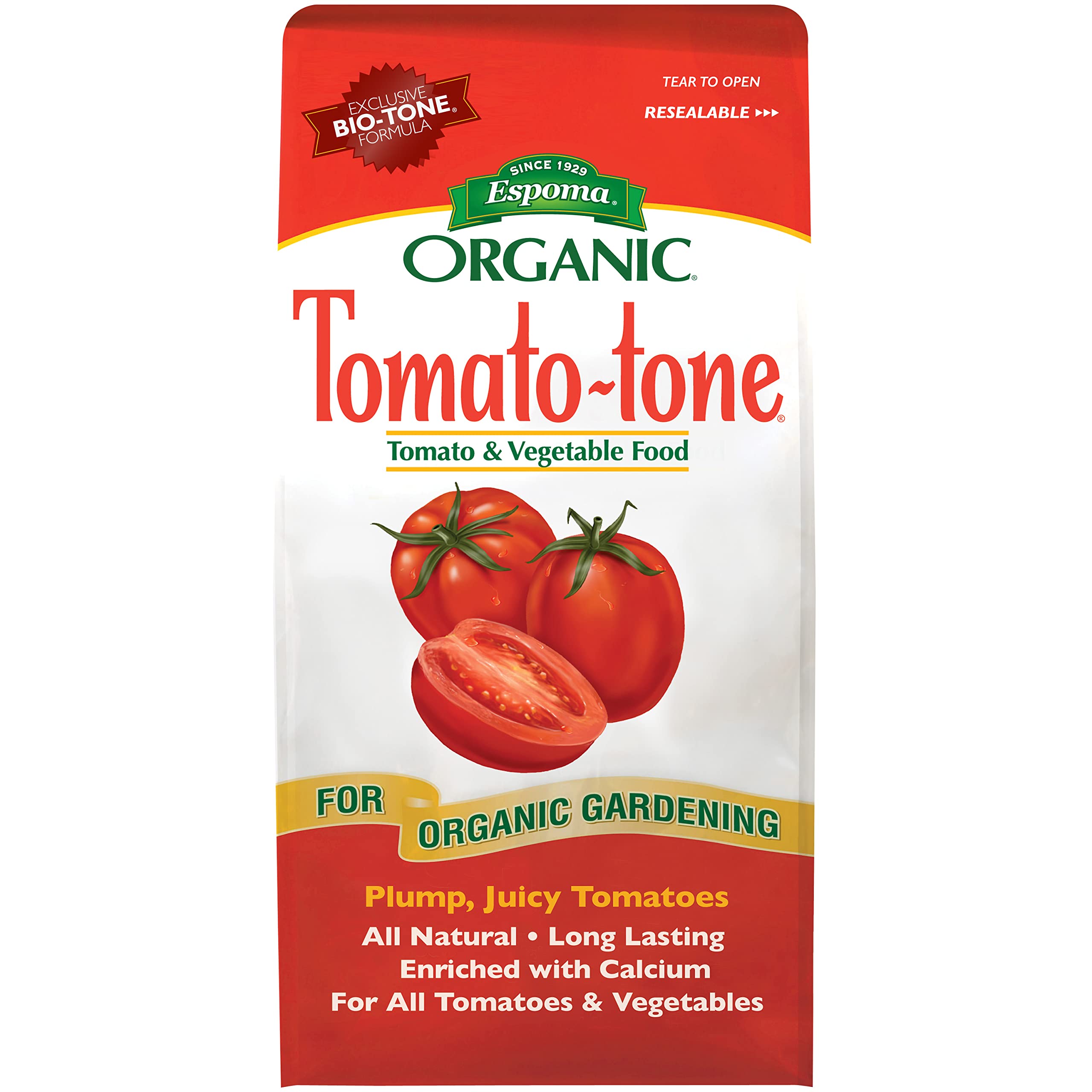
Espoma Tomato-Tone brings 8% calcium in a 3-4-6 NPK granular formula, making it a solid organic choice for tomatoes and all vegetables. The Bio-tone microbes in the formula help break down organic matter in the soil, releasing calcium steadily over weeks rather than flooding the root zone all at once. The 8-pound bag covers a full season for a medium-sized home garden at a very accessible entry price.
Users switching from synthetic fertilizers notice more blooms and fewer misshapen fruit after the first two applications. The granules need to be worked into the soil around the drip line and watered in — they will not dissolve if just sprinkled on top of dry mulch. The product has a strong organic odor (similar to fish or compost) that dissipates after a day or two in the soil.
This fertilizer is OMRI-listed for organic gardening and has been produced by Espoma since 1929, giving it a long track record of reliability. The calcium content is high enough to prevent blossom end rot in most home garden situations, though aggressive feeders in poor soil may still need a supplemental liquid calcium boost mid-season.
Why it’s great
- High 8% calcium content
- OMRI-listed organic
- Large 8-pound bag for the price
Good to know
- Strong organic smell when applied
- Requires soil incorporation and watering
5. RAW Calcium/Mag

RAW Calcium/Mag is a water-soluble powder that delivers calcium and magnesium in a 3:2 ratio, designed for growers who want to control their own nutrient mix rather than rely on pre-blended liquids. Each 2-ounce bag makes a concentrated stock solution — dissolve one teaspoon in 16 ounces of reverse-osmosis water, then use one ounce of that concentrate per gallon of feed water. This approach saves money over liquid Cal-Mag products and lets you adjust the dose to match your plant’s exact needs.
The product supports cell wall strength, chlorophyll production, and nutrient uptake in any growing medium. Hydroponic and coco coir growers report explosive growth when RAW Calcium/Mag is used alongside a base nutrient program, especially during the vegetative stretch. The powder itself has no strong odor and stores indefinitely in dry conditions, unlike liquid concentrates that can degrade over time.
The ziplock-style bag closure has been criticized by users in humid climates — the powder can clump if moisture gets in. Transferring the powder to an airtight glass jar solves this issue. The price is the lowest on this list on a per-gram basis, making it ideal for budget-conscious growers or those running large gardens who want to buy nutrients in bulk.
Why it’s great
- Very low cost per dose
- Customizable mixing ratio
- Works in all growing mediums
Good to know
- Bag seal is weak in humid environments
- Requires measuring and mixing
FAQ
What is the fastest way to fix blossom end rot?
Can I use too much calcium on my plants?
Do I need a calcium supplement for hydroponics?
Final Thoughts: The Verdict
For most growers, the best calcium for plants winner is the FoxFarm Happy Frog Tomato & Vegetable Fertilizer because it combines slow-release calcium with mycorrhizal fungi for strong root development and zero blossom end rot in a single organic bag. If you need a liquid option for hydroponics or indoor plants, grab the TPS Cal-Mag Complete. And for a fast rescue when rot has already started, nothing beats the Southern Ag Stop Blossom-End Rot.

Mo Maruf
I created WellFizz to bridge the gap between vague wellness advice and actionable solutions. My mission is simple: to decode the research and give you practical tools you can actually use.
Beyond the data, I am a passionate traveler. I believe that stepping away from the screen to explore new environments is essential for mental clarity and physical vitality.