Our readers keep the lights on and my smoothie glass nicely filled. As an Amazon Associate, I earn from qualifying purchases.
Every extra ounce in your pack adds up over miles of trail, turning a dream hike into a grueling slog. Finding gear that cuts weight without leaving you shivering at night is the ultimate backpacking puzzle.
I’m Mohammad Maruf — the founder and writer behind WellFizz. For over 15 years, I’ve specialized in dissecting outdoor gear specifications and analyzing vast sets of user data to identify where true value lies, separating marketing hype from real-world performance.
This guide is the result of that deep-dive research, comparing critical factors like fill power, fabric denier, and verified temperature limits. Choosing the correct best budget ultralight sleeping bag is essential for minimizing your load without sacrificing warmth during chilly mountain nights.
How To Choose The Best Budget Ultralight Sleeping Bag
Selecting the right sleeping bag is a trade-off between warmth, weight, and wallet. The goal is to find the sweet spot where you save the most grams for the least dollars, without ending up cold. Focus on these core aspects to make a confident choice.
Temperature Rating: Reality vs. Marketing
Look for bags that reference EN or ISO testing standards, as these provide reliable comfort and limit ratings. Many budget bags list a “survival” rating that’s far lower than where you’ll actually be comfortable. For three-season use, a comfort rating around 30°F to 20°F is versatile. Always consider your personal sleep temperature and plan to use a sleeping pad with a good R-value.
Insulation: Down vs. Synthetic
Down (like 600-850 fill power) offers the best warmth-to-weight ratio and packability, ideal for dry conditions. Synthetic insulation (like Cirroloft) retains warmth when damp and is often more budget-friendly, but it’s heavier and bulkier. For ultralight priorities, high-fill-power down is usually the winner, even in the mid-range segment.
Weight and Packed Size
True “ultralight” for a sleeping bag typically means under 3 pounds, with elite options dipping below 2. Check the actual weight, not just the title. Packed size is equally crucial; it should compress down to the size of a large football or smaller to fit in a backpacking pack without monopolizing space.
Design and Shape
Mummy bags are efficient for warmth but can feel restrictive. Quilt designs eliminate back weight and offer great movement, often providing the best weight savings. Semi-rectangular or “roomy” mummy bags are a good middle ground for side-sleepers who want a balance of space and thermal efficiency.
Quick Comparison
On smaller screens, swipe sideways to see the full table.
| Model | Type | Best For | Key Feature | Amazon |
|---|---|---|---|---|
| SENSORY4U Top Quilt | Quilt | Ultralight backpackers & warm sleepers | 850-fill down, 1.9 lbs weight | Amazon |
| WIND HARD Twilight | Quilt | Gram-counters wanting premium materials | 800FP down, 10D ultralight fabric | Amazon |
| Sea to Summit Spark | Mummy | Summer & fast-packing adventures | 850+ FP down, premium compactness | Amazon |
| TETON Sports ALTOS | Mummy | Value-focused campers needing reliable down | Roomy cut, included compression sack | Amazon |
| Kelty Cosmic Synthetic | Mummy | Wet conditions & ethical insulation | 0°F synthetic, weather-resistant | Amazon |
| Sea to Summit Boab | Semi-Rectangular | Side-sleepers & car camping versatility | Recycled synthetic, blanket-convertible | Amazon |
| QEZER 600FP Down | Semi-Rectangular | Budget cold-weather trips | 600FP down, spacious design | Amazon |
| QEZER 0 Degree Down | Mummy | Winter camping on a strict budget | 650FP down, vertical baffles | Amazon |
In‑Depth Reviews
1. SENSORY4U Ultralight Sleeping Bag Top Quilt

This quilt represents a phenomenal value proposition for weight-conscious backpackers. By ditching the full-back construction, it achieves a remarkably low weight while packing premium 850-fill-power down into its top layer. The design philosophy here is pure efficiency: warmth goes where you need it most, and the included straps let you secure it to your sleeping pad to eliminate drafts.
User reports consistently highlight its versatility across a range of temperatures, from chilly 35°F nights down to its stated limit. The foot box is sewn for coziness, while the open design allows for easy venting on warmer evenings. Its performance in damp conditions, where it reportedly retained warmth and dried quickly, is a significant plus for unpredictable weather.
While the included stuff sack is noted as being on the thinner side, the quilt’s overall compressibility is excellent. For side sleepers or anyone who feels confined in a traditional mummy bag, this quilt offers liberating movement without a weight penalty. It’s a standout example of how smart design can deliver premium-level weight savings at a mid-range point.
Why it’s great
- Exceptional warmth-to-weight ratio for the cost.
- Highly versatile with easy temperature regulation.
- Packs down very small for its warmth level.
- Offers more freedom of movement than a zipped bag.
Good to know
- Some minor down leakage may occur over time.
- The attachment straps can sometimes loosen.
- Requires a good insulated pad for full system warmth.
2. WIND HARD Twilight Series 800FP Down Sleeping Bag

The Twilight Series takes the quilt concept further with technical fabrics and a focus on minimalism. The use of 10D nylon shell and lining is a premium touch you don’t often see at this price point, directly translating to impressive weight reduction and a pack size that rivals bags costing much more. Its EN limit rating of 23°F provides a reliable benchmark for three-season use.
This bag is designed for hikers who pair it with a high-R-value sleeping pad, as the bottomless design relies on that pad for insulation. This synergy creates a highly efficient sleep system that eliminates redundant material underneath you. The sewn-footbox quilt style is warm, and the fabric has a soft, comfortable hand feel that users appreciate against the skin.
Some initial loft inconsistency has been noted, but it generally evens out with use. Its performance in temperatures dipping into the low 30s and even high 20s has been validated by users, making it a robust option for shoulder-season adventures. For the ultralight enthusiast wanting near-top-tier specs without the top-tier cost, this is a compelling pro-level choice.
Why it’s great
- Extremely lightweight and compact due to 10D fabric.
- Officially EN/ISO tested for reliable temperature ratings.
- Highly compatible with all types of sleeping pads.
- Excellent warmth for its minimal weight.
Good to know
- Bottomless design requires a quality insulated pad.
- May require airing out to achieve full loft upon arrival.
- Shipping times can sometimes be longer.
3. Sea to Summit Spark Ultralight Down Sleeping Bag
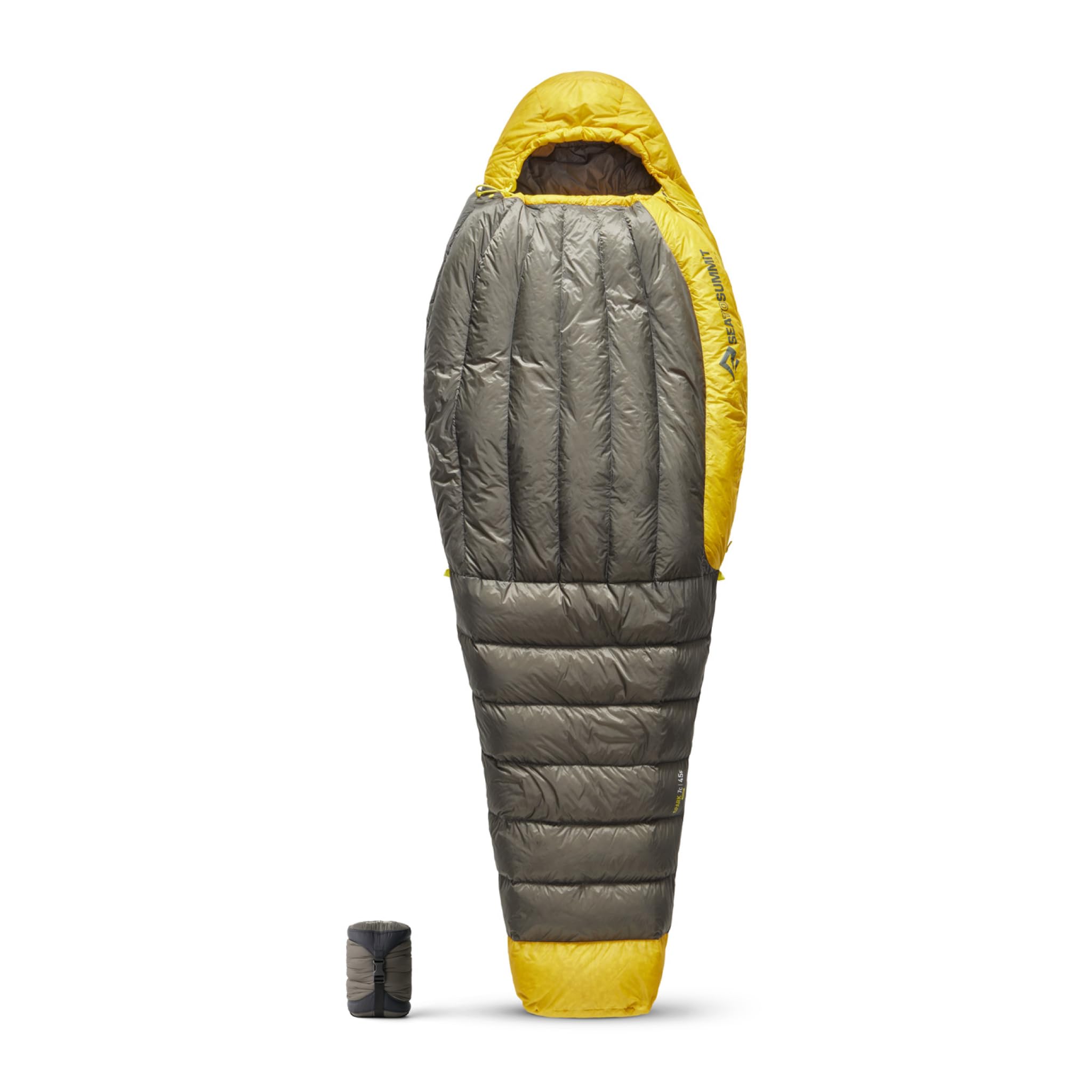
The Spark is the apex of warm-weather ultralight design from a respected brand. It’s engineered for situations where every gram counts, such as fast-packing or summer backpacking trips where nighttime temps stay above 45°F. The 850+ fill power down with water-repellent treatment and the exceptionally light 10D fabrics create a package that is shockingly small and light.
Despite its featherweight construction, the bag doesn’t feel fragile. The contoured mummy shape provides a efficient fit without being overly restrictive, and the YKK zipper operates smoothly. For those who run warm or hike in predominantly mild climates, this bag eliminates the bulk and weight of a heavier three-season bag you’d never fully use.
It’s important to match this bag to its intended use; it’s a specialist for warm conditions. However, for that role, its performance is outstanding. The quality of materials and construction is evident, offering a premium experience focused on maximum packability and minimum weight for summer adventures.
Why it’s great
- Unmatched packability and weight for summer use.
- High-quality down with moisture-resistant treatment.
- Premium brand construction and reliable zippers.
- Breathable and comfortable for warmer nights.
Good to know
- Temperature rating is for warm-weather camping only.
- A premium investment focused on a specific season.
- Less versatile for cooler spring or fall trips.
4. TETON Sports ALTOS 20 Degree Down Sleeping Bag
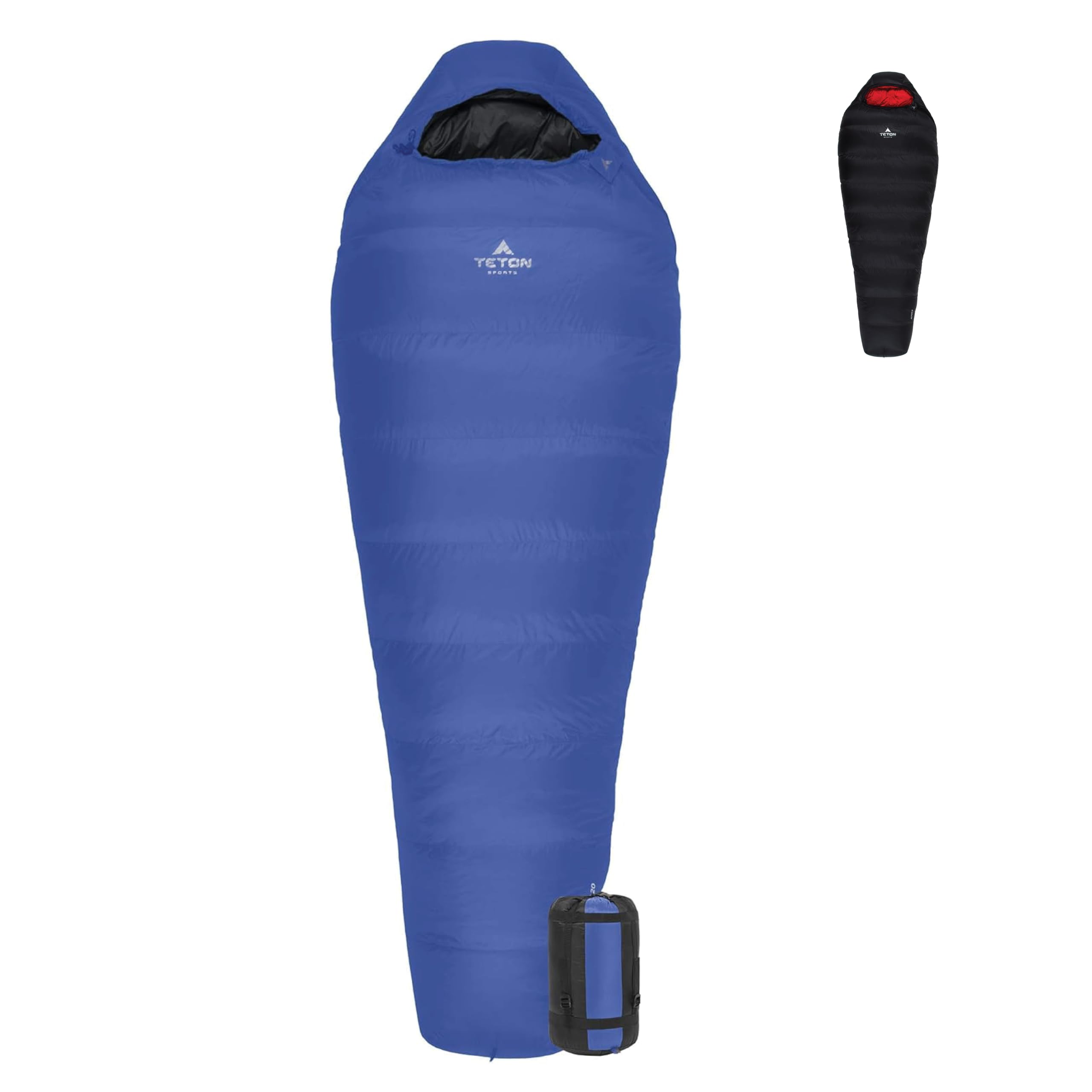
TETON Sports delivers reliable, entry-level down insulation with the ALTOS, a bag that prioritizes comfort and straightforward functionality. The cut is notably roomier than a technical mummy, especially in the shoulders and footbox, making it a friendly option for those new to mummy-style bags or who simply prefer more space to move.
Its performance in temperatures around the 30°F mark, as reported by users, aligns well with its 20°F rating when used with appropriate base layers. The inclusion of a compression sack is a thoughtful touch, though some note the sack’s durability could be better. For campers and backpackers who want the reliable warmth of down without the complexity or cost of hyper-specialized ultralight gear, this bag is a trustworthy and accessible choice.
It balances warmth and weight effectively for its category, offering a solid introduction to down sleeping bags. While it may not compress as small or weigh as little as premium options, its real-world performance in cold conditions provides excellent value. It’s a workhorse bag that won’t let you down on weekend backpacking trips or car camping excursions where pack size isn’t the absolute top priority.
Why it’s great
- Provides reliable down warmth at an accessible price point.
- Roomy cut is comfortable for side-sleepers and those who move.
- Includes a useful compression sack for packing.
- Good performance into the 30s and 20s Fahrenheit.
Good to know
- The compression sack may not be as durable as the bag itself.
- Heavier and bulkier than higher-fill-power down options.
- Temperature rating is optimistic without proper layering.
5. Kelty Cosmic Synthetic 0 Degree Sleeping Bag
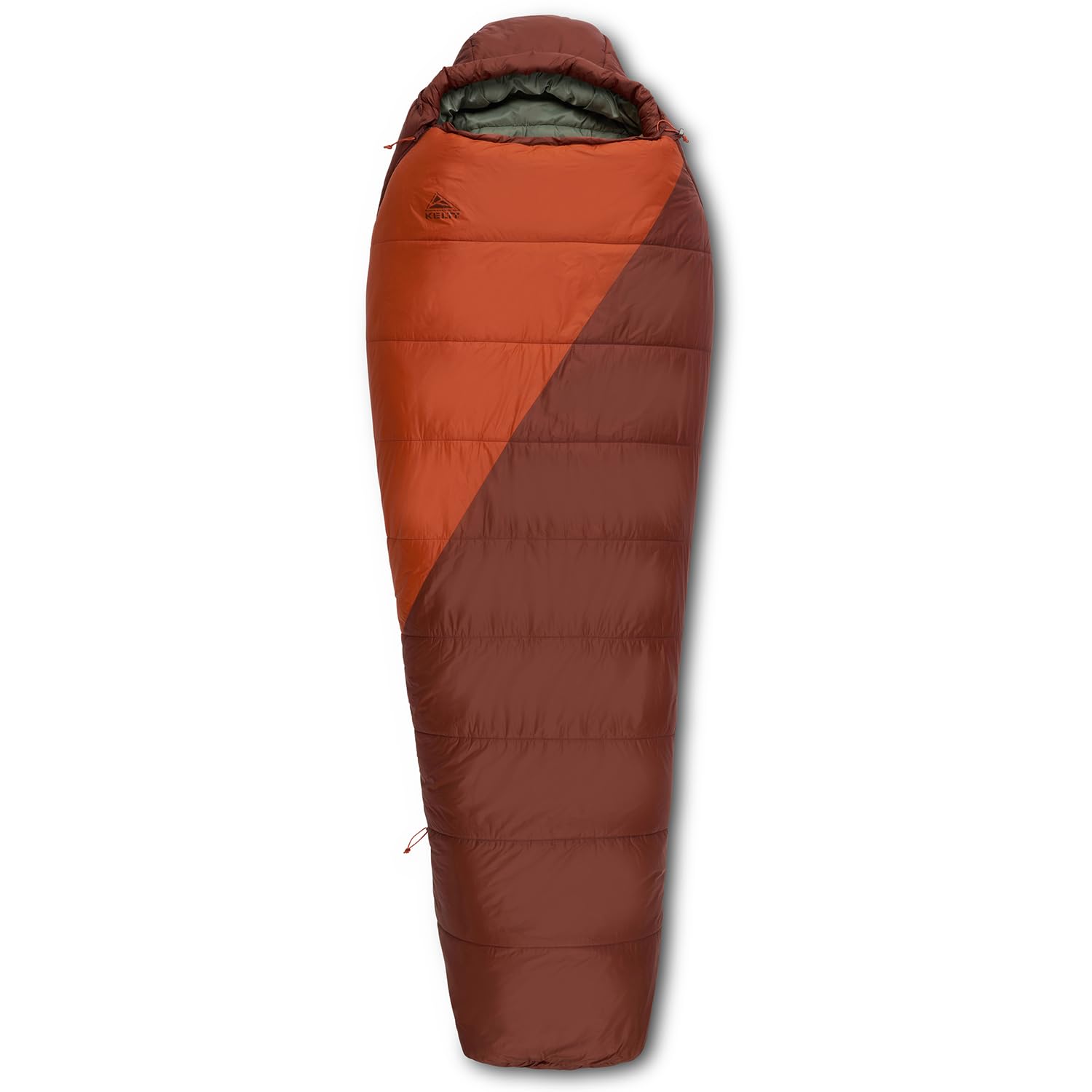
For campers who prioritize performance in damp conditions or prefer synthetic insulation, the Kelty Cosmic Synthetic is a standout. Its 0°F rating is backed by ISO testing, providing a trustworthy benchmark for cold-weather adventures. The Cirroloft synthetic insulation maintains its loft and warmth even when exposed to moisture, a key advantage over down in wet climates.
While synthetic bags are inherently heavier and bulkier than down, Kelty has done an impressive job maximizing packability here with an integrated compression system. The long version accommodates taller users, and the spacious footbox design enhances comfort. This bag is ideal for winter camping, scout trips, or any situation where the gear might get wet and need to still perform.
The fabric is durable and features a PFAS-free water-repellent treatment. Some users have noted the zipper can be finicky, requiring careful operation. However, for its category, it offers exceptional warmth and reliability. If your adventures involve snow, rain, or high humidity, this synthetic bag provides crucial peace of mind without a prohibitive cost.
Why it’s great
- Retains warmth reliably in damp conditions.
- ISO-tested 0°F rating offers trustworthy performance.
- Durable construction and integrated compression.
- Ethical choice for those avoiding animal products.
Good to know
- Significantly heavier and bulkier than down equivalents.
- Zipper can snag if not handled carefully.
- Pack size is larger, requiring more backpack space.
6. Sea to Summit Boab Synthetic Sleeping Bag
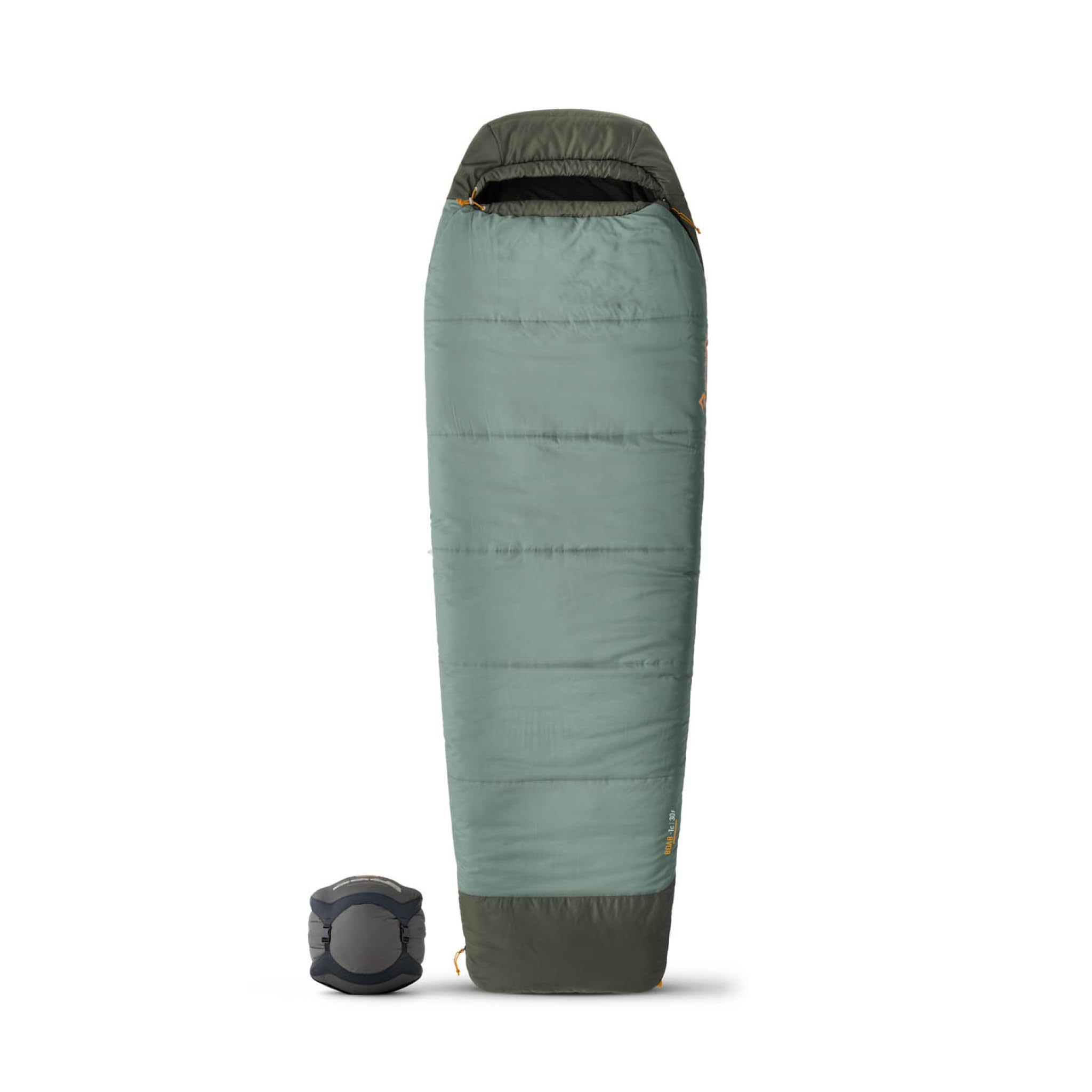
The Boab takes a different approach, focusing on comfort, sustainability, and versatility over absolute minimal weight. Its semi-rectangular, roomy cut is a blessing for side-sleepers and anyone who feels confined. The full-length side zipper allows it to be fully opened and used as a blanket, making it excellent for car camping or cabin use where versatility is key.
Made with bluesign-approved fabrics and recycled insulation, it’s an eco-conscious choice. The synthetic fill performs consistently and is less affected by moisture than down, while the durable 50D shell stands up to regular use. The temperature rating around 30°F makes it suitable for three-season car camping or beginner backpacking trips where a few extra ounces aren’t critical.
It’s not the lightest or most packable option, but it excels in user-friendly features. The dual-zipper sliders and shoulder snap allow for easy venting, and the overall build quality from Sea to Summit is high. This is the bag you choose when comfort, ease of use, and environmental impact are higher priorities than shaving every last gram from your pack weight.
Why it’s great
- Extremely roomy and comfortable for restless sleepers.
- Converts fully into a blanket for multi-use functionality.
- Built with recycled, eco-friendly materials.
- Durable construction ideal for frequent car camping.
Good to know
- Heavier and bulkier than ultralight-focused bags.
- Packing it back into its storage sack can be challenging.
- Best suited for scenarios where pack size isn’t paramount.
7. QEZER 600 Fill Power Down Sleeping Bag
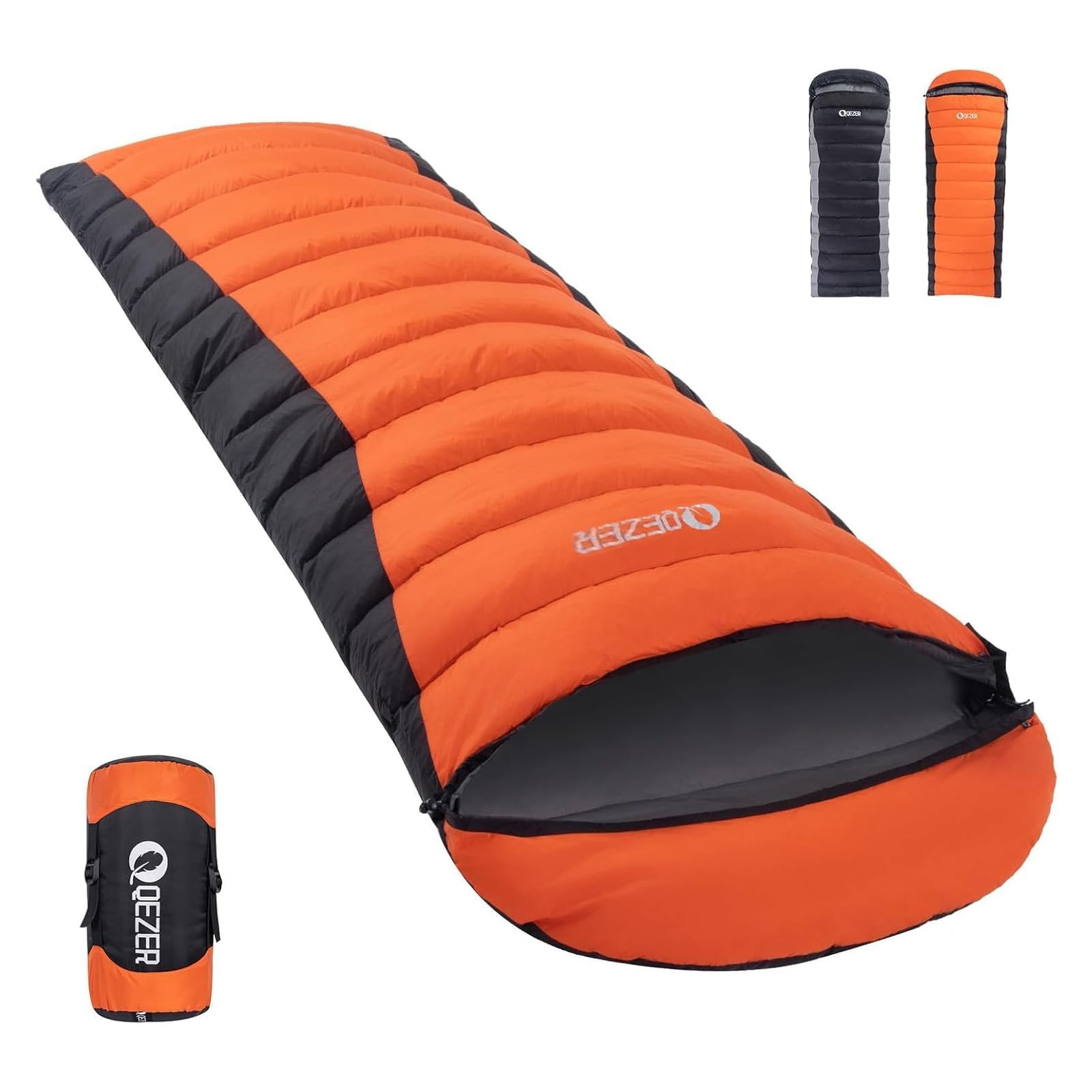
This bag from QEZER offers an entry point into down insulation with a spacious, rectangular shape that many find more comfortable than a snug mummy. The 600-fill-power duck down provides decent warmth for its weight, and the bag compresses to a manageable size, though not as small as higher-fill-power options. The stated temperature range is broad, with users finding it comfortable around 40°F and survivable lower.
Features like a double zipper to prevent drafts, a foot vent zipper, and the ability to zip two bags together for a double setup add to its versatility. The inner fabric is soft, and the overall construction is solid for the cost. It’s a great choice for someone who wants a single bag for various activities—from backyard camping to hostel travel—where a restrictive mummy bag would be overkill.
While not ultralight in the strictest sense, it is lightweight for its warmth and spaciousness. It represents a solid step up from basic polyester bags, offering the packability and warmth retention of down without a steep investment. For the casual backpacker or camper who values space and comfort, it’s a reliable and budget-friendly down option.
Why it’s great
- Spacious rectangular shape offers great freedom of movement.
- Provides the packability and warmth of down at a low cost.
- Can be zipped to another bag to create a double.
- Soft lining and generally good construction quality.
Good to know
- Temperature ratings are optimistic; view as a 40°F comfort bag.
- Heavier than bags using higher-fill-power down.
- Down quality is good but not premium grade.
8. QEZER 0 Degree Down Sleeping Bag
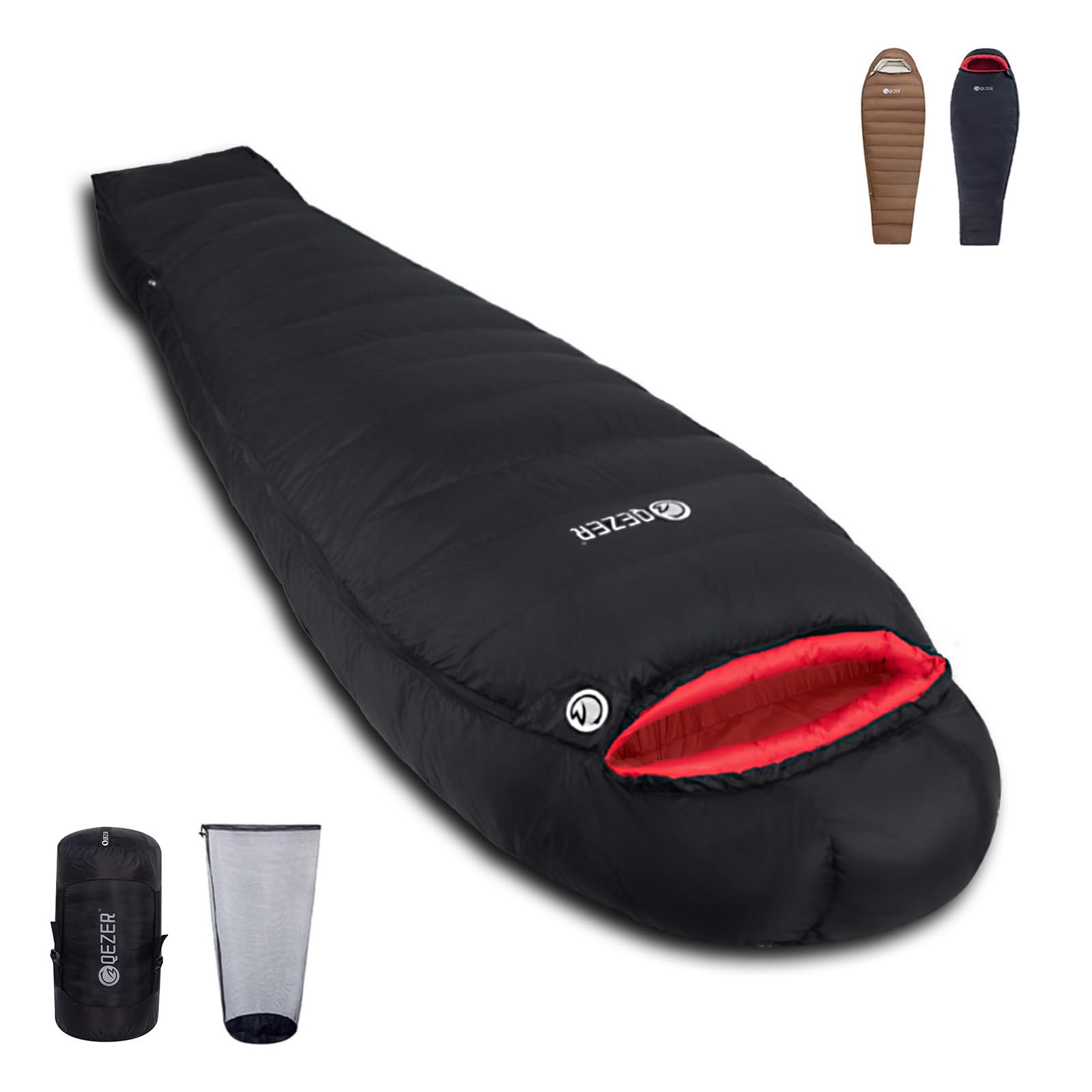
This is QEZER’s answer for campers needing serious cold-weather performance on a tight budget. With 650-fill-power down packed into vertical baffles and a generous amount of fill weight, this mummy bag is designed to trap heat effectively. The ergonomic footbox and draft collar around the neck are thoughtful touches that enhance its real-world warmth.
User experiences in temperatures down to the teens and 20s (°F) are positive, though the 0°F rating should be seen as a survival limit rather than a comfort rating. The bag is relatively compressible for its warmth level, but it is not an ultralight option by any measure—it’s a warm bag first, with weight savings as a secondary benefit.
It’s an excellent value for winter car camping, overlanding, or cold-weather scout trips where extreme warmth is needed and pack size is less critical. The fabric is durable, and the overall build is robust. If you face freezing temperatures and need a bag that won’t break the bank, this provides substantial warmth for the investment.
Why it’s great
- Offers exceptional warmth for sub-freezing conditions.
- Good down quality and fill amount for the price.
- Effective draft collar and footbox design.
- Durable construction suitable for rugged winter use.
Good to know
- Quite heavy and bulky compared to three-season bags.
- True comfort rating is likely 20-30°F higher than advertised.
- Not intended for weight-conscious backpacking.
Understanding the Specs
Fill Power (FP)
This measures the loft or “fluffiness” of down insulation. A higher number (e.g., 850FP) means the down traps more air per ounce, providing better warmth for less weight. High fill power is key for ultralight gear. Synthetic insulation doesn’t use this rating; instead, look for the type (like Cirroloft) and weight of the fill.
Denier (D)
Denier refers to the thickness and durability of the fabric threads. A lower number (like 10D or 15D) means a lighter, more packable, but potentially more delicate fabric. A higher number (like 50D) is heavier but far more durable and resistant to abrasion. For ultralight, 10D-20D is common; for car camping, 30D-50D is typical.
FAQ
Can a quilt keep me as warm as a traditional sleeping bag?
Is down or synthetic better for a budget ultralight bag?
How should I store my sleeping bag between trips?
Do I need a sleeping pad with an ultralight bag?
Final Thoughts: The Verdict
For most people, the best budget ultralight sleeping bag winner is the SENSORY4U Ultralight Top Quilt because it delivers an elite warmth-to-weight ratio and liberating quilt design at a mid-range cost. If you want premium materials and certified ratings, grab the WIND HARD Twilight. And for reliable warmth in wet conditions, nothing beats the Kelty Cosmic Synthetic.

Mo Maruf
I created WellFizz to bridge the gap between vague wellness advice and actionable solutions. My mission is simple: to decode the research and give you practical tools you can actually use.
Beyond the data, I am a passionate traveler. I believe that stepping away from the screen to explore new environments is essential for mental clarity and physical vitality.