Our readers keep the lights on and my smoothie glass nicely filled. As an Amazon Associate, I earn from qualifying purchases.
Finding a self‑propelled mower that actually pulls its weight without wrecking your wallet sounds like a yard‑care fantasy. The budget tier is crowded with machines that promise effortless cutting but deliver frustrating stalls, poor traction, and premature wear. The real challenge isn’t spotting a low price — it’s identifying the one unit whose transmission, deck steel, and engine displacement are built to last beyond a single season.
I’m Mohammad Maruf — the founder and writer behind WellFizz. I’ve spent years dissecting lawn mower specs and owner reports to identify the sub‑ machines that genuinely deliver reliable self‑propulsion, decent cut quality, and acceptable service life for the money.
Whether you’re on a sloping lot or just tired of pushing, the right budget self propelled lawn mower balances drive‑train durability, cutting width, and engine torque without forcing compromises that leave your yard half‑trimmed.
How To Choose The Best Budget Self Propelled Lawn Mower
Three factors separate a genuinely capable self‑propelled mower from a frustrating one that ends up on the curb after two summers: the drive system, the engine or motor power, and the deck’s ability to handle your grass type without clogging.
Drive System: Front‑Wheel vs. Rear‑Wheel vs. Variable Speed
Rear‑wheel drive (RWD) pulls the mower forward, improving traction on hills and reducing the likelihood of the front wheels spinning out on wet grass. Front‑wheel drive is lighter and cheaper but struggles on slopes. Variable‑speed self‑propel lets you match ground speed to your walking pace — a huge advantage for large yards where single‑speed units feel either too fast or too slow.
Engine Displacement (Gas) vs. Voltage (Battery)
For gas models, look for at least 170cc to handle tall, damp grass without bogging the blade. Anything under 140cc works only for small, flat, well‑maintained lawns. For battery models, 40V systems with a brushless motor are the minimum for reliable self‑propelled cutting; 56V or dual‑battery 48V setups provide torque closer to a gas engine.
Deck Material and Cut Quality
Stamped steel decks are standard at this price point — they’re durable enough for a few years of regular use. Some budget models use plastic or aluminum decks to save weight, which can flex under heavy loads or crack on rocks. A 21‑ or 22‑inch cutting width balances maneuverability with pass coverage. Single‑lever height adjustment with at least six positions ensures you can adapt to seasonal growth.
Quick Comparison
On smaller screens, swipe sideways to see the full table.
| Model | Category | Best For | Key Spec | Amazon |
|---|---|---|---|---|
| PowerSmart EasyGlide 144cc | Gas / Push | Small flat yards on a tight budget | 144cc / 21″ steel deck / 6 heights | Amazon |
| SKIL PWR CORE 40 20″ | Battery / Self‑Propel | Quiet battery operation with variable speed | 40V / 20″ deck / 7 heights | Amazon |
| PowerSmart 170cc RWD | Gas / Self‑Propel | Sloped lawns needing rear‑wheel traction | 170cc / 22″ steel deck / RWD | Amazon |
| YARDMAX 201cc CVT FWD | Gas / Self‑Propel | Variable ground speed via CVT transmission | 201cc / 22″ deck / 6‑speed CVT | Amazon |
| WORX WG752 Push 40V | Battery / Push | Lightweight electric with Aerodeck anti‑clog | 40V / 20″ / 2×5.0Ah batteries | Amazon |
| WORX WG760 Self‑Propel 40V | Battery / Self‑Propel | Electric self‑propelled with variable speed | 40V / 21″ / up to 3.7 MPH | Amazon |
| SENIX 201cc RWD Single Speed | Gas / Self‑Propel | Large yards needing 22″ cut and torque | 201cc / 22″ steel deck / 2.9 MPH | Amazon |
| Greenworks 48V RWD | Battery / Self‑Propel | 4‑in‑1 capability with LED headlight | 48V (2×24V) / 21″ / 45 min runtime | Amazon |
| EGO LM2114SP 56V | Battery / Self‑Propel | Premium battery torque and dual‑toggle propel | 56V / 21″ / 6.0Ah battery | Amazon |
In‑Depth Reviews
1. EGO POWER+ LM2114SP 56V Self‑Propel
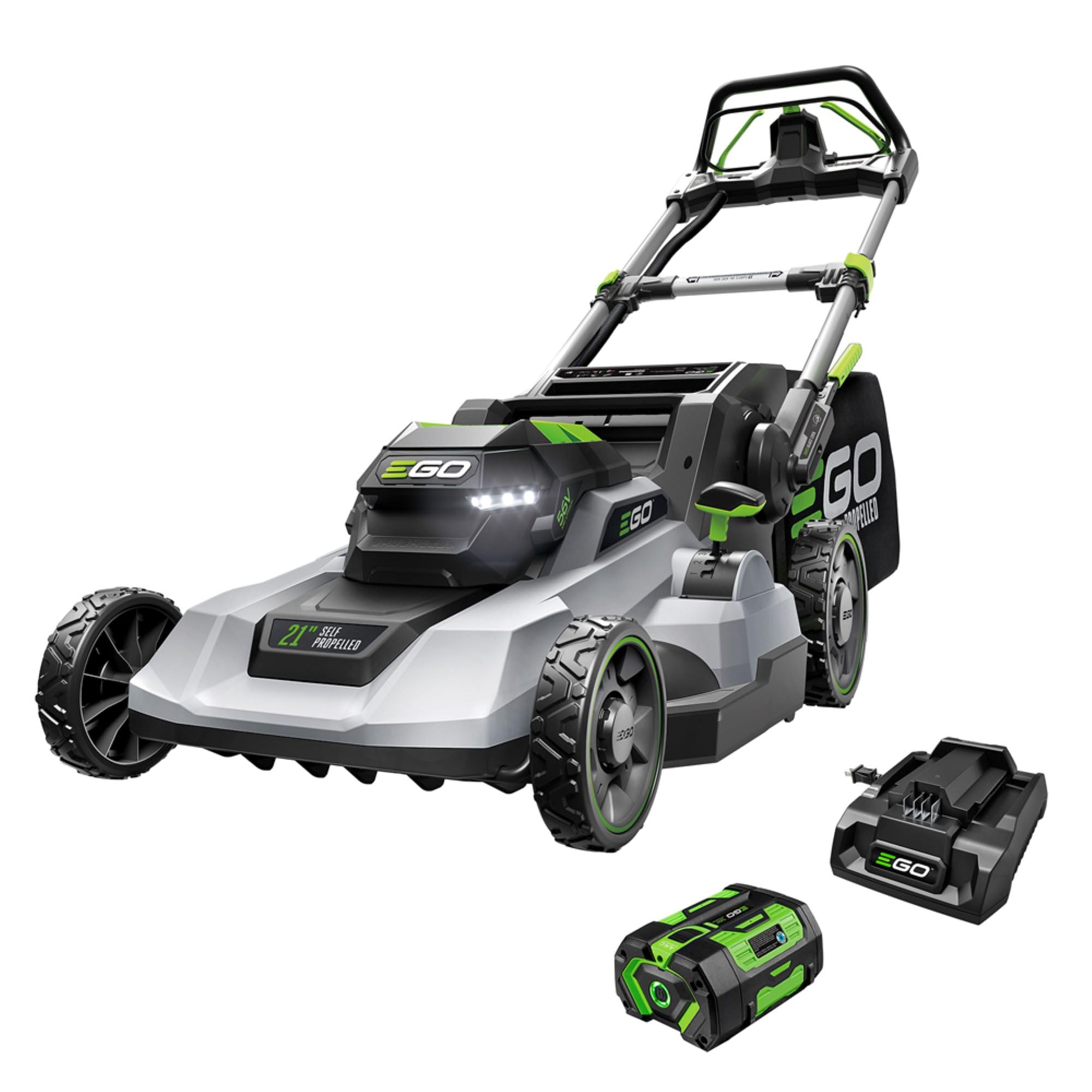
The EGO LM2114SP sits at the top of the budget‑conscious self‑propelled category because it delivers genuine gas‑like torque from a 56V ARC Lithium battery that has become the reference standard for cordless outdoor power. Its 6.0Ah pack provides up to 50 minutes of runtime, enough to handle a half‑acre lot without needing a second battery in most conditions. The dual‑toggle handleset lets you engage the rear‑wheel drive with either hand, a thoughtful detail for maneuvering around flower beds and fences.
Cut quality is consistent across its seven height positions (1.25” to 4”), and the 21‑inch deck paired with a high‑efficiency brushless motor handles thick, damp grass without bogging down. Owners consistently mention how much quieter and lighter this unit feels compared to the gas mowers it replaces, and the push‑button start eliminates the frustration of pull cords entirely. The LED headlights also extend usable mowing time into twilight.
The downside is the initial investment — this is the most expensive unit on the list, though the included battery and 320W charger offset the cost over time by eliminating gas, oil, and filter purchases. A second battery is often needed for larger properties, and the self‑propel can feel too fast on the highest setting for small, tight lawns. For anyone wanting a single cordless mower that does not compromise on power, this is the benchmark.
Why it’s great
- 6.0 ft‑lbs of cutting torque outperforms many gas engines
- Dual‑toggle self‑propel allows one‑handed operation
- LED headlights and adjustable handle height add real usability
Good to know
- Larger lawns will likely need an extra battery
- Plastic deck may not survive impacts from rocks as well as steel
- More expensive than every other option on this list
2. WORX Nitro WG760 40V Self‑Propel

The WORX WG760 brings together two proprietary technologies — Aerodeck and IntelliCut — that set it apart from other battery self‑propelled mowers in the mid range. Aerodeck vents the cutting deck to increase air volume, which prevents wet grass from clumping under the deck and maximizes bag fill. IntelliCut sensors automatically dial the blade speed up or down based on grass density, conserving battery runtime when cutting thin areas and delivering extra torque in thicker patches.
Powered by two 20V 5.0Ah PowerShare Pro batteries wired for 40V, the WG760 delivers up to 50 minutes of run‑time on a full charge. The variable‑speed self‑propel allows you to adjust ground speed up to 3.7 MPH, making it comfortable for both leisurely walks and quicker passes. At 63 pounds, it is notably lighter than comparable gas self‑propelled models, and the collapsible handle enables upright storage in tight garage spaces.
Owners praise the clean cut quality and quiet operation, though some note that the self‑propel drains the batteries noticeably faster on inclines. The 3‑in‑1 system (mulch, bag, side discharge) is easy to switch between, and the included dual charger replenishes both batteries simultaneously. For those who want a feature‑rich battery self‑propelled mower without stepping into the premium tier, the WG760 is the sweet spot.
Why it’s great
- Aerodeck prevents clogging in damp grass
- IntelliCut extends runtime by adjusting blade speed automatically
- Lightweight at 63 pounds with variable‑speed propel
Good to know
- Self‑propel drains batteries faster on hills
- Recommended for yards up to half an acre
- Battery platform limited to WORX tools only
3. Greenworks 48V 21″ Self‑Propel RWD

Greenworks takes a dual‑battery approach with its 48V system, running two 24V 5.0Ah batteries in series to deliver strong torque without the cost of a dedicated high‑voltage pack. The rear‑wheel drive self‑propel system with variable speed control offers confident traction on moderate slopes, and the brushless motor provides longer life and quieter operation compared to brushed alternatives. The 21‑inch steel deck feels solid and includes a 4‑in‑1 system that adds a turbo button specifically designed for leaf pickup in the fall.
Runtime with two fully charged batteries averages around 45 minutes under normal conditions, though using the self‑propel consistently reduces that window. The push‑button start is immediate, and the seven‑position height adjustment ranges from a low 1 inch to a generous 7 inches — useful for tackling overgrown grass without scalping the lawn. LED headlights are built in, though they stay on whenever the batteries are connected and cannot be manually turned off.
Owners appreciate the easy assembly and quiet cutting experience, but the battery charge time (roughly two hours with the included dual‑port charger) can interrupt workflow on larger properties. The handle fasteners have drawn complaints about threading difficulty, though once assembled the mower runs reliably. For anyone already in the Greenworks 24V platform, this is a natural upgrade that leverages existing batteries.
Why it’s great
- RWD self‑propel with variable speed for slope traction
- Turbo mode aids leaf pickup beyond standard mulching
- Wide height range from 1 to 7 inches
Good to know
- LED headlights cannot be switched off
- Self‑propel drains batteries faster than rated runtime
- Handle assembly hardware can be finicky
4. PowerSmart 170cc RWD Self‑Propel

For buyers who insist on gas power and need rear‑wheel drive for a sloped lot, the PowerSmart 170cc self‑propelled mower delivers the most critical features at a price that undercuts the competition. The 170cc 4‑stroke OHV engine with auto choke starts reliably on the first or second pull, and the RWD system provides significantly better traction than front‑wheel alternatives when climbing inclines or cutting wet grass. The 22‑inch all‑steel deck covers ground efficiently and is built with enough heft to handle roots and uneven terrain without flexing.
Tool‑free assembly is a welcome time‑saver — unfold the handle, add oil and gas, and the mower is ready in about 10 minutes. The 3‑in‑1 system (mulch, bag, rear discharge) works cleanly, and the 60L bag holds a generous amount before needing emptying. Six cutting heights from 1.5 to 3.9 inches give enough range for seasonal changes, and the single‑lever adjustment is quick.
Quality‑control issues do appear in the owner feedback: some units arrived with a faulty safety switch that caused no‑spark conditions, requiring return or repair. The blade also arrives serviceable but not exceptionally sharp out of the box. For the price, however, this is one of the few sub‑mid‑range mowers that pairs rear‑wheel drive with a displacement large enough to avoid stalling in taller grass.
Why it’s great
- RWD provides real traction on slopes at a low price
- 170cc engine handles tall, damp grass confidently
- Tool‑free assembly and 22‑inch deck speed up mowing
Good to know
- Quality control is inconsistent — check safety switch on arrival
- Blade is not very sharp out of the box
- Single‑speed propel only; no variable speed adjustment
5. WORX Nitro WG752 Push 40V

The WORX WG752 is the push version of the WG760, sharing the same Aerodeck and IntelliCut technologies but dropping the self‑propel system to reduce cost and weight. At just 55.6 pounds, it is one of the lightest 40V mowers available, which makes it easy to maneuver for anyone who does not mind providing the forward locomotion. The dual 20V 5.0Ah PowerShare Pro batteries provide enough runtime for up to half an acre under normal conditions, and the brushless motor 2.0 delivers 40 percent more power than WORX’s first‑generation brushless units.
The Aerodeck design is particularly effective in humid climates where wet grass normally clogs under the deck — the increased airflow keeps clippings moving cleanly into the bag or onto the lawn as mulch. IntelliCut sensors automatically adjust blade speed based on grass density, which conserves battery when cutting thin areas and provides a clean finish without stripping the lawn. The seven‑position height adjustment (1.5 to 4 inches) and 3‑in‑1 functionality cover the majority of mowing scenarios.
Assembling the WG752 is straightforward — the handle comes 95 percent pre‑assembled — and the dual charger can replenish both batteries simultaneously in about an hour. The main trade‑off is the lack of self‑propulsion; on larger or sloped lawns the pushing effort becomes noticeable, especially with a full grass bag. For flat properties under a quarter acre, this is an exceptional electric push mower that out‑cuts many gas units.
Why it’s great
- Aerodeck eliminates clogging in damp grass
- Lightweight at 55.6 pounds for easy pushing
- IntelliCut saves battery by auto‑adjusting blade speed
Good to know
- No self‑propel; requires pushing effort on slopes
- Batteries can be difficult to remove from the deck
- Instruction manual lacks detail on maintenance steps
6. YARDMAX 201cc CVT 6‑Speed FWD
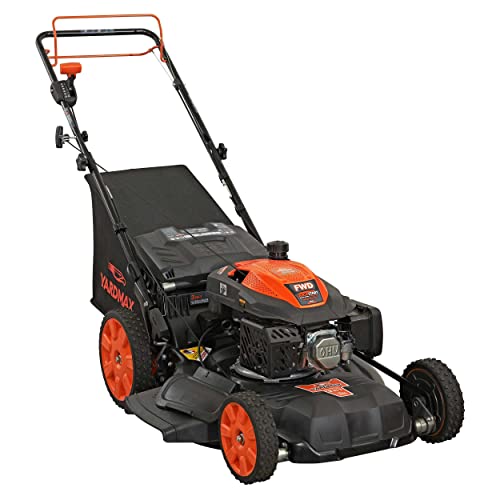
The YARDMAX YG2860 is built around a continuously variable transmission (CVT), a drivetrain typically found in much pricier machines. The CVT allows six distinct ground speeds via a shift lever, giving the operator precise control to match the mower’s pace to their walking speed without the jerky engagement of a fixed‑gear system. The 201cc OHV engine is the largest displacement on this list, and it powers through six‑inch‑tall grass without bogging, making it a strong choice for properties where mowing intervals stretch beyond a week.
Front‑wheel drive with aggressively spiked rubber tires provides good traction on flat and moderately sloped terrain, though on wet grass the front wheels can lose grip and pull sideways during turns — a limitation of any FWD mower. The deck cleanout port allows quick hose access to wash away grass buildup, and the single‑lever height adjustment works smoothly across six positions. Assembly is straightforward: unfold the handle, add oil and gas, and the auto choke system eliminates manual priming.
Owner feedback highlights excellent gas mileage and quiet operation for a 201cc engine, though the mower is noticeably heavy at 85 pounds empty. Bag removal can be awkward due to the bag’s design and the weight of the mower. Some units arrive with the speed‑selector lever not staying firmly in place, requiring a minor adjustment. For large, mostly flat lots where CVT speed control matters more than hill traction, this is a compelling gas option.
Why it’s great
- CVT provides six precise ground speeds for comfortable pacing
- 201cc engine easily handles overgrown grass without stalling
- Auto choke and deck cleanout reduce maintenance time
Good to know
- FWD struggles with traction on wet or slick slopes
- Heavy at 85 pounds; bagging is awkward
- Speed lever may need manual tightening to stay engaged
7. SENIX 201cc RWD Single Speed
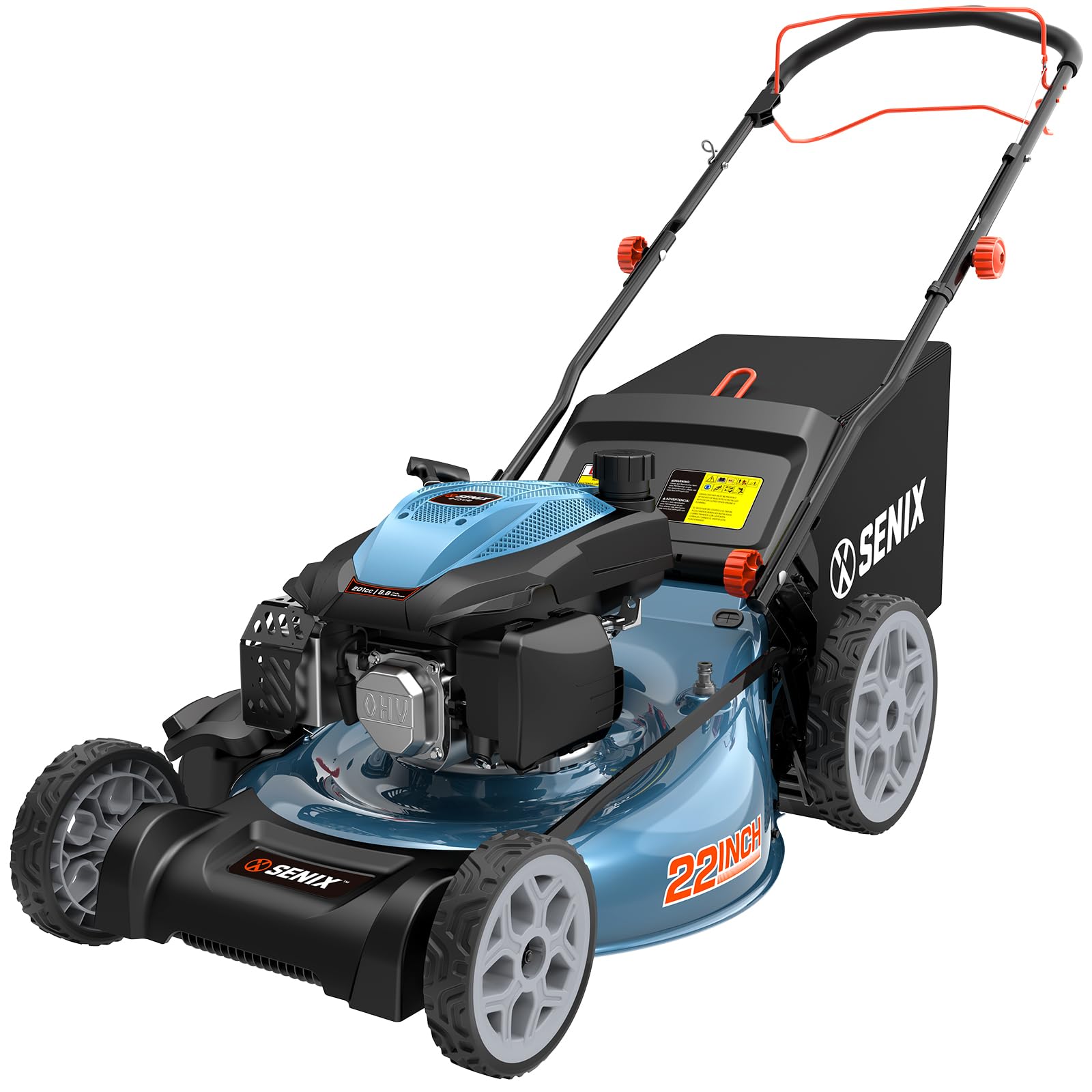
The SENIX 201cc rear‑wheel drive mower delivers impressive displacement and a 22‑inch steel deck at a price that undercuts most competitors with similar specs. The single‑speed self‑propel reaches 2.9 MPH — a comfortable walking pace for most users — and the RWD system provides solid climbing traction on inclines without the front wheels lifting. The manganese steel alloy blade is hardened to 45‑50 HRC, which maintains sharpness longer than the basic steel blades found on most budget gas mowers.
The vortex tunnel deck design improves grass discharge into the 3‑in‑1 system, reducing clogs even in slightly damp conditions. Six cutting heights from 1.25 to 4 inches cover the typical range for warm‑ and cool‑season grasses. Assembly requires no tools for the folding handle, and the engine starts reliably with the auto‑choke pull cord. Owners consistently report minimal setup effort and immediate cut quality that rivals higher‑priced units.
There are drawbacks: the pull cord can make a ringing sound if the handle flexes during starting, and the plastic wheels feel less robust than the rubber tires on pricier mowers. A few units have arrived with wheels detaching after a handful of uses, suggesting inconsistent QC on wheel fasteners. For the engine displacement and RWD configuration at this price point, the SENIX offers exceptional raw value for anyone willing to address minor fit‑and‑finish issues.
Why it’s great
- 201cc engine and RWD provide strong hill‑climbing power
- Hardened manganese steel blade stays sharp longer
- Tool‑free assembly and easy oil fill
Good to know
- Wheels feel cheap and may loosen over time
- Pull cord can produce noise if handle flexes
- Single‑speed propel lacks variable speed control
8. SKIL PWR CORE 40 20″ Self‑Propel

SKIL’s PWR CORE 40 system brings a 40V brushless motor and a 6.0Ah battery to the self‑propelled category, offering up to 55 minutes of runtime on a single charge. The variable‑speed self‑propel engages via a dial on the handle, allowing users to set the ground speed without having to hold down a constant‑pressure lever. The push‑button start is instant, and the foldable telescoping handle reduces the mower’s footprint for vertical storage in small garages or sheds.
With a 20‑inch cutting width and seven height positions from 1.5 to 4 inches, the SKIL handles lawns up to roughly a quarter acre comfortably on one full battery. The 3‑in‑1 system (bag, mulch, rear discharge) works effectively, and the weather‑resistant construction adds durability for storage in humid or damp environments. At just over 60 pounds, it is light enough for most users to lift into a truck bed or carry up a few steps.
Owner reviews highlight the mower’s quiet operation and effortless starting, though some report that the self‑propel motor is louder than the cutting motor — a minor annoyance rather than a performance issue. Battery runtime drops noticeably when running at full self‑propel speed on thick grass, and the included charger takes several hours to recharge the 6.0Ah pack. For a lightweight, easy‑to‑store battery self‑propelled mower that covers small to medium lawns without gas hassles, this is a balanced choice.
Why it’s great
- Variable‑speed self‑propel with dial adjustment
- Lightweight at 60 lbs with foldable handle for storage
- Push‑button start eliminates pull cords entirely
Good to know
- Self‑propel motor is audibly louder than the cutting motor
- 20‑inch deck is narrower than most gas competitors
- Battery recharge time is slow with the included charger
9. PowerSmart EasyGlide 144cc Gas Push
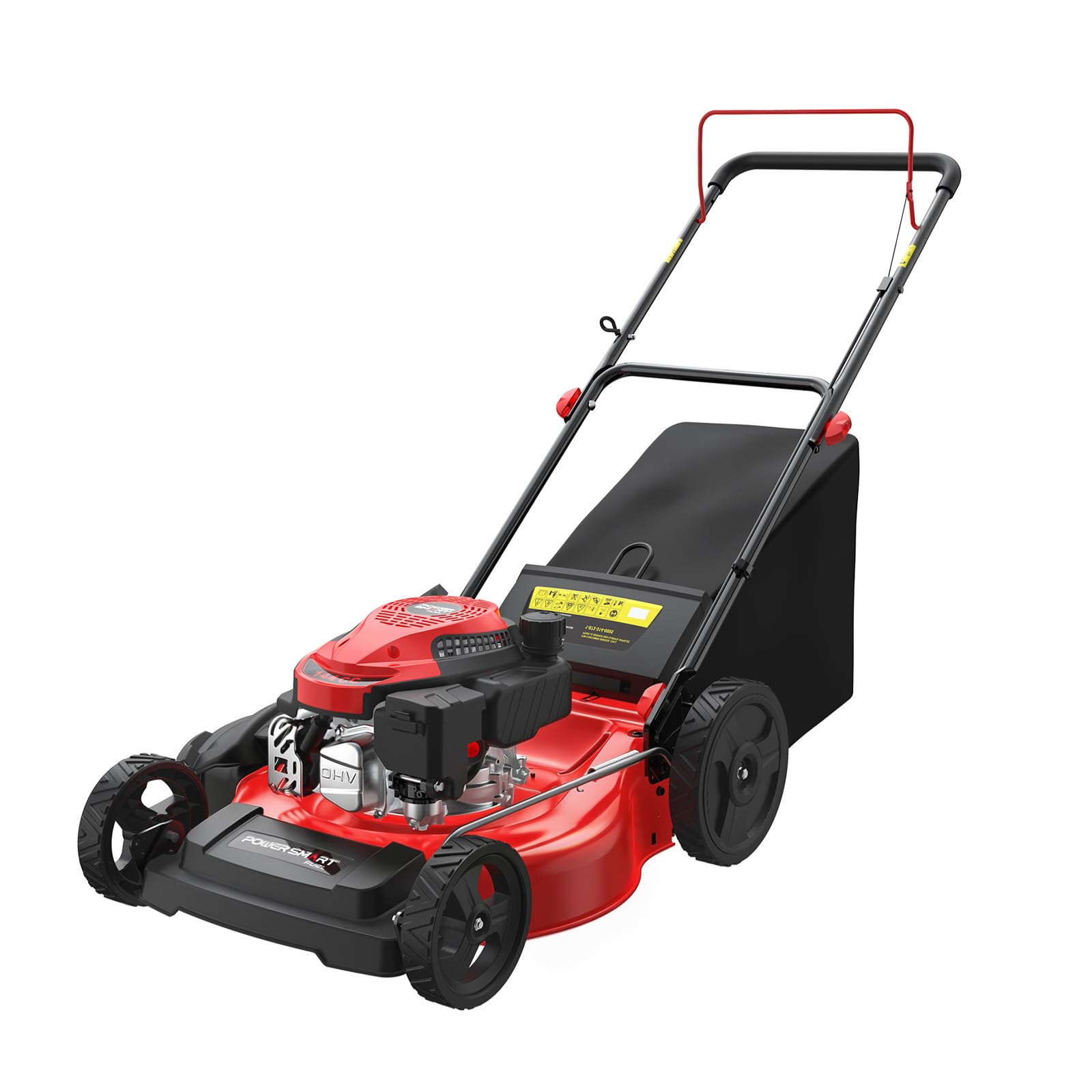
The PowerSmart EasyGlide is a straightforward push mower with a 144cc OHV engine and a 21‑inch stamped steel deck, designed for small, flat yards where self‑propulsion isn’t essential but a reliable gas start is. The auto‑choke system and primer bulb make cold starts predictable — owners report first‑pull starts consistently after the initial break‑in. The six‑position single‑lever height adjustment ranges from 1.5 to 3.9 inches, covering most warm‑season and cool‑season grasses, and the 3‑in‑1 system allows mulching, bagging, or side discharge.
At 61.6 pounds, this is a moderately heavy push mower, but the 10‑inch rear wheels and 7‑inch front wheels with double ball bearings reduce rolling resistance enough to keep pushing effort manageable on flat terrain. The steel deck feels sturdy for the price, and the blade delivers a clean, even cut on grass up to about six inches tall. Assembly takes under 20 minutes with basic tools.
The fuel tank is small — owners note it requires refills for any yard larger than about a quarter acre — and the foam grip on the handle has been reported to arrive with cosmetic damage on some units. The 144cc displacement is adequate for maintained lawns but will struggle if the grass is allowed to grow over eight inches tall. For the absolute lowest entry point into gas mowing with a steel deck and consistent starting, this is the pick.
Why it’s great
- Consistent first‑pull starts after break‑in period
- Steel deck and 21‑inch cutting width at a very low entry price
- Double ball‑bearing wheels reduce push effort
Good to know
- Small fuel tank requires frequent refills
- Not self‑propelled; no drive‑system assistance
- Struggles with grass over eight inches tall
FAQ
Is rear‑wheel drive worth paying extra on a budget mower?
How long do battery self‑propelled mowers typically run per charge?
Can I use a budget self‑propelled mower on a lawn larger than half an acre?
Final Thoughts: The Verdict
For most users, the budget self propelled lawn mower winner is the EGO POWER+ LM2114SP because it combines genuine gas‑matching torque with the convenience of battery power, dual‑toggle self‑propel, and a proven 56V platform that grows with other outdoor tools. If you want the quietest operation and innovative deck technology at a lower price, grab the WORX WG760. And for a gas self‑propelled mower with rear‑wheel drive that handles slopes without breaking the budget, nothing beats the PowerSmart 170cc RWD.

Mo Maruf
I created WellFizz to bridge the gap between vague wellness advice and actionable solutions. My mission is simple: to decode the research and give you practical tools you can actually use.
Beyond the data, I am a passionate traveler. I believe that stepping away from the screen to explore new environments is essential for mental clarity and physical vitality.