Our readers keep the lights on and my smoothie glass nicely filled. As an Amazon Associate, I earn from qualifying purchases.
Finding a portable power station that won’t drain your wallet is about understanding which battery chemistry, inverter type, and capacity actually line up with your real-world needs — not just the wattage number on the box. Most budget units cram in basic lithium-ion cells and noisy fans, but the models that earn a spot on this list deliver pure sine wave output, multiple charge inputs, and cycle counts that won’t leave you stranded after a dozen uses.
I’m Mohammad Maruf — the founder and writer behind WellFizz. I spend my time cross-referencing battery spec sheets, inverter efficiency curves, and real customer longevity reports so you don’t have to guess which budget station actually holds up.
Whether you need a lightweight companion for weekend camping or a blackout-ready backup for your CPAP machine, this guide zeroes in on the best budget portable power station options that balance price with proven reliability.
How To Choose The Best Budget Portable Power Station
A budget station can still be your primary off-grid power source, but you have to weigh capacity, battery type, and inverter quality more carefully than you would with a premium model. Here are the three factors that make or break a budget buy.
Battery Chemistry: LiFePO4 vs. Standard Lithium-Ion
Lithium iron phosphate (LiFePO4) cells handle over 3,000 charge cycles before significant degradation — roughly ten times the lifespan of standard lithium-ion. If you plan to use the station regularly, the extra upfront cost for LiFePO4 pays for itself in longevity. Budget stations with older lithium-ion chemistries may cost less today but risk capacity loss within two years of weekly use.
Inverter Type: Pure Sine Wave Is Non-Negotiable
Many low-priced power stations cut costs by using modified sine wave inverters, which can cause hum, overheating, or even permanent damage in sensitive electronics like CPAP machines, laptops, and camera battery chargers. Every unit in this guide uses a pure sine wave inverter, delivering clean AC power that matches wall-outlet quality.
Solar Input and MPPT Controller
A budget station with a built-in MPPT (Maximum Power Point Tracking) charge controller extracts more usable energy from your solar panel than a standard PWM controller, especially in partial shade or low-angle sunlight. Check the solar input voltage range — a wider range lets you pair with a broader selection of panels, making the station far more flexible for extended off-grid trips.
Quick Comparison
On smaller screens, swipe sideways to see the full table.
| Model | Category | Best For | Key Spec | Amazon |
|---|---|---|---|---|
| GRECELL 300W | Mid-Range | All-day camping & CPAP | 288Wh / 330W Pure Sine Wave | Amazon |
| HOWEASY K300 | Mid-Range | Starlink & 9-device charging | 222Wh / 300W + 65W USB-C PD | Amazon |
| DaranEner NEOZ | Mid-Range | Long-life LiFePO4 safety | 192Wh / 300W LiFePO4 3500 Cycles | Amazon |
| EBL EB300 | Mid-Range | Wireless charging & SOS light | 288.6Wh / 330W + 5W Wireless | Amazon |
| Anker SOLIX C200 DC | Premium | Ultra-compact LFP backup | 192Wh / 200W LiFePO4 3000 Cycles | Amazon |
| Apowking HP200L | Budget | Budget 7-device camping | 220Wh / 300W + Big LED Light | Amazon |
| powkey HP200 | Budget | Entry-level with solar panel | 146Wh / 200W + 40W Solar Panel | Amazon |
In‑Depth Reviews
1. GRECELL 300W Portable Power Station
The GRECELL 300W delivers the highest capacity in its class at 288Wh with a 330W pure sine wave inverter, making it the most versatile budget station for running a CPAP machine, mini fridge, or TV through a full evening. The built-in 5W wireless charging pad is a thoughtful addition, letting you top off your phone without rummaging for cables, while the three USB-A ports with fast charge 3.0 and a 60W USB-C PD port cover nearly every modern device standard.
Its three recharging methods include a 100W solar input with MPPT optimization, which users report can fully recharge the unit in about 5-9 hours under good sun — reasonable for the price bracket. The dual silent cooling fans keep the internal temperature regulated during heavy loads without producing the loud drone common on cheaper inverters.
A few users noted that the AC outlet is disabled during charging, meaning you cannot run pass-through power while the station itself is plugged into the wall. The 6-7 hour wall recharge time is also on the slower side compared to premium units, but for this capacity and price, the trade-off is acceptable. The three-level LED flashlight with SOS mode adds genuine utility for emergency kits.
Why it’s great
- 288Wh capacity is the largest in the budget tier — runs a CPAP all night
- Wireless charging pad eliminates cable clutter for quick phone top-offs
- Pure sine wave output protects sensitive electronics like laptops and TVs
- Three recharging methods including 100W solar input with MPPT
Good to know
- AC outlet disabled during wall charging — no pass-through power
- Wall recharge takes 6-7 hours even with the included adapter
- Wireless charging pad may not align with phones that have protruding camera bumps
2. HOWEASY K300 300W Portable Power Station

The HOWEASY K300 packs 222Wh and a 300W pure sine wave inverter into a footprint that is 28% smaller than comparable models, thanks to its compact chassis and folding handle. The standout feature is the 65W USB-C PD port, which can fast-charge a MacBook Pro or Dell XPS directly from the station — a rarity at this price point where most units cap out at 18W or 30W USB-C.
With nine total output ports (two AC outlets, 65W USB-C, three USB-A, and three DC ports), the K300 is the most device-dense station in this lineup. Users have confirmed it can run a Starlink Mini for an entire night through the USB-C port, a testament to both the clean power delivery and the decent capacity. The three-level LED light with SOS mode is integrated into the side panel, freeing up the top surface for device placement.
On the downside, the wall charger included in the box is rated for only 60W input, meaning a full recharge takes around 5 hours — a bit behind the faster-charging LiFePO4 competitors. Several reports mention that car charging can be finicky unless the vehicle engine is actively running. The unit also lacks an MPPT solar controller, so solar charging efficiency is lower than the GRECELL or DaranEner.
Why it’s great
- 65W USB-C PD port fast-charges laptops — rare for budget stations
- Nine total output ports cover nearly every device simultaneously
- 28% smaller footprint than equivalent 300W stations — easier to pack
- Folding handle makes one-handed carry simple
Good to know
- No MPPT controller — solar charging efficiency is lower than peers
- Wall recharge takes about 5 hours with included 60W adapter
- Car charging may require engine running to maintain proper voltage
3. DaranEner NEOZ 300W Portable Power Station
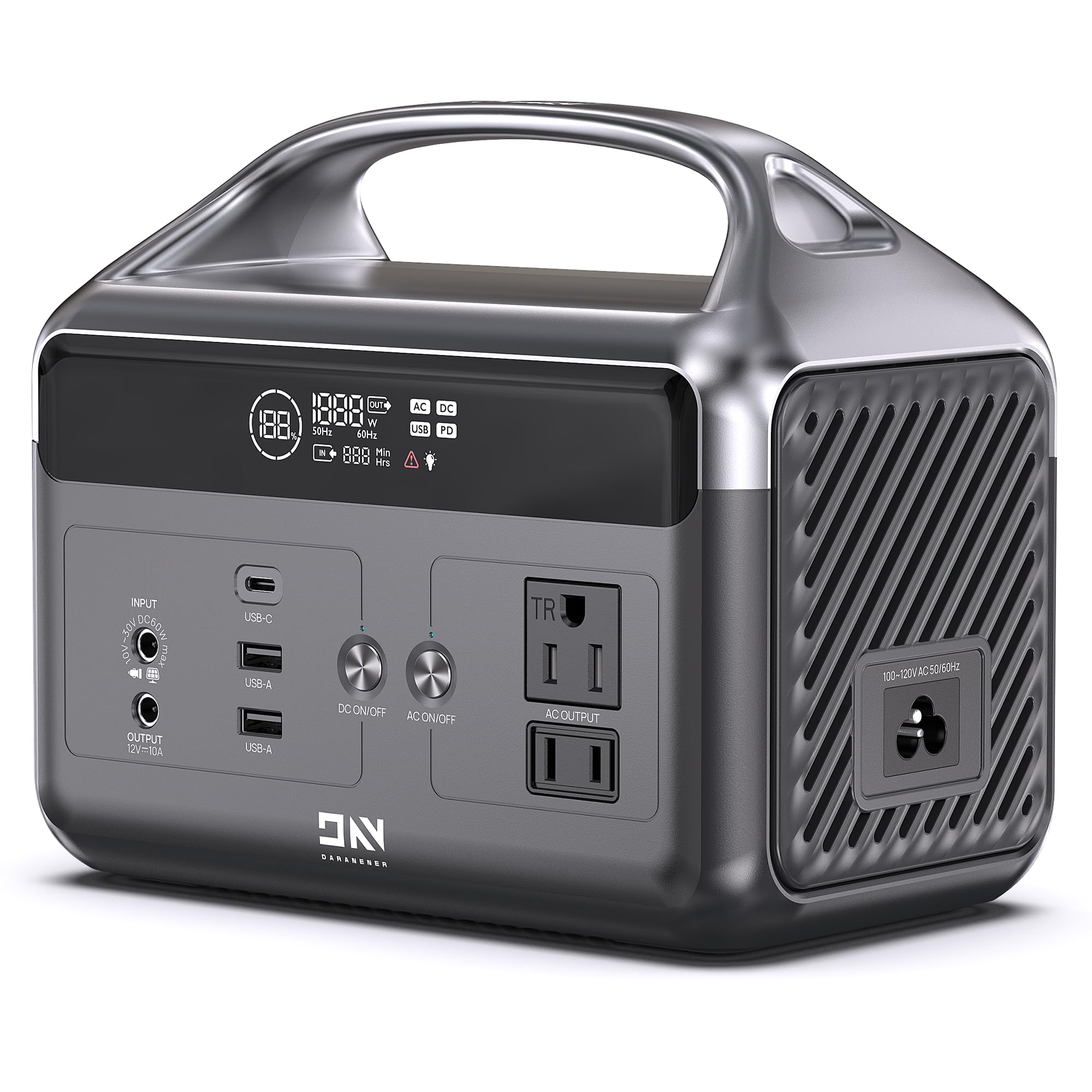
The DaranEner NEOZ is the only mid-range unit in this lineup that pairs its 192Wh capacity with genuine LiFePO4 cells rated for 3,500 cycles — over ten times the lifespan of the standard lithium-ion found in the Apowking or powkey. For daily users or those who plan to keep a station in their emergency kit for years, this chemistry difference alone makes the NEOZ the smartest long-term value in the budget space.
It delivers 300W pure sine wave AC output across two outlets, plus a 60W USB-C PD port and dual 18W QC 3.0 USB-A ports. The unit supports 30V solar input (not the typical 12-24V), which means you can wire two 18V solar panels in series for faster charging in low-light conditions — a clever feature for bike tourists or van-lifers. At 5.73 pounds, it is also one of the lighter options while still including a built-in flashlight with four brightness modes and SOS.
The main drawback is the 192Wh capacity — it is smaller than the GRECELL’s 288Wh, so you will get roughly 6-8 hours of CPAP runtime versus a full night. A small number of units have shipped with defective DC ports, though the manufacturer has a responsive replacement policy. The wall charger included is only 100W, so a full recharge takes about 2 hours — faster than most in this bracket, but still not the 1-hour claims you sometimes see.
Why it’s great
- LiFePO4 cells last 3,500 cycles — ten times longer than standard lithium-ion
- 30V solar input supports dual-panel series wiring for faster off-grid charging
- Lightweight at 5.73 lbs with two AC outlets and four LED light modes
- Pure sine wave output protects CPAP machines and sensitive electronics
Good to know
- 192Wh capacity may not run a CPAP through a full 8-hour night
- Occasional reports of defective DC-side ports — check upon arrival
- No AC wall charger included in the box for some batches
4. EBL EB300 330W Portable Power Station
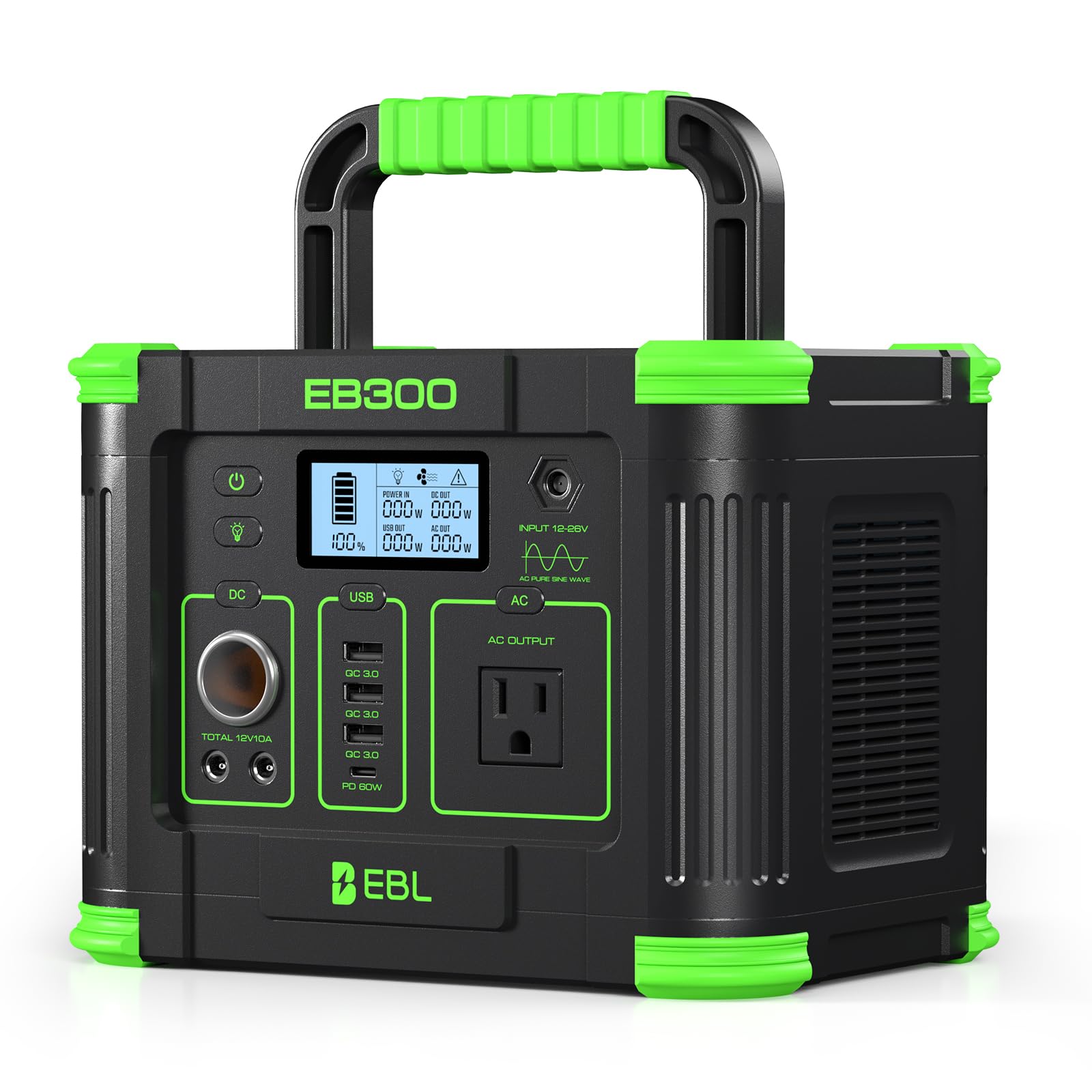
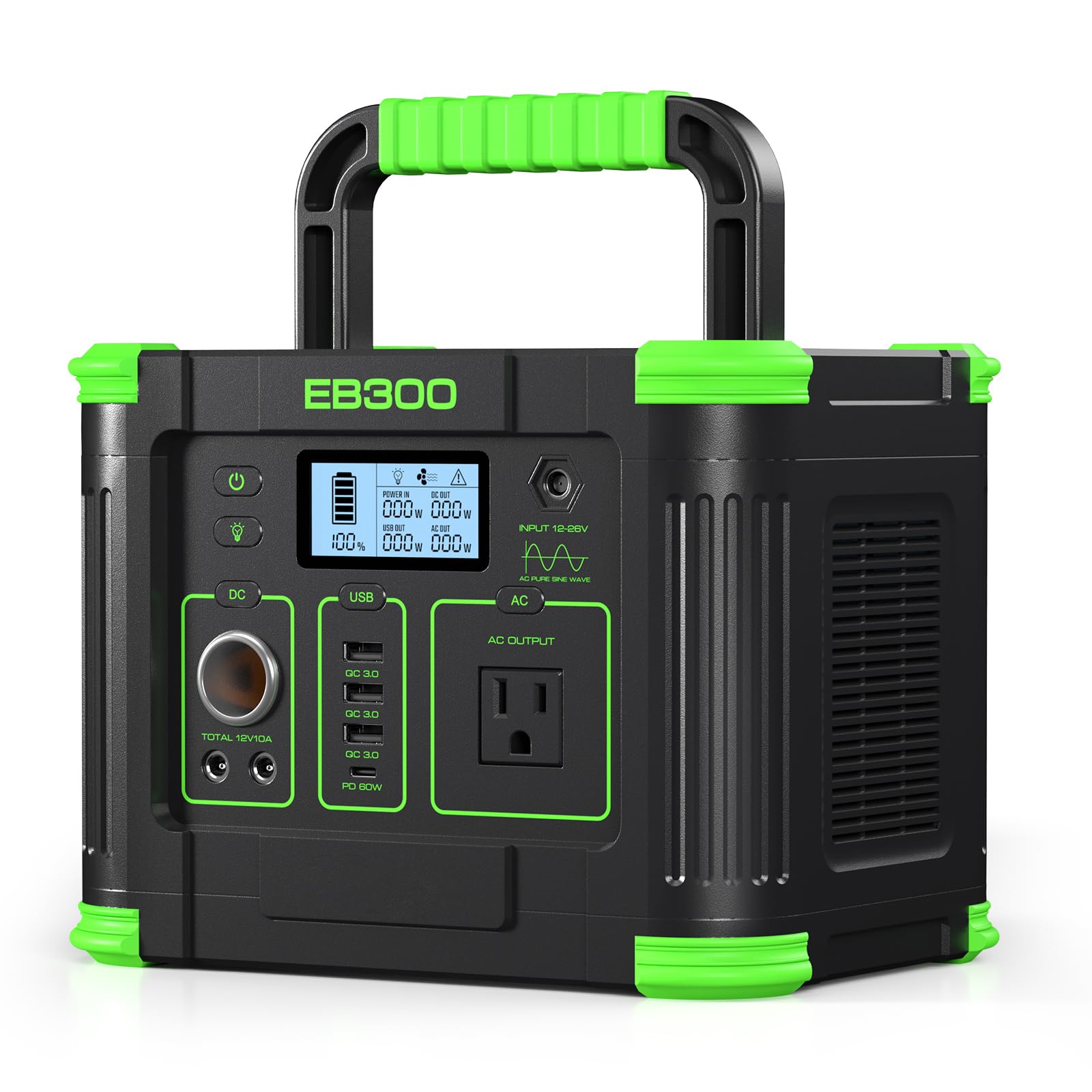
The EBL EB300 matches the GRECELL’s 288.6Wh capacity and 330W pure sine wave output while adding a dedicated 5W wireless charging pad on the top panel — ideal for quickly topping off AirPods, a phone, or any Qi-compatible device without plugging in. It also includes two DC 5521 ports (12V/5A each), a 12V/10A cigarette lighter port, and a 60W USB-C PD port, giving you more DC flexibility than most competitors in this tier.
One unique feature is the standalone SOS LED light that operates even when the main power system is switched off — it draws from a separate reserve, ensuring you always have emergency signaling regardless of the main battery level. The unit also includes a folding handle and anti-collision rubber strips on the corners, making it surprisingly rugged for a budget station. Users running CPAP machines report full-night runtime, and the near-silent cooling fan is a welcome relief compared to the audible whine of cheaper inverters.
The main caveat is weight — at 7.94 pounds, the EB300 is the heaviest in this lineup, which matters if you are backpacking. Some users have also reported that the AC outlet requires a separate button press before it activates, which can be confusing during the first few uses. A small number of units have failed to hold a charge after several months, though the two-year warranty offers decent protection.
Why it’s great
- 5W wireless charging pad on top panel — no cable needed for Qi devices
- Standalone SOS light works even with main power off — true emergency feature
- 288.6Wh capacity runs CPAP through a full night
- Anti-collision rubber strips and folding handle improve portability
Good to know
- Heaviest in the class at 7.94 lbs — less ideal for backpacking
- AC outlet requires manual button press before each use
- A few units have shown capacity failure after extended storage
5. Anker SOLIX C200 DC Portable Power Station

The Anker SOLIX C200 DC is the most compact station in this guide — 39% smaller than equivalent 192Wh units — and uses LiFePO4 cells rated for 3,000 cycles backed by a 3-year warranty. It outputs 200W pure sine wave AC, which is lower than the 300W competitors, but its two USB-C ports (140W and 100W) support the fastest device charging in this entire comparison, including laptops, drones, and even Starlink Mini terminals over USB-C.
Recharging speed is where the C200 DC really shines: the 140W USB-C PD 3.1 port can charge the station from empty to 80% in just 1.3 hours when paired with a compatible charger. It also accepts up to 100W solar input, though the solar panel is sold separately. The unit has no dedicated AC wall charger in the box — you must supply your own 18W-or-higher USB-C charger — which caught some buyers off guard.
The C200 DC is entirely DC-focused (hence the name), meaning its AC output is limited to 200W continuous. If you plan to run a mini fridge or a television that draws closer to 300W, this station will trip the inverter. It also lacks a built-in wireless charging pad, and the physical dimensions, while compact, do not include a carrying handle. For ultralight tech-focused users who prioritize laptop charging speed over raw AC capacity, this is the most polished option available.
Why it’s great
- Ultra-compact — 39% smaller than competing 192Wh stations
- 140W USB-C PD 3.1 charges laptops at full speed and recharges the station in 1.3 hours
- LiFePO4 cells with 3,000 cycles and a 3-year warranty
- 100W solar input supports efficient off-grid recharging
Good to know
- No wall charger included — requires separate USB-C charger purchase
- AC output limited to 200W — won’t run 300W appliances like mini fridges
- No built-in wireless charging or carrying handle
6. Apowking HP200L 300W Portable Power Station
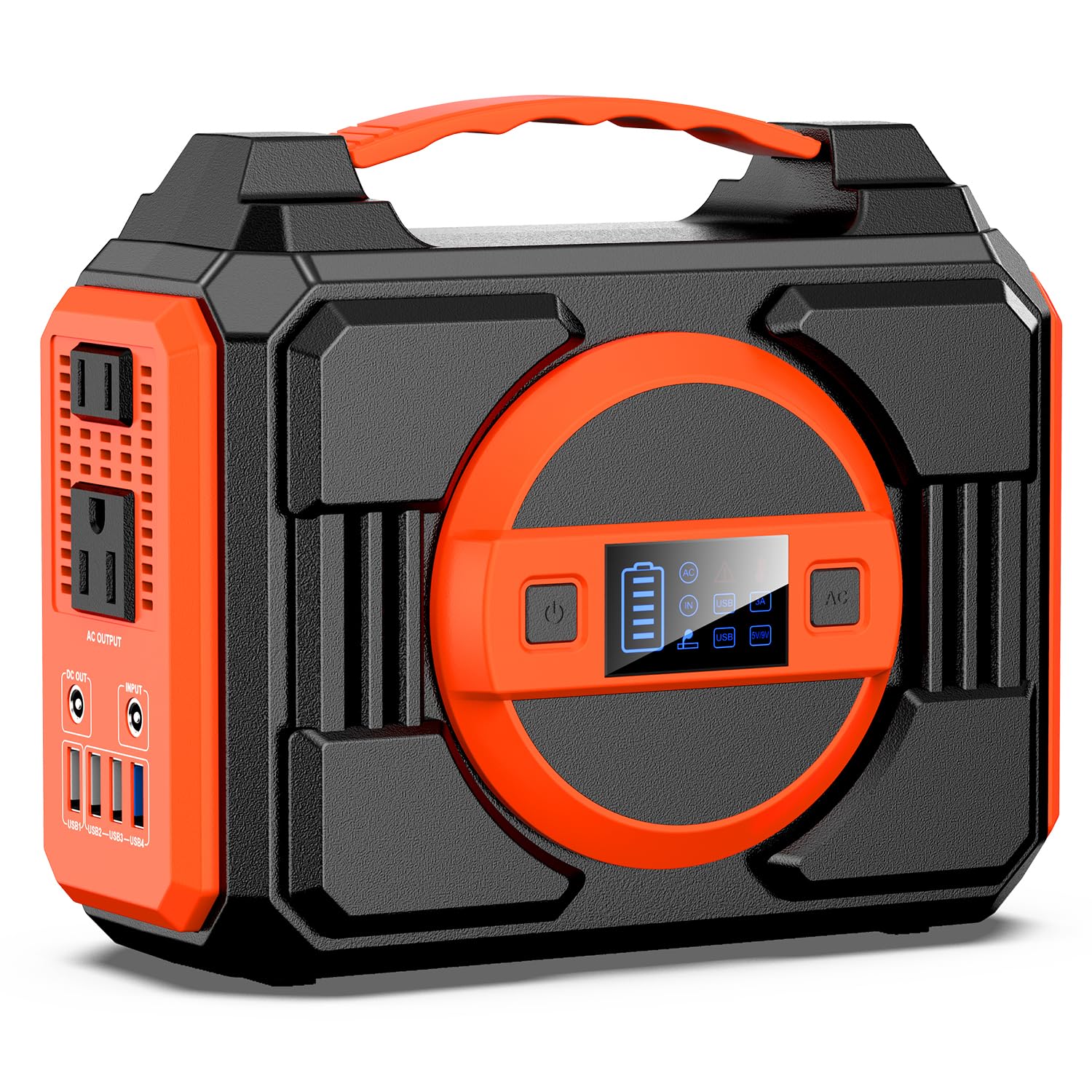
The Apowking HP200L is the price leader in this lineup without cutting corners on the essentials: a 300W pure sine wave inverter and a 220Wh lithium-ion battery pack that can charge up to seven devices simultaneously. Its two 110V AC outlets, three USB-A ports, one USB-C port (without PD), and a 12V DC car port cover the basics adequately for weekend camping trips or short power outages.
The standout physical feature is the unusually large LED light panel covering the entire back of the unit — not a small flashlight-style bulb but a wide floodlight that illuminates a tent interior or a blackout room far better than any competitor. It also includes a red AC verification indicator that lights briefly when the inverter activates, helping you confirm the output is live.
Owner feedback highlights two consistent complaints: the wall charging time exceeds four hours even with the included 15V/2.4A adapter, and the unit lacks USB-C Power Delivery, so laptops charge slowly through the standard USB-A ports at 5V/3.1A. The lithium-ion battery chemistry is rated for roughly 1,000 cycles — adequate for occasional use but far below the LiFePO4 options. A few units have also exhibited slow or failed solar charging when paired with panels under 60W.
Why it’s great
- Large rear LED floodlight outshines all competitors in tent or room illumination
- Seven device outputs including two 110V pure sine wave AC outlets
- Compact 5-pound form factor fits easily in a daypack
- 12-month warranty with responsive customer service for warranty claims
Good to know
- No USB-C PD — laptop charging is slow via USB-A (5V/3.1A)
- Wall recharge takes over 4 hours with included adapter
- Lithium-ion chemistry limited to ~1,000 cycles compared to LiFePO4 alternatives
- Solar charging is slow with panels under 60W
7. powkey HP200 200W Portable Power Station with 40W Solar Panel
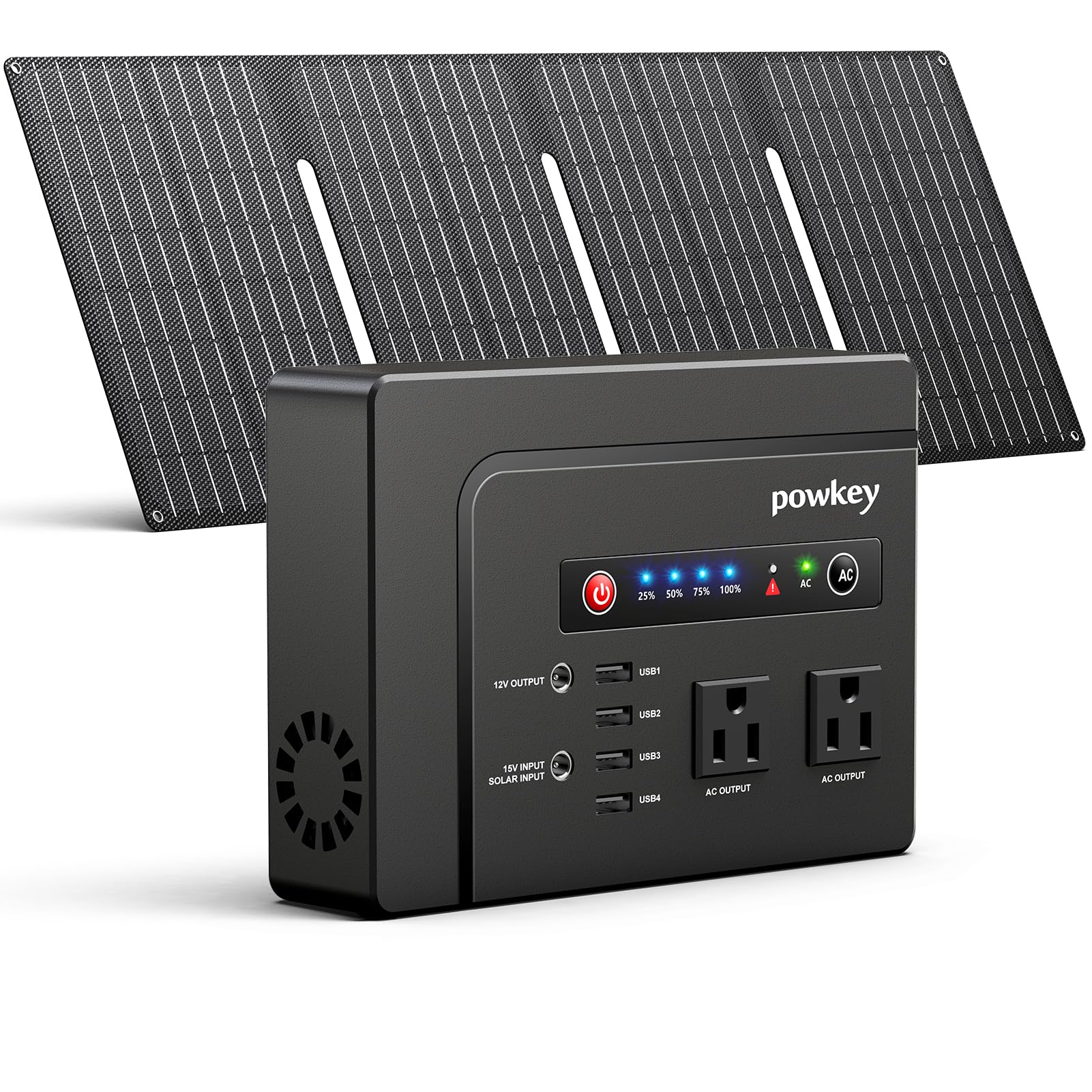
The powkey HP200 is the only station in this guide that ships with a 40W solar panel included, making it the perfect entry point for someone who wants to experience off-grid solar charging without a separate panel purchase. The station itself holds 146Wh (39,600mAh) with a 200W pure sine wave AC inverter — enough to charge a phone 24 times, a camera 12 times, or a laptop about 2.5 times per full charge.
Its seven output ports include two 110V AC outlets, four USB-A ports (5V/3.1A max), and one DC 12V/8A port. At just 3 pounds for the station and a compact folding panel that fits in a backpack, this is the lightest complete solar generator kit in the budget space. The station has a simple four-LED indicator system for battery level and a dedicated AC status light, keeping the interface clean for beginners.
The trade-offs are significant: 146Wh is the smallest capacity here, and the 200W AC inverter will not run anything above a small fan or a laptop. Several users reported that the unit stopped charging from the solar panel after a few months of use, suggesting the internal charge controller may be prone to failure. The wall charging time of 5-6 hours is also slow relative to its small capacity. For a first-time buyer who wants to test solar power with zero extra gear, this kit works — but it is not built for heavy or long-term use.
Why it’s great
- Includes a 40W solar panel in the box — no separate purchase needed
- Lightest complete kit at just 3 pounds for the station
- Seven output ports including two pure sine wave AC outlets
- Great for ultralight backpackers who need phone and camera charging
Good to know
- 146Wh capacity is the smallest in this guide — limited runtime
- 200W AC inverter cannot run 300W devices like mini fridges or CPAP with heated humidifier
- Some units have experienced solar charging failure after a few months
- Wall recharge takes 5-6 hours despite the small battery size
FAQ
How do I calculate how long a budget power station will run my CPAP machine?
Can I leave a budget portable power station plugged in all the time?
Why does my 300W power station trip when I plug in a device rated below 300W?
Is it safe to charge a power station from a solar panel while simultaneously powering a device?
Final Thoughts: The Verdict
For most users, the best budget portable power station winner is the GRECELL 300W because it delivers the highest capacity (288Wh) at a price that undercuts mid-range competitors while still including a pure sine wave inverter, wireless charging, and three recharging methods. If you want the longest battery lifespan and plan to use a station daily for years, grab the DaranEner NEOZ with its 3,500-cycle LiFePO4 cells. And for the most compact station that fast-charges laptops, nothing beats the Anker SOLIX C200 DC.

Mo Maruf
I created WellFizz to bridge the gap between vague wellness advice and actionable solutions. My mission is simple: to decode the research and give you practical tools you can actually use.
Beyond the data, I am a passionate traveler. I believe that stepping away from the screen to explore new environments is essential for mental clarity and physical vitality.