Our readers keep the lights on and my smoothie glass nicely filled. As an Amazon Associate, I earn from qualifying purchases.
Finding a television that delivers smooth, responsive gameplay without draining your wallet is the central challenge for the modern console and PC gamer. The difference between a frustrating, laggy session and a buttery-smooth victory lap often comes down to specific hardware choices—from panel refresh rate to HDMI 2.1 support—that most budget-focused shoppers overlook.
I’m Mohammad Maruf — the founder and writer behind WellFizz. I’ve spent many hours analyzing panel specifications, variable refresh rate compatibility, and real-world gaming performance across dozens of models to separate the genuinely capable gaming TVs from the ones that merely look good on paper.
This guide breaks down the absolute best options for gamers who need high performance at a reasonable cost, focusing on native refresh rates, VRR support, and HDR gaming features that directly impact your play. After hundreds of hours of research, here is your definitive best budget gaming tv roundup.
How To Choose The Best Budget Gaming TV
Gaming televisions differ from standard TVs in three critical ways: input lag, refresh rate capability, and VRR implementation. A regular TV might look fine for movies but introduce a 50ms delay that ruins your timing in a fighting game or FPS. Understanding the priorities below will help you make a confident purchase.
Native Refresh Rate vs. Marketing Claims
The single most important spec for gaming is the panel’s native refresh rate. A true 120Hz or 144Hz panel refreshes the image 120 or 144 times per second, producing dramatically smoother motion than a standard 60Hz TV. Beware of marketing terms like “Motion Rate 240” or “Effective Refresh Rate”—these often describe backlight scanning or frame insertion tricks on a 60Hz panel, not native high-refresh capability. Look for the native Hertz value in the technical specifications, not the marketing bullet points.
HDMI 2.1 and Bandwidth
To deliver a 4K signal at 120Hz, you need HDMI 2.1 ports with full 48Gbps bandwidth. Many mid-range TVs include HDMI 2.1 on only one or two ports, which is fine if you primarily connect one console and one streaming device. Budget TVs sometimes use “HDMI 2.1” ports that support only 4K at 60Hz—always verify the maximum supported resolution and refresh rate per port in the spec sheet.
Variable Refresh Rate (VRR) Technologies
VRR synchronizes the TV’s refresh rate to the output of your graphics card or console, eliminating screen tearing and reducing stutter when frame rates fluctuate. The three main standards are HDMI Forum VRR (basic implementation), AMD FreeSync (Premium and Premium Pro tiers add LFC and HDR support), and NVIDIA G-Sync (typically found on more expensive sets). FreeSync Premium Pro is the most common on gaming-focused budget TVs and works with both Xbox and AMD-equipped PCs.
Input Lag and Auto Low Latency Mode (ALLM)
Input lag is the delay between pressing a button and seeing the action on screen. For competitive gaming, look for TVs that measure under 10ms in Game Mode. ALLM (Auto Low Latency Mode) automatically switches the TV into its lowest-lag picture setting when it detects a gaming console, saving you from manually adjusting menus every time you switch from Netflix to a game. This is a standard feature on most gaming-oriented models today.
Panel Type: QLED, Mini-LED, and Local Dimming
QLED (Quantum Dot) technology improves color volume and brightness compared to standard LED, which is beneficial for HDR gaming. Mini-LED backlighting takes this further by using thousands of tiny LEDs behind the screen, allowing for precise local dimming zones that produce deeper black levels without the blooming seen on older edge-lit designs. For a budget gaming setup, a Mini-LED panel with at least 200 local dimming zones offers the best contrast-to-price ratio available today. Standard LED panels without local dimming will show grayish blacks in dark scenes.
Quick Comparison
On smaller screens, swipe sideways to see the full table.
| Model | Category | Best For | Key Spec | Amazon |
|---|---|---|---|---|
| Hisense 55″ U8 Series | Premium Mini-LED | Enthusiast Gaming + HDR | Native 165Hz Panel | Amazon |
| Amazon Ember 55″ Mini-LED | Premium Smart TV | Fire TV Ecosystem + Gaming | 144Hz with 512 Dimming Zones | Amazon |
| Roku 55″ Pro Series | Premium QLED | Streaming + 120Hz Gaming | 120Hz Native Refresh Rate | Amazon |
| TCL 55″ T7 Series | Mid-Range QLED | 144Hz Console + PC Gaming | 120Hz-144Hz Variable Refresh | Amazon |
| iFFALCON 55″ MiniLED | Mid-Range Mini-LED | High-Refresh Console Gaming | Native 144Hz + 4x HDMI 2.1 | Amazon |
| Sony BRAVIA 2 II 43″ | Mid-Range LED | PS5 Exclusive Features | 4K Processor X1 | Amazon |
| Samsung 32″ QLED Q8F | Mid-Range QLED | Small Room + 144Hz VRR | 4K 144Hz VRR Support | Amazon |
| Hisense 43″ E6 Cinema Series | Entry-Level QLED | Fire TV Ecosystem | Motion Rate 120 | Amazon |
| VIZIO V-Series 50″ | Entry-Level LED | Casual Gaming + Streaming | 60Hz Native Panel | Amazon |
| Samsung 43″ Mini LED M70H | Mid-Range Mini-LED | Versatile Smart TV | Mini LED Processor 4K | Amazon |
| TCL 55″ Q65 QLED | Entry-Level QLED | Budget-Conscious Buyer | 60Hz Native Panel | Amazon |
In‑Depth Reviews
1. Hisense 55″ U8 Series ULED Mini-LED (55U8QG)
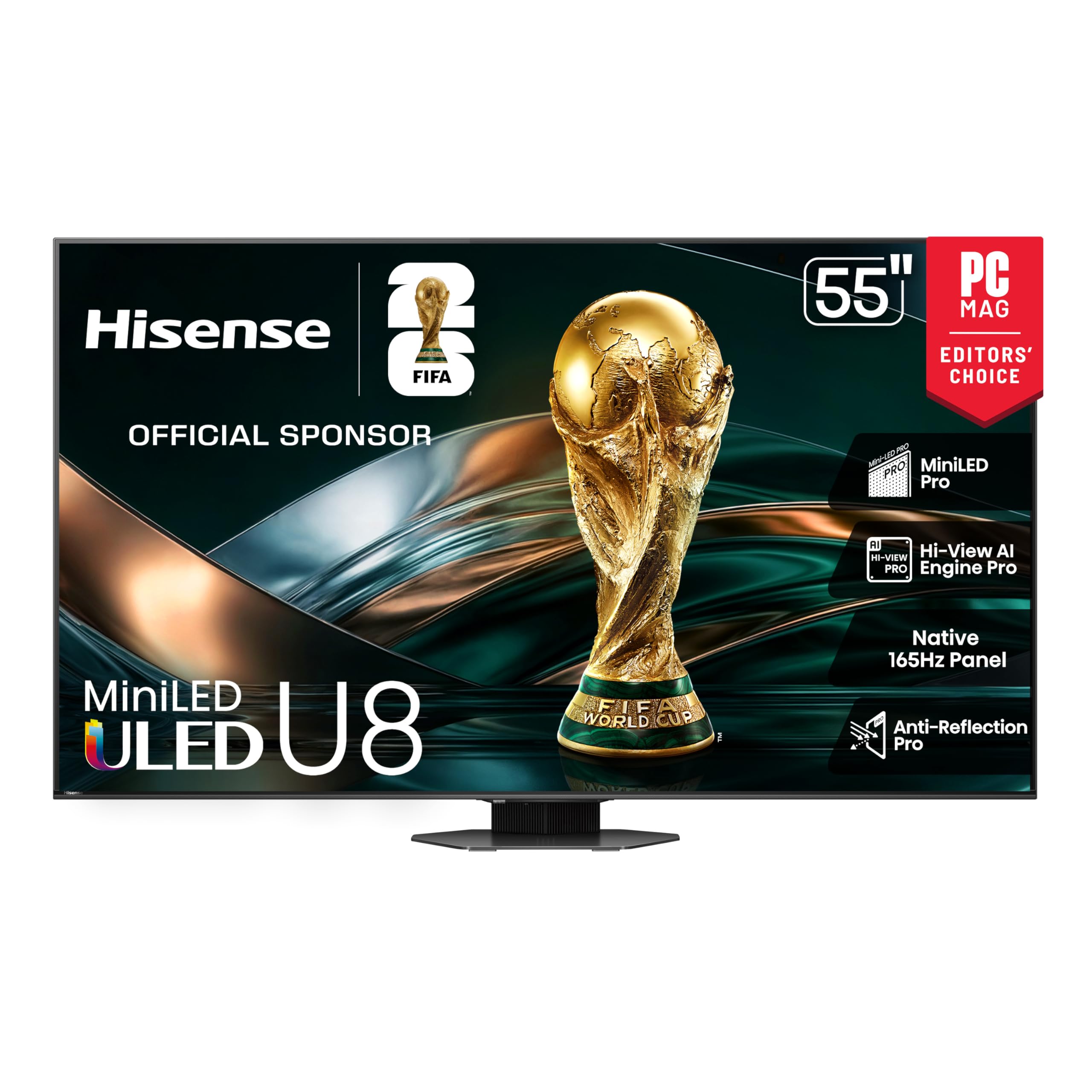
The Hisense U8 Series sits at the top of the budget-conscious gaming pyramid by delivering specs that rival flagship sets costing twice as much. The native 165Hz panel is a genuine standout—it gives PC gamers with high-frame-rate rigs a clear advantage, while the VRR range that extends up to 288Hz (via LFC) ensures buttery-smooth motion regardless of frame-time fluctuations. The 5,000-nit peak brightness and up to 5,600 local dimming zones produce HDR highlights with near-zero blooming, making dark horror games and bright open worlds equally stunning. The 4.1.2-channel Dolby Atmos speaker system with up-firing drivers delivers convincing spatial audio without requiring an external soundbar, though purists will still want a dedicated audio setup for critical listening.
Gamers will appreciate the dedicated Game Bar overlay that lets you adjust response time, VRR mode, and black stabilizer settings in real time without backing out to the main menu. The Anti-Reflection Pro coating is a welcome addition for brightly lit rooms, maintaining contrast even when sunlight streams through windows. Google TV runs responsively on the Hi-View AI Engine Pro, and the included voice remote makes content discovery effortless. The 75-inch variant receives equally strong reviews for picture quality and sound immersion.
Reliability concerns surface in a minority of user reports—some units require factory resets after prolonged standby periods, and Hisense’s software update cadence is slower than Sony or Samsung. However, the raw hardware capability at this price tier is unmatched. For the gamer who wants near-flagship performance without crossing the threshold into OLED territory, the U8 Series makes a compelling case. The IMAX Enhanced certification also means compatible streaming titles receive director-approved audio and video processing.
Why it’s great
- Native 165Hz panel with VRR up to 288Hz eliminates tearing and stutter in fast-paced titles.
- 5,000-nit peak brightness and mini-LED backlight with 5,600 zones produce reference-level HDR highlights.
- Built-in 4.1.2-channel Dolby Atmos system with up-firing speakers delivers immersive sound out of the box.
Good to know
- Some users report occasional software lockups requiring a factory reset after extended standby periods.
- Hisense software update frequency and support responsiveness trail behind more established brands.
2. Amazon Ember 55″ Mini-LED Series with Fire TV
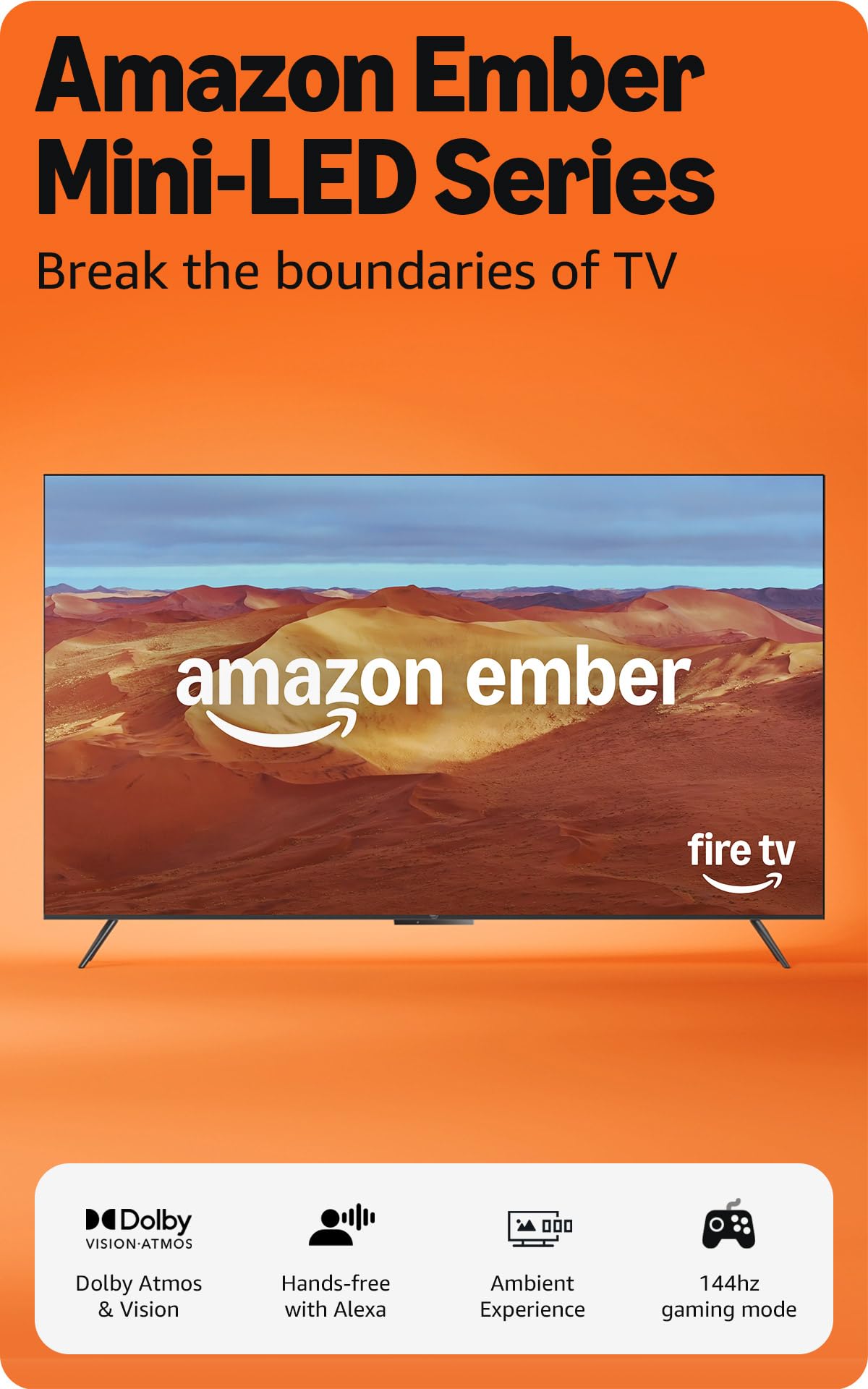
Amazon’s Ember Mini-LED Series represents a serious step forward for the Fire TV platform, combining a 144Hz gaming panel with FreeSync Premium Pro certification and 512 individual local dimming zones. The 4K QLED mini-LED display reaches up to 1,400 nits peak brightness, and the Dolby Vision IQ processing adjusts tone mapping based on ambient room lighting—a clever feature that keeps HDR detail visible whether you’re gaming at night or during the day. The 2.1-channel Dolby Atmos audio system includes a built-in subwoofer that adds genuine bass weight to explosions and soundtracks, though dialogue clarity could be sharper at moderate volumes.
The Fire TV interface has received a significant overhaul with the 2026 software update, offering a cleaner layout and faster navigation than previous generations. The inclusion of hands-free Alexa with Omnisense technology means the TV can wake upon detecting your presence and display artwork or recently used apps. For gamers already invested in the Amazon ecosystem with Alexa routines and Blink cameras, the Ember Series integrates seamlessly. The 144Hz panel with AMD FreeSync Premium Pro handles frame-rate fluctuations from Xbox Series X and AMD-equipped PCs without visible tearing, and the sub-10ms input lag in Game Mode feels instantaneous.
Not every experience is flawless—some users report occasional random reboots and a home screen that can feel cluttered with Amazon recommendations. The Fire TV OS has historically suffered from slowdown over time, and while the Ember Series hardware is more powerful, long-term software bloat remains a concern. The built-in microphone switch physically disconnects the mics for privacy, which is a thoughtful touch. For the price, the combination of Mini-LED contrast, high refresh rate gaming, and tight ecosystem integration is hard to beat.
Why it’s great
- 512-zone mini-LED backlight produces deep black levels with minimal blooming during dark game scenes.
- 144Hz panel with FreeSync Premium Pro certification eliminates tearing on Xbox and AMD GPUs.
- Built-in subwoofer in the 2.1-channel audio system adds genuine low-end presence without a soundbar.
Good to know
- Fire TV interface can feel cluttered with Amazon ads and recommendations, reducing the clean experience.
- A minority of units experience random reboots or slowdown over time as the OS accumulates updates.
3. Roku 55″ Pro Series 4K QLED
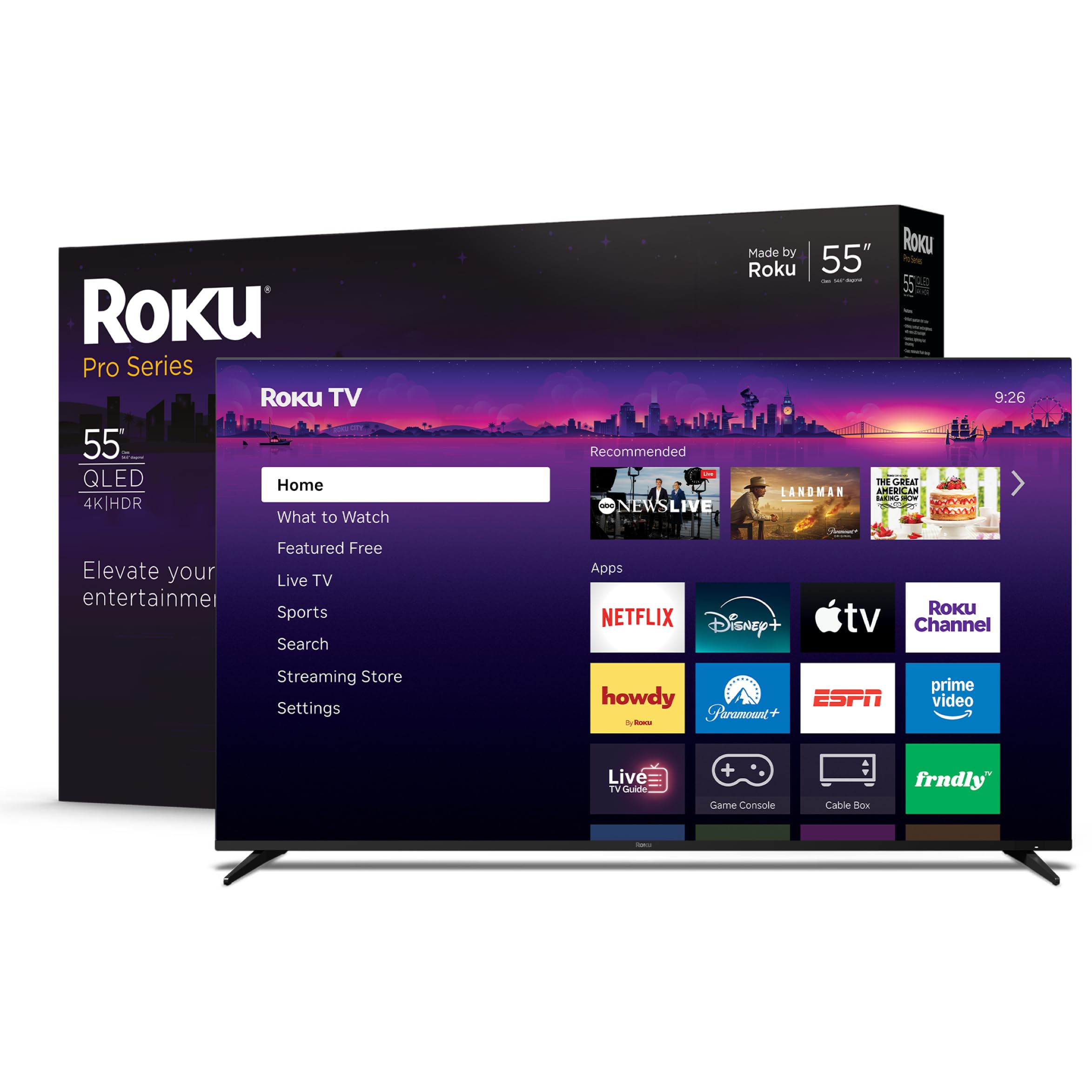
The Roku Pro Series takes the beloved Roku operating system—widely considered the fastest and simplest smart TV platform—and wraps it in genuinely capable gaming hardware. The 120Hz native refresh rate panel supports both FreeSync Premium Pro and VRR, ensuring console gamers get tear-free gameplay on Xbox Series X and PS5. The Mini-LED backlight with local dimming delivers solid contrast, and the Dolby Vision IQ processing adapts HDR tone mapping to room brightness. The backlit Roku Voice Remote Pro is a standout accessory, with a rechargeable battery that outlasts most competitors and hands-free voice controls that work reliably even from across the room.
Where the Pro Series truly shines is its audio implementation. The side-firing speaker array creates a surprisingly wide soundstage for a flat-panel TV, and Dolby Atmos processing adds height cues that make games like Cyberpunk 2077 feel more enveloping. Roku’s Smart Picture Max AI processing cleans up lower-resolution signals impressively—useful for upscaling older consoles or streaming compressed video. The Pro Series also supports wireless pairing with Roku audio devices for expanding into a full surround system without dedicated receiver hardware.
The primary trade-off is price—the Pro Series sits at a premium compared to similarly specified Fire TV or Google TV models, and the Roku app selection, while covering all major services, lacks some niche streaming options. Some early units have exhibited brown discoloration spots and HDMI eARC sync issues, though these appear to be isolated to specific batches. For users who prioritize a clean, ad-lite interface and reliable streaming performance alongside capable 120Hz gaming, the Roku Pro Series delivers a polished experience.
Why it’s great
- Side-firing speakers and Dolby Atmos create an immersive, wide soundstage without an external soundbar.
- Roku OS remains the fastest and least cluttered smart TV platform for streaming content discovery.
- Backlit Roku Voice Remote Pro with rechargeable battery is a premium-feeling accessory included in the box.
Good to know
- Premier pricing compared to similarly specced Fire TV or Google TV alternatives with equivalent hardware.
- Isolated reports of panel defects (brown spots) and HDMI eARC audio sync issues in early production batches.
4. TCL 55″ T7 Series QLED (55T7, 2025 Model)

TCL’s T7 Series, an Amazon exclusive, strikes a strong balance between high-refresh gaming capability and everyday streaming performance. The panel supports a variable refresh rate that scales from 120Hz to 144Hz, making it flexible for both console and PC use. The QLED quantum dot technology covers nearly the full DCI-P3 color space, and the HDR Pro+ support includes Dolby Vision, HDR10+, and HLG. The TCL AIPQ Pro processor handles upscaling and motion interpolation well, and the Motion Rate 480 with MEMC frame insertion smooths out fast camera pans in games and sports without introducing obvious artifacts.
One of the less advertised strengths of the T7 is its four HDMI inputs, including one with eARC for lossless audio passthrough to a soundbar or AV receiver. PC gamers have noted that enabling the Game feature in the settings is essential to eliminate input lag—failure to do so results in noticeable delay. The Google TV interface runs smoothly, and the voice remote supports both Amazon Alexa and Google Assistant. The 75-inch variant has earned particular praise for delivering a massive, immersive gaming canvas at a price that undercuts larger premium brands by a significant margin.
The built-in speaker system is adequate for casual use but lacks bass depth and clarity at higher volumes—a soundbar upgrade is recommended for serious gaming sessions. Some users report that the TV does not wake from power save mode reliably when used as a PC monitor, requiring a manual HDMI cable reseat. The Direct LED backlight, while capable, does not match the contrast performance of mini-LED competitors. For gamers who want 120Hz+ gaming without paying a premium for local dimming, the T7 Series delivers strong value.
Why it’s great
- Variable refresh rate panel supports 120Hz for consoles and up to 144Hz for PC gaming without breaking the bank.
- Four HDMI inputs including eARC provide ample connectivity for multiple consoles, PC, and sound systems.
- QLED quantum dot technology delivers vibrant, wide color gamut coverage for HDR gaming and movies.
Good to know
- Built-in speakers lack bass and clarity, making a soundbar upgrade a near-necessity for immersive audio.
- PC monitor users may encounter wake-from-sleep issues requiring manual HDMI reconnection.
5. iFFALCON 55″ 4K MiniLED Smart TV (55U85)
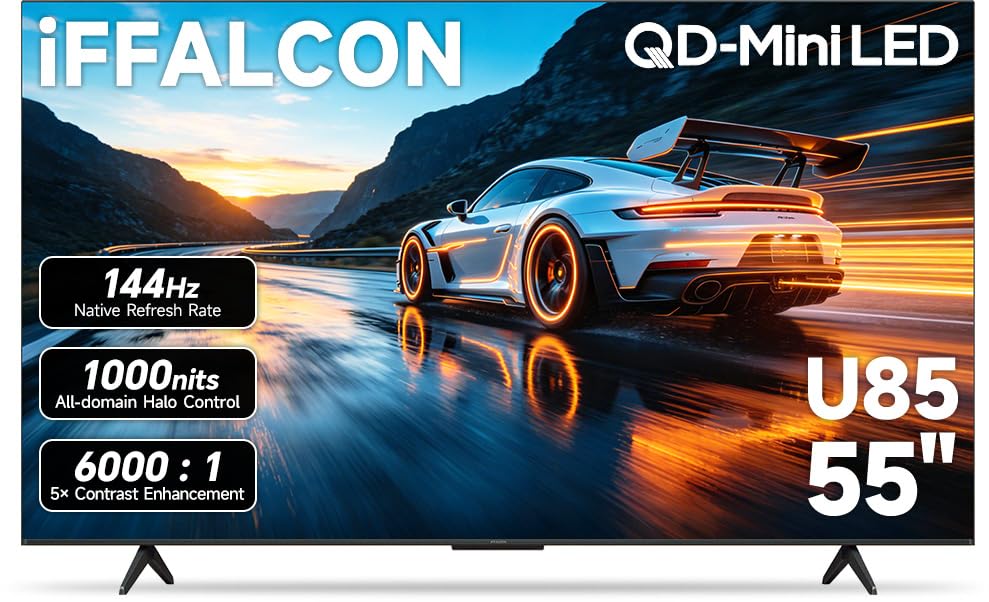
The iFFALCON 55U85 is a dark horse in the budget gaming TV space, offering a native 144Hz Mini-LED panel with four HDMI 2.1 ports—a connectivity configuration typically reserved for much more expensive sets. This means you can simultaneously connect a PS5, Xbox Series X, gaming PC, and a soundbar through eARC without needing to swap cables or use an HDMI switch. The display reaches up to 1,000 nits peak brightness with a 6,000:1 contrast ratio from its Mini-LED local dimming, producing punchy HDR highlights and decent black levels for the price. The FreeSync Premium Pro certification covers both AMD GPU-equipped PCs and Xbox consoles, ensuring tear-free gameplay across the 48Hz–144Hz VRR range.
Gaming performance is where this TV punches above its weight—user reviews consistently note that both Xbox Series X and PS5 titles look noticeably better than on previous Vizio and Samsung mid-range sets, with less color banding, reduced ghosting, and smoother motion. The 50W 2.1-channel audio system (2x15W tweeters plus a 20W woofer) with Dolby Atmos passthrough outperforms many built-in TV speakers, though external audio is still recommended for serious immersion. Google TV runs smoothly on the interface, and the inclusion of hotel mode and IP/IR control makes it suitable for commercial installations like Airbnbs or hotel rooms.
The build quality feels slightly less substantial than premium brands, with a slightly thicker chassis that may not sit as flush against the wall. Some users note that while the Mini-LED backlight is effective, it doesn’t reach the black level depth of the Hisense U8 or Amazon Ember sets. The iFFALCON brand is relatively new to the US market, which may give some buyers pause regarding long-term reliability and customer support. For gamers who need the maximum number of HDMI 2.1 ports at a Mid-Range price, this is the most practical option available.
Why it’s great
- Four HDMI 2.1 ports (2 at 144Hz, 2 at 60Hz) allow simultaneous connection of multiple consoles and PC without a switch.
- Mini-LED backlight with 6,000:1 contrast ratio delivers punchy HDR and good black levels for the price tier.
- Dolby Atmos passthrough and 50W 2.1-channel audio system provide immersive sound out of the box.
Good to know
- Brand is relatively new in the US market, raising questions about long-term support and reliability track record.
- Chassis is thicker than ultra-slim competitors, which may affect wall-mount aesthetics.
6. Sony BRAVIA 2 II 43″ (K-43S20M2)
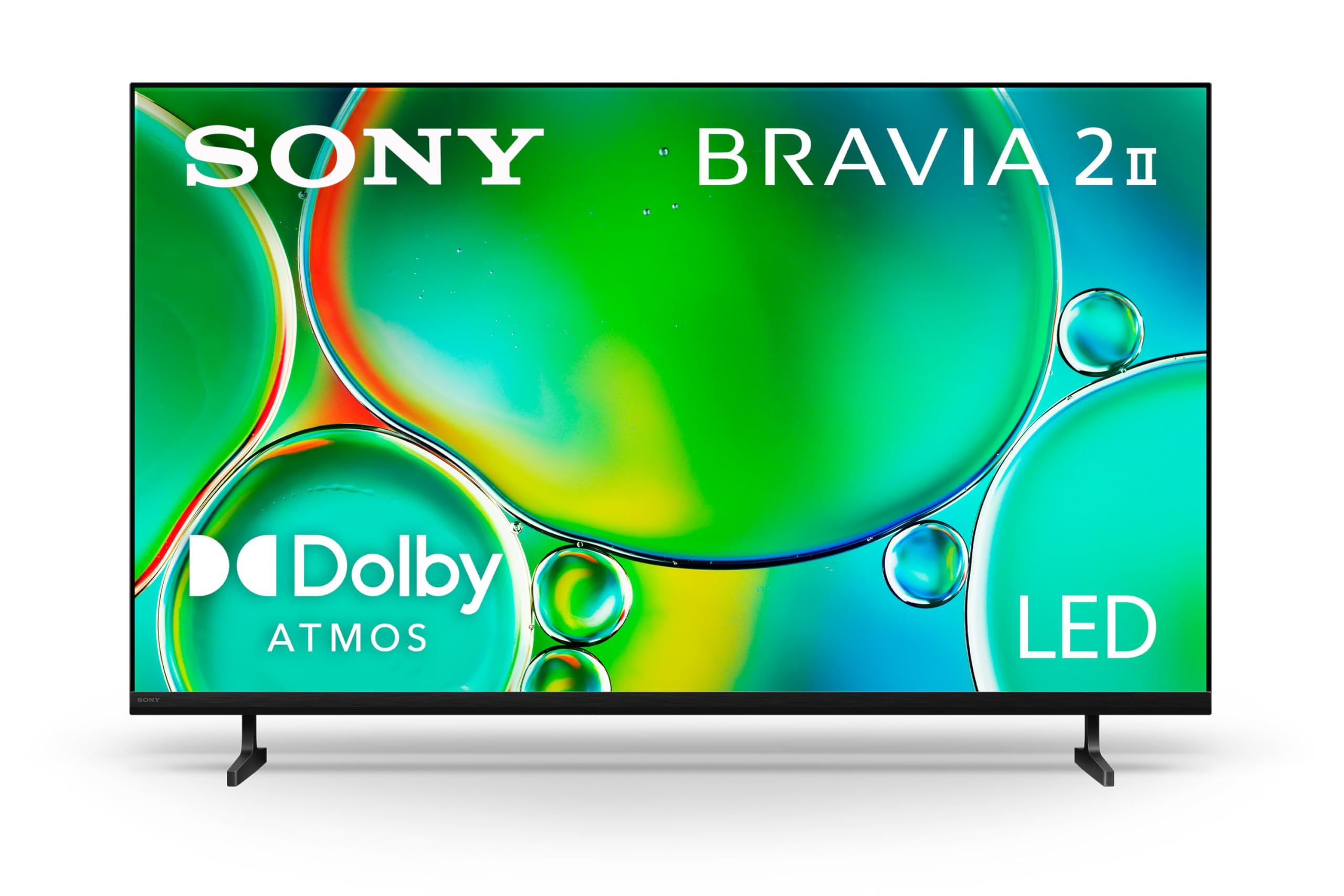
The Sony BRAVIA 2 II is purpose-built for PlayStation 5 owners who want exclusive features like Auto HDR Tone Mapping and Auto Genre Picture Mode, which automatically optimize picture settings when a PS5 is detected. The 4K Processor X1 delivers excellent upscaling for lower-resolution content, and the Motionflow XR technology keeps fast-moving action smooth and blur-free. While the 60Hz native panel means this TV won’t satisfy PC gamers seeking 120FPS+ gameplay, the PS5-specific enhancements ensure that every supported title looks its best with minimal input lag. The Google TV interface is responsive, and the included Sony Pictures Core app provides access to a library of movies at no additional cost.
The 43-inch size makes this an ideal choice for bedroom gaming setups, dorm rooms, or secondary gaming stations where a massive screen isn’t practical. The build quality is excellent, with a sturdy stand and clean cable management routing. The 4K XR-Reality PRO upscaling engine does a remarkable job of cleaning up 1080p and 1440p signals, so older Switch games or streaming content still look crisp. Sony’s exclusive Game Menu puts all gaming-related picture adjustments in one accessible location, and the Eco Dashboard provides straightforward energy management options.
The LED backlight cannot match the contrast performance of Mini-LED or OLED panels, and the 60Hz refresh rate is a hard ceiling for competitive PC gamers. The remote control is functional but not backlit, and the constant menu navigation that appears every time the TV powers on can frustrate less tech-savvy household members. A small number of units have exhibited freezing and WiFi drop issues that require frequent unplugging to resolve. For the dedicated PS5 gamer who values seamless console integration above raw refresh rate numbers, the BRAVIA 2 II is a focused, reliable choice.
Why it’s great
- Exclusive PS5 features—Auto HDR Tone Mapping and Auto Genre Picture Mode—optimize picture without manual adjustment.
- 4K Processor X1 and 4K XR-Reality PRO upscaling deliver excellent image quality from lower-resolution sources.
- Compact 43-inch size fits well in bedrooms, dorms, or secondary gaming spaces without overwhelming the room.
Good to know
- 60Hz native panel limits suitability for high-FPS PC gaming or competitive titles that benefit from 120Hz+.
- Some units experience freezing and WiFi disconnection issues requiring frequent power cycling to maintain operation.
7. Samsung 32″ QLED Q8F (2025 Model)

The Samsung Q8F is a rare breed: a 32-inch TV that supports 4K at 144Hz VRR, making it one of the few small-screen options capable of keeping up with high-end gaming PCs. The QLED panel delivers over a billion colors with 100% Color Volume, meaning brightness doesn’t wash out saturation even in HDR peak highlights. The Q4 AI Processor handles upscaling intelligently, and the AirSlim design allows the TV to sit very close to the wall when mounted. Samsung’s Gaming Hub brings together console, cloud, and PC game services in one unified interface, and the built-in Alexa support adds smart home control without needing an external puck.
For the small-room gamer—think dedicated desk setups, small apartments, or bedrooms—the Q8F offers the refresh rate performance of a high-end gaming monitor in a TV form factor with smart features. The Samsung TV Plus free channel lineup provides 2,700+ channels without subscription, though ads are present on the free tiers. The SolarCell remote, which charges via ambient light, eliminates battery waste and is a thoughtful design touch. Picture quality is crisp and clean out of the box, and the Game Mode settings allow for fine-tuning of response time and VRR behavior.
At 32 inches, the 4K resolution is less impactful than on larger screens—the pixel density is high, but many viewers won’t perceive the difference from 1440p at normal viewing distances. The stand legs are notably flimsy for a TV at this price, and the built-in speakers lack depth, requiring a soundbar for satisfying audio. Some users report that the free channels menu can be confusing to navigate and that the remote feels simplified to the point of frustration. For the specific niche of high-refresh small-screen gaming with smart TV functionality, the Q8F is a compelling if niche option.
Why it’s great
- 4K 144Hz VRR support in a compact 32-inch form factor is unique and ideal for desk-based gaming setups.
- 100% Color Volume with QLED quantum dots ensures saturated HDR colors even at peak brightness levels.
- SolarCell remote charges from ambient light, eliminating the need for disposable batteries over the TV’s lifetime.
Good to know
- 4K resolution at 32 inches yields high pixel density, but the visual improvement over 1440p is marginal at typical distances.
- Stand legs feel flimsy for the price point, and integrated speakers lack bass and depth for immersive gaming audio.
8. Hisense 43″ E6 Cinema Series Hi-QLED (43E6QF)
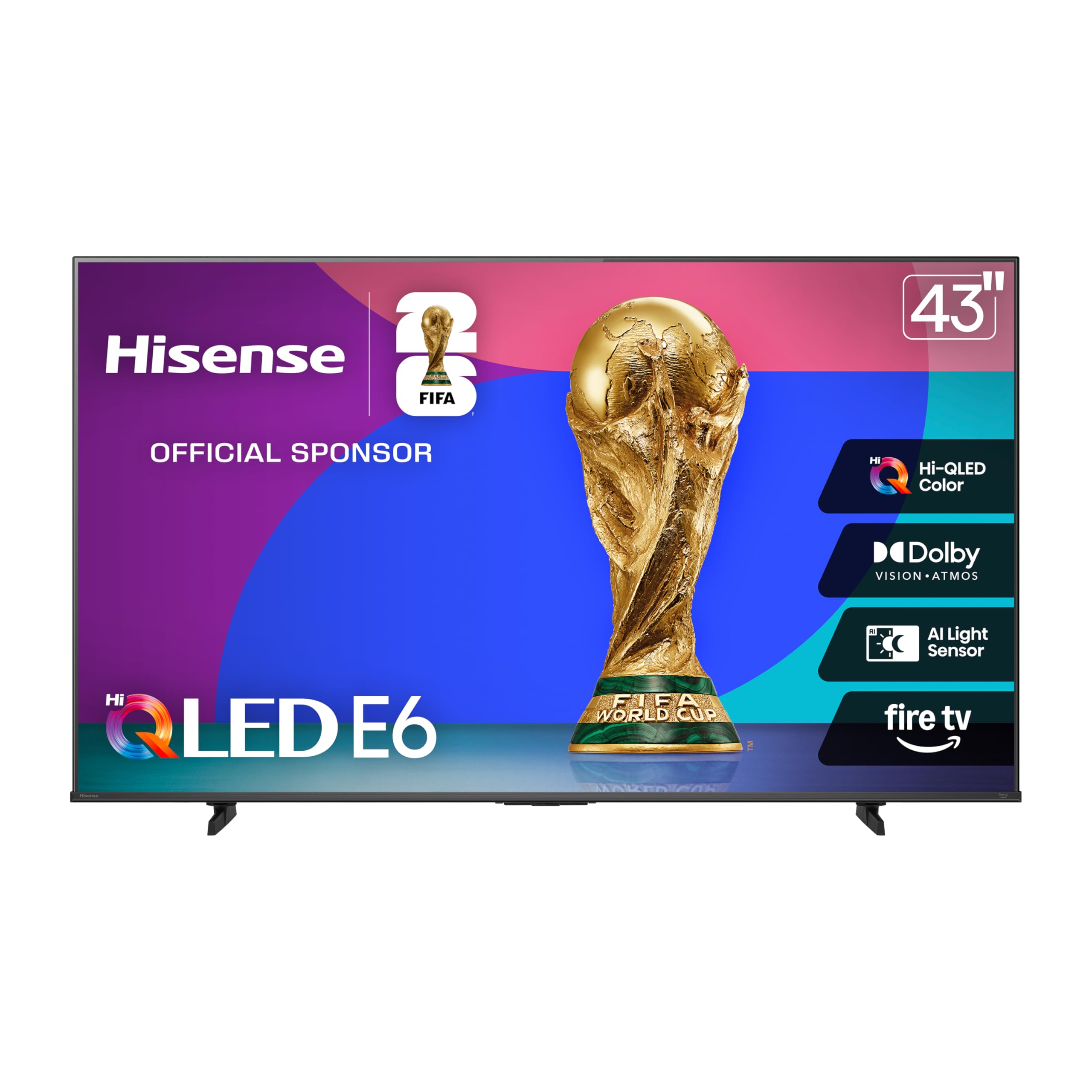
The Hisense E6 Cinema Series brings Hi-QLED color technology and a full HDR format suite—including Dolby Vision, HDR10+ Adaptive, and HLG—to a very accessible price point. The Motion Rate 120 processing, while not a native 120Hz panel, enhances motion clarity for sports and fast-paced content beyond what a standard 60Hz set can manage. The Total HDR Solution ensures that dark scenes maintain deep blacks without crushing shadow detail, and the Dolby Vision and Dolby Atmos combination provides a cinematic experience for both gaming and streaming. The built-in Fire TV platform is snappy and responsive, with Alexa voice control integrated into the remote.
For the budget-conscious gamer who primarily plays single-player titles and values HDR picture quality over competitive refresh rates, the E6 delivers impressive visual fidelity. The Hi-QLED quantum dots produce vibrant, punchy colors that make games like Horizon Forbidden West and Spider-Man look rich and lifelike. The 43-inch size is a versatile fit for smaller entertainment centers, and the thin bezel design gives the screen a modern, premium appearance. Setup is straightforward, and the Fire TV interface provides access to all major streaming apps without additional hardware.
The 60Hz panel is a hard limitation for gamers who play competitive shooters or racing sims at high frame rates—motion will appear less smooth than on a native 120Hz display. Some users report initial interface lag that resolves after a few days of use, as well as a preference for the Roku interface layout over Fire TV. A small number of units have exhibited app crashes and spontaneous app switching during the first week of use. For the price, the E6 offers strong HDR performance for non-competitive gamers who prioritize visual richness over raw speed.
Why it’s great
- Hi-QLED quantum dot technology delivers vibrant, wide-gamut colors that make HDR games and movies look rich and lifelike.
- Full HDR format support including Dolby Vision, HDR10+ Adaptive, and HLG ensures compatibility with all major content sources.
- Integrated Fire TV platform with Alexa voice control provides a smooth, feature-rich streaming experience out of the box.
Good to know
- 60Hz native panel limits smoothness for competitive gaming at high frame rates; Motion Rate 120 is processing, not native.
- Some units exhibit app crashes and spontaneous app switching during initial use, though these often stabilize over time.
9. VIZIO V-Series 50″ 4K (V4K50C-0809)

The VIZIO V-Series serves as a capable entry point for gamers who are building their setup on a strict budget and need a large screen without sacrificing HDR formats. The 50-inch 4K UHD display supports Dolby Vision, HDR10+, and HLG, ensuring that HDR content from streaming services and consoles displays correctly. The built-in DTS Virtual X processing widens the soundstage from the integrated speakers, and the WiFi 6 dual-band connectivity provides faster, more reliable streaming than older Wi-Fi standards. The V-Gaming Engine includes Auto Low Latency Mode and HDMI VRR, which reduce input lag and screen tearing when gaming on compatible consoles.
For casual gamers who primarily play single-player titles, sports games, or older console generations, the V-Series offers a solid, no-frills experience. The Vizio WatchFree+ platform provides over 150 free channels without any subscription, making it easy to access live TV and news. The 50-inch screen size works well in medium-sized living rooms or bedrooms, and the dual-band WiFi 6 ensures smooth 4K streaming even in homes with multiple connected devices. The Bluetooth 5.3 support allows for private listening with wireless headphones, a considerate feature for late-night gaming sessions.
The most significant caveat is the 60Hz native refresh rate—the product listing has caused confusion by referencing 120Hz in descriptions, but the panel is natively 60Hz. This means fast-paced sports and competitive shooters will exhibit motion blur and choppiness compared to true high-refresh displays. The picture quality is described by some users as merely adequate, with less vibrant color saturation and contrast than QLED competitors. The on-board sound also has a tendency to distort when the volume is raised significantly. For purely casual use within its limitations, the V-Series provides good value.
Why it’s great
- Dolby Vision, HDR10+, and HLG support ensures proper HDR handling for all major formats at a very accessible price point.
- Dual-band WiFi 6 provides faster and more stable streaming connectivity compared to older Wi-Fi 5 standards.
- Bluetooth 5.3 support enables private wireless headphone listening for late-night gaming without disturbing others.
Good to know
- 60Hz native panel causes motion blur and choppiness in fast-paced sports and competitive shooters.
- Product description confusion around refresh rate leads to buyer disappointment; verify it is a 60Hz panel before purchase.
10. Samsung 43″ Mini LED M70H Series (2026 Model)
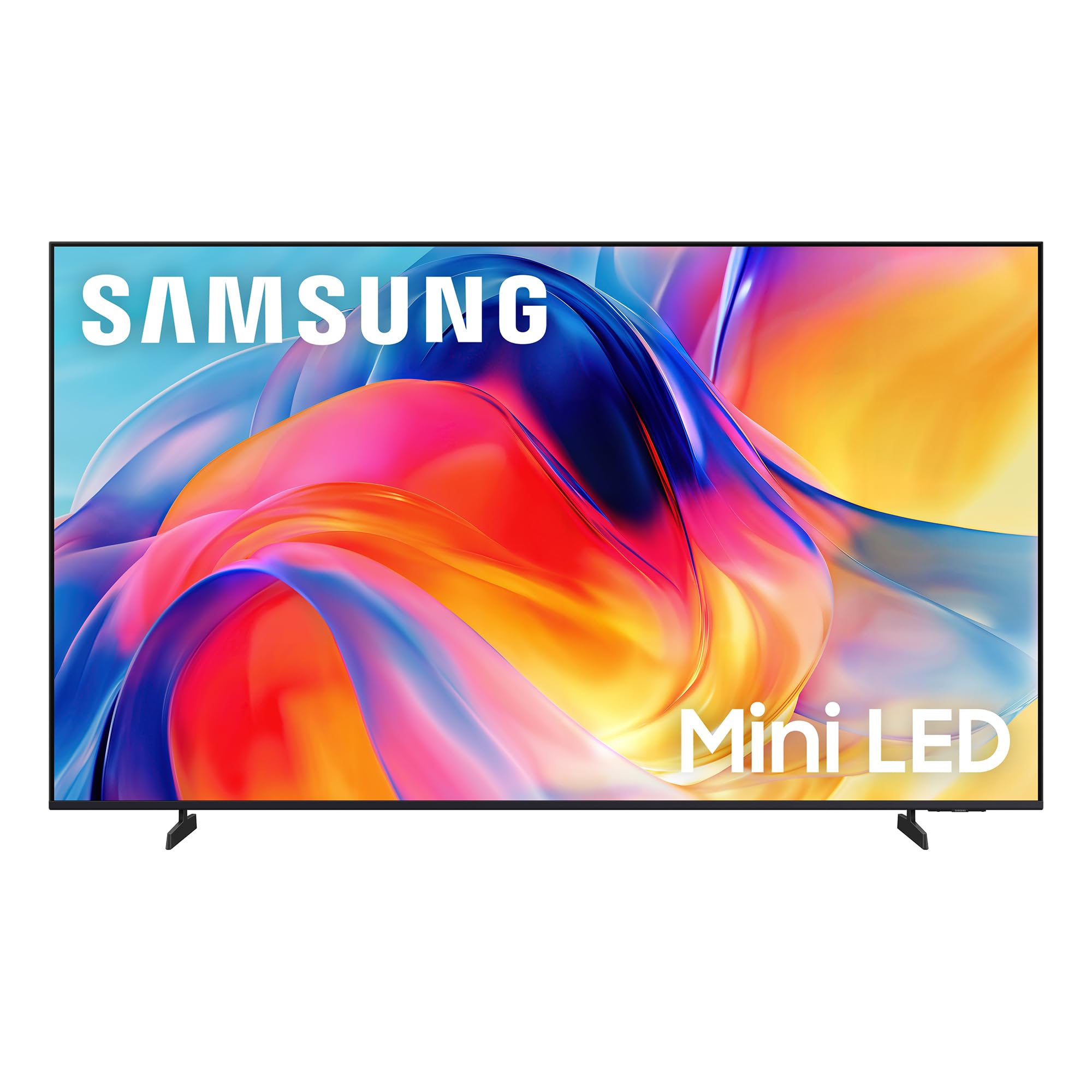
The Samsung M70H Series brings Mini-LED backlighting and the Vision AI processing down to a 43-inch form factor, producing deeper blacks and brighter highlights than standard LED sets. The Mini LED Processor 4K dynamically analyzes content to optimize color, contrast, and clarity, and the Pure Spectrum Color technology delivers a claimed one billion true-to-life colors. The Motion Xcelerator with DLG 120Hz provides a 120Hz-class experience via dynamic frame insertion, though it’s important to note this is not a native 120Hz panel—the base refresh rate is 60Hz. The Supreme Mini LED Dimming system provides decent local dimming for the panel size, and the Color Booster feature adds intensity to reds and blues for a more vibrant image.
For the mixed-use buyer who watches sports, streams movies, and games casually, the M70H offers strong all-around performance. Samsung’s Soccer Mode specifically optimizes motion handling and green saturation for football matches, making it a great choice for sports fans. The Gaming Hub consolidates console, cloud, and app-based gaming services into a single interface, and the included Samsung TV Plus provides thousands of free channels. The Titan Black finish and slim profile give the TV a clean, premium aesthetic that fits well in modern living rooms.
The 60Hz base refresh rate is the primary limitation for competitive gaming—while DLG technology helps with motion clarity, it cannot match a native 120Hz or 144Hz panel. The remote control has been noted to have weak signal strength, requiring direct line-of-sight to register inputs, and the startup time can be sluggish at 10–12 seconds. Some users find that the TV defaults to Samsung TV Plus instead of the last used input, requiring a deep menu navigation to change the default behavior. For the buyer who wants Mini-LED contrast in a compact size with excellent smart TV features, the M70H is a solid mid-range option.
Why it’s great
- Mini-LED backlighting provides deeper black levels and brighter highlights than standard LED TVs at this price.
- Pure Spectrum Color with quantum dot technology delivers vibrant, accurate colors for HDR movies and games.
- Gaming Hub and Samsung TV Plus provide extensive gaming and free streaming content without separate subscriptions.
Good to know
- 60Hz native panel is the base; Motion Xcelerator DLG is processing enhancement, not a true native 120Hz display.
- Remote control has weak Bluetooth signal strength, requiring direct line-of-sight for reliable operation.
11. TCL 55″ Q65 QLED (55Q651G, 2024 Model)

The TCL Q65 QLED is the quintessential entry-level gaming TV for those who prioritize color volume and HDR support over high refresh rates. The QLED PRO quantum dot technology covers nearly the entire DCI-P3 color space, producing vibrant, punchy colors that make games and movies look significantly better than standard LED panels. The HDR PRO+ suite includes Dolby Vision, HDR10+, HDR10, and HLG, ensuring compatibility with all major HDR formats across streaming services and consoles. The TCL AIPQ Processor uses deep learning AI to optimize color, contrast, and clarity in real time, and the Auto Game Mode (ALLM) automatically engages the lowest-lag picture setting when a console is detected.
For the gamer on the tightest budget who wants a large 4K screen with true HDR capability, the Q65 delivers solid performance. The 60Hz native panel is sufficient for single-player games, streaming, and casual console play, and the Motion Rate 240 with MEMC frame insertion smooths out motion better than a basic 60Hz display. The built-in Dolby Atmos audio processing and DTS Virtual:X provide a wider soundstage than typical TV speakers, and the Enhanced Dialogue Mode improves vocal clarity in games and movies. The Google TV interface provides access to thousands of apps, and the voice remote supports both Google Assistant and Alexa.
The 60Hz refresh rate is a firm ceiling for competitive or high-FPS gaming—players who enjoy fast-paced shooters or racing sims will notice motion blur. The Google TV interface, while functional, has drawn criticism from users who prefer Roku’s simpler layout, and the non-local-dimming QLED panel cannot produce the deep blacks of Mini-LED backlights. Some users have reported that the remote requires the TV to be powered on via the physical button before the voice remote can connect. For the budget-focused buyer who wants a large QLED screen with comprehensive HDR support for casual gaming and streaming, the Q65 is a solid value.
Why it’s great
- QLED PRO quantum dot technology delivers vibrant, wide-gamut color coverage that far exceeds standard LED panels.
- HDR PRO+ suite supports Dolby Vision, HDR10+, HDR10, and HLG for full HDR format compatibility.
- Auto Game Mode (ALLM) automatically engages the lowest-lag picture setting when a console is detected.
Good to know
- 60Hz native panel limits suitability for high-FPS competitive gaming; motion blur will be noticeable in fast-paced titles.
- Non-local-dimming QLED panel cannot produce the deep black levels and contrast of Mini-LED backlit competitors.
FAQ
Do I need a 120Hz TV for PS5 or Xbox Series X gaming?
What is the difference between QLED and Mini-LED for gaming?
Can I use a gaming TV as a computer monitor?
What does FreeSync Premium Pro certification add for gaming?
Final Thoughts: The Verdict
For most users, the best budget gaming tv winner is the Hisense 55″ U8 Series because it delivers a native 165Hz panel, up to 5,600 local dimming zones, and 5,000 nits peak brightness at a price that undercuts competitors by a substantial margin. If you want deep integration with the Amazon ecosystem and 144Hz gaming with 512 dimming zones, grab the Amazon Ember 55″ Mini-LED Series. And for the dedicated PS5 owner who needs exclusive console features and a compact 43-inch form factor, nothing beats the Sony BRAVIA 2 II.

Mo Maruf
I created WellFizz to bridge the gap between vague wellness advice and actionable solutions. My mission is simple: to decode the research and give you practical tools you can actually use.
Beyond the data, I am a passionate traveler. I believe that stepping away from the screen to explore new environments is essential for mental clarity and physical vitality.