Our readers keep the lights on and my smoothie glass nicely filled. As an Amazon Associate, I earn from qualifying purchases.
The moment you hit play on a new streaming release or drop into a fast-paced game on a budget TV is the moment you either feel satisfied or start noticing motion blur, washed-out blacks, and a clunky interface that kills the mood. Finding a true 4K screen that delivers crisp detail and reliable smart features without asking for flagship money requires separating the hype from the hardware that actually matters.
I’m Mohammad Maruf — the founder and writer behind WellFizz. I’ve spent hundreds of hours analyzing panel technologies, refresh rates, HDR formats, and smart platforms to pinpoint exactly where budget-friendly 4K TVs compromise and where they genuinely deliver for the price.
Whether you’re upgrading a secondary room or building your first home theater, this guide walks through every spec that separates a solid performer from a frustrating one so you can buy with confidence knowing exactly what you’re getting in a best budget 4k tv.
How To Choose The Best Budget 4K TV
Four key areas separate a reliable daily driver from a regret-inducing purchase. Focusing on panel technology, refresh rate, HDR support, and the smart platform will ensure the TV you pick aligns with how you actually watch or game.
Panel Technology: LED vs. QLED vs. Mini-LED
Standard LED backlighting is the baseline — acceptable for casual viewing but prone to uneven brightness and weaker contrast. QLED uses a quantum dot layer to boost color volume, producing richer, more accurate hues across a wider brightness range. Mini-LED takes this further by shrinking the backlight zones, allowing deeper blacks and far better local dimming for HDR content. In the budget bracket, QLED and Mini-LED models deliver a noticeably premium picture for only a modest increase in cost.
Refresh Rate and Motion Handling
Most budget models advertise a 60Hz native panel, which is fine for general streaming. For sports or console gaming, a native 120Hz or 144Hz panel eliminates blur during fast camera pans and quick movements. Entry-level TVs often inflate motion ratings using software tricks — always check the native refresh rate on the spec sheet rather than relying on “Motion Rate” or “Motionflow” numbers.
HDR Support: Dolby Vision vs. HDR10
HDR10 is the universal baseline, supported by nearly every TV. Dolby Vision adds scene-by-scene metadata for superior brightness and color grading, but requires both TV and source support. HDR10+ offers similar benefits but is less widespread. For the best picture on a budget, prioritize Dolby Vision compatibility — it’s more commonly used by major streaming platforms and creates a visible upgrade over standard HDR10.
Smart Platform and Usability
The operating system defines your daily experience. Roku is the gold standard for simplicity and responsiveness on a budget. Google TV and Fire TV offer deeper integration with voice assistants and more app flexibility but can feel slower on lower-end hardware. Vizio’s SmartCast interface has improved but still lags in polish. Choose based on whether you value speed and simplicity over customization and ecosystem features.
Quick Comparison
On smaller screens, swipe sideways to see the full table.
| Model | Category | Best For | Key Spec | Amazon |
|---|---|---|---|---|
| Samsung Q80F | QLED | Vivid color & gaming | 4K 144Hz QLED | Amazon |
| Amazon Ember Mini-LED | Mini-LED | Deep blacks & brightness | QLED Mini-LED 144Hz | Amazon |
| TCL T7 | QLED | Smooth motion & gaming | QLED 120Hz MEMC | Amazon |
| iFFALCON 55U85 | Mini-LED | Gaming & hotel use | Mini-LED 144Hz 6000:1 | Amazon |
| Roku Plus Series | Mini-LED | Easy streaming & Roku fans | Mini-LED QLED 4K | Amazon |
| Sony BRAVIA 2 50″ | LED | PS5 & reliable upscaling | 4K X1 Processor | Amazon |
| Sony BRAVIA 2 43″ | LED | Compact PS5 gaming | 4K X1 Processor | Amazon |
| Roku Select Series | QLED | Value & simple interface | QLED 4K 60Hz | Amazon |
| VIZIO V-Series | LED | Entry-level 4K & Free TV | 4K LED 60Hz | Amazon |
In‑Depth Reviews
1. Samsung QLED Q80F

Samsung’s Q80F is a mid-range QLED that punches above its class with 100% color volume from Quantum Dots, meaning colors stay vibrant even in bright-room viewing. The 4K AI processor analyzes content in real-time to boost clarity and adjust sound, making lower-resolution streams look sharper than you’d expect from a budget-friendly panel.
The 144Hz native refresh rate with VRR support ensures tear-free motion, whether you’re watching fast-paced sports or connecting a gaming PC. Reviewers consistently praise the crisp, accurate picture and the solar-powered remote that eliminates battery swaps — a thoughtful touch that reduces long-term waste.
Sound quality is decent for built-in speakers, though some users note a lack of bass depth that an external soundbar easily solves. The Samsung Tizen platform offers smooth navigation and solid app selection, but lacks the simplicity of Roku. Overall, this is the balanced performer for those who want premium visuals without jumping to the highest price tier.
Why it’s great
- Exceptional color accuracy and brightness across all lighting conditions
- High 144Hz refresh rate with VRR for zero screen tearing during gaming
- Solar-powered remote reduces battery waste
Good to know
- Built-in sound lacks richness; a soundbar upgrade is recommended
- TV is heavy and requires care during setup
2. Amazon Ember Mini-LED Series
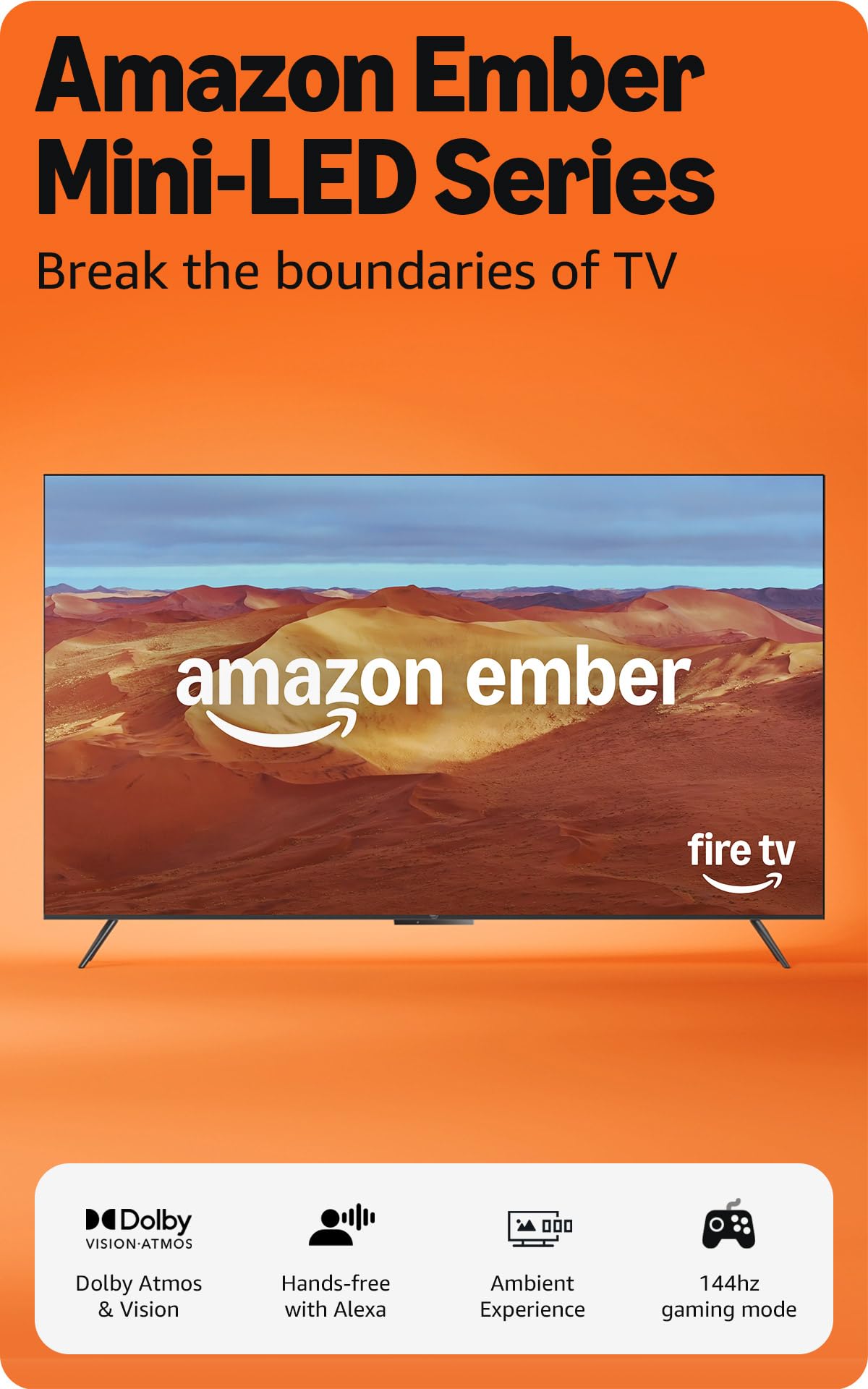
The Amazon Ember Mini-LED Series sits at the top of the budget spectrum, packing 512 dimming zones into a QLED Mini-LED panel that delivers near-OLED black levels. With peak brightness reaching 1,400 nits and Dolby Vision IQ adapting to room lighting, HDR content looks genuinely striking — a rare sight at this price point.
Gamers benefit from the 144Hz panel with AMD FreeSync Premium Pro certification, ensuring smooth, tear-free frames without input lag. The built-in 2.1-channel Dolby Atmos audio includes a subwoofer that produces real bass, reducing the immediate need for external speakers in most rooms.
The Fire TV interface is feature-rich with Alexa voice control and hands-free wake, but some users report occasional lag and menu slowdowns after updates. The home screen also pushes Amazon recommendations heavily. For pure picture quality and gaming performance, this is the top performer among the mid-range and premium contenders.
Why it’s great
- Stunning 1,400-nit peak brightness with 512 dimming zones for deep blacks
- 144Hz FreeSync Premium Pro delivers elite gaming performance
- Built-in subwoofer produces impressive sound without a soundbar
Good to know
- Fire TV interface can feel sluggish after software updates
- Home screen is cluttered with Amazon ads and recommendations
3. TCL T7 QLED

TCL’s T7 is an Amazon-exclusive QLED that covers nearly the entire DCI-P3 color gamut, producing rich, lifelike hues that rival more expensive sets. The 120Hz native panel with MEMC frame insertion ensures motion stays fluid during action scenes and live sports — a key differentiator from typical 60Hz budget TVs.
The AIPQ Pro Processor intelligently optimizes contrast and sharpness, and Dolby Vision support means streaming content in HDR looks noticeably better than on HDR10-only models. Google TV interface is clean and responsive, with Chromecast and AirPlay 2 built-in for easy casting from any device.
Some buyers note that glare can be an issue in brightly lit rooms due to the glossy screen finish. The built-in speakers are adequate but lack the fullness of a dedicated audio solution. For those wanting QLED color accuracy and high-frame-rate motion without going premium, the T7 is a standout value option.
Why it’s great
- Wide color gamut coverage delivers vibrant, accurate QLED picture quality
- 120Hz native refresh rate with MEMC for butter-smooth motion
- Dolby Vision and Google TV provide premium features at a low cost
Good to know
- Screen glare can be noticeable in bright rooms
- Speakers are acceptable but benefit from external audio
4. iFFALCON 55U85 Mini-LED
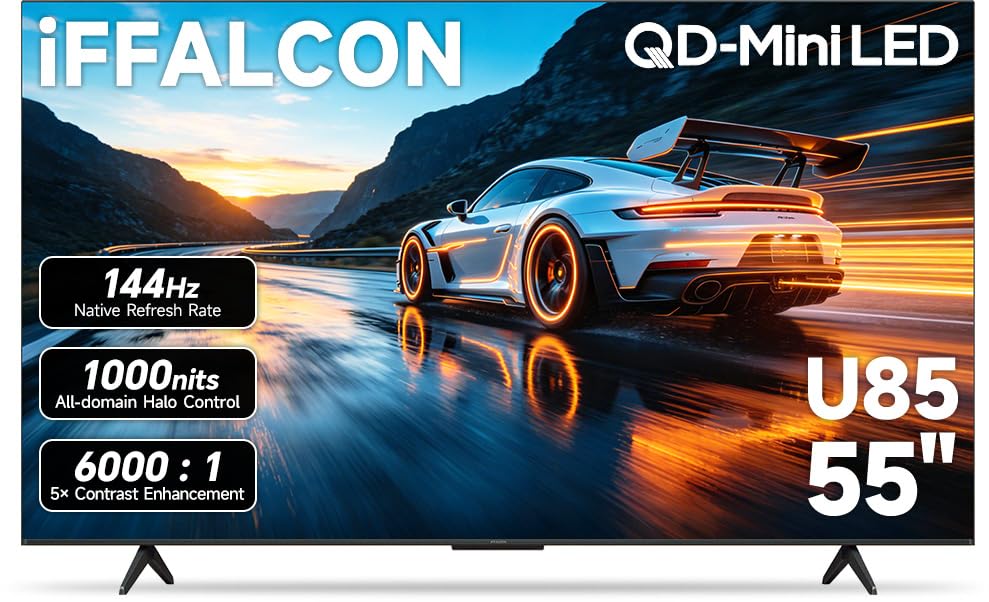
The iFFALCON 55U85 is a Mini-LED powerhouse with a native 144Hz panel and VRR stretching to 240Hz, making it one of the fastest budget displays available. The 6,000:1 contrast ratio and 1,000-nit peak brightness deliver deep blacks and punchy highlights in HDR gaming and movie content.
Four HDMI 2.1 ports — two supporting 4K 144Hz — allow simultaneous connection of a PS5, Xbox Series X, PC, and soundbar without sacrificing performance. The built-in 50W 2.1-channel audio system with Dolby Atmos and DTS Virtual:X provides room-filling sound that eliminates the immediate need for an external setup.
Google TV runs smoothly with minimal bloat, and the inclusion of hotel mode and IP control makes it uniquely suited for commercial or Airbnb installations. Some users note the chassis is slightly thicker than ultra-slim competitors, but the feature density at this price point is hard to match for dedicated gamers.
Why it’s great
- Ultra-fast 144Hz panel with VRR up to 240Hz for competitive gaming
- Four HDMI 2.1 ports allow full multi-console setups
- Powerful 50W built-in audio with Dolby Atmos and DTS Virtual:X
Good to know
- Physical design is slightly thicker than some premium competitors
- Full retail price approaches baseline OLED territory
5. Roku Plus Series Mini-LED
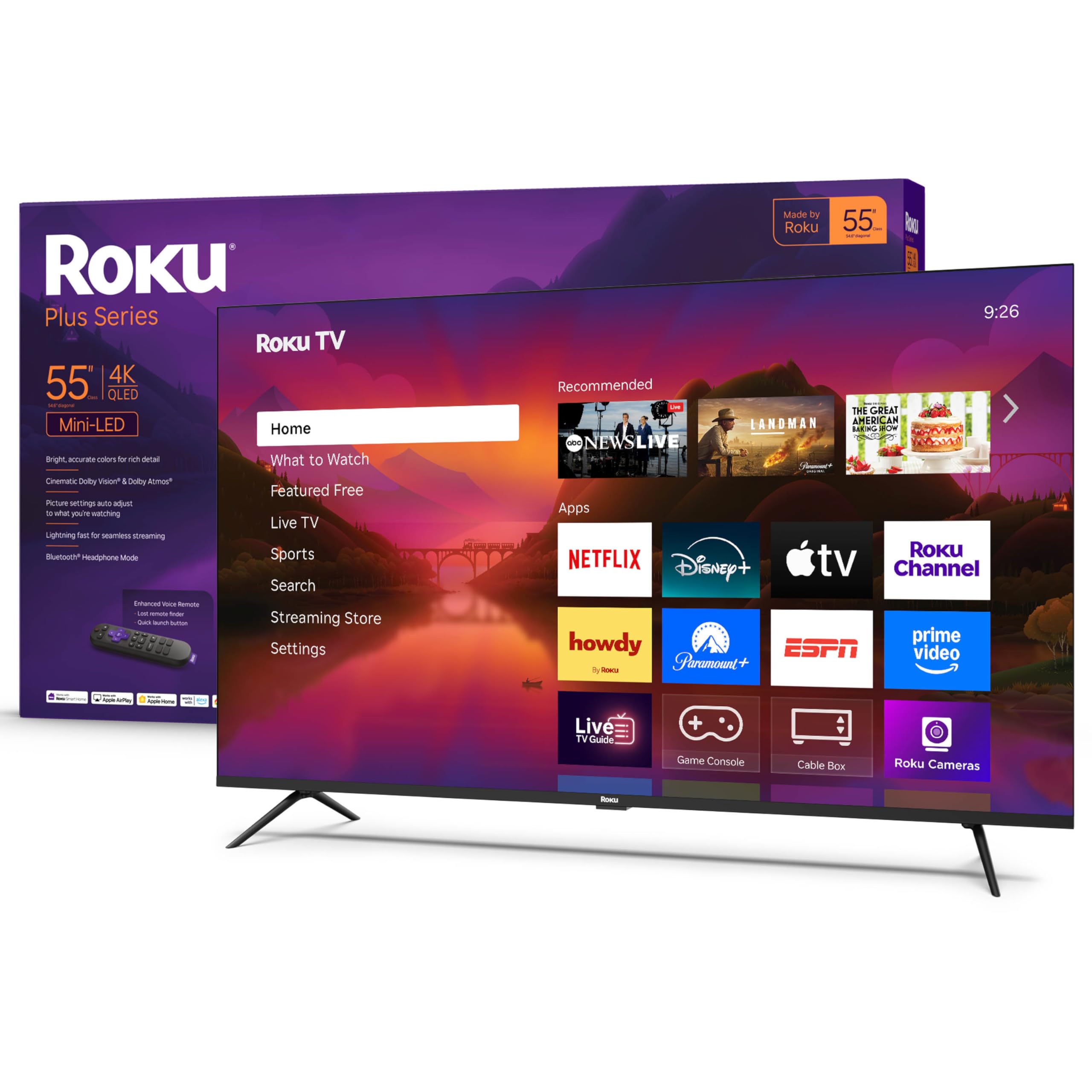
Roku’s Plus Series brings Mini-LED backlighting and QLED color to the famously simple Roku platform. Dolby Vision support and AI-driven Smart Picture Max processing automatically refine brightness and sharpness scene by scene, so you get a consistently polished image without fiddling with settings.
The included Enhanced Voice Remote features a lost remote finder and programmable shortcuts, and Bluetooth Headphone Mode lets you listen privately — ideal for shared living spaces. Built-in Dolby Atmos audio with a subwoofer produces surprisingly full sound for a TV at this level.
Roku’s interface remains the most intuitive and ad-light among smart platforms, making this a great choice for less tech-savvy users or families who want straightforward access to streaming. The main downside is the lack of a USB-C port, which some users note limits direct media playback options.
Why it’s great
- Effortless Roku interface with minimal learning curve
- Mini-LED backlighting with Dolby Vision produces excellent contrast
- Bluetooth headphone mode enables private listening
Good to know
- No USB-C port for direct media file connections
- Settings menu is basic compared to competitors
6. Sony BRAVIA 2 50″
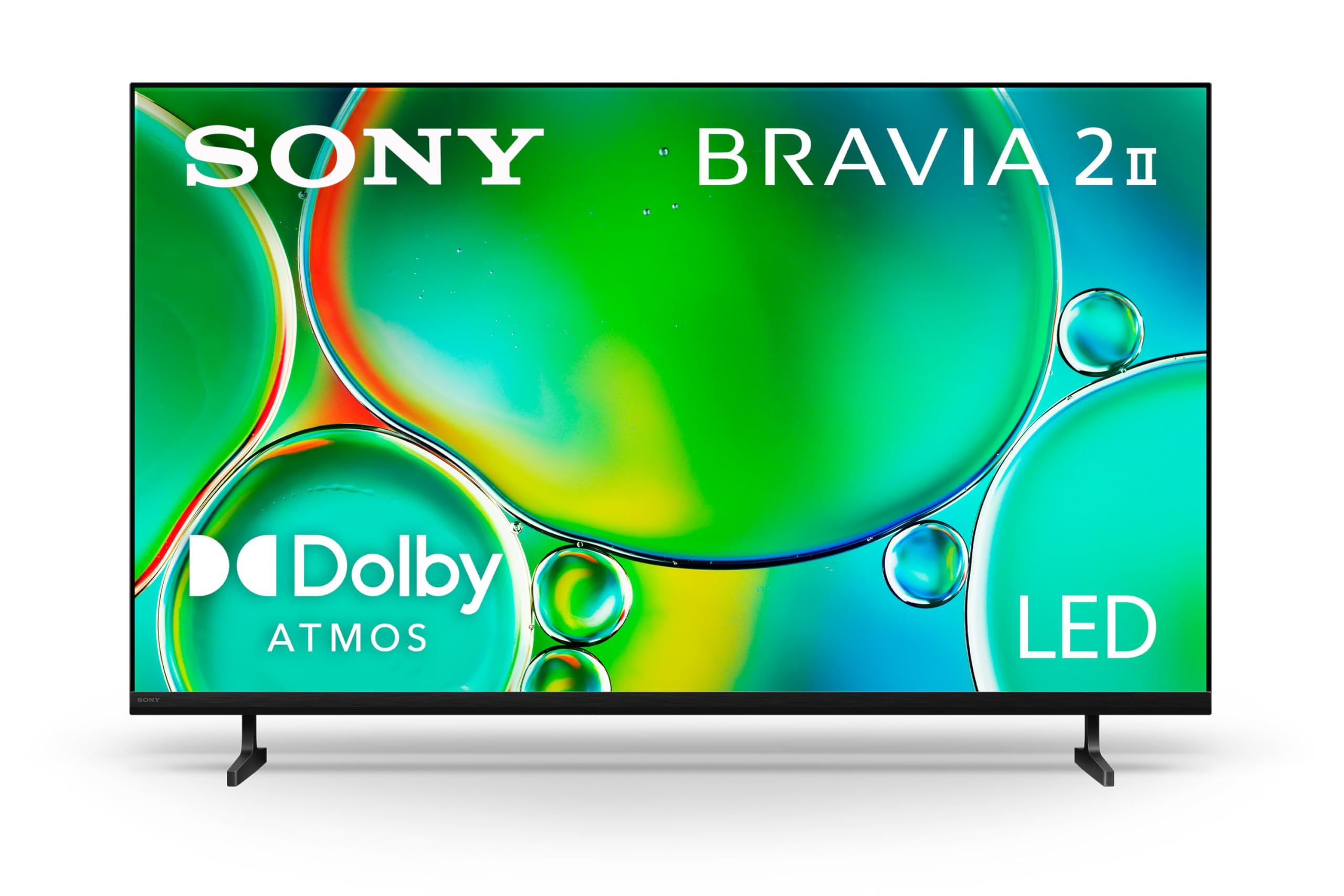
Sony’s BRAVIA 2 series delivers the company’s renowned 4K X1 Processor at a mid-range price, providing excellent upscaling that makes 1080p and 720p content look surprisingly close to native 4K. Motionflow XR keeps fast-moving scenes blur-free, and the exclusive PS5 integration — Auto HDR Tone Mapping and Auto Genre Picture Mode — makes it a perfect companion for Sony’s console.
The Google TV platform offers a wide app selection with Apple AirPlay 2 and Google Cast support, and the Eco Dashboard helps manage power consumption. Reviewers consistently praise the natural color reproduction and sharp detail, often calling it an excellent value for the price.
However, some users report that the TV boots directly to the menu rather than the last-used input, which can be annoying for those using antenna or cable sources. A small number of buyers experienced freezing or WiFi dropouts, though this appears to be occasional unit variation rather than a widespread flaw.
Why it’s great
- Superior 4K upscaling brings lower-resolution content to near-4K quality
- Exclusive PS5 features optimize HDR and picture mode automatically
- Power-efficient design uses significantly less energy than older LCDs
Good to know
- Boots to menu instead of last input, requiring navigation for antenna use
- A small number of units reported freezing or WiFi issues
7. Sony BRAVIA 2 43″
The 43-inch Sony BRAVIA 2 shares the same 4K X1 Processor and PS5-exclusive features as its larger sibling, making it an ideal fit for smaller spaces like bedrooms, dorm rooms, or gaming desks. The LED panel delivers natural colors and dynamic contrast, and Motionflow XR ensures smooth playback across all content types.
Google TV provides a rich app ecosystem, and the inclusion of Sony Pictures CORE gives access to movies for free. The compact size and low power draw — under 100 watts during typical use — make it an economical choice for secondary rooms that still want solid picture quality.
User feedback mirrors the 50-inch version: excellent clarity and reliable performance for the price, with the same caveat about the input boot behavior. The smaller screen makes it less ideal for group movie watching but perfect for dedicated gaming setups or tight budgets.
Why it’s great
- Same powerful 4K X1 Processor and PS5 features in a compact size
- Very energy-efficient design, running under 100 watts
- Great value for a dedicated gaming or bedroom TV
Good to know
- 43-inch size limits immersion for living room setups
- Same menu boot behavior as the 50-inch version
8. Roku Select Series QLED
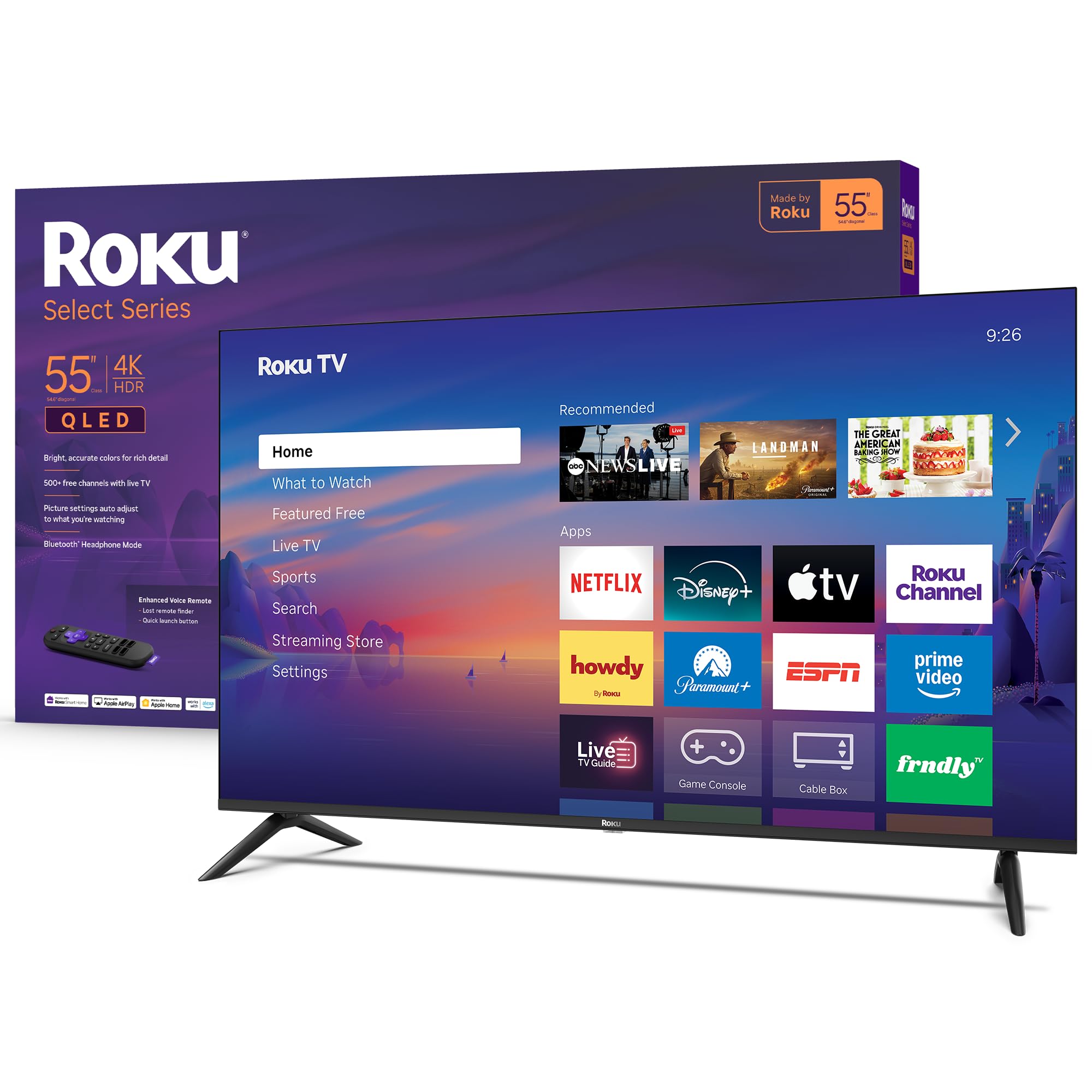
The Roku Select Series is a budget-friendly entry point into 4K QLED that prioritizes simplicity above all else. The QLED panel with HDR10 produces bright, accurate colors that look notably better than standard LED screens at the same price tier, making it a strong baseline choice for casual viewers.
Roku’s interface is famously fast and easy to navigate, with automatic updates and a home screen that puts apps front and center without bloat. The Voice Remote includes a lost remote finder, and Bluetooth headphone mode lets you watch without disturbing others — practical features that enhance everyday use.
The 60Hz panel limits motion handling during fast sports or gaming, and the Direct LED backlighting lacks the local dimming found on Mini-LED competitors. For living rooms where simplicity and budget are the top priorities, this TV delivers reliable 4K performance without complexity.
Why it’s great
- Excellent value for a QLED 4K screen at the entry level
- Roku OS is the best smart platform for speed and ease of use
- Bluetooth headphone mode offers private listening without extra gear
Good to know
- 60Hz panel limits motion clarity for sports and gaming
- No local dimming zones for deeper black levels
9. VIZIO V-Series 4K

The VIZIO V-Series offers a no-frills LED 4K panel with Dolby Vision HDR support at the most accessible price point. The IQ Active Processor handles basic picture optimization, and the Full Array LED backlighting delivers uniform brightness across the screen — a solid baseline for streaming and cable viewing.
WatchFree+ provides 250+ free live channels, making this a strong choice for cord-cutters who want to avoid subscription costs. WiFi 6E support ensures smooth streaming, and VRR compatibility with AMD FreeSync helps reduce screen tearing during casual gaming sessions.
The SmartCast interface is less polished than Roku or Google TV, requiring more clicks to access antenna channels, and some users are frustrated by the lack of an Ethernet port despite the listing mentioning it. The 60Hz panel also limits motion performance. Still, for the lowest entry cost into 4K with Dolby Vision, it gets the job done.
Why it’s great
- Lowest-cost entry point with Dolby Vision HDR support
- Free 250+ channel WatchFree+ service reduces streaming costs
- WiFi 6E provides modern wireless connectivity
Good to know
- No Ethernet port despite product claims; Wi-Fi only
- SmartCast interface requires extra steps for antenna use
FAQ
Can a budget 4K TV deliver good HDR performance?
What refresh rate do I need for a budget gaming TV?
Which smart platform is easiest to use on a budget TV?
Does every budget 4K TV support PlayStation 5 or Xbox features?
Final Thoughts: The Verdict
For most users, the best budget 4k tv winner is the Samsung QLED Q80F because it blends vibrant QLED color, a high 144Hz refresh rate, and reliable smart features into a package that works well for both streaming and gaming without crossing into premium pricing. If you want deep black levels and near-OLED contrast, grab the Amazon Ember Mini-LED Series. And for the best gaming performance with four HDMI 2.1 ports and a fast Mini-LED panel, nothing beats the iFFALCON 55U85.

Mo Maruf
I created WellFizz to bridge the gap between vague wellness advice and actionable solutions. My mission is simple: to decode the research and give you practical tools you can actually use.
Beyond the data, I am a passionate traveler. I believe that stepping away from the screen to explore new environments is essential for mental clarity and physical vitality.