Our readers keep the lights on and my smoothie glass nicely filled. As an Amazon Associate, I earn from qualifying purchases.
The wrong brick in a fire pit doesn’t just crack — it can spall, crumble, and compromise the entire structure, leaving you with a dangerous mess instead of a warm evening. The difference between a fire pit that performs season after season and one that fails halfway through the first autumn is almost always the brick you chose to line it with.
I’m Mohammad Maruf — the founder and writer behind WellFizz. I’ve spent hundreds of hours analyzing material compositions, temperature ratings, and real-world feedback to separate the bricks worth installing from the ones that waste your time.
Whether you need replacement bricks for a wood stove, a kiln shelf, or a backyard fire ring, you need the right refractory material for the job. This guide breaks down everything you need to confidently choose the best bricks for fire pit builds and repairs.
How To Choose The Best Bricks For A Fire Pit
Fire pit bricks aren’t just decorative — they are a thermal barrier that protects your outer shell and radiates heat where you want it. The wrong choice leads to cracking, spalling, and poor heat retention. Here are the three things you must evaluate before you buy.
Material Composition: Fireclay vs. Insulating vs. Pressed Composite
Fireclay bricks (chamotte) are dense, heavy, and can withstand extreme heat up to 3000°F. They hold heat and conduct it, making them ideal for forge floors and high-contact fireboxes. Insulating bricks made from alumina and silica are lightweight, designed for thermal efficiency in kilns and ovens, and cut easily with hand tools. Pressed vermiculite blocks fall somewhere in the middle — they reflect heat and are lighter than fireclay but require heat treatment after first installation and cannot get wet before their first firing. The material you choose determines where and how you can install the brick.
Temperature Rating: 2200°F vs. 2300°F vs. 3000°F
A standard residential wood stove or backyard fire pit typically runs between 800°F and 1200°F at the firebox floor. Most fire bricks from Amazon are rated 2200°F or 2300°F — more than adequate for these applications. Forges, blacksmithing, and ceramic kilns demand higher refractoriness, often 2600°F to 3000°F. Ignoring the rating is a common mistake. Bricks rated for 2200°F are not waterproof and are intended for indoor or protected outdoor stoves. If your pit sits directly in the rain, you need a solid fireclay brick or a cover solution.
Installation and Fit: Cutting, Moisture, and Mortaring
Not all bricks are the same size. The standard dimension for most wood stove and fire pit replacements is 9″ x 4.5″ x 1.25″. Thicker bricks like 2.5″ are available for specialized high-heat applications. You will likely need to cut bricks to fit your firebox. Insulating bricks (alumina-silica) cut easily with a wood saw or skill saw. Fireclay bricks require a masonry blade or chisel. Before installation, always moisten the contact surface if using refractory mortar — never use standard cement mix, as it will fail under high heat. And if your brick is vermiculite pressed block, you must follow the heat treatment protocol: a low burn cycle first to harden the binder before full use.
Quick Comparison
On smaller screens, swipe sideways to see the full table.
| Model | Category | Best For | Key Spec | Amazon |
|---|---|---|---|---|
| CFKJ 12-Piece Insulating | Alumina-Silica | High-temp kilns, forges, fireplace lining | 2300°F rated, 1.25″ thick | Amazon |
| GIRtech USM-5 | Fireclay | Heavy-duty forges, BBQ pits, wood stoves | 2760°F rated, 5-pack | Amazon |
| Protalwell 12-Pack | Vermiculite | Wood stove replacement, stable firebox floor | 2200°F rated, 1.25″ thick | Amazon |
| YANRUIPRO 12-Pack | Clay | Wood stoves, indoor fireplaces, fire pit lining | 2200°F rated, 12.0 count | Amazon |
| dndsim 12-Pack | Vermiculite | Budget wood stove floor, maple evaporator | 2200°F rated, 1.25″ thick | Amazon |
| BLQH 12-Piece Insulating | Alumina-Silica | Kiln bracing, outdoor fireplaces, wood stove repair | 2300°F rated, 1.25″ thick | Amazon |
| Lynn Manufacturing 3123T | Alumina-Silica | Kilns, lost wax burnout, jewelry soldering | 2300°F rated, 2.5″ thick | Amazon |
In‑Depth Reviews
1. CFKJ 12-Piece Insulating Fire Brick

This 12-pack of insulating fire bricks from CFKJ hits a sweet spot for anyone building or repairing a kiln, forge, or fireplace. The alumina-silica composition keeps the bricks lightweight — about 2.1 lbs each — while delivering a 2300°F rating that handles a wood stove’s hottest burn without degrading. Customers report using them successfully in a charcoal grill bottom after six months of intense heat, noting they held up without crumbling. The bricks are easy to cut with a wood saw or jigsaw, which is critical when custom-fitting a non-rectangular firebox.
Several buyers also used these bricks to line a Traeger pellet smoker, claiming they stabilized temperature swings even in 20°F wind. The 9″ x 4.5″ x 1.25″ dimensions match the standard replacement size for most wood stove and fireplace inserts, so if you’re swapping out old cracked bricks, these will slide right in.
One note from a forge user: the bricks are light and somewhat brittle. If you plan to stack them or rest heavy steel on them, you may want a denser fireclay product. But for insulating a firebox, reflecting heat, or upgrading a smoker’s thermal mass, these are a strong mid-range pick.
Why it’s great
- High 2300°F rating for most domestic heating and forge work
- Very easy to cut with standard woodworking tools
- Delivered well-packaged with minimal breakage
Good to know
- Brittle when handled roughly; may crumble if repeatedly moved
- Not as dense as traditional fireclay; not ideal for direct heavy impact
2. GIRtech USM-5 Heavy Duty Firebricks

If your fire pit or forge sees industrial-level heat, the GIRtech USM-5 5-pack offers a 2760°F refractoriness that few other bricks at this size match. These are dense fireclay chamotte bricks — not lightweight insulators — built for the floor of a forge, the interior of a steel furnace, or a BBQ pit firebox that needs to hold heat without disintegrating. Users have dropped them into a Lopi Revere wood stove and a custom BBQ pit, where they helped control smoking temperatures. The thermal conductivity is intentionally enhanced, meaning heat transfers through the brick efficiently rather than just reflecting.
A key detail from the manufacturer: these bricks require a fireclay or alumina mortar for installation. Cement mixes will fail under high heat. You also need to moisten the contact surface before laying. This isn’t a straight drop-in product for a prefab fireplace — it’s designed for builds where you control the mortar bed. The bricks can be cut with a special tool, but don’t expect to score them with a utility knife; fireclay is hard.
Some buyers note that the 1.25″ thickness feels thin compared to traditional full-size firebricks, but the dense material makes them feel solid. One minor edge chip during shipping is common due to weight (4 lbs per brick), but reviewers confirm the bricks function perfectly even with small corner loss. If you need a true heavy-duty refractory floor for extreme heat, this 5-pack is a premium choice.
Why it’s great
- Extreme 2760°F rating suitable for forges and furnaces
- Dense fireclay construction for durability under heavy loads
- Improved thermal conductivity for efficient heat transfer
Good to know
- Only 5 bricks per pack; you may need multiple packs for larger builds
- Requires refractory mortar — not a dry-fit product
- Brittle corners; may arrive with minor chips
3. Protalwell 12-Pack Woodstove Firebricks

Protalwell’s 12-pack of vermiculite firebricks is designed as a direct replacement for the US Stove FBP6 and Harman service part 1-00-900450125. The vermiculite pressed composite is lighter than fireclay, easier to cut, and less brittle once heat-treated. Customers report rebuilding a 1920s Montgomery Ward Bengal Stove firebox with these bricks, using a jigsaw to shape them without crumbling. Two years of use with no issues is a common durability report. The flat surface finish ensures a flush installation that leaves no gaps in the combustion chamber floor.
The key caution with vermiculite bricks is moisture: they are not waterproof and should not be used outdoors. If your fire pit is uncovered, you need a fireclay option or a cover. These are strictly for indoor wood stoves or protected fireplaces. The 2200°F rating is fine for wood combustion but not for forges or blacksmithing — the manufacturer explicitly warns against use in forging ovens. One buyer had half the pack arrive broken during UPS shipment, but the replacement (shipped via postal service) arrived intact. Order with a backup plan if your delivery service is rough.
For a straightforward, reliable replacement of old stove bricks, this 12-pack offers good value without the weight of full fireclay. The pressed composite doesn’t peel or spall like clay bricks can, and the lightweight nature makes installation a one-person job.
Why it’s great
- Lightweight vermiculite composite easy to cut with a jigsaw
- Flat surface for gap-free installation in wood stoves
- Direct replacement for common US Stove and Harman parts
Good to know
- Not waterproof; do not use in uncovered outdoor pits
- Not rated for forges or blacksmithing applications
- Shipping breakage reported; consider ordering a spare pack
4. YANRUIPRO 12-Pack Fire Bricks
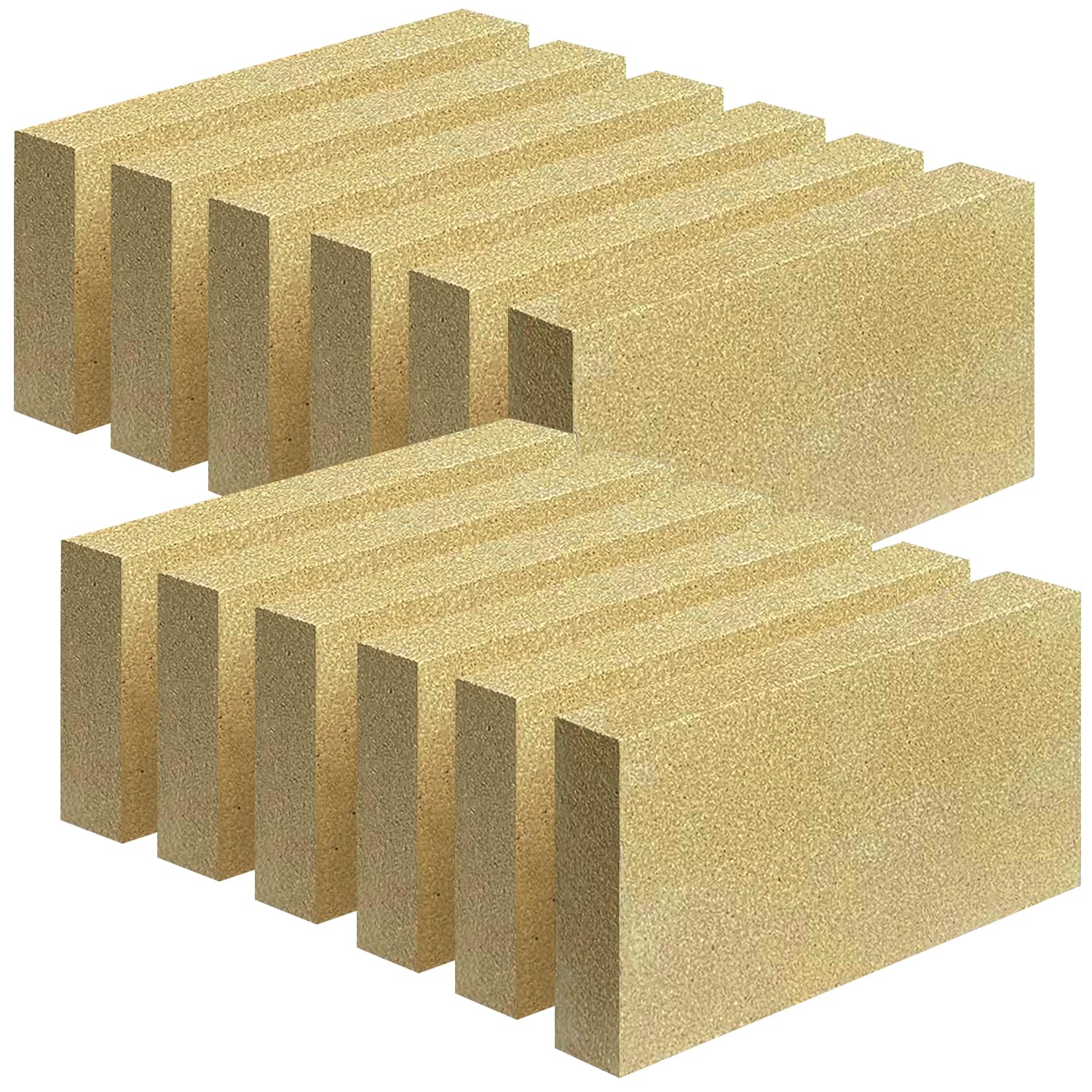
YANRUIPRO’s 12-pack of clay fire bricks is aimed squarely at wood stove and fireplace owners who want a dense, durable lining. These are not insulating bricks — they are made from high-quality clay that holds heat and stands up to prolonged high temperatures. Customers have used them under a Breeo fire pit with sand and insulation, reporting no black marks or surface damage after several burns. The bricks are easy to cut with a wood saw, though they are brittle when broken, so score-and-snap methods work best. One reviewer noted they are heavier than budget composite bricks and require a respirator when cutting due to dust.
Durability is where these bricks separate from cheaper alternatives. One buyer explicitly states that these are superior quality to other brands he tried, holding the weight of hardwood logs without needing extra bricks underneath. Another reviewer replaced cheaper bricks that failed before winter ended, switching to this YANRUIPRO set for longer life. The 2200°F rating is adequate for a standard wood fire pit, but the manufacturer explicitly states these are not for forging ovens. They are also not waterproof, so indoor or covered use only.
A single concern from buyers: one brick arrived cracked in a few shipments despite good packaging. The company accepted returns, but delivery was described as slow. If you need bricks quickly, plan ahead or confirm the seller’s shipping method. Overall, these are a solid mid-range option for a firebox that demands a dense clay brick rather than a lightweight insulator.
Why it’s great
- Dense clay construction holds up under heavy hardwood logs
- Easy to cut with a saw for custom fits
- Better durability than budget composite bricks; longer service life
Good to know
- Not waterproof; must be used in covered stoves or pits
- Brittle — may crack if handled roughly or shipped poorly
- Some reports of slow delivery and a cracked brick in the box
5. dndsim 12-Pack Woodstove Firebricks

If you need a no-frills set of bricks for a wood stove firebox floor, the dndsim 12-pack gets the job done at an entry-level price point. Several customers have used these for two years without issues, replacing old broken bricks from a large burner that had been in service for a decade. The lightweight nature makes removal of old bricks and installation of new ones straightforward.
A critical detail from experienced buyers: these bricks require heat treatment after installation. They are vermiculite pressed blocks, not traditional fire bricks. If not heat treated first, they can disintegrate if they get wet. The manufacturer warns against getting them wet before the first firing. One reviewer specifically notes that after the curing burn, they hardened up nicely and have performed well. If you skip this step, you risk crumbling bricks on the first real fire.
The 9″ x 4.5″ x 1.25″ size matches the standard floor brick for most wood stoves. At just 1.21 lbs per brick, a single box covers 12 floor spaces. They are not intended for forge work or any application above 2200°F. For a simple, no-regret replacement in a residential wood stove or fireplace, these are a budget-friendly pick that works.
Why it’s great
- Lightweight — easy to cut and install in standard wood stoves
- Heat reflective design improves efficiency in evaporators and stoves
- Proven two-year durability under normal wood stove use
Good to know
- Requires heat treatment (curing burn) before full use
- Not waterproof; will disintegrate if exposed to moisture before first firing
- Not suitable for outdoor pit use or forge applications
6. BLQH 12-Piece Insulating Fire Brick

BLQH offers a 12-piece set of insulating fire bricks made from alumina and silica, rated to 2300°F. This set has earned strong reviews, with a 4.5-star average from 148 ratings, placing it at #9 in Firing Accessories on Amazon. Customers have used them to brace ceramic pieces in a kiln, restore a wood stove, and line an outdoor fireplace. The bricks are lightweight and easy to cut — one reviewer trimmed them with a putty knife for a perfect fit around a stove firebox. Another buyer installed them in an outdoor fireplace and praised the light weight, saying they were perfect for the application.
The 18.06 lbs total weight for the 12-brick pack means each brick weighs about 1.5 lbs, consistent with an insulating rather than dense fireclay product. Users who needed bricks for firing pottery in a kiln note that a bisque fire before use is recommended. One buyer used them to restore a wood stove, saying the size was exactly what was needed and that the bricks look great — no more broken, crumbling originals. The product dimensions are the standard 9″ x 4.5″ x 1.25″.
The only recurring observation is that these are not structural bricks — they are designed for insulation and bracing, not for load-bearing furnace floors. If you need to stack steel or hold heavy workpieces, look at a fireclay product. For insulating a firebox, lining a kiln, or refurbishing a stove that had old crumbling bricks, this BLQH set is a well-rated, reliable mid-range option.
Why it’s great
- High 2300°F rating with strong customer satisfaction (4.5 stars)
- Lightweight material easy to cut with hand tools
- Versatile — works for kiln, fireplace, and wood stove applications
Good to know
- Not intended for load-bearing or heavy-impact use
- May require a bisque firing before use in a kiln
- Some deliveries may arrive with minor breakage despite good packaging
7. Lynn Manufacturing 3123T Insulating Fire Brick
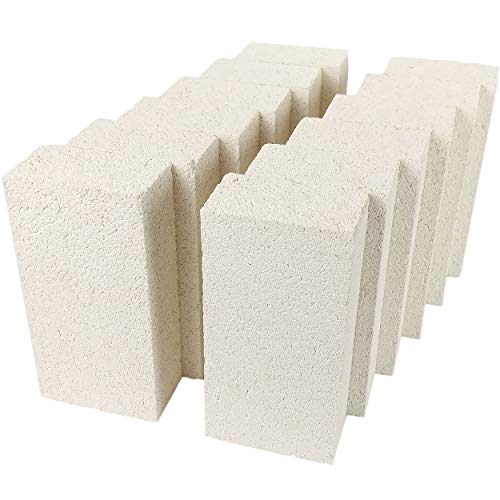
At 2.5 inches thick, the Lynn Manufacturing 3123T is nearly double the height of standard 1.25″ fire bricks. This extra thickness provides greater thermal mass and insulation value, making it the right choice for kilns, lost wax burnout ovens, jewelry soldering stations, and knife making forges. The 2300°F alumina-silica refractory clay formulation is identical to other insulating bricks, but the 2.5″ dimension means you get superior heat retention and structural depth. The weight per brick is 2.1 lbs — light for its size, consistent with an insulating brick rather than fireclay.
A goldsmith who uses these for firing metal clay reports they work great. Another buyer used them to insulate the cleanout door on a chimney for a woodstove, finding them easy to cut to size. One customer building a lost wax burnout oven highlighted the packaging: every brick is individually wrapped in a cardboard enclosure, and the two UPS boxes were delivered without any breakage. That packaging matters for a premium-priced product — broken 2.5″ bricks are a significant loss. Note that the crumble factor is real: one reviewer says the bricks produce dust whenever moved. If you install them and leave them static, that’s not a problem, but for a workspace where you relocate bricks regularly, the dust is a nuisance.
This is a premium, niche product. If you only need floor bricks for a standard stove, the 1.25″ options above will save you money. But if you need thick, insulating refractory for a kiln shelf or burnout oven, the 3123T is engineered exactly for that purpose.
Why it’s great
- 2.5″ thickness provides superior insulation and thermal mass
- Excellent packaging — individually wrapped, minimal breakage risk
- 2300°F rating ideal for kilns, forges, and jewelry casting
Good to know
- Premium price — budget-friendly only if thick bricks are required
- Produces dust whenever moved; not ideal for portable setups
- Not intended for standard 1.25″ firebox replacement
FAQ
Can I use any brick in a fire pit or do I need a special fire brick?
What is the difference between an insulating fire brick and a fireclay brick?
Do I need to heat treat vermiculite pressed bricks before first use?
Can fire pit bricks get wet after installation?
Final Thoughts: The Verdict
For most users, the best bricks for fire pit builds and repairs are the CFKJ 12-Piece Insulating Fire Brick because it balances a high 2300°F rating with easy installation and lightweight handling. If you need a heavy-duty floor that can take direct impact and extreme heat, grab the GIRtech USM-5 Fireclay. And for a thick insulating brick for a kiln or jewelry forge, nothing beats the Lynn Manufacturing 3123T.

Mo Maruf
I created WellFizz to bridge the gap between vague wellness advice and actionable solutions. My mission is simple: to decode the research and give you practical tools you can actually use.
Beyond the data, I am a passionate traveler. I believe that stepping away from the screen to explore new environments is essential for mental clarity and physical vitality.