Our readers keep the lights on and my smoothie glass nicely filled. As an Amazon Associate, I earn from qualifying purchases.
Choosing the wrong adhesive for brickwork means watching your repair crumble or turn into a messy, permanent eyesore.
I’m Mohammad Maruf — the founder and writer behind WellFizz. I’ve spent years analyzing the actual chemical composition, cure times, and temperature tolerances of construction adhesives rather than just reading the labels.
This guide breaks down the five adhesives that genuinely solve different brick bonding problems, helping you match the right chemistry to your specific project without wasting time or money. Here is everything you need to know to confidently choose the best brick glue.
How To Choose The Right Brick Glue
Selecting a brick adhesive isn’t about picking the strongest-looking tube. Brick is porous, often exposed to moisture and temperature swings, and the repairs range from invisible indoor fixes to outdoor structural anchoring. Here are the three factors that determine whether your repair holds or fails.
Match the Cure Profile to Your Worksite Conditions
Fast-curing polyester resins harden in minutes and are ideal for anchoring fasteners where you need immediate strength. Hybrid construction adhesives, by contrast, require 24 hours for full cure and remain slightly flexible — a better choice for surfaces that expand and contract. Refractory cements need a controlled heat cure over a fire to reach their full 3000°F capability. If you apply a slow-cure adhesive in freezing weather, expect tackiness for days.
Check the Temperature and Moisture Tolerance
Standard construction adhesives fail between 0°F and 140°F. That covers most outdoor walls but won’t survive a fireplace or a kiln. For firebrick or chimney repairs, a refractory silicate mortar is non-negotiable. For exterior walls exposed to rain and freeze-thaw cycles, a waterproof, temperature-rated construction adhesive is essential — not a drywall glue or wood glue.
Choose the Right Physical Form for the Job
Cartridge-based adhesives dispense evenly through a caulk gun and work for large-area bonding like attaching brick veneers or tile. Squeeze tubes offer control for spot repairs but require hand strength to express thick paste. Pails of pre-mixed mortar are best for trowel application to patch large surface areas or fill cracks. Chemical anchors in dual-cartridge systems are for drilling and inserting fasteners into masonry, not for spreading.
Quick Comparison
On smaller screens, swipe sideways to see the full table.
| Model | Category | Best For | Key Spec | Amazon |
|---|---|---|---|---|
| Professional Soma Fix Chemical Anchor | Chemical Anchor | Anchoring fasteners into brick | Fast-curing polyester resin | Amazon |
| Loctite Power Grab Ultimate Crystal Clear | Construction Adhesive | Invisible bond on visible brick | Crystal clear finish after cure | Amazon |
| Gorilla Heavy Duty Construction Adhesive | Hybrid Adhesive | Gap-filling and waterproof bonding | 30-second initial grab | Amazon |
| DAP Concrete and Mortar Repair | Pre-mixed Mortar | Patching cracks and holes in brick | Pre-mixed, no-water paste | Amazon |
| Meeco’s Red Devil 610 Refractory Cement | Refractory Mortar | Firebrick and fireplace repairs | Handles up to 3000°F | Amazon |
In‑Depth Reviews
1. Professional Soma Fix Chemical Anchor
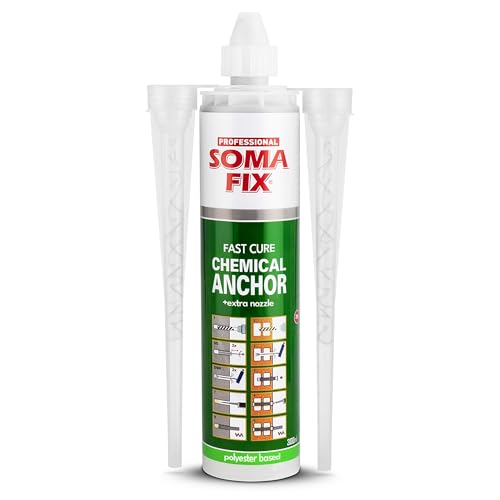
This isn’t a surface glue; it’s a chemical anchoring system designed to lock metal fasteners into drilled holes in brick, concrete, or stone. The polyester resin sets in minutes rather than hours, making it the ideal choice when you need to secure a railing, a gate hinge, or a heavy shelf bracket without waiting overnight for the bond to develop strength.
The kit includes an extra mixing nozzle, which is a practical detail because the resin hardens inside the nozzle after a single use. Users report consistent output and easy application — drill the hole, clean the debris, inject the resin, and insert the fastener before the paste cures. The gray color blends well with mortar.
One important note: for hollow bricks or cavity walls, you need a mesh sleeve to prevent the resin from escaping into the void. This adds one step but ensures the anchor actually works. The price is roughly half of the Sika alternative, and the performance matches it in real-world railing and fastener repairs.
Why it’s great
- Sets in minutes for time-sensitive jobs
- Extra nozzle included for multiple applications
- Strong enough for outdoor railing repair
Good to know
- Requires mesh sleeve for hollow bricks
- Must be applied quickly before resin cures
2. Loctite Power Grab Ultimate Crystal Clear
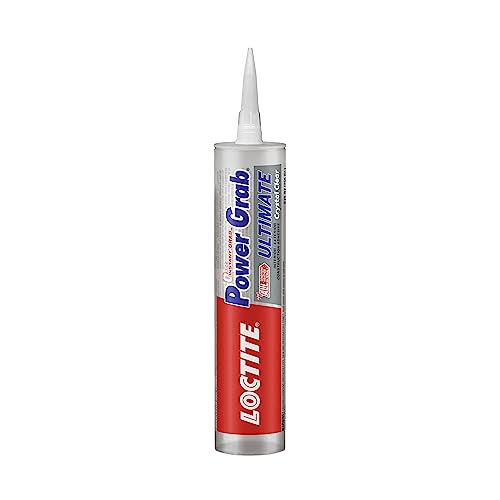
This is the adhesive to reach for when the bond line will be visible and you don’t want a white or gray glob ruining the look of your brick repair. It dries completely transparent and forms a rock-hard bond suitable for cement, tile, wood, and metal. Users have successfully used it to install stainless steel backsplashes and attach decorative ceiling tiles.
The formula maintains its hold in wet conditions and across a temperature range from 0°F to 140°F, making it suitable for exterior brickwork that faces rain and mild freezes. The initial tack is strong enough to reduce bracing and nailing — a real advantage when bonding brick veneers or trim where clamps aren’t practical.
The trade-off is that the adhesive has a jello-like consistency that works best when pressed into the gap rather than spread. Cleanup requires mineral spirits if it’s fresh, and it becomes much harder to remove once cured. Below freezing, the cure time extends significantly, so plan your application for a warmer day.
Why it’s great
- Dries completely clear for invisible repair lines
- Waterproof and rated for temperature swings
- High initial tack reduces need for bracing
Good to know
- Inconsistent cure time in freezing temperatures
- Requires mineral spirits for fresh cleanup
3. Gorilla Heavy Duty Construction Adhesive (2-Pack)
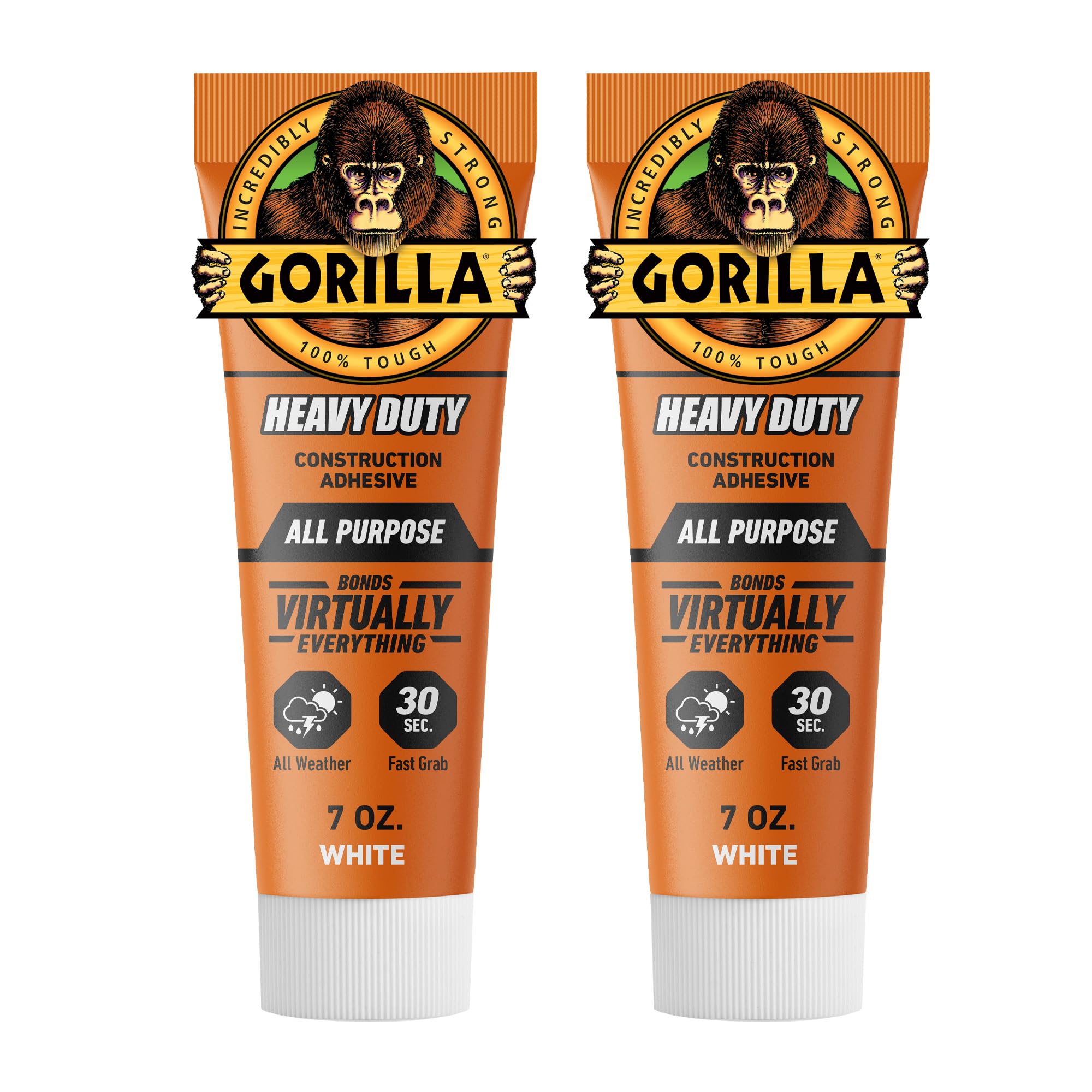
Gorilla’s construction adhesive offers a 30-second initial grab that is genuinely helpful when bonding brick to vertical surfaces or overhead positions. The white paste is thick and tacky, filling small gaps effectively without slumping. It bonds brick, concrete, stone, wood, and metal, making it a versatile single-tube option for mixed-material repairs.
The formula is waterproof and paintable, which matters if you need to match the repair to the surrounding mortar color. Users note the paste is very thick and requires a strong squeeze from the tube — it’s not a runny liquid that flows into cracks on its own. This thickness works well for flat surface bonding but not for deep crack injection.
The two-pack offers good coverage for medium-sized projects, though some users report the white color stands out against darker brick or stone. The bond is durable once fully cured after 24 hours, but one reviewer found the hold weaker than expected for heavy ceramic tile. For brick veneer or decorative stone, it performs well.
Why it’s great
- Grabs in 30 seconds for vertical bonding
- Waterproof and paintable after cure
- Thick paste fills small gaps without slump
Good to know
- White color is noticeable on dark brick
- Requires strong hand pressure to dispense
4. DAP Concrete and Mortar Repair

When the repair involves patching a crack or filling a hole in brick mortar rather than bonding two separate pieces, a pre-mixed mortar paste like this DAP product is the right tool. It comes ready to use straight from the pail — no measuring, no mixing with water. Just open, stir, and trowel into the damaged area.
The paste sets in 3 to 5 hours and reaches full cure in 48 hours for a quarter-inch depth. Thicker applications require adding 48 hours per additional quarter inch. Users with six years of experience using this product on basements, patios, and stone steps praise its ease of use and minimal cracking as it dries.
The main caveat is color: the dried finish is a very light gray that can stand out against typical dark gray mortar. If color matching matters, you may need to paint or stain the repair. The formula works in temperatures above 40°F and can be painted with latex paint after 2 to 4 hours of setting.
Why it’s great
- Pre-mixed and ready to use from the pail
- Minimal shrinkage and cracking during cure
- Easy to clean with a wet sponge while fresh
Good to know
- Dries to a noticeably light gray color
- Cure time increases with deeper applications
5. Meeco’s Red Devil 610 Refractory Cement
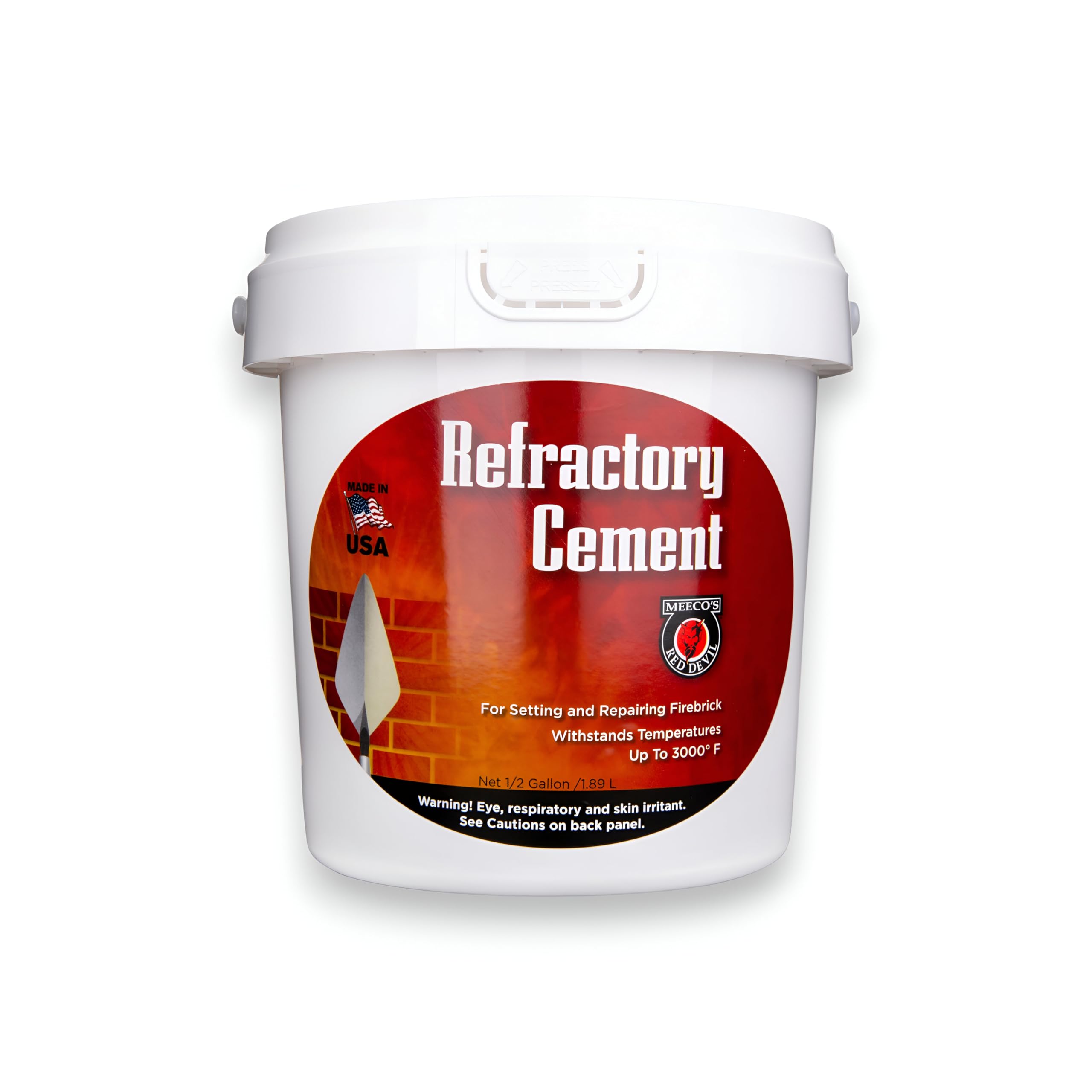
Standard construction adhesives melt or burn at fireplace temperatures. This refractory cement from Meeco’s Red Devil is formulated specifically for firebrick, stove, and fireplace repairs, with a fiber-reinforced silicate matrix that withstands continuous heat up to 3000°F. It is the only option in this list that belongs anywhere near a firebox.
The pre-mixed paste has a consistency like warm peanut butter and applies easily with a trowel for thin joints under a quarter-inch. It air-dries in about 30 minutes but requires exposure to actual heat — a small fire around 500°F — to reach full strength. Users building forges and repairing fireplace panels confirm it holds securely through repeated hot fires.
The material is caustic when wet (wear gloves) and safe once cured. Apply in thin layers of one-eighth inch, letting each dry fully before adding another. The buff color blends well with firebrick, and the cement is not an insulator — it bonds but doesn’t block heat transfer. Avoid sealing the faces of firebricks to prevent trapped air bursts during heating.
Why it’s great
- Withstands continuous temperatures up to 3000°F
- Fiber-reinforced for crack resistance
- Pre-mixed and easy to trowel
Good to know
- Requires heat firing for full strength
- Caustic when wet; gloves are essential
FAQ
Can I use regular construction adhesive for a fireplace brick repair?
How long should I wait before loading a brick repair with weight?
Does the color of the adhesive matter for brick repairs?
Final Thoughts: The Verdict
For most users needing a reliable brick adhesive for general construction, the winner is the Gorilla Heavy Duty Construction Adhesive because it offers the best balance of fast grab, waterproof performance, and gap-filling capability for everyday brick and masonry projects. If you need to anchor a fastener into a brick wall with immediate strength, grab the Professional Soma Fix Chemical Anchor. And for high-temperature repairs inside a fireplace or stove, nothing beats the Meeco’s Red Devil 610 Refractory Cement.

Mo Maruf
I created WellFizz to bridge the gap between vague wellness advice and actionable solutions. My mission is simple: to decode the research and give you practical tools you can actually use.
Beyond the data, I am a passionate traveler. I believe that stepping away from the screen to explore new environments is essential for mental clarity and physical vitality.