Our readers keep the lights on and my smoothie glass nicely filled. As an Amazon Associate, I earn from qualifying purchases.
Every breastfeeding mother faces the same decision: finding a pump that removes milk efficiently without causing pain or locking you to a wall outlet. The wrong pump leads to clogged ducts, low supply, and hours wasted sitting still. The right one preserves your milk production and gives you back your freedom.
I’m Mohammad Maruf — the founder and writer behind WellFizz. I analyze engineering data, motor specs, and user feedback on hundreds of pumping systems to separate reliable performance from marketing noise.
After comparing suction strength, battery life, flange fit, and hygiene design across the market, I’ve built this guide to the best breast pump for every pumping style and budget.
How To Choose The Best Breast Pump
Breast pumps fall into three functional categories: traditional tabletop electrics, portable battery-powered units, and wearable in-bra models. Each type balances suction power against portability. Your choice depends on whether you pump exclusively at home, at work, or on the move. Focus on suction strength, flange compatibility, and cleaning ease.
Suction Strength and Cycle Control
Hospital-grade pumps deliver 250–300 mmHg of suction and mimic a baby’s natural nursing rhythm. Look for a unit that offers at least 8 expression levels and a separate stimulation mode that triggers letdown. Pumps with a wide adjustable range let you dial in the exact pressure your body responds to without pain.
Flange Fit and Material
The flange — the funnel that sits against your breast — is the single most important comfort factor. Soft silicone flanges conform to breast shape better than hard plastic, reducing friction and improving the seal. Measure your nipple diameter before buying; many pumps include only 24mm or 28mm flanges, but aftermarket inserts can fine-tune the fit.
Closed System Hygiene
A closed system uses a barrier that prevents milk from entering the tubing and motor. This design is non-negotiable for hygienic pumping because it stops mold and bacteria from growing inside the machine. Open systems require careful tube cleaning and carry higher contamination risk over months of daily use.
Quick Comparison
On smaller screens, swipe sideways to see the full table.
| Model | Category | Best For | Key Spec | Amazon |
|---|---|---|---|---|
| Eufy S1 Pro | Wearable | Heat therapy & app control | 300 mmHg, 46 dB, 3 heat levels | Amazon |
| Spectra S1 Plus | Tabletop | Exclusive pumping at home | Rechargeable, nightlight, 2-phase cycling | Amazon |
| Medela Sonata | Tabletop | Hospital performance portable | 1.5 hr battery, touch screen | Amazon |
| Medela Symphony Plus | Hospital | NICU-grade reliability | Initiate & Maintain programs | Amazon |
| Philips Avent Double | Tabletop | Gentle suction & easy cleaning | 270 mmHg, 8 stimulation levels | Amazon |
| Lansinoh Discreet Duo | Wearable | Discreet pumping on the go | 100 min battery, 4 modes, 45 dB | Amazon |
| Zomee Z2 | Portable | Fast pumping with alternate mode | 2+ hr battery, 3 modes, USB-C | Amazon |
| Momcozy M6 | Wearable | Hands-free mobility | 295 mmHg, 3 modes, DoubleFit flange | Amazon |
| Eufy E20 | Wearable | Heated pumping & app rhythm | 300 mmHg, 3 heat levels, app sync | Amazon |
In‑Depth Reviews
1. Eufy Security S1 Pro Heated Breast Pump
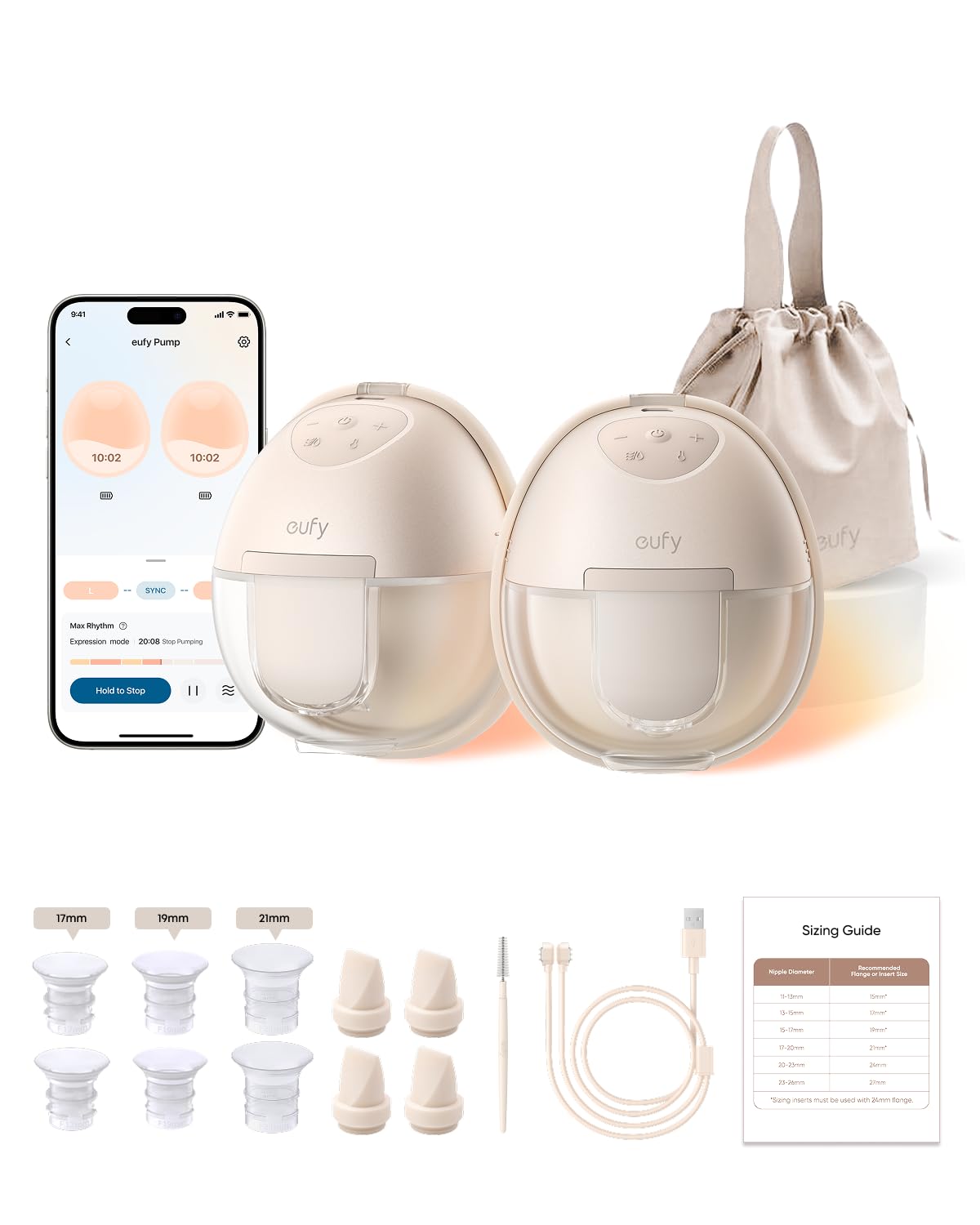
The Eufy S1 Pro stands out as the only wearable pump with integrated HeatFlow technology that warms to 95°F. This heat helps prevent clogged ducts and increases milk output by up to 30% based on user feedback. The 300 mmHg suction matches hospital-grade performance while the ultra-slim design fits discreetly inside a standard nursing bra.
The companion app gives you control over four preset pumping rhythms, or you can create a custom pattern tuned to your letdown response. At 46 dB the motor is quiet enough for conference calls or nursing in public. The closed system with double-seal leakproofing keeps milk away from the motor and tubing.
Battery life covers roughly five 30-minute sessions on a full charge with heat activated. The 105° ergonomic curvature and soft silicone flanges (17–24mm included) accommodate most breast shapes without painful rubbing. Some users report minor app glitches, but the physical pump consistently empties breasts as well as the Spectra S1 and Medela Symphony.
Why it’s great
- HeatFlow technology reduces clog risk and boosts output
- App-controlled rhythms let you fine-tune every session
- Compact, leakproof design with whisper-quiet motor
Good to know
- Heating function reduces battery life to about 90 minutes
- Some users experience minor app connectivity issues
2. Spectra S1 Plus Premier Rechargeable Pump

The Spectra S1 is the gold standard for exclusive pumpers who prioritize output and comfort. Its Natural Nursing Technology cycles between a stimulation phase that triggers letdown and an expression phase that mimics deeper nursing. The massage mode uses gentle vibrations to keep milk flowing even during long sessions.
This is a rechargeable tabletop unit with about three hours of cordless use, so you can move between rooms without unplugging. The built-in nightlight is a thoughtful addition for late-night sessions. The pump includes 24mm and 28mm flanges only — most users need to purchase smaller inserts or alternate flanges for a proper fit.
Lactation consultants frequently recommend the Spectra S1 over hospital-grade Medela models because the suction feels more natural and the adjustable cycle speed gives finer control. The closed system prevents milk from reaching the tubing. At 7 pounds it is heavier than wearable options, but the included tote bag makes transport straightforward.
Why it’s great
- Natural nursing rhythm mimics baby’s suckling pattern
- Rechargeable battery allows cordless mobility
- Very quiet motor and useful nightlight
Good to know
- Bulky for carrying in a diaper bag
- Does not include smaller flange sizes
3. Medela Sonata Smart Breast Pump
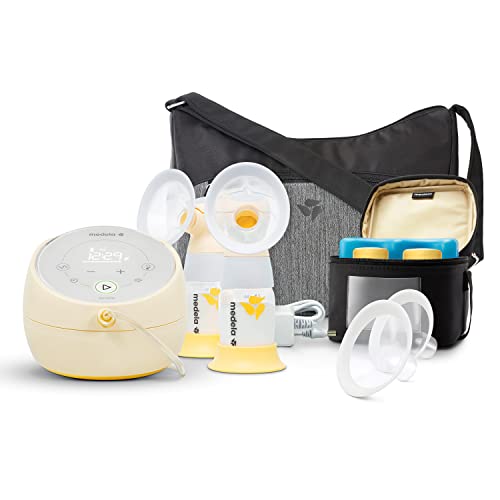
The Medela Sonata delivers hospital-grade suction in a package that weighs under 2.5 pounds. Its responsive technology automatically adjusts vacuum intensity to maintain consistent suction even as milk flow changes during a session. The touch screen interface makes it easy to switch between single and double pumping modes.
Battery life is approximately 1.5 hours, enough for two full pumping sessions away from an outlet. The closed system with overflow protection prevents milk from backing up into the tubing. The Flex breast shields feature soft silicone rims that many users find more comfortable than Medela’s standard hard plastic flanges.
While the companion app has been described as glitchy, the physical pump itself consistently matches the performance of the Medela Symphony used in NICUs. The motor is whisper quiet and won’t wake a sleeping baby. Some units have reported power cord connection glitches, but overall reliability is high among exclusive pumpers.
Why it’s great
- Hospital-grade suction in a lightweight portable body
- Flex shields with soft silicone rims improve comfort
- Closed system with overflow protection
Good to know
- Battery lasts only 1.5 hours per charge
- Occasional glitches with power cord connection
4. Medela Symphony Plus Breast Pump
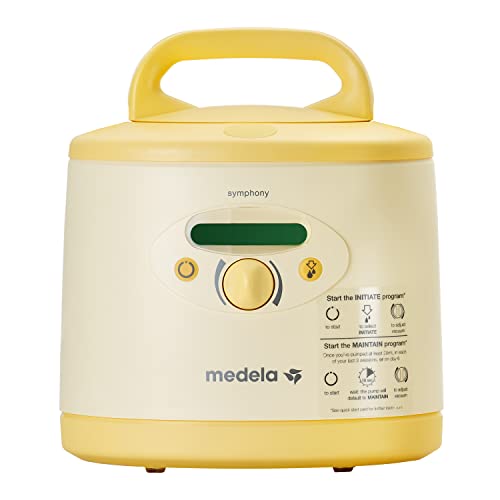
The Medela Symphony Plus is the same pump model used in hospital NICUs, now available for home use. Its Initiate program, designed for the first days postpartum, can increase milk production by up to 50% by alternating between stimulation, expression, and pause phases. The Maintain program then supports long-term exclusive pumping.
This is a two-piece unit that requires the Medela Symphony Double Pumping Kit (sold separately) for operation. The motor is built for years of heavy daily use, making it the most durable option for mothers who need to pump every 2–3 hours. The closed system is fully sealed, eliminating any mold or bacteria risk in the tubing.
Large-breasted mothers and those with oversupply consistently report that the Symphony Plus fully empties the breast more completely than any consumer model. The trade-off is size and weight — this is not a portable pump. It is designed to sit on a table next to your nursing chair and stay plugged in. Some units have reported motor failure within the first month, though service is covered under warranty.
Why it’s great
- Same pump used in hospital NICUs for reliable performance
- Initiate program boosts early milk production by up to 50%
- Fully sealed closed system for maximum hygiene
Good to know
- Requires separate purchase of pumping kit to operate
- Large, non-portable footprint best suited for home use
5. Philips Avent Double Electric Breast Pump

The Philips Avent uses Natural Motion technology that combines suction with gentle nipple stimulation to trigger letdown quickly. At 270 mmHg suction strength, it is slightly less powerful than hospital-grade pumps, but the soft silicone flange shield adapts to the breast shape and size for a comfortable seal without leaning forward.
This unit offers 8 stimulation levels and 16 expression levels, giving you fine-grained control over the pumping experience. The closed system keeps milk out of the tubing, and the pump has very few parts to clean and reassemble — a major advantage during those sleep-deprived early weeks. The included travel bag and pouch make it easy to carry to work.
The main limitation is that the pump must remain plugged in during use. It does not have a rechargeable battery, which tethers you to a wall outlet. Several users note that wearable pumps offer more freedom, but for mothers who prefer a traditional tabletop pump that prioritizes comfort over portability, the Avent delivers consistent results.
Why it’s great
- Soft silicone flange adapts to breast shape for a gentle seal
- Very few parts to clean and assemble
- Includes travel bag and pouch for portability
Good to know
- Must be plugged into a wall outlet during use
- Suction is gentler than hospital-grade options
6. Lansinoh Discreet Duo Wearable Pump
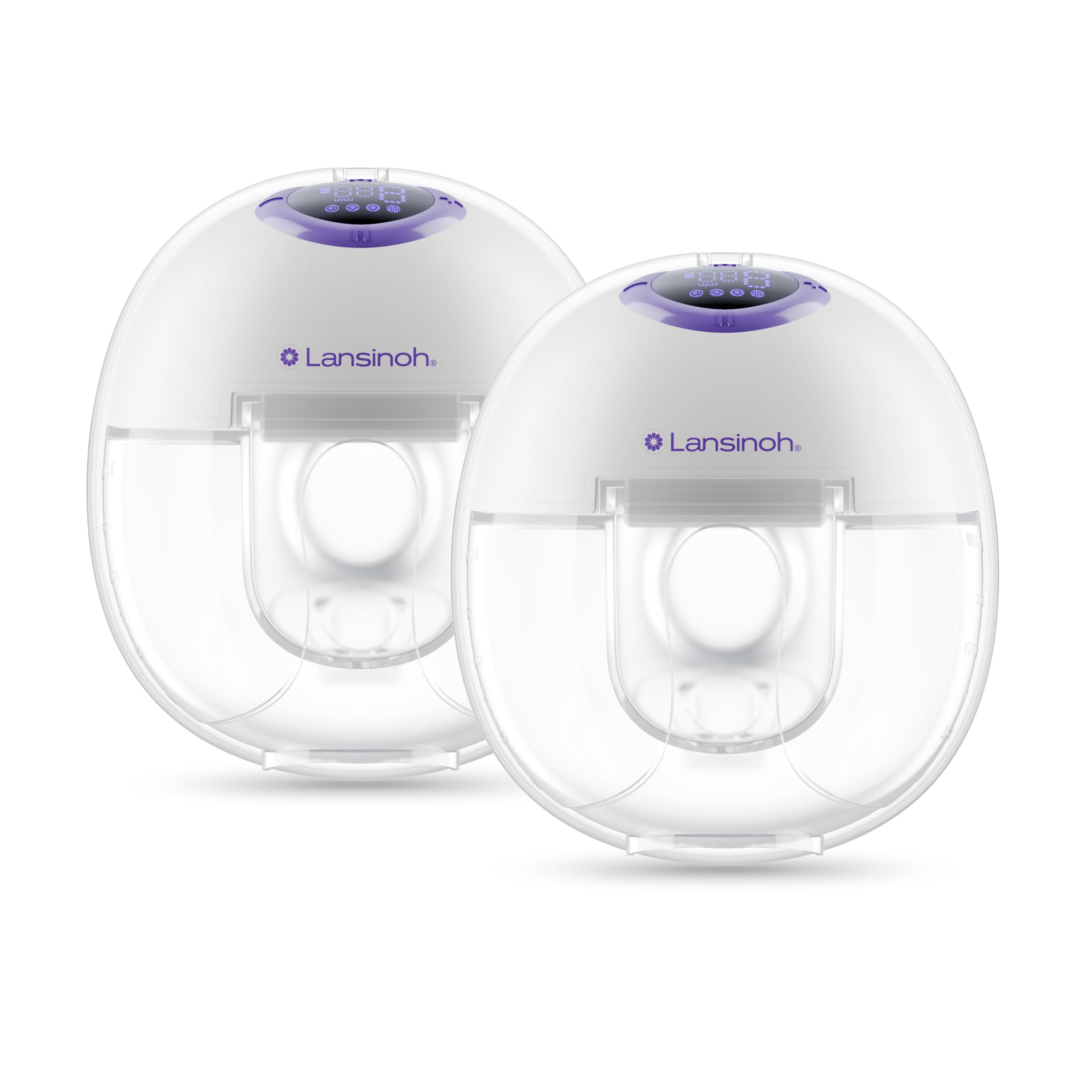
The Lansinoh Discreet Duo offers four customizable pumping modes with nine levels of hospital-strength suction in a lightweight, in-bra form factor. The rechargeable battery provides up to 100 minutes of use — roughly three full pumping sessions — and the motor operates at under 45 dB, making it one of the quieter wearable pumps available.
The closed system design prevents breastmilk backflow into the motor, and all silicone components are made without BPA or BPS. The pump includes 24mm and 21mm flanges with a sizing guide to help you find the right fit. The automatic shut-off after 20 minutes is a useful safety feature when you are multitasking.
Some users report that the pump seal can be inconsistent when parts are not perfectly aligned, leading to minor leakage. The battery life is adequate but declines with frequent use. A few reviews mention that the suction feels weaker than the Eufy or Spectra options. Still, for the price, this wearable delivers reliable hands-free pumping with good output for most mothers.
Why it’s great
- Long 100-minute battery life for multiple sessions
- Quiet motor at under 45 dB for discreet use
- Includes two flange sizes and sizing guide
Good to know
- Seal can leak if parts are not perfectly aligned
- Suction is weaker than premium wearable competitors
7. Zomee Z2 Double Electric Breast Pump

The Zomee Z2 uses Alternate-Mode Technology that automatically switches expression between breasts in a rhythmic pattern. This speeds up pumping sessions significantly — many users report collecting the same amount of milk in 20 minutes that used to take 30–45 minutes with other pumps. The three pumping styles (Stimulation, Expression, and 2-Phase) give you flexibility for different stages of each session.
The internal rechargeable battery lasts over two hours and recharges via USB-C, making this one of the most portable tabletop-style pumps. It works with Medela bottle parts, which is convenient if you already own Medela accessories. The LCD screen includes a nightlight for late-night pumping sessions without turning on bright overhead lights.
The unit is small enough to fit in a diaper bag, and users report using it while cooking, walking around the house, or riding in a car. The main drawback is that the flange only goes down to 19mm, so mothers with smaller nipples need aftermarket inserts. The battery needs to be recharged daily with regular use, and the diaphragm that contacts milk requires washing after every session.
Why it’s great
- Alternate-mode technology cuts pumping time significantly
- USB-C charging and over 2 hours of battery life
- Compatible with Medela bottle parts
Good to know
- Minimum flange size is 19mm, may not fit smaller nipples
- Battery needs daily recharging with regular use
8. Momcozy M6 Wearable Breast Pump

The Momcozy M6 centers around the DoubleFit flange design, which combines a soft inner silicone seal with a harder outer ring. This two-layer approach reduces slippage and improves the overall seal compared to single-material flanges. The second-generation motor delivers 295 mmHg of suction across three modes and nine adjustable levels.
The stand-up milk bowl design makes it easy to pour expressed milk into storage bags or bottles without spilling. The pump fits snugly into a standard nursing bra, though a tight pumping bra is recommended to keep the cups in place during movement. Users consistently report output comparable to the Spectra S1 in a wearable form factor.
Some users experienced motor failure when milk leaked past the seal and entered the motor cavity. Momcozy’s customer support replaced the units under warranty, often shipping replacements overnight. The pump is not designed for lying down or babywearing, and milk can spill if you bend over with the cups full. These are common limitations of wearable pumps in this price range.
Why it’s great
- DoubleFit flange improves seal and comfort compared to standard silicone
- Output comparable to the Spectra S1 in a wearable design
- Stand-up bowl design simplifies pouring and transfer
Good to know
- Motor can fail if milk leaks past the seal
- Cannot bend over or wear baby while pumping
9. Eufy Security E20 Heated Breast Pump
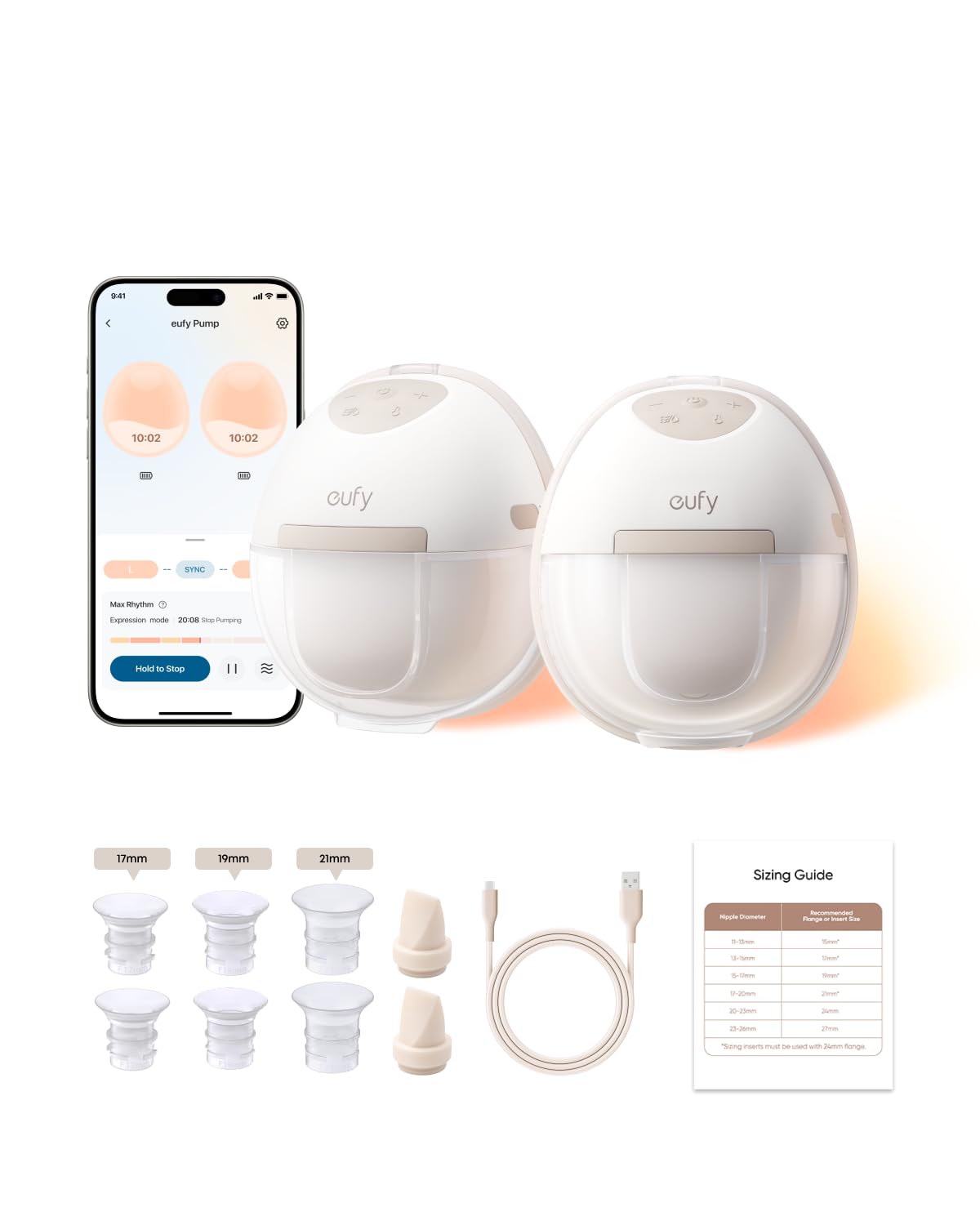
The Eufy E20 is the entry point into heated wearable pumping, offering three heat levels that warm the flange up to 95°F. This heat therapy reduces the risk of clogged ducts and helps trigger faster letdowns. The pump reaches operating temperature in about 30 seconds, making it convenient for busy mothers who need to pump quickly before leaving the house.
The 300 mmHg suction matches the performance of the premium S1 Pro, and the companion app lets you customize the suction rhythm and track your output over time. The pump uses a double-seal leakproof design that works well when properly assembled. It includes 17mm, 19mm, and 21mm flange inserts, covering a wider range of nipple sizes than most wearables.
The main trade-off is bulk — the E20 is noticeably larger than other wearable cups, which some users find less discreet under clothing. The battery lasts around five 30-minute sessions with heat off, and about four with heat on. Assembly can be finicky at first, and the diaphragm may leak if the motor is not left running during pouring. Overall, it is a strong value alternative to the S1 Pro for mothers who want heat therapy without the premium price tag.
Why it’s great
- Three heat levels help prevent clogs and speed letdown
- App-controlled suction rhythms for customized pumping
- Includes multiple flange sizes for precise fit
Good to know
- Bulkier than other wearable pumps, less discreet
- Assembly requires careful alignment to avoid leaks
FAQ
How do I know which flange size is right for me?
Is a wearable pump as effective as a tabletop model?
How often should I replace pump parts?
Can I use a breast pump with different bottle brands?
What does a closed system mean and why does it matter?
Final Thoughts: The Verdict
For most users, the best breast pump winner is the Eufy Security S1 Pro because it combines hospital-grade 300 mmHg suction with innovative heat therapy that reduces clogs and boosts output, all in a wearable form factor. If you want the strongest suction with the most precise cycle control, grab the Spectra S1 Plus. And for maximum portability at a budget-friendly price, nothing beats the Lansinoh Discreet Duo.

Mo Maruf
I created WellFizz to bridge the gap between vague wellness advice and actionable solutions. My mission is simple: to decode the research and give you practical tools you can actually use.
Beyond the data, I am a passionate traveler. I believe that stepping away from the screen to explore new environments is essential for mental clarity and physical vitality.