Our readers keep the lights on and my smoothie glass nicely filled. As an Amazon Associate, I earn from qualifying purchases.
The difference between a mediocre sourdough loaf and one with a shattering crust, an open crumb, and a deep nutty tang often comes down to one ingredient — the flour itself. Modern commodity wheat, stripped and bleached, simply lacks the protein structure and microbial complexity that a natural fermentation cycle demands.
I’m Mohammad Maruf — the founder and writer behind WellFizz. I’ve spent countless hours cross-referencing protein values, milling techniques, organic certifications, and customer feedback from hundreds of sourdough bakers to separate the flours that truly feed a starter from those that just fill a bag.
This guide highlights five flours that earn their place in a discerning baker’s pantry. Whether you chase loft, digestibility, or pure whole-grain flavor, you need best bread flour for sourdough that respects both the craft and your body.
How To Choose The Best Bread Flour For Sourdough
Sourdough baking is different from yeasted baking. A long fermentation actively breaks down gluten and phytic acid, so the flour you start with determines the structure, flavor, and digestibility of the final loaf. Choosing the right bag means looking past the brand name and into the grain itself.
Protein Content and Gluten Quality
For sourdough, you want a protein percentage between 12% and 15%. High protein ensures the gluten network can withstand the extended bulk fermentation without collapsing. Low-protein flours produce a dense, pancake-like crumb. Sir Lancelot from King Arthur sits at 14.2%, giving it exceptional strength for bagels and high-hydration doughs.
Milling Freshness and Grain Variety
Wheat flavor peaks within days of milling, then declines. Heritage and ancient grains like Einkorn, Turkey Red, and White Sonora offer deeper flavor profiles and often contain less aggressive gluten structures that some digestive systems tolerate better. A stone-ground or single-pass milled flour retains more of the bran and germ, feeding your starter more minerals and wild yeast.
Organic Certification and Purity
Glyphosate residues and pesticide sprays can disrupt natural fermentation. A certified organic or glyphosate-residue-free bag — like those from Palouse Brand or Jovial — ensures the grain is clean. For sourdough, you want the flour to be a blank canvas for your starter, not a mix of chemical inhibitors.
Quick Comparison
On smaller screens, swipe sideways to see the full table.
| Model | Category | Best For | Key Spec | Amazon |
|---|---|---|---|---|
| Sunrise Flour Mill Heritage | Organic White | Bloating-prone bakers | 14% protein, unifine milled | Amazon |
| King Arthur Sir Lancelot | High-Gluten | Bagels & high-hydration | 14.2% protein, 50 lb bulk | Amazon |
| Sunrise Flour Mill Whole Wheat | Whole Grain | Nutty artisan loaves | Ultra-fine stone ground | Amazon |
| Jovial Organic Einkorn | Ancient Grain | Sensitive digestion | Never hybridized, weaker gluten | Amazon |
| Palouse Brand Whole Wheat | Glyphosate Free | Clean farm-to-table | Triple cleaned, stone ground | Amazon |
In‑Depth Reviews
1. Sunrise Flour Mill Heritage Organic Bread Flour Blend
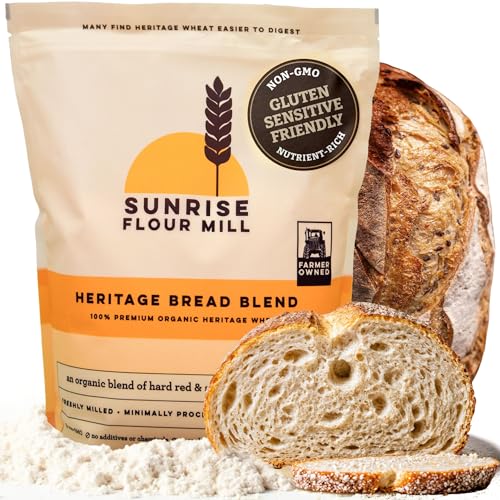
This blend combines Turkey Red and White Sonora Heritage Wheats, milled using 1930s unifine technology to produce a flour that is both fluffy and packed with protein. At 14% protein, it supplies the gluten backbone needed for a tall, open-crumb sourdough loaf without the heavy bitterness that some whole wheat flours carry.
Bakers report that a 24-hour cold fermentation with this flour yields loaves that are extremely digestible — even for those with IBS — while still producing a golden crust with a creamy, nutty flavor. The bag is printed with a grind date, ensuring you are baking with flour milled days, not months, ago.
I consider this the best white bread flour blend for sourdough because it bridges the gap between easy digestibility and high-performance baking. It absorbs hydration predictably and rewards the baker with consistent rise batch after batch.
Why it’s great
- Heritage grains produce a nutty, mellow flavor that complements sourdough tang
- Single-pass milling creates a super-fine texture with no grit
- Excellent protein content for high-hydration doughs
Good to know
- More expensive per pound than commodity bread flours
- Limited availability — can sell out quickly
2. King Arthur Flour Sir Lancelot Hi-Gluten Flour

Sir Lancelot is the flour professional bakers reach for when they need maximum gluten strength. Milled from hard red spring wheat, its 14.2% protein content provides the structural integrity to support high-hydration doughs, heavy whole-grain additions, and long cold ferments without collapsing.
The 50-pound bag is a serious commitment, but the value per pound is unmatched among premium bread flours. Bakers making six loaves a week consistently report that Sir Lancelot produces sourdough with a crisp crust and an open crumb that rivals expensive Italian imports.
If you bake in volume or want a flour that can handle anything from bagels to pain de campagne, this is the bulk solution. It is never bleached or bromated, and the flavor holds up well against the acidity of a mature starter.
Why it’s great
- Highest protein content in the category for maximum dough strength
- Unbeatable cost per pound for a premium flour
- Consistent performance across high-hydration and enriched doughs
Good to know
- 50-pound bag requires large storage container and strong arms
- Not organic — no heritage grain qualities
3. Sunrise Flour Mill Heritage Organic Whole Wheat Flour
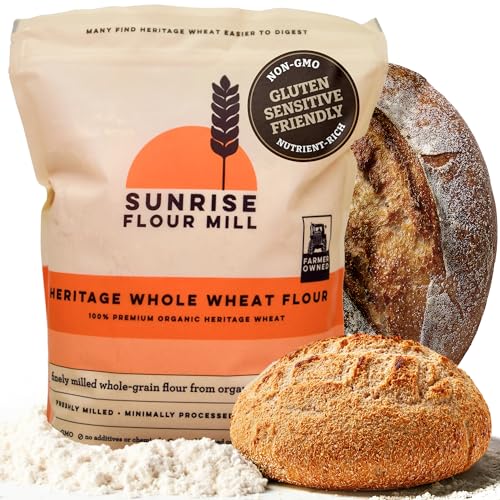
This whole wheat flour uses the same pre-hybridized wheat varieties as Sunrise’s white blend, but retains the entire bran and germ. The unifine milling process breaks the bran particles down so finely that the flour behaves more like an all-purpose whole grain than a gritty stone-ground option.
Sourdough bakers praise it for bagels and artisan loaves where a nutty, full-bodied flavor is wanted without the sandpaper texture that turns many people away from whole wheat. The heritage wheat base also significantly reduces the bloating that some experience with modern whole wheat flours.
I recommend this flour when you want a 100% whole-grain loaf that still rises well and feels tender. For best results, blend it with a high-protein white flour like Sir Lancelot to preserve oven spring while adding deep grain flavor.
Why it’s great
- Ultra-fine bran integration prevents gritty texture in bread
- Heritage wheat is easier to digest for gluten-sensitive bakers
- Rich, nutty flavor that enhances sourdough’s complexity
Good to know
- Does not rise as high as white flour in pure sourdough builds
- Best performance when blended with a high-gluten white flour
4. Jovial Organic Einkorn Whole Wheat Flour
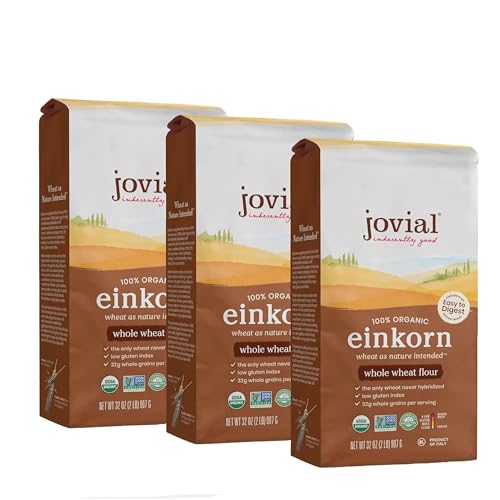
Einkorn is the oldest wheat variety still available — it has never been hybridized, and its gluten structure is fundamentally different from modern wheat. This 100% organic, Non-GMO Project Verified flour is grown in Italy using long rotation cycles that protect soil biodiversity.
The flour has a silky, buttery yellow color from naturally high lutein levels, and a nutty, slightly sweet flavor that bakes into a distinctive golden crumb. Its gluten is weaker than modern wheat, so it requires a gentle handling technique — but sourdough fermentation helps build enough structure for a satisfying loaf.
I most often recommend Jovial Einkorn for bakers who need to reduce modern gluten exposure but still want a real wheat bread. It is also naturally lower in carbs and higher in fiber than standard white and whole wheat flours, making it appealing for low-carb dieters who miss real bread.
Why it’s great
- Original, unhybridized wheat with weaker gluten for easier digestion
- Higher fiber and lower carbs than standard whole wheat flour
- Rich, buttery flavor with a beautiful golden crumb
Good to know
- Weaker gluten means lower rise in tall boules
- Premium price per pound compared to commodity wheat
5. Palouse Brand Certified Glyphosate Residue Free Bread Flour

Palouse Brand operates a 125-year-old family farm in Washington State, growing, harvesting, milling, and packaging their own wheat. This whole wheat flour is certified glyphosate residue free by The Detox Project, and is triple cleaned in a HACCP-certified facility before stone grinding.
The result is an authentic whole-grain flour with a slightly sweet, non-bitter flavor that shines in sourdough. Bakers note that it mixes beautifully with dark rye or unbleached all-purpose flour for a more forgiving rise, and that the bread has an old-fashioned homemade texture that store flours cannot replicate.
I appreciate this flour for its total traceability — you know exactly which farm your wheat came from. The 3-pound resealable bag is a practical entry point for bakers who want to test a premium whole wheat without committing to a large bulk purchase.
Why it’s great
- Certified glyphosate residue free — a clean fermentation canvas
- Farm-milled from a single family farm with full supply-chain control
- Sweet, mild whole-wheat flavor without bitterness
Good to know
- 3-pound bag may be small for frequent bakers
- New packaging design does not stand upright easily
FAQ
Can I use bread flour labeled for conventional yeast in a sourdough starter?
Does heritage wheat really reduce bloating from sourdough?
What is the difference between stone-ground and roller-milled bread flour for sourdough?
Can Einkorn flour be used for 100% sourdough bread?
Final Thoughts: The Verdict
For most users, the bread flour for sourdough winner is the Sunrise Flour Mill Heritage Organic Bread Flour Blend because it delivers the protein strength of a white flour with the digestibility and flavor of heritage grains. If you want bulk performance for high-volume baking, grab the King Arthur Sir Lancelot. And for an ancient-grain loaf with a nutty sweetness, nothing beats the Jovial Organic Einkorn.

Mo Maruf
I created WellFizz to bridge the gap between vague wellness advice and actionable solutions. My mission is simple: to decode the research and give you practical tools you can actually use.
Beyond the data, I am a passionate traveler. I believe that stepping away from the screen to explore new environments is essential for mental clarity and physical vitality.