Our readers keep the lights on and my smoothie glass nicely filled. As an Amazon Associate, I earn from qualifying purchases.
The right backpack for hiking transforms an arduous uphill battle into a rhythmic, controlled movement. A poor suspension system or a frame that doesn’t match your torso length can turn a 10-mile day into a lesson in misery, leading to shoulder chafing, lower back strain, and that dreaded wobble on uneven terrain. The fit is not a luxury—it is the fundamental requirement for enjoying the trail.
I’m Mohammad Maruf — the founder and writer behind WellFizz. After analyzing hundreds of hours of user feedback, technical specifications, and field reports across budget, mid-range, and premium hiking packs, this guide cuts through the marketing to help you find the exact fit for your next long-distance trek.
The most effective load carriers combine a well-ventilated back panel with a load-transferring hip belt, and you will find the top contenders for the best backpack for hikers detailed below, each suited to a different style of trail and body type.
How To Choose The Best Backpack For Hikers
Selecting a hiking pack is not about grabbing the cheapest option with the most pockets. The core priorities are torso fit, load capacity, and the suspension system’s ability to transfer weight to your hips. Volume measurements (liters) are secondary to whether the pack actually fits your spine length and waist circumference.
Torso Length and Hip Belt Integration
The hip belt should sit firmly on your iliac crest—the top of your hip bones—not around your waist. A pack with an adjustable torso length, like the deuter Aircontact Lite or Osprey Stratos, allows you to dial in this fit precisely. Fixed-length packs save weight but can cause shoulder fatigue if your torso is outside the intended range.
Suspension Style and Load Limits
Internal frame packs with a rigid perimeter frame (often aluminum or plastic) excel at transferring heavy loads over 30 pounds. Ultralight packs with only a foam frame sheet are comfortable up to about 25 pounds but become unstable beyond that. Consider your typical base weight plus food and water before choosing between a structured pack and a frameless one.
Ventilation and Back Panel Design
A trampoline-style mesh back panel, common on the Osprey Stratos and deuter Futura, creates an air gap that reduces sweat buildup during hot climbs. Packs with padded foam channels (like the Mardingtop designs) are less ventilated but bring the load closer to your center of gravity, which improves stability on technical terrain.
Quick Comparison
On smaller screens, swipe sideways to see the full table.
| Model | Category | Best For | Key Spec | Amazon |
|---|---|---|---|---|
| Osprey Stratos 44L | Premium Hiking | Ventilated day hikes & overnights | AirSpeed trampoline suspension | Amazon |
| Osprey Kestrel 48L | Premium Multi-Day | Technical terrain & heavy loads | AirScape close-to-body backpanel | Amazon |
| Deuter Aircontact Lite 40+10L | Premium Lightweight | Long-distance & world travel | Vari Quick adjustable torso length | Amazon |
| Deuter Futura 27L | Premium Daypack | Advanced day hiking with max ventilation | Aircomfort Sensic back system | Amazon |
| Naturehike 45L Rock | Mid-Range Ultralight | Sub-25lb base weight trips | 2.5lb total pack weight | Amazon |
| Mardingtop 60L | Budget Multi-Day | Heavy loads under | Expandable to 75L with MOLLE | Amazon |
| Mardingtop 50L | Budget Tactical | Hunting, rucking, and rugged use | 600D polyester + YKK zippers | Amazon |
In‑Depth Reviews
1. Osprey Stratos 44L Men’s Hiking Backpack
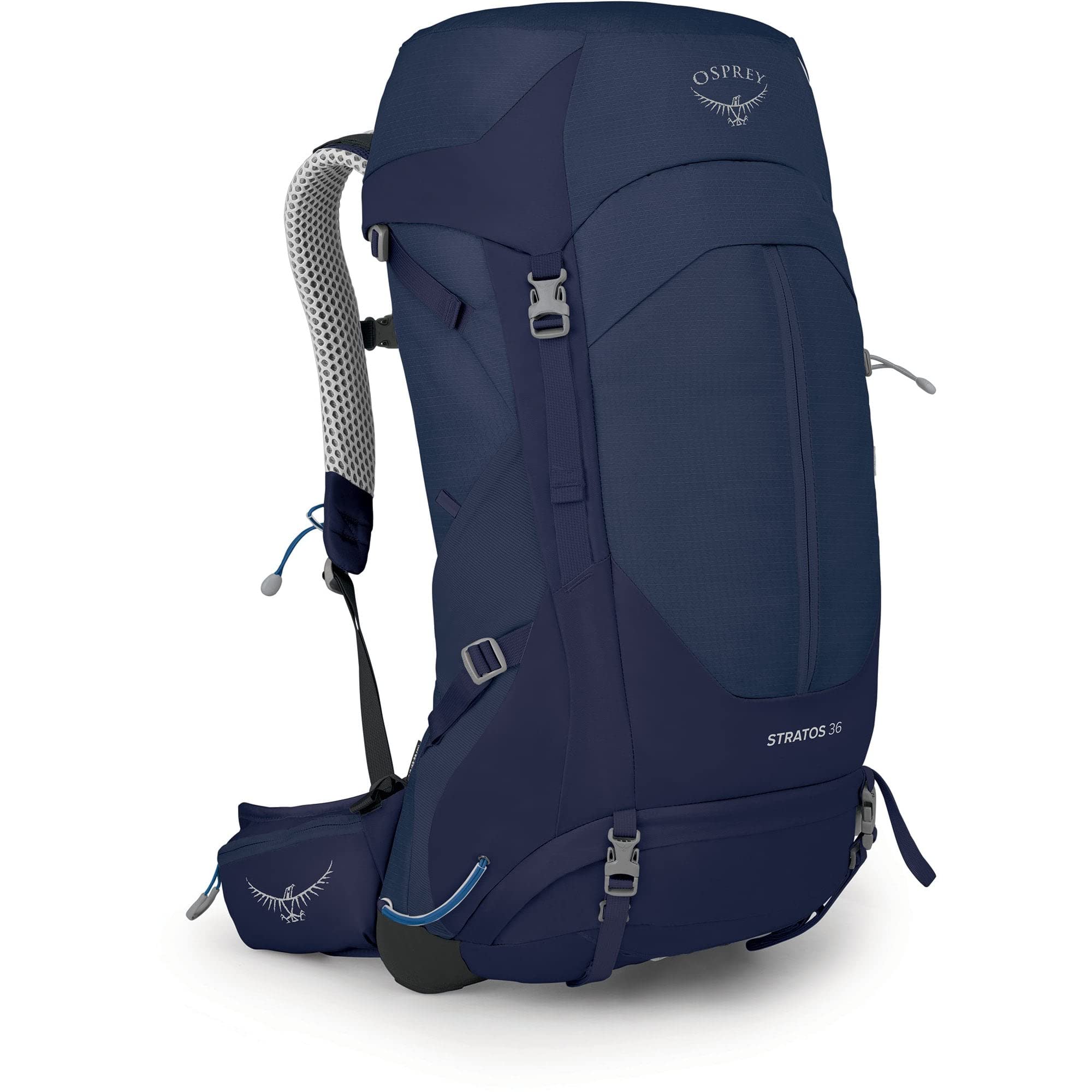
The Osprey Stratos 44L is the benchmark for ventilated hiking packs in the premium tier. Its AirSpeed suspension uses an adjustable injection-molded frame that holds a 3D-tensioned mesh away from your back, creating a generous air channel that keeps your spine cool even during hot, sweaty ascents. The torso adjustment range is generous, accommodating taller and wider frames without compromising load stability.
At 3.64 pounds, it is not an ultralight pack, but the weight is justified by the included rain cover, trekking pole attachment loops, and a well-organized top lid with a zippered pocket. The internal hydration sleeve routes the hose through a port in the back panel, keeping the bite valve within easy reach without tangling. Side pocket geometry works well for tall, thin water bottles but struggles with wide Nalgene-sized containers.
Customer feedback from long-distance day hikers on the Appalachian Trail confirms the Stratos handles 20-plus mile days without pressure points, and the fit adjustment is straightforward even for beginners. The hard frame does require overhead bin space on flights, but for trail performance, this pack delivers the most balanced combination of ventilation, stability, and organizational features at this volume.
Why it’s great
- Outstanding back ventilation reduces sweat buildup significantly
- Adjustable torso length fits a wide range of body types
- Integrated rain cover provides reliable weather protection
Good to know
- Side pockets are tight for wide water bottles
- Hard frame makes it unsuitable as a personal airline item
2. Osprey Kestrel 48L Men’s Backpacking Backpack
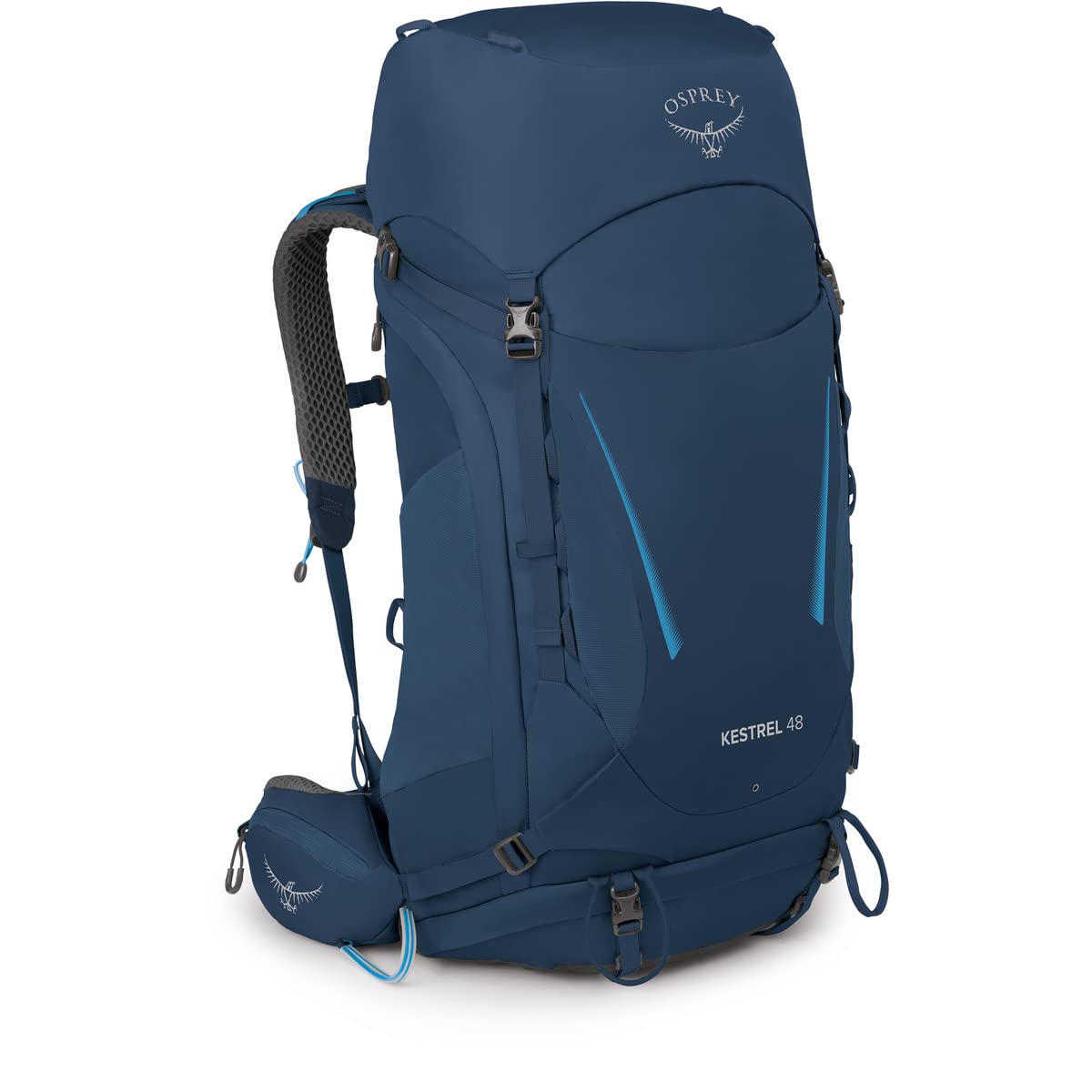
The Osprey Kestrel 48L is built for hikers who tackle technical terrain with heavy loads. Unlike the Stratos, the Kestrel uses an AirScape back panel that positions the load closer to your body, providing a more stable and controlled carry on uneven ground. The injection-molded frame sheet still offers adjustable torso lengths, but the fit is intentionally closer to your center of gravity for better balance during scrambles.
Weighing in at 4.62 pounds, the Kestrel is noticeably heavier than many 48-liter packs, but the material upgrade—thicker fabric and denser padding—justifies the weight for users who regularly carry 35 to 50 pounds. The fixed hip belt is generously padded, and the side compression straps tuck into daisy chains when not in use. The included rain cover is bright green, making it easy to spot in low-light conditions.
Reviews from Glacier National Park trips and Allegheny Forest overnights confirm the Kestrel absorbs abuse from brush, rock, and rain without wear. Users also appreciate the side access zipper, which allows reaching the main compartment without unloading the top. The trade-off for the close-to-body carry is reduced ventilation compared to trampoline-style packs, but for rugged multi-day missions, this is the superior choice.
Why it’s great
- Extremely durable fabric withstands heavy brush and rock contact
- Close-to-body carry enhances balance on technical terrain
- Generous hip belt padding handles loads over 40 pounds comfortably
Good to know
- Heavier than many comparable packs at 4.62 pounds
- Back ventilation is less effective than mesh trampoline designs
3. Deuter Unisex Aircontact Lite 40 + 10 L
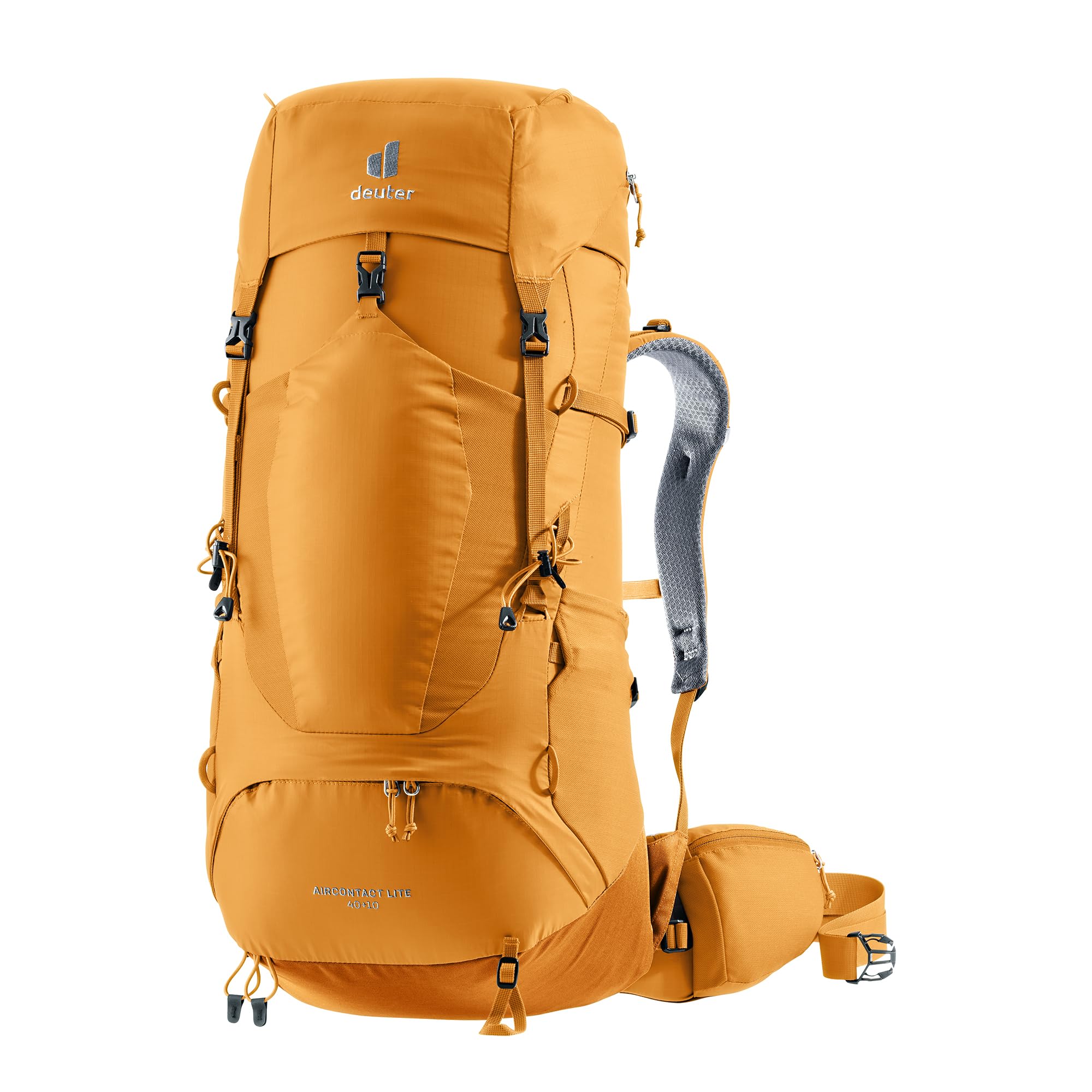
The deuter Aircontact Lite 40+10L is a premium lightweight pack designed for ambitious long-distance hikers who want both comfort and a low base weight. The Vari Quick adjustable back length system allows precise torso length changes on the fly, while the Aircontact cushions use hollow chamber foam that creates a pump-effect ventilation every time you move. This reduces perspiration rates without the bulk of a trampoline frame.
The plus-10-liter expansion comes from a height-adjustable lid, which gives you flexibility for resupply-heavy sections. The lightweight X-frame provides good load transfer up to about 35 pounds, and the separate bottom compartment keeps a sleeping bag accessible without unpacking the main body. At 3.5 pounds, it undercuts many packs in its volume class while still offering a fully framed suspension.
Users on the Beara Way and other 100-kilometer+ trails report zero pressure points after full-day carries, though the chest strap position is fixed and may sit too low for some torsos. The side pockets are excellent—deep enough to hold a thermos securely without bouncing. This pack strikes the best balance between a stripped-down ultralight and a fully featured multi-day pack for the weight-conscious hiker.
Why it’s great
- Excellent load transfer for its lightweight 3.5lb frame
- Separate bottom compartment simplifies sleeping bag organization
- Hollow chamber foam back panel provides active ventilation
Good to know
- Chest strap height is fixed and may not suit all torsos
- Lid design requires careful packing to prevent wobble
4. Deuter Futura 27 Hiking Backpack

The deuter Futura 27 is engineered for day hikers who refuse to compromise on back ventilation. The Aircomfort Sensic system uses a flexible spring steel frame that tensions a mesh panel away from your back, and deuter claims this design reduces perspiration by up to 25 percent compared to standard foam panels. The ActiveFit pivoting S-shaped shoulder harness adapts to your natural movement, reducing restriction during reaching and scrambling.
At 27 liters, this pack is firmly in daypack territory, but its organizational layout is surprisingly generous. The main compartment is deeper than many 30-liter packs, and the bottom section is narrower to keep the load high and close. The ergonomic Comfort Lock hip fins use dual-density foam that stabilizes the pack without feeling restrictive. It also includes a detachable waterproof rain cover, hiking pole loops, and a hydration sleeve.
Reviews from Costa Rica trips and alpine day hikes confirm the Futura keeps the back notably cooler than both Osprey and earlier deuter models. Some users with broader shoulders find the S-shaped straps sit too close to the neck, causing constriction—returning the pack for a Gregory Juno solved the issue for a few. For hikers who overheat easily and prioritize ventilation above all, the Futura 27 is the top daypack choice.
Why it’s great
- Best-in-class back ventilation with the Aircomfort spring frame
- Lightweight construction at under 2 pounds
- Dual-density hip fins provide excellent stabilization for a daypack
Good to know
- Shoulder straps may fit too narrowly for some body types
- At 27L, not suitable for multi-day trips without resupply
5. Naturehike 45L Rock Internal Frame Hiking Backpack

The Naturehike 45L Rock is a mid-range ultralight pack that competes directly with brands charging double the price. At just 2.5 pounds for a 45-liter internal frame pack, it shaves critical weight without going completely frameless. The 420D nylon fabric is tear-resistant and water-repellent, and the included rain cover provides extra protection in sustained downpours. The mesh back panel uses a trampoline-like tensioning system that keeps the pack off your spine.
The Rock has a roll-top closure that seals securely but lacks the easy-access convenience of a dedicated brain pocket. The hip belt pockets are small, and users with larger smartphones may struggle to fit them. However, the frame can handle loads up to 30 pounds comfortably, and the shoe compartment on the back panel is a clever addition for separating camp shoes from your sleeping bag.
AT section hikers report the Naturehike handled 20-plus mile days with a 30-pound total load without frame failure or fabric wear after 108 miles. The load tensioners are finicky and require periodic adjustment, but the weight savings are real. For the hiker transitioning from a heavy beginner pack to their first ultralight setup, the Naturehike 45L offers the best value-to-weight ratio in this guide.
Why it’s great
- Impressive 2.5lb weight for a fully framed 45L pack
- Durable 420D nylon resists abrasion better than cheaper ultralight fabrics
- Mesh back panel provides good ventilation for a frameless-like build
Good to know
- Hip belt pockets are small for modern smartphones
- Roll-top closure lacks easy-access top pocket
6. Mardingtop 60L Military Internal Frame Backpack
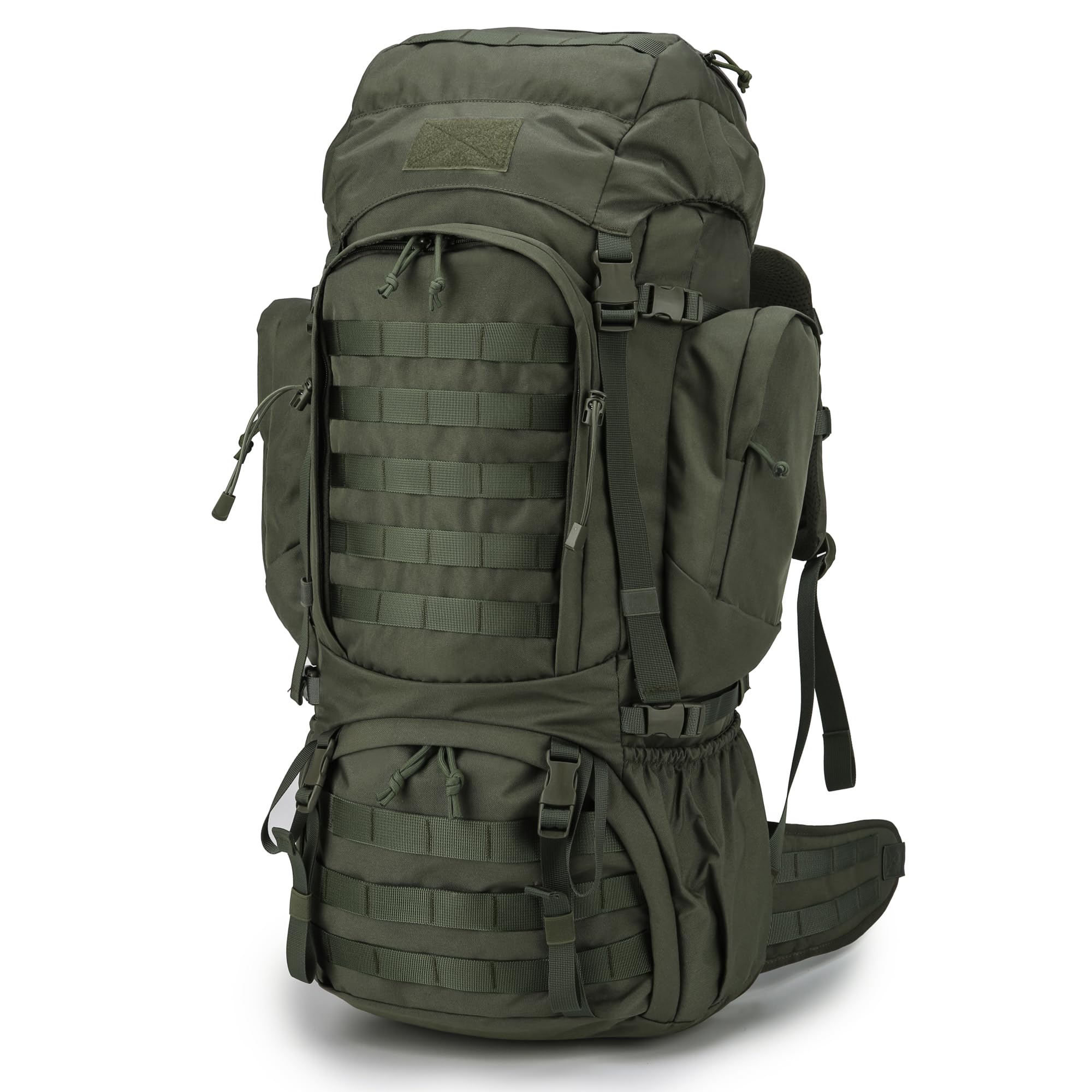
The Mardingtop 60L is a mid-range pack that punches well above its price point for volume and customization. With MOLLE webbing covering the front and sides, you can attach pouches, carabiners, and gear externally without crowding the main compartment. The pack also features a sleeping bag compartment with a separate zippered access, and the side compression straps let you cinch down a partial load for day hikes or expand it to 75L for longer trips.
The internal frame is a stiff perimeter rod that transfers load to a padded hip belt, though the belt padding is thinner than premium options and may cause chafing on carries over 50 pounds. The YKK zippers are a durable touch often missing from packs at this price, and the rain cover is included. The main compartment is a single large tub, which simplifies packing but lacks organization pockets for small items.
Users carrying 90 pounds for short ruck runs report the pack handles the abuse, but the hip belt cinches tend to loosen under heavy loads over long distances. For a 60-liter pack under , the Mardingtop delivers a functional suspension, MOLLE adaptability, and genuine durability for hunters, SAR volunteers, and hikers on a tight budget who need maximum capacity.
Why it’s great
- MOLLE webbing allows extensive external gear customization
- Expandable from 60L to 75L for resupply-heavy trips
- YKK zippers add durability uncommon at this price tier
Good to know
- Hip belt padding is thin for loads over 40 pounds
- Strap cinches loosen gradually under sustained heavy use
7. Mardingtop 50L Hiking Backpack
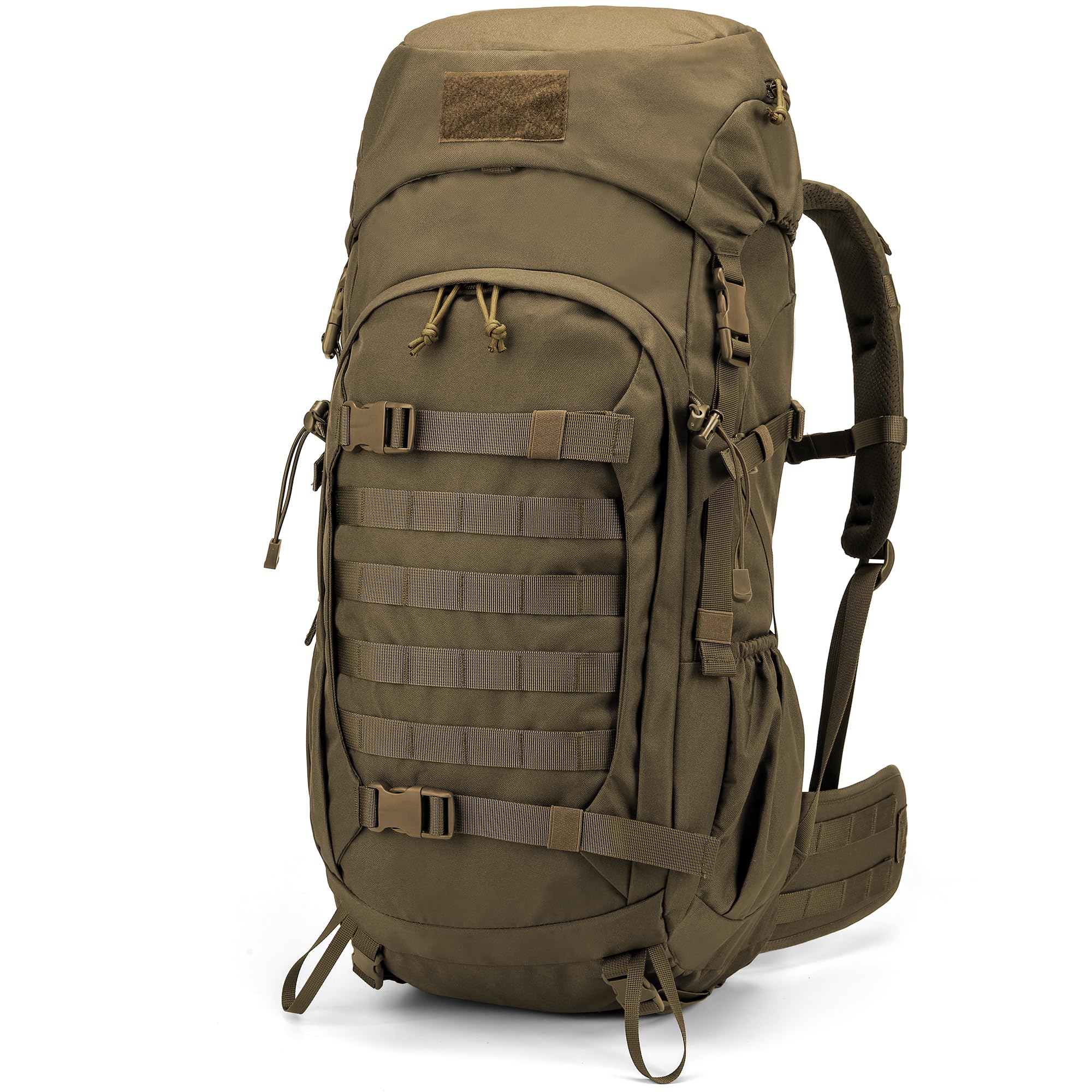
The Mardingtop 50L is the entry-level workhorse for hikers who need a tough, inexpensive pack for rugged environments. Its 600D polyester shell resists abrasion from brush and rock, and the included rain cover keeps gear dry when the weather turns. The internal frame provides structure for loads up to 40 pounds, and the hydration sleeve holds up to a 5-liter bladder. The front zippered access opens the main compartment like a suitcase, making gear retrieval much easier than a top-loading design.
The MOLLE system on the front allows attaching tactical pouches or extra gear, and the multiple lash points accommodate trekking poles or an ice axe. The padded sternum strap and hip belt are adjustable, but the hip belt padding is minimal—adequate for 25-pound weekend loads but insufficient for extended heavy carries. The back panel consists of mesh-covered foam channels that offer moderate ventilation but trap heat during hot climbs.
Owner reviews from hunters and forest hikers who have put 150 miles on this pack report the construction holds up well, with only the buckles showing weakness over time (easily replaced). The pack is not ultralight at 3.9 pounds, but it is built to survive bushwhacking and rough handling. For a first-time backpacker or someone who needs a budget pack for scouting trips, the Mardingtop 50L delivers where it matters most: durability and capacity.
Why it’s great
- Durable 600D polyester withstands heavy bushwacking and abrasion
- Full front zippered access allows easy gear retrieval
- Hydration sleeve fits up to 5 liters for long, dry stretches
Good to know
- Buckles are prone to slipping and may need replacement
- Back panel ventilation is limited during hot weather hikes
FAQ
What torso length range do I need for a multi-day hiking backpack?
How much hip belt padding is enough for a 35-pound carry?
Should I choose a trampoline mesh back panel or a foam channel back panel?
Final Thoughts: The Verdict
For most hikers, the best backpack for hikers is the Osprey Stratos 44L because it combines unmatched ventilation with a fully adjustable suspension, integrated rain cover, and enough volume for multi-day trips without being oversized. If you want a close-to-body carry for technical terrain with a heavier load, grab the Osprey Kestrel 48L. And for the weight-conscious long-distance hiker, nothing beats the deuter Aircontact Lite 40+10L with its expandable lid and lightweight frame.

Mo Maruf
I created WellFizz to bridge the gap between vague wellness advice and actionable solutions. My mission is simple: to decode the research and give you practical tools you can actually use.
Beyond the data, I am a passionate traveler. I believe that stepping away from the screen to explore new environments is essential for mental clarity and physical vitality.