Our readers keep the lights on and my smoothie glass nicely filled. As an Amazon Associate, I earn from qualifying purchases.
That familiar ache running up the inside of your ankle, the feeling that your arch is collapsing with every step—posterior tibial tendonitis is a stubborn condition that demands targeted support, not just a generic ankle wrap. A brace designed for this specific tendon must control excessive pronation, cradle the medial arch, and provide rigid lateral stability without cutting off circulation or bulging out of your shoe.
I’m Mohammad Maruf — the founder and writer behind WellFizz. I’ve spent years analyzing tens of thousands of product reviews and clinical specs to separate medical-grade solutions from glorified socks.
After cross-referencing hundreds of user outcomes with biomechanical design features, I’ve identified the braces that truly stabilize the posterior tibial tendon. This guide breaks down the only seven models that belong on your shortlist for the best brace for posterior tibial tendonitis.
How To Choose The Best Brace For Posterior Tibial Tendonitis
Posterior tibial tendonitis is not a generic ankle sprain. The tendon runs behind the medial malleolus and inserts into the navicular bone, supporting the arch. A brace that fails to control midfoot pronation or that lacks a medial lift will leave the tendon straining against every step. Here are the specific features that actually matter.
Figure-8 Strapping vs. Simple Compression
Compression sleeves do nothing for posterior tibial tendonitis. You need a brace with figure-8 straps that cross over the dorsum of the foot and anchor around the heel. This cinching action prevents the calcaneus from everting and offloads the tendon insertion site. Without this strap geometry, the brace is just a sweatband for your ankle.
Removable Articulated Stays for Custom Rigidity
Rigid medial and lateral stays prevent the ankle from collapsing into valgus—the exact motion that aggravates the posterior tibial tendon. Look for braces with removable semi-rigid or articulated stays so you can dial in the level of immobilization as your tendon heals. Fixed soft braces lack the structural integrity to fight pronation.
Arch-Lift and Medial Heel Wedge Integration
Some braces incorporate a built-in arch-lift strap (like the FootLok system) or a medial wedge that physically tilts the subtalar joint toward supination. This is the closest a brace can get to mimicking the function of the posterior tibial tendon itself. If the brace doesn’t elevate your arch, it isn’t treating the root cause—it’s just wrapping the symptom.
Low-Profile Build for Shoe Compatibility
A brace that forces you into oversized shoes or alters your gait is a brace you will stop wearing. The best models for posterior tibial tendonitis use low-profile materials—thin ballistic nylon, Lycra panels, and streamlined lacing systems—that fit inside standard trainers, work boots, or even dress shoes without shifting your foot position in the heel cup.
Quick Comparison
On smaller screens, swipe sideways to see the full table.
| Model | Category | Best For | Key Spec | Amazon |
|---|---|---|---|---|
| BioSkin TriLok Ankle Brace | Premium | Severe pronation with arch collapse | FootLok arch-lift strap + figure-8 | Amazon |
| DonJoy Stabilizing Speed Pro | Premium | High-impact sports and daily wear | 800D ballistic nylon, articulated stays | Amazon |
| MUELLER The One Ankle Brace | Premium | Arthritic ankles needing flexible stability | Integrated speed lacing + grip coating | Amazon |
| Med Spec ASO Ankle Stabilizer | Mid-Range | Peroneal and posterior tibial tendonitis | Figure-8 straps + CoolFlex tongue | Amazon |
| Ossur FormFit Ankle Brace | Mid-Range | Post-injury immobilization and rehab | Speedlace + removable semi-rigid stays | Amazon |
| Neo-G Achilles Tendon Support | Mid-Range | Mild tendonitis with Achilles involvement | Silicone tendon cushion + multi-zone compression | Amazon |
| Fitomo Ankle Brace | Budget-Friendly | General ankle support and minor sprains | Triple-Lock straps + removable side stabilizers | Amazon |
In‑Depth Reviews
1. BioSkin TriLok Ankle Brace

The BioSkin TriLok is the only brace on this list with a dedicated FootLok strap that actively lifts the arch—a critical feature for posterior tibial tendonitis patients whose tendon can no longer hold the medial longitudinal arch. The figure-8 wrap and stirrup strap create a lateral stabilization net that controls inversion/eversion without relying on bulky plastic hinges. Podiatrists frequently recommend this model for severe supination and ankle collapse precisely because it offloads the posterior tibial tendon at its insertion point rather than just immobilizing the talocrural joint.
Users recovering from lateral malleolus fractures and chronic supination report pain reduction from an 8 down to a 4 within 24 hours of wearing the TriLok. The low-profile Lycra outer fits inside steel-toed work boots and standard trainers, which means you don’t have to switch footwear to get proper tendon support. The bilateral design works on either foot, and the hypoallergenic material prevents skin irritation during all-day wear.
The downside is the initial application learning curve—first-time users often spend 15 to 30 minutes figuring out the strap path and tension sequence. Sizing runs small, so order half to a full size up from your usual brace size. The outer material can feel slippery on smooth floors, so avoid flip-flops. Once mastered, the TriLok delivers the most precise pronation control available in a non-custom brace.
Why it’s great
- FootLok strap provides active arch support that directly assists the posterior tibial tendon
- Breathable Lycra construction fits comfortably in most shoes including work boots
- Effective for controlling severe over-pronation and reducing degenerative arthritis pain
Good to know
- Steep learning curve for proper strap application
- Sizing runs small; measure carefully and consider sizing up
- Not comfortable for sleeping due to rigid support elements
2. DonJoy Stabilizing Speed Pro Ankle Support Brace

The DonJoy Speed Pro is built for demanding athletes who refuse to stop training despite posterior tibial tendon issues. The 800-denier ballistic nylon shell resists abrasion and stretch far better than standard nylon braces, and the reinforced eyelet area prevents the lacing system from tearing out under high tension. The full circumferential elastic strap secures all strapping layers and adds tibia/fibula compression that stabilizes the entire lower leg unit—not just the ankle mortise.
What sets the Speed Pro apart for posterior tibial tendonitis is the pair of removable, articulated medial and lateral stays. These stays enhance proprioception and prevent the talus from tilting into valgus during weight-bearing activities. Users with severe Achilles tendonitis report pain dropping from a 9 to a 2 or 3 after switching to this brace. The speed lacing system gathers four lace ends into a single Velcro tab, enabling a full lace-up in under ten seconds.
The brace runs slightly bulkier than compression-only models, and the lacing stability strip can warp after 3 to 5 months of heavy use (40-plus hours per week). Some users note that the D-rings create pressure points on the dorsum of the foot if laced too tightly. Replacement units sometimes ship with shorter top laces, which can affect fit consistency. Despite these quirks, the DonJoy Speed Pro remains the gold standard for high-activity users who need durable, repeatable pronation control.
Why it’s great
- Exceptional durability with 800D ballistic nylon construction
- Articulated medial and lateral stays prevent ankle collapse into valgus
- Speed lace system enables fast, even tightening without cutting circulation
Good to know
- Bulky profile may not fit in narrow dress shoes
- Lacing stability strip can warp after several months of daily heavy use
- D-rings may create pressure points on the top of the foot
3. MUELLER Sports Medicine The One Ankle Brace

Mueller’s The One Ankle Brace strikes a rare balance: it offers the figure-8 strapping geometry needed for posterior tibial tendon offloading while remaining soft enough for arthritic joints. The integrated speed lacing system uses fewer eyelets and flat laces, which reduces lace bite and allows a more even tension distribution across the dorsum. The grip coating on the interior prevents the brace from migrating downward during activity, a common complaint with lace-up designs.
Users transitioning from CAM boots after fracture or severe tendonitis find The One provides enough stability to protect the tendon without the weight and restriction of a full rigid brace. The criss-cross straps are independently adjustable, so you can apply heavy tension to the lateral stabilizer while leaving the medial side looser for comfort. The brace fits both right and left ankles, and the medium size accommodates men’s shoe sizes 9–11 and women’s 10–12.
The under-foot strap seam can begin to fray after a year of daily use, especially if worn without socks. The brace is not designed for high-impact cutting sports—the ballistic nylon is absent here, so the material will stretch out faster under extreme loads. For walking, daily activity, and moderate athletic use, The One delivers excellent tendon support without the bulk of a full stabilizer.
Why it’s great
- Integrated speed lacing reduces lace bite and speeds up application
- Adjustable figure-8 straps allow independent medial and lateral tension settings
- Comfortable for extended wear, including yoga and light exercise
Good to know
- Under-foot strap seam may fray after a year of daily use
- Not rugged enough for high-intensity lateral sports
- Less rigid than braces with articulated stays
4. Med Spec ASO Ankle Stabilizer
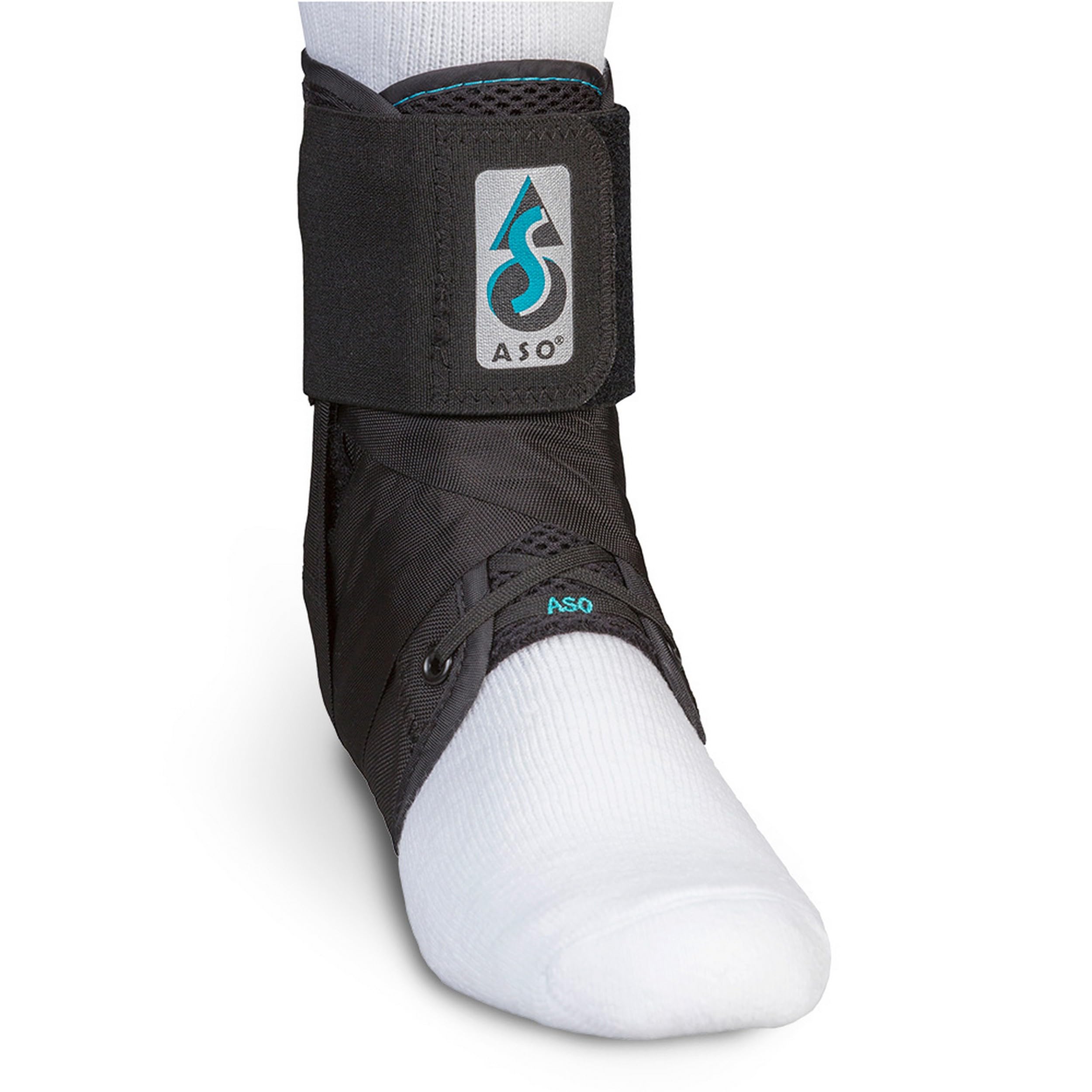
The Med Spec ASO has been a staple in athletic training rooms for decades, and for good reason: the figure-8 strapping system with bilateral design provides reliable peroneal and posterior tibial support without the complexity of articulated stays. The CoolFlex padding on the tongue and the durable nylon shell resist stretching over time, so the brace maintains its fit characteristics even after months of weekly washing. Users specifically mention that the ASO reduces peroneal tendon soreness and medial ankle pain during running and basketball.
A key advantage for posterior tibial tendonitis patients is the lace-up design combined with the elastic figure-8 straps. The laces allow micro-adjustments over the midfoot, while the cross-over straps lock the calcaneus into a neutral position. This dual-tension approach prevents the brace from shifting during dynamic movements. The ASO fits inside most gym shoes and even some barefoot-style footwear, though slip-ons without laces won’t work well.
The sizing is critical here—measure your ankle circumference rather than relying on shoe size. Velcro durability is excellent, with users reporting straps that remain adhesive for years. The brace requires some dexterity to apply correctly, and injured patients may need assistance the first few times. Regular washing prevents odor buildup, but the nylon tongue can feel warm in hot weather.
Why it’s great
- Proven track record with athletic trainers for peroneal and posterior tibial support
- Lace-up design enables precise midfoot compression adjustments
Good to know
- Requires some dexterity to apply; may need help initially
- Nylon tongue can retain heat during intense activity
- Not designed for use with slip-on or laceless shoes
5. Ossur FormFit Ankle Brace

The Ossur FormFit is a podiatrist-recommended brace that shines during the transition from full immobilization to active rehabilitation. Its single-pull Speedlace system allows you to cinch the entire brace with one tug, which is invaluable when your tendon is already painful and bending down is difficult. The removable semi-rigid stays can be taken out as your posterior tibial tendon regains strength, allowing you to gradually reduce support without buying a new brace.
Users with Achilles tendonitis and bone spurs report immense relief after switching to the FormFit, noting that the combination of the criss-cross straps and optional ankle wrap provides both compression and targeted immobilization. The brace is thick enough to offer firm support but fits inside most standard shoes when properly sized. The elastic strap adds an extra layer of compression that helps control subtle swelling around the medial malleolus.
The main durability concern is that the heel stitching can wear out after a year of daily use, and some users report the second unit tearing faster than the first if the wrong size is selected due to flat feet. Limits range of motion deliberately—that’s the point for tendonitis recovery—but the restriction can feel excessive for low-level walking. Measure your ankle circumference carefully; the provided sizing chart is more reliable than shoe size.
Why it’s great
- Podiatrist-recommended for Achilles and posterior tibial tendonitis recovery
- Speedlace system enables easy one-handed tightening
- Removable stays allow progression from rigid support to flexible stability
Good to know
- Heel stitching can wear out after extended daily use
- May feel overly restrictive for casual walking
- Sizing can be tricky; measure circumference rather than shoe size
6. Neo-G Achilles Tendon Support With Silicone Cushion

The Neo-G Achilles Support takes a different approach from lace-up braces: it relies on multi-zone compression knit and a silicone cushion that sits directly over the Achilles tendon. While this design is better suited for Achilles tendinopathy than isolated posterior tibial tendonitis, users with overlapping tendon issues—where both the Achilles and posterior tibial tendons are irritated—find the targeted compression and cushioning reduces overall ankle fatigue. The breathable, seamless fabric is lightweight and fits comfortably inside walking shoes.
Physical therapists often recommend this style for patients who need gentle support during the early stages of tendonitis or as a post-activity recovery sleeve. The silicone pad applies mild pressure to the posterior aspect of the ankle, which can help desensitize the tendon and reduce pain during heel-off in the gait cycle. The Class 1 Medical Device registration adds a layer of quality assurance that generic compression sleeves lack.
For posterior tibial tendonitis specifically, the Neo-G lacks the rigid pronation control that figure-8 straps and articulated stays provide. Users with moderate to severe posterior tibial dysfunction will likely need a more structured brace for weight-bearing activities. The compression sleeve is best used as a secondary support for low-impact walking or as a night-time recovery aid, not as the primary stabilizer during sports or long workdays.
Why it’s great
- Silicone cushion provides targeted pressure relief for the Achilles and surrounding tendons
- Breathable, seamless knit minimizes irritation during all-day wear
- Class 1 Medical Device with registered quality standards
Good to know
- Lacks rigid pronation control needed for moderate to severe posterior tibial tendonitis
- Not suitable as a primary brace for sports or heavy activity
- Compression-only design does not prevent ankle collapse
7. Fitomo Ankle Brace with Quick Lace Up
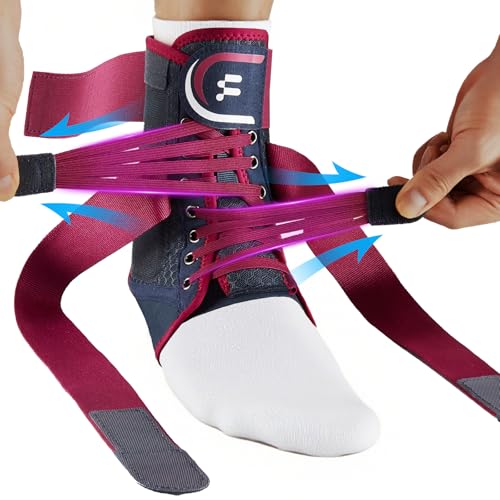
The Fitomo Ankle Brace brings a Triple-Lock support system—top strap compression, dual removable side stabilizers, and cross straps—to a price point that makes it accessible for patients who need multiple braces for different shoes or activities. The figure-8 strap design allows basic pronation control, and the removable stabilizers mean you can configure the brace for more flexibility during daily wear or more rigidity during walks. Users recovering from ankle sprains and stroke-related inversion find the brace stays secure without constant readjustment.
The breathable polyester and nylon blend keeps weight low, and the low-profile fit works inside most sneakers and boots. The FSA/HSA eligibility is a practical bonus for those using pre-tax health savings accounts. For mild posterior tibial tendonitis where the tendon is irritated but not yet dysfunctional, the Fitomo provides enough lateral and medial support to reduce pain during daily activities.
The limitation for posterior tibial tendonitis is the absence of a dedicated arch-lift mechanism. The brace can control ankle rolling, but it does not actively supinate the foot or elevate the medial arch. Users with significant arch collapse or adult-acquired flatfoot deformity will find the Fitomo insufficient as a primary brace. The Velcro straps remain durable after six months of daily use, and the color options (rose, black) add a cosmetic choice that many braces lack.
Why it’s great
- Affordable entry point with Triple-Lock support and removable side stabilizers
- Low-profile design fits in most shoes without bulk
- FSA/HSA eligible for health savings account users
Good to know
- No active arch-lift mechanism for patients with flatfoot deformity
- Best suited for mild tendonitis rather than advanced posterior tibial dysfunction
- Expected to need replacement after extended daily heavy use
FAQ
Can a posterior tibial tendonitis brace fix my fallen arch?
Should I wear the brace while sleeping?
Final Thoughts: The Verdict
For most users, the best brace for posterior tibial tendonitis winner is the BioSkin TriLok Ankle Brace because it combines the only active arch-lift mechanism on the market with a professional-grade figure-8 stabilization system. If you want the durability for high-intensity sports and training, grab the DonJoy Stabilizing Speed Pro. And for a budget-friendly option that still provides figure-8 pronation control, the Fitomo Ankle Brace delivers solid value for mild cases.

Mo Maruf
I created WellFizz to bridge the gap between vague wellness advice and actionable solutions. My mission is simple: to decode the research and give you practical tools you can actually use.
Beyond the data, I am a passionate traveler. I believe that stepping away from the screen to explore new environments is essential for mental clarity and physical vitality.