Our readers keep the lights on and my smoothie glass nicely filled. As an Amazon Associate, I earn from qualifying purchases.
Landing hard on a bad knee repeats the original injury with every step. The wrong boot lacks the structural support to control pronation and the cushioning to absorb ground force, sending shock waves straight through the joint. Finding footwear that mechanically aligns the lower chain—from heel strike through tibia rotation—changes whether you walk without pain or limp by midday.
I’m Mohammad Maruf — the founder and writer behind WellFizz. My research focuses on biomechanical footwear design, analyzing outsoles, orthotic compatibility, and midsole density claims against real user reports from people managing chronic knee issues.
This guide compares nine models on the specific attributes that protect knees—arch geometry, heel stability, shock absorption, and removable insoles—so you can confidently choose the best boots for bad knees that match your foot type and activity level.
How To Choose The Best Boots For Bad Knees
Knee pain while wearing boots usually stems from three mechanical failures: insufficient arch support that lets the foot overpronate, a heel cup that fails to lock the calcaneus, and a midsole that transfers impact instead of absorbing it. Evaluating each attribute requires looking beyond marketing terms and into the actual construction.
Arch Support and the Pronation Connection
A boot with flat or poorly placed arch support forces the ankle to roll inward, which rotates the tibia and stresses the medial collateral ligament of the knee. Look for boots that offer a structured orthotic footbed—ideally removable—so you can replace it with a custom insert if needed. Models like the Orthofeet line include multiple arch inserts to adjust the support height, which is critical for people whose arches collapse under load.
Heel Cup Depth and Stability
A shallow heel cup lets the heel shift during the gait cycle, creating instability that the knee must compensate for. Boots with a deep, cupped heel counter cradle the calcaneus and limit lateral movement. The SOREL Kinetic Impact and the Orthofeet Ryder both use a reinforced heel structure that reduces wobble on uneven ground, directly reducing shear forces on the knee joint.
Midsole Shock Absorption vs. Energy Return
Thick foam midsoles feel soft at first but often bottom out under repeated impact, especially in heavier users. A boot that combines a dense EVA or polyurethane base with a removable cushioned insole offers better long-term shock attenuation. The Skechers Relment-pelmo uses memory foam that conforms to the foot, but the Orthofeet Dakota uses a firmer polyurethane midsole that holds its shape over miles of hiking, providing consistent impact damping for the knee.
Outsole Flexibility and Rocker Geometry
A rigid outsole forces the knee to bend more aggressively during the toe-off phase, while an overly flexible sole lacks the lever action needed for efficient walking on inclines. The best knee-friendly boots have a moderate rocker—a curved sole profile that helps roll the foot forward—reducing the range of motion required at the knee joint. The Arcopedico L19’s lightweight construction and subtle rocker make it particularly good for long walking days.
Quick Comparison
On smaller screens, swipe sideways to see the full table.
| Model | Category | Best For | Key Spec | Amazon |
|---|---|---|---|---|
| Orthofeet Dakota Waterproof | Premium Hiking | Long hikes & wet terrain | Polyurethane midsole + 2 insoles | Amazon |
| Orthofeet Alps Waterproof Snow | Premium Winter | Cold weather & snow | Waterproof + adjustable arch insoles | Amazon |
| Orthofeet Ryder Dual-Zip | Premium Casual | Everyday wear & foot drop | Dual zippers + AFO compatible | Amazon |
| SOREL Kinetic Impact Conquest | Premium Winter | Wet slush & city walking | Thick lifted sole + waterproof | Amazon |
| Arcopedico L19 | Mid-Range Casual | Travel & lightweight walking | Machine-washable + seamless knit | Amazon |
| Dr.Scholl’s Headstart Mid Shaft | Mid-Range Casual | Retail/standing shifts | Lightweight combat + supportive | Amazon |
| Skechers Relment-pelmo | Mid-Range Hiking | Light hiking & wide feet | Memory foam + slip-resistant sole | Amazon |
| BZees Get Going | Budget Casual | Travel & light daily wear | Washable + lightweight knit | Amazon |
| BZees Generation | Budget Winter | Warmth & easy on/off | Faux-fur lining + side zip | Amazon |
In‑Depth Reviews
1. Orthofeet Women’s Orthopedic Dakota Waterproof Lug Sole Hiking Boot
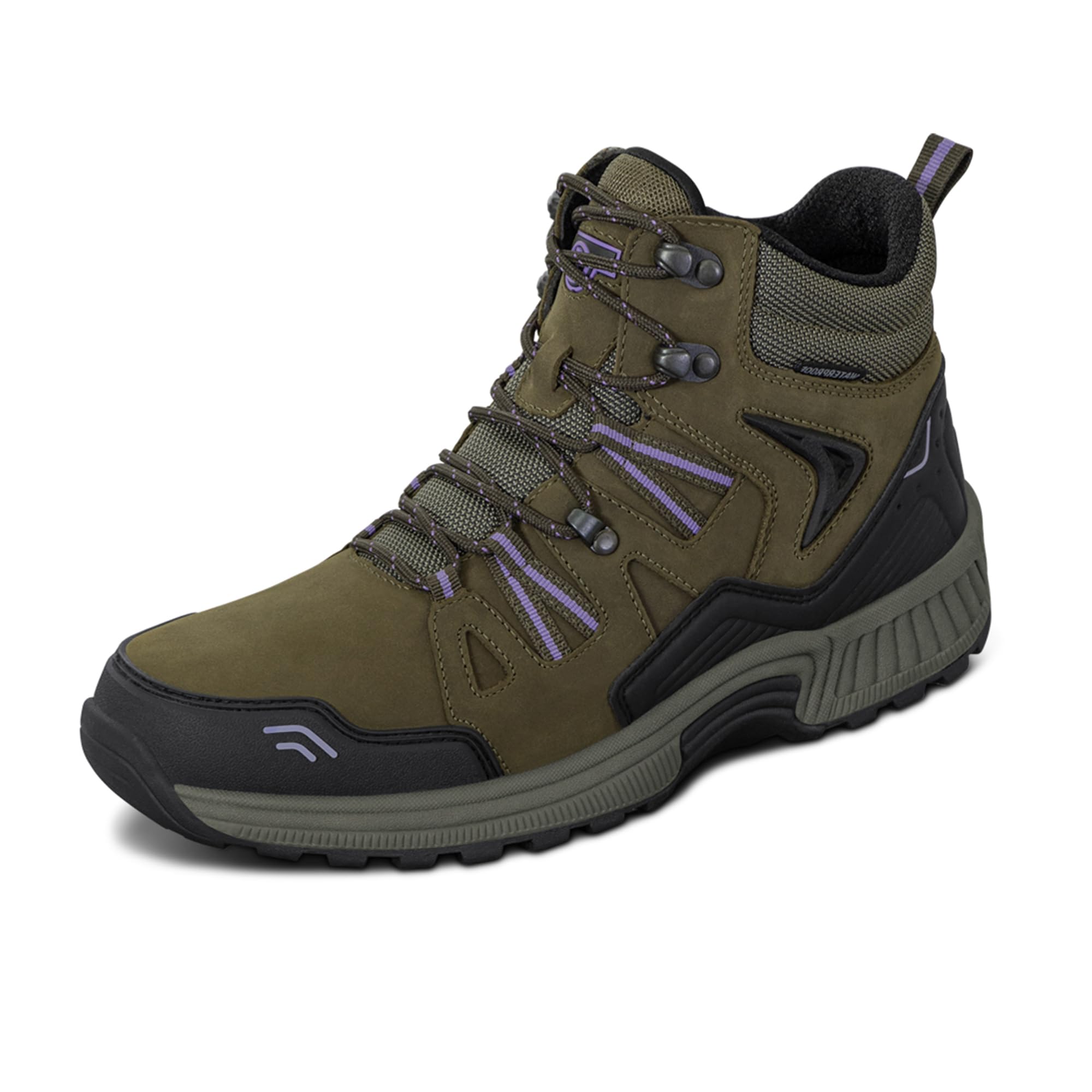
The Dakota is the only boot on this list built on a polyurethane midsole rather than cheaper EVA foam, which means it resists compression set far longer — critical for anyone whose knee pain flares after repeated impact. The midsole retains its shock-absorbing properties over miles of steep terrain rather than flattening out by noon. A deep heel cup and firm arch support platform keep the foot from pronating, directly reducing rotational stress on the medial knee.
Multiple reviewers confirmed wearing these boots in Alaska for 12 consecutive days through rain and snow without wet feet or knee soreness. The outsole uses deep lugs that bite into loose gravel and mud, giving the knee a stable platform to push off from. The boot includes two removable insoles plus an arch support insert, so you can dial in the exact volume your orthotic needs without crowding the toe box.
The only notable tradeoff is the top lace hooks—solid studs that allow the tongue to shift slightly if not tied aggressively. For hikers who prefer a locked-in feel all the way to the ankle, this requires a deliberate cinching technique. Otherwise, the Dakota delivers the most comprehensive knee-protection package for active users who need reliable off-road stability.
Why it’s great
- Polyurethane midsole resists compression better than typical EVA foam boots
- Two insoles plus arch inserts allow custom orthotic volume
- Deep heel cup and firm arch reduce pronation and knee torque
Good to know
- Top lace hooks are solid studs; tongue may shift without careful lacing
- Non-marking outsole can feel stiff on flat pavement
- Premium-tier price point, but midsole durability justifies it for frequent hikers
2. Orthofeet Women’s Orthopedic Alps Waterproof Snow Boot
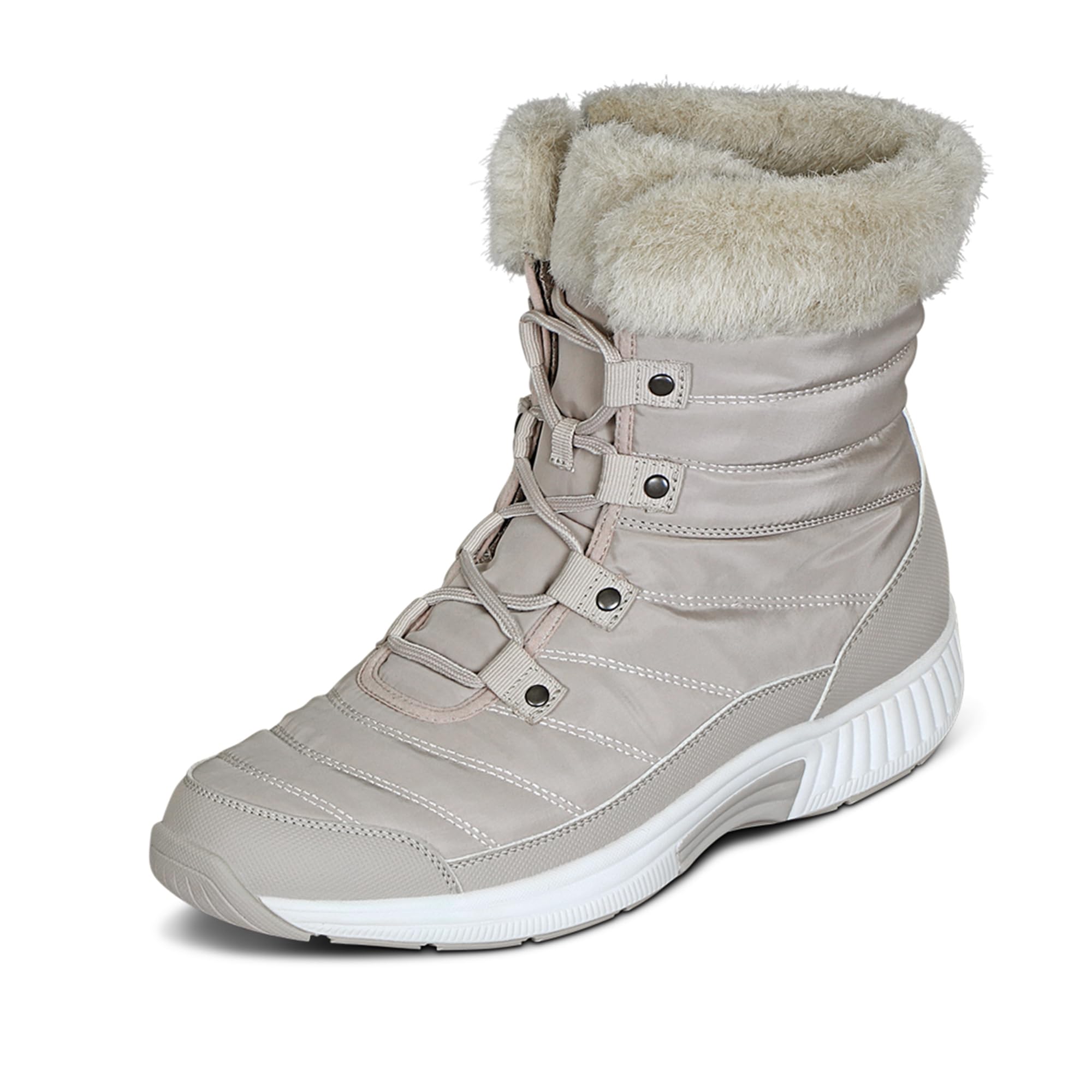
Snow boots often sacrifice arch support for insulation, leaving the knee to absorb the impact of walking on hard-packed icy surfaces. The Alps breaks that pattern with a waterproof leather construction that encloses a fully adjustable orthotic system: two different arch inserts let you raise or lower the support height to match your foot’s natural pronation angle. The roomy toe box prevents crowding, which is essential when wearing thick wool socks in sub-freezing conditions.
The side zipper makes entry effortless for anyone with limited hip or knee flexion, a detail that matters when bending down causes pain. Reviewers consistently rated the Alps as “very warm” in 20°F weather, and the non-slip rubber outsole held traction on compacted snow and wet pavement. The boot also includes a removable cushioned insole, so you can swap in a custom orthotic without losing the thermal liner.
A small number of users noted that the left boot zipper initially catches on the internal fur lining, though this loosens with use. The arch placement sits slightly farther back than some users expected, which may require a break-in period for those accustomed to mid-foot support. For winter walking in icy climates where knee pain worsens with cold, the Alps provides the structural support most snow boots omit entirely.
Why it’s great
- Waterproof and warm down to 20°F without sacrificing support
- Two arch inserts adjust support height for pronation control
- Side zipper eliminates painful bending to lace up
Good to know
- Zipper may catch on fur lining during the first few wears
- Arch placement is set slightly back relative to the foot’s natural mid-arch
- Heavier than non-insulated boots, which may affect gait on stairs
3. Orthofeet Men’s Orthopedic Ryder Slip-Resistant Dual-Zip Leather Boot

The Ryder is designed for users who need maximum access to the foot without compromising support — the dual rear zippers allow the boot to open wide enough to accommodate AFOs (ankle-foot orthoses) and swollen feet while maintaining a snug heel fit through the lacing system. The extra-depth construction provides vertical room for custom orthotics without raising the instep too high, a common failure point in boots marketed as “orthotic-friendly.”
The leather upper and full rubber sole have held up for two years in multiple user reports, with only the zipper pulls needing occasional replacement — a wear item common in any zippered boot. The arch support is prominently raised, and many users with plantar fasciitis and knee pain reported immediate relief after switching from standard work boots. The boot also includes a set of spacers to fine-tune the volume, making it one of the most adjustable options for varying foot shapes.
On the downside, the zippers are the weakest structural point; some users experienced a tang breaking within the first month, though Orthofeet’s warranty covered replacement. The slip-resistant sole performs well on wet tile and smooth concrete, making it a strong choice for service industry workers who stand eight-hour shifts. If you need a boot that opens fully for bracing but locks down for stability, the Ryder is uniquely capable.
Why it’s great
- Dual zippers open wide enough for AFO braces and swollen feet
- Extra-depth construction fits custom orthotics without raising instep
- Spacers and arch inserts allow precise volume adjustment
Good to know
- Zipper pulls may wear out within the first year; replaceable but inconvenient
- Arch support is very pronounced; may feel aggressive for flat feet
- Leather requires regular conditioning to stay water-resistant
4. SOREL Women’s Kinetic Impact Conquest Plus Waterproof Boot
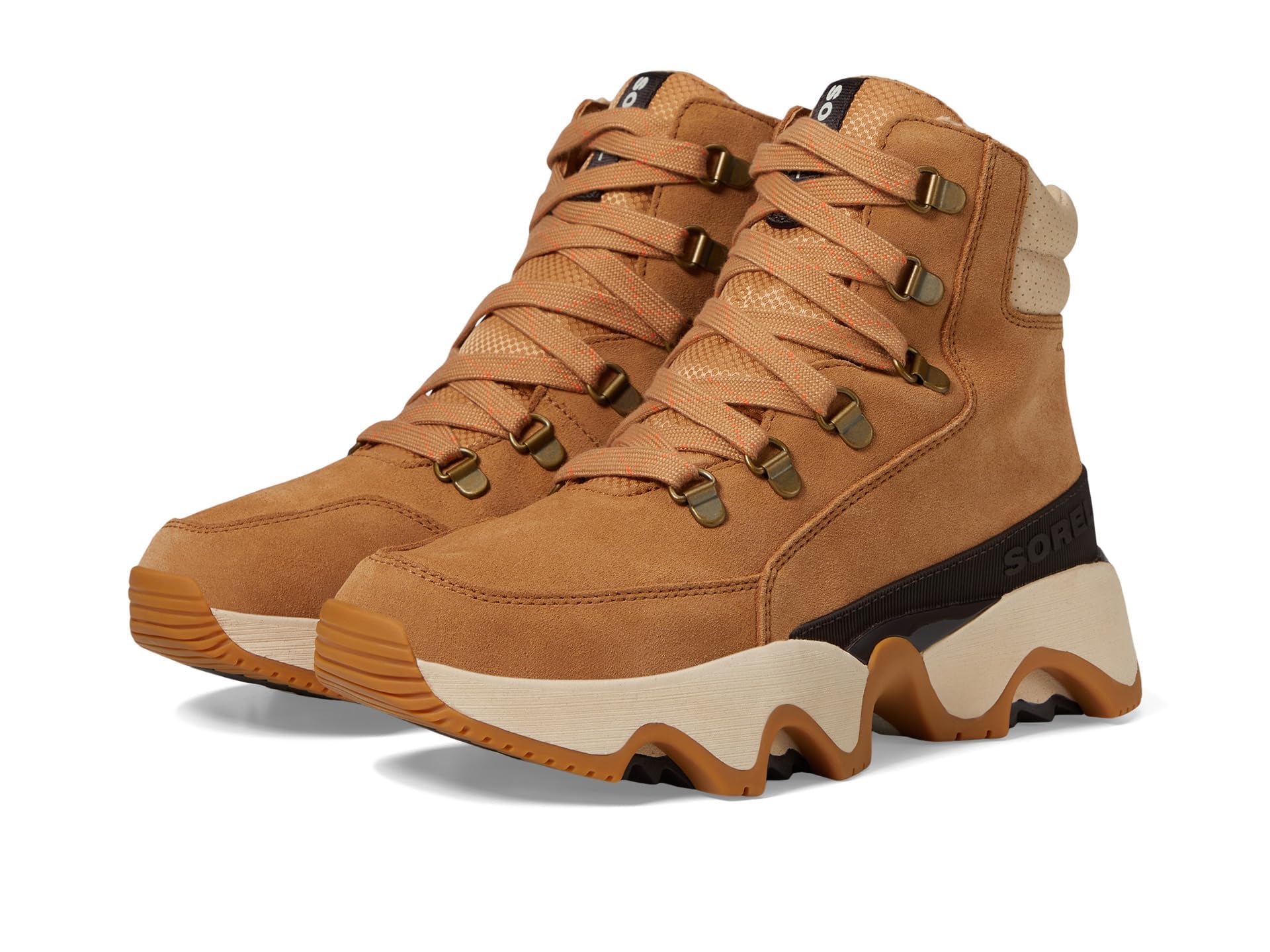
The Kinetic Impact Conquest bridges the gap between a technical snow boot and a cushioned sneaker. The thick rubber outsole lifts the foot out of slush while providing enough rocker curvature to roll the foot forward, reducing the demand on knee flexion during the gait cycle. The midsole is noticeably more flexible than the Orthofeet models, which suits users who want a less rigid walking feel but still need waterproofing and warmth.
Multiple reviewers praised the boot’s lightweight construction — it weighs less than many comparable winter boots — which directly reduces the energy cost of lifting the leg with each step, a meaningful advantage for anyone with knee osteoarthritis. The synthetic upper with faux suede and metal lace loops outlasts the cheaper fabric versions of the same SOREL line. The boot also runs slightly large, allowing room for thick socks without compressing the foot.
The primary limitation is width: the Kinetic Impact Conquest is not designed for wide feet, and users with bunions or high-volume insteps reported pinching across the forefoot. Additionally, the molded insole is not removable, so you cannot replace it with a custom orthotic. For women with narrow to medium feet looking for a winter boot that walks like a sneaker, this is a rare find.
Why it’s great
- Rocker outsole reduces knee flexion demand during walking
- Lighter than typical insulated winter boots; less leg fatigue
- Waterproof and warm with terracotta color option for visibility
Good to know
- Not suitable for wide feet or bunions
- Insole is non-removable, blocking custom orthotics
- Runs slightly large; sizing down may be necessary for precise fit
5. Arcopedico womens Arcopedico L19
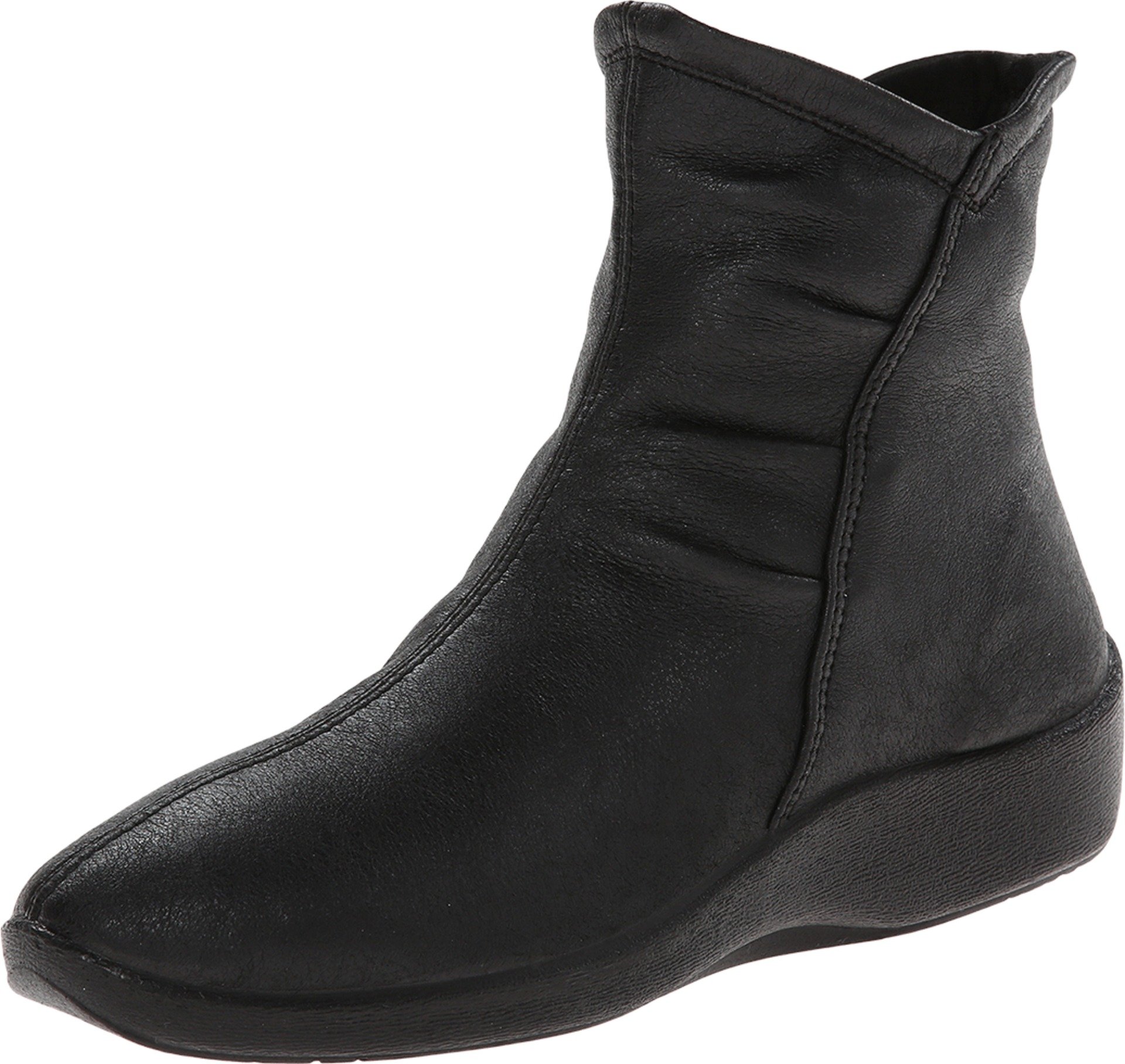
The Arcopedico L19 is the lightest boot on this list at roughly three pounds per pair, and it rolls up for packing — a feature that matters for travelers who need knee support across long airport terminals and city walking tours. The seamless knit upper eliminates pressure points that cause blisters, which is important because even minor foot pain alters gait and shifts load to the knees. The subtle rocker sole provides gentle forward momentum without forcing the foot into an aggressive roll.
The boot is machine-washable, a practical advantage for users prone to knee stiffness in wet or muddy conditions. The support level is moderate rather than aggressive — it uses a foam footbed with mild arch contour — making it appropriate for users whose knee pain stems from general fatigue rather than severe pronation. Multiple reviewers reported wearing these boots for years without the structure collapsing, which speaks to the knit construction’s resilience.
However, the L19 is not waterproof, despite early marketing claims that suggested it was. Users in wet snow or persistent rain will need to apply a waterproofing spray. The support also falls short of what heavy orthotic users need — if you require a rigid arch bridge, you’ll need to swap the insole, and the internal volume may feel snug with a thick custom orthotic. For lightweight walking and travel, it’s a uniquely knee-friendly option.
Why it’s great
- Extremely lightweight and packable for travel walking comfort
- Seamless knit upper prevents blister-causing friction that alters gait
- Machine-washable for easy care in wet conditions
Good to know
- Not waterproof; requires aftermarket treatment for wet weather
- Moderate arch support insufficient for severe pronation
- Tight internal volume limits thick custom orthotic insertion
6. Dr.Scholl’s SHOES womens Headstart Mid Shaft Boots
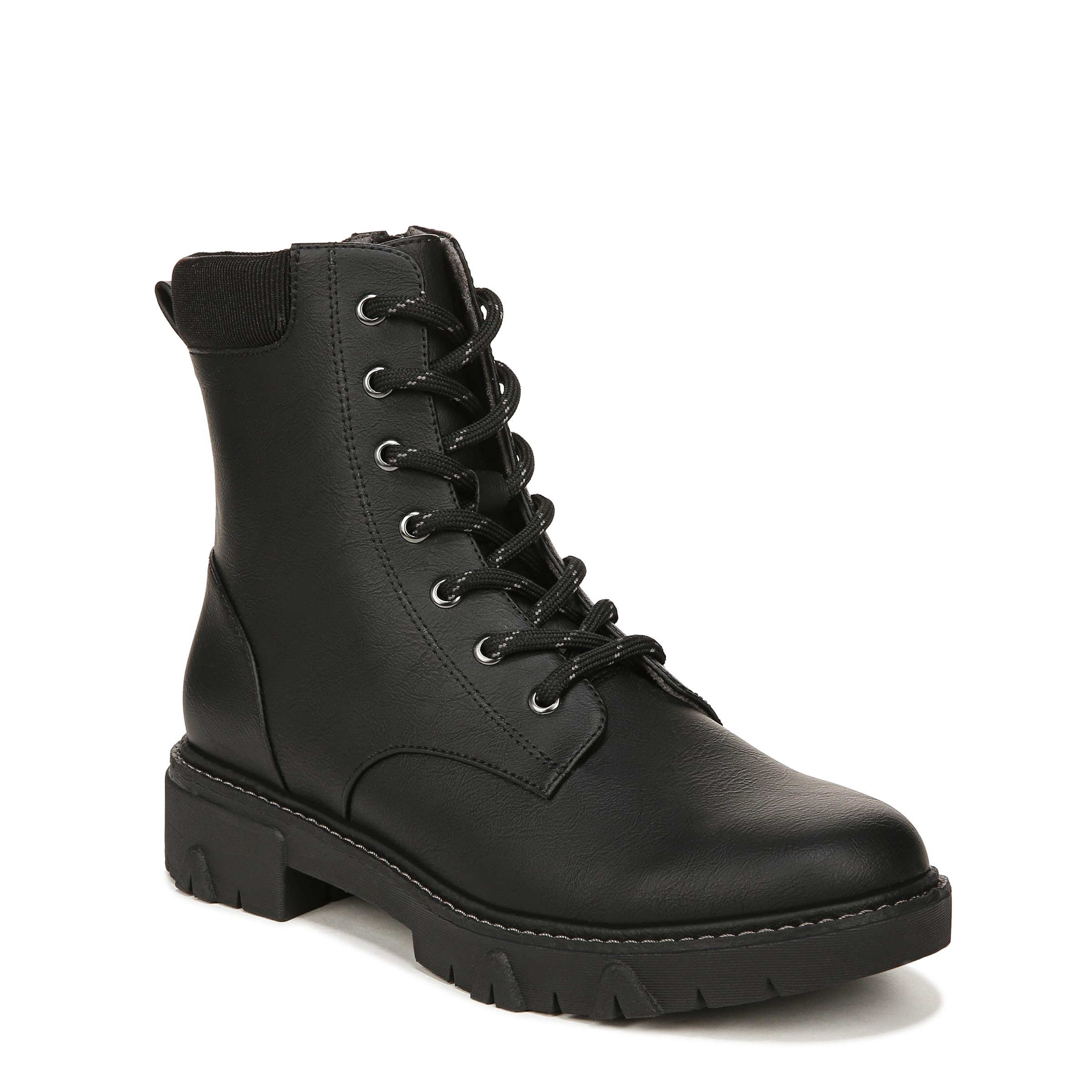
The Dr.Scholl’s Headstart boot uses a memory foam footbed and a supportive midsole specifically engineered for prolonged standing on concrete floors — a scenario that compounds knee pain by preventing the joint’s natural fluid exchange. Users working eight-hour retail shifts reported no foot ache and “helps with knee problems from prolonged standing” in verified reviews. The boot’s lightweight construction makes it feel closer to a combat sneaker than a traditional boot, reducing the lever arm weight that pulls on the knee.
The shaft height provides solid ankle support without restricting dorsiflexion, and the outsole grips well on smooth retail floors. The memory foam conforms to the foot’s contours quickly, so there’s virtually no break-in period. The boot is true to size, with several reviewers sizing up one half-size to accommodate thick insoles — a sign that the internal volume is moderate rather than generous.
Where this boot falls short for knee protection is the arch support: it’s built around a flat memory foam bed rather than a structured orthotic arch. Users with fallen arches or diagnosed overpronation will need to replace the insole with a firm arch support. The durability is also average — the memory foam compresses faster than polyurethane, so heavy users may notice reduced support after six months of daily wear.
Why it’s great
- Memory foam footbed provides immediate comfort for concrete-floor shifts
- Lightweight construction reduces fatigue during long standing hours
- Ankle support helps stabilize gait without restricting movement
Good to know
- Memory foam lacks structured arch support for pronation control
- Insole compression accelerates; support degrades after 6+ months
- Moderate internal volume; sizing up needed for custom orthotics
7. Skechers mens Relment-pelmo

Skechers has engineered the Relment-pelmo with a memory foam insole and a lightweight synthetic upper that creates a genuinely comfortable mid-range hiking boot. One verified reviewer logged 75 miles on rocky and loose terrain, rating the grip 5/5 and comfort 5/5, with only minor sole separation at that mileage. The boot fits extra-wide sizes well, a critical factor for users whose knee pain is linked to foot crowding and improper toe splay.
The ankle support is better than most Skechers boots, with a padded collar that locks the heel without choking the Achilles. The outsole uses a multi-directional lug pattern that provides reliable traction on wet rock and loose dirt. The memory foam insole feels plush out of the box, but its long-term shock absorption is lower than a polyurethane alternative — the foam will compact faster under daily hiking loads.
The biggest limitation for knee protection is the removable insole: while it can be swapped for an orthotic, the internal volume is tight, and inserting a thick arch support may raise the heel too high, causing instability. The suede/nubuck upper attracts dirt and is only waterproof to the one-inch rubber sole line. For budget-conscious hikers with wide feet who need a lightweight boot with decent ankle support, this is a solid entry point.
Why it’s great
- Fits extra-wide sizes well, allowing natural toe splay
- Lightweight with good ankle support for a mid-range boot
- Multi-directional lug outsole grips well on rocky terrain
Good to know
- Memory foam compresses faster than denser polyurethane midsoles
- Tight internal volume limits thick custom orthotic placement
- Suede upper is not fully waterproof; attracts dirt easily
8. BZees Get Going
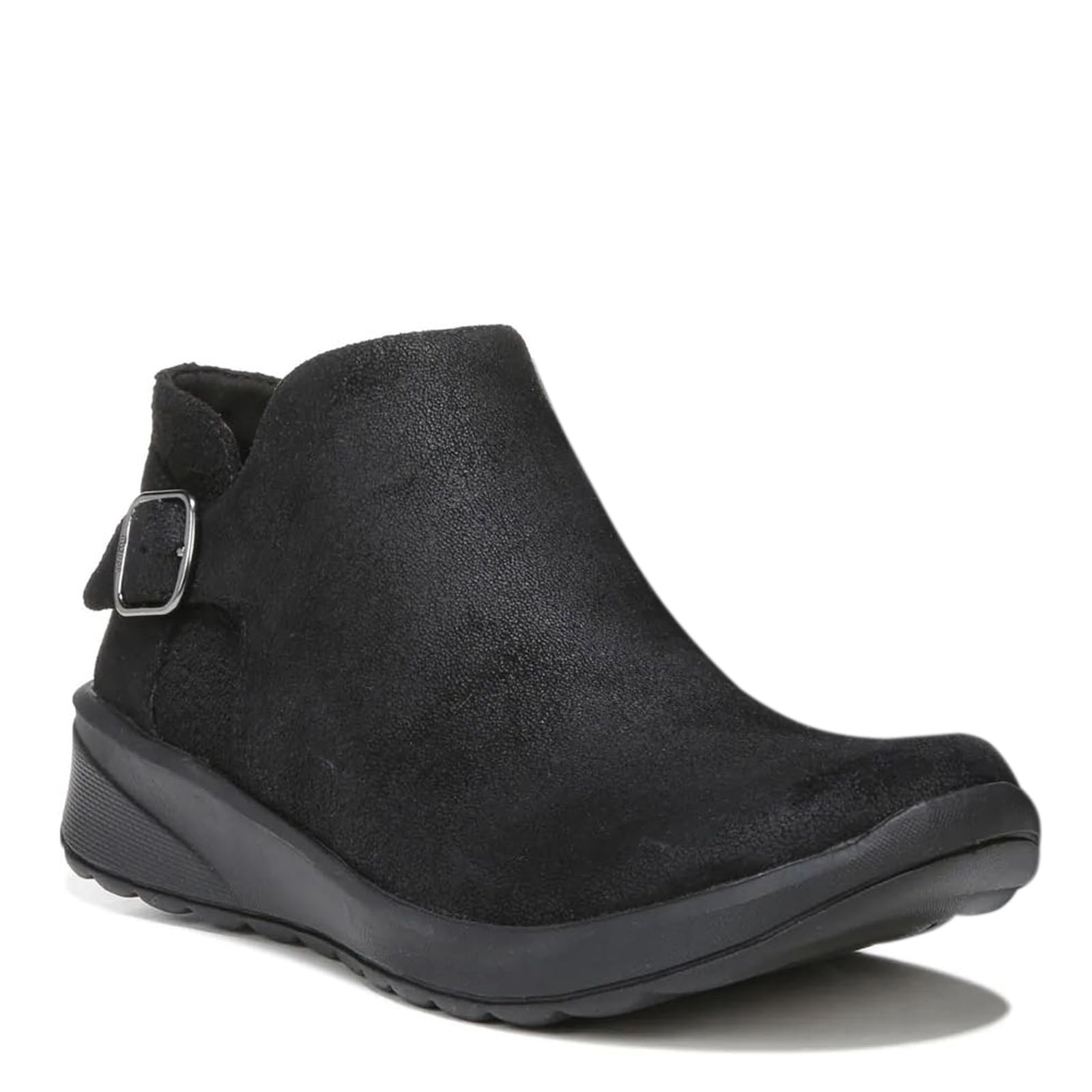
The BZees Get Going is a budget-friendly ankle boot that prioritizes easy entry and washability over structural support. The knit upper is stretchy enough to accommodate bunions and wide forefeet, and the side zipper makes putting the boot on possible without bending the knee into a painful position. At roughly 0.75 pounds per boot, it’s one of the lightest options available, which helps reduce the energy cost of walking for users with arthritic knees.
The removable insole is washable and contoured with modest arch support — enough for normal arches but insufficient for users who need firm pronation control. Several reviewers noted that the boot runs short and narrow, so sizing up a full size is necessary for anyone with wide feet or a need for orthotic inserts. The insole is glued down, making replacement difficult without tearing the foam.
Where this boot fails the knee test is the secondary offset arch support built into the footbed: one reviewer reported that the raised arch caused pain (rather than relieving it) because its placement was misaligned with their foot’s natural structure. The sole also lacks any rocker curvature, so the toe-off phase requires full knee extension. For casual travel and short errands, the convenience is high, but for consistent knee protection, you will likely need to replace the insole with a better orthotic.
Why it’s great
- Extremely lightweight; reduces leg fatigue during extended walking
- Stretchy knit upper accommodates bunions and wide forefeet
- Machine-washable for easy care in travel scenarios
Good to know
- Built-in arch support may cause pain if placement is misaligned
- Glued-in insole is difficult to swap for a custom orthotic
- Runs short and narrow; requires sizing up for proper fit
9. BZees Generation
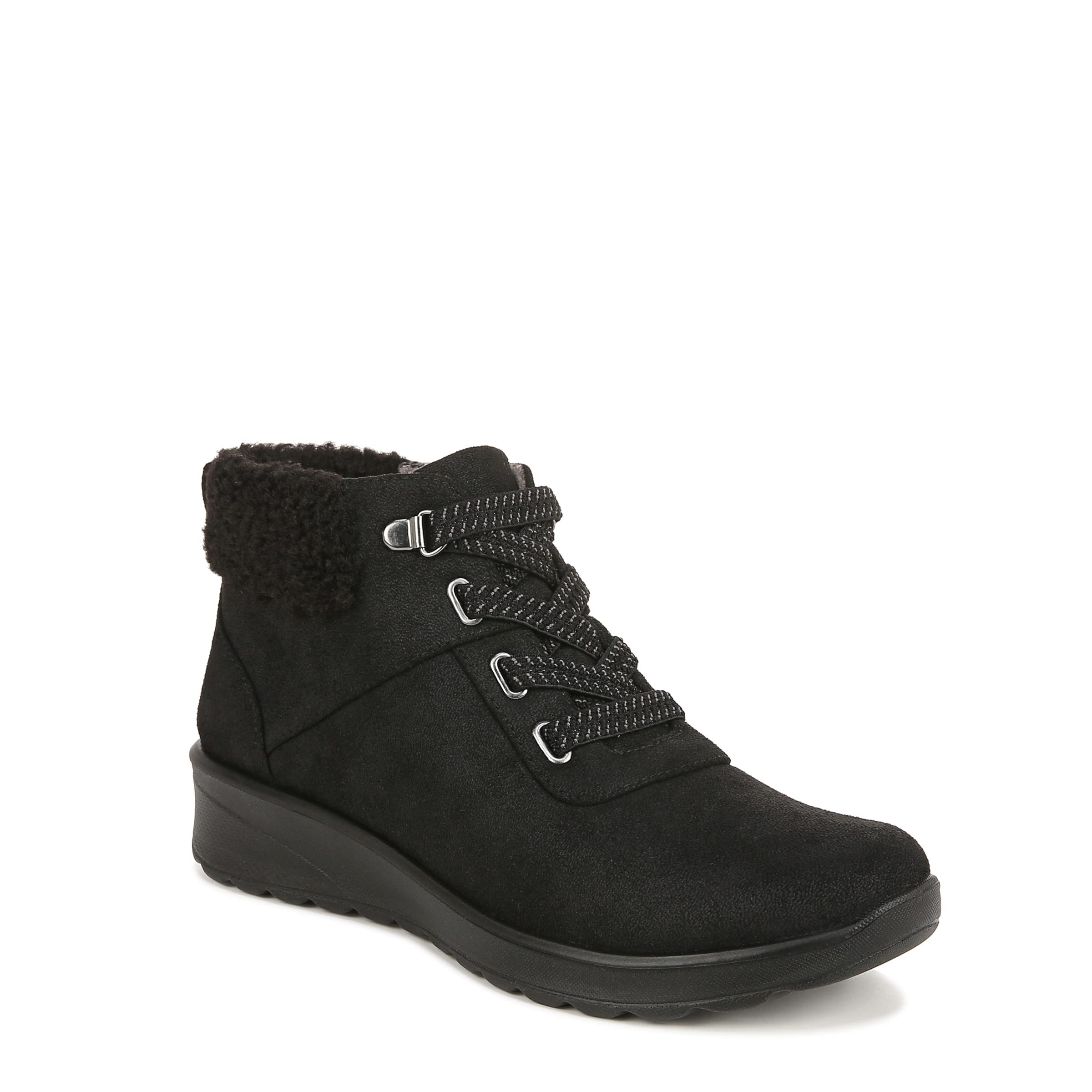
The BZees Generation is a winter-oriented budget boot with a faux-fur lining that traps heat effectively, making it a warm choice for cold-weather errands. The side zipper provides easy access without bending, and the boot is lightweight enough to wear for casual all-day use. The lace system is largely decorative — one eyelet is sewn shut in some units — which means the fit depends almost entirely on the zipper and stretch upper rather than tension adjustment.
Several users reported that the boot runs small and that the thin sole offers minimal padding, making it unsuitable for extended walking on hard surfaces. For users with bad knees, the thin sole transmits impact directly through the heel and into the knee joint without significant dampening. The back of the boot is also too soft to use as a kick-on style; users need a long-handled shoehorn to put them on, which adds friction if you have limited hip or knee mobility.
The arch support is essentially flat, so this boot will not help with pronation or knee alignment. However, one reviewer noted that after modifying the decorative laces (cutting the top loop and tightening the remaining laces), the boot fit a narrow foot securely. For users whose knee pain is minimal and who primarily need a warm, easy-to-remove winter boot for short outdoor exposures, the Generation offers value. Those requiring real support should look to the Orthofeet options.
Why it’s great
- Faux-fur lining provides effective warmth for cold weather errands
- Lightweight construction reduces leg fatigue during brief outdoor use
- Side zipper enables easy on/off for users with limited knee bending
Good to know
- Thin sole provides minimal shock absorption for the knee joint
- Decorative laces prevent adjustable tension; fit is zipper-dependent
- Back collar too soft for easy slip-on; requires a shoehorn
FAQ
Can a boot really reduce knee pain, or is shoe selection overrated?
Should I buy a boot with built-in arch support or use a separate orthotic insole?
How much cushioning is too much for a knee-friendly boot?
Final Thoughts: The Verdict
For most users, the boots for bad knees winner is the Orthofeet Dakota Waterproof Hiking Boot because the polyurethane midsole resists compression far longer than foam alternatives, and the dual-arch insert system allows precise pronation control. If you need a truly warm snow boot with the same orthotic adjustability, grab the Orthofeet Alps. And for lightweight city walking or travel where packability matters, nothing beats the Arcopedico L19.

Mo Maruf
I created WellFizz to bridge the gap between vague wellness advice and actionable solutions. My mission is simple: to decode the research and give you practical tools you can actually use.
Beyond the data, I am a passionate traveler. I believe that stepping away from the screen to explore new environments is essential for mental clarity and physical vitality.